Interior designs

What do interior designers struggle with?

What Do Interior Designers Struggle With? 11 Real Challenges & Solutions
Interior A to Z Design · Detail · Execution
Inside the profession

What Do Interior Designers Struggle With?

Beautiful interiors are the visible result. Behind them is a complex process of decisions, budgets, drawings, materials, people and execution. Here are the real challenges that can make interior design surprisingly demanding.

11 real challenges Practical design guide Updated 2026
The short answer

Design is only one part of the job.

When people ask, “What do interior designers struggle with?”, the answer is rarely simply creativity.

Interior designers have to balance aesthetics with budgets, measurements, functionality, material performance, construction realities, client expectations and deadlines. A beautiful concept still has to work in the real world.

The strongest interior design process therefore connects the creative idea with careful planning, documentation and execution.

Featured answer

Interior designers commonly struggle with managing client expectations, limited space, budgets, changing requirements, material selection, contractor coordination, timelines and the gap between a design concept and what can actually be built.

01 — The real challenges

11 things interior designers have to solve before a room feels effortless.

A finished interior can look simple. The process behind it usually is not. These challenges appear repeatedly across residential and commercial projects.

01

Understanding what the client really wants

Clients often know how they want a home to feel without knowing how to describe the layout, materials, proportions or technical decisions required to achieve it.

The design response
Translate preferences into decisions. A good briefing process turns lifestyle, references and priorities into a clear design direction before detailed work begins.
02

Working within a real budget

The desired finish level and available budget do not always match. Designers have to make choices without losing the overall design idea.

The design response
Prioritize instead of compromising everywhere. Allocate budget to the elements that have the greatest functional and visual impact, then select practical alternatives for secondary areas.
03

Making small spaces work harder

Apartments and compact homes require more than attractive furniture. Every centimetre can affect circulation, storage and comfort.

The design response
Start with space planning. Furniture dimensions, movement paths, storage and sight lines should be resolved before decorative decisions dominate the project.
04

Balancing beauty with functionality

A room can look impressive in a photograph but fail when people actually use it. Designers have to consider cleaning, storage, maintenance, movement and daily routines.

The design response
Design for everyday life. Function, ergonomics and maintenance should be considered alongside color, texture, furniture and visual impact.
05

Material selection

Choosing materials involves more than appearance. Durability, maintenance, availability, installation and budget all matter.

The design response
Evaluate the complete material lifecycle. A material should suit the room, the user’s lifestyle and the practical conditions in which it will be installed.
06

Keeping the project on schedule

Design work often depends on measurements, approvals, manufacturing, deliveries and multiple trades. One delay can affect several others.

The design response
Sequence decisions before execution. Drawings, selections and approvals should be organized around the construction sequence rather than treated as isolated tasks.
07

Coordinating contractors and vendors

A design becomes a physical space through many people. Carpenters, electricians, painters, fabricators and suppliers must understand the same design intent.

The design response
Make the design buildable. Detailed drawings, specifications, measurements and clear communication reduce ambiguity during execution.
08

Handling changes during the project

Requirements can evolve after work begins. Even a small change may affect cost, dimensions, procurement or another part of the design.

The design response
Control changes systematically. Every significant change should be understood in terms of cost, timeline, materials and downstream consequences.
09

Working with existing site conditions

Real buildings rarely behave exactly like drawings. Uneven walls, structural elements, services and site measurements can change the original plan.

The design response
Verify before finalizing. Site measurements and practical verification are essential before manufacturing or committing to critical dimensions.
10

Maintaining design consistency

Large projects contain dozens of individual decisions. Without a strong design language, rooms can begin to feel disconnected.

The design response
Create a clear design system. Repeated materials, proportions, colors, details and lighting principles can create continuity throughout the home.
11

Turning a visual concept into reality

Perhaps the biggest challenge is the final translation: moving from mood boards and drawings to a physical space without losing the original design intention.

The design response
Connect design and execution. The closer the relationship between design documentation and execution, the easier it becomes to protect the intended result.
The deeper issue

The hardest part is managing relationships between decisions.

A change to one element can influence several others. Increase a kitchen island, and circulation changes. Change a flooring material, and skirting or door heights may need attention. Upgrade a light fitting, and electrical planning may change.

Professional design is therefore less about isolated choices and more about understanding how decisions connect.

  • Client expectations and project scope
  • Budget and material selection
  • Space planning and furniture dimensions
  • Design intent and construction reality
  • Drawings and site execution
  • Procurement and project scheduling
  • Aesthetics and everyday functionality
02 — A better process

How experienced designers reduce these problems.

Strong projects do not eliminate every challenge. They create a process that identifies important decisions early and gives the team a way to manage them.

01

Discover

Understand the property, lifestyle, priorities, budget and expectations before creating the design direction.

02

Plan

Resolve layouts, circulation, storage, furniture, lighting and major technical requirements.

03

Detail

Develop materials, drawings, specifications and design details so the concept can be executed accurately.

04

Execute

Coordinate site work, vendors and finishing details while checking that execution remains aligned with the approved design.

03 — Common misconceptions

What people often misunderstand about interior design.

Misconception

“Interior design is mainly decoration.”

Decoration is only one layer. Space planning, ergonomics, storage, lighting, materials, documentation and execution can be equally important.

Reality

Design begins before furniture is selected.

The layout and functional requirements should usually be understood before detailed furniture and styling decisions are finalized.

Misconception

“A mood board is the finished design.”

A mood board communicates direction. Construction requires dimensions, drawings, specifications and decisions that can be implemented.

Reality

Good design has to survive contact with reality.

Materials, site conditions, budgets and construction constraints are part of the design problem, not separate from it.

Delhi NCR perspective

Local homes create their own design challenges.

Interior projects in Gurgaon, Noida and Delhi NCR can involve very different property types, from compact apartments and builder floors to independent houses and larger luxury residences.

That means the design process has to respond to the actual property rather than forcing every project into the same template.

For homeowners, useful questions include:

  • How much storage is genuinely required?
  • How should furniture fit the available circulation?
  • Which materials suit the household’s maintenance expectations?
  • What should be customized and what can remain standard?
  • Which design decisions need to be finalized before execution?

Explore interior design services in Gurgaon, interior designers in Noida, or our Delhi NCR home interior design resources.

04 — Frequently asked questions

Questions about the challenges of interior design.

What do interior designers struggle with?

Common challenges include client expectations, budget management, limited space, material selection, changing requirements, contractor coordination, timelines, site conditions and maintaining design intent during execution.

What is the hardest part of being an interior designer?

Interior design combines creative and technical responsibilities. Coordinating different requirements while keeping the design practical, within scope and buildable can be demanding.

Why do interior design projects go over budget?

Cost can change because of scope changes, material upgrades, unforeseen site conditions, inaccurate initial assumptions or additional work requested during execution.

Why is communication important in interior design?

Clear communication keeps clients, designers, contractors, suppliers and other project participants aligned on drawings, materials, approvals, costs, changes and schedules.

How can homeowners make an interior design project easier?

Homeowners can help by establishing priorities early, communicating a realistic budget, approving important decisions on time, understanding the project scope and limiting unnecessary changes after execution begins.

Interior A to Z

Good interiors are designed before they are built.

If you are planning a home interior in Gurgaon, Noida or Delhi NCR, thoughtful planning can resolve many of the challenges before they become expensive site problems.

Start Your Interior Project

Interior A to Z · Interior Design · Delhi NCR · Gurgaon · Noida
What do interior designers struggle with? Read More »

What interior designers should not do?

What Interior Designers Should Not Do | Interior Design Mistakes Guide 2026
INTERIOR DESIGN MISTAKES GUIDE 2026

What Interior Designers Should Not Do

Discover the biggest mistakes interior designers should avoid including poor planning, ignoring client needs, overcrowding interiors, bad lighting choices, budget mismanagement, and outdated design practices.

What Interior Designers Should Avoid

Interior designers should avoid poor space planning, ignoring functionality, overspending budgets, copying designs without personalization, using improper lighting, overcrowding spaces, and neglecting client preferences.

Why Avoiding Interior Design Mistakes Is Important

Interior designer planning modern apartment layout

Interior design directly affects comfort, functionality, aesthetics, and property value. Poor planning or design mistakes can create uncomfortable spaces, increase renovation costs, and reduce visual appeal. Modern homeowners in Gurgaon, Noida, and Delhi NCR increasingly expect personalized, functional, and luxurious interiors that match their lifestyles.

80%

Design Issues Caused by Poor Planning

15+

Years Interior Experience

1000+

Interior Projects Completed

Interior Designers Should Not Ignore Client Needs

Interior designer discussing home design ideas with clients

One of the biggest mistakes interior designers can make is ignoring client preferences and lifestyle requirements. Beautiful interiors are not successful unless they are practical and personalized for the homeowner.

  • Understand client lifestyle and daily routines
  • Respect personal design preferences
  • Balance aesthetics with functionality
  • Create practical and comfortable layouts
  • Maintain transparent communication throughout projects

Interior Designers Should Not Overcrowd Spaces

Too Much Furniture

Overloading rooms with furniture reduces comfort and movement space.

Excessive Décor

Too many decorative items create cluttered and visually heavy interiors.

Poor Layout Planning

Bad furniture arrangement disrupts movement flow inside rooms.

Oversized Furniture

Large furniture can make compact apartments feel smaller.

Interior Designers Should Not Ignore Lighting

Modern luxury interior with balanced lighting design

Lighting is one of the most important parts of interior design. Poor lighting can ruin even the best-designed spaces. Interior designers should always combine natural lighting, ambient lighting, task lighting, and decorative fixtures for balanced interiors.

Lighting MistakeProblem Created
Insufficient LightingDark and uncomfortable interiors
Harsh White LightingCold and unattractive atmosphere
Ignoring Natural LightReduced brightness and ventilation
Poor Fixture PlacementUneven lighting distribution

Interior Designers Should Not Ignore Functionality

Modern apartment interior with functional furniture layout

Bad Storage Planning

Insufficient storage creates cluttered and inefficient interiors.

Ignoring Movement Space

Rooms should allow comfortable movement and accessibility.

Uncomfortable Furniture

Furniture should be practical and ergonomically designed.

Wrong Furniture Scale

Furniture size must match room dimensions properly.

Interior Designers Should Not Exceed Budgets

Interior budget planning for modern home renovation
  • Create realistic budget plans before starting
  • Avoid unnecessary luxury upgrades
  • Prioritize essential interior elements first
  • Maintain cost transparency with clients
  • Select materials according to project budget
  • Prevent hidden expenses during execution

Budget management is extremely important for successful interior projects in Delhi NCR where material and labor costs vary significantly.

Interior Designers Should Not Follow Trends Blindly

Overuse of Trends

Temporary trends may become outdated quickly.

Ignoring Timeless Design

Balanced interiors should remain attractive for years.

Copying Designs

Every home should reflect unique personality and functionality.

Ignoring Practicality

Stylish interiors must also be functional and durable.

Common Technical Mistakes Interior Designers Should Avoid

Professional interior planning with technical drawings
Technical MistakeImpact
Improper Electrical PlanningInconvenient switch and socket placement
Poor Ventilation DesignUncomfortable indoor environment
Incorrect MeasurementsFurniture fitting problems
Low-Quality MaterialsReduced durability and frequent repairs
Ignoring Safety StandardsElectrical and structural risks

How Professional Interior Designers Create Better Spaces

Proper Planning

Professional layouts improve space efficiency and comfort.

Balanced Aesthetics

Experts combine beauty with practicality.

Budget Optimization

Smart material selection controls overall costs.

Luxury Finishing

Quality execution creates elegant and long-lasting interiors.

Modern Interior Design Best Practices

Modern luxury apartment interiors with minimalist design
  • Focus on minimalist and clutter-free layouts
  • Use smart lighting and natural materials
  • Create multifunctional spaces for modern living
  • Balance comfort, luxury, and functionality
  • Use sustainable and durable materials
  • Personalize interiors according to client lifestyle

Related Interior Design Resources

Create Functional and Beautiful Interiors

Transform your apartment, villa, or office with professional interior design solutions focused on functionality, luxury aesthetics, smart planning, and personalized living experiences across Delhi NCR.

Book Free Consultation

Common Interior Design Mistakes Experts Always Spot Contents. Not Having a Plan. Not Budgeting Properly. Failing to Establish a Focal Point. Thinking Everything Has to Match. Having your Clutter on Display. Holding onto Heirlooms (you do not like). Using the Wrong Size Area Rug.

What interior designers should not do? Read More »

How can I learn my own design?

How Can I Learn Interior Design on My Own? 15 Powerful Steps
Independent Interior Design Guide

How Can I Learn Interior Design on My Own?

You do not need to begin with expensive software or complicated theory. Start with the room around you. Learn how space works, understand proportion, study light and materials, create your own concepts—and practice until your eye becomes your strongest design tool.

15 practical steps Beginner friendly Interior A to Z
The short answer

Learn by designing real spaces.

The fastest way to understand interior design is to combine study with continuous observation and practical experiments.

If you want to learn interior design on your own, you can begin without building a complicated curriculum. Start with fundamentals: space planning, proportion, color, lighting, furniture, materials and visual balance.

Then turn those ideas into practice. Measure your bedroom. Redesign your living room. Create a mood board. Try three furniture layouts. Compare different lighting approaches. Document what worked and what did not.

Over time, these exercises develop something that tutorials alone cannot: design judgment.

Featured answer

Yes—you can learn interior design on your own. Begin with design fundamentals, practice on real rooms, study professional interiors, learn basic drawing and software, and gradually develop your own design process.

Modern interior design space used as inspiration for learning interior design
Interior design begins with observation: space, light, materials, proportion and atmosphere.
01 — The learning path

15 powerful steps to learn interior design by yourself.

Do not try to master everything simultaneously. Build your knowledge in layers. Each step below develops a skill that supports the next.

01

Learn the principles of design

Begin with balance, contrast, emphasis, rhythm, proportion, scale, hierarchy, unity and variety. These principles explain why some spaces feel organized while others feel visually chaotic.

PracticeChoose one room and identify its focal point, balance, contrast, repetition and dominant visual elements.
02

Master space planning

Space planning is one of the most important interior design skills. Learn how people move through a room, how furniture relates to walls and doors, and how different activities require different zones.

PracticeMeasure your room and draw three different furniture layouts before moving anything.
03

Understand proportion and scale

A beautiful sofa can look wrong if it is too large for the room. A tiny rug can make an otherwise well-designed space feel disconnected.

PracticeMeasure your furniture and compare its dimensions with the room before changing the layout.
04

Study color theory

Learn hue, saturation, value, warm and cool colors, complementary colors and neutral palettes. Then study how natural and artificial light changes color.

PracticeCreate three palettes for the same room: warm neutral, cool neutral and color-rich.
05

Train your eye to understand lighting

Lighting can change the atmosphere, perceived size and functionality of a space. Study natural light, ambient lighting, task lighting and accent lighting.

PracticePhotograph one room at morning, afternoon and evening. Compare the shadows, colors and focal points.
06

Study furniture carefully

Do not only look at whether furniture is attractive. Study its dimensions, ergonomics, material, visual weight, function and relationship with nearby pieces.

PracticePick five sofas and compare their dimensions, proportions, seating depth and visual character.
07

Learn about materials

Understand timber, veneers, laminates, stone, glass, metal, fabrics, tiles, paint and other commonly used interior materials.

PracticeCreate a small physical or digital material board and record the advantages, limitations, maintenance and typical applications of each material.
08

Create mood boards

Mood boards help you transform vague inspiration into a coherent design direction. Combine colors, materials, furniture, lighting and architectural references.

PracticeCreate one mood board for a bedroom and restrict yourself to one primary material palette.
09

Study real interiors

Look beyond individual photographs. Ask why the room works. Identify its layout, focal point, lighting, proportions, material relationships and circulation.

PracticeTake one professional interior each day and write down five design decisions you can identify.
10

Learn basic drawing

You do not need to become an artist. Learn enough plan, elevation and simple perspective drawing to communicate your ideas clearly.

PracticeSketch your own bedroom from above and mark doors, windows, furniture and circulation paths.
11

Learn one design software at a time

Once your fundamentals are strong, begin learning digital tools for floor plans, 3D visualization, presentations and documentation.

PracticeRecreate one room digitally instead of attempting a complete house immediately.
12

Redesign your own home

Your own home is an excellent laboratory. Test layouts, storage concepts, color palettes and lighting ideas before worrying about creating a portfolio.

PracticeChoose one room and create a complete concept including layout, palette, materials, lighting and furniture.
13

Study functionality before decoration

Professional interiors are not simply collections of attractive objects. Storage, ergonomics, circulation, maintenance and daily routines must work.

PracticeWrite down everything the room needs to accomplish before selecting decorative elements.
14

Learn from your mistakes

Keep a record of every project. Document what you intended, what happened and what you would change next time.

PracticeAfter every redesign, write three things that worked and three things you would improve.
15

Build a design portfolio

Once you have several strong exercises, present them as projects. Show the problem, your concept, layout, materials, visual direction and final result.

PracticeCreate three complete case studies rather than filling a portfolio with unrelated images.
The important shift

Stop collecting inspiration. Start analyzing it.

Saving beautiful interiors is easy. Understanding why they work is where real learning begins.

Whenever you see an interior you like, ask what creates the effect. Is it the proportion of the furniture? The lighting? The negative space? The repetition of materials? The ceiling height? The color relationship?

  • What is the first thing I notice?
  • Where does my eye move next?
  • How is the furniture arranged?
  • What creates balance?
  • How many materials are being used?
  • How does natural light affect the room?
  • What makes the space feel expensive or calm?
  • What would I change?
02 — Skills to develop

The six skill groups that matter most.

You do not need to master every subject immediately. Build competence gradually and connect each skill to practical projects.

Foundation

Space Planning

Learn circulation, zoning, furniture placement, dimensions and functional relationships between spaces.

Visual

Color & Composition

Understand color relationships, contrast, hierarchy, proportion and visual balance.

Atmosphere

Lighting

Study natural light and combine ambient, task and accent lighting.

Technical

Materials

Understand surfaces, durability, maintenance, installation and material relationships.

Communication

Drawing & Presentation

Learn to communicate design ideas through plans, elevations, sketches and visual presentations.

Professional

Project Thinking

Understand budgets, specifications, timelines, vendors and the relationship between design and execution.

03 — Your learning roadmap

A simple 90-day approach.

Consistency matters more than trying to learn everything in one weekend. Use a structured progression.

DAYS 01–30

Observe

Learn design principles, space planning, color, proportion and lighting. Analyze real interiors every day.

DAYS 31–60

Practice

Redesign rooms, create mood boards, draw layouts and experiment with materials and furniture.

DAYS 61–75

Build

Create complete room concepts and begin learning the software needed to present your ideas.

DAYS 76–90

Present

Turn your strongest exercises into polished case studies and begin developing your own design language.

Interior design in India

Learning locally makes the knowledge practical.

If you are learning interior design in Delhi NCR, Gurgaon or Noida, pay attention to the homes and projects around you. Apartments, builder floors, villas and independent houses present different space-planning and execution challenges.

Study actual room proportions, storage requirements, materials, lighting and construction details. This makes your learning more practical than relying only on international inspiration.

You can also explore professional interior design projects to study how different residential spaces are approached.

For a broader introduction to professional practice, explore interior design services and related design resources from Interior A to Z.

04 — Frequently asked questions

Questions beginners usually ask.

Can I learn interior design on my own?

Yes. You can learn the fundamentals independently by studying space planning, proportion, color, lighting, furniture, materials and design principles, then practicing those skills on real spaces.

How can I learn interior design at home?

Start with your own rooms. Measure them, create floor plans, test furniture layouts, build mood boards and experiment with color, materials and lighting. Document each exercise so you can see how your design judgment develops.

What should I learn first in interior design?

Begin with space planning, proportion and scale, design principles, color theory, lighting and furniture planning. These fundamentals make more advanced design skills easier to understand.

Do I need a degree to learn interior design?

You do not need a degree to independently learn the fundamentals. However, professional practice can require formal education, practical experience, technical knowledge and compliance with applicable requirements depending on the work.

How long does it take to learn interior design?

Basic principles can be learned relatively quickly, but strong design judgment develops through repeated practice. Working on real rooms and analyzing completed projects can accelerate practical learning.

What is the best way to practice interior design?

Choose real rooms and solve real problems. Create a layout, select a palette, choose materials, plan lighting and explain why each decision was made. Repeated complete projects are more useful than collecting isolated ideas.

Keep learning

Your first design project can be your own room.

Start small. Measure the space. Understand the problem. Create a concept. Test it. Improve it. Then do it again.

Explore Interior Design Projects

How can I learn my own design? Read More »

Is interior design easy?

Is Interior Design Easy? 11 Truths Beginners Should Know
Interior A to Z Interior Design · Delhi NCR · Gurgaon · Noida
Interior Design Fundamentals

Is Interior Design Easy?

It can be learned. But creating an interior that looks beautiful, feels comfortable and works perfectly every day is more than choosing attractive furniture and colours. Here is what actually makes interior design easy—or difficult.

11 essential truthsBeginner friendlyPractical guide
The short answer

Interior design is easy to start—but difficult to master.

Anyone can learn the fundamentals of interior design. Professional-quality results require something more: observation, planning and repeated practice.

Interior design is often misunderstood as simply selecting colours, furniture and decorative accessories. Those elements matter, but they are only part of the process.

A successful interior has to solve several problems simultaneously. It needs to use space efficiently, support everyday activities, provide appropriate storage, work with natural and artificial light, maintain visual balance and stay within the project’s practical limitations.

That is why the first stage of learning interior design is not decoration. It is learning how to see a space.

Featured answer

Is interior design easy? The fundamentals are accessible to beginners, but professional interior design requires practice and the ability to balance aesthetics, functionality, space planning, materials, lighting, budget and execution.

Elegant modern interior design living room
Good interior design combines visual character with proportion, circulation, comfort and practical function.
A realistic view

The basics are approachable. The judgment takes time.

You can understand basic design principles without spending years studying them. What takes longer is developing the ability to make good decisions when a real room has limitations.

A small apartment, for example, may require compromises between storage, furniture size, circulation and visual openness. That is where experience becomes valuable.

Learning fundamentalsAccessible
The challenge increases as projects become more complex.
01 — What makes it easy or difficult

11 truths every beginner should understand.

Interior design becomes much easier when you understand what the work actually involves. These principles are useful whether you are redesigning one room or planning an entire home.

01

Creativity helps—but it is not everything.

Many people believe an interior designer simply needs to be creative. Creativity matters, but good design also requires measurements, planning, proportion, problem solving and practical judgment.

Start here Learn to solve problems visually. Ask what a room needs to achieve before deciding how it should look.
02

Space planning is one of the hardest fundamentals.

A room can contain beautiful furniture and still feel uncomfortable. Good space planning considers movement, furniture dimensions, doors, windows, storage and everyday activities.

Practice Measure before you design. Draw your room from above and create several furniture layouts.
03

Proportion can make or break a room.

Even expensive furniture can look wrong when its dimensions are incompatible with the room. Understanding scale is therefore a fundamental interior design skill.

Learn Think in relationships. Compare furniture dimensions with the room, ceiling height and nearby elements.
04

Lighting is more important than beginners expect.

Lighting changes colour, depth, atmosphere and functionality. Professional interiors rarely depend on a single ceiling fixture.

Experiment Layer the light. Study ambient, task and accent lighting and observe how each affects the same room.
05

Materials require practical knowledge.

A material is not simply a colour or texture. Durability, maintenance, installation, availability and budget all affect whether a material is appropriate.

Study Look beyond appearance. Compare materials according to use, maintenance and longevity.
06

Function should come before decoration.

The best-looking room is not necessarily the best-designed room. Storage, ergonomics, circulation and everyday routines have to work before styling is added.

Rule Design for real life. Ask how the people using the space will actually move, sit, work, store and live.
07

A beautiful reference does not automatically fit your home.

Inspiration photographs can teach you a lot, but copying a room without considering your floor plan, light, ceiling height and lifestyle can produce disappointing results.

Better approach Borrow the principle, not the room. Identify what you like about a reference and reinterpret it for your own space.
08

Budget affects design decisions.

Good design does not require every item to be expensive. It requires thoughtful allocation of resources and knowing where quality matters most.

Think strategically Prioritize high-impact elements. Spend carefully on pieces that influence function, durability and the overall visual character of the space.
09

Communication is part of design.

Interior projects involve homeowners, designers, contractors, suppliers and installers. A good concept can fail if it is not communicated clearly.

Professional skill Make decisions understandable. Use plans, dimensions, material samples and clear specifications.
10

Real sites are different from inspiration boards.

Existing walls, columns, electrical points, plumbing, uneven surfaces and other site conditions can influence the final result.

Professional habit Verify before committing. Accurate site measurements are essential before major decisions are manufactured or installed.
11

Experience improves decision-making.

The more rooms you analyze and design, the easier it becomes to recognize proportion problems, weak layouts, excessive decoration and practical limitations.

Long-term goal Practice complete projects. Design whole rooms instead of studying isolated furniture or colour combinations.
The professional mindset

Good interior design is problem solving with visual intelligence.

The designer’s job is not simply to make a room attractive. It is to understand the problem behind the room and develop a solution that balances several requirements at once.

This is why strong interiors often feel effortless. Many decisions have already been solved before the finished space is visible.

  • Understand the people using the space
  • Measure and analyze the property
  • Plan circulation and furniture
  • Resolve storage requirements
  • Develop the visual direction
  • Select materials with purpose
  • Plan lighting and electrical requirements
  • Coordinate design with execution
02 — Understanding the difference

What is easy—and what takes experience?

Easier to learn

The visible fundamentals

Beginners can learn colour theory, basic design principles, furniture arrangement, mood boards, basic space planning and simple styling through study and practice.

Takes experience

The invisible decisions

It takes more experience to balance competing requirements, anticipate construction problems, select appropriate materials, manage changes and protect the design concept during execution.

03 — Skills to build

Six skills that make interior design easier.

You do not need to master all of these immediately. Build them gradually through real projects and observation.

Skill 01

Space Planning

Understand layouts, circulation, furniture dimensions, zoning and functional relationships.

Skill 02

Proportion

Learn how furniture, architectural elements and decorative objects relate in size and visual weight.

Skill 03

Colour

Study hue, value, saturation, contrast, neutral palettes and the effect of natural and artificial light.

Skill 04

Lighting

Learn ambient, task and accent lighting and understand how lighting changes atmosphere and functionality.

Skill 05

Materials

Understand appearance, durability, maintenance, installation and suitability before specifying a material.

Skill 06

Communication

Learn to explain design ideas through drawings, layouts, specifications, mood boards and visual references.

04 — Beginner roadmap

If you are starting today, follow this sequence.

A structured learning path is easier than trying to learn everything at once.

STEP 01

Observe

Study real interiors and identify what makes them visually successful.

STEP 02

Measure

Learn room dimensions, furniture sizes, circulation and proportions.

STEP 03

Design

Create layouts, mood boards, colour palettes and complete room concepts.

STEP 04

Review

Compare your work with professional projects and identify what you would improve.

Delhi NCR perspective

Real homes make design easier to understand.

If you are learning interior design in Delhi NCR, Gurgaon or Noida, study the homes and apartments around you. Different property types create different design problems.

A compact apartment may need efficient storage and careful furniture proportions. A builder floor may provide more flexibility but create different circulation and architectural considerations. Larger homes require stronger coordination between rooms.

This is why learning from real properties is often more useful than simply collecting beautiful reference photographs.

05 — Frequently asked questions

Is interior design easy? Your practical questions answered.

Is interior design easy?

The fundamentals are accessible to beginners, but professional interior design requires practice and the ability to balance aesthetics, functionality, space planning, materials, lighting, budget and execution.

Can I learn interior design by myself?

Yes. You can independently study design principles, space planning, colour, lighting, furniture, materials and presentation, then practice these skills on real rooms and projects.

What makes interior design difficult?

The difficulty comes from balancing several requirements at the same time. A designer may need to consider aesthetics, functionality, dimensions, storage, budget, materials, lighting, timelines and execution.

Do I need to be creative to become an interior designer?

Creativity is useful, but it is only one part of the skill set. Observation, planning, proportion, communication, technical knowledge and problem solving are also important.

How long does it take to learn interior design?

Basic principles can be learned relatively quickly, but strong design judgment develops through repeated practice. Real projects and detailed observation help build that judgment.

What should a beginner learn first?

Begin with space planning, proportion and scale, design principles, colour, lighting, furniture dimensions and material basics. Then move into drawing, visualization and project execution.

Is interior design harder than interior decoration?

Interior design generally covers a wider range of considerations, including space planning, functionality, layouts, materials, lighting and technical coordination. Decoration focuses more heavily on visually enhancing an existing space.

Interior A to Z

Beautiful interiors become easier when the decisions are made in the right order.

Start with the space. Understand how it will be used. Plan the layout. Then bring in colour, materials, lighting and personality.

Explore Interior Design Services
Interior A to Z · Interior Design · Delhi NCR · Gurgaon · Noida

Is interior design easy? Read More »

What is the difference between an interior designer and an interior decorator?

The main difference is that an interior designer changes how a space functions, while an interior decorator improves how it looks.

Interior DesignerInterior Decorator
Plans the layout and functionality of spacesFocuses on aesthetics and styling
Can redesign kitchens, bathrooms, and floor plansSelects furniture, colors, artwork, and accessories
Works with architects, engineers, and contractorsWorks with homeowners or businesses after construction
May handle lighting plans, electrical layouts, and space planningArranges décor to create a cohesive look
Often requires formal education and technical knowledgeMay have design training but typically doesn’t alter structural elements

What an Interior Designer Does

An interior designer is involved in both the technical and creative aspects of a project. Typical responsibilities include:

  • Space planning
  • Kitchen and wardrobe design
  • Lighting design
  • Material and finish selection
  • Custom furniture design
  • Coordination with contractors
  • Budget and project management
  • Ensuring designs comply with building codes where applicable

An interior designer is the right choice if you’re:

  • Renovating your home
  • Building a new house
  • Changing room layouts
  • Planning custom cabinetry or storage
  • Managing a full-home makeover

What an Interior Decorator Does

An interior decorator enhances an existing space without changing its structure. They typically help with:

  • Choosing paint colors
  • Selecting furniture
  • Curtains and blinds
  • Rugs and carpets
  • Artwork and accessories
  • Decorative lighting
  • Styling shelves and tabletops

An interior decorator is ideal if your home already has a functional layout and you want to refresh its appearance.

Which One Should You Hire?

Choose an interior designer if you need:

  • Space planning
  • Structural or layout changes
  • Custom-built furniture
  • Renovation or new-home interiors
  • End-to-end project management

Choose an interior decorator if you need:

  • A style refresh
  • Help selecting furniture and décor
  • Color coordination
  • Seasonal or room-by-room styling

Can One Person Do Both?

Yes. Many professionals offer both interior design and interior decoration services. For example, a designer may create the layout and custom cabinetry, then also select furniture, fabrics, artwork, and accessories to complete the look.

In practice, if your project involves construction, remodeling, or custom interiors, an interior designer is usually the better fit. If the space is already complete and you’re mainly looking to improve its visual appeal, an interior decorator is often sufficient.

Interior layout is the artwork and technology of information people’s conduct to create purposeful areas inside a building, even as indoors re adorning is the furnishing or re adorning of a area with ornamental factors to attain a positive aesthetic. In short, indoors designers can also additionally decorate, however decorators do now no longer layout.

What is the difference between an interior designer and an interior decorator? Read More »

How do I start an interior design job with no experience?

How Do I Start an Interior Design Job With No Experience? 15 Practical Steps
Interior A to Z Design · Practice · Experience
Interior Design Career Guide

How Do I Start an Interior Design Job With No Experience?

You do not need to wait for someone to give you your first opportunity. Build the skills, create evidence of what you can do, learn how real projects work and approach the industry with something useful to show.

15 practical stepsBeginner roadmapPortfolio focused
The short answer

No experience does not mean no evidence.

If you have never worked for an interior design firm, your first job is to create proof that you can learn, think and contribute.

The original version of this topic on Interior A to Z correctly points beginners toward internships, apprenticeships and entry-level positions. The next step is making that advice practical. :contentReference[oaicite:0]{index=0}

A beginner can build useful evidence through self-directed projects, room layouts, mood boards, material studies, 3D concepts, drawings and a focused portfolio.

You should also understand that interior design is not only decoration. Professional work can involve space planning, 2D and 3D planning, materials, kitchens, wardrobes, lighting, furniture and execution coordination. :contentReference[oaicite:1]{index=1}

Featured answer

How do I start an interior design job with no experience? Learn the fundamentals, build a small but strong portfolio, learn the software relevant to the job you want, gain practical exposure through internships or projects, and apply for junior roles where you can demonstrate what you can already contribute.

Interior designer working on a residential interior design concept
A career in interior design develops through a combination of design knowledge, practical work, communication and project experience.
Before applying

Build something an employer can actually evaluate.

If your CV says you have no experience, your portfolio can demonstrate your thinking. You do not need dozens of projects. A few carefully developed projects can communicate more than a large collection of unrelated images.

  • One complete living-room redesign
  • One bedroom or compact-apartment project
  • One kitchen or storage concept
  • Floor plan and furniture layout
  • Material and colour board
  • A clear explanation of your design decisions
01 — Your first 15 moves

A practical route from complete beginner to job applicant.

Follow these steps in sequence. The objective is not to become an expert before applying. It is to become useful enough to enter the industry and continue learning through real projects.

01

Decide what kind of interior design work interests you.

Interior design includes residential, commercial, hospitality, workplace, kitchen, furniture, visualization and site-related roles. Understanding the direction you want helps determine what skills to learn first.

Do this Pick one starting direction. For example: residential interiors, 3D visualization, CAD drafting, design assistance or site coordination.
02

Learn the fundamentals of interior design.

Study space planning, proportion, scale, balance, colour, lighting, furniture, materials, circulation and functionality before focusing heavily on software.

Focus Learn why a design works. Software can display an idea. Fundamentals help you create one.
03

Learn to measure and draw a room.

Take measurements of a real room and convert them into a simple floor plan. Include doors, windows, columns and important fixed elements.

Practice Start with your own home. Measure one room and create a clean plan before attempting a full house.
04

Learn one relevant design software.

Choose software based on the role you want. Drafting, 3D modelling, visualization and presentation require different tools.

Rule One tool deeply is better than five superficially. Recreate a real room rather than watching tutorials without producing finished work.
05

Create your first self-directed project.

Choose a room and solve it as though a client hired you. Define the user, requirements, budget assumptions, style and functional goals.

Portfolio Treat practice like a real project. Document the problem, concept, layout, materials and final proposal.
06

Build a small portfolio.

Your portfolio should show how you think, not simply contain attractive reference images.

Include Process + result. Show layouts, mood boards, material choices, drawings, visualizations and the reasoning behind the decisions.
07

Learn about real materials.

Visit material suppliers and study laminates, veneers, stone, hardware, fabrics, tiles, lighting and other products used in actual interiors.

Field experience Touch the materials. Learn how they look, feel, perform and get installed.
08

Understand how a design reaches the site.

A drawing is only part of the process. Learn how measurements, fabrication, electrical work, carpentry, painting, installation and finishing interact.

Important Learn from execution. Site knowledge can make your design decisions much more practical.
09

Look for internships and junior opportunities.

Search for internships, apprenticeships, design assistant roles, junior designer positions, CAD roles, visualization roles and other entry-level opportunities.

Search Apply before you feel completely ready. Match your current abilities honestly to the requirements of the role.
10

Make your CV specific to interior design.

Avoid presenting yourself as a generic applicant. Highlight design projects, software, drawings, material knowledge, internships, relevant education and practical skills.

CV tip Show evidence. Replace vague statements with specific projects and skills.
11

Learn to present your work.

Designers communicate visually. Learn how to explain your concept clearly without overwhelming someone with unnecessary information.

Interview Explain your decisions. Be prepared to discuss why you selected a layout, material, colour or furniture arrangement.
12

Network with people already working in the industry.

Learn from designers, architects, contractors, vendors and other professionals. A genuine professional conversation can reveal what skills firms actually need.

Approach Ask intelligent questions. Show curiosity about the work instead of asking only for a job.
13

Accept that your first role may not be your dream role.

Your first position can be a place to learn drawings, measurements, vendors, site work, materials, presentations or project coordination.

Mindset Optimize for learning. Early practical experience can help you understand where you want to specialize later.
14

Document everything you learn.

Keep a private learning record of materials, site observations, drawings, mistakes, solutions and useful details.

Long-term Build your professional knowledge base. Your observations become more valuable as your project experience grows.
15

Keep improving after you get the job.

Getting your first position is not the finish line. Interior design changes through materials, technology, construction methods and client expectations.

Career Become more useful every year. Build both design judgment and practical project knowledge.
Your strongest advantage

A small portfolio can change the conversation.

When you have no professional experience, employers cannot evaluate your past employment history in the same way. A portfolio gives them another way to see your thinking.

The objective is not to pretend that self-directed projects were professional client work. Label them honestly and use them to show your ability to solve design problems.

  • Project brief
  • Existing-space analysis
  • Floor plan
  • Furniture layout
  • Mood board
  • Material palette
  • Lighting concept
  • 3D visualization or presentation
  • Final design explanation
02 — Skills employers can see

Build skills that translate directly into project work.

Interior A to Z’s current service process connects consultation, space planning, design development, materials and execution. :contentReference[oaicite:2]{index=2} These are useful categories for a beginner to understand even before applying for a professional role.

Skill 01

Space Planning

Understand room dimensions, circulation, furniture placement, zoning and functional requirements.

Skill 02

2D Drafting

Learn to create clean floor plans, furniture layouts and basic technical drawings.

Skill 03

3D Visualization

Develop enough 3D knowledge to communicate spatial concepts and material combinations.

Skill 04

Materials

Learn the practical characteristics, applications and limitations of common interior materials.

Skill 05

Lighting

Understand ambient, task and accent lighting and how electrical planning connects with the design.

Skill 06

Site Understanding

Learn how drawings, dimensions, fabrication, installation and finishing become a physical interior.

03 — Before you apply

Your beginner interior design job checklist.

You do not need every item to be perfect. The checklist is designed to identify the gaps that are most useful to close before approaching firms.

One polished portfolio

At least two or three complete projects presented clearly.

A focused CV

Education, skills, software, projects and relevant experience.

Basic drafting ability

You can create and understand a simple room plan.

Basic software knowledge

At least one tool relevant to the position you want.

Material awareness

You understand common interior materials and their applications.

Communication skills

You can explain your design decisions clearly.

Site curiosity

You are willing to learn how design becomes actual construction.

Willingness to learn

You understand that the first role is part of your education.

Delhi NCR opportunity

Learn from the kind of projects around you.

If you are starting an interior design career in Delhi NCR, Gurgaon or Noida, study the local residential market. Interior A to Z currently works across these markets on apartments, builder floors, villas, kitchens, wardrobes, offices and turnkey projects. :contentReference[oaicite:3]{index=3}

This can help a beginner understand how design decisions connect to real property types, budgets, storage requirements, materials and execution.

Interior A to Z also publishes project and process material that can be useful for studying how a residential project moves from planning toward execution. :contentReference[oaicite:4]{index=4}

04 — Frequently asked questions

Starting an interior design career without experience.

How do I start an interior design job with no experience?

Start by learning the fundamentals, practicing on real spaces, creating a focused portfolio, learning relevant software and applying for internships, apprenticeships and entry-level positions.

Can I get an interior design job without experience?

Yes. Entry-level opportunities can be approached by demonstrating relevant skills, portfolio work, software knowledge, practical understanding and a willingness to learn.

What should I put in an interior design portfolio with no experience?

Include self-directed room redesigns, floor plans, furniture layouts, mood boards, material boards, lighting concepts, 3D work and case studies explaining the design problem and your solution.

Should I do an internship before applying for an interior design job?

An internship can provide useful exposure to real projects, drawings, materials, vendors, site conditions and professional workflows.

Which software should a beginner learn?

It depends on the role. Drafting, 3D modelling, visualization and presentation use different tools. Choose software based on the jobs you want to pursue and learn it through completed projects.

How can I get interior design experience without a job?

Create self-directed projects, redesign real rooms, assist experienced professionals where appropriate, study materials and site conditions, and document your work as portfolio case studies.

Do I need a degree to work in interior design?

Requirements vary according to the employer, position and jurisdiction. Formal education can provide valuable technical knowledge, while portfolio quality, practical skills and relevant experience can also matter.

What is a good first interior design job for a beginner?

Potential entry-level roles include junior designer, design assistant, CAD or drafting assistant, visualization assistant, design intern and site coordination trainee.

Start before you feel ready

Your first interior design opportunity starts with something you can show.

Build one strong project. Then another. Learn from real spaces, improve your portfolio and use every project to become more useful.

Study Real Interior Projects

How do I start an interior design job with no experience? Read More »

What is the best finish for living room walls?

What Is the Best Finish for Living Room Walls? | Expert Guide
Living Room Interior Design Guide

What Is the Best Finish for Living Room Walls?

The right wall finish can change how a living room looks, feels and performs. Compare matte, eggshell, satin, washable paint, textured finishes, wallpaper and feature-wall materials before making your final choice.

Quick Answer

For most living rooms, a quality low-sheen matte or eggshell-style wall finish is an excellent starting point. It creates a sophisticated appearance without excessive reflection and can work with modern, contemporary, classic and minimalist interiors.

However, there is no single best finish for every room. A family living room, luxury apartment, small living room, TV wall and high-traffic space may each require a different approach. The decision should consider wall condition, natural light, cleaning requirements, furniture, room size and the overall interior design.

01 / Finish Guide

7 Living Room Wall Finishes Worth Considering

Start with the function of the wall, then select the visual finish. A beautiful surface should also be practical for the way the room is used.

Best All-Rounder

Matte Finish

Matte walls create a soft, understated and contemporary appearance. They are particularly useful when you want the wall colour to feel calm rather than reflective.

  • Elegant low-reflection appearance
  • Helps disguise minor imperfections
  • Works well with layered lighting
  • Ideal for sophisticated neutral palettes
Balanced Choice

Eggshell Finish

Eggshell-style finishes provide a subtle amount of sheen while remaining softer than glossy paint. They can be a practical option for active homes.

  • More reflective than matte
  • Suitable for everyday living spaces
  • Can provide easier cleaning
  • Creates a gentle visual depth
Practical

Satin Finish

Satin has noticeably more sheen and can provide a smooth, cleanable appearance. It should be used carefully because stronger reflection can reveal wall imperfections.

  • More washable appearance
  • Useful in busy households
  • Reflects more light
  • Requires better surface preparation
Family Friendly

Washable Paint

If your living room experiences fingerprints, dust or frequent cleaning, a good-quality washable interior paint can be a practical solution.

  • Designed for easier maintenance
  • Useful for high-use homes
  • Available in multiple sheens
  • Check manufacturer’s cleaning instructions
Feature Wall

Textured Finish

Texture introduces depth without requiring a completely different material. Subtle plaster, concrete-look, brushed or decorative textures can create a strong focal point.

  • Adds architectural character
  • Works well on one feature wall
  • Can complement warm lighting
  • Consider dust and repair requirements
Decorative

Wallpaper

Wallpaper can introduce pattern, colour and texture while giving the room a highly finished appearance. Choose the product according to the wall, lighting and maintenance requirements.

  • Huge range of patterns and textures
  • Excellent for accent walls
  • Can create a designer backdrop
  • Requires careful wall preparation
Premium Feature

Wood, Stone & Panel Finishes

Wood-look panels, fluted surfaces, stone-look materials and decorative wall panels can turn a living room wall into an architectural feature.

  • Strong visual impact
  • Useful for TV and media walls
  • Adds texture and depth
  • Requires detailed installation planning
02 / Compare

Which Wall Finish Should You Choose?

There is no universal winner. Compare appearance, maintenance and practical requirements before choosing the finish.

FinishAppearanceMaintenanceBest Use
MatteSoft and refinedModerateElegant everyday living rooms
EggshellSoft subtle sheenGoodFamily living rooms
SatinNoticeably reflectiveGoodBusy spaces requiring easier cleaning
Textured PaintLayered and tactileDepends on textureFeature walls
WallpaperDecorative and variedProduct dependentStatement walls
Wood / PanelsArchitectural and premiumProduct dependentTV walls and focal areas
Elegant modern living room with refined wall finish
03 / Design Logic

Choose the Finish According to the Room

The best living room wall finish should work with the entire interior, not exist as an isolated decoration. Consider the following before approving the final material.

  • Natural light: Observe the wall during morning, afternoon and evening.
  • Artificial lighting: Check how warm and cool lights affect the surface.
  • Wall condition: Higher sheen can make imperfections more noticeable.
  • Furniture: Coordinate the finish with the sofa, flooring, curtains and wood tones.
  • Room size: Smaller rooms usually benefit from controlled visual complexity.
  • Maintenance: Consider dust, children, pets, cleaning and future touch-ups.
  • Focal point: Decide whether the wall is a background or a statement feature.
04 / By Interior Style

Best Wall Finish for Different Living Room Styles

01

Modern Minimal

Consider a smooth matte wall in warm white, beige, taupe, greige or another restrained colour. Keep feature materials limited.

02

Contemporary

Combine matte paint with one controlled feature treatment such as fluted panels, textured paint, artwork or a refined TV wall.

03

Modern Luxury

Use sophisticated textures, stone-look surfaces, wood details, premium wallpaper and layered lighting without overloading the room.

04

Modern Indian

Warm textures, timber tones, handcrafted artwork, subtle colour and decorative elements can create a welcoming Indian-inspired interior.

05

Modern Classic

Consider soft paint colours, wall moulding, symmetrical composition, refined artwork and controlled lighting.

06

Small Living Room

Use lighter colours, restrained texture and carefully positioned mirrors or reflective details to maintain visual openness.

05 / Visual Inspiration

Living Room Wall Finish Ideas

Use the finish as part of a larger composition involving furniture, lighting, flooring and decorative elements.

06 / Avoid These

Common Living Room Wall Finish Mistakes

A premium finish can still look wrong when the material, scale or lighting is not coordinated with the room.

01
Choosing sheen before checking the wall

Higher sheen can make uneven surfaces and preparation problems more visible.

02
Using too many finishes

Combining several competing textures can make a living room visually busy.

03
Ignoring lighting

A finish can look completely different under daylight, warm LEDs and cool LEDs.

04
Skipping samples

Always evaluate colours and textures on the actual wall or a realistic sample board.

05
Decorating every wall

One strong focal wall is often more effective than covering the entire room.

06
Forgetting maintenance

Consider dust, cleaning, repairs, replacement and long-term appearance before installation.

07 / Professional Checklist

Before You Finalise Your Living Room Wall Finish

  • Measure the complete wall and note doors, windows and electrical points.
  • Check natural light at different times of the day.
  • Coordinate the wall with sofa, flooring, curtains and furniture.
  • Decide whether the wall is a background or focal point.
  • Compare matte, eggshell, satin and decorative alternatives.
  • Request actual material and paint samples.
  • Check cleaning and maintenance requirements.
  • Plan TV wiring, lighting, niches and electrical points before fabrication.
  • Confirm surface preparation before the final finish is applied.
  • Approve the complete wall composition rather than selecting a finish in isolation.
08 / Related Interior Planning

Build the Wall Into the Complete Living Room Design

Wall finishes work best when planned together with space planning, furniture, TV units, lighting, storage and colour.

09 / FAQ

Frequently Asked Questions

What is the best finish for living room walls?

For many living rooms, a quality low-sheen matte or eggshell-style finish provides a good balance of elegance, low reflection and practical use. The best choice depends on lighting, wall condition, cleaning needs and interior style.

Is matte paint good for living room walls?

Yes. Matte paint creates a soft and sophisticated appearance and can help reduce the visibility of minor surface imperfections. A washable matte product can be considered when easier cleaning is important.

Is satin or matte better for a living room?

Matte generally gives a calmer, less reflective appearance, while satin offers more sheen and may provide practical cleaning advantages depending on the product. Wall condition and lighting should also be considered.

What wall finish is best for a luxury living room?

Luxury living rooms can use refined matte paint, textured finishes, wallpaper, wood panels, stone-look surfaces or a carefully detailed feature wall. The finish should coordinate with furniture and lighting.

Are textured walls good for living rooms?

Yes. Subtle textures can add depth and character, particularly when used as a controlled feature wall. Consider cleaning, dust and future repair requirements before selecting a heavily textured surface.

What is the easiest living room wall finish to maintain?

A good-quality washable interior paint is generally one of the simplest options to maintain. Always check the manufacturer’s cleaning instructions and recommended products.

Should every living room wall have the same finish?

Not necessarily. A common approach is to keep most walls visually quiet and use one feature wall for texture, wallpaper, panels, artwork or a TV design. The correct balance depends on room size and overall style.

What is the best finish for a small living room?

Light, low-sheen finishes can help maintain a visually open feeling. Controlled texture, strategically placed mirrors and carefully planned lighting can add interest without making the room feel crowded.

Interior A to Z

Plan a Living Room Where Every Finish Works Together

The right wall finish is only one part of a successful living room. Space planning, furniture proportions, TV placement, lighting, storage, colours and materials should be designed as one coordinated interior.

© Interior A to Z — Interior Design Services for Gurgaon, Noida, Delhi NCR and surrounding areas.

What is the best finish for living room walls? Read More »

Which material is best for use on interior walls?

Which Material Is Best for Interior Walls? | Complete Guide
Interior Wall Materials Guide

Which Material Is Best for Interior Walls?

From paint and wallpaper to wood panels, stone, marble, glass, textured finishes and decorative surfaces, the right wall material depends on how the room is used—not simply how the material looks.

Quick Answer

The best material for an interior wall depends on the room, intended use, maintenance requirements, design style and budget. Paint is the most versatile option for many walls, while wallpaper, wood panels, textured finishes, stone, marble-look surfaces, glass and decorative panels are useful when you want additional texture, character or architectural detail.

Instead of asking which material is universally best, ask which material is best for this wall. A living-room TV wall, bedroom headboard wall, entrance wall and bathroom wall may need completely different specifications.

01 / Material Library

Best Interior Wall Materials to Consider

Each material creates a different combination of colour, texture, depth, durability and maintenance. The best result usually comes from using a small, coordinated material palette.

Most Versatile

Paint

Paint remains one of the most flexible wall treatments. It can be used throughout the home or selectively for accent walls and colour blocking.

Best for: Complete homes, bedrooms, living rooms
  • Wide colour selection
  • Easy to refresh
  • Works with almost every design style
  • Available in multiple finishes
Decorative

Wallpaper

Wallpaper introduces patterns, murals, textures and visual character without requiring structural changes to the wall.

Best for: Feature walls, bedrooms, living rooms
  • Huge range of patterns
  • Textured and decorative options
  • Creates a strong focal point
  • Requires proper wall preparation
Warm & Premium

Wood & Veneer Panels

Wood, veneer, laminate and timber-look panels add warmth, rhythm and architectural depth to selected walls.

Best for: TV walls, bedrooms, studies
  • Warm natural appearance
  • Excellent for feature walls
  • Can integrate storage and lighting
  • Requires careful joint planning
Modern Texture

Fluted & 3D Panels

Ribbed, fluted, wave and geometric panels create depth and shadow without using heavy natural stone.

Best for: Feature walls, TV units, partitions
  • Strong visual texture
  • Creates vertical rhythm
  • Works with integrated lighting
  • Use selectively in smaller rooms
Architectural

Stone & Marble

Stone and marble can create a dramatic architectural focal point in premium interiors when proportion and installation are planned carefully.

Best for: Entrances, feature walls, luxury spaces
  • Strong natural character
  • Premium visual impact
  • Highly durable when correctly specified
  • Weight and fixing require attention
Practical Decorative

PVC Wall Panels

PVC panels can provide decorative patterns and relatively easy cleaning for suitable interior applications.

Best for: Selected decorative applications
  • Many decorative patterns
  • Easy-clean options
  • Lightweight compared with stone
  • Check quality and heat suitability
Contemporary

Glass & Mirrors

Reflective surfaces can visually expand compact interiors and introduce a lighter, contemporary character.

Best for: Compact rooms, partitions, feature areas
  • Creates visual depth
  • Reflects available light
  • Works with modern interiors
  • Requires regular cleaning
Artisanal

Decorative Plaster & Texture

Decorative plaster, limewash-inspired surfaces and textured finishes can create subtle depth without full wall cladding.

Best for: Feature walls, luxury minimal interiors
  • Distinctive handmade character
  • Soft visual texture
  • Works with layered lighting
  • Samples should be approved first
Soft Finish

Fabric & Upholstered Panels

Fabric wall treatments introduce softness and can be useful for selected bedroom, lounge and acoustic-style applications.

Best for: Bedrooms, lounges, selected feature walls
  • Softens visual appearance
  • Adds tactile texture
  • Can support acoustic strategies
  • Maintenance depends on fabric
02 / Compare

Interior Wall Material Comparison

Use this as a starting point, then evaluate the exact product and installation specification before making a final decision.

MaterialAppearanceMaintenanceBest ApplicationKey Consideration
PaintClean and versatileEasy to moderateMost roomsSurface preparation and finish
WallpaperPatterned / texturedProduct dependentFeature wallsMoisture and installation
Wood / VeneerWarm and naturalModerateTV and feature wallsJoints, cleaning and moisture
Fluted / 3D PanelsTextured and architecturalModerateFeature wallsDust and detailing
Stone / MarbleNatural and premiumProduct dependentLuxury feature wallsWeight and fixing
PVC PanelsDecorativeGenerally easySelected interiorsProduct quality and heat
Glass / MirrorReflective and lightRegular cleaningPartitions and feature areasSafety and glare
Decorative PlasterArtisanal and texturedProduct dependentPremium feature wallsCraftsmanship and repair
Modern interior with coordinated wall materials and furniture
03 / Design Principle

The Best Wall Material Is the One That Fits the Room

A wall material should not be selected independently from the interior. Colour, lighting, furniture, flooring and ceiling design all influence how a wall treatment will look.

  • Function: Understand what the wall needs to do.
  • Moisture: Check whether the room has humidity or water exposure.
  • Light: Evaluate the material in both daylight and artificial light.
  • Maintenance: Consider dust, cleaning, touch-ups and future repairs.
  • Scale: Heavy textures can overwhelm compact rooms.
  • Budget: Compare the complete installed cost rather than only the material price.
04 / Room by Room

Which Wall Material Works Best in Each Room?

The right material changes according to the room’s function and environmental conditions.

Living Room

Feature + Comfort

Consider paint, wallpaper, wood panels, fluted panels, textured finishes, stone-look surfaces or a coordinated TV wall.

Bedroom

Warm + Calm

Wallpaper, soft paint, veneer, fluted panels, fabric panels and subtle textures can create a comfortable atmosphere.

Dining

Character + Detail

Consider decorative paint, mirrors, wallpaper, wood, artwork or carefully positioned textured panels.

Entrance

First Impression

Stone-look surfaces, wood, mirrors, decorative panels and architectural lighting can create a strong entry statement.

Home Office

Focus + Function

Paint, wood, acoustic-style panels, shelving and restrained wallpaper can create a productive background.

Kids Room

Practical + Flexible

Choose surfaces that are appropriate for cleaning, impact, changing décor and everyday use.

TV Wall

Technology + Design

Combine panels, paint, stone-look materials, storage and lighting while planning cables and equipment access.

Bathroom

Moisture First

Select wall surfaces specifically designed for wet or humid conditions and follow appropriate installation requirements.

05 / Inspiration

Interior Wall Material Ideas

The goal is not to cover every wall with a feature. Create a clear hierarchy so that one or two surfaces become the visual focus.

06 / Selection Method

How to Choose the Right Material for an Interior Wall

Use this simple process before approving any wall material.

01
Identify the wall’s purpose

Decide whether it is a background wall, feature wall, TV wall, storage wall or architectural element.

02
Measure the wall

Understand width, height, doors, windows, corners and existing electrical points before selecting a pattern or panel.

03
Study natural light

Dark, reflective and strongly textured materials can behave differently depending on daylight.

04
Coordinate furniture

Match the wall treatment with sofa, bed, dining furniture, flooring, curtains and existing wood tones.

05
Check maintenance

Understand cleaning, dust accumulation, touch-ups, repairs and replacement requirements.

06
Check room conditions

Consider humidity, moisture, sunlight, heat, traffic and everyday use before installation.

07
Compare complete costs

Include material, surface preparation, fabrication, installation, finishing and future maintenance.

08
Approve a physical sample

Review actual material samples under the lighting conditions of the room before final installation.

07 / Professional Design Rules

8 Rules for Better Interior Wall Design

01

Do Not Decorate Every Wall

Give the room a visual hierarchy. One strong feature can be more effective than multiple competing surfaces.

02

Coordinate Materials

Wood, stone, paint, metal and glass should share a coherent colour and texture relationship.

03

Use Lighting Strategically

Wall washers, concealed LEDs and accent lighting can dramatically change how texture is perceived.

04

Respect Room Scale

Large patterns and heavy textures can visually reduce the openness of smaller rooms.

05

Plan Electrical Points

TV points, sockets, switches, lighting and cable routes should be resolved before wall fabrication.

06

Think About Cleaning

A beautiful surface should remain practical for the way the household actually lives.

07

Test Before Installation

Samples help reveal colour, texture, scale and reflection more accurately than small catalogue photographs.

08

Value Proportion Over Price

Good proportions and coordinated detailing can make a simple material look more refined than an expensive material used poorly.

09 / FAQ

Frequently Asked Questions About Interior Wall Materials

Which material is best for interior walls?

There is no single best material for every interior wall. Paint, wallpaper, wood panels, textured finishes, stone, marble-look surfaces, PVC panels, glass and decorative plaster can all be suitable depending on the room, maintenance, design style and budget.

What is the most affordable material for interior walls?

Paint is generally one of the simplest and most flexible options for changing an interior wall. The complete cost depends on surface preparation, product specification, finish and labour.

Are wooden wall panels good for interiors?

Yes. Wood, veneer, laminate and fluted panels can add warmth and architectural character to living rooms, bedrooms, studies and TV walls. Moisture, cleaning, joints and installation should be considered before selection.

Is wallpaper good for interior walls?

Wallpaper is useful when you want pattern, texture or a strong visual identity. Choose the product according to wall preparation, room conditions, moisture exposure, cleaning and installation.

Is PVC wall panelling good for interiors?

PVC panels can be suitable for selected decorative interior applications. Check product quality, joint treatment, heat exposure, cleaning requirements and installation details.

Is stone or marble good for interior walls?

Stone and marble can create strong architectural focal points in entrances, living rooms and other selected areas. Weight, fixing, maintenance and total installed cost should be considered.

Which wall material is best for a luxury home?

Luxury interiors can combine refined paint, wallpaper, wood, fluted panels, stone, marble-look surfaces, decorative plaster, glass and carefully planned lighting. A coordinated palette is usually more important than using expensive materials everywhere.

How do I choose the right wall material?

Start with the application and room conditions. Then consider moisture, sunlight, daily use, cleaning, durability, appearance, installation, maintenance and budget. Test actual samples in the room before final approval.

Can interior wall materials include storage?

Yes. A wall can combine decorative finishes with shelves, niches, TV units, concealed cabinets, display areas and integrated lighting. The complete wall should be planned around actual furniture and electrical requirements.

How can I make an interior wall look expensive?

Focus on proportion, material coordination, clean detailing, appropriate lighting and one strong focal treatment. A restrained combination of paint, wood, texture or stone can look more refined than a wall covered with unrelated decorative elements.

Interior A to Z

Choose the Right Wall Material Before You Start the Work

A successful interior wall is not only about selecting an attractive material. It requires the right proportion, surface preparation, lighting, electrical planning, installation method and coordination with the rest of the interior.

Interior A to Z — Home Interior Design, Wall Design and Interior Solutions for Delhi NCR, Gurgaon, Noida and surrounding areas.

Which material is best for use on interior walls? Read More »

What are different types of wall covering?

What Are the Different Types of Wall Covering? | Complete Guide
Interior Wall Design Guide

What Are the Different Types of Wall Covering?

Explore the most useful wall covering options for modern homes, from paint and wallpaper to wood, MDF, PVC, WPC, stone, glass, fabric and decorative wall panels.

Quick Answer

Wall covering is a broad category that includes paint, wallpaper, wood panels, decorative panels, stone, glass, fabric and other materials used to finish or transform an interior wall. The best option depends on the room, desired appearance, maintenance, moisture exposure, durability, installation requirements and budget.

For a complete home, paint is usually the most versatile background treatment. For feature walls, wallpaper, fluted panels, wood, textured finishes, stone-look surfaces and 3D panels can create additional depth and character.

01 / Wall Covering Library

15 Different Types of Wall Covering

The following options cover the most common decorative and functional approaches used in contemporary residential interiors.

01
Versatile

Paint

The simplest and most flexible wall covering for changing colour, atmosphere and visual continuity throughout a home.

  • Suitable for almost every room
  • Large range of colours
  • Multiple sheen levels
  • Easy to refresh
02
Decorative

Wallpaper

Wallpaper introduces pattern, texture, artwork or a strong visual identity without major structural work.

  • Floral and botanical designs
  • Geometric patterns
  • Textured finishes
  • Feature-wall applications
03
Warm

Wood Wall Panels

Wood, veneer and wood-finish panels add warmth and natural character to contemporary and premium interiors.

  • Living rooms
  • Bedrooms
  • TV walls
  • Studies and dining areas
04
Customisable

MDF Wall Panelling

MDF can be shaped into mouldings, fluted designs, geometric panels and painted feature walls.

  • Highly designable
  • Paintable surface
  • Modern-classic interiors
  • Feature wall applications
05
Practical

PVC Wall Panels

PVC panels are available in wood-look, marble-look, textured, glossy and 3D designs for selected interior applications.

  • Lightweight
  • Wide design selection
  • Easy routine cleaning
  • Check product suitability for moisture and heat
06
Modern

WPC Wall Panels

Wood-plastic composite panels can provide a contemporary wood-like appearance for suitable interior applications.

  • Contemporary appearance
  • Decorative applications
  • Useful for feature walls
  • Check product specifications
07
Textured

3D Wall Panels

Three-dimensional panels create depth through waves, geometric patterns, ribs and sculptural forms.

  • Strong visual impact
  • Excellent feature-wall material
  • Works with accent lighting
  • Consider dust accumulation
08
Architectural

Stone & Marble

Natural stone and marble create an architectural focal point and can add a premium character to selected interiors.

  • Entrance walls
  • Luxury living rooms
  • TV walls
  • Requires proper fixing
09
Reflective

Glass & Mirror

Reflective wall treatments can create visual depth and make compact spaces feel brighter and more open.

  • Compact apartments
  • Dining areas
  • Partitions
  • Feature walls
10
Soft

Fabric Wall Covering

Fabric and upholstered panels introduce softness, texture and a more tactile atmosphere.

  • Bedroom headboards
  • Lounge areas
  • Selected office applications
  • Acoustic-oriented designs
11
Artisanal

Decorative Plaster

Decorative plaster and textured finishes create depth while retaining a refined, architectural appearance.

  • Minimal interiors
  • Luxury feature walls
  • Textured backgrounds
  • Hand-finished appearance
12
Classic

Wall Moulding

Decorative moulding creates framed geometry and is particularly effective in modern-classic and transitional interiors.

  • Bedroom walls
  • Dining rooms
  • Living rooms
  • Painted feature walls
13
Natural

Brick & Stone-Look Finishes

Brick slips, lightweight cladding and stone-look surfaces can introduce earthy, rustic or contemporary character.

  • Industrial interiors
  • Rustic interiors
  • Living room features
  • Dining areas
14
Creative

Wall Murals & Printed Coverings

Custom prints and murals turn a wall into an artwork and can create highly personalised interiors.

  • Kids rooms
  • Creative spaces
  • Feature walls
  • Commercial interiors
15
Functional

Integrated Wall Systems

A wall can combine panelling with storage, TV units, shelves, niches, lighting and concealed services.

  • TV walls
  • Storage walls
  • Home offices
  • Entry feature walls
Modern interior with decorative wall covering and wood details
02 / Design Strategy

Wall Covering Should Support the Entire Interior

A wall is one of the largest visual surfaces in a home. The best wall covering is therefore not simply the most decorative option. It should work with furniture, flooring, lighting, ceiling height and the overall colour palette.

  • Room size: Use scale-appropriate patterns and textures.
  • Natural light: Check how the material changes throughout the day.
  • Furniture: Coordinate wall texture with sofa, bed, dining and storage.
  • Lighting: Use accent lighting to reveal selected textures.
  • Maintenance: Consider dust, cleaning and future repairs.
  • Installation: Resolve electrical points and wall preparation first.
03 / Compare

Wall Covering Comparison

This comparison is a practical starting point. Exact performance depends on the selected product, substrate and installation method.

Wall CoveringLookMaintenanceCommon UseImportant Consideration
PaintClean and versatileEasy to moderateMost roomsSurface preparation and finish
WallpaperPatterned / texturedProduct dependentFeature wallsMoisture and wall preparation
Wood / VeneerWarm and naturalModerateTV and feature wallsMoisture, joints and finish
MDFCustomisableModerateMoulding and feature wallsSuitable finish and moisture protection
PVCDecorativeGenerally easySelected applicationsQuality, heat and product rating
WPCWood-likeGenerally moderateDecorative wallsProduct specification
Stone / MarbleNatural and premiumProduct dependentLuxury feature wallsWeight and fixing
Glass / MirrorReflectiveRegular cleaningCompact spaces and featuresSafety and glare
FabricSoft and tactileProduct dependentBedrooms and loungesCleaning and fabric care
Decorative PlasterArtisanal and texturedProduct dependentFeature wallsCraftsmanship and repair
04 / Room Guide

Best Wall Covering Ideas by Room

Different rooms have different requirements. Choose the covering according to function before choosing its appearance.

01 / LIVING ROOM

Statement + Comfort

Paint, wallpaper, wood panels, fluted panels, textured finishes, stone-look surfaces and TV wall systems can work particularly well.

02 / BEDROOM

Warm + Relaxed

Wallpaper, soft paint, veneer, fluted panels and upholstered treatments can create a comfortable backdrop behind the bed.

03 / DINING ROOM

Elegant + Social

Mirrors, wallpaper, wood, decorative paint, wall moulding and textured finishes can complement dining furniture and lighting.

04 / ENTRANCE

First Impression

Stone-look surfaces, mirrors, wood panels and architectural lighting can make an entrance wall visually memorable.

05 / HOME OFFICE

Focused + Professional

Paint, wood, subtle wallpaper and selected acoustic-style panels can provide a strong but controlled background.

06 / KIDS ROOM

Flexible + Practical

Washable paint, selected wallpapers and easily changeable decorative treatments can suit evolving children’s rooms.

07 / TV WALL

Technology + Design

Combine panels, paint, storage, concealed wiring and integrated lighting for a coordinated media wall.

08 / HALLWAY

Durable + Narrow

Choose finishes that tolerate everyday movement and are visually proportionate to narrower wall surfaces.

09 / BATHROOM

Moisture First

Use only materials and installation systems appropriate for the moisture conditions of the specific area.

05 / Inspiration

Modern Wall Covering Inspiration

Use wall covering to create a clear focal point instead of making every surface equally decorative.

06 / Selection Method

How to Choose the Right Wall Covering

Before buying material, evaluate the wall itself and the way the room will actually be used.

01
Define the wall’s purpose

Decide whether it is a background, feature, TV, storage, bedroom headboard or architectural wall.

02
Measure the wall

Record wall width, height, openings, corners and existing electrical points.

03
Check the substrate

Repair dampness, leakage, loose plaster and major wall defects before covering the surface.

04
Study natural light

Check how colours, textures and reflective surfaces behave during different times of day.

05
Coordinate furniture

Match the wall covering with sofa, bed, dining furniture, flooring, curtains and wood tones.

06
Consider maintenance

Think about dust, cleaning, scratches, touch-ups and future replacement before choosing a material.

07
Plan lighting

Resolve wall washers, LED strips, sconces and other lighting before the wall covering is installed.

08
Approve actual samples

Always inspect physical samples under the room’s real lighting before final installation.

07 / Avoid These Mistakes

Common Wall Covering Mistakes

01

Covering Every Wall

Too many competing finishes can make a room feel visually busy. Establish one clear focal treatment.

02

Ignoring Wall Condition

A decorative covering should not be used to permanently hide dampness, leakage or structural problems.

03

Choosing From a Small Sample

Pattern scale, texture and colour can look different on a full wall than on a small catalogue sample.

04

Ignoring Lighting

Glossy, textured and reflective coverings can change dramatically under different lighting conditions.

05

Forgetting Electrical Planning

TV points, switches, sockets, speakers and lighting should be planned before panels are fabricated.

06

Choosing Only by Price

Compare complete installed cost, durability, maintenance and suitability instead of comparing material prices alone.

09 / FAQ

Frequently Asked Questions About Wall Coverings

What are the different types of wall covering?

Common interior wall coverings include paint, wallpaper, wood and veneer panels, MDF panels, PVC panels, WPC panels, stone and marble finishes, glass and mirrors, fabric panels, 3D panels, decorative plaster and wall moulding.

What is the most popular wall covering for homes?

Paint remains one of the most versatile wall treatments. Wallpaper, wood panels, fluted panels, textured finishes and decorative panels are also widely used for feature walls.

What is the best wall covering for a living room?

Paint, wallpaper, wood or fluted panels, textured finishes, stone-look surfaces and decorative wall panels can all work well. The right choice depends on room size, lighting, furniture, maintenance and design style.

Which wall covering is best for a bedroom?

Bedrooms can use paint, wallpaper, wooden or fluted panels, MDF designs and upholstered wall panels. Select the material according to the desired atmosphere and maintenance requirements.

Are PVC wall coverings good for interiors?

PVC wall panels can be useful for selected applications because they are available in many decorative finishes and can be relatively easy to clean. Always check product specifications and room suitability.

What is the difference between wall covering and wall panelling?

Wall covering is a broad term for materials used to finish a wall, including paint, wallpaper and decorative finishes. Wall panelling generally refers to boards or panels installed as a structured wall treatment.

Are wall coverings expensive?

Costs vary considerably. Paint and some wallpapers can be relatively economical, while custom panels, premium wood, stone, glass and complex installations can cost considerably more.

Can wall coverings hide uneven walls?

Some coverings can visually conceal minor surface imperfections, but dampness, leakage, loose plaster and structural problems should be repaired before the wall is covered.

Which wall covering is best for a luxury interior?

Luxury interiors can combine refined paint, wallpaper, wood, fluted panels, stone, marble-look surfaces, glass and decorative plaster. Good proportion and coordination are more important than using an expensive finish everywhere.

Can wall coverings be combined on the same wall?

Yes. Paint can be combined with wood, wallpaper, stone-look panels, mirrors, moulding or lighting. The key is to create a clear visual hierarchy rather than using too many unrelated materials.

Interior A to Z

Turn a Plain Wall Into a Designed Interior Feature

The right wall covering can add colour, texture, warmth, depth, storage and character. Plan the wall together with furniture, lighting, electrical points and the complete interior rather than selecting the finish separately.

Interior A to Z — Interior Design, Wall Design and Home Interior Solutions for Delhi NCR, Gurgaon, Noida and surrounding areas.

What are different types of wall covering? Read More »

What kind of art to put in bedroom?

What Kind of Art to Put in a Bedroom? | Bedroom Art Guide
Bedroom Interior Art Guide

What Kind of Art Should You Put in a Bedroom?

Discover how to choose bedroom artwork that feels calm, personal and beautifully proportioned—from oversized paintings and abstract art to botanical prints, photography, textile art and curated gallery walls.

Quick Answer

The best bedroom art is artwork that creates personality without making the room feel visually busy. Abstract paintings, botanical artwork, landscapes, nature photography, minimalist compositions, textile art and carefully selected personal photographs can all work beautifully.

For the wall above the bed, one appropriately scaled statement piece is often more effective than many small objects. The artwork should relate to the bed, headboard, wall colour, lighting and overall bedroom design. A calm bedroom usually benefits from restraint, balanced spacing and negative space.

01 / Art Selection

12 Types of Art That Work Beautifully in Bedrooms

Choose artwork based on the atmosphere you want to create rather than selecting a piece simply because it fills an empty wall.

01
Modern Favourite

Abstract Art

Abstract artwork can introduce colour, movement and sophistication without relying on a literal subject.

  • Works with modern interiors
  • Easy to coordinate with existing colours
  • Available in calm or dramatic compositions
  • Excellent above beds and dressers
02
Nature Inspired

Botanical Artwork

Botanical prints and plant-inspired paintings bring natural forms into the bedroom and can complement earthy interiors.

  • Leaves and foliage
  • Pressed-flower inspired prints
  • Soft green palettes
  • Works well with natural materials
03
Calming

Landscape Art

Landscapes can create a visual escape and work particularly well when colours are soft and the composition is not overly dramatic.

  • Mountains
  • Coastal scenes
  • Minimal landscapes
  • Muted natural colours
04
Personal

Photography

Black-and-white or carefully edited colour photography can give the bedroom a sophisticated and personal identity.

  • Travel photography
  • Architecture
  • Nature
  • Personal memories
05
Minimal

Line Art

Simple line drawings provide visual interest without overwhelming a minimalist bedroom.

  • Single-line portraits
  • Abstract forms
  • Neutral frames
  • Ideal for small walls
06
Warm Texture

Textile Art

Woven pieces, fabric art and carefully selected tapestries introduce softness and tactile depth.

  • Woven wall art
  • Textile panels
  • Minimal tapestries
  • Boho and contemporary bedrooms
07
Personal

Family Photography

Personal photographs can make the bedroom feel connected to the people and experiences that matter to you.

  • Wedding photographs
  • Travel memories
  • Black-and-white portraits
  • Curated photo walls
08
Elegant

Decorative Mirrors

A mirror can function as both décor and a practical design element, especially in smaller bedrooms.

  • Round mirrors
  • Organic shapes
  • Framed mirrors
  • Above-dresser placement
09
Contemporary

Sculptural Wall Art

Three-dimensional pieces introduce shadows and texture while creating a more architectural appearance.

  • Metal sculptures
  • Wooden forms
  • Minimal geometric pieces
  • Textured compositions
10
Cultural

Indian & Artisan Art

Contemporary Indian artwork and traditional-inspired pieces can add cultural character without compromising a modern interior.

  • Contemporary Indian art
  • Handcrafted artwork
  • Traditional-inspired patterns
  • Artisan textures
11
Graphic

Typography Art

Carefully selected typography can add a graphic element to the bedroom, particularly in contemporary or youthful interiors.

  • Minimal words
  • Personal phrases
  • Monochrome typography
  • Small accent pieces
12
Custom

Personalised Artwork

Custom artwork can be designed around the bedroom palette, bed width, wall dimensions and personal preferences.

  • Custom colour palette
  • Custom dimensions
  • Personal imagery
  • Integrated wall composition
Calm modern bedroom with artwork and neutral interior
02 / Bedroom Mood

Bedroom Art Should Feel Calm, Not Crowded

Bedrooms are different from living rooms. They are spaces for rest, so artwork should generally support the atmosphere rather than compete with it.

  • Use one main focal point: Avoid giving every wall equal visual importance.
  • Repeat existing colours: Let artwork connect with bedding, curtains, rugs or furniture.
  • Keep scale intentional: A large wall often needs a substantial artwork rather than a tiny frame.
  • Leave breathing room: Negative space can make a bedroom feel more luxurious.
  • Consider evening lighting: Artwork can look different under warm bedside or accent lighting.
03 / Placement

Where Should You Put Art in a Bedroom?

Placement is as important as the artwork itself. The correct position should relate to furniture and the architecture of the room.

01

Above the Bed

The wall above the bed is usually the bedroom’s strongest natural focal area.

  • Oversized artwork
  • Pair of coordinated frames
  • Small curated gallery
  • Artwork integrated with headboard
02

Above the Dresser

A painting, mirror or sculptural piece can balance the horizontal furniture below it.

  • Round mirror
  • Landscape painting
  • Small artwork group
  • Decorative sculpture
03

Side Wall

Side walls are useful for secondary artwork, photographs or a carefully edited gallery composition.

  • Photography
  • Botanical prints
  • Line art
  • Small gallery wall
04

Reading Corner

A small artwork can define a reading chair or lounge corner without requiring a large decorative installation.

  • Small painting
  • Textile art
  • Decorative mirror
  • Minimal sculpture
05

Opposite the Bed

If the wall is visible from the bed, use calm imagery or a composition that remains comfortable to look at repeatedly.

  • Landscape art
  • Abstract artwork
  • Minimal gallery
  • Decorative panel
06

Integrated Feature Wall

Art can be combined with wall panels, lighting, shelves and other architectural elements.

  • Artwork + panelling
  • Artwork + lighting
  • Art + shelves
  • Custom bedroom wall
04 / Scale

What Size Art Looks Best in a Bedroom?

Artwork should be proportional to the furniture and wall. Scale is one of the easiest ways to make bedroom décor look professionally planned.

Small Artwork

Best for bedside areas, narrow walls, shelves, small dressers or carefully composed gallery arrangements.

Medium Artwork

Useful above dressers, desks, reading corners and smaller beds where a large statement piece would overpower the wall.

Oversized Artwork

Excellent for the wall behind a bed or another major furniture piece when you want one strong visual focal point.

Useful Proportion

For artwork above a bed, a useful starting point is to choose a composition that spans roughly two-thirds of the bed width. Adjust the final dimensions for the headboard, side tables, ceiling height and available wall area.

05 / Style Matching

Bedroom Art Ideas by Interior Style

01

Modern Minimal

Choose large abstract compositions, line art, monochrome photography and restrained botanical prints.

02

Luxury Bedroom

Consider oversized abstract artwork, sculptural pieces, textured art, elegant mirrors and integrated lighting.

03

Modern Indian

Contemporary Indian artwork, artisan pieces, earthy abstracts and handcrafted textures can add cultural depth.

04

Bohemian

Woven textiles, botanical prints, handmade artwork and curated gallery arrangements work naturally with this style.

05

Modern Classic

Symmetrical framed artwork, portraits, elegant landscapes and coordinated pairs work well with moulding and classic furniture.

06

Contemporary

Bold abstracts, geometric compositions, photography and sculptural wall pieces can create a stronger visual identity.

06 / Inspiration

Bedroom Art & Wall Styling Inspiration

Artwork becomes more powerful when it is planned together with the bed wall, lighting, furniture and colour palette.

07 / Designer Checklist

Before You Hang Bedroom Artwork

A few simple checks can make the difference between a random decoration and a professionally composed bedroom wall.

01
Measure the wall

Record the usable width and height before purchasing artwork.

02
Measure the furniture

Artwork should relate to the width of the bed, dresser or console below it.

03
Check viewing height

Avoid placing artwork unnecessarily high above the furniture.

04
Match the colour palette

Repeat one or two room colours within the artwork for visual cohesion.

05
Check lighting

Look at the artwork in both daylight and evening lighting.

06
Keep enough negative space

Do not fill every wall simply because there is available space.

07
Coordinate frames

Frame colour and material should support the bedroom’s furniture and finishes.

08
Install securely

Use suitable fixings for the wall type and artwork weight.

08 / Avoid These

Common Bedroom Art Mistakes

01

Artwork Is Too Small

A tiny frame on a large bed wall can look disconnected and leave the composition visually incomplete.

02

Hanging Art Too High

Artwork should relate to the furniture and viewing position rather than simply being centred on the entire wall height.

03

Too Many Competing Pieces

Several bold paintings, patterns and decorative objects can make a bedroom feel busy rather than restful.

04

Ignoring the Headboard

Artwork should complement the headboard rather than fight with its shape, colour or texture.

05

Wrong Colour Relationship

Artwork does not need to match everything, but it should have a considered relationship with the room’s colour palette.

06

Filling Every Wall

Negative space is valuable in bedrooms. Leave quieter walls around the main focal area.

09 / Beyond Artwork

Sometimes the Best Bedroom Art Is Part of the Wall Design

In a premium bedroom, artwork does not have to exist as a separate framed object. It can become part of a complete bed-wall composition.

  • Artwork + wood panelling for warmth and architectural depth.
  • Artwork + upholstered panels for a softer hotel-style bedroom.
  • Artwork + wallpaper for pattern and visual richness.
  • Artwork + concealed lighting to create an evening focal point.
  • Artwork + floating shelves for books and carefully selected objects.
Bedroom wall with coordinated art and interior design elements
11 / FAQ

Bedroom Art Frequently Asked Questions

What kind of art should I put in my bedroom?

Calming abstract art, botanical prints, nature photography, minimalist paintings, textile art and carefully selected personal artwork can work well. Choose art that complements the bedroom’s colours, scale and overall mood.

What type of painting is best for a bedroom?

Soft abstract paintings, landscapes, botanical artwork, minimalist compositions and muted contemporary art are common choices. The final choice should relate to the bedroom’s colours and furniture.

Should bedroom art be above the bed?

The wall above the bed is a natural focal point for artwork. One oversized piece, a coordinated pair or a small curated group can work well when properly proportioned and securely installed.

What size artwork should go above a bed?

A useful starting point is artwork or an artwork composition spanning roughly two-thirds of the bed width. Adjust the final size according to the headboard and available wall area.

Is abstract art good for a bedroom?

Yes. Abstract art can work particularly well when its colours, scale and visual intensity support the restful character of the bedroom.

Are family photos good bedroom art?

Yes. Carefully framed photographs can make a bedroom personal. Consistent frames and a restrained arrangement help keep the display visually cohesive.

Can I use a gallery wall in a bedroom?

Yes. A small curated gallery wall can add personality. Keep the number of pieces, frame styles, spacing and colours coordinated with the rest of the bedroom.

What colours are best for bedroom artwork?

Muted neutrals, earthy tones, soft greens, blues and warm beige can create a cohesive look. Stronger colours can also work when intentionally used as accents.

Can mirrors be used as bedroom wall art?

Yes. Decorative mirrors can function as both artwork and a way to reflect light and create visual depth, particularly in smaller bedrooms.

Should bedroom art match the bedding?

It does not need to match exactly. Instead, artwork should have a coordinated relationship with the bedding, curtains, rug, furniture and overall bedroom colour palette.

Interior A to Z

Create a Bedroom Where Art, Lighting and Architecture Work Together

The strongest bedroom interiors do not treat artwork as an afterthought. The bed wall, artwork, panelling, lighting, furniture and colours can be planned together to create a calm and personalised space.

Interior A to Z — Bedroom Interior Design, Wall Design and Home Interior Solutions for Delhi NCR, Gurgaon, Noida and surrounding areas.

What kind of art to put in bedroom? Read More »

How to decorate walls in bedroom?

How to Decorate Walls in Bedroom? | Modern Bedroom Wall Decor Ideas 2026
BEDROOM WALL DECOR IDEAS 2026

How to Decorate Walls in Bedroom?

Discover modern bedroom wall decoration ideas using wallpapers, wall panels, mirrors, lighting, paintings, textures, floating shelves, and luxury décor concepts for stylish interiors.

Best Ways to Decorate Bedroom Walls

Bedroom walls can be decorated using wallpapers, textured paint, wall panels, mirrors, artwork, floating shelves, decorative lighting, wooden finishes, and modern wall décor accessories to create elegant and relaxing interiors.

Why Bedroom Wall Decoration Is Important

Luxury modern bedroom wall decor with elegant lighting

Bedroom wall decoration improves aesthetics, comfort, and ambiance while creating a personalized and relaxing environment. Modern bedroom interiors in Gurgaon, Noida, and Delhi NCR increasingly focus on stylish wall treatments that combine luxury, functionality, and contemporary design trends.

1000+

Bedroom Interiors Designed

15+

Years Interior Experience

80%

Homes Prefer Accent Walls

Best Bedroom Wall Decoration Ideas

Wallpaper Designs

Modern wallpapers add texture, luxury, and visual depth to bedroom walls.

Wooden Wall Panels

Wooden panels create elegant and warm bedroom interiors.

Textured Paint

Designer paint textures create modern and premium wall finishes.

Decorative Mirrors

Mirrors make bedrooms appear larger, brighter, and more stylish.

Floating Shelves

Floating shelves add decorative and functional storage solutions.

Artwork & Paintings

Wall art creates personality and enhances bedroom aesthetics.

Modern Accent Wall Ideas

Modern bedroom accent wall with textured panels and lighting
  • Create a statement wall behind the bed
  • Use wooden slats for modern luxury interiors
  • Add wallpaper with subtle textures and patterns
  • Use ambient LED strip lighting for soft effects
  • Install upholstered wall panels for premium aesthetics
  • Choose neutral and calming color palettes

Accent walls are one of the most popular modern bedroom trends because they instantly improve the visual appeal without overcrowding the space.

Best Colors for Bedroom Walls

Color ThemeEffect on Bedroom
White & BeigeCreates calm and spacious interiors
Grey TonesAdds modern and elegant aesthetics
Pastel ShadesCreates relaxing and soft environments
Earthy ColorsAdds warmth and natural beauty
Dark Accent ColorsCreates luxury and dramatic interiors

Bedroom Wall Decor Using Lighting

Luxury bedroom wall lighting with modern decor ideas

Wall Sconces

Decorative wall lights create elegant and cozy bedroom ambiance.

LED Strip Lighting

Hidden LED lights highlight wall textures and panels beautifully.

Pendant Lighting

Stylish hanging lights add luxury and sophistication.

Backlit Panels

Backlit wall panels create modern hotel-style bedroom interiors.

Luxury Bedroom Wall Decor Trends

Luxury bedroom wall design with modern wall panels and decor
  • Marble-finish wall panels
  • Minimalist textured walls
  • Upholstered headboard walls
  • Smart mood lighting systems
  • Large decorative mirrors
  • Metal and wooden wall accents
  • Luxury wallpaper designs

Small Bedroom Wall Decoration Tips

Use Light Colors

Light shades make small bedrooms look larger and brighter.

Add Mirrors

Mirrors reflect light and visually expand the room.

Use Vertical Designs

Vertical panels create the illusion of higher ceilings.

Keep Décor Minimal

Minimal decoration avoids visual clutter in compact rooms.

Choose Floating Furniture

Floating shelves and décor maximize usable space.

Add Soft Lighting

Warm lighting improves comfort and visual appeal.

Bedroom Wall Decoration Cost in Delhi NCR

Modern bedroom wall decor ideas for luxury apartments
Wall Decoration TypeAverage Cost
Wallpaper Installation₹80 – ₹350 per sq. ft.
Wooden Wall Panels₹250 – ₹900 per sq. ft.
Textured Paint₹60 – ₹250 per sq. ft.
Decorative Mirrors₹5,000 – ₹50,000+
LED Wall Lighting₹3,000 – ₹40,000+

Tips for Creating Beautiful Bedroom Walls

  • Focus on one accent wall instead of decorating every wall
  • Use calming and relaxing color combinations
  • Combine textures with soft lighting effects
  • Keep décor balanced and clutter-free
  • Match wall finishes with furniture style
  • Use premium materials for luxury appearance

Related Interior Design Resources

Create Stylish Bedroom Walls with Modern Decor

Transform your bedroom interiors with elegant wall decoration ideas including wallpapers, lighting, mirrors, wall panels, and luxury finishes for beautiful and relaxing spaces across Delhi NCR.

Book Free Consultation

Here are a few clean methods you may take your bed room wall readorning to the following level. Paint (or wallpaper) the wall a rich, colourful color. … Hang a patterned rug. Add a wall mural. Create a gallery wall. … Hang a room divider. Hang a horizontal portray or mirror. … Hang a chain of wall artwork horizontally.

How to decorate walls in bedroom? Read More »

How do you beautify a small bedroom?

How Do You Beautify a Small Bedroom? 15 Smart Ideas | Interior A to Z
Interior A to Z · Bedroom Interior Design Delhi · Gurgaon · Noida · Delhi NCR
Small Bedroom Design Guide

How Do You Beautify a Small Bedroom?

Make a compact bedroom feel larger, calmer and more elegant with thoughtful space planning, lighter visual finishes, smart storage, layered lighting and carefully selected décor.

Quick answer: The easiest way to beautify a small bedroom is to reduce visual clutter while making every element work harder. Start with the bed position, protect circulation, use vertical storage, choose proportionate furniture, introduce a light and cohesive colour palette, then add warm lighting and one or two carefully selected decorative features.
15 practical ideas

Small bedroom beauty comes from better decisions, not more things.

A compact bedroom can look premium when the layout is disciplined. The goal is to create visual breathing room while retaining comfort, storage and personality.

01

Start with the bed

Position the bed first because it controls circulation, bedside access, wardrobe clearance and the overall visual balance.

02

Use light colours

Soft white, warm beige, pale grey, muted green and gentle blue can create a brighter and visually quieter backdrop.

03

Go vertical

Full-height wardrobes, vertical wall panels and tall shelving make better use of wall height without consuming extra floor area.

04

Choose sliding wardrobes

Sliding doors remove the swing clearance required by hinged shutters and can make a compact circulation zone easier to use.

05

Use multifunctional furniture

A storage bed, compact study unit or integrated bedside cabinet can combine several functions within a smaller footprint.

06

Keep walkways clear

Open circulation often makes a bigger difference than decorative tricks. Avoid furniture that interrupts the natural path through the room.

07

Add a large mirror carefully

A well-positioned mirror can reflect daylight and create a stronger sense of openness without adding another bulky object.

08

Use wall-mounted lighting

Bedside sconces or integrated lights can free up valuable space on small bedside tables.

09

Create one focal wall

Use the wall behind the bed for subtle wallpaper, wood texture, paint, artwork or upholstered detailing rather than decorating every wall.

10

Choose furniture by scale

Oversized furniture can quickly make a compact room feel crowded. Choose pieces that leave comfortable visual and physical clearance.

11

Layer the textiles

Curtains, bedding, cushions and a compact rug can add warmth and texture without requiring additional furniture.

12

Hide everyday clutter

Closed storage keeps surfaces visually calm. Keep only a few meaningful decorative objects visible.

13

Use floating furniture

Wall-mounted shelves, desks and compact bedside units can expose more floor area and make cleaning easier.

14

Use warm lighting

Soft layered illumination creates depth and a comfortable evening atmosphere without visually overwhelming the room.

15

Leave some empty space

Negative space is part of the design. A small bedroom often looks more sophisticated when every wall and surface is not filled.

Elegant small bedroom with compact furniture and calm colours
01 · Space planning

Make the layout beautiful before adding decoration.

The most effective small-bedroom transformation usually starts with space planning. Decide where the bed goes, then check wardrobe access, doors, windows, bedside circulation and the remaining usable floor.

  • Position the bed around the room’s strongest wall.
  • Keep wardrobe shutters and doors comfortably accessible.
  • Avoid blocking windows with oversized furniture.
  • Use compact bedside furniture where possible.
  • Protect a clear walking path through the bedroom.

Interior A to Z’s bedroom guidance similarly places the bed, circulation, storage and lighting before decorative details. :contentReference[oaicite:1]{index=1}

02 · Smart storage

Make storage disappear into the architecture.

Small bedrooms become visually crowded when storage is treated as separate furniture. A more refined approach is to integrate storage into the room’s vertical surfaces.

Full-height wardrobes Use the wall from floor to ceiling.
Sliding shutters Reduce door swing requirements.
Storage bed Keep seasonal items underneath.
Floating shelves Add display space without heavy floor furniture.
Integrated study Combine desk and storage where required.
Closed storage Keep everyday clutter visually hidden.
Small bedroom with practical built-in storage
03 · Lighting

Use lighting to create depth instead of taking up space.

A single bright ceiling light can flatten a small bedroom. Layered lighting gives you more control and creates a softer, more premium atmosphere.

Ambient lighting

Use the main ceiling light to provide comfortable general illumination.

Bedside lighting

Wall sconces or compact pendants can replace bulky bedside lamps.

Accent lighting

Concealed lighting behind a headboard or wall panel can add depth without filling the room with decorative objects.

04 · Colour strategy

Small bedroom colours that feel calm and spacious.

A coordinated palette makes a small room feel more intentional. Instead of using many competing colours, select one base, one supporting tone and a restrained accent.

PaletteVisual characterBest used with
Warm white + beigeBright, calm and timelessWood, linen and soft lighting
Soft grey + whiteContemporary and cleanBlack accents, oak and warm lighting
Sage + creamNatural and relaxedWood, plants and woven textures
Muted blue + warm whiteCool, restful and elegantLight wood and neutral textiles
Earthy beige + brownWarm and sophisticatedWood, brass and textured fabrics
05 · Design direction

Choose a style that works with the room’s size.

Modern Minimal

Clean furniture, neutral colours, integrated storage and minimal décor.

Warm Contemporary

Beige, wood, soft fabrics and warm lighting create a comfortable premium feel.

Modern Indian

Contemporary planning combined with selected wood, craft, textiles or artwork.

Scandinavian

Light finishes, simple furniture and natural textures keep the room visually open.

Soft Luxury

Upholstered details, restrained metallic accents, layered lighting and elegant textures.

Natural Retreat

Earthy colours, wood, plants and organic textures create a calm atmosphere.

06 · Bedroom walls

Beautify the walls without making the room feel busy.

In a compact bedroom, one well-designed wall can do more than several decorative walls. The bed-back wall is usually the strongest opportunity.

Modern bedroom wall design with warm lighting

Good small-bedroom wall options

  • Subtle textured paint
  • Vertical wood or fluted panels
  • Soft upholstered headboard wall
  • Minimal wallpaper
  • One large piece of artwork
  • A carefully positioned mirror
  • Integrated warm backlighting

Interior A to Z’s existing wall-design guidance also recommends light colours, mirrors, vertical treatments, minimal décor and floating furniture for compact bedrooms. :contentReference[oaicite:2]{index=2}

Explore bedroom wall decoration ideas →

07 · Visual inspiration

Think in layers: bed, wall, light, textile and storage.

08 · Designer checklist

Before buying anything, check these 10 things.

01. Measure the roomRecord wall lengths, doors, windows and ceiling height.
02. Measure the bedInclude the headboard and surrounding clearance.
03. Check wardrobe accessMake sure doors or sliding panels operate comfortably.
04. Protect circulationDo not fill every available floor area.
05. Plan electrical pointsDecide lighting and charging locations early.
06. Plan storage firstKnow what must be stored before choosing furniture.
07. Choose one focal pointUse the bed wall or artwork as the visual anchor.
08. Coordinate coloursKeep walls, furniture and textiles visually connected.
09. Layer lightingUse more than one lighting source where practical.
10. Remove unnecessary objectsMinimal surfaces make compact rooms feel calmer.
09 · Avoid these mistakes

What can make a small bedroom look smaller?

Too much furniture Every piece should have a purpose. Avoid adding chairs, cabinets or tables simply because there is an empty corner.
Heavy visual finishes everywhere Dark, highly patterned walls on multiple sides can make a compact room feel visually dense.
Oversized wardrobe shutters Hinged doors need clearance. Consider sliding solutions where appropriate.
One harsh ceiling light Layered lighting usually creates more depth and comfort.
Too many decorative objects Keep surfaces curated rather than filling every shelf and table.
Ignoring vertical space The walls can provide storage and visual interest without consuming floor area.
Related interior guides

Continue planning your bedroom.

Bedroom Interior Design

Explore layouts, wardrobes, bed walls, lighting and complete bedroom planning.

View bedroom design →

Bedroom Design Ideas

Explore modern bedroom concepts, compact furniture and space-saving ideas.

View design ideas →

How to Decorate Bedroom Walls

Explore wallpapers, panels, mirrors, artwork, shelves and lighting.

Read the guide →
FAQ

Small bedroom beautification questions.

How can I make a small bedroom look beautiful?

Start with a functional layout, then use light colours, proportionate furniture, integrated storage, warm lighting and a restrained decorative scheme.

How can I make a small bedroom look bigger?

Use clear circulation, vertical storage, lighter visual finishes, sliding wardrobes, selective mirrors and furniture that is appropriately scaled to the room.

What colour is best for a small bedroom?

Soft neutrals, warm whites, beige, pale grey, muted blue and sage can work well. Consider the amount of daylight and the atmosphere you want before selecting the final colour.

What type of wardrobe is best for a small bedroom?

A full-height wardrobe with sliding shutters can be useful where circulation is limited. The correct solution depends on wall length, storage requirements and door or window positions.

Can mirrors make a small bedroom look bigger?

A thoughtfully positioned mirror can reflect daylight and create a greater sense of visual openness. It should be used selectively rather than covering every available wall.

How should I decorate a small bedroom wall?

Choose one focal area, usually the wall behind the bed. Options include subtle wallpaper, textured paint, vertical panels, artwork, a mirror or integrated warm lighting.

What lighting is best for a small bedroom?

A combination of ambient, bedside and accent lighting creates a more flexible and comfortable room than relying on one central light.

Can Interior A to Z design small bedrooms?

Yes. Small-bedroom planning can include layout, wardrobes, storage, bed-back walls, lighting, furniture, study areas and decorative finishes according to the room and project requirements.

Interior A to Z

Turn a compact bedroom into a well-planned space.

Share your room dimensions, photographs, storage requirements and preferred style. A thoughtful bedroom plan can improve storage, circulation, lighting and visual comfort without making the room feel crowded.

How do you beautify a small bedroom? Read More »

What color furniture hides dust?

What Color Furniture Hides Dust? Best Dust-Resistant Colours
Interior A to Z · Furniture & Interior Design Delhi · Gurgaon · Noida · Delhi NCR
Furniture Colour & Maintenance Guide

What Color Furniture Hides Dust?

Discover practical furniture colours and finishes that make everyday dust less noticeable while keeping your home stylish, comfortable and easier to maintain.

Quick answer: Medium warm neutrals such as taupe, greige, beige, muted brown and natural wood tones can make everyday dust less visually obvious than very dark or very light high-contrast surfaces. The finish matters too: matte or low-sheen furniture often looks more forgiving than glossy black or highly reflective surfaces. There is no universal “dust-proof” colour because dust visibility depends on particle colour, lighting, surface texture and the furniture finish.
Best furniture colours

Which furniture colours make dust less noticeable?

If easy maintenance is important, think about contrast rather than simply choosing the darkest or lightest furniture. Mid-tone, warm and naturally varied surfaces can visually soften everyday dust between cleaning sessions.

Taupe

Balanced warm-grey/brown tone with relatively low visual contrast.

Greige

A practical neutral that works across contemporary interiors.

Natural Wood

Grain and tonal variation can make small particles less obvious.

Warm Beige

Soft and versatile for bedrooms, living rooms and wardrobes.

Medium Grey

A balanced alternative to very light or very dark furniture.

Warm neutral furniture and contemporary interior design
The key principle

Dust visibility is about contrast, not just colour.

There is an important difference between furniture that does not collect dust and furniture that makes dust less noticeable.

Dust can appear light, grey, brown or dark depending on where it comes from. Strong contrast makes particles easier to see, while mid-tone and visually varied surfaces can reduce the apparent contrast.

  • Medium tones can be visually forgiving.
  • Natural wood grain creates tonal variation.
  • Matte finishes reduce strong reflections.
  • Glossy black can reveal light dust quickly.
  • Very white surfaces can reveal darker particles.
  • Strong direct sunlight can reveal dust on almost any surface.
Colour guide

Best furniture colours for a low-maintenance-looking home.

These colours are not dust-proof. They are simply useful choices when you want furniture that does not visually highlight every small particle between regular cleaning.

01

Taupe Furniture

Taupe sits between grey and brown and works particularly well with warm white walls, beige fabrics, natural wood and soft lighting.

It is a strong option when you want a sophisticated neutral without choosing very dark furniture.

02

Greige Furniture

Greige combines the calm character of grey with the warmth of beige. It works well for wardrobes, TV units, cabinets and contemporary living room furniture.

03

Natural Wood

Oak, walnut-inspired, teak-inspired and other natural-looking wood surfaces provide grain and tonal variation that can visually soften small amounts of dust.

04

Warm Beige

Beige furniture works especially well in bedrooms and living rooms where the goal is a calm, warm and timeless interior.

05

Medium Grey

A mid-grey can provide a practical compromise between very dark charcoal furniture and very light white furniture.

06

Muted Brown

Warm brown furniture can work particularly well with wood, cream, off-white, olive, terracotta and other earthy interior palettes.

At-a-glance comparison

Which furniture colours show dust most easily?

The table below describes general visual behaviour. Actual results depend on lighting, dust colour, surface texture and finish.

Furniture colourDust visibilityVisual characterUseful pairing
TaupeGenerally lower contrastWarm & sophisticatedIvory, beige, wood
GreigeGenerally lower to medium contrastModern & neutralWhite, stone, oak
Natural woodOften visually forgivingWarm & organicCream, beige, green
Medium greyModerateContemporaryWhite, black, wood
WhiteCan show darker particlesBright & airyOak, beige, pastel
BlackCan show light dust stronglyDramatic & luxuriousWood, brass, warm neutrals
Colour + finish

The furniture finish can matter as much as the colour.

Choosing the right colour is only half the decision. A glossy surface reflects light and can make fingerprints, smudges and fine particles more obvious.

Matte and low-sheen finishes generally create a softer visual surface. Textured or wood-grain finishes can also introduce variation that makes small amounts of dust less visually prominent.

Matte laminate A practical choice for many wardrobes and cabinets.
Low-sheen finish Reduces strong reflections compared with high gloss.
Wood grain Adds natural visual variation.
Textured surface Can visually break up small marks and particles.
Natural wood furniture with matte interior finishes
Matte vs glossy

Should you choose matte or glossy furniture?

If easy visual maintenance is a priority, compare the finish before deciding on the colour.

A

Matte

Matte surfaces have less reflection and can create a softer, contemporary appearance.

They are particularly useful for modern wardrobes, TV units, cabinets and minimalist interiors.

B

High Gloss

Gloss creates reflection and can make a room feel polished, but fingerprints, smudges and contrasting dust can become easier to notice.

C

Wood Texture

A natural-looking grain introduces variation and warmth while reducing the completely uniform appearance of a plain surface.

Room-by-room recommendations

Dust-conscious furniture colours for different rooms.

01

Living Room

Consider taupe, greige, medium grey, warm beige or natural wood for TV units, consoles, coffee tables and storage.

02

Bedroom

Warm beige, taupe, muted brown and natural wood work well with calm bedroom palettes and soft textiles.

03

Wardrobes

Greige, beige, wood grain and medium neutral laminates can provide a practical and cohesive wardrobe finish.

04

Study Room

Medium wood tones, greige and muted grey can provide a professional appearance without relying on very dark surfaces.

05

Dining Room

Natural wood, medium brown and warm neutral furniture can work well with practical flooring and easy-clean finishes.

06

Entryway

Because entryways receive frequent contact, a mid-tone console with a durable low-sheen finish can be easier to maintain visually.

Modern neutral living room furniture design
Delhi NCR homes

Choosing furniture for a dusty urban environment.

In cities such as Delhi, Gurgaon and Noida, furniture selection should consider more than colour. Surface durability, ease of cleaning, upholstery, hardware and ventilation all influence everyday maintenance.

  • Choose practical, easy-to-clean furniture finishes.
  • Consider matte or low-sheen surfaces for frequently touched furniture.
  • Use washable or easy-clean upholstery where appropriate.
  • Plan closed storage for items that should stay dust-free.
  • Avoid unnecessarily complex decorative grooves where cleaning is difficult.
  • Use a colour palette that fits the room instead of selecting colour only for dust visibility.

Interior A to Z’s furniture guidance similarly recommends dust-resistant laminates and easy-to-clean fabrics for NCR homes. :contentReference[oaicite:1]{index=1}

Interior inspiration

Warm neutrals, wood and matte finishes work naturally together.

Maintenance checklist

Colour helps, but good furniture planning helps more.

The best low-maintenance interior is not simply one with a dust-hiding colour. It combines practical materials, accessible storage and surfaces that are easy to clean.

01 · Use accessible surfaces Avoid furniture details that create difficult-to-reach dust traps.
02 · Prefer practical laminates Select finishes appropriate for the furniture’s everyday use.
03 · Consider closed storage Doors and drawers protect stored belongings from open-room dust.
04 · Keep furniture off the floor where practical Floating furniture can make floor cleaning easier.
05 · Choose upholstery carefully Easy-clean and washable fabrics can simplify regular maintenance.
06 · Control clutter Fewer exposed objects mean fewer surfaces requiring frequent dusting.
07 · Consider sunlight Strong direct light can make particles more visible on almost any surface.
08 · Clean regularly No furniture colour replaces routine cleaning.
Common mistakes

Furniture colour choices that can make dust more noticeable.

Very glossy black everywhere Light dust particles and fingerprints can create strong contrast on dark reflective surfaces.
Pure white in high-contact areas Darker particles, marks and everyday stains may stand out clearly.
Choosing colour without checking lighting Direct sunlight can reveal particles that are less visible under softer ambient light.
Ignoring the finish Two furniture pieces with the same colour can look completely different depending on gloss, texture and grain.
Too many open shelves Open storage creates more exposed surfaces that require regular dusting.
Designing only for appearance Furniture should balance colour, durability, cleaning, storage, comfort and the overall interior concept.
Related interior guides

Continue planning a practical, beautiful interior.

How to Choose Furniture

Explore furniture selection, materials, finishes, comfort and practical considerations for Indian homes.

Read furniture guide →

Living Room Interior Design

Coordinate furniture, TV units, storage, wall treatments, lighting and colour into one cohesive living room.

Explore living room design →

Bedroom Interior Design

Explore bedroom furniture, wardrobes, storage, lighting, materials and calm colour palettes.

Explore bedroom design →

Materials Expertise

Understand how materials, colours, finishes and furniture construction work together.

Explore materials →

Interior Design Services

Explore residential interior design and complete interior solutions from Interior A to Z.

View services →
FAQ

Questions about dust-friendly furniture colours.

What color furniture hides dust best?

Medium warm colours such as taupe, greige, beige, muted brown and many natural wood tones can make everyday dust less visually noticeable because they generally create less stark contrast than very dark or very light surfaces.

Does dark furniture show dust more?

Very dark furniture, especially black or charcoal, can make light-coloured dust easier to see. High-gloss dark furniture can also reveal fingerprints and smudges more clearly.

Does white furniture hide dust?

White furniture creates a bright, clean appearance but may show darker particles and marks through strong contrast. The result depends on the room’s lighting and the furniture finish.

Is natural wood good for hiding dust?

Natural-looking wood with visible grain can be visually forgiving because the surface already contains tonal variation. It can also create a warm, timeless appearance.

Is matte furniture better than glossy furniture for dust?

Matte and low-sheen finishes generally reduce reflections and can make fingerprints and fine particles less visually prominent than glossy surfaces. Cleaning performance still depends on the actual material.

What furniture colour is practical for Delhi NCR homes?

Taupe, greige, warm beige, medium grey and natural wood tones can be practical choices when combined with durable finishes and easy-to-clean materials. Interior A to Z also recommends considering dust-resistant laminates and easy-clean fabrics for NCR homes.

What is the best furniture finish for easy maintenance?

A matte or low-sheen laminate, veneer or other appropriate furniture finish can be a practical choice. The right finish depends on the furniture type, room, usage and cleaning requirements.

Can furniture colour reduce the need for cleaning?

No. Furniture colour can only change how noticeable dust appears. Regular cleaning is still necessary, particularly in high-dust urban environments.

Interior A to Z

Choose furniture for colour, maintenance and the whole interior.

A good furniture scheme balances appearance with everyday practicality. Consider the room’s lighting, wall colour, flooring, storage needs, material, finish and cleaning routine before finalising the design.

What color furniture hides dust? Read More »

What color furniture makes room look bigger?

What Color Furniture Makes a Room Look Bigger? | Interior A to Z
Interior A to Z · Small Space Interior Design Delhi · Gurgaon · Noida · Delhi NCR
Small Room Colour Guide

What Color Furniture Makes a Room Look Bigger?

Discover the furniture colours, finishes and design combinations that can make a compact room feel brighter, lighter, calmer and more spacious.

Quick answer: Light furniture colours such as off-white, cream, beige, pale grey, soft blue, soft green and light wood can help a room feel brighter and more open. The effect is stronger when furniture is appropriately scaled, visual clutter is reduced, natural light is preserved and walls and furniture have a visually connected palette. Colour changes perception; it does not physically increase the room’s dimensions.
Best furniture colours

Light furniture colours that can make a room feel more spacious.

Light furniture can help maintain visual brightness and reduce the heavy contrast that large dark pieces can create in compact interiors. The best choice still depends on daylight, walls, flooring and the overall design scheme.

Off-White

Bright and visually light without the starkness of pure white.

Cream

Warm and soft, especially effective with natural materials.

Light Beige

A calm neutral foundation with a warm character.

Light Grey

Contemporary and understated for modern compact interiors.

Light Wood

Adds warmth and texture without excessive visual weight.

Bright contemporary interior with light furniture and neutral colours
Why colour matters

Furniture colour changes visual weight.

A piece of furniture occupies the same physical area regardless of its colour, but its visual presence can change.

Light furniture can blend more easily with light walls and create greater visual continuity. Dark furniture creates stronger contrast and can become a more prominent focal point.

  • Light surfaces can reflect available light.
  • Similar wall and furniture tones can reduce visual boundaries.
  • Lower contrast can make furniture appear less dominant.
  • Natural wood adds warmth and visual texture.
  • Dark furniture can work well when used selectively.
Colour comparison

Which furniture colours create a lighter visual effect?

There is no universal best colour. The result depends on daylight, wall colour, flooring, furniture scale and the amount of contrast in the room.

Furniture colourVisual characterWorks well withUseful for
Off-whiteBright and visually lightWhite, cream, light woodCompact living rooms
CreamWarm and openBeige, wood, soft greenLiving rooms and bedrooms
Light beigeSoft and cohesiveWarm whites, wood, stoneWhole-home interiors
Light greyClean and contemporaryWhite, oak, muted coloursModern apartments
Soft blueFresh and airyWhite, pale greyBedrooms and lounge areas
Light woodWarm and naturalCream, beige, whiteContemporary homes
Dark brownGrounded and visually heavierWarm neutralsAccent furniture
BlackStrong contrast and visual weightWhite, wood, beigeSelected accents
Visual continuity

Match furniture with the room instead of treating it as a separate object.

One effective way to make furniture feel visually lighter is to reduce unnecessary contrast between the furniture, walls and surrounding surfaces.

For example, a cream sofa against a warm-white wall can feel visually quieter than a black sofa against the same wall.

Light sofa + light wall Creates stronger visual continuity.
Light wood + cream Adds warmth without heavy contrast.
Beige + warm white Creates a soft, cohesive palette.
Light grey + white Works well for contemporary interiors.
Light wood furniture with neutral walls
Furniture scale

Furniture size can matter more than furniture colour.

A light-coloured oversized sofa can still make a small room feel crowded. A properly scaled darker accent chair may have less impact. Spacious interiors depend on colour, scale and circulation working together.

01

Choose the right sofa

Measure width, depth and height against your actual room before purchasing.

02

Use slim furniture

Lighter profiles and visible legs can preserve more visual floor area.

03

Use multifunctional pieces

Storage ottomans, storage beds and nesting tables can reduce the need for multiple separate pieces.

04

Consider floating furniture

Wall-mounted TV units, desks and cabinets can expose more floor area.

05

Protect circulation

Clear pathways are essential in any compact room.

06

Reduce visual clutter

A restrained arrangement usually creates more perceived space than filling every available surface.

Modern room with neutral furniture and reflective surfaces
Add depth

Pair light furniture with strategic mirrors.

Mirrors can reflect daylight, windows and parts of the room, increasing the sense of depth. Their placement matters more than simply adding multiple mirrors.

  • Place a mirror where it reflects useful light.
  • Consider full-height wardrobe mirrors.
  • Use one strong mirror instead of many small ones.
  • Avoid reflecting clutter or unattractive areas.
  • Coordinate the mirror frame with the interior palette.

Explore small-space interior ideas →

Light + colour

Lighting changes how furniture colour is perceived.

The same furniture colour can appear different under daylight, warm artificial light and cool artificial light.

01

Maximise natural light

Keep windows visually open and use suitable window treatments that allow comfortable daylight.

02

Use layered lighting

Combine ambient, task and accent lighting rather than relying on a single central fixture.

03

Keep the palette balanced

Coordinate furniture colour with wall finishes, flooring, curtains and lighting temperature.

Room-by-room guide

Furniture colours for different compact spaces.

Small Living Room

Consider cream, off-white, light beige, light grey or light wood. Pair with compact seating and restrained décor.

Small Bedroom

Warm white, beige, soft grey and light wood can create a calm, visually continuous backdrop.

Small Dining Area

Light wood and warm neutral furniture can maintain visual openness while adding natural texture.

Compact Study

Light wood, white and pale grey can create a clean workspace. Wall-mounted desks can preserve floor space.

Small Entryway

A light console, mirror and vertical storage can make a narrow entrance feel more organised.

Small Apartment

A consistent neutral palette across connected rooms can create visual continuity and reduce fragmentation.

Small-space formula

The practical formula for making a compact room feel larger.

Colour works best when combined with furniture scale, storage, circulation and lighting.

01 · Light base Use light walls and furniture as the visual foundation.
02 · Lower contrast Connect furniture and walls where a seamless appearance is desired.
03 · One accent Add stronger colour through artwork, cushions, rugs or one furniture piece.
04 · Clear floor Avoid unnecessary furniture and preserve circulation.
05 · Vertical storage Use wall height rather than consuming additional floor space.
06 · Strategic mirror Reflect light and depth where it improves the room.
07 · Layered lighting Create depth instead of depending on one harsh light source.
08 · Consistent materials Repeat wood, metal or neutral finishes to create visual continuity.
Visual inspiration

Light furniture works best when the entire room feels connected.

Common mistakes

What can make a small room feel smaller?

Oversized furniture

Light colour cannot compensate for furniture that is too large for the room.

Too much dark furniture

Multiple dark pieces can create stronger visual boundaries and increase the feeling of density.

Too many colours

Competing furniture colours can fragment a compact interior. Use accents selectively.

Blocking natural light

Tall furniture placed directly in front of windows can reduce brightness and visual openness.

Excessive decoration

Too many objects create visual pressure and make furniture feel more dominant.

Ignoring circulation

Comfortable pathways are essential even in a visually spacious room.

Related Interior A to Z guides

More ideas for compact interiors.

How to Design Your Bedroom

A practical guide to bedroom layout, storage, furniture, lighting and colour.

Read bedroom guide →

Interior Design Services

Explore residential interior design, space planning and complete home interior services.

View services →

Interior A to Z Projects

Explore completed residential and interior design projects.

View projects →
FAQ

Furniture colour questions answered.

What color furniture makes a room look bigger?

Light furniture colours such as off-white, cream, beige, pale grey, soft blue, soft green and light wood can help a room feel brighter and more spacious when combined with suitable lighting, furniture scale and visual continuity.

Does white furniture make a room look bigger?

White furniture can contribute to a brighter and more open appearance, particularly when combined with light walls, natural daylight and uncluttered circulation.

Does dark furniture make a room look smaller?

Dark furniture creates stronger visual contrast and can have greater visual weight. Too many large dark pieces may make a compact room feel more enclosed, although dark furniture can work effectively as an accent.

What furniture colour is best for a small living room?

Cream, off-white, beige, light grey and light wood are useful options. The final choice should also consider wall colour, flooring, daylight, furniture scale and the interior style.

Can furniture colour really make a room look bigger?

Furniture colour does not change the physical dimensions of a room, but light-reflective colours and lower visual contrast can influence perceived spaciousness.

What furniture is best for a small apartment?

Appropriately scaled multifunctional furniture is useful in many small apartments. Storage beds, compact sofas, nesting tables, wall-mounted units and customized storage can help preserve usable floor space.

Should furniture match the wall colour?

Furniture does not need to exactly match the walls. However, similar or complementary tones can reduce visual fragmentation and create a more continuous appearance.

Can mirrors make a room look bigger?

Strategically positioned mirrors can reflect light and visual depth, helping a compact room feel more open. Placement matters more than simply adding many mirrors.

Interior A to Z

Make your room feel bigger through better planning.

Colour is only the beginning. A well-planned compact interior combines furniture scale, circulation, storage, lighting, mirrors, materials and a coordinated palette to create a more spacious visual experience.

What color furniture makes room look bigger? Read More »

What does every small bedroom need?

What Does Every Small Bedroom Need? | Small Bedroom Guide
Small Bedroom Design Guide

What Does Every Small Bedroom Need?

A small bedroom does not need more furniture. It needs better planning: smart storage, comfortable circulation, appropriately scaled pieces, useful lighting and a calm visual balance.

Quick answer: Every small bedroom needs five essentials: a properly positioned bed, efficient storage, clear walking space, proportionate furniture and layered lighting. Mirrors, lighter finishes and multifunctional furniture can then improve the feeling of space without overcrowding the room.
The essentials

Six things a small bedroom should get right

The most successful compact bedrooms are designed around function first. Decoration becomes more effective when the basic layout already works.

01

A comfortable bed

The bed is usually the largest item in the room, so its position and size determine much of the remaining circulation. Choose the largest practical size without compromising movement around it.

02

Smart storage

Use wall height intelligently. Full-height wardrobes, sliding shutters, loft storage, drawers and under-bed storage can reduce the amount of furniture occupying the floor.

03

Clear circulation

A bedroom feels smaller when doors, wardrobes and furniture compete for the same passage. Keep the main walking route simple and test every door and drawer before finalizing the layout.

04

Proportionate furniture

Avoid filling a compact room with oversized bedside tables, bulky dressers or deep furniture. Smaller, integrated pieces often create more usable space.

05

Layered lighting

Combine general illumination with bedside, dressing, wardrobe or accent lighting where useful. This creates flexibility without relying on one bright central fixture.

06

A calm visual scheme

Light and restrained finishes can reduce visual heaviness. Use colour, texture and decoration selectively so the room remains comfortable rather than visually crowded.

01 · Storage

Use the walls before using more floor space.

Vertical storage is one of the most effective strategies for a compact bedroom. Instead of spreading storage across the floor, use the available wall height.

  • Full-height wardrobes
  • Sliding wardrobe shutters where appropriate
  • Overhead loft storage for less-used items
  • Floating shelves and bedside storage
  • Storage beds and under-bed drawers
  • Integrated dressing or study storage
Small bedroom with practical furniture and organized storage
Compact modern bedroom with layered lighting
02 · Furniture

Choose furniture that earns its footprint.

In a small bedroom, every large object affects circulation. Instead of adding individual pieces, look for furniture that performs more than one function.

  • Storage bed instead of a standard bed where useful
  • Floating bedside tables instead of bulky cabinets
  • Sliding wardrobes where hinged shutters create conflicts
  • Compact dressing units
  • Foldable or integrated study desks where required
  • Wall-mounted furniture where appropriate
Space planning

Plan the room around movement

The objective is not simply to fit everything inside the bedroom. The objective is to make the room easy to use every day.

ElementSmall-bedroom approachWhy it matters
BedPosition first and keep access practical.The bed determines circulation and the location of other furniture.
WardrobeConsider full-height or sliding solutions.More storage can be created without spreading furniture across the room.
Bedside storageUse compact or floating units.Preserves floor space while keeping essentials accessible.
Study areaIntegrate it into storage when possible.Reduces the number of separate furniture pieces.
MirrorUse one strategically rather than many.Can reflect light and improve perceived openness.
LightingUse ambient plus task or accent lighting.Creates flexibility without visually filling the room.
03 · Light & reflection

Make the room feel lighter, not simply brighter.

Light-coloured finishes, thoughtful mirrors and controlled lighting can help a compact bedroom feel more open. The goal is visual continuity, not filling the room with reflective surfaces.

A mirror can be useful near a dressing area or positioned where it catches available light. Wall-mounted bedside lights can also free up valuable bedside surface area.

For a more premium effect, combine ambient ceiling lighting with warm bedside or concealed lighting around selected architectural details.

Explore complete bedroom interior design →
Elegant small bedroom using warm lighting and light finishes
Furniture selection

What furniture does a small bedroom actually need?

Start with the essentials and add pieces only when the room can support them comfortably.

Bed

The primary piece. Choose a practical size and consider integrated storage when additional storage is required.

Wardrobe

Prioritize usable internal storage. Full-height designs can make better use of vertical space.

Bedside unit

Keep it compact. Floating units can preserve floor space while providing a useful surface and drawer.

Dressing area

Add one when required. Integrate the mirror, drawers and lighting instead of creating a separate bulky zone.

Study desk

Include a desk only when the bedroom needs to support work or study. Integrated designs can reduce visual clutter.

Seating

A chair, bench or ottoman can be useful, but only if it does not interfere with the main circulation route.

Design formula

A simple small-bedroom formula

If you are starting from an empty room, use this sequence before selecting decorative details.

1

Measure

Record room dimensions, doors, windows, electrical points, AC units and existing architectural constraints.

2

Place the bed

Establish the main focal point and test the available walking space around it.

3

Plan storage

Decide what must be stored before selecting wardrobe size, configuration and internal accessories.

4

Add furniture

Introduce bedside, dressing, study or seating furniture only when the layout can accommodate it.

5

Layer lighting

Plan ceiling, bedside, dressing and wardrobe lighting before final furniture and ceiling work.

6

Style last

Finish with colours, artwork, textiles and accessories after the functional layout is working.

Visual inspiration

Small bedroom design should feel calm and intentional.

Use a limited palette, integrated storage and carefully selected materials to create a room that feels organized rather than crowded.

Avoid these mistakes

Small bedrooms become difficult when the essentials are ignored.

Too much furniture

Adding more pieces does not automatically make the room more useful. Prioritize the furniture that supports everyday routines.

Storage planned too late

Decide what needs to be stored before finalizing wardrobes and decorative features.

Ignoring wardrobe clearance

Check how doors, drawers and shutters open in relation to the bed and main walking route.

One central light

A single fixture may provide general illumination but does not always support reading, dressing and relaxing equally well.

Oversized furniture

Bulky pieces can consume circulation space and make the bedroom feel visually heavy.

Decorating every wall

Small rooms usually benefit from restraint. Create one or two focal areas rather than filling every available surface.

Delhi NCR homes

Small bedroom planning for apartments, builder floors and homes

Compact bedrooms are common in apartments and builder floors, where storage, furniture and circulation have to work within a limited footprint.

In Gurgaon, Noida and Delhi NCR homes, a practical small-bedroom layout can combine full-height storage, sliding wardrobes, compact furniture, lighter finishes and layered lighting. The exact solution should still follow the room’s measurements, window position, doors and the lifestyle of the person using it.

Interior A to Z approaches bedroom design by planning the bed, circulation, wardrobes and storage first, followed by lighting, wall treatments, furniture and decorative details.

Explore Home Interior Design in Delhi NCR →
FAQ

Small bedroom questions

What does every small bedroom need?

Every small bedroom needs a comfortable bed, practical storage, clear circulation, appropriately scaled furniture and useful lighting. A calm colour palette and selective mirrors can further improve the feeling of openness.

How can I make a small bedroom more functional?

Start with the bed and circulation, then plan storage around what you actually own. Full-height wardrobes, sliding shutters, storage beds, floating furniture and integrated study units can help when appropriate.

What furniture is best for a small bedroom?

Choose furniture according to the room’s scale. Storage beds, compact bedside units, sliding wardrobes and integrated furniture can be useful where they solve a real space problem.

Do mirrors make a small bedroom look bigger?

A strategically positioned mirror can reflect available light and increase the perception of visual openness. It should be used as part of the overall layout rather than simply covering an empty wall.

What lighting does a small bedroom need?

A combination of ambient lighting and task or accent lighting usually gives more flexibility than relying only on a single ceiling fixture.

Can a small bedroom include a study table?

Yes. If the room needs to support work or study, a compact or integrated desk can be planned around the storage and circulation requirements.

Interior A to Z

Make a small bedroom work harder.

Good small-bedroom design is less about adding decoration and more about making every element work together. Plan the bed, circulation, storage, lighting and furniture first, then build the visual character around them.

For a customized bedroom interior, share your room photographs, approximate dimensions, location and preferred style with Interior A to Z.

Explore Interior Design Services →
Interior A to Z · Bedroom Interior Design · Delhi NCR · Gurgaon · Noida

What does every small bedroom need? Read More »

What color curtains make a room look bigger?

What Color Curtains Make a Room Look Bigger? | Interior A to Z
Small Room Interior Design Guide

What Color Curtains Make a Room Look Bigger?

Discover how curtain colour, fabric, length and placement can make a compact room feel brighter, taller and more visually open without changing its actual dimensions.

Quick answer: Soft white, ivory, cream, light beige, pale grey and subtle pastel curtains can help a room feel larger because they keep the window area visually light and allow the room to maintain a brighter, more continuous appearance. The effect depends on natural light, wall colour, curtain fabric, furniture scale and installation—not colour alone.
Best curtain colours

Six curtain colours that can create a more spacious feel

The best choice is usually a light, visually quiet colour that works with the walls, flooring and furniture already in the room.

Soft White

A clean choice for compact rooms. White curtains can help maintain brightness and create continuity with white or light walls.

Ivory & Cream

Warmer than pure white, cream can create an inviting appearance while keeping the window treatment visually light.

Light Beige

A practical neutral that works particularly well with warm wood, natural textures and contemporary neutral interiors.

Pale Grey

Useful in modern interiors where you want a cooler neutral without introducing a strong visual block around the window.

Soft Pastels

Muted blue, green or blush tones can introduce personality while keeping the overall palette light and restrained.

Light Sand

Natural sandy tones pair easily with wood, beige walls and earthy interiors while keeping the room visually warm.

The visual principle

Light curtains can reduce visual weight around the window.

Windows are often one of the largest visual areas in a room. Heavy, dark or strongly patterned curtains can become a major visual block. Lighter curtains generally create a softer transition between the window, walls and rest of the room.

This does not mean every small room needs white curtains. The objective is to choose a curtain colour that supports the room’s natural light and maintains visual continuity.

  • Choose lighter tones for a brighter visual effect.
  • Coordinate curtains with wall and furniture colours.
  • Use sheer fabric where daylight is a priority.
  • Avoid unnecessary heavy patterns in compact rooms.
  • Use full-length curtains to emphasize vertical height.
  • Layer curtains when both daylight and privacy are required.
Bright modern room with light window treatments and neutral interior
Colour comparison

Which curtain colours work best in compact rooms?

Think about the amount of daylight and the existing colour palette before selecting the fabric.

Curtain colourVisual effectWorks well with
Soft whiteBright, clean and visually lightWhite, light grey, wood and minimalist interiors
Ivory / creamWarm and airyBeige, warm white, wood and earthy finishes
Light beigeSoft and cohesiveWarm neutrals, timber and natural textures
Pale greyModern and understatedWhite, charcoal accents and contemporary furniture
Muted pastelLight with a subtle colour accentSoft bedroom palettes and restrained contemporary schemes
Dark charcoal / navyDramatic and visually heavierLarger rooms or carefully controlled accent schemes
Elegant neutral room with floor length curtains
More than colour

Curtain length can be just as important as curtain colour.

A light curtain can still look heavy if it is poorly proportioned. In many interiors, installing curtains higher and using a full-length drop creates a stronger vertical line.

  • Position the rod thoughtfully in relation to the ceiling.
  • Use floor-length curtains where the room and window allow.
  • Avoid unnecessarily short curtains that visually cut the wall.
  • Keep the curtain stack away from the main window opening where possible.
  • Check radiator, AC, furniture and door clearances.

The final proportion should always follow the actual window, ceiling height and furniture arrangement.

Fabric choice

Choose the fabric according to the amount of light you need.

Curtain colour is only one part of the equation. Fabric density changes how much daylight enters the room and how visually substantial the curtains appear.

Sheer curtains are useful when preserving daylight is a priority. Lightweight woven fabrics can provide more privacy without becoming visually dominant. Blackout curtains are valuable where darkness and privacy are essential, particularly in bedrooms.

For many rooms, a layered treatment works well: a lighter inner layer for daytime and a more opaque outer layer for privacy and light control.

See bedroom lighting and brightness ideas →
Neutral interior with soft curtains and natural daylight
Small-room styling

How to make curtains work with the rest of the room

The most spacious-looking result usually comes from coordinating several small decisions rather than relying on one curtain colour.

Match the visual tone

Curtains do not need to exactly match the walls. Similar light tones can create a smooth, continuous appearance.

Keep patterns controlled

Large, high-contrast patterns can dominate a compact room. If you use patterned curtains, consider a restrained scale and palette.

Let daylight in

Keep the window area as unobstructed as practical and select fabric according to the amount of natural light available.

Coordinate with furniture

Light curtains pair naturally with light visual masses, warm woods and carefully scaled furniture.

Use mirrors selectively

A strategically positioned mirror can reflect available daylight and contribute to a stronger feeling of openness.

Reduce clutter

Even the best curtain colour cannot compensate for excessive furniture and crowded window areas.

Room-by-room guide

Best curtain approach for different rooms

The right curtain depends on how the room is used as well as how large it is.

Small Bedroom

Soft white, cream, beige or pale grey can create a calm backdrop. Consider sheer layers for daylight and blackout layers when needed for sleep.

Small Living Room

Choose a light neutral that coordinates with the sofa and walls. Floor-length curtains can help emphasize the vertical proportion.

Dining Area

Keep window treatments visually simple so they support rather than compete with the dining furniture and lighting.

Study Room

Prioritize glare control and comfortable daylight. A layered treatment can provide flexibility during different times of the day.

Kids’ Room

Use practical, easy-care fabrics and a restrained palette that can work with changing furniture and accessories.

Guest Bedroom

Neutral curtains with privacy and light-control options create a flexible solution for different guests and uses.

Visual inspiration

Light curtains work best as part of a complete interior.

Walls, flooring, furniture, mirrors, lighting and window treatments should work together to create visual continuity.

Avoid these mistakes

Curtain mistakes that can make a small room feel heavier

Very dark curtains everywhere

Dark curtains are not automatically wrong, but large dark surfaces can become visually heavy in a compact room.

Oversized patterns

Large, high-contrast patterns can dominate a small room and compete with furniture, artwork and other focal points.

Blocking the window

Poor curtain placement can reduce useful daylight. Keep the window opening as clear as practical.

Wrong curtain length

Curtains that stop at an awkward point can visually break the wall and reduce the sense of vertical continuity.

Ignoring wall colour

A curtain can look much heavier when it strongly clashes with the wall instead of working within the room’s overall palette.

Choosing appearance over function

Bedrooms may require blackout and privacy, while living rooms may prioritize daylight. Function should determine the final fabric.

Delhi NCR interiors

Choosing curtains for apartments in Gurgaon, Noida and Delhi NCR

Compact apartments often benefit from careful control of daylight, storage and visual clutter.

In Delhi NCR homes, curtain selection should consider the actual window size, daylight direction, privacy requirements, furniture placement and overall interior palette. A light curtain can support a brighter appearance, but the final solution should also handle glare, privacy and everyday maintenance.

Interior A to Z’s bedroom guidance similarly emphasizes natural light, layered lighting, appropriately scaled furniture, clear circulation, storage and carefully selected window treatments as parts of the overall bedroom design rather than isolated decisions.

Explore Home Interior Design in Delhi NCR →
FAQ

Questions about curtains and room size

What color curtains make a room look bigger?

Soft white, ivory, cream, light beige, pale grey and muted pastel curtains can help a room feel brighter and more open. The result depends on the entire room rather than colour alone.

Are white curtains good for small rooms?

Yes. White and soft off-white curtains can create an airy appearance, especially when they coordinate with light walls and allow useful daylight into the room.

Do curtains actually make a room bigger?

No. Curtains cannot change the physical dimensions of a room. However, the right colour, fabric, length and placement can improve the perceived brightness, height and openness of the space.

Should curtains match the walls?

They do not need to match exactly. Curtains in a similar light tonal family can create continuity, while a subtle contrast can add depth without creating a strong visual block.

Are sheer curtains good for small rooms?

Sheer curtains can be useful when natural light is important because they soften the window while allowing daylight through. They can be combined with blackout or privacy layers when required.

What curtain length makes a room look taller?

Curtains that extend close to the floor and are installed at an appropriate height can emphasize vertical lines. The correct position depends on the ceiling, window and furniture arrangement.

Interior A to Z

Make the window part of the room—not a visual obstacle.

The best curtain colour is the one that works with the room’s natural light, wall colour, furniture, privacy requirements and overall design. For compact interiors, a light and cohesive window treatment can be one useful part of creating a brighter, calmer and more spacious feel.

Interior A to Z provides residential interior design solutions for bedrooms, living rooms and complete homes across Delhi NCR, Gurgaon and Noida.

Explore Interior Design Services →
Interior A to Z · Interior Design · Delhi NCR · Gurgaon · Noida

What color curtains make a room look bigger? Read More »

What color curtains brighten a room?

What Color Curtains Brighten a Room? | Interior A to Z
Curtain Colour & Natural Light Guide

What Color Curtains Brighten a Room?

Learn how curtain colour, fabric, transparency, length and placement influence the brightness and visual character of bedrooms, living rooms and other interior spaces.

Quick answer: Soft white, ivory, cream, light beige, pale grey and muted pastel curtains are generally useful choices when the goal is a brighter-looking room. However, brightness depends on more than colour: fabric transparency, window size, direction of daylight, wall colour, furniture placement and the amount of visual clutter all matter.
Best curtain colours

Six curtain colours for a lighter, brighter interior

Choose a colour that supports the existing natural light instead of creating a heavy visual frame around the window.

Soft White

White curtains create a clean, light appearance and can work particularly well with white or very light walls.

Ivory & Cream

Cream and ivory introduce warmth while maintaining a light visual presence. They work especially well with warm wood and beige interiors.

Light Beige

A versatile neutral that works with natural materials, warm whites, wooden furniture and contemporary interiors.

Pale Grey

Pale grey offers a modern alternative to white while maintaining a relatively light and understated window treatment.

Soft Sage

A muted green can introduce colour without creating the visual weight of a saturated or very dark curtain.

Pale Blue

A soft blue can create an airy, calm appearance in bedrooms and living spaces when coordinated with the rest of the palette.

01 · Let daylight work

The brightest curtain is not always the lightest colour.

Fabric transparency can be just as important as the colour printed or woven into the curtain.

A pale but very opaque curtain can block substantial daylight, while a light-coloured sheer or light-filtering fabric can allow daylight to spread more softly through the room.

  • Use sheer curtains when daylight is the priority.
  • Choose light-filtering fabrics for a balance of light and privacy.
  • Use blackout layers where darkness is necessary.
  • Keep window areas as unobstructed as practical.
  • Consider the direction and intensity of natural light.
  • Coordinate the curtain with the wall and flooring palette.
Bright modern room with light curtains and natural daylight
Colour comparison

Which curtain colours work best for different lighting conditions?

The same curtain colour can look different depending on daylight, wall colour and artificial lighting.

Curtain colourVisual characterGood pairing
Soft whiteClean, crisp and brightWhite walls, pale wood, modern interiors
IvoryWarm and softly luminousCream walls, wood, brass and warm neutrals
Light beigeNatural and understatedWarm white, timber and earthy materials
Pale greyCool and contemporaryWhite walls, grey furniture and modern finishes
Soft sageFresh and gentleNatural wood, cream and botanical interiors
Pale blueAiry and calmingWhite, light grey and relaxed bedroom palettes
Elegant neutral interior with floor length curtains
02 · Curtain length

Use curtain height to emphasize the room’s vertical lines.

Brightness is only one part of the design. The way curtains occupy the wall can also influence how tall and balanced a room feels.

Where appropriate, curtains that extend close to the floor and are installed at a considered height can create a continuous vertical line. This can be particularly useful in compact rooms with limited wall area.

  • Consider the ceiling height before fixing the curtain rod.
  • Use floor-length curtains where practical.
  • Keep the window opening clear where possible.
  • Check furniture, AC and door clearances.
  • Choose fullness according to the fabric and window size.
03 · Layering

Sheer curtains can brighten the room while preserving softness.

Layered window treatments provide more control than choosing one curtain for every situation.

A sheer inner layer can soften daylight during the day while a heavier outer curtain can provide privacy or darkness when required.

This approach is particularly useful in bedrooms where daylight, privacy and sleep comfort all need to be considered.

Explore bedroom brightness ideas →
Bedroom with soft neutral curtains and natural light
Room-by-room guide

Which curtain colours work in different rooms?

Curtain selection should follow the purpose of the room as well as its natural light.

Living Room

Soft white, cream, beige and pale grey are versatile options. Pair them with sheer layers when preserving daylight is important.

Bedroom

Cream, beige, soft white, muted blue and sage can create a calm atmosphere. Add blackout layers when sleep and privacy require them.

Dining Room

Neutral curtains can keep the room visually open while allowing furniture, artwork and lighting to remain the main features.

Study Room

Prioritize comfortable daylight and glare control. Light-filtering curtains can be useful when the desk is close to a window.

Kids’ Room

Light neutrals and soft colours offer flexibility as furniture, artwork and accessories change over time.

Guest Bedroom

Neutral layered curtains provide a flexible combination of daylight, privacy and darkness for different guests.

Complete the room

Bright curtains work best with a bright overall interior strategy.

Curtains are one element of a larger visual system. Walls, flooring, furniture, mirrors, lighting and storage all influence how bright a room feels.

Use light wall colours

Soft neutrals, warm whites and selected muted colours can create a balanced background for lighter curtains.

Keep windows clear

Avoid placing oversized furniture directly in front of windows when it unnecessarily reduces daylight or circulation.

Add mirrors strategically

Mirrors can reflect available light and strengthen the perception of openness when positioned thoughtfully.

Layer artificial lighting

Combine ambient, task and accent lighting instead of depending on one central ceiling fixture.

Control visual clutter

Even a well-lit room can feel heavy when furniture and surfaces are overcrowded.

Coordinate textiles

Curtains, rugs, cushions and upholstery should work together instead of introducing too many unrelated colours.

Visual inspiration

Create brightness through balance, not decoration overload.

A calm palette, controlled window treatment and layered lighting can make a room feel brighter without making the design look unfinished.

Common mistakes

What can make a room feel darker despite light curtains?

Opaque fabric over every window

Even a pale curtain can limit daylight if the fabric is very dense. Select the opacity according to the room’s needs.

Heavy dark furniture around the window

Large furniture close to the window can create visual weight and reduce the sense of openness.

Too many contrasting colours

Strong colour changes across walls, curtains, furniture and rugs can make a compact room feel visually fragmented.

Incorrect curtain length

Poor proportions can make the window wall feel shorter or less cohesive.

Blocking natural light

Keep the window opening as unobstructed as practical, especially in rooms that already receive limited daylight.

Ignoring artificial lighting

Curtain colour cannot compensate for poor evening lighting. Use multiple lighting layers for a balanced result after sunset.

Delhi NCR homes

Curtain choices for apartments in Gurgaon, Noida and Delhi NCR

Window treatments need to balance daylight, privacy, comfort and the practical requirements of everyday urban homes.

In Delhi NCR homes, the right curtain should be selected according to window orientation, available daylight, privacy requirements, room size, furniture placement and the overall interior palette. Light-coloured fabrics can support a brighter appearance, while sheer and layered treatments provide additional control.

Interior A to Z’s bedroom guidance recommends maximizing natural light, keeping windows unobstructed, using sheer curtains where appropriate, selecting light and comfortable textiles, and combining window treatments with layered lighting and appropriate furniture planning. :contentReference[oaicite:0]{index=0}

Explore Home Interior Design in Delhi NCR →
FAQ

Questions about curtain colours and brightness

What color curtains brighten a room?

Soft white, ivory, cream, light beige, pale grey and selected muted pastel curtains can help create a lighter visual appearance.

Are white curtains good for a dark room?

Yes. White or soft off-white curtains can work well in darker rooms, especially when the fabric is lightweight enough to allow useful daylight through.

Do sheer curtains make a room brighter?

Sheer curtains can allow more daylight to pass through than opaque treatments, making them useful when natural light is a priority.

What curtain color is best for a small room?

Light neutrals such as soft white, cream, beige and pale grey are versatile choices. The best colour should also coordinate with the room’s walls, flooring and furniture.

Can dark curtains make a room look darker?

Dark, opaque curtains can create a stronger visual block and may reduce daylight entering the room. They can nevertheless be appropriate when privacy, darkness or a dramatic design is the priority.

Should curtains match the walls?

Curtains do not need to match exactly. Similar light tones create continuity, while subtle contrast can add depth without overwhelming the room.

Interior A to Z

Make natural light part of your interior design.

The right curtain colour is only one part of a brighter room. Window placement, fabric transparency, wall colour, furniture scale, mirrors, storage and layered lighting should work together.

Interior A to Z provides residential interior design solutions for bedrooms, living rooms and complete homes across Delhi NCR, Gurgaon and Noida.

Explore Interior Design Services →
Interior A to Z · Interior Design · Delhi NCR · Gurgaon · Noida

What color curtains brighten a room? Read More »

Which color is best in Vastu?

Which Color Is Best in Vastu? | Vastu Colours for Home
Vastu & Home Interior Design

Which Color Is Best in Vastu?

Explore Vastu-inspired colours for different rooms and learn how to combine traditional colour preferences with natural light, room function, materials and modern interior design.

Quick answer: There is no single colour that is considered the best for every Vastu situation. Traditional Vastu colour recommendations vary according to direction, room function and the approach being followed. Light, balanced shades such as ivory, cream, yellow, green, blue and beige are commonly used in Vastu-inspired interiors. Practical factors such as daylight, room size, ventilation, furniture and personal preference should also guide the final palette.
Vastu-inspired palette

Popular colours used in Vastu-inspired interiors

These colours are commonly associated with different qualities in traditional Vastu approaches. Use them as design considerations rather than rigid rules.

White & Ivory

Associated with clarity, openness and a clean visual atmosphere. White and ivory also provide a versatile base for contemporary Indian interiors.

Yellow

Often associated with warmth, optimism and brightness. Soft yellow can work well as an accent or as a carefully balanced wall colour.

Green

Traditionally associated with nature, growth and freshness. Muted sage and botanical greens can fit particularly well with natural wood.

Blue

Commonly associated with calmness and tranquillity. Softer blues can create a relaxed atmosphere in bedrooms and quiet spaces.

Peach & Soft Warm Tones

Warm, gentle shades can create an inviting atmosphere when used with restrained furniture and complementary neutrals.

Terracotta & Earth Tones

Earth-inspired shades can introduce warmth and an Indian character, especially when paired with wood, stone, cotton and handcrafted details.

01 · Important distinction

Vastu colour is a design preference—not a universal rule.

Vastu traditions contain different approaches to colours, directions, elements and room functions. Recommendations can therefore differ between practitioners.

For a practical interior, colour selection should combine the Vastu preferences of the homeowner with the actual characteristics of the property.

  • Consider the room’s orientation and intended function.
  • Observe natural light throughout the day.
  • Coordinate colour with flooring and existing furniture.
  • Use strong colours selectively rather than everywhere.
  • Consider maintenance and the material’s finish.
  • Keep connected rooms visually coordinated.
Elegant Indian-inspired home interior with warm neutral colours
Room-by-room guide

Vastu-inspired colours for different rooms

A useful palette should respect the room’s purpose as well as traditional colour preferences.

Living Room

Consider cream, ivory, beige, light yellow, green or selected warm tones. The living room should feel welcoming without becoming visually overloaded.

Bedroom

Soft blue, green, cream, beige and other muted tones can support a calm atmosphere. Keep strong colours controlled, particularly in smaller rooms.

Kitchen

Light neutrals, soft yellow, cream and selected warm tones can create a clean and welcoming kitchen. Coordinate cabinet, countertop and backsplash colours.

Dining Room

Warm neutrals, cream, yellow and selected earthy tones can create an inviting dining environment without overwhelming the table and lighting.

Study / Home Office

Soft green, light blue, ivory and muted neutrals can create a visually calm background suitable for focused work.

Pooja / Meditation Space

Light, peaceful colours such as ivory, cream, soft yellow and natural tones can create a quiet visual setting for prayer or meditation.

Colour planning

How to choose a Vastu-inspired colour palette

Instead of choosing one colour in isolation, build a complete palette around the home’s architecture and lifestyle.

Design factorWhat to considerPractical approach
DirectionTraditional Vastu recommendations may vary by direction.Discuss the home’s orientation with your Vastu consultant if this is important to you.
Natural lightDaylight changes how colours appear.Test large samples in morning, afternoon and evening light.
Room sizeStrong colours can visually dominate compact spaces.Use lighter base colours and controlled accents where appropriate.
FurnitureWood, upholstery and cabinetry already contribute colour.Coordinate wall colours with existing materials before painting.
LightingWarm and cool artificial light can change colour appearance.Test samples under the actual lighting planned for the room.
MaintenanceSome colours and finishes show dust or marks more readily.Choose practical finishes according to everyday use.
Warm neutral home interior with natural materials
02 · Modern interpretation

Bring Vastu preferences into a contemporary home.

A Vastu-inspired interior does not have to look traditional or dated.

Use Vastu-related colour preferences through walls, furniture, upholstery, artwork, rugs, curtains and selected accent surfaces. Combine these with contemporary storage, clean furniture lines, natural materials and layered lighting.

A restrained base of ivory, beige, warm white or soft grey can provide visual continuity while stronger colours such as terracotta, green, indigo or muted mustard add personality.

Explore Indian Home Interior Design Ideas →
Indian interior palette

Traditional colours can be used with modern restraint.

Indian interiors often become more sophisticated when stronger heritage colours are balanced with calm neutrals and natural materials.

Ivory + Natural Wood

A calm foundation for living rooms, bedrooms and hallways. Add brass, cane or stone for texture.

Beige + Sage Green

A natural combination that works well with plants, wood, linen and contemporary furniture.

Cream + Terracotta

Introduces warmth and Indian character while retaining a relatively soft visual foundation.

Ivory + Indigo

A sophisticated contrast that can be introduced through artwork, cushions, rugs or a selected accent wall.

Warm White + Muted Mustard

Use mustard selectively through upholstery, artwork, cushions or decorative details.

Beige + Deep Green

Creates depth while maintaining a connection with natural materials and botanical tones.

03 · Colour psychology & comfort

Choose colours that also work for everyday living.

A home should feel comfortable to the people who live in it. Traditional colour preferences and practical design considerations can coexist.

If a room receives strong sunlight, a very saturated colour may appear more intense during parts of the day. In a darker room, the same colour may appear substantially deeper.

This is why sample testing is important. Paint large sample areas and observe them under both natural and artificial light before finalising the palette.

Read the complete colour scheme guide →
Balanced contemporary home colour palette with warm neutral finishes
Vastu planning

Colour is only one part of a Vastu-inspired home.

A balanced interior considers the relationship between space planning, natural light, ventilation, movement, materials, colour and function.

Space Planning

Organise rooms, furniture and circulation so the home remains comfortable and practical.

Natural Light

Make thoughtful use of windows and openings instead of relying only on artificial lighting.

Ventilation

Consider airflow and ventilation alongside layout and window planning.

Materials

Wood, stone, clay, textiles and other natural materials can introduce warmth and tactile character.

Storage

Concealed and organised storage can reduce visual clutter and make rooms feel calmer.

Lighting

Layer ambient, task and accent lighting according to the purpose of each room.

Common mistakes

Vastu colour mistakes to avoid

Following one colour for the entire house

Different rooms have different functions and lighting conditions. A single colour does not need to dominate every space.

Ignoring natural light

A colour can look very different in direct sunlight, indirect daylight and warm artificial lighting.

Using too many strong colours

Several saturated colours competing in one room can create visual noise even when each colour is individually attractive.

Ignoring existing furniture

Flooring, wardrobes, sofas, beds and kitchen cabinetry already contribute significant colour to the interior.

Treating traditional guidance as a rigid rule

Vastu interpretations vary. Discuss specific directional requirements with the practitioner whose approach you choose to follow.

Forgetting practical maintenance

Select finishes that suit the room’s everyday use, cleaning needs, daylight exposure and material performance.

Visual inspiration

Vastu-inspired interiors can be warm, modern and personal.

Use traditional colour ideas selectively and let proportions, materials, lighting and storage create the modern character of the home.

Delhi NCR homes

Vastu-inspired colour planning for homes in Delhi, Gurgaon and Noida

Vastu preferences can be incorporated into apartments, builder floors, villas and independent homes while maintaining practical modern living.

For Delhi NCR homes, colour selection should consider the property’s orientation, room size, natural light, ventilation, flooring, furniture, lifestyle and maintenance requirements. If Vastu is important to the homeowner, those preferences can be incorporated during the initial planning stage rather than added after the interior has already been designed.

A coordinated palette can combine traditional Indian colours such as terracotta, indigo, deep green, ochre and muted gold with ivory, beige, warm white and natural wood. This creates cultural character while retaining a contemporary visual balance. :contentReference[oaicite:0]{index=0} Explore Vastu Interior Design in Delhi →

FAQ

Frequently asked questions about Vastu colours

Which color is best in Vastu?

There is no single colour that is universally best for every room. Traditional Vastu recommendations vary according to direction, elements and room function. Light colours such as ivory, cream, yellow, green and selected blues are commonly used in Vastu-inspired interiors.

Which color is best for a Vastu living room?

Cream, ivory, beige, light yellow, green and selected warm tones can create a welcoming living room. Natural light, room size and furniture should also influence the final choice.

Which color is best for a bedroom according to Vastu?

Soft blue, green, cream, beige and other muted colours are commonly used in Vastu-inspired bedrooms because they support a calm visual atmosphere.

Which color should be avoided according to Vastu?

Recommendations vary by tradition, direction and room. Rather than treating one colour as universally prohibited, consider the specific Vastu approach being followed and the practical characteristics of the room.

Can a modern home follow Vastu colours?

Yes. Vastu preferences can be introduced through paint, furniture, textiles, artwork and accent surfaces while maintaining contemporary furniture, storage, lighting and materials.

Is Vastu colour selection scientifically proven?

Vastu colour associations are traditional and cultural beliefs rather than established scientific rules. They can be considered as a personal design preference alongside practical factors such as daylight, comfort, function and material performance.

Interior A to Z

Create a Vastu-inspired home without compromising modern living.

A successful Vastu-inspired interior can combine traditional preferences with thoughtful space planning, natural light, ventilation, practical storage, contemporary furniture, coordinated colours and layered lighting.

Interior A to Z provides customized residential interior design services across Delhi, Gurgaon, Noida and the wider Delhi NCR region.

Explore Interior Design Services →
Interior A to Z · Vastu-Inspired Interior Design · Delhi NCR · Gurgaon · Noida

Which color is best in Vastu? Read More »

How can I make my house look nice without money?

You can make your house look significantly better without spending much—or even any money—by focusing on decluttering, rearranging, cleaning, and using what you already have.

1. Declutter Every Room

The fastest way to improve a space is to remove unnecessary items.

  • Clear countertops and tables.
  • Store away items you don’t use daily.
  • Donate or recycle things you no longer need.
  • Keep only a few decorative pieces on display.

A clutter-free room immediately feels larger and more inviting.

2. Rearrange Your Furniture

Try a new layout before buying anything.

  • Move furniture away from walls where appropriate.
  • Create clear walking paths.
  • Position seating to encourage conversation.
  • Place your largest furniture piece as the focal point.

Even a different arrangement can make a room feel brand new.

3. Deep Clean Everything

A clean home always appears more polished.

Focus on:

  • Washing windows
  • Dusting shelves
  • Cleaning light fixtures
  • Vacuuming rugs
  • Mopping floors
  • Polishing mirrors

Natural light reflects better in a clean space.

4. Let More Light In

Open curtains during the day.

  • Remove anything blocking windows.
  • Clean the glass for maximum brightness.
  • Use mirrors to reflect natural light into darker areas.

Brighter rooms tend to feel larger and more welcoming.

5. Style What You Already Own

Look around your home for items that can become décor.

  • Stack books on a coffee table.
  • Display attractive bowls or baskets.
  • Arrange candles together.
  • Showcase travel souvenirs.
  • Group similar-colored objects.

Displaying items intentionally creates a more curated look.

6. Bring Nature Indoors

Plants instantly make a home feel more alive.

If you don’t want to buy plants:

  • Propagate cuttings from existing plants.
  • Use fresh branches from your garden.
  • Display flowers or greenery from your yard in a vase.

7. Fold and Organize Textiles

Neatly arranged fabrics make a room feel finished.

  • Fold blankets neatly.
  • Fluff cushions.
  • Straighten bedding.
  • Hang towels evenly.

Small details have a surprisingly large visual impact.

8. Rearrange Decorative Items

Move accessories between rooms.

For example:

  • Move artwork from the bedroom to the living room.
  • Swap lamps between rooms.
  • Exchange cushions from one sofa to another.

The change feels fresh without any new purchases.

9. Create Simple Vignettes

Instead of spreading decorations everywhere, group them.

A simple combination such as:

  • A plant
  • A candle
  • A stack of books

creates a balanced, designer-inspired display.

10. Hide Visible Cables

Bundle or tuck away charging cables and wires behind furniture where possible.

Reducing visual clutter makes a room appear more organized.

11. Keep a Consistent Color Palette

If a room feels busy, remove a few brightly colored accessories so the remaining colors work together more harmoniously.

12. Make the Entryway Inviting

The entrance sets the tone for the whole home.

Keep it tidy by:

  • Removing extra shoes.
  • Hanging coats neatly.
  • Keeping the floor clear.
  • Adding a simple bowl or tray for keys.

The biggest improvements cost nothing

If you only do five things, prioritize:

  1. Declutter.
  2. Deep clean.
  3. Rearrange furniture.
  4. Maximize natural light.
  5. Organize and style the items you already own.

These changes can dramatically improve the appearance of your home without requiring a budget.

Find unfastened stuff. Always be at the hunt without spending a dime stuff! … Use unfastened printable. … Free pallets are your nice friend. … Use up your scrap wood. … Upcycle trash. … Look in nature. … Clutter and take away stuff. … Rearrange your furniture.

How can I make my house look nice without money? Read More »

How can I make my home look positive?

How Can I Make My Home Look Positive? | Interior A to Z
Positive Home Interior Design

How Can I Make My Home Look Positive?

Create a brighter, calmer and more welcoming home with practical design choices for natural light, colour, plants, furniture, storage, lighting and personal décor.

Quick answer: A home can feel more positive when it is bright, comfortable, organized and connected to nature. Start with natural daylight and clear circulation, then improve the atmosphere with calming colours, layered lighting, greenery, useful storage, comfortable furniture and personal objects that have meaning to you.
The foundation

Eight design choices that can change the feeling of a home

You do not need to completely renovate your home to create a more positive atmosphere. Small improvements to light, layout, colour and organization can make a noticeable visual difference.

01

Maximize natural light

Keep windows as visually open as practical and choose curtains or blinds that provide privacy without unnecessarily blocking daylight.

02

Choose calming colours

Warm whites, soft neutrals, muted greens and gentle blues can create a quieter visual foundation.

03

Reduce clutter

Clear surfaces and organized storage can make rooms feel more controlled and easier to use.

04

Bring in greenery

Indoor plants can introduce natural colour, texture and a visual connection with the outdoors.

05

Improve lighting

Combine ambient, task and accent lighting rather than relying on one bright central fixture.

06

Choose comfortable furniture

Good proportions and comfortable seating contribute to a home that is enjoyable to use rather than simply attractive.

07

Add natural materials

Wood, woven fabrics, stone-inspired surfaces and tactile finishes can add warmth and visual depth.

08

Make it personal

Artwork, books, photographs, crafts and meaningful objects can give the home a sense of identity.

09

Protect circulation

Arrange furniture so that everyday movement remains easy and rooms do not feel blocked or congested.

01 · Natural light

Start with daylight before adding decoration.

A room often feels more inviting when useful natural light can reach deeper into the space.

Avoid placing tall furniture directly in front of windows when the layout allows another solution. Keep window treatments practical and consider lighter fabrics where privacy requirements permit.

  • Keep windows visually accessible.
  • Use light-filtering or sheer curtains where appropriate.
  • Choose lighter finishes for darker rooms.
  • Use mirrors strategically to reflect available light.
  • Avoid unnecessary visual barriers near windows.
  • Test colours under actual daylight before finalizing them.
Bright contemporary home interior with natural daylight
Warm neutral living room with comfortable furniture
02 · Colour

Use colour to establish the mood of each room.

Colour can influence the visual character of an interior, but there is no single “positive” colour that works for every person or every room.

Soft warm whites, beige and sand can create a calm foundation. Muted green and blue can introduce a connection with nature. Yellow, terracotta or other stronger colours can be used selectively as accents.

For a balanced result, keep the main palette restrained and use stronger colours through cushions, artwork, rugs, upholstery or one carefully selected feature surface.

Explore positive colour ideas →
Colour guide

How different colours can change the visual atmosphere

Use these as interior design directions rather than rigid rules. Personal preference and the amount of natural light should always be considered.

Colour familyTypical visual characterWhere to consider it
Warm whiteClean, soft and spaciousWhole-home base, living rooms, bedrooms
Beige / sandWarm, grounded and comfortableLiving rooms, bedrooms, dining areas
Soft greenNatural, fresh and calmingBedrooms, studies, living spaces
Light blueCalm, airy and quietBedrooms, studies and relaxation areas
Soft yellowWarm and cheerfulDining spaces, kitchens and selected accents
TerracottaEarthy, warm and expressiveAccent walls, textiles, artwork and décor
03 · Decluttering

A positive home does not have to be an empty home.

The goal is not minimalism for its own sake. The goal is to reduce unnecessary visual and functional friction.

Give everyday objects a designated location. Use closed cabinetry for items that need to remain accessible but do not need to remain visible. Keep frequently used surfaces relatively clear.

  • Remove items that are no longer useful.
  • Group similar objects together.
  • Use concealed storage for everyday clutter.
  • Keep entryways organized.
  • Give children practical storage at accessible heights.
  • Review decorative objects periodically.
More ideas for redesigning a room with what you already have →
Organized modern home interior with uncluttered furniture
04 · Nature

Bring the feeling of nature indoors.

Plants, wood, woven materials and natural textures can make a modern home feel warmer and more connected to its surroundings.

Indoor Plants

Place suitable plants near windows, balconies, living rooms or reading corners according to their light and maintenance requirements.

Natural Wood

Timber furniture, veneer and wood detailing can introduce warmth and visual texture.

Woven Textures

Cane, rattan, linen, cotton and woven décor can soften contemporary furniture and hard surfaces.

Earthy Colours

Sand, beige, olive, terracotta and natural wood tones can create a relaxed residential palette.

Natural Views

Where possible, arrange seating and furniture to maintain useful views toward balconies, gardens or greenery.

Fresh Air

Furniture planning should not unnecessarily obstruct windows, ventilation routes or comfortable movement through the home.

Comfortable contemporary living room with plants and natural materials
05 · Lighting

Use lighting to change the atmosphere after sunset.

A room that feels beautiful during the day can feel completely different at night. Layered lighting provides more control.

  • Ambient lighting for general illumination.
  • Task lighting for reading, cooking or working.
  • Accent lighting for artwork and architectural details.
  • Warm lighting for relaxed evening spaces.
  • Bedside lighting instead of relying only on ceiling fixtures.
  • Under-cabinet or concealed lighting where useful.
Explore Interior Lighting Design →
Room-by-room positivity

Make every room support the way you actually live.

A positive home is not just about appearance. Each room should make everyday activities easier and more comfortable.

Living Room

Comfortable seating, clear circulation, daylight, organized media storage and a simple focal point can make the room more welcoming.

Bedroom

Prioritize comfortable bedding, calming colours, warm lighting, practical wardrobes and reduced visual clutter.

Kitchen

Organized cabinets, efficient work zones, good task lighting and easy-clean materials reduce daily friction.

Entryway

A mirror, practical shoe storage, a small console and good lighting can create a welcoming transition into the home.

Home Office

Natural light, an ergonomic desk, organized cables and focused task lighting can support a comfortable working environment.

Balcony

Plants, suitable outdoor seating, warm lighting and natural textures can turn an underused balcony into a relaxing extension of the home.

Personal connection

Make the home feel like yours.

A positive interior should not look like a showroom. Personal objects give a home memory, identity and character.

Family Photographs

Display meaningful photographs selectively instead of covering every available wall.

Artwork

Choose pieces that genuinely appeal to you and give them enough space to remain visually important.

Books

Books can add colour, texture and personality to shelves, consoles and reading areas.

Travel & Craft

Handmade objects, textiles and travel memories can create a stronger sense of personal identity.

Meaningful Objects

Keep objects that have genuine value to you rather than decorating simply to fill empty surfaces.

Quiet Corners

Create a small reading, meditation or relaxation corner where your home’s layout allows.

Positive home formula

Use this simple formula before buying anything new.

StepActionPurpose
01DeclutterRemove objects that create unnecessary visual noise.
02RearrangeImprove circulation and make better use of natural light.
03OrganizeGive everyday items a practical storage location.
04LightImprove both daylight and evening lighting layers.
05SoftenAdd textiles, plants and tactile natural materials.
06PersonalizeIntroduce artwork, photographs, books and meaningful objects.
Avoid these mistakes

What can make a home feel less positive?

Too much clutter

Excess objects on floors, tables and open shelves can make a room feel visually busy.

Blocking natural light

Tall furniture and heavy window treatments can unnecessarily reduce daylight and visual openness.

Only one lighting source

A single ceiling fixture rarely provides the right atmosphere for every activity in a room.

Too many strong colours

Excessive contrast can make a room feel fragmented rather than calm and coordinated.

Furniture without circulation

A beautiful room becomes frustrating when furniture blocks doors, windows or everyday movement.

Copying a showroom

A home should reflect its occupants’ routines, comfort requirements, memories and personality.

Visual inspiration

A positive home can be warm, modern and personal.

Natural materials, comfortable furniture, greenery, warm lighting and carefully selected décor can create a sophisticated but lived-in interior.

Delhi NCR homes

Positive home design for Gurgaon, Noida and Delhi NCR

The same principles can be adapted to compact apartments, builder floors, independent houses and larger villas.

Homes across Delhi NCR have different layouts, daylight conditions, family routines and storage requirements. A positive interior therefore works best when it is customized to the property instead of following one fixed style.

For compact apartments, prioritize circulation, integrated storage, daylight and multifunctional furniture. Larger homes can introduce dedicated reading corners, indoor greenery, layered lighting and stronger architectural focal points.

Interior A to Z’s current wellness-oriented design guidance similarly emphasizes natural light, airflow, greenery, calming colours, comfortable furniture, organized storage, natural textures and clear circulation as practical ingredients of a more comfortable home. :contentReference[oaicite:0]{index=0}

Explore Home Interior Design in Delhi NCR →
FAQ

Frequently asked questions

How can I make my home look positive?

Start with natural light, clear circulation and organized storage. Then add calming colours, plants, comfortable furniture, layered lighting, natural materials and personal décor.

What colors make a home feel more positive?

Soft whites, warm neutrals, muted greens, light blues, gentle yellows and earthy tones can create different positive atmospheres. The best palette depends on the room, natural light and your preferences.

How can I make my home feel more peaceful?

Reduce unnecessary clutter, improve storage, choose comfortable furniture, use warm layered lighting and introduce plants and natural textures.

Do plants make a home feel more positive?

Plants can add natural colour, texture and a visual connection with nature. Select varieties that suit the available light and your maintenance routine.

Does natural light make a home feel better?

Natural daylight can make rooms feel brighter and more open. Keep windows accessible and use appropriate window treatments to balance daylight with privacy.

How does decluttering affect a home?

Removing unnecessary visible objects can make a room feel more organized and visually calm. Well-planned storage helps keep everyday belongings accessible without creating visual clutter.

Interior A to Z

Design a home that feels good to live in.

A positive home is not defined by one colour, one furniture style or one decorating trend. It comes from the combination of light, comfort, organization, nature, proportion, function and personal meaning.

Interior A to Z provides customized residential interior design for apartments, builder floors, villas and independent homes across Delhi, Gurgaon, Noida and Delhi NCR.

Explore Interior Design Services →
Interior A to Z · Home Interior Design · Delhi NCR · Gurgaon · Noida

How can I make my home look positive? Read More »

What makes a house feel luxurious?

What Makes a House Feel Luxurious? 11 Powerful Design Secrets
Luxury Home Interior Design

What Makes a House Feel Luxurious? 11 Powerful Design Secrets

What makes a house feel luxurious is not simply the price of the furniture. The right combination of space planning, lighting, materials, colour, comfort, textures and architectural details creates a sophisticated and high-end home.

Discover Luxury Design Ideas Contact Interior A to Z

Luxury is more than a price tag. It is an experience created through detail, comfort and sensory appeal. Mirrors can add depth and light, architectural details can create a custom appearance, colour can influence the mood, and professional execution can bring the entire concept together.

11 Things That Make a House Feel Luxurious

If you want a luxurious-looking home, focus first on the elements that have the greatest effect on how a room is experienced.

1

A Well-Planned Layout

Luxury starts with space. Furniture should be correctly scaled, circulation should be comfortable and every area should have a clear purpose.

2

Layered Lighting

Combine ambient, task, accent and decorative lighting to create depth instead of relying on one bright ceiling light.

3

Refined Materials

Wood, stone, glass, quality laminates, veneer, metal and sophisticated fabrics can give interiors a premium appearance.

4

Rich Textures

Combine upholstery, curtains, rugs, wood, stone and textured walls to create visual and tactile depth.

5

Sophisticated Colours

Warm neutrals, cream, beige, taupe, earthy greens and controlled darker accents can create an elegant foundation.

6

Comfortable Furniture

Select furniture according to room proportions, comfort and design consistency rather than simply choosing the largest pieces.

7

Architectural Details

Wall panelling, false ceilings, niches, mouldings and integrated lighting can give a home a custom-designed appearance.

8

Mirrors and Visual Depth

Strategically placed mirrors can reflect light and create the impression of greater depth and openness.

9

Decluttered Spaces

Clean surfaces and organised storage allow important furniture, materials and architectural features to stand out.

10

Curated Décor

A few carefully selected artworks, plants, books and accessories usually create a more refined appearance than excessive decoration.

11

Professional Execution

Accurate measurements, material coordination, installation quality and attention to finishing details can determine the final result.

+

Comfort and Sensory Appeal

Comfortable seating, pleasant lighting, soft fabrics and subtle sensory details make luxury feel natural rather than artificial.

1. Create Visual Sophistication With Space

One of the simplest answers to what makes a house feel luxurious is visual balance. A room should not feel overcrowded. Furniture, pathways and decorative elements need enough breathing space.

  • Use furniture appropriate to the room size.
  • Keep major walking paths clear.
  • Create one or two strong focal points.
  • Use concealed storage where possible.
  • Avoid filling every wall and surface.

Mirrors are particularly useful because they can reflect light and introduce visual depth into a room.

Elegant luxury living room interior design

2. Use Layered Lighting to Create Luxury

Lighting can dramatically change how expensive or refined a room appears. Instead of using only one ceiling fixture, create several layers of light.

Ambient Lighting

Provides the general illumination of the room through ceiling lights, recessed lights or concealed lighting.

Accent Lighting

Highlights artwork, textured walls, niches, shelves and architectural features.

Decorative Lighting

Pendant lights, chandeliers, wall sconces and table lamps can become attractive design features.

3. Choose Materials That Look Refined

A luxurious interior does not require expensive materials everywhere. The better approach is to use a consistent material palette and invest strategically in areas that attract attention.

AreaLuxury-Focused OptionPractical Option
WallsWall panels, textured finishes or premium wallpaperQuality paint with one feature wall
FurnitureCustom upholstery and refined finishesQuality modular furniture
LightingLayered architectural lightingRecessed lighting with selected decorative fixtures
FlooringNatural stone, wood or premium large-format tilesGood-quality porcelain or wood-look flooring
DécorCurated artwork and quality accessoriesFewer but better-selected accessories

4. Use Colour Psychology for an Elegant Home

Colour affects the mood and visual character of an interior. A controlled colour palette can make a house feel calmer, more coordinated and sophisticated.

Warm Neutrals

Beige, cream, taupe and warm white provide a timeless foundation.

Earthy Greens

Muted greens can bring natural character and a sophisticated connection with nature.

Dark Accent Colours

Charcoal, deep blue and other darker shades can create contrast when used carefully.

5. Add Architectural Details

Architectural details can make an interior feel custom-designed. They are particularly effective when integrated with the lighting, furniture and overall room layout.

Wall Panelling

Fluted panels, wood finishes and moulded wall treatments can create a strong focal point.

False Ceiling

A well-planned false ceiling can hide services while providing opportunities for integrated and concealed lighting.

Built-In Niches

Recessed niches and integrated shelving can combine storage and display without making the room feel crowded.

6. Layer Textures for a Richer Interior

Texture is one of the most effective ways to make a home feel sophisticated. Combine smooth and soft surfaces instead of relying on one material throughout the room.

Soft Fabrics

Curtains, rugs, cushions and upholstered furniture add softness and comfort.

Natural Materials

Wood, stone and plants introduce warmth and organic texture.

Textured Walls

Wallpaper, fluted panels and subtle wall finishes can add depth without excessive decoration.

7. Select Furniture for Comfort and Proportion

A luxury home should not only look beautiful; it should also feel comfortable. Furniture should be selected according to the dimensions of the room and the way the space will actually be used.

  • Choose comfortable sofas and seating.
  • Keep furniture proportional to the room.
  • Coordinate upholstery colours and textures.
  • Avoid overcrowding.
  • Use one or two statement pieces rather than too many competing items.

Can You Make a House Feel Luxurious on a Budget?

Yes. You do not need to replace everything to improve the feeling of luxury. Concentrate your budget on the elements that people notice most.

How to Make Different Rooms Feel Luxurious

Luxury Living Room

  • Comfortable sofa
  • Layered lighting
  • Elegant rug
  • Statement artwork
  • Controlled décor

Luxury Bedroom

  • Upholstered headboard
  • Layered bedding
  • Warm bedside lighting
  • Full-height curtains
  • Integrated storage

Luxury Kitchen

  • Clean cabinet design
  • Quality hardware
  • Integrated appliances
  • Under-cabinet lighting
  • Coordinated countertop and backsplash

Luxury Home Interior Design in Delhi NCR

Homeowners in Delhi, Gurgaon, Noida and Greater Noida can create luxurious interiors by combining good space planning, appropriate furniture, refined finishes, layered lighting and organised storage.

The most effective luxury interiors are designed around the actual size, architecture, lifestyle and requirements of the home rather than simply copying an expensive-looking room from a catalogue.
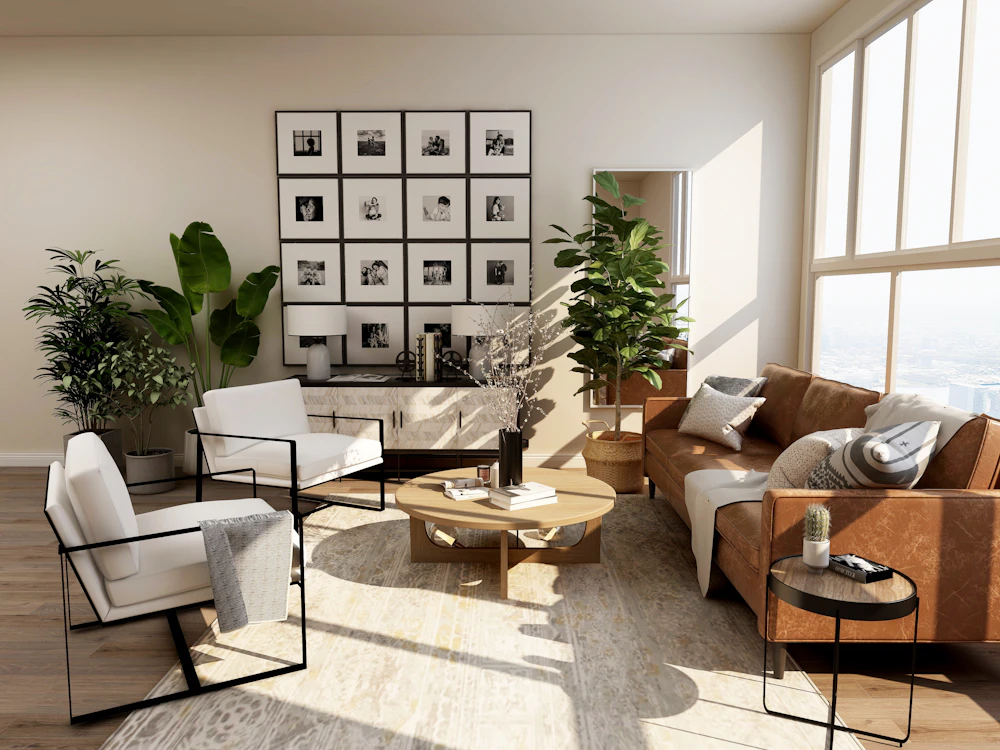
Interior A to Z provides residential interior design guidance for homeowners looking to create functional and sophisticated homes across Delhi NCR.

Explore Interior Designers in Delhi NCR

Frequently Asked Questions

What makes a house feel luxurious?

Good space planning, layered lighting, refined colours, quality materials, comfortable furniture, rich textures, mirrors, architectural details and carefully selected décor can make a house feel luxurious.

Does a luxury home have to be expensive?

No. A luxury feeling can be created through thoughtful design, decluttering, lighting, furniture proportion, colour coordination and strategic investment in high-impact features.

What type of lighting makes a house look luxurious?

Layered lighting generally works best. Combine ambient lighting with task, accent and decorative lighting instead of depending on one central light.

Which colours make a home look luxurious?

Warm white, cream, beige, taupe, sophisticated grey, muted green and carefully selected darker accent colours can create an elegant interior.

Can a small house feel luxurious?

Yes. Use appropriately scaled furniture, concealed storage, mirrors, good lighting, consistent finishes and uncluttered surfaces.

What architectural features make a house look expensive?

Wall panelling, false ceilings, integrated lighting, built-in cabinetry, niches, mouldings and carefully planned detailing can give a home a custom-designed appearance.

Make Your House Feel More Luxurious

Turn your home into a refined, comfortable and well-planned space with professional interior design guidance from Interior A to Z.

Contact Interior A to Z Explore Interior Design Ideas

What makes a house feel luxurious? Read More »

Scroll to Top
Interior A to Z — Premium Footer