How Can I Learn Interior Design on My Own?
You do not need to begin with expensive software or complicated theory. Start with the room around you. Learn how space works, understand proportion, study light and materials, create your own concepts—and practice until your eye becomes your strongest design tool.
Learn by designing real spaces.
The fastest way to understand interior design is to combine study with continuous observation and practical experiments.
If you want to learn interior design on your own, you can begin without building a complicated curriculum. Start with fundamentals: space planning, proportion, color, lighting, furniture, materials and visual balance.
Then turn those ideas into practice. Measure your bedroom. Redesign your living room. Create a mood board. Try three furniture layouts. Compare different lighting approaches. Document what worked and what did not.
Over time, these exercises develop something that tutorials alone cannot: design judgment.
Yes—you can learn interior design on your own. Begin with design fundamentals, practice on real rooms, study professional interiors, learn basic drawing and software, and gradually develop your own design process.

15 powerful steps to learn interior design by yourself.
Do not try to master everything simultaneously. Build your knowledge in layers. Each step below develops a skill that supports the next.
Learn the principles of design
Begin with balance, contrast, emphasis, rhythm, proportion, scale, hierarchy, unity and variety. These principles explain why some spaces feel organized while others feel visually chaotic.
Master space planning
Space planning is one of the most important interior design skills. Learn how people move through a room, how furniture relates to walls and doors, and how different activities require different zones.
Understand proportion and scale
A beautiful sofa can look wrong if it is too large for the room. A tiny rug can make an otherwise well-designed space feel disconnected.
Study color theory
Learn hue, saturation, value, warm and cool colors, complementary colors and neutral palettes. Then study how natural and artificial light changes color.
Train your eye to understand lighting
Lighting can change the atmosphere, perceived size and functionality of a space. Study natural light, ambient lighting, task lighting and accent lighting.
Study furniture carefully
Do not only look at whether furniture is attractive. Study its dimensions, ergonomics, material, visual weight, function and relationship with nearby pieces.
Learn about materials
Understand timber, veneers, laminates, stone, glass, metal, fabrics, tiles, paint and other commonly used interior materials.
Create mood boards
Mood boards help you transform vague inspiration into a coherent design direction. Combine colors, materials, furniture, lighting and architectural references.
Study real interiors
Look beyond individual photographs. Ask why the room works. Identify its layout, focal point, lighting, proportions, material relationships and circulation.
Learn basic drawing
You do not need to become an artist. Learn enough plan, elevation and simple perspective drawing to communicate your ideas clearly.
Learn one design software at a time
Once your fundamentals are strong, begin learning digital tools for floor plans, 3D visualization, presentations and documentation.
Redesign your own home
Your own home is an excellent laboratory. Test layouts, storage concepts, color palettes and lighting ideas before worrying about creating a portfolio.
Study functionality before decoration
Professional interiors are not simply collections of attractive objects. Storage, ergonomics, circulation, maintenance and daily routines must work.
Learn from your mistakes
Keep a record of every project. Document what you intended, what happened and what you would change next time.
Build a design portfolio
Once you have several strong exercises, present them as projects. Show the problem, your concept, layout, materials, visual direction and final result.
Stop collecting inspiration. Start analyzing it.
Saving beautiful interiors is easy. Understanding why they work is where real learning begins.
Whenever you see an interior you like, ask what creates the effect. Is it the proportion of the furniture? The lighting? The negative space? The repetition of materials? The ceiling height? The color relationship?
- What is the first thing I notice?
- Where does my eye move next?
- How is the furniture arranged?
- What creates balance?
- How many materials are being used?
- How does natural light affect the room?
- What makes the space feel expensive or calm?
- What would I change?
The six skill groups that matter most.
You do not need to master every subject immediately. Build competence gradually and connect each skill to practical projects.
Space Planning
Learn circulation, zoning, furniture placement, dimensions and functional relationships between spaces.
Color & Composition
Understand color relationships, contrast, hierarchy, proportion and visual balance.
Lighting
Study natural light and combine ambient, task and accent lighting.
Materials
Understand surfaces, durability, maintenance, installation and material relationships.
Drawing & Presentation
Learn to communicate design ideas through plans, elevations, sketches and visual presentations.
Project Thinking
Understand budgets, specifications, timelines, vendors and the relationship between design and execution.
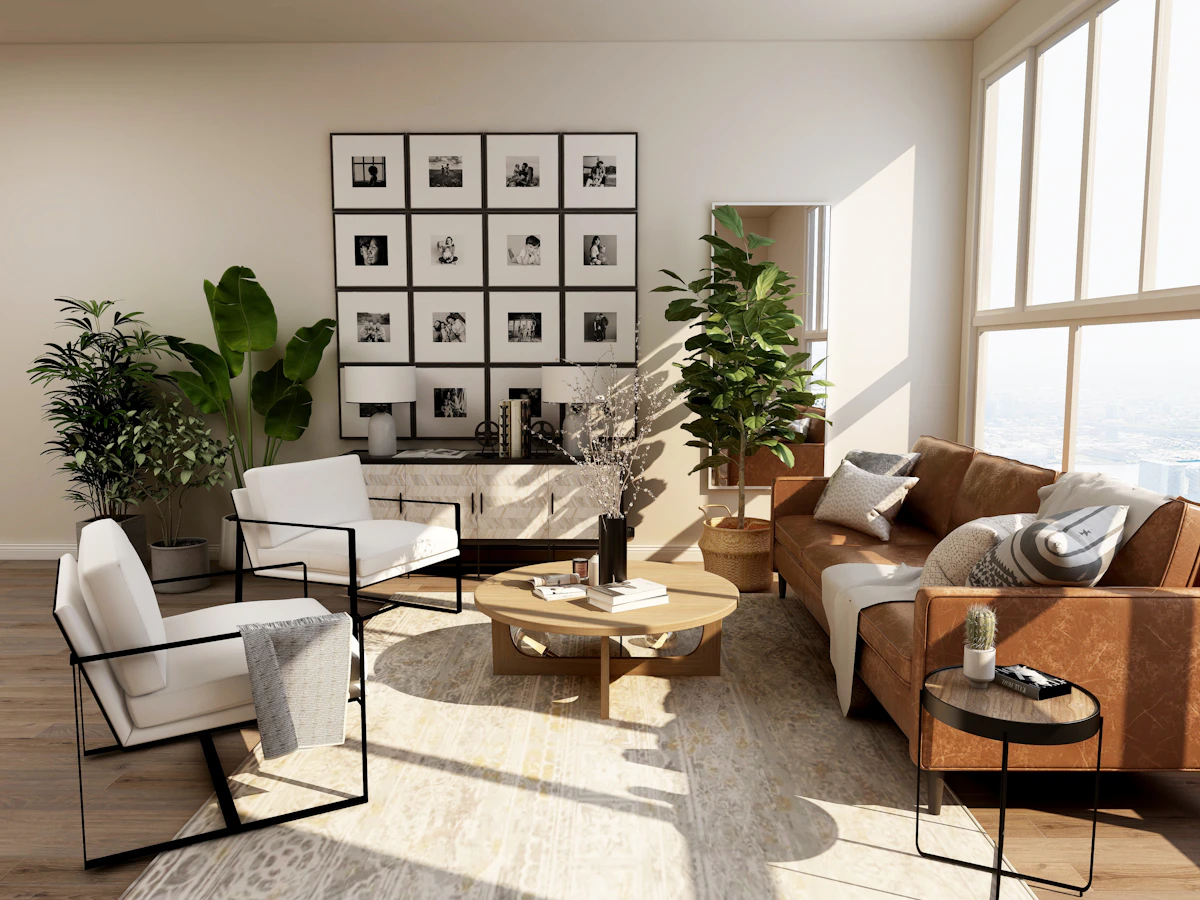
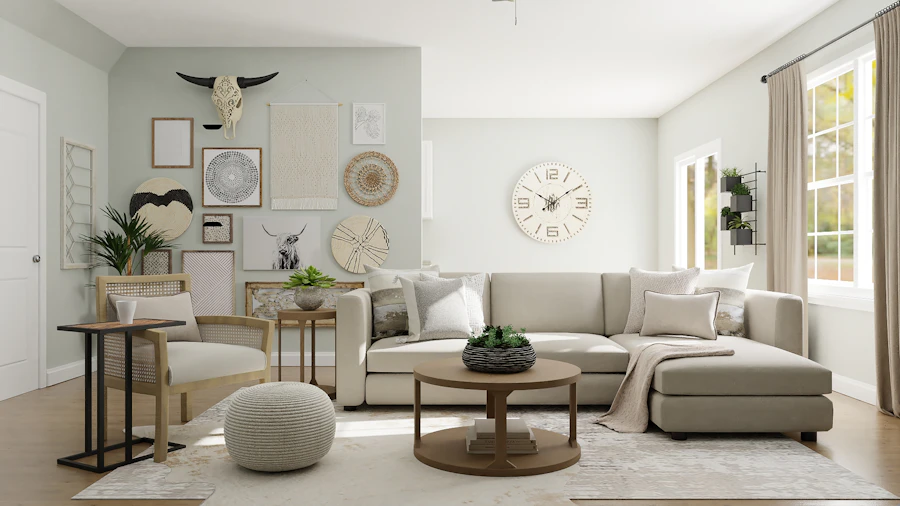
Study spaces. Study details. Study why they work.

A simple 90-day approach.
Consistency matters more than trying to learn everything in one weekend. Use a structured progression.
Observe
Learn design principles, space planning, color, proportion and lighting. Analyze real interiors every day.
Practice
Redesign rooms, create mood boards, draw layouts and experiment with materials and furniture.
Build
Create complete room concepts and begin learning the software needed to present your ideas.
Present
Turn your strongest exercises into polished case studies and begin developing your own design language.
Learning locally makes the knowledge practical.
If you are learning interior design in Delhi NCR, Gurgaon or Noida, pay attention to the homes and projects around you. Apartments, builder floors, villas and independent houses present different space-planning and execution challenges.
Study actual room proportions, storage requirements, materials, lighting and construction details. This makes your learning more practical than relying only on international inspiration.
You can also explore professional interior design projects to study how different residential spaces are approached.
For a broader introduction to professional practice, explore interior design services and related design resources from Interior A to Z.
Questions beginners usually ask.
Can I learn interior design on my own?
Yes. You can learn the fundamentals independently by studying space planning, proportion, color, lighting, furniture, materials and design principles, then practicing those skills on real spaces.
How can I learn interior design at home?
Start with your own rooms. Measure them, create floor plans, test furniture layouts, build mood boards and experiment with color, materials and lighting. Document each exercise so you can see how your design judgment develops.
What should I learn first in interior design?
Begin with space planning, proportion and scale, design principles, color theory, lighting and furniture planning. These fundamentals make more advanced design skills easier to understand.
Do I need a degree to learn interior design?
You do not need a degree to independently learn the fundamentals. However, professional practice can require formal education, practical experience, technical knowledge and compliance with applicable requirements depending on the work.
How long does it take to learn interior design?
Basic principles can be learned relatively quickly, but strong design judgment develops through repeated practice. Working on real rooms and analyzing completed projects can accelerate practical learning.
What is the best way to practice interior design?
Choose real rooms and solve real problems. Create a layout, select a palette, choose materials, plan lighting and explain why each decision was made. Repeated complete projects are more useful than collecting isolated ideas.
Your first design project can be your own room.
Start small. Measure the space. Understand the problem. Create a concept. Test it. Improve it. Then do it again.
Explore Interior Design Projects