What Color Curtains Make a Room Look Bigger?
Discover how curtain colour, fabric, length and placement can make a compact room feel brighter, taller and more visually open without changing its actual dimensions.
Six curtain colours that can create a more spacious feel
The best choice is usually a light, visually quiet colour that works with the walls, flooring and furniture already in the room.
Soft White
A clean choice for compact rooms. White curtains can help maintain brightness and create continuity with white or light walls.
Ivory & Cream
Warmer than pure white, cream can create an inviting appearance while keeping the window treatment visually light.
Light Beige
A practical neutral that works particularly well with warm wood, natural textures and contemporary neutral interiors.
Pale Grey
Useful in modern interiors where you want a cooler neutral without introducing a strong visual block around the window.
Soft Pastels
Muted blue, green or blush tones can introduce personality while keeping the overall palette light and restrained.
Light Sand
Natural sandy tones pair easily with wood, beige walls and earthy interiors while keeping the room visually warm.
Light curtains can reduce visual weight around the window.
Windows are often one of the largest visual areas in a room. Heavy, dark or strongly patterned curtains can become a major visual block. Lighter curtains generally create a softer transition between the window, walls and rest of the room.
This does not mean every small room needs white curtains. The objective is to choose a curtain colour that supports the room’s natural light and maintains visual continuity.
- Choose lighter tones for a brighter visual effect.
- Coordinate curtains with wall and furniture colours.
- Use sheer fabric where daylight is a priority.
- Avoid unnecessary heavy patterns in compact rooms.
- Use full-length curtains to emphasize vertical height.
- Layer curtains when both daylight and privacy are required.

Which curtain colours work best in compact rooms?
Think about the amount of daylight and the existing colour palette before selecting the fabric.
| Curtain colour | Visual effect | Works well with |
|---|---|---|
| Soft white | Bright, clean and visually light | White, light grey, wood and minimalist interiors |
| Ivory / cream | Warm and airy | Beige, warm white, wood and earthy finishes |
| Light beige | Soft and cohesive | Warm neutrals, timber and natural textures |
| Pale grey | Modern and understated | White, charcoal accents and contemporary furniture |
| Muted pastel | Light with a subtle colour accent | Soft bedroom palettes and restrained contemporary schemes |
| Dark charcoal / navy | Dramatic and visually heavier | Larger rooms or carefully controlled accent schemes |

Curtain length can be just as important as curtain colour.
A light curtain can still look heavy if it is poorly proportioned. In many interiors, installing curtains higher and using a full-length drop creates a stronger vertical line.
- Position the rod thoughtfully in relation to the ceiling.
- Use floor-length curtains where the room and window allow.
- Avoid unnecessarily short curtains that visually cut the wall.
- Keep the curtain stack away from the main window opening where possible.
- Check radiator, AC, furniture and door clearances.
The final proportion should always follow the actual window, ceiling height and furniture arrangement.
Choose the fabric according to the amount of light you need.
Curtain colour is only one part of the equation. Fabric density changes how much daylight enters the room and how visually substantial the curtains appear.
Sheer curtains are useful when preserving daylight is a priority. Lightweight woven fabrics can provide more privacy without becoming visually dominant. Blackout curtains are valuable where darkness and privacy are essential, particularly in bedrooms.
For many rooms, a layered treatment works well: a lighter inner layer for daytime and a more opaque outer layer for privacy and light control.
See bedroom lighting and brightness ideas →
How to make curtains work with the rest of the room
The most spacious-looking result usually comes from coordinating several small decisions rather than relying on one curtain colour.
Match the visual tone
Curtains do not need to exactly match the walls. Similar light tones can create a smooth, continuous appearance.
Keep patterns controlled
Large, high-contrast patterns can dominate a compact room. If you use patterned curtains, consider a restrained scale and palette.
Let daylight in
Keep the window area as unobstructed as practical and select fabric according to the amount of natural light available.
Coordinate with furniture
Light curtains pair naturally with light visual masses, warm woods and carefully scaled furniture.
Use mirrors selectively
A strategically positioned mirror can reflect available daylight and contribute to a stronger feeling of openness.
Reduce clutter
Even the best curtain colour cannot compensate for excessive furniture and crowded window areas.
Best curtain approach for different rooms
The right curtain depends on how the room is used as well as how large it is.
Small Bedroom
Soft white, cream, beige or pale grey can create a calm backdrop. Consider sheer layers for daylight and blackout layers when needed for sleep.
Small Living Room
Choose a light neutral that coordinates with the sofa and walls. Floor-length curtains can help emphasize the vertical proportion.
Dining Area
Keep window treatments visually simple so they support rather than compete with the dining furniture and lighting.
Study Room
Prioritize glare control and comfortable daylight. A layered treatment can provide flexibility during different times of the day.
Kids’ Room
Use practical, easy-care fabrics and a restrained palette that can work with changing furniture and accessories.
Guest Bedroom
Neutral curtains with privacy and light-control options create a flexible solution for different guests and uses.
Light curtains work best as part of a complete interior.
Walls, flooring, furniture, mirrors, lighting and window treatments should work together to create visual continuity.

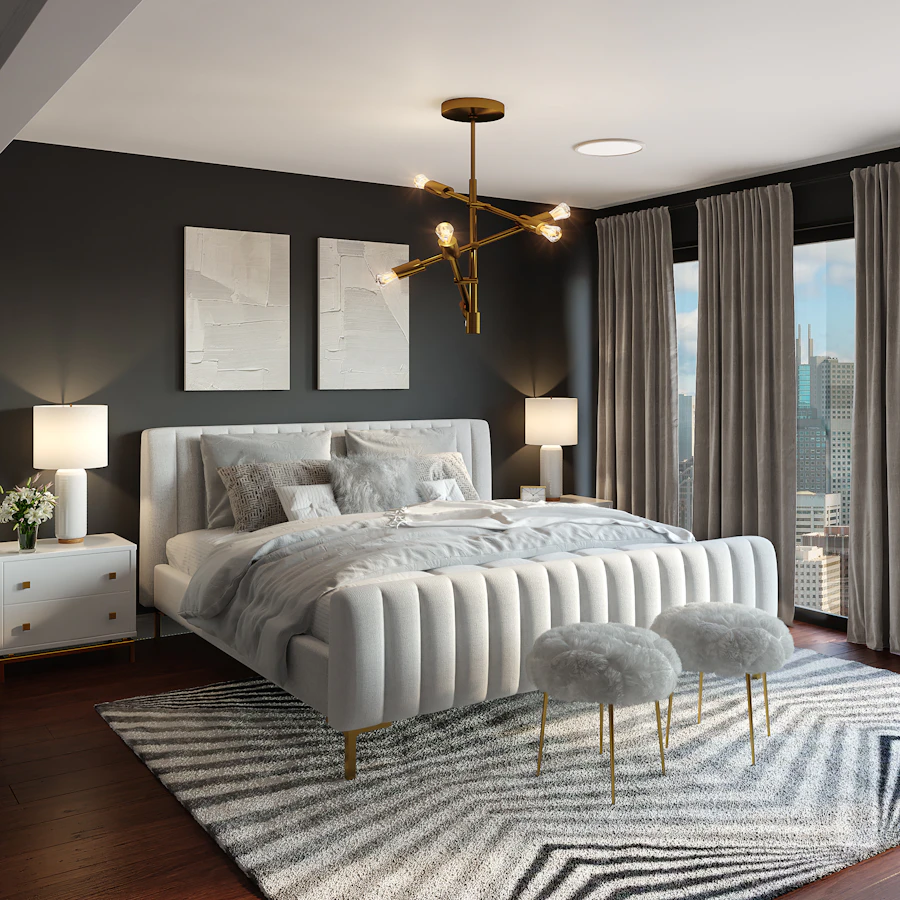

Curtain mistakes that can make a small room feel heavier
Very dark curtains everywhere
Dark curtains are not automatically wrong, but large dark surfaces can become visually heavy in a compact room.
Oversized patterns
Large, high-contrast patterns can dominate a small room and compete with furniture, artwork and other focal points.
Blocking the window
Poor curtain placement can reduce useful daylight. Keep the window opening as clear as practical.
Wrong curtain length
Curtains that stop at an awkward point can visually break the wall and reduce the sense of vertical continuity.
Ignoring wall colour
A curtain can look much heavier when it strongly clashes with the wall instead of working within the room’s overall palette.
Choosing appearance over function
Bedrooms may require blackout and privacy, while living rooms may prioritize daylight. Function should determine the final fabric.
Choosing curtains for apartments in Gurgaon, Noida and Delhi NCR
Compact apartments often benefit from careful control of daylight, storage and visual clutter.
In Delhi NCR homes, curtain selection should consider the actual window size, daylight direction, privacy requirements, furniture placement and overall interior palette. A light curtain can support a brighter appearance, but the final solution should also handle glare, privacy and everyday maintenance.
Interior A to Z’s bedroom guidance similarly emphasizes natural light, layered lighting, appropriately scaled furniture, clear circulation, storage and carefully selected window treatments as parts of the overall bedroom design rather than isolated decisions.
Explore Home Interior Design in Delhi NCR →More small-space interior design ideas
Questions about curtains and room size
What color curtains make a room look bigger?
Soft white, ivory, cream, light beige, pale grey and muted pastel curtains can help a room feel brighter and more open. The result depends on the entire room rather than colour alone.
Are white curtains good for small rooms?
Yes. White and soft off-white curtains can create an airy appearance, especially when they coordinate with light walls and allow useful daylight into the room.
Do curtains actually make a room bigger?
No. Curtains cannot change the physical dimensions of a room. However, the right colour, fabric, length and placement can improve the perceived brightness, height and openness of the space.
Should curtains match the walls?
They do not need to match exactly. Curtains in a similar light tonal family can create continuity, while a subtle contrast can add depth without creating a strong visual block.
Are sheer curtains good for small rooms?
Sheer curtains can be useful when natural light is important because they soften the window while allowing daylight through. They can be combined with blackout or privacy layers when required.
What curtain length makes a room look taller?
Curtains that extend close to the floor and are installed at an appropriate height can emphasize vertical lines. The correct position depends on the ceiling, window and furniture arrangement.
Make the window part of the room—not a visual obstacle.
The best curtain colour is the one that works with the room’s natural light, wall colour, furniture, privacy requirements and overall design. For compact interiors, a light and cohesive window treatment can be one useful part of creating a brighter, calmer and more spacious feel.
Interior A to Z provides residential interior design solutions for bedrooms, living rooms and complete homes across Delhi NCR, Gurgaon and Noida.
Explore Interior Design Services →