What Color Curtains Brighten a Room?
Learn how curtain colour, fabric, transparency, length and placement influence the brightness and visual character of bedrooms, living rooms and other interior spaces.
Six curtain colours for a lighter, brighter interior
Choose a colour that supports the existing natural light instead of creating a heavy visual frame around the window.
Soft White
White curtains create a clean, light appearance and can work particularly well with white or very light walls.
Ivory & Cream
Cream and ivory introduce warmth while maintaining a light visual presence. They work especially well with warm wood and beige interiors.
Light Beige
A versatile neutral that works with natural materials, warm whites, wooden furniture and contemporary interiors.
Pale Grey
Pale grey offers a modern alternative to white while maintaining a relatively light and understated window treatment.
Soft Sage
A muted green can introduce colour without creating the visual weight of a saturated or very dark curtain.
Pale Blue
A soft blue can create an airy, calm appearance in bedrooms and living spaces when coordinated with the rest of the palette.
The brightest curtain is not always the lightest colour.
Fabric transparency can be just as important as the colour printed or woven into the curtain.
A pale but very opaque curtain can block substantial daylight, while a light-coloured sheer or light-filtering fabric can allow daylight to spread more softly through the room.
- Use sheer curtains when daylight is the priority.
- Choose light-filtering fabrics for a balance of light and privacy.
- Use blackout layers where darkness is necessary.
- Keep window areas as unobstructed as practical.
- Consider the direction and intensity of natural light.
- Coordinate the curtain with the wall and flooring palette.

Which curtain colours work best for different lighting conditions?
The same curtain colour can look different depending on daylight, wall colour and artificial lighting.
| Curtain colour | Visual character | Good pairing |
|---|---|---|
| Soft white | Clean, crisp and bright | White walls, pale wood, modern interiors |
| Ivory | Warm and softly luminous | Cream walls, wood, brass and warm neutrals |
| Light beige | Natural and understated | Warm white, timber and earthy materials |
| Pale grey | Cool and contemporary | White walls, grey furniture and modern finishes |
| Soft sage | Fresh and gentle | Natural wood, cream and botanical interiors |
| Pale blue | Airy and calming | White, light grey and relaxed bedroom palettes |

Use curtain height to emphasize the room’s vertical lines.
Brightness is only one part of the design. The way curtains occupy the wall can also influence how tall and balanced a room feels.
Where appropriate, curtains that extend close to the floor and are installed at a considered height can create a continuous vertical line. This can be particularly useful in compact rooms with limited wall area.
- Consider the ceiling height before fixing the curtain rod.
- Use floor-length curtains where practical.
- Keep the window opening clear where possible.
- Check furniture, AC and door clearances.
- Choose fullness according to the fabric and window size.
Sheer curtains can brighten the room while preserving softness.
Layered window treatments provide more control than choosing one curtain for every situation.
A sheer inner layer can soften daylight during the day while a heavier outer curtain can provide privacy or darkness when required.
This approach is particularly useful in bedrooms where daylight, privacy and sleep comfort all need to be considered.
Explore bedroom brightness ideas →
Which curtain colours work in different rooms?
Curtain selection should follow the purpose of the room as well as its natural light.
Living Room
Soft white, cream, beige and pale grey are versatile options. Pair them with sheer layers when preserving daylight is important.
Bedroom
Cream, beige, soft white, muted blue and sage can create a calm atmosphere. Add blackout layers when sleep and privacy require them.
Dining Room
Neutral curtains can keep the room visually open while allowing furniture, artwork and lighting to remain the main features.
Study Room
Prioritize comfortable daylight and glare control. Light-filtering curtains can be useful when the desk is close to a window.
Kids’ Room
Light neutrals and soft colours offer flexibility as furniture, artwork and accessories change over time.
Guest Bedroom
Neutral layered curtains provide a flexible combination of daylight, privacy and darkness for different guests.
Bright curtains work best with a bright overall interior strategy.
Curtains are one element of a larger visual system. Walls, flooring, furniture, mirrors, lighting and storage all influence how bright a room feels.
Use light wall colours
Soft neutrals, warm whites and selected muted colours can create a balanced background for lighter curtains.
Keep windows clear
Avoid placing oversized furniture directly in front of windows when it unnecessarily reduces daylight or circulation.
Add mirrors strategically
Mirrors can reflect available light and strengthen the perception of openness when positioned thoughtfully.
Layer artificial lighting
Combine ambient, task and accent lighting instead of depending on one central ceiling fixture.
Control visual clutter
Even a well-lit room can feel heavy when furniture and surfaces are overcrowded.
Coordinate textiles
Curtains, rugs, cushions and upholstery should work together instead of introducing too many unrelated colours.
Create brightness through balance, not decoration overload.
A calm palette, controlled window treatment and layered lighting can make a room feel brighter without making the design look unfinished.


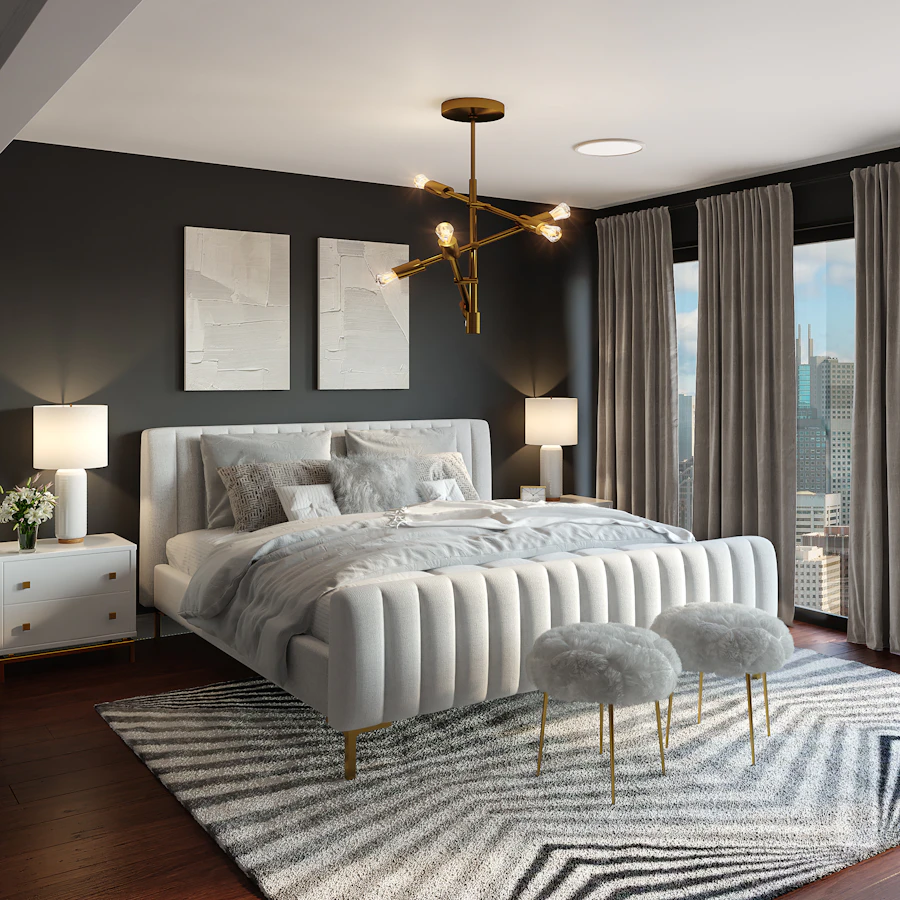
What can make a room feel darker despite light curtains?
Opaque fabric over every window
Even a pale curtain can limit daylight if the fabric is very dense. Select the opacity according to the room’s needs.
Heavy dark furniture around the window
Large furniture close to the window can create visual weight and reduce the sense of openness.
Too many contrasting colours
Strong colour changes across walls, curtains, furniture and rugs can make a compact room feel visually fragmented.
Incorrect curtain length
Poor proportions can make the window wall feel shorter or less cohesive.
Blocking natural light
Keep the window opening as unobstructed as practical, especially in rooms that already receive limited daylight.
Ignoring artificial lighting
Curtain colour cannot compensate for poor evening lighting. Use multiple lighting layers for a balanced result after sunset.
Curtain choices for apartments in Gurgaon, Noida and Delhi NCR
Window treatments need to balance daylight, privacy, comfort and the practical requirements of everyday urban homes.
In Delhi NCR homes, the right curtain should be selected according to window orientation, available daylight, privacy requirements, room size, furniture placement and the overall interior palette. Light-coloured fabrics can support a brighter appearance, while sheer and layered treatments provide additional control.
Interior A to Z’s bedroom guidance recommends maximizing natural light, keeping windows unobstructed, using sheer curtains where appropriate, selecting light and comfortable textiles, and combining window treatments with layered lighting and appropriate furniture planning. :contentReference[oaicite:0]{index=0}
Explore Home Interior Design in Delhi NCR →More interior design ideas
Questions about curtain colours and brightness
What color curtains brighten a room?
Soft white, ivory, cream, light beige, pale grey and selected muted pastel curtains can help create a lighter visual appearance.
Are white curtains good for a dark room?
Yes. White or soft off-white curtains can work well in darker rooms, especially when the fabric is lightweight enough to allow useful daylight through.
Do sheer curtains make a room brighter?
Sheer curtains can allow more daylight to pass through than opaque treatments, making them useful when natural light is a priority.
What curtain color is best for a small room?
Light neutrals such as soft white, cream, beige and pale grey are versatile choices. The best colour should also coordinate with the room’s walls, flooring and furniture.
Can dark curtains make a room look darker?
Dark, opaque curtains can create a stronger visual block and may reduce daylight entering the room. They can nevertheless be appropriate when privacy, darkness or a dramatic design is the priority.
Should curtains match the walls?
Curtains do not need to match exactly. Similar light tones create continuity, while subtle contrast can add depth without overwhelming the room.
Make natural light part of your interior design.
The right curtain colour is only one part of a brighter room. Window placement, fabric transparency, wall colour, furniture scale, mirrors, storage and layered lighting should work together.
Interior A to Z provides residential interior design solutions for bedrooms, living rooms and complete homes across Delhi NCR, Gurgaon and Noida.
Explore Interior Design Services →