- Entrance and Door Placement:
- Ensure that the entrance to your apartment is well-lit and clutter-free.
- Place a doormat outside to symbolize a clear and welcoming path.
- Position the main door to allow the smooth flow of energy (chi) throughout the space.
- Colors and Elements:
- Incorporate colors that represent the five Feng Shui elements: wood, fire, earth, metal, and water.
- Use earthy tones like terracotta and green for a balance of yin and yang energies.
- Introduce metal elements through decor items or metallic finishes.
- Furniture Arrangement:
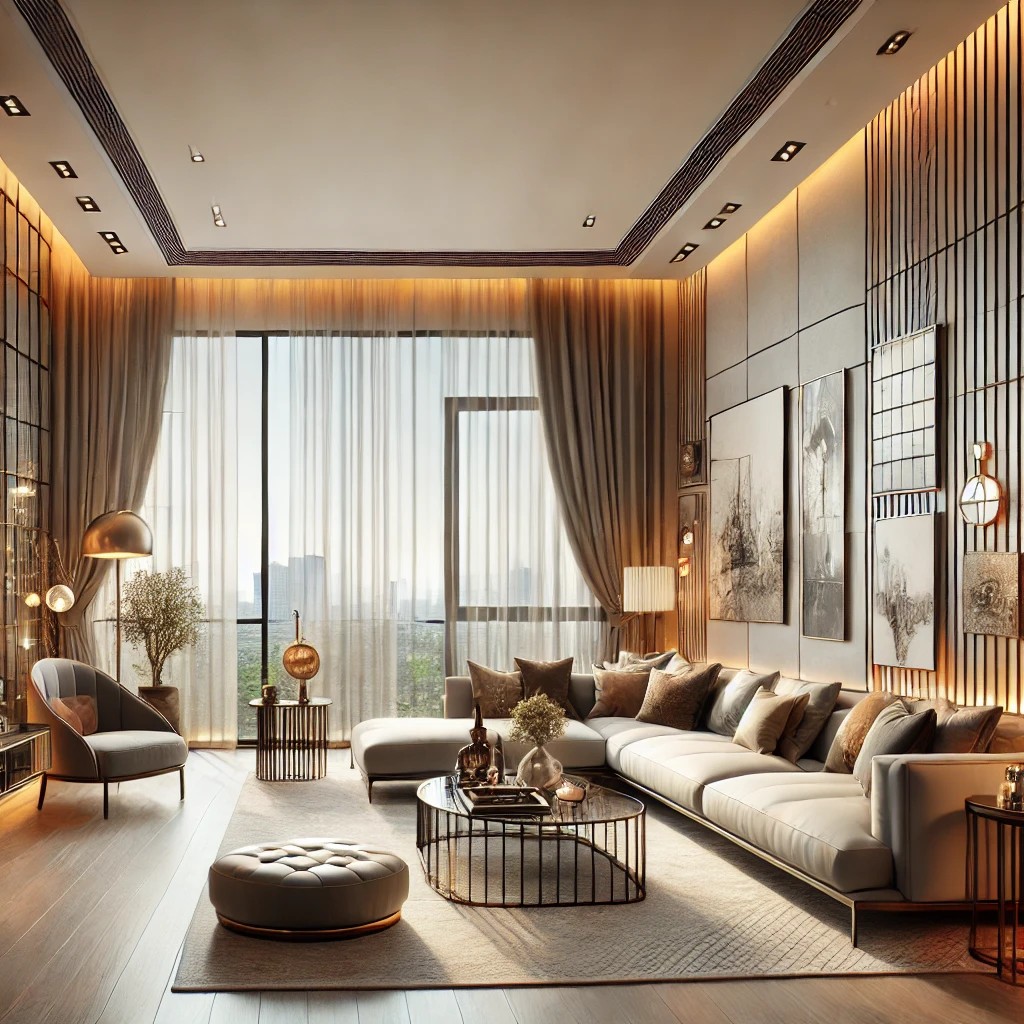
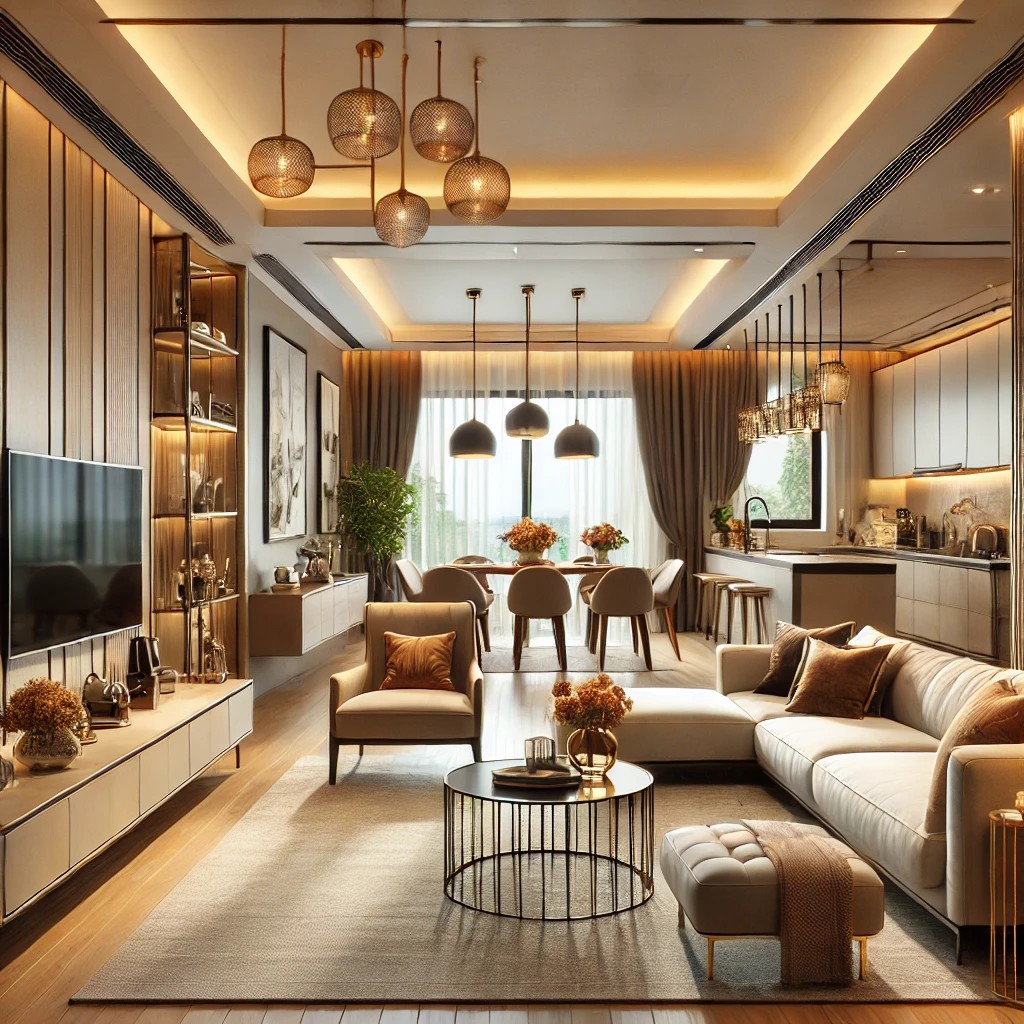
- Place furniture in a way that allows for free movement and encourages conversation.
- Avoid placing furniture with sharp edges pointing directly at seating areas to prevent negative energy (sha chi).
- Choose furniture with rounded edges to create a more harmonious atmosphere.
- Natural Light and Ventilation:
- Maximize natural light and ventilation in your apartment.
- Use curtains or blinds that can be easily opened to allow positive energy to flow into the space.
- Keep windows clean and unobstructed for clear views and energy flow.
- Decluttering:
- Declutter regularly to allow energy to circulate freely.
- Remove items that have negative associations or bring back unpleasant memories.
- Keep the space organized to promote a sense of calm and balance.
- Mirrors and Reflections:
- Use mirrors strategically to reflect positive energy and light.
- Avoid placing mirrors directly facing the bed or reflecting clutter.
- Position mirrors to amplify desirable views and bring nature indoors.
- Plants and Greenery:
- Introduce healthy and vibrant indoor plants to enhance the flow of positive energy.
- Choose plants with rounded or wavy leaves for a soothing effect.
- Place plants strategically in areas that need revitalization.
- Bedroom Placement:
- Position the bed so that it has a clear view of the bedroom door without being directly in line with it.
- Avoid placing the bed under a window or sloped ceiling.
- Use soothing colors in the bedroom for a restful atmosphere.
- Art and Decor:
- Display artwork that brings joy and positive emotions.
- Choose decor items that have personal significance and resonate with positive energy.
- Avoid overly stimulating or negative images.
- Water Features:
- If possible, incorporate water features like fountains or aquariums in the living area.
- Ensure the water is clean, and the feature is well-maintained to symbolize abundance and prosperity.
Remember, Feng Shui is a personal practice, and these principles can be adapted to suit individual preferences and cultural contexts. It’s essential to create a balance that resonates with your own sense of well-being and aligns with the energy of your Gurgaon apartment.
Certainly! Here’s a fictional FAQ (Frequently Asked Questions) section for Feng Shui principles in Gurgaon apartment interiors:
Q1: Can you explain the importance of the entrance in Feng Shui for Gurgaon apartments? A1: Certainly! In Feng Shui, the entrance is considered the “mouth of chi,” where energy enters your home. Ensure it’s well-lit, clutter-free, and welcoming to allow positive energy to flow smoothly into your Gurgaon apartment.
Q2: Which colors are recommended for Gurgaon apartment interiors according to Feng Shui? A2: Feng Shui encourages a balance of the five elements. For Gurgaon, consider earthy tones like terracotta and green, and introduce metal elements through decor or finishes for a harmonious and balanced energy.
Q3: How should I arrange furniture in my Gurgaon apartment to follow Feng Shui principles? A3: Arrange furniture to allow for easy movement and conversation. Avoid sharp edges pointing at seating areas, and opt for rounded furniture to create a harmonious atmosphere. Ensure that the placement promotes a smooth flow of energy throughout the space.
Q4: Can you provide tips for incorporating natural light and ventilation in a Gurgaon apartment based on Feng Shui? A4: Maximize natural light and ventilation by using light and airy window treatments. Keep windows clean and unobstructed to allow positive energy to flow into your apartment. Consider incorporating mirrors strategically to enhance natural light.
Q5: How can I use Feng Shui to declutter my Gurgaon apartment? A5: Regularly declutter your space to allow energy to circulate freely. Remove items with negative associations and keep the space organized. A clutter-free environment promotes a sense of calm and balance.
Q6: Are there specific guidelines for placing mirrors in a Gurgaon apartment following Feng Shui principles? A6: Yes, mirrors can be used strategically to reflect positive energy. Avoid placing mirrors directly facing the bed or reflecting clutter. Position mirrors to amplify desirable views and bring in more natural light.
Q7: Can you recommend indoor plants suitable for Gurgaon apartment interiors in line with Feng Shui? A7: Certainly! Consider incorporating vibrant indoor plants with rounded or wavy leaves for a soothing effect. Place plants strategically in areas that need revitalization to enhance the flow of positive energy in your Gurgaon apartment.
Q8: How should I position my bed in the bedroom according to Feng Shui principles for Gurgaon? A8: Position the bed so that it has a clear view of the bedroom door without being directly in line with it. Avoid placing the bed under a window or sloped ceiling. Use soothing colors in the bedroom for a restful atmosphere.
Q9: Are there specific Feng Shui considerations for incorporating water features in Gurgaon apartments? A9: Water features, like fountains or aquariums, symbolize abundance and prosperity in Feng Shui. If incorporating one, ensure it is well-maintained and the water is clean. Place it strategically in the living area.
Q10: Can I personalize my Gurgaon apartment while still following Feng Shui principles? A10: Absolutely! Feng Shui is adaptable to personal preferences. Incorporate decor items and artwork that bring you joy and have positive significance. The key is to create a balanced and harmonious energy that aligns with your well-being.
Remember that this FAQ is fictional, and it’s essential to adapt Feng Shui principles to your individual preferences and cultural context.