Know what your kitchen should cost before you choose the finish.
Modular kitchen interior design cost depends on much more than cabinet area. Layout, carcass material, shutters, hardware, countertop, storage accessories, appliances, services and installation all shape the final budget.
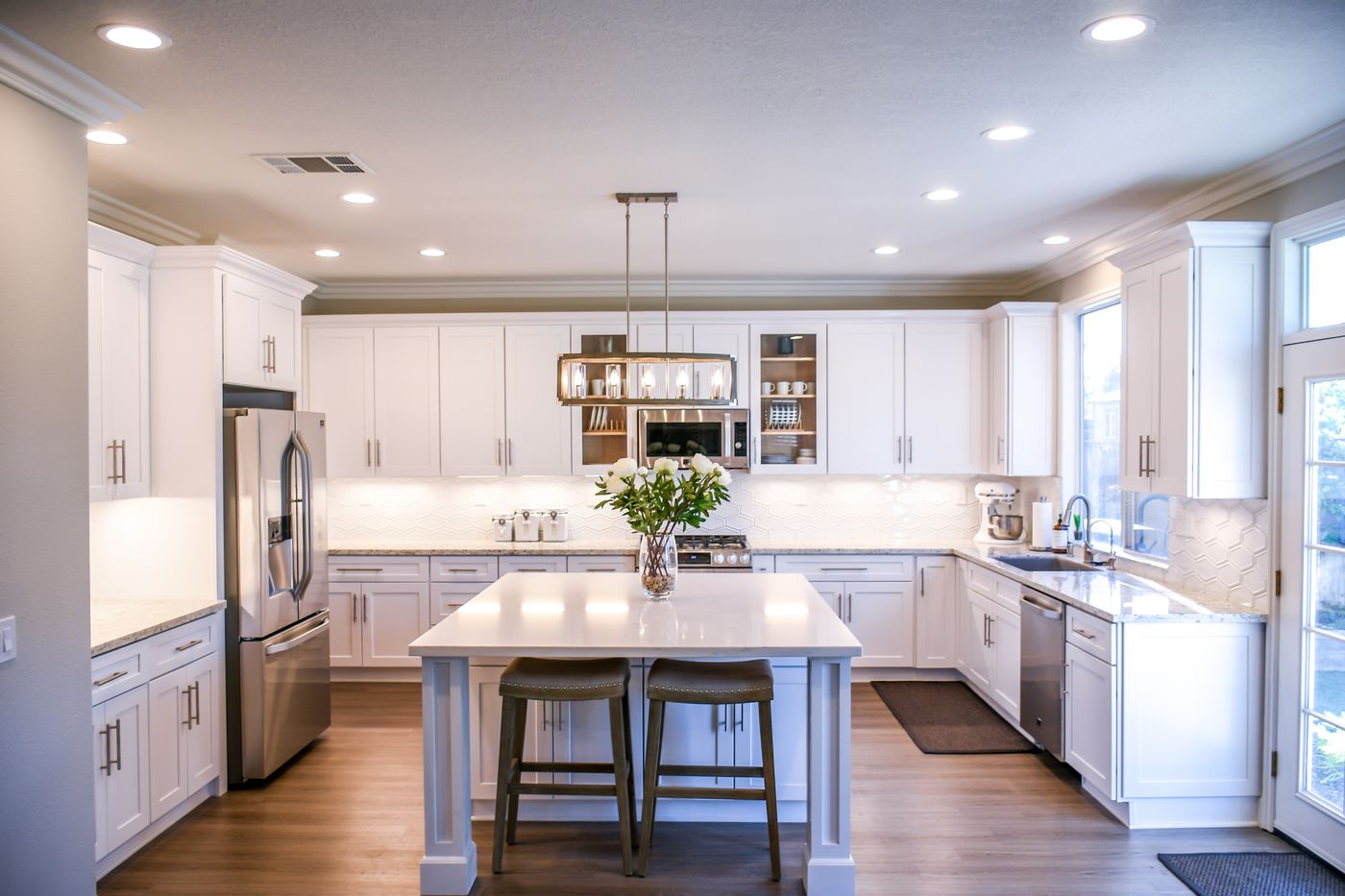
There is no single “modular kitchen rate” that fits every home.
Current Interior A to Z guidance places a basic modular kitchen broadly around ₹1.0–₹1.8 lakh, a mid-range kitchen around ₹1.8–₹3.5 lakh and a premium/high-end kitchen around ₹3.5–₹5 lakh+, with other current 2026 references extending premium projects much higher depending on specification and size. citeturn0search3turn0search14
Per-square-foot benchmarks are useful for an early estimate, but a quotation should identify what is actually being measured and included. The original 2025 guide also highlights size, carcass, finish, hardware, countertop, services, complexity, logistics and installation as major cost drivers. citeturn0search0
Start with the level of kitchen you want.
Basic / Budget
About ₹1.0–₹1.8 lakh as a broad planning range. Think simple layouts, laminate shutters, essential storage and standard hardware. Compact kitchens can be lower or higher depending on scope. citeturn0search3turn0search1
Mid-Range
About ₹1.8–₹3.5 lakh as a broad planning range. Better cabinetry, branded hardware, additional accessories and upgraded finishes are common. citeturn0search3
Premium / High-End
₹3.5 lakh upward, with premium kitchens extending substantially higher when you add PU, veneer, luxury hardware, larger layouts, islands, appliances and custom details. citeturn0search3turn0search16
These are planning benchmarks, not fixed quotations. Kitchen size, layout, city, material specification, brand, site condition and inclusions can move the final number significantly.
The visible finish is only one part of the kitchen.
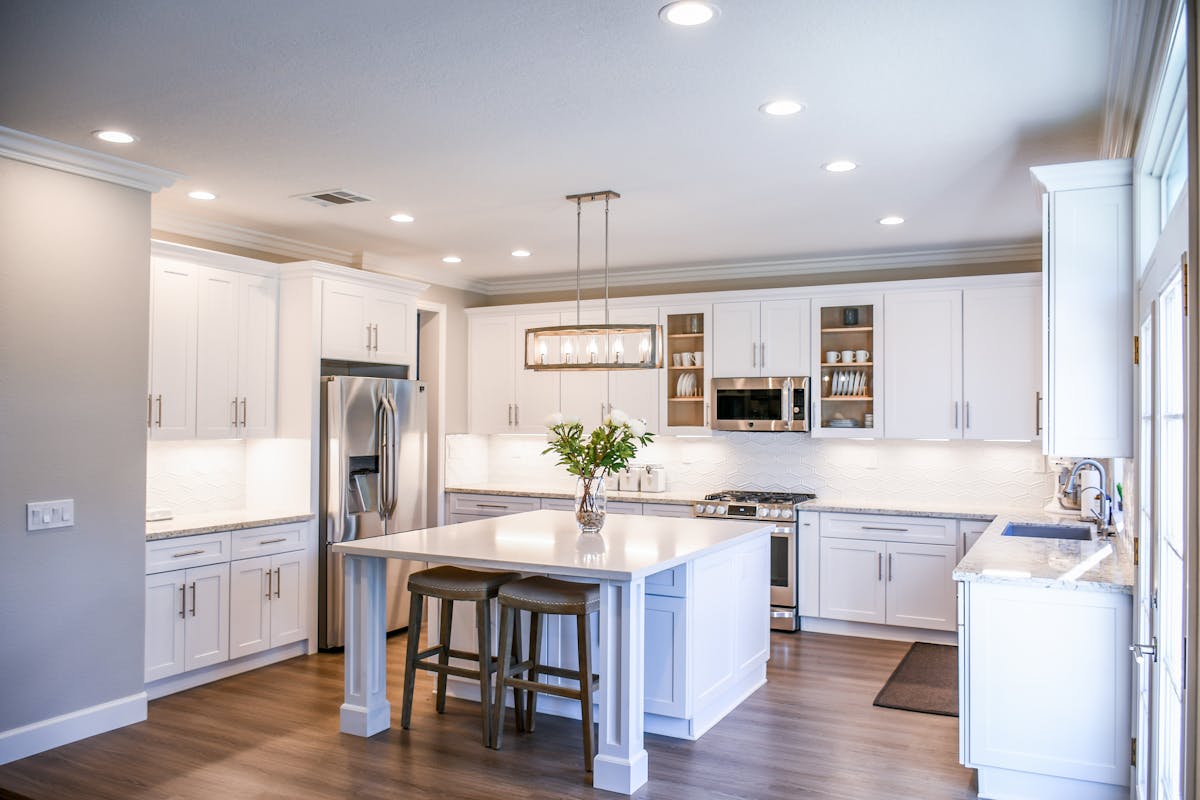
Compare the finish before comparing the price.
Laminate
Practical, versatile and generally budget-friendly. Available in many colours, textures and wood-inspired finishes.
Acrylic
Creates a smooth, reflective contemporary appearance. It generally costs more than standard laminate.
PU
A painted finish for a more seamless, premium appearance. Finish quality and application affect the price.
Veneer
Natural wood character for a warmer bespoke look. Grain, species, finish and detailing influence cost.
The current Interior A to Z finish comparison confirms that laminate is generally the cost-effective option, while acrylic and PU move into higher price territory. citeturn0search15
Use the arithmetic to test a quote.
≈ ₹80,000 before any separately quoted additions. The 2025 budget guide uses a similar illustrative calculation and recommends a contingency buffer. citeturn0search1
≈ ₹1.8 lakh as an illustrative mid-range Gurgaon kitchen calculation from the current Interior A to Z reference. citeturn0search9
≈ ₹4.2 lakh as an illustrative premium Gurgaon kitchen calculation. Actual scope may include or exclude appliances and other work. citeturn0search9
These examples demonstrate budgeting logic only. Do not treat them as a universal market rate or a quotation for your kitchen.
More cabinetry and complexity usually means more budget.
Straight
A single-wall kitchen is often the simplest starting point for compact spaces and can reduce cabinet quantity and complexity.
L-Shaped
A popular balance of counter, storage and circulation. Corner cabinetry and accessories need careful planning.
Parallel
Two runs can deliver strong workflow efficiency, but both sides add cabinetry, countertop and coordination.
U-Shaped
High storage and worktop potential, with additional corner units and more cabinetry than a simple straight layout.
Island
A premium feature that can add preparation, storage and seating—but needs generous circulation and service planning.
Peninsula
A useful compromise for open-plan homes, adding worktop and seating without a fully independent island.
Ask what the quotation excludes.
One of the easiest ways to misread a kitchen quote is to compare the headline number while the scopes are different. Appliances such as hob, chimney, oven, microwave, refrigerator and dishwasher are commonly treated separately in budget guidance. Plumbing changes, gas work, electrical changes and luxury accessories may also sit outside the cabinet package. citeturn0search1turn0search0
Ask for a written inclusions/exclusions list before comparing two or three proposals.
Compare kitchens line by line, not logo by logo.
Board & Carcass
Ask for board type, thickness, moisture specification, internal finish and warranty.
Shutter Finish
Confirm exact laminate, acrylic, PU, veneer or glass specification—not simply “premium finish.”
Hardware
Identify hinge, channel, drawer, lift-up and accessory brands or performance specifications.
Countertop
Confirm material, thickness, edge profile, cut-outs, backsplash and installation.
Appliances
Write down what is supplied, what is client-supplied and what is completely excluded.
Installation
Clarify delivery, installation, site supervision, finishing, service coordination and handover.
Put the budget where you touch the kitchen every day.
Keep the layout simple
Straight and L-shaped layouts can be more economical than highly complex islands, curves and multiple levels.
Use laminate intelligently
Good laminate can deliver durability and visual variety without paying premium-finish prices everywhere.
Prioritise hardware
Spend selectively on frequently used drawers, hinges and storage mechanisms rather than upgrading every accessory.
Reduce unnecessary customisation
Standard module sizes can reduce complexity, wastage and fabrication time.
Phase luxury additions
Some lighting, organisers or decorative upgrades can be added later if the design allows.
Compare complete scopes
Get multiple itemised quotations so a lower headline price does not hide missing work.
A disciplined process keeps the budget visible.
Site dimensions, walls, windows, plumbing and electrical points.
Workflow, cabinets, storage, appliances and circulation.
2D plan and 3D views for finishes, colours and proportions.
Boards, shutters, hardware, countertop and inclusions.
Production, delivery, installation, coordination and final checks.
Useful kitchen cost and design resources.
Before you approve a modular kitchen quote.
What is the average modular kitchen cost in India?
Current Interior A to Z guidance places a basic modular kitchen broadly around ₹1.0–₹1.8 lakh, mid-range around ₹1.8–₹3.5 lakh and premium/high-end around ₹3.5–₹5 lakh+, with larger or luxury projects potentially much higher. Actual cost depends on size, layout, materials, hardware, finishes, accessories, countertop, appliances and installation. citeturn0search3turn0search16
What is the modular kitchen cost per square foot?
Published Interior A to Z references show broad ranges rather than one universal rate. A 2025 budget guide cites approximately ₹800–₹1,500/sq ft for budget kitchens, while a current Gurgaon guide shows approximately ₹800–₹1,200/sq ft basic, ₹1,200–₹2,500/sq ft mid-range and ₹2,500+/sq ft premium. citeturn0search1turn0search9
Are appliances included in modular kitchen cost?
Not necessarily. Hob, chimney, oven, microwave, refrigerator and dishwasher are commonly separate items unless the quotation explicitly includes them. Confirm this in writing before comparing quotes. citeturn0search1
Which modular kitchen finish is most affordable?
Laminate is generally positioned as a more cost-effective finish than acrylic, PU or veneer. The final price still depends on the board, brand, edge treatment, installation and other components. citeturn0search15
Is a straight kitchen cheaper than an island kitchen?
Often, yes. A straight layout can require less cabinetry and hardware, while an island adds cabinetry, countertop, circulation requirements and potentially additional electrical or plumbing coordination.
How can I reduce modular kitchen cost without compromising quality?
Keep the layout efficient, use standard module sizes, choose practical finishes, prioritise high-use hardware, limit unnecessary accessories and compare itemised quotations. The current Interior A to Z budget guide recommends several of these approaches. citeturn0search1
Start with your kitchen size, layout and priorities—not a generic package.
Share a floor plan, dimensions or photographs and get a clearer starting point for your modular kitchen design and execution budget.