Here’s a comparative breakdown of ready-made furniture vs custom furniture in India, focused on cost, benefits, trade-offs, and when to use each.
🛋️ Definitions & Basics
- Ready-made furniture: mass-produced, factory made, available off the shelf, fixed sizes and designs.
- Custom furniture: tailor-made for your space, design, dimensions, materials and style.
💰 Cost Differences
Ready-made is generally cheaper.
- Mass production lowers per-unit cost.
- Uses standard modules, designs, cheaper materials (particle board, low-cost MDF) in many cases.
- No extra design / carpentry overhead for custom fitting.
- Faster turnaround reduces labor surcharges.
Custom is more expensive, but adds value.
- You pay for design, craftsmanship, site measurements, adjustments, premium materials, uniqueness.
- Fewer compromises in fit, style, space utilization.
- May use better materials for longevity.
Sources confirm: custom furniture is generally more expensive than ready-made. (Ventura Interiors)
ContractorBhai notes that carpentered furniture (a form of custom work) often uses better ply and finishes compared to many ready-made store pieces. (ContractorBhai)
From DesignCafe: readymade options are quick & inexpensive; custom lets you get pieces that feel unique. (DesignCafe)
🧩 Key Factors Influencing Cost
| Factor | Impact | Notes |
|---|---|---|
| Material quality | High | Custom often uses higher grade wood / ply / finishes |
| Design complexity / detail | High | Curves, joinery, special shapes increase cost |
| Fit to space / dimensions | Moderate-high | Custom ensures a precise fit, avoids dead zones |
| Labor & craftsmanship | Moderate | Custom demands more skilled labor and site work |
| Overheads / markup | Moderate | Ready-made markup, logistics, factory overheads, retailer margins |
| Time / lead time | Low budget for ready-made; custom usually slower | |
| Durability / longevity | Custom tends to last longer if quality material used |
📊 Example Comparison (Hypothetical)
Suppose you need a wardrobe for a room:
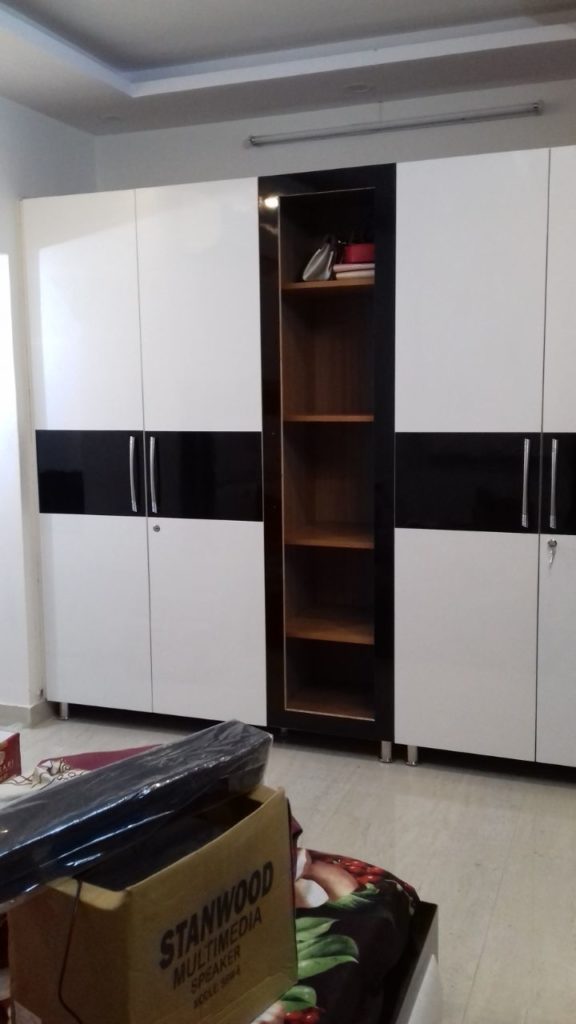
- Ready-made wardrobe (standard size, basic finish): ₹20,000
- Custom wardrobe (to wall height, use premium ply, good hardware): ₹35,000 – ₹50,000 (or more depending on finish and design)
Difference comes from customization, materials, design overhead, and labor.
✅ Pros & Cons at a Glance
| Feature | Ready-Made | Custom |
|---|---|---|
| Cost | Lower upfront | Higher upfront |
| Speed / Availability | Fast / immediate | Slower turnaround |
| Fit / Use of Space | May waste spaces or gaps | Tailored to exact space |
| Design Options | Limited styles / sizes | Fully flexible |
| Longevity | Varies | Often higher if good materials used |
| Replacement / Repairs | Easier (‘off the shelf’ parts) | Harder if parts are unique |
📌 When to Choose Which
- Use ready-made when you have standard spaces, tight budgets, need quick installation.
- Use custom when you have irregular spaces, need unique pieces, want higher quality, or view furniture as long-term investment.
- Many times, a hybrid approach works best: ready-made for simpler items, custom for focal or hard-to-fit pieces.
If you like, I can run numbers comparing ready-made vs custom for your specific room / part (wardrobe, TV unit, kitchen) in your city, so you see exact cost difference. Do you want me to do that for your case?