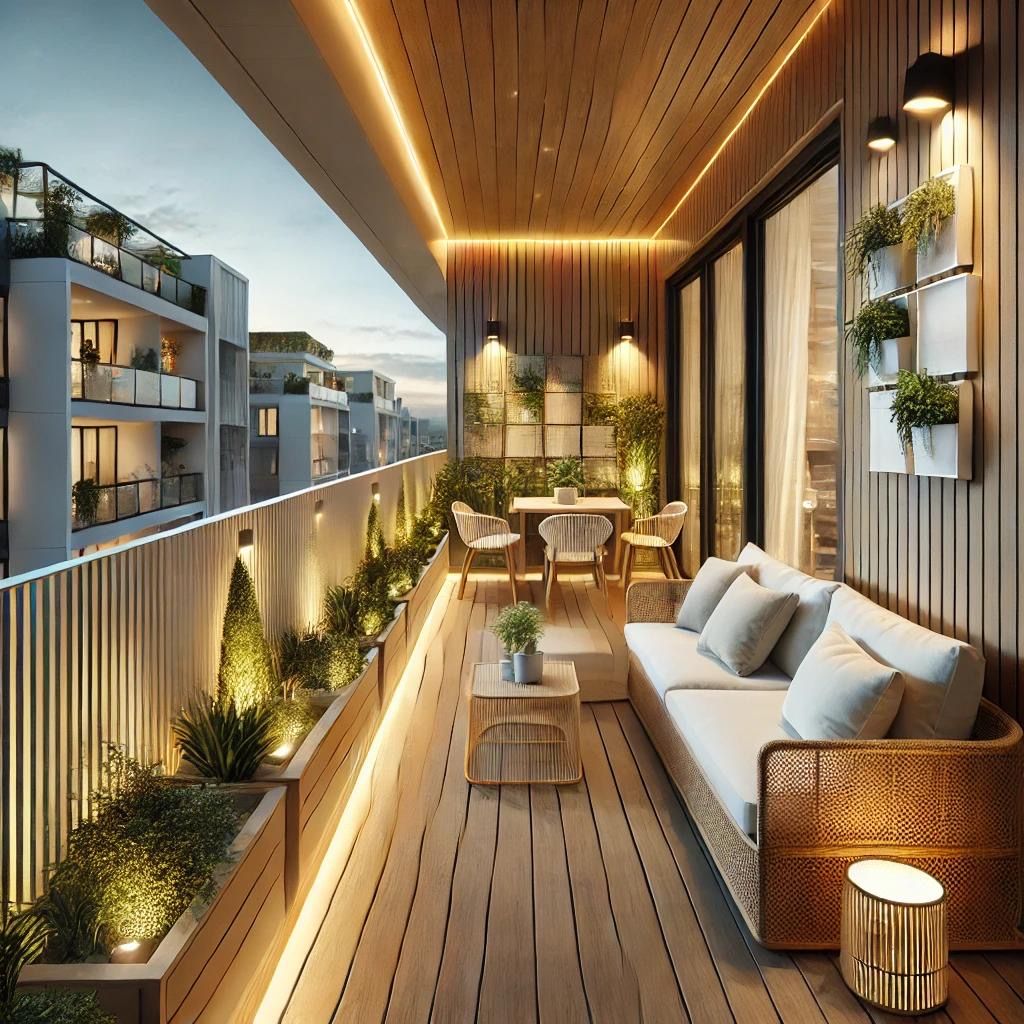
Luxury interior design is characterized by a combination of elements that create a sophisticated, comfortable, and aesthetically pleasing living environment. Here are some key defining features of luxury interior design:
- High-Quality Materials:
- The use of premium materials is a hallmark of luxury design. This includes materials like marble, granite, hardwood, leather, and other high-end finishes that exude quality and durability.
- Fine Craftsmanship:
- Luxury interiors often feature custom-made or artisan-crafted furniture and decor items. Fine craftsmanship and attention to detail are crucial in creating a sense of exclusivity.
- Timeless Elegance:
- Luxury design tends to favor timeless aesthetics over trends. Classic styles and designs that stand the test of time are often incorporated, ensuring that the space maintains its sophistication for years.
- Attention to Detail:
- Every aspect of the design, from the hardware on furniture to the trim on draperies, is carefully considered. Attention to detail is a key factor in achieving a polished and refined look.
- Customization:
- Tailored and personalized elements contribute to the uniqueness of luxury interiors. Custom-designed furniture, built-in cabinetry, and bespoke finishes are often integrated to create a one-of-a-kind space.
- Sophisticated Color Palette:
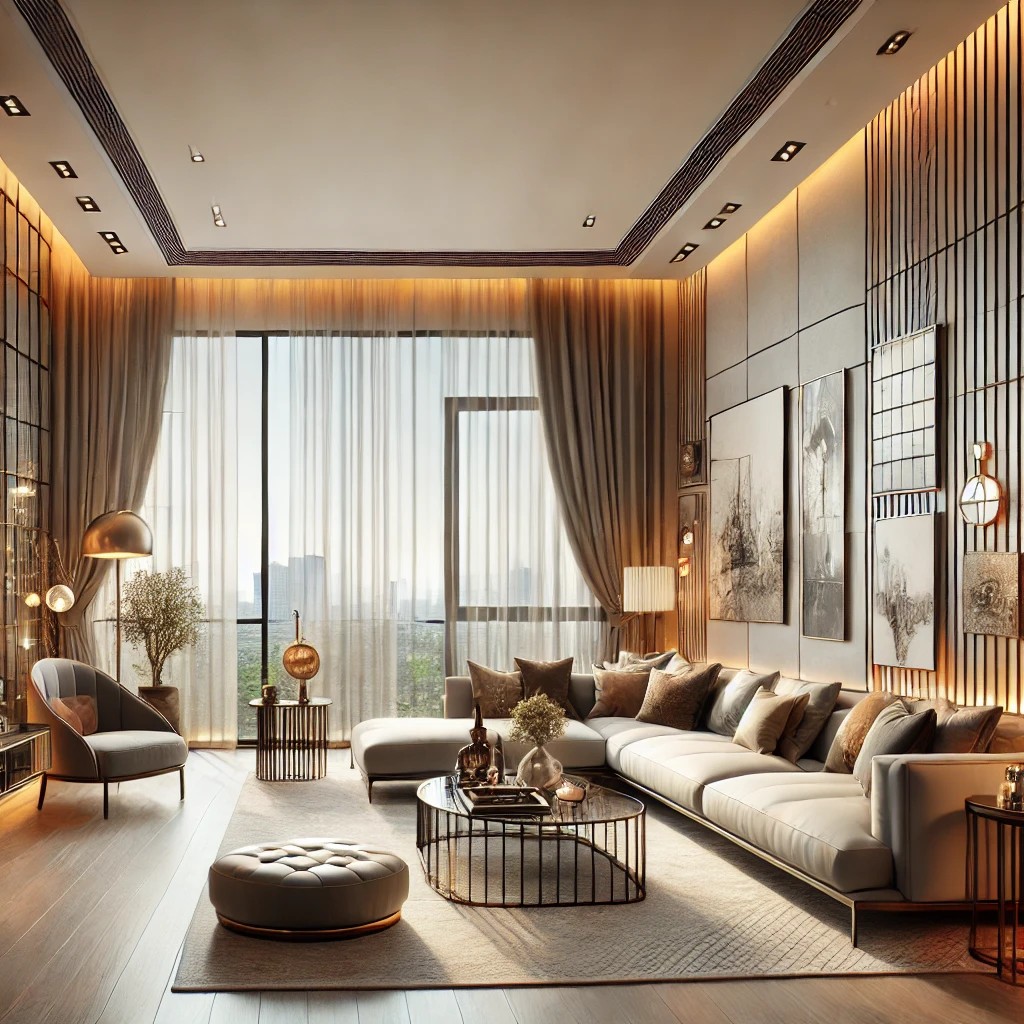
- Luxury interiors typically feature a refined and neutral color palette. Whites, creams, greys, and muted tones create a sense of tranquility and sophistication. Bold accent colors may be used sparingly to add drama.
- Statement Lighting:
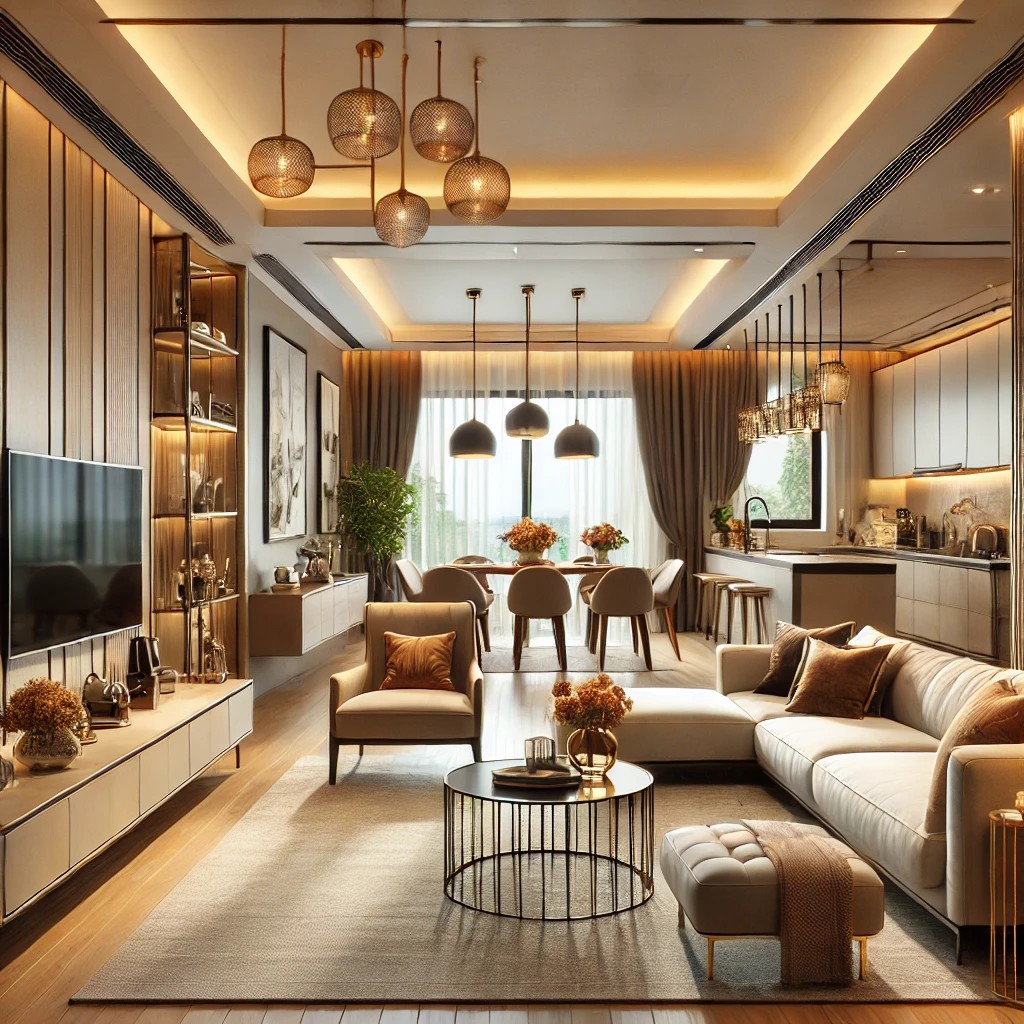
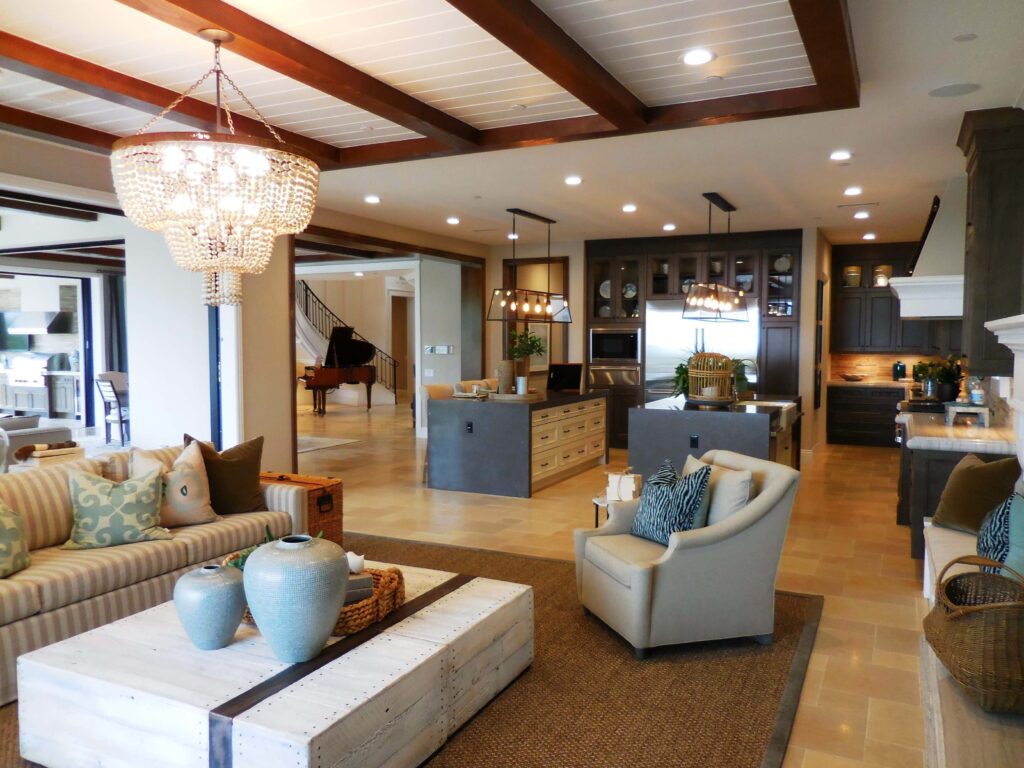
- Elegant and artistic lighting fixtures, such as chandeliers or unique pendant lights, are used to create focal points in the space. Lighting is carefully designed to enhance the overall ambiance.
- Comfort and Functionality:
- While aesthetics are crucial, luxury interiors also prioritize comfort and functionality. Plush furnishings, high-quality bedding, and well-designed layouts contribute to a comfortable living experience.
- Unique Art and Accessories:
- Original artwork, sculptures, and unique accessories contribute to the exclusivity of luxury interiors. These elements are carefully curated to complement the overall design.
- Symmetry and Balance:
- Symmetrical arrangements and well-balanced layouts create a sense of order and harmony in luxury spaces. Proportionate furniture and decor elements contribute to a visually pleasing environment.
- Spaciousness:
- Luxury interiors often make use of open spaces and high ceilings to create a feeling of grandeur. This spaciousness contributes to a sense of luxury and allows for the inclusion of statement pieces.
- Smart Home Integration:
- Incorporating the latest smart home technologies discreetly into the design adds a modern touch to luxury interiors. Automated systems for lighting, temperature control, and entertainment enhance the overall experience.
In summary, luxury interior design is characterized by the use of high-quality materials, fine craftsmanship, attention to detail, timeless elegance, and a focus on creating a personalized and comfortable living space. It goes beyond mere opulence to create a harmonious and inviting environment that reflects the individual preferences and lifestyle of the occupants.