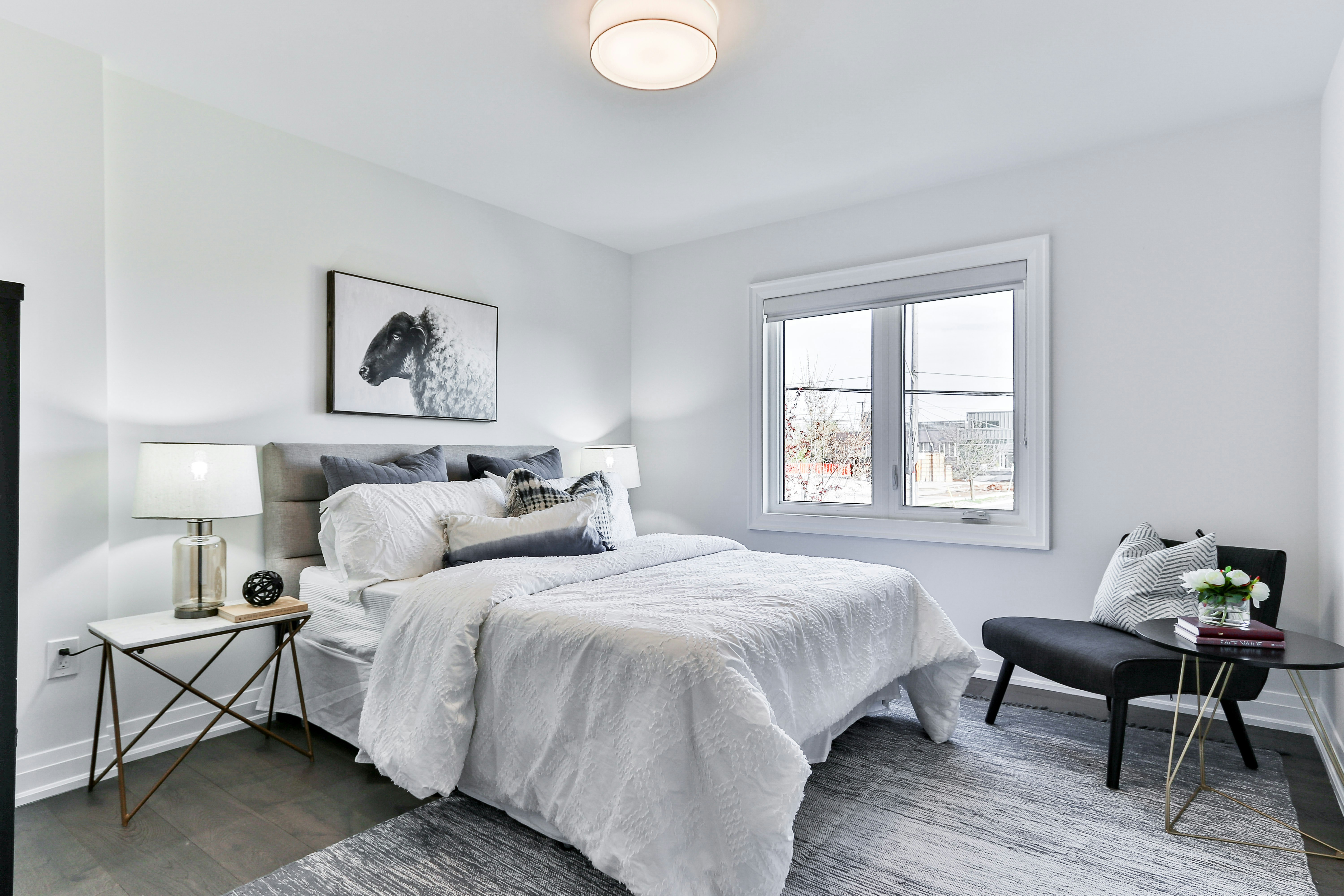
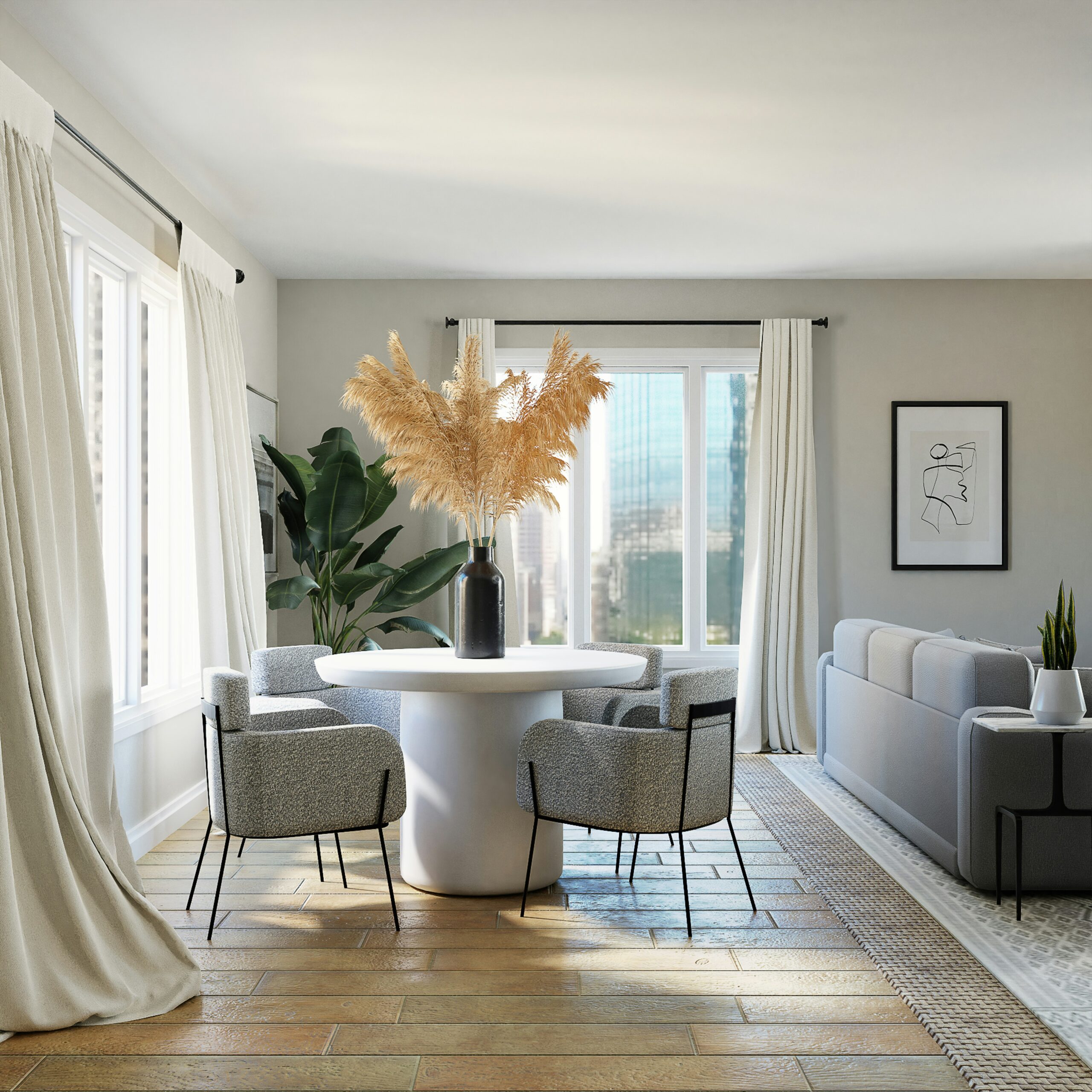
Creating a stylish and functional bedroom involves incorporating thoughtful interior design ideas. Here are some popular and effective ideas to enhance your bedroom design:
Accent Wall:
Create a focal point by designing one wall with a different color, texture, or pattern. This accent wall can add visual interest and serve as a backdrop for the bed or other key furniture.
Statement Headboard:
Invest in a unique and stylish headboard for the bed. Whether it’s upholstered, wooden, or a custom design, a statement headboard can elevate the entire look of the bedroom.
Luxurious Bedding:
Choose high-quality, luxurious bedding to make your bed the ultimate comfort zone. Layer with different textures, patterns, and throw pillows to create a sumptuous and inviting appearance.
Hidden Storage Solutions:
Optimize space by incorporating hidden storage solutions. Consider under-bed storage, built-in closets, or furniture pieces that serve dual purposes, such as a storage ottoman or a bed with built-in drawers.
Customized Lighting:
Install unique and customized lighting fixtures to add personality to the bedroom. Consider pendant lights, wall sconces, or even a stylish chandelier to create a sophisticated ambiance.
Mirrors for Illusion of Space:
Strategically place mirrors to create the illusion of more space and enhance natural light. Mirrored furniture, a full-length mirror, or mirrored closet doors can all contribute to a brighter and more spacious feel.
Nature-Inspired Elements:
Bring the outdoors inside with nature-inspired elements. Incorporate indoor plants, botanical artwork, or nature-themed decor to create a serene and calming environment.
Layered Window Treatments:
Use layered window treatments for both style and functionality. Combine curtains with blinds or shades to control light levels while adding a touch of elegance to the room.
Gallery Wall:
Create a personalized gallery wall with framed artwork, photographs, or a mix of both. This allows you to showcase your unique style and add a personal touch to the bedroom.
Monochromatic Color Scheme:
Choose a monochromatic color scheme for a sophisticated and cohesive look. Select different shades of the same color for walls, furniture, and decor to create a harmonious atmosphere.
Mix of Textures:
Introduce a variety of textures to add depth and interest. Incorporate textured rugs, throw pillows, and blankets to create a cozy and visually appealing space.
Floating Shelves:
Install floating shelves to display decorative items, books, or personal treasures. This not only adds storage but also allows you to showcase your favorite items.
Tactile Fabrics:
Embrace tactile fabrics for bedding, furniture, and decor. Velvet, fur, and knit textures add warmth and comfort to the room.
Unique Nightstands:
Choose distinctive and unique nightstands to complement the overall design. Consider unconventional materials or shapes to add a touch of creativity.
Smart Technology Integration:
Integrate smart home technology for added convenience. This may include smart lighting, automated window treatments, or a connected entertainment system.
Remember that the best bedroom design is one that reflects your personal style and creates a comfortable retreat tailored to your preferences. Feel free to mix and match these ideas to create a unique and personalized space.
Designing a bedroom involves creating a comfortable, functional, and aesthetically pleasing space that reflects the occupant’s personality and preferences. Here are some tips to help you design a bedroom effectively:
Understand Your Needs:
Before you start designing, consider your lifestyle and needs. Think about how you use the bedroom – whether it’s primarily for sleeping, relaxing, working, or a combination of activities.
Set a Budget:
Determine a budget for the bedroom design project. This will help guide your choices and ensure that you stay within financial constraints.
Choose a Theme or Style:
Decide on a theme or style that resonates with you. Whether it’s modern, traditional, minimalist, or eclectic, having a cohesive theme will help guide your design decisions.
Select a Color Scheme:
Choose a color scheme that promotes a calming and comfortable atmosphere. Consider soft and neutral tones for the walls and larger furniture pieces, and use accent colors for decor and accessories.
Focus on the Bed:
The bed is the focal point of the bedroom. Invest in a comfortable mattress and quality bedding. Consider the style of the bed frame and headboard, ensuring it complements the overall design.
Optimize Furniture Layout:
Plan the furniture layout to maximize space and flow. Ensure there’s enough room to move around, and position the bed in a way that allows easy access to windows, doors, and other key elements.
Create Adequate Storage:
Incorporate sufficient storage solutions to keep the bedroom organized. Consider built-in closets, wardrobes, or stylish dressers. Storage ottomans and under-bed storage can also be useful in smaller spaces.
Lighting Matters:
Plan a layered lighting scheme. Use ambient lighting for overall illumination, task lighting for specific activities like reading, and accent lighting to highlight features or create a cozy ambiance.
Personalize with Decor:
Add personal touches with decor items such as artwork, photographs, or sentimental objects. These elements contribute to a sense of identity and make the space feel uniquely yours.
Consider Window Treatments:
Choose window treatments that enhance the overall design while providing privacy and controlling natural light. Options include curtains, blinds, or shades in materials that complement the room’s aesthetic.
Incorporate Texture:
Introduce texture through textiles, such as rugs, throw pillows, and blankets. This adds visual interest and a tactile dimension to the room.
Maintain a Clutter-Free Environment:
Keep the bedroom clutter-free to promote a sense of calm. Consider multi-functional furniture that serves both storage and design purposes.
Balance and Symmetry:
Aim for a balanced and symmetrical look, especially in larger pieces of furniture and decor arrangements. This creates a harmonious and visually appealing atmosphere.
Consider the Floor:
Choose flooring that complements the overall design. Options include hardwood, carpet, or a combination of both. Use area rugs to define specific zones within the room.
Personal Space for Relaxation:
Dedicate a corner or space for relaxation. This could be a cozy reading nook, a comfortable chair, or a small seating area where you can unwind.
Remember that personal preferences play a significant role in bedroom design. Listen to your instincts, and don’t be afraid to experiment with different elements until you achieve a space that feels perfect for you.
Yes, it is possible to pursue a Master’s degree in Interior Design after completing a diploma. However, the specific admission requirements and eligibility criteria may vary depending on the university and the country where you plan to pursue your Master’s degree.
Here are some general steps and considerations:
Research Programs: Start by researching Master’s programs in Interior Design at universities that interest you. Look into the specific admission requirements, curriculum, and any prerequisites for the program.
Admission Requirements: Check the admission requirements for the Master’s program. While some programs may accept candidates with a diploma, others may prefer or require a Bachelor’s degree in a related field. Some universities may consider relevant work experience as a substitute for formal education.
Portfolio: A strong portfolio showcasing your design work and projects is often a crucial part of the application process for interior design programs. Make sure your portfolio reflects your skills, creativity, and the depth of your design experience.
Work Experience: Some Master’s programs may consider professional experience in lieu of formal education. If you have gained substantial experience in the field since completing your diploma, highlight this in your application.
Bridge Programs or Pathways: Some universities offer bridge programs or pathways for individuals with diplomas or non-traditional backgrounds to enter Master’s programs. These programs may provide additional coursework to bridge any gaps in education.
Contact Admissions Offices: Reach out to the admissions offices of the universities you are interested in to discuss your specific situation. They can provide guidance on eligibility and any additional steps you may need to take.
Prepare for Entrance Exams: Some universities may require applicants to take standardized tests, such as the GRE (Graduate Record Examination) or a specific design-related exam. Prepare for these exams if they are part of the admission process.
Recommendation Letters and Statements of Purpose: Prepare strong recommendation letters and a compelling statement of purpose that outlines your career goals, why you want to pursue a Master’s in Interior Design, and how your background and experiences have prepared you for the program.
Remember that admission policies can vary widely between institutions, so it’s important to carefully review the specific requirements of each Master’s program you are considering. Additionally, demonstrating a passion for the field, a commitment to furthering your education, and a clear vision for your future in interior design can strengthen your application.
Whether an interior design degree or diploma is more important depends on your career goals, the specific requirements of the interior design field in your region, and your individual circumstances. Here are some factors to consider when deciding between a degree and a diploma in interior design:
1. Career Goals:
If your career aspirations involve roles that typically require a higher level of education, such as project management, leadership positions, or teaching at the college or university level, an interior design degree may be more suitable.
2. Professional Recognition:
In some regions, a degree in interior design from an accredited institution may be a prerequisite for professional recognition and licensure. Check the requirements in your jurisdiction to understand whether a degree is necessary for your career path.
3. Specialization:
If you have a specific area of interest within interior design, such as sustainable design, healthcare design, or historic preservation, a degree program may offer opportunities for specialization and in-depth study.
4. Skill Development:
Both degree and diploma programs aim to provide students with essential skills in design principles, space planning, color theory, and other foundational aspects of interior design. Consider the specific curriculum of each program to ensure it aligns with your learning goals.
5. Industry Standards:
Research industry standards in your region to understand whether employers typically prioritize candidates with a degree or diploma. Some employers may value practical skills and experience, while others may prioritize a formal education.
6. Networking Opportunities:
Degree programs often provide networking opportunities with professors, classmates, and industry professionals. Networking can be valuable for building connections, discovering job opportunities, and staying updated on industry trends.
7. Time and Cost Considerations:
Consider the time and financial investment required for each option. Diploma programs are often shorter in duration and may be more cost-effective, but a degree may offer a more comprehensive and in-depth education.
8. Portfolio Development:
Both degree and diploma programs should provide opportunities to develop a strong portfolio, which is crucial for showcasing your skills and securing employment in the field.
9. Regional Variations:
The importance of a degree versus a diploma may vary by region. Research the expectations and preferences of employers in your area to make an informed decision.
10. Alternative Paths: – Some successful interior designers have achieved their goals without a formal degree, relying on practical experience, self-directed learning, and a strong portfolio. Consider alternative paths if formal education is not a viable option for you.
In summary, both an interior design degree and a diploma can be valuable, depending on your career goals and the requirements of the industry in your region. Assess your individual circumstances, research the specific programs available to you, and consider the expectations of employers in the field before making a decision.
The decision to pursue a graduate degree in interior design depends on various factors, including your career goals, the specific requirements of the interior design field, and your individual circumstances. Here are some considerations to help you determine whether pursuing a graduate degree in interior design is worth it for you:
Career Goals:
If your career aspirations involve positions that require advanced knowledge or specialization, such as teaching at the university level or working in high-level design research, a graduate degree may be beneficial.
Professional Development:
A graduate degree can offer opportunities for in-depth study and research within the field of interior design. This can contribute to your professional development and potentially open doors to advanced roles or leadership positions.
Networking Opportunities:
Graduate programs often provide networking opportunities with professors, fellow students, and industry professionals. Building a strong professional network can be valuable for career advancement.
Research and Innovation:
If you have an interest in contributing to the academic and theoretical aspects of interior design, a graduate program may provide the platform to engage in research and contribute to the field’s knowledge base.
Specialization:
Graduate programs may offer opportunities for specialization in niche areas of interior design, such as sustainable design, healthcare design, or historic preservation. If you have a specific area of interest, a graduate program can provide focused study in that field.
Teaching Opportunities:
Some individuals pursue graduate degrees with the goal of teaching interior design at the college or university level. If you have a passion for education, a graduate degree may be a prerequisite for academic positions.
Portfolio Enhancement:
Graduate programs often involve advanced design projects that can enhance your portfolio. This may be particularly valuable if you plan to work in high-profile design firms or launch your own design consultancy.
Time and Financial Investment:
Consider the time and financial investment required for a graduate degree. Evaluate whether the potential benefits align with your career goals and if the return on investment (ROI) is justifiable.
Alternative Paths:
Some successful interior designers have achieved their goals without pursuing a graduate degree. Practical experience, networking, and a strong portfolio can be equally important in the field.
Licensure Requirements:
In some regions, licensure as an interior designer may require a specific level of education. If licensure is a goal, check the requirements in your jurisdiction.
It’s crucial to conduct thorough research, speak with professionals in the field, and carefully assess your personal and professional goals before deciding to pursue a graduate degree in interior design. Ultimately, the worth of the degree depends on how well it aligns with your aspirations and the opportunities it provides for your desired career path.
The decision to pursue a degree in interior design and whether it’s worth going to college for it depends on various factors, including your career goals, personal preferences, and the specific requirements of the field. Here are some considerations to help you make an informed decision:
1. Career Goals:
If your goal is to become a licensed interior designer, many jurisdictions require a formal education in interior design from an accredited institution. In such cases, obtaining a degree is essential.
If you’re interested in working in a specialized area of interior design, such as healthcare or sustainable design, a degree may provide the necessary knowledge and skills for those specific fields.
2. Professionalism and Credibility:
Clients and employers often view a degree in interior design as a mark of professionalism and competence. It can enhance your credibility in the eyes of potential clients and employers.
3. Networking Opportunities:
College programs offer networking opportunities with professors, classmates, and industry professionals. Building a network can be valuable for gaining insights, finding job opportunities, and staying updated on industry trends.
4. Skill Development:
A formal education in interior design provides a structured curriculum that covers essential design principles, technical skills, and industry standards. This can be particularly beneficial for developing a strong foundation in the field.
5. Access to Resources:
College programs often provide access to resources such as design studios, libraries, and software that may be essential for learning and practicing design skills.
6. Portfolio Development:
College programs typically include projects and assignments that contribute to the development of a strong portfolio. A well-curated portfolio is crucial when applying for jobs or freelance opportunities in the field.
7. Industry Connections:
Some colleges have strong ties with the industry and may facilitate internships, workshops, or guest lectures by professionals, providing real-world exposure and experience.
8. Alternative Paths:
It’s important to note that not all successful interior designers have a formal degree in interior design. Some professionals enter the field through alternative paths, such as starting as assistants or through self-directed learning.
Considerations Against Pursuing a Degree:
The cost of education is a significant factor. Consider whether the potential financial investment in a degree aligns with your career goals and expectations for future earnings in the field.
Some individuals may prefer gaining practical experience through internships, apprenticeships, or entry-level positions rather than pursuing a formal degree.
Ultimately, the decision to pursue a degree in interior design depends on your individual circumstances and career aspirations. If licensure or a specialized focus is crucial for your goals, a degree may be worth it. However, if you prioritize gaining practical experience and are open to alternative paths, there may be viable options outside of a formal degree program.
The cost of hiring an interior decorator, like that of interior designers, can vary depending on factors such as location, experience, and the scope of the project. Interior decorators typically charge in one of the following ways:
Hourly Rates: Many interior decorators charge by the hour. Hourly rates can range widely, typically falling between $50 and $200 per hour. The specific rate depends on the decorator’s experience, reputation, and the complexity of the project.
Flat Fees: Some decorators prefer to work on a flat fee basis for the entire project. The flat fee is determined based on the size and complexity of the project. Flat fees can range from a few hundred dollars to a few thousand, depending on the decorator and the scope of work.
Consultation Fees: Some decorators offer initial consultation services at a fixed fee. This fee covers the decorator’s time spent understanding the client’s needs, offering advice, and providing initial design suggestions.
Interior decorators typically focus on the aesthetics of a space, helping clients choose color schemes, furniture, accessories, and decor items to create a cohesive and visually appealing look. Their services may include:
Color Consultation: Interior decorators can help clients choose suitable color schemes for their spaces, taking into consideration personal preferences, lighting, and overall design goals.
Furniture and Decor Selection: Decorators assist in selecting furniture, accessories, and decor items that complement the client’s style and vision. They often have an eye for creating balanced and visually appealing arrangements.
Space Planning: While interior decorators may not provide the same level of detailed space planning as designers, they can offer suggestions for arranging furniture and decor to enhance the flow and functionality of a space.
Styling and Finishing Touches: Decorators excel at adding the finishing touches that bring a design together. This may include selecting artwork, lighting fixtures, and accessories to complete the look.
Budget-Friendly Solutions: Interior decorators often work with clients to achieve their design goals within a specified budget. They may suggest cost-effective solutions for achieving a stylish and cohesive look.
When considering hiring an interior decorator, it’s important to communicate your budget, preferences, and expectations clearly. Reviewing the decorator’s portfolio and discussing their approach to design can help ensure a good fit for your project.
The cost of hiring an interior designer can vary significantly based on factors such as their experience, location, the scope of the project, and the level of customization required. Interior designers typically charge in one of the following ways:
Hourly Rates: Many interior designers charge by the hour. Rates can range widely, but on average, you might expect to pay anywhere from $50 to $200 per hour, depending on the designer’s expertise and reputation.
Flat Fees: Some designers prefer to work on a flat fee basis for the entire project. This fee is determined based on the scope and complexity of the project. Flat fees can range from a few thousand dollars to tens of thousands, depending on the scale of the design.
Percentage of the Project Cost: Another common method is charging a percentage of the total project cost. Designers may charge anywhere from 10% to 30% of the total project cost. This method is often used for larger projects with higher budgets.
Services offered by interior designers can vary, but they generally include:
Concept Development: Interior designers will work with you to understand your vision, preferences, and lifestyle. They will create a design concept that aligns with your needs and aesthetic preferences.
Space Planning: Designers will assess the layout of your space and plan the placement of furniture, fixtures, and other elements to optimize functionality and flow.
Material and Color Selection: Interior designers help select materials, finishes, and color schemes that suit your style and preferences. They have an eye for coordinating different elements for a cohesive look.
Furniture Selection and Procurement: Designers assist in selecting and sourcing furniture that fits both the design concept and your budget. This may involve custom furniture design or selecting ready-made pieces.
Lighting Design: Interior designers consider the lighting needs of each space and design a lighting plan that enhances the overall ambiance. This includes selecting fixtures and placement.
Project Management: For larger projects, designers may oversee the implementation of the design plan. This involves coordinating with contractors, overseeing installations, and ensuring that the design vision is executed correctly.
Budget Management: Interior designers help establish and manage budgets for the project, making informed choices to optimize spending on key elements.
Styling and Accessories: Designers often add finishing touches to a space, including accessories, artwork, and other decorative elements to enhance the overall design.
Before hiring an interior designer, it’s essential to discuss their fee structure, review their portfolio, and ensure they understand your vision for the project. Clear communication about your budget and expectations is crucial for a successful collaboration.
Transforming Your 2 BHK on a Budget: Full Interiors Under 2 Lakhs | 2026 Guide
Transforming Your 2 BHK on a Budget: Full Interiors Under 2 Lakhs | 2026 Guide
2 BHK interiors under 2 lakhs is achievable with smart planning, cost-effective materials, and minimalist design strategies. In cities like Delhi NCR, Gurgaon, and Noida, homeowners are increasingly opting for budget-friendly interiors without compromising on style and functionality.
Is It Possible to Design a 2 BHK Under 2 Lakhs?
Yes, creating 2 BHK interiors under 2 lakhs is possible if you prioritize essentials and avoid luxury finishes. Focus on modular, ready-made, and DIY-friendly solutions.
Choose basic furniture instead of custom-built
Use laminates over expensive veneers
Limit false ceiling and decorative elements
Focus on functionality over luxury
Budget Breakdown for 2 BHK Interiors Under 2 Lakhs
Here’s a practical cost allocation for 2 BHK interiors under 2 lakhs:
Living Room: ₹40,000 – ₹60,000
Bedroom 1: ₹30,000 – ₹50,000
Bedroom 2: ₹25,000 – ₹40,000
Kitchen Setup: ₹40,000 – ₹60,000
Painting & Lighting: ₹20,000 – ₹30,000
Living Room Design on a Budget
Designing a stylish living room within 2 BHK interiors under 2 lakhs requires smart choices:
To achieve 2 BHK interiors under 2 lakhs, follow these expert tips:
Reuse existing furniture where possible
Buy materials in bulk
Choose local vendors in Delhi NCR
Avoid unnecessary customization
Focus on essential areas first
Interior Trends for Budget Homes in Delhi NCR
Even budget homes in Gurgaon and Noida follow modern design trends:
Minimalist layouts
Neutral color palettes
Functional furniture
Smart storage solutions
Conclusion
2 BHK interiors under 2 lakhs are achievable with the right planning, smart material choices, and minimal design approach. Whether you are in Delhi NCR, Gurgaon, or Noida, budget-friendly interiors can still look modern and stylish.
2BHK Interior Pricing Guide
2BHK Interior Cost Per Sq Ft in Gurgaon & Delhi NCR
Explore budget vs luxury material pricing, labor charges,
hidden costs, affordable timelines, and smart space-saving
interior solutions for 2BHK apartments in Gurgaon and Noida.
📐
2BHK Interior Cost Per Sq Ft
Average 2BHK interior pricing in Gurgaon and Noida
depends on material quality, customization level,
and design complexity.
Budget₹1,200+
Mid-Range₹2,400+
Luxury₹4,500+
🪵
Budget vs Luxury Materials
Material selection has the biggest impact on
overall project pricing and long-term durability.
BudgetCommercial Ply + Laminate
PremiumHDHMR + Acrylic
LuxuryMarine Ply + Veneer
👷
Labor Charges in Gurgaon
Labor charges vary depending on workmanship,
project timelines, and customization requirements.
Carpentry Work: ₹350–₹900/day
False Ceiling: ₹25–₹80/sq ft
Painting Labor: ₹12–₹35/sq ft
Electrical Installation Charges
⚠️
Hidden Interior Costs
Additional charges often increase the final
interior project budget unexpectedly.
GST & Transportation Charges
Electrical Rewiring Expenses
Furniture Shifting Costs
Site Management & Cleaning
⏳
Interior Timeline Under ₹2 Lakhs
Budget-focused 2BHK interiors can usually
be completed within a short execution period.
Week 1
Site Measurement & Planning
Week 2
Modular Production
Week 3
Installation & Finishing
🛋️
Smart Space-Saving Solutions
Compact 2BHK apartments benefit from intelligent
storage planning and multifunctional furniture solutions.
Storage Beds
Hidden storage under beds improves utility
without occupying extra space.
Sliding Wardrobes
Sliding shutters save circulation space
in compact bedrooms.
Foldable Dining
Space-saving dining tables work well
for small apartment layouts.
Vertical Storage
Tall cabinets maximize storage while
keeping interiors clutter-free.
Introduction: Owning a 2 BHK doesn’t have to break the bank when it comes to interior design. With a strategic approach and creative solutions, it’s entirely possible to give your living space a complete makeover without exceeding the 2 lakh budget mark. In this blog, we’ll explore practical tips and tricks to achieve full interiors for your 2 BHK within a reasonable budget.
Plan and Prioritize: Before diving into the design process, create a comprehensive plan outlining your priorities. Identify the essential elements and areas that require immediate attention. Prioritizing will help you allocate your budget effectively.
DIY Décor and Furnishings: Engage in do-it-yourself projects for decor and furnishings. There are countless online resources offering step-by-step guides for creating budget-friendly items like wall art, curtains, and furniture. Customizing your decor adds a personal touch and saves money.
Smart Shopping: Take advantage of sales, discounts, and clearance events to purchase furniture and home decor items. Explore both online and offline markets, compare prices, and be patient. Sometimes waiting for the right deal can significantly reduce costs.
Repurpose and Upcycle: Give a second life to existing furniture by repurposing and upcycling. A fresh coat of paint, new hardware, or rearranging furniture can completely transform a space. Look for hidden gems in thrift stores or online platforms that can be revamped to suit your style.
Budget-Friendly Materials: Choose cost-effective materials without compromising on quality. Opt for laminate flooring instead of hardwood, and consider alternatives for expensive materials like granite. With the right selection, you can achieve a high-end look without the hefty price tag.
Minimalism: Embrace minimalism in your design approach. A clutter-free, minimalist aesthetic not only looks modern but is also cost-effective. Selecting a few statement pieces and focusing on simplicity can create a chic and sophisticated atmosphere.
Use of Mirrors: Mirrors are an excellent way to make a space feel larger and brighter. Invest in strategically placed mirrors to enhance natural light and create the illusion of spaciousness. Thrift stores often have unique, affordable options.
Lighting Matters: Upgrade your lighting fixtures to set the mood in different areas of your home. Affordable pendant lights, floor lamps, or even DIY lighting solutions can add a touch of elegance without straining your budget.
DIY Storage Solutions: Instead of investing in expensive storage solutions, create your own. DIY shelves, under-bed storage, and multi-functional furniture can help maximize space while keeping costs low.
Smart Negotiation: When hiring professionals for specific tasks, negotiate effectively. Sometimes, skilled craftsmen are willing to work within a budget if they understand your constraints. Be clear about your expectations and explore cost-effective alternatives.
Affordable Interior Solutions
Budget Interior Design Ideas for Gurgaon & Delhi NCR
Explore low-budget modular kitchens, affordable wardrobe designs,
compact living room ideas, and smart interior solutions for
2BHK apartments in Gurgaon and Noida.
🍳
Modular Kitchen Under ₹50K
Functional modular kitchens designed for compact apartments
using budget-friendly materials and optimized layouts.
✔ Basic Laminate Finish
✔ Commercial Ply Cabinets
✔ Soft-Close Hinges
✔ Compact Storage Planning
Starting from ₹45,000
🚪
Budget Wardrobe Design
Affordable wardrobe designs with practical storage,
laminate finishes, and space-saving layouts.
Sliding & hinged wardrobe options
Laminate & matte finish designs
Compact bedroom storage planning
Budget-friendly hardware fittings
🛋️
Small Living Room Design
Smart furniture layouts and minimalist décor ideas
for compact apartments and small urban homes.
Use multifunctional furniture
Add wall-mounted storage
Use light wall colors
Optimize natural lighting
🏠
2BHK Interior Cost Gurgaon
Average 2BHK interior pricing in Gurgaon varies
depending on material selection and customization level.
Basic Interior₹2–₹4 Lakhs
Mid-Range₹5–₹8 Lakhs
Luxury₹10 Lakhs+
✨
Low Budget False Ceiling
Affordable false ceiling solutions improve lighting,
aesthetics, and ceiling finish without increasing
the project budget significantly.
Gypsum Ceiling
Lightweight and cost-effective ceiling solution
for apartments.
POP Border Design
Minimal border ceilings for simple modern interiors.
LED Cove Lighting
Budget-friendly indirect lighting for elegant ambience.
Simple Grid Ceiling
Clean linear designs suitable for compact homes.
Budget Interior Pricing Breakdown
How We Calculated the ₹2 Lakh Budget
Our ₹2 lakh interior estimate is based on actual contractor pricing,
Delhi NCR market rates, labor assumptions, and budget-friendly
material categories commonly used in compact apartments.
👷
Contractor Pricing
Contractor quotations from Gurgaon, Noida, and Delhi were
analyzed to estimate realistic low-budget interior costs.
Basic modular kitchen pricing
Wardrobe installation quotations
False ceiling labor estimates
Turnkey execution averages
📍
Delhi NCR Market Rates
Material and execution pricing was benchmarked using
Delhi NCR supplier averages and local vendor quotations.
Laminate Sheets & Hardware
Commercial Plywood Pricing
Basic Lighting & Electricals
Affordable False Ceiling Materials
🛠️
Labor Assumptions
Labor costs were estimated using average daily wage rates
for standard interior execution work.
Carpentry Labor₹500–₹800/day
Painting Labor₹12–₹25/sq ft
False Ceiling Work₹25–₹50/sq ft
Electrical WorkBasic Package
🪵
Material Categories
To maintain the ₹2 lakh budget, affordable and durable
material categories were selected for modular furniture
and interior finishes.
Commercial Plywood
Cost-effective plywood option suitable for
budget wardrobes and kitchen cabinets.
Laminate Finish
Affordable finish option with multiple
texture and color choices.
Basic Hardware
Standard hinges, handles, and channels
from local hardware brands.
Simple Ceiling Designs
Minimal gypsum and POP ceiling designs
for compact apartments.
Explore a realistic 2BHK interior pricing example for an
850 sq ft apartment in Gurgaon with modular kitchen,
wardrobes, TV unit, lighting, and painting work.
LocationGurgaon
Apartment Type2BHK
Area Size850 Sq Ft
Area
Cost
🍳 Kitchen
₹55,000
🚪 Wardrobes
₹40,000
📺 TV Unit
₹18,000
💡 Paint & Lights
₹25,000
🏠
Estimated Total Interior Cost
₹1,38,000
Budget-focused interior package designed for compact
2BHK apartments in Gurgaon with practical storage
and modern finishes.
Get a personalized 2BHK interior cost estimate for your apartment
in Gurgaon, Noida, and Delhi NCR. Our experts provide detailed
budget planning based on layout, material selection, storage needs,
and design preferences.
This ₹2 lakh interior estimate is based on Delhi NCR contractor
pricing, laminate market rates, labor cost assumptions, and
affordable modular furniture configurations commonly used in
compact apartments and 2BHK homes.
👷
Delhi NCR Contractor Rates
Contractor quotations from Gurgaon, Noida, and Delhi
were analyzed to estimate realistic budget interior pricing.
Basic turnkey execution pricing
Compact apartment interior packages
Low-budget modular kitchen rates
Wardrobe & TV unit installation costs
🪵
Laminate Pricing
Laminate pricing was calculated using average supplier
rates across Delhi NCR hardware and plywood markets.
Matte Finish Laminates
Basic Wood Grain Finishes
Budget Wardrobe Shutters
Modular Kitchen Surface Finishes
🛠️
Labor Estimates
Labor assumptions were based on average wages
charged by local interior contractors and carpenters.
Carpentry Work₹500–₹900/day
Painting Labor₹12–₹25/sq ft
False Ceiling Work₹25–₹50/sq ft
Electrical InstallationBasic Package
🏠
Modular Furniture Assumptions
To maintain the ₹2 lakh budget, modular furniture
assumptions were based on practical layouts and
affordable storage solutions for small apartments.
Modular Kitchen
Straight-line kitchen layout using commercial
plywood and laminate finishes.
Basic Wardrobes
Hinged wardrobe shutters with standard
laminate finishes and simple hardware.
Compact TV Unit
Minimal wall-mounted TV panel with
open storage shelves.
Space-Saving Layouts
Optimized furniture placement to maximize
movement and storage efficiency.
Budget Includes:
Modular kitchen, wardrobes, TV unit, paint work,
basic lighting, and simple false ceiling solutions
suitable for 2BHK apartments in Gurgaon and Noida.
Real Budget Interior Example
Gurgaon 2BHK – 850 Sq Ft Interior Cost
Detailed cost breakdown for a compact 2BHK apartment in Gurgaon
including modular kitchen, wardrobes, TV unit, painting,
and lighting work.
LocationGurgaon
Apartment Type2BHK
Area850 Sq Ft
Item
Cost
🍳 Modular Kitchen
₹55,000
🚪 Wardrobes
₹40,000
📺 TV Unit
₹18,000
💡 Paint & Lights
₹22,000
🏠
Estimated Total Cost
₹1,35,000
Budget-friendly 2BHK interior package designed for
compact apartments using practical storage planning
and affordable finishes.
FAQ: Transforming Your 2 BHK on a Budget – Full Interiors Under 2 Lakhs
1. Is it possible to fully furnish and design a 2 BHK for under 2 Lakhs?
Yes, it is absolutely possible to transform a 2 BHK on a budget of 2 Lakhs, but it requires careful planning, prioritization, and smart choices. Opting for cost-effective materials, functional designs, and focusing on key areas such as the living room, bedrooms, and kitchen can help you achieve a stylish look without exceeding your budget.
2. What are the key areas to focus on when designing a 2 BHK on a budget?
When working with a budget of 2 Lakhs, it’s important to focus on the following:
Living Room: Invest in budget-friendly sofas, stylish yet affordable lighting, and multipurpose furniture like coffee tables with storage.
Bedrooms: Prioritize functional furniture like affordable beds with storage, compact wardrobes, and simple yet elegant decor.
Kitchen: Choose modular kitchen solutions that fit within your budget. Focus on practical storage, good countertop materials, and efficient appliances.
Bathrooms: Affordable bathroom fittings, tiles, and storage can help you stay within budget.
Lighting: Use energy-efficient LED lighting and simple, yet stylish fixtures.
3. How can I save money on furniture for my 2 BHK design?
Modular Furniture: Opt for modular or ready-made furniture that is affordable and easy to assemble.
DIY and Upcycling: Repurpose or upcycle old furniture by painting it or changing the upholstery. This can give your space a fresh look without breaking the bank.
Online Shopping: Look for discounts, sales, or buy directly from manufacturers online, as they often offer better prices than traditional stores.
Multi-functional Furniture: Invest in multi-purpose furniture, such as sofa-cum-beds, foldable tables, and storage ottomans, to maximize space and minimize costs.
4. What types of materials should I choose for a budget-friendly transformation?
For a 2 BHK transformation under 2 Lakhs, opt for budget-friendly materials like:
Laminates: For furniture and cabinets, laminate finishes are affordable and come in a variety of designs.
Medium Density Fiberboard (MDF): This is a more cost-effective alternative to solid wood for furniture, cabinets, and paneling.
PVC and MDF Wall Panels: They are inexpensive, water-resistant, and come in different styles, making them perfect for both bedrooms and living areas.
Ceramic Tiles: For flooring and bathroom walls, ceramic tiles are a cost-effective and durable option.
Plywood: It is affordable and can be used for various furniture pieces like beds, wardrobes, and shelves.
5. How can I make my 2 BHK look more spacious on a budget?
Here are some budget-friendly tips to create the illusion of space:
Light Colors: Use light shades of paint like whites, off-whites, or pastels on walls and ceilings to make the rooms appear bigger.
Mirrors: Strategically placed mirrors can reflect light and make the space feel larger.
Declutter: Keep the space minimal and organized to avoid overcrowding. Use storage solutions that hide away clutter.
Vertical Storage: Use tall bookshelves, wall-mounted shelves, and overhead cabinets to save floor space and store items effectively.
6. What kind of lighting should I use for a 2 BHK on a budget?
Lighting plays an essential role in setting the mood and functionality of a space. Consider these cost-effective options:
LED Lights: Use energy-efficient LED lights throughout the home. They last longer and save on electricity bills.
Pendant Lights: Install pendant lights above dining tables or in the living room to add style without spending too much.
Recessed Lighting: Use affordable recessed lighting or downlights in kitchens and bathrooms for a clean, modern look.
Task Lighting: For work areas or reading nooks, use affordable table lamps or wall-mounted sconces.
7. How do I design a budget-friendly kitchen in my 2 BHK?
A kitchen makeover on a budget can be achieved by:
Modular Kitchen: Invest in ready-made, modular kitchen units that fit your space and budget. Prioritize storage solutions, such as pull-out drawers and overhead cabinets.
Affordable Countertops: Use granite or engineered stone alternatives for countertops that are cost-effective but durable.
Smart Storage Solutions: Utilize vertical space for storage and use containers or baskets to organize kitchen essentials efficiently.
Economical Appliances: Choose essential kitchen appliances like a gas stove, microwave, and refrigerator that are energy-efficient and budget-friendly.
8. Can I incorporate designer touches within my 2 BHK design on a budget?
Yes, you can achieve a designer look without going over budget by:
Accent Walls: Use wallpapers or wall decals for a feature wall in the living room or bedroom, which adds character and a designer touch without being expensive.
Decorative Accessories: Use budget-friendly decor items like cushions, rugs, vases, and artwork to personalize the space.
Lighting Fixtures: Invest in affordable designer lighting options such as table lamps, pendant lights, and wall sconces to create ambiance.
9. How much should I allocate for each area in a 2 BHK design on a budget?
For a 2 BHK under 2 Lakhs, here’s a rough budget breakdown:
Living Room: ₹40,000-₹50,000 for furniture, decor, and lighting.
Bedroom: ₹30,000-₹40,000 per room for beds, wardrobes, and storage solutions.
Kitchen: ₹30,000-₹40,000 for modular units, countertops, and essential appliances.
Bathroom: ₹20,000-₹30,000 for fittings, tiles, and storage.
Miscellaneous (Decor, Lighting, etc.): ₹20,000-₹30,000 for artwork, lighting fixtures, and accessories.
10. Can I hire an interior designer for a 2 BHK on a budget?
Yes, you can hire an interior designer, but it’s essential to communicate your budget constraints upfront. Some designers specialize in budget-friendly designs and can suggest cost-effective solutions and materials. Alternatively, you can look for package deals or online design consultations that offer more affordable pricing compared to traditional interior design firms.
11. What should I avoid when designing a 2 BHK on a budget?
To ensure your transformation stays within budget:
Over-investing in Expensive Materials: Avoid splurging on high-end materials unless absolutely necessary. Stick to budget-friendly options that still offer durability and style.
Excessive Decor: While decor is important, too many accessories can clutter the space and increase costs.
Underestimating Labour Costs: Ensure that your contractor provides a transparent cost estimate to avoid hidden charges.
12. What are some quick DIY hacks to upgrade my 2 BHK?
Painting Furniture: Give your existing furniture a fresh look with a coat of paint or new upholstery.
Wall Art: Create your own wall art using affordable canvas prints, DIY frames, or printed photographs.
Creative Shelving: Use floating shelves or repurpose wooden crates for affordable storage solutions.
Conclusion:
Transforming your 2 BHK on a budget of 2 Lakhs is completely achievable with the right approach. By prioritizing essential areas like furniture, storage, and lighting, and opting for cost-effective materials, you can achieve a stylish, functional, and comfortable home. Remember to plan ahead, do thorough research, and consider DIY options to keep costs low while still achieving a designer look.
Introduction: Embark on a captivating exploration of the intricate artistry and transformative magic that defines interior design through the lens of architectural detailing. Join us on this immersive journey as we delve into the nuances of creating spaces that transcend functionality to become living works of art.
Chapter 1: The Essence of Architectural Detailing
1.1 The Soul of Design
Unraveling the fundamental principles that breathe life into architectural detailing. Understand how thoughtful detailing can elevate a space from mundane to extraordinary.
1.2 Bridging Aesthetics and Functionality
Exploring the delicate balance between aesthetics and functionality in interior design. Learn how every detail contributes to the overall experience of a space.
Chapter 2: Materials: The Palette of Possibilities
2.1 The Alchemy of Materials
Dive into the world of materials and discover how architects and designers weave a tapestry of textures, colors, and finishes to craft compelling environments.
2.2 Sustainable Sensibilities
Explore the rising trend of sustainable materials in interior design. Learn how eco-friendly choices can enhance both the aesthetic and environmental impact of a space.
Chapter 3: Form Follows Function: The Dance of Design
3.1 Designing with Purpose
Delve into the concept of form follows function and understand how it shapes the overall design narrative. Uncover the secrets of creating spaces that are not just visually appealing but also highly functional.
3.2 Spatial Poetry: The Art of Composition
Explore the art of composing spaces like a poet crafts verses. Learn how architects use balance, rhythm, and harmony to create a symphony of design within a room.
Chapter 4: The Intricacies of Architectural Detailing
4.1 Molding the Narrative: Crown Molding and Baseboards
Examine the role of crown molding and baseboards in adding a touch of elegance and cohesiveness to interior spaces. Understand the art of selecting the right profiles and finishes.
4.2 Illuminating the Details: Lighting Design
Shedding light on the transformative power of lighting in architectural detailing. Explore how lighting design can accentuate architectural features and set the mood for different spaces.
Take a trip through history and explore the enduring appeal of classic architectural detailing. Uncover the timeless elements that continue to inspire designers today.
5.2 Contemporary Marvels: Modern Architectural Detailing
Witness the evolution of architectural detailing in the modern era. Analyze cutting-edge designs and innovative detailing techniques that define contemporary interior spaces.
Chapter 6: Crafting Personalized Experiences
6.1 Tailoring Spaces to Individuality
Delving into the art of creating bespoke interiors. Explore how designers weave the unique personalities and preferences of clients into every aspect of architectural detailing.
6.2 Future Trends: Forecasting Design Innovations
Anticipate the future of architectural detailing and interior design. Uncover emerging trends and innovative approaches that are reshaping the way we perceive and inhabit spaces.
Conclusion: The Unending Tapestry of Design
As we conclude our journey through the captivating world of architectural detailing, reflect on the profound impact that thoughtful design can have on our lives. From the selection of materials to the intricacies of form and function, every detail contributes to the rich tapestry of our built environment. May this exploration inspire your own creative endeavors and deepen your appreciation for the artistry that surrounds us.
Introduction: Enter the world of design without boundaries – the realm of virtual interior design consultations. As an advocate for accessible and personalized design experiences, I’m thrilled to guide you through the intricacies of virtual consultations in this comprehensive blog. From leveraging technology to understanding client needs, discover the secrets to creating stunning interiors without leaving the comfort of your own space.
Table of Contents:
The Evolution of Interior Design: Embracing Virtual Consultations a. Historical Perspective on Traditional Design Consultations b. The Rise of Virtual Interior Design in the Digital Age c. The Significance of Thoughtful Design in Virtual Spaces d. Innovations Shaping the Future of Virtual Design Consultations
Understanding Virtual Interior Design: A Blend of Art and Technology a. Defining Virtual Interior Design vs. Traditional Approaches b. Tools and Technologies Enabling Virtual Design Consultations c. Applications Across Different Design Sectors d. Balancing Creativity with Technological Advancements
Benefits of Virtual Interior Design Consultations: Design Without Limits a. Increased Accessibility for Clients Worldwide b. Time and Cost Efficiency for Both Designers and Clients c. Flexibility in Design Collaboration d. Enhanced Visualization through Virtual Tools
Preparing for a Virtual Interior Design Consultation: A Guide for Designers a. Setting Up a Professional Virtual Workspace b. Choosing the Right Virtual Design Tools c. Establishing Communication Protocols d. Balancing Creativity with Practicality in Virtual Settings
Client Onboarding in the Virtual Realm: Navigating New Beginnings a. Building a Strong Online Presence b. Educating Clients on Virtual Design Processes c. Understanding Client Expectations and Goals d. Innovative Approaches to Virtual Client Introductions
Virtual Design Questionnaires: Extracting Key Design Information a. Adapting Traditional Design Questionnaires for Virtual Platforms b. Collecting Essential Information Remotely c. Innovative Approaches to Gathering Client Preferences d. Balancing In-Depth Inquiry with User-Friendly Surveys
Digital Space Analysis: Navigating Homes Through Screens a. Leveraging Virtual Tools for Space Measurement b. Analyzing Room Layouts and Architectural Elements Remotely c. Innovative Approaches to Digital Space Mapping d. Balancing Precision with Client Input in Virtual Space Analysis
Mood Boards and Virtual Inspiration: Setting the Design Tone a. Creating Virtual Mood Boards for Design Conceptualization b. Curating Inspiring Design Elements Online c. Innovative Approaches to Virtual Design Presentations d. Balancing Visual Appeal with Practicality in Virtual Mood Boards
Real-Time Collaboration: Designing Together Across Distances a. Live Design Sessions with Screen Sharing b. Interactive Whiteboards for Design Sketching c. Innovative Approaches to Virtual Material Selection d. Balancing Design Creativity with Practical Constraints
Virtual Material Selection: Navigating Fabrics, Colors, and Finishes a. Utilizing Digital Fabric and Material Libraries b. Choosing Colors Through Virtual Swatches c. Innovative Approaches to Virtual Finish Selection d. Balancing Aesthetics with Practicality in Material Choices
Virtual Furniture Placement: Designing Spaces Digitally a. Using Augmented Reality (AR) for Furniture Placement b. Digital Tools for Testing Layout Configurations c. Innovative Approaches to Virtual Furniture Visualization d. Balancing Scale and Proportion in Virtual Furniture Arrangement
3D Rendering in Virtual Design: Bridging Vision and Reality a. Creating Photorealistic 3D Renderings for Virtual Designs b. Showcasing Design Concepts Through Virtual Walkthroughs c. Innovative Approaches to Realistic Virtual Design Representations d. Balancing Realism with Design Intent in 3D Rendering
Budgeting and Procurement in Virtual Design: Practical Considerations a. Setting Budget Expectations Remotely b. Virtual Platforms for Collaborative Budget Planning c. Innovative Approaches to Virtual Product Procurement d. Balancing Cost-Effective Design with Client Expectations
Client Reviews and Feedback in the Virtual Landscape a. Creating Virtual Platforms for Design Feedback b. Incorporating Real-Time Revisions c. Innovative Approaches to Virtual Design Approval d. Balancing Design Iterations with Client Satisfaction
Post-Design Delivery: Implementing Virtual Design Concepts a. Coordinating Virtual Installations and Project Management b. Innovative Approaches to Remote Design Implementation c. Ensuring Client Satisfaction in Virtual Project Completion d. Balancing Virtual Success with Real-World Impact
Challenges and Solutions in Virtual Interior Design: Navigating Pitfalls a. Overcoming Technical Hurdles in Virtual Platforms b. Addressing Miscommunications in Virtual Interactions c. Innovative Problem-Solving in Virtual Design Challenges d. Balancing Design Challenges with Flexibility and Adaptability
Case Studies: Showcasing Successful Virtual Design Transformations a. Virtual Renovation Triumph: From Concept to Reality b. Global Design Harmony: A Cross-Continental Virtual Collaboration c. Virtual Home Office Makeover: Practicality Meets Style d. Virtual Design Showcase: Bringing a Vision to Life
Expert Insights: Conversations with Pioneers in Virtual Interior Design a. Q&A with Renowned Virtual Interior Designer X b. Pro Tips from Experienced Virtual Design Professionals c. Innovations and Future Trends in Virtual Interior Design
Conclusion: Step into the future of interior design with virtual consultations, where creativity knows no bounds. This guide is your key to navigating the complexities of remote design, allowing you to create stunning interiors, build meaningful client relationships, and bring visions to life without stepping outside the virtual realm. Let your design journey be a testament to the transformative power of virtual interior design consultations in shaping beautiful and functional spaces.
Introduction: Step into the realm of visual storytelling and design precision – the world of 3D rendering services. As a passionate advocate for the transformative power of visuals, I’m excited to guide you through the intricacies of 3D rendering in this comprehensive blog. From architectural visualization to product design, discover the secrets to leveraging 3D rendering services to bring ideas to life with unparalleled realism.
Table of Contents:
The Visual Revolution: The Rise of 3D Rendering in Design a. Historical Evolution of 3D Rendering b. Modern Trends Shaping Visual Communication c. The Significance of 3D Rendering in Design d. Innovations Shaping the Future of 3D Rendering
Understanding 3D Rendering: Transforming Concepts into Reality a. Defining 3D Rendering vs. 2D Graphics b. Types of 3D Rendering: Photorealistic vs. Stylized c. Applications Across Industries: Architecture, Interior Design, and More d. Balancing Realism with Design Intent
Benefits of 3D Rendering Services: A Visual Advantage a. Enhancing Communication with Clients and Stakeholders b. Streamlining the Design Review Process c. Reducing Costs and Time in Prototyping d. Facilitating Marketing and Presentation Efforts
Choosing the Right 3D Rendering Service Provider: A Guide a. Evaluating Portfolio and Expertise b. Assessing Technical Proficiency and Software Utilization c. Understanding Project Management and Communication d. Balancing Cost with Quality in Rendering Services
Architectural Visualization: Bringing Buildings to Life a. Creating Photorealistic Architectural Renders b. Showcasing Interior Spaces in Detail c. Visualizing Exterior Environments with Precision d. Innovative Approaches to Architectural Rendering
Product Visualization: Elevating E-Commerce and Marketing a. Highlighting Product Features and Details b. Creating Interactive Product Configurators c. Innovative 3D Rendering in Virtual Shopping Experiences d. Balancing Aesthetics with Functional Representation
Interior Design Rendering: Crafting Virtual Living Spaces a. Visualizing Furniture Arrangements and Layouts b. Showcasing Material Finishes and Textures c. Incorporating Lighting Design in Interior Renders d. Innovative Use of 3D Rendering in Virtual Design Consultations
Landscape and Outdoor Rendering: Nature in Digital Form a. Capturing Outdoor Environments with Realism b. Visualizing Garden and Landscape Design Elements c. Innovative Approaches to Terrain Rendering d. Balancing Natural Elements with Digital Precision
Virtual Reality (VR) and Augmented Reality (AR) Integration a. Creating Immersive VR Architectural Walkthroughs b. Enhancing Product Demonstrations with AR c. Innovative Uses of VR and AR in Design Presentations d. Balancing Realism with User Interaction in Virtual Environments
Animation in 3D Rendering: Dynamic Storytelling a. Creating Engaging Architectural Flythroughs b. Animating Product Assembly and Functionality c. Innovative Motion Graphics in Design Presentations d. Balancing Timing and Visual Impact in 3D Animation
Sustainability Visualization: A Green Perspective a. Visualizing Sustainable Architectural Features b. Showcasing Eco-Friendly Product Designs c. Innovative Approaches to Sustainability Communication d. Balancing Aesthetics with Environmental Consciousness
Collaboration Tools and Platforms: Enhancing Team Dynamics a. Utilizing Cloud-Based Rendering Services b. Integrated Collaboration in 3D Rendering Software c. Innovative Project Management Solutions d. Balancing Security and Accessibility in Collaboration Platforms
Quality Control in 3D Rendering: Ensuring Precision and Realism a. Setting Quality Standards for Renders b. Quality Assurance in Detailing and Texturing c. Ensuring Accuracy in Scale and Proportion d. Innovative Approaches to Realistic Lighting and Shadows
Future Trends in 3D Rendering: Anticipating Technological Advances a. Advancements in Real-Time Rendering b. The Rise of Artificial Intelligence in Rendering c. Innovations in Interactive 3D Experiences d. Balancing Automation with Creative Control
Case Studies: Showcasing Stunning 3D Rendering Transformations a. Architectural Marvels Brought to Life: Before and After b. Product Launch Success: The Power of Realistic Visualization c. Virtual Design Showrooms: A Revolution in Interior Design d. Sustainable Spaces in 3D: Bridging Vision and Reality
Expert Insights: Conversations with Renowned 3D Rendering Professionals a. Q&A with Leading Architectural Visualizer X b. Pro Tips from Experienced 3D Rendering Artists c. Innovations and Future Trends in Rendering Services
Conclusion: Immerse yourself in the boundless possibilities of 3D rendering services, where creativity meets precision in a virtual realm. This guide is your key to navigating the intricacies of 3D visualization, allowing you to communicate ideas, captivate audiences, and bring designs to life with unparalleled realism. Let your visual storytelling be a testament to the transformative power of 3D rendering in the ever-evolving landscape of design.
Introduction: Step into the world of enchantment and celebration, where every detail tells a story – the realm of event decor and design. As a seasoned event designer, I’m excited to guide you through the art and science of creating unforgettable experiences in this comprehensive blog. From conceptualization to execution, discover the secrets to transforming spaces into immersive environments that leave a lasting impression.
Table of Contents:
The Artistry of Event Design: Crafting Memorable Experiences a. The Role of Event Design in Creating Atmosphere b. Modern Trends Shaping Event Decor c. The Significance of Thoughtful Design in Events d. Innovations Shaping the Future of Event Decor
Understanding Event Types: Tailoring Designs for Every Occasion a. Weddings: Elegance, Romance, and Personalization b. Corporate Events: Professionalism with a Creative Twist c. Social Gatherings: From Birthdays to Anniversaries d. Cultural and Themed Events: Bringing Stories to Life
Event Design Process: From Concept to Execution a. Client Consultation and Vision Exploration b. Conceptualization and Mood Boards c. Collaborating with Vendors and Partners d. The Execution Phase: Turning Ideas into Reality
Spatial Considerations: Transforming Venues into Wonderlands a. Optimizing Layouts for Flow and Engagement b. Creating Focal Points and Vignettes c. Innovative Use of Indoor and Outdoor Spaces d. Balancing Practicality with Aesthetic Appeal
Color Palette and Theming: Setting the Tone for Success a. Choosing Colors for Emotional Impact b. Incorporating Themes for Cohesive Designs c. Creating Consistency Across Different Elements d. Innovative Use of Lighting to Enhance Themes
Centerpieces and Tablescapes: The Heart of Event Decor a. Designing Striking Table Centerpieces b. Incorporating Linens and Table Settings c. Choosing Floral Arrangements for Impact d. Innovative Table Decor Ideas for Every Occasion
Lighting Design: Crafting Ambiance and Atmosphere a. Strategic Use of Ambient Lighting b. Creating Drama with Spotlighting c. Innovative LED and Smart Lighting Solutions d. Balancing Natural and Artificial Lighting
Textiles and Fabrics: Adding Texture and Elegance a. Choosing Drapery for Elegance and Acoustics b. Incorporating Unique Textiles in Decor c. Customizing Fabric Installations d. Innovative Use of Textiles in Themed Events
Furniture Selection: Enhancing Comfort and Style a. Optimal Seating Arrangements for Events b. Choosing Stylish Lounge Furniture c. Innovative and Modular Furniture Solutions d. Balancing Functionality with Aesthetic Appeal
Branding and Personalization: Making Events Truly Unique a. Incorporating Brand Elements in Corporate Events b. Customizing Decor to Reflect Personal Stories c. Innovative Approaches to Personalized Event Decor d. Balancing Branding with Overall Design Cohesion
Sustainability in Event Design: Nurturing the Environment a. Choosing Eco-Friendly Decor Elements b. Sustainable Floral Arrangements and Greenery c. Reducing Waste in Event Planning d. Innovations in Sustainable Event Design Practices
Entertainment Spaces: Creating Wow Moments a. Designing Interactive Photo Booths b. Incorporating Live Performances and Shows c. Innovative Event Entertainment Ideas d. Balancing Entertainment with Guest Engagement
Technology Integration: Elevating Events with Tech a. Incorporating Digital Displays and Signage b. Interactive Tech in Event Decor c. Event Apps and Virtual Components d. Innovations in Event Technology
Budgeting and Cost Management: Designing within Constraints a. Prioritizing Key Design Elements b. Choosing Cost-Effective Decor Solutions c. Negotiating with Vendors for Budget-Friendly Options d. Innovative Ways to Achieve Luxury Looks on a Budget
Post-Event Evaluation: Learning and Evolving a. Gathering Feedback from Clients and Attendees b. Assessing the Success of Design Elements c. Identifying Opportunities for Improvement d. Innovative Approaches to Continuous Learning in Event Design
Case Studies: Showcasing Stunning Event Design Transformations a. A Whimsical Wonderland Wedding: Turning Dreams into Reality b. Corporate Gala Extravaganza: Merging Professionalism with Creativity c. Themed Birthday Bash: Creating Unforgettable Memories d. Cultural Celebration Spectacle: Embracing Diversity in Design
Expert Insights: Conversations with Renowned Event Designers a. Q&A with Celebrity Event Designer X b. Pro Tips from Industry Experts c. Innovations and Future Trends in Event Decor
Conclusion: Elevate your events to the extraordinary by infusing them with thoughtful design, creating immersive experiences that leave lasting impressions. This guide is your key to unlocking the art and science of event decor, allowing you to weave stories, evoke emotions, and transform spaces into unforgettable wonderlands. Let your events be a testament to the magic of design, where every detail contributes to the creation of memories that linger long after the celebration has ended.
Introduction: Embark on a journey through the ages, exploring the world of antique and vintage furniture. As an enthusiast of timeless design, I’m delighted to guide you through the intricacies of sourcing antique and vintage furniture in this comprehensive blog. From understanding the value of historical pieces to navigating the markets, discover the secrets to finding and incorporating these cherished treasures into your living spaces.
Table of Contents:
The Allure of Antique and Vintage Furniture: A Glimpse into the Past a. Defining Antiques and Vintage Furniture b. The Historical Significance of Antique Pieces c. Modern Trends in Vintage Furniture d. Innovations Shaping the Future of Antique and Vintage Sourcing
Understanding Styles and Periods: Identifying Timeless Design a. Recognizing Key Furniture Periods b. Defining Style Movements and Their Characteristics c. Incorporating Historical Styles in Modern Interiors d. Balancing Vintage Elements with Contemporary Design
Sourcing Antique and Vintage Furniture: Where to Begin a. Exploring Antique Shops and Dealers b. Navigating Vintage and Thrift Stores c. Online Platforms for Antique and Vintage Finds d. Attending Auctions and Estate Sales
Evaluating Authenticity and Quality: A Buyer’s Guide a. Understanding Antique vs. Reproduction b. Assessing Craftsmanship and Materials c. Identifying Markings and Signatures d. Consulting Experts and Appraisers
Caring for Antique and Vintage Pieces: Preservation Tips a. Proper Cleaning and Maintenance Practices b. Protecting Wood Surfaces and Finishes c. Addressing Common Issues like Scratches and Stains d. Preserving Upholstery and Fabrics
Restoration and Refinishing: Breathing New Life into Old Furniture a. Knowing When to Restore vs. Preserve b. Seeking Professional Restoration Services c. DIY Techniques for Minor Repairs d. Balancing Authenticity with Functional Restoration
Incorporating Antique and Vintage Furniture in Modern Interiors a. Creating Focal Points with Statement Pieces b. Mixing Styles for Eclectic Charm c. Blending Antique and Contemporary Elements d. Innovative Styling Ideas for Antique Furniture
Sustainable Design: The Environmental Appeal of Vintage a. Reducing the Carbon Footprint with Vintage Furniture b. Choosing Sustainable Materials in Vintage Pieces c. Repurposing and Upcycling Vintage Finds d. Embracing a Circular Economy in Design
Niche Collections: Specialized Antique and Vintage Items a. Collecting Vintage Lighting Fixtures b. Exploring Antique Mirrors and Frames c. Unique Antique and Vintage Textiles d. Innovative Collectibles and Decor Pieces
Cultural and Regional Influences: A Global Perspective a. Exploring Antique Furniture Styles by Region b. Understanding Cultural Significance in Design c. Incorporating Global Finds in a Cohesive Design d. Supporting Local Artisans and Antique Markets
Online Resources and Communities: Connecting with Fellow Enthusiasts a. Joining Antique and Vintage Forums b. Exploring Social Media Platforms for Sourcing c. Utilizing Online Auction Platforms d. Learning from Experts and Experienced Collectors
Case Studies: Showcasing Stunning Antique and Vintage Transformations a. Restoring an Antique Dining Set to Its Former Glory b. Creating a Cozy Nook with Vintage Upholstery c. Incorporating Vintage Finds in a Modern Office Space d. The Art of Display: Showcasing Antique and Vintage Collections
Expert Insights: Conversations with Antique and Vintage Connoisseurs a. Q&A with Renowned Antique Dealer X b. Pro Tips from Experienced Vintage Collectors c. Innovations and Future Trends in Antique and Vintage Sourcing
Conclusion: Immerse yourself in the world of timeless treasures as you embark on the journey of sourcing antique and vintage furniture. This guide is your key to discovering the stories and craftsmanship behind each piece, adding a touch of history and character to your living spaces. Let your furniture choices be a testament to the enduring appeal of design across the ages, creating homes that tell a rich and diverse narrative.
Introduction: Embark on a journey toward inclusivity and accessibility – the realm of universal design. As an advocate for creating spaces that cater to everyone, I’m thrilled to guide you through the principles and practices of universal design in this comprehensive blog. From architectural considerations to interior elements, discover the secrets to crafting environments that are welcoming, functional, and accommodating to people of all abilities.
Table of Contents:
The Essence of Universal Design: Creating for All a. Historical Perspective on Universal Design b. Modern Trends Shaping Inclusive Spaces c. The Significance of Thoughtful Design d. Innovations Shaping the Future of Accessibility
Understanding Accessibility: Beyond Compliance a. Defining Accessibility in Design b. Legislation and Guidelines for Inclusive Design c. Benefits of Prioritizing Accessibility d. Innovative Approaches to Accessibility Compliance
Spatial Considerations: Designing for Mobility a. Optimizing Layouts for Easy Navigation b. Incorporating Wide Walkways and Doorways c. Creating Barrier-Free Entrances d. Balancing Aesthetics with Functional Space
Architectural Elements: Ramps, Elevators, and Beyond a. Incorporating Accessible Ramps and Lifts b. Designing Inclusive Elevator Spaces c. Innovative Approaches to Stair Design d. Balancing Form and Function in Architectural Elements
Adaptable and Flexible Design: Spaces for Everyone a. Creating Multi-Functional Areas b. Incorporating Adaptable Furniture and Fixtures c. Designing for Changing Needs d. Innovations in Flexible Interior Design
Accessible Bathrooms and Kitchens: Daily Functionality a. Designing Wheelchair-Friendly Bathrooms b. Adapting Kitchen Spaces for Accessibility c. Innovative Appliances and Fixtures d. Balancing Style with Practicality in Essential Spaces
Inclusive Lighting and Acoustics: Sensory Considerations a. Optimizing Lighting for Visual Comfort b. Incorporating Auditory and Tactile Elements c. Creating a Calming Acoustic Environment d. Innovative Solutions for Sensory-Friendly Spaces
Color and Contrast: Enhancing Visibility a. Choosing Colors for Visual Contrast b. Incorporating High Contrast Elements c. Innovative Use of Colors in Wayfinding d. Creating Inclusive Spaces Through Color Choices
Technology in Universal Design: Smart Solutions a. Incorporating Smart Home Automation b. Digital Accessibility for All c. Assistive Technologies in Design d. Innovations in Universal Design Apps
Landscape and Exterior Accessibility: Outdoor Inclusivity a. Creating Accessible Outdoor Paths b. Incorporating Seating and Rest Areas c. Designing Inclusive Outdoor Recreation Spaces d. Balancing Aesthetics with Exterior Accessibility
Inclusive Furnishings and Decor: Style with Function a. Choosing Adaptable and Comfortable Furniture b. Incorporating Sensory-Friendly Decor c. Designing for Easy Navigation d. Innovative Inclusive Design in Decor
User-Centered Design: Collaborating with Diverse Perspectives a. Incorporating User Feedback in Design b. Collaborating with Accessibility Experts c. Promoting Inclusive Design Thinking d. Balancing Creativity with User Needs
Case Studies: Showcasing Stunning Universal Design Transformations a. From Traditional to Inclusively Modern: An Office Renovation b. Barrier-Free Living: A Residential Transformation c. Inclusive Public Spaces: Park and Recreational Areas d. Universally Accessible Hospitality: Hotel Design for All
Expert Insights: Conversations with Accessibility Advocates and Designers a. Q&A with Leading Accessibility Advocate X b. Pro Tips from Inclusive Design Experts c. Innovations and Future Trends in Universal Design
Conclusion: Immerse yourself in the world of inclusive design, where thoughtful considerations make spaces welcoming for everyone. This guide is your key to creating environments that not only meet accessibility standards but also celebrate diversity and promote a sense of belonging. Let your design choices be a testament to the power of universal design, fostering spaces where everyone can thrive.
Introduction: Unveil the magic of textiles – the transformative touch that brings interiors to life. As an experienced interior designer, I am delighted to guide you through the enchanting world of textile and fabric selection in this comprehensive blog. From choosing the right fabrics for various applications to understanding the art of blending textures, discover the secrets to creating spaces that not only look stunning but also feel inviting and comfortable.
Table of Contents:
The Fabric Symphony: Understanding the Importance of Textiles a. Historical Significance of Textiles in Design b. Modern Trends Shaping Fabric Selection c. The Role of Textiles in Interior Design d. Innovations Shaping the Future of Textile Design
Functionality First: Analyzing Fabric Performance a. Choosing Durable Fabrics for High-Traffic Areas b. Optimizing Comfort with Soft and Inviting Textiles c. Incorporating Stain-Resistant Fabrics d. Balancing Style with Practicality in Fabric Choices
Types of Fabrics: A Guide to Material Diversity a. Natural Fibers: Cotton, Linen, and Silk b. Synthetic Fibers: Polyester, Nylon, and Acrylic c. Blended Fabrics for Enhanced Performance d. Innovative and Sustainable Fabric Options
Textile Applications: Crafting Textured Environments a. Choosing Upholstery Fabrics for Furniture b. Selecting Drapery and Curtain Fabrics c. Incorporating Textiles in Bedding and Linens d. Rug and Carpet Textures for Comfort and Style
Color Palette and Patterns: Harmonizing with the Design a. Choosing Timeless vs. Trendy Colors b. Mixing Patterns for Visual Interest c. Creating Cohesion in Textile Choices d. Innovative Use of Prints and Embellishments
Seasonal Considerations: Adapting Fabrics to Climate a. Choosing Fabrics for Summer and Winter b. Incorporating Warmth in Cold Climates c. Cooling Textiles for Hot Environments d. Versatile Fabrics for Year-Round Comfort
Textile Care and Maintenance: Ensuring Longevity a. Understanding Cleaning Codes for Fabrics b. Caring for Delicate and Specialty Fabrics c. Protecting Fabrics from Fading and Wear d. Innovative Solutions for Easy Maintenance
Texture Mixing: Creating Dimension in Design a. Balancing Smooth and Textured Fabrics b. Incorporating Woven and Knitted Textiles c. Layering Textures for Depth d. Innovative Textile Combinations
Customization and Bespoke Fabrics: Tailoring to Unique Needs a. Custom Upholstery and Drapery Services b. Personalized Printing and Embroidery Options c. Collaborating with Artisans for Unique Textiles d. Innovative Approaches to Custom Fabric Design
Sustainable Textiles: Nurturing the Environment a. Choosing Eco-Friendly and Recycled Fabrics b. Supporting Fair Trade and Ethical Practices c. Innovations in Sustainable Textile Manufacturing d. Balancing Style with Environmental Responsibility
Inspirational Textile Styles: Showcasing Design Themes a. Modern Minimalism in Textile Design b. Bohemian Chic Textile Aesthetics c. Classic Elegance in Fabric Choices d. Eclectic Styles for Personalized Spaces
Case Studies: Showcasing Stunning Textile Transformations a. From Drab to Fab: A Living Room Upholstery Makeover b. Bedroom Bliss: Revamping Linens and Curtains c. Harmony in Hospitality: Hotel Textile Design d. Office Elegance: Corporate Space Fabric Revitalization
Expert Insights: Conversations with Renowned Textile Designers a. Q&A with Celebrity Textile Designer X b. Pro Tips from Industry Experts c. Innovations and Future Trends in Textile Design
Conclusion: Immerse yourself in the world of textile alchemy, where the right fabrics have the power to transform spaces into havens of comfort and style. This guide is your key to selecting textiles that not only meet your practical needs but also infuse your interiors with personality and warmth. Let your fabric choices be a testament to the artistry and innovation of modern design, creating spaces that speak to both the eye and the touch.
Introduction: Enter the realm of bespoke beauty and functionality – the world of custom cabinetry design. As an experienced interior designer, I’m thrilled to guide you through the intricate art and craftsmanship of custom cabinetry in this comprehensive blog. From optimizing storage to enhancing aesthetic appeal, discover the secrets to creating cabinetry that goes beyond the ordinary, reflecting your unique style and meeting your practical needs.
Table of Contents:
The Allure of Custom Cabinetry: Elevating Storage to Art a. Historical Roots of Cabinetry Craftsmanship b. Modern Trends Shaping Custom Cabinetry Design c. The Importance of Thoughtful Cabinetry Design d. Innovations Shaping the Future of Custom Cabinetry
Functionality First: Analyzing Storage Needs and Space a. Understanding the Client’s Storage Requirements b. Optimizing Layouts for Functionality c. Incorporating Smart Storage Solutions d. Balancing Open Shelving and Closed Storage
Material Selection: Elevating Craftsmanship with Quality a. Choosing Durable and Sustainable Cabinetry Materials b. Selecting Wood Types for Different Styles c. Innovative Use of Alternative Materials d. Balancing Aesthetics with Durability
Design Styles and Aesthetics: Tailoring Cabinets to Your Taste a. Embracing Traditional Cabinetry Styles b. Modern and Minimalist Cabinet Designs c. Transitional Styles for Timeless Elegance d. Innovative Fusion of Styles for Unique Appeal
Custom Cabinetry for Different Spaces: Kitchens, Bathrooms, and Beyond a. Designing Functional and Stylish Kitchen Cabinets b. Elevating Bathrooms with Custom Vanity Cabinets c. Innovative Storage Solutions for Closets d. Crafting Custom Solutions for Unique Spaces
Cabinet Hardware and Accessories: The Finishing Touches a. Choosing Stylish and Functional Hardware b. Innovative Drawer Slides and Hinges c. Customizing Pulls and Knobs for Personalization d. Incorporating Smart and High-Tech Accessories
Color Palette and Finishes: Harmonizing with the Surroundings a. Choosing Timeless vs. Trendy Color Schemes b. Mixing Finishes for Texture and Interest c. Creating Cohesion in Cabinetry Choices d. Innovative Use of Glass and Mirrors
Innovative Cabinetry Solutions: Beyond the Basic Cupboard a. Pull-Out Pantries and Spice Racks b. Hidden Storage in Unexpected Places c. Innovations in Cabinetry Accessories d. Maximizing Vertical Space with Clever Solutions
Custom Cabinetry and Technology Integration: Efficiency and Convenience a. Smart Storage Solutions and Pull-Out Shelves b. Incorporating Charging Stations c. Smart Lighting and Motion-Sensor Cabinets d. Innovative Tech Integration for Modern Living
Personalization and Trends: Crafting Unique Cabinetry a. Customization Options for a Unique Cabinet Design b. Incorporating Trends in Cabinetry Design c. Statement Art and Decor in Cabinetry d. Sustainable and Eco-Friendly Design Choices
Case Studies: Showcasing Stunning Custom Cabinetry Transformations a. From Standard to Spectacular: A Kitchen Renovation b. Small Space, Big Impact: Custom Solutions for Apartments c. Marrying Old and New in Custom Cabinetry Design d. Luxury Walk-In Closets with Customized Storage
Expert Insights: Conversations with Renowned Cabinetry Designers a. Q&A with Celebrity Cabinetry Designer X b. Pro Tips from Industry Experts c. Innovations and Future Trends in Custom Cabinetry Design
Conclusion: Step into a world where every cabinet is a piece of art, crafted with precision and tailored to your unique style. This guide is your key to creating custom cabinetry that not only meets your storage needs but also elevates the aesthetic appeal of your living spaces. Let your cabinetry be a reflection of your personality and a testament to the craftsmanship and innovation of modern design.
Introduction: Embark on a journey through the artistry of the outdoors – the realm of landscape design. As an experienced designer, I’m thrilled to guide you through the intricate world of landscape design in this comprehensive blog. From creating harmonious outdoor environments to incorporating sustainable practices, discover the secrets to crafting landscapes that blend seamlessly with nature while reflecting your personal style.
Table of Contents:
The Art of Landscape Design: Blending Nature and Creativity a. Historical Roots of Landscape Design b. Modern Trends Shaping Outdoor Spaces c. The Importance of Thoughtful Landscape Design d. Innovations Shaping the Future of Landscape Design
Site Analysis and Planning: Crafting Outdoor Masterpieces a. Understanding the Lay of the Land b. Optimizing Layouts for Functionality c. Zoning for Different Outdoor Functions d. Balancing Hardscape and Softscape Elements
Plant Selection and Garden Styles: Curating Natural Beauty a. Choosing Plants for Climate and Soil Conditions b. Creating a Cohesive Plant Palette c. Innovative Planting Designs and Patterns d. Marrying Different Garden Styles
Hardscape Elements: Enhancing Structure and Functionality a. Designing Elegant Pathways and Walkways b. Creating Outdoor Living Spaces with Patios and Decks c. Incorporating Functional Retaining Walls d. Choosing Sustainable Hardscape Materials
Water Features and Pools: Elevating Outdoor Tranquility a. Designing Graceful Water Fountains b. Incorporating Ponds and Water Gardens c. Creating Stylish Pools and Spas d. Balancing Water Features with Environmental Impact
Outdoor Lighting Design: Illuminating Nightscapes a. Strategic Lighting for Pathways and Safety b. Creating Ambiance with Landscape Lighting c. Highlighting Architectural and Plant Features d. Innovative Solar-Powered Lighting Solutions
Sustainability in Landscape Design: Nurturing the Environment a. Choosing Native Plants for Biodiversity b. Rainwater Harvesting and Irrigation Techniques c. Implementing Eco-Friendly Lawn Alternatives d. Innovations in Sustainable Landscaping Practices
Color Palette and Texture: Painting with Outdoor Elements a. Choosing Serene Color Schemes for Plantings b. Mixing Materials for Texture and Interest c. Creating Cohesion in Outdoor Color Choices d. Innovative Use of Outdoor Fabrics and Materials
Outdoor Furnishings and Decor: Functional Art in the Landscape a. Selecting Weather-Resistant Outdoor Furniture b. Incorporating Decorative Elements in Outdoor Spaces c. Creating Outdoor Art Installations d. Balancing Comfort with Aesthetic Appeal
Edible Landscapes and Urban Agriculture: Blurring Lines a. Incorporating Edible Plants into Landscape Design b. Creating Sustainable Vegetable Gardens c. Innovative Vertical Gardening for Urban Spaces d. Balancing Ornamental and Productive Elements
Wildlife-Friendly Landscaping: Inviting Nature’s Guests a. Choosing Plants that Support Local Wildlife b. Creating Habitat-Friendly Design Features c. Innovative Bird and Butterfly Gardens d. Balancing Aesthetic Appeal with Conservation
Wellness Gardens: Designing for Mental and Physical Health a. Incorporating Mindful Spaces in the Landscape b. Creating Meditation Gardens and Retreats c. Innovative Healing Gardens d. Balancing Technology-Free Zones with Outdoor Connectivity
Personalization and Trends: Tailoring the Landscape to You a. Customization Options for a Unique Landscape b. Incorporating Trends in Landscape Design c. Statement Art and Sculptures in the Outdoors d. Sustainable and Eco-Friendly Design Choices
Case Studies: Showcasing Stunning Landscape Transformations a. From Barren Lot to Lush Oasis b. Balancing Formal and Informal Elements in Large Gardens c. Transforming Small Urban Spaces into Outdoor Retreats d. Native Plant Landscapes in Eclectic Suburban Gardens
Expert Insights: Conversations with Renowned Landscape Designers a. Q&A with Celebrity Landscape Designer X b. Pro Tips from Industry Experts c. Innovations and Future Trends in Landscape Design
Conclusion: Step into the breathtaking world of landscape design, where creativity meets nature in a seamless dance of beauty and functionality. This guide is your key to creating outdoor spaces that not only complement the environment but also serve as an extension of your personal style and values. Let your landscape design be a testament to the harmony between human innovation and the timeless beauty of the natural world.
Introduction: Step into the open air where nature meets design – the outdoor space. As an experienced interior designer, I’m excited to guide you through the art and functionality of outdoor space design in this comprehensive blog. Whether you have a sprawling garden, a modest balcony, or a rooftop oasis, discover the secrets to creating outdoor spaces that seamlessly blend style, comfort, and the beauty of the natural world.
Table of Contents:
The Rise of Outdoor Living: Embracing Nature in Design a. Historical Perspective on Outdoor Space Design b. Modern Trends in Outdoor Living c. Benefits of a Well-Designed Outdoor Space d. Innovations Shaping the Future of Outdoor Design
Space Planning: Crafting Functional and Inviting Outdoor Layouts a. Optimizing Layouts for Different Outdoor Spaces b. Creating Zones for Dining, Lounging, and Entertaining c. Choosing Furniture for Comfort and Durability d. Maximizing Small Spaces with Clever Design
Furniture Selection: Merging Comfort with Nature a. Choosing Weather-Resistant Outdoor Furniture b. Optimal Placement for Furniture Arrangement c. Innovative Storage Solutions for Outdoor Spaces d. Balancing Aesthetics with Practicality
Outdoor Kitchen and Dining: Elevating Al Fresco Experiences a. Designing Functional Outdoor Kitchens b. Selecting Durable Outdoor Dining Furniture c. Incorporating Shade Solutions for Dining Areas d. Creating Atmospheric Lighting for Nighttime Dining
Landscaping and Greenery: Nature as an Integral Design Element a. Choosing the Right Plants for Your Space b. Creating Outdoor Gardens and Planters c. Innovative Vertical Gardening Ideas d. Balancing Hardscape and Softscape Elements
Water Features and Pools: Adding Tranquility to Outdoor Design a. Incorporating Fountains and Water Walls b. Designing Functional and Stylish Pools c. Choosing Water Features for Small Spaces d. Innovative Lighting for Water Features
Lighting Design: Illuminating Outdoor Ambiance a. Task Lighting for Cooking and Reading b. Creating Atmosphere Through Ambient Lighting c. Accent Lighting for Plant Features d. Innovative Solar-Powered Lighting Solutions
Color Palette and Materials: Harmonizing with Nature a. Choosing Serene Color Schemes b. Mixing Materials for Texture and Interest c. Creating Cohesion in Color Choices d. Innovative Use of Outdoor Fabrics and Materials
Privacy and Shade Solutions: Carving Out Intimate Spaces a. Innovative Outdoor Screens and Dividers b. Creating Shade with Pergolas and Awnings c. Balancing Openness with Privacy d. Innovative Umbrella and Canopy Designs
Fire Features and Outdoor Heating: Extending Outdoor Seasons a. Designing Stylish Outdoor Fire Pits b. Incorporating Outdoor Fireplaces c. Choosing Efficient Outdoor Heating Solutions d. Creating Cozy Seating Areas Around Fires
Outdoor Entertainment: Incorporating Technology and Comfort a. Innovations in Outdoor Audio and Visual Systems b. Creating Comfortable Lounge Areas c. Outdoor Furniture for Entertainment Spaces d. Innovative Grill and Outdoor Cooking Technologies
Personalization and Decor: Tailoring the Outdoors to Your Style a. Customizing Outdoor Decor for Inspiration b. Incorporating Personal Touches and Art c. Greenery and Plants for a Refreshing Outdoor Space d. Statement Furniture and Decor Pieces
Inspirational Outdoor Styles: Showcasing Design Themes a. Modern Minimalism for a Clean Outdoor Look b. Bohemian Chic in Outdoor Design c. Classic Elegance for Timeless Outdoor Spaces d. Eclectic Styles for Personalized Outdoor Retreats
Case Studies: Showcasing Stunning Outdoor Transformations a. From Neglected Patio to Oasis of Tranquility b. Urban Rooftop Gardens: Transforming City Spaces c. Maximizing Small Balconies with Big Ideas d. Luxurious Poolside Retreats in Suburban Homes
Expert Insights: Conversations with Renowned Outdoor Designers a. Q&A with Celebrity Landscape Designer X b. Pro Tips from Industry Experts c. Innovations and Future Trends in Outdoor Design
Conclusion: Embrace the beauty of the great outdoors as you design spaces that seamlessly connect with nature and reflect your personal style. This guide is your key to creating outdoor spaces that go beyond functionality, offering a sanctuary for relaxation, entertainment, and connection with the natural world. Let your outdoor space be a testament to the artistry and innovation of modern design, inviting you to savor the beauty of outdoor living.
Introduction: Welcome to the intersection of work and style – the home office. As an experienced interior designer, I’m excited to guide you through the art and functionality of home office design in this comprehensive blog. Whether you’re creating a dedicated workspace or incorporating an office within another room, discover the secrets to crafting a home office that enhances productivity and reflects your personal aesthetic.
Table of Contents:
The Home Office Renaissance: Adapting Spaces for Work a. Evolution of Home Offices in Modern Living b. Importance of a Well-Designed Home Office c. Benefits of a Thoughtful Work Environment d. Innovations Shaping the Future of Home Office Design
Space Planning: Crafting an Efficient and Inspiring Workspace a. Choosing the Right Location for a Home Office b. Optimizing Layouts for Productivity c. Balancing Open vs. Closed Office Designs d. Creating Multi-Functional Spaces
Furniture Selection: Merging Comfort with Functionality a. Choosing Ergonomic Office Furniture b. Optimal Desk Placement for Workflow c. Innovative Storage Solutions for Home Offices d. Balancing Aesthetics with Practicality
Technology Integration: A Seamless Blend of Work and Tech a. Smart Office Gadgets for Efficiency b. Optimizing Connectivity and Charging Solutions c. Incorporating High-Tech Office Furniture d. Enhancing Security and Privacy in Home Offices
Lighting Design: Illuminating a Productive Work Atmosphere a. Task Lighting for Focused Work b. Choosing Natural Light Solutions c. Stylish and Functional Light Fixtures for Offices d. Creating an Ambiance Through Lighting
Color Palette and Finishes: Setting the Mood in Home Office Design a. Choosing Calming and Energizing Color Schemes b. Mixing Materials for Texture and Interest c. Creating Cohesion in Color Choices d. Innovative Use of Mirrors for Visual Enhancement
Organization and Storage: Decluttering for Enhanced Productivity a. Innovative Storage Solutions for Home Offices b. Digital Organization Tips and Tools c. Creating a Clutter-Free Desk Space d. Maximizing Vertical Storage with Clever Solutions
Personalization and Decor: Tailoring the Office to Your Style a. Customizing Office Decor for Inspiration b. Incorporating Personal Touches and Art c. Greenery and Plants for a Refreshing Workspace d. Statement Furniture and Decor Pieces
Sound and Acoustics: Creating a Distraction-Free Zone a. Incorporating Soundproofing Solutions b. Choosing Appropriate Flooring Materials c. Innovations in Noise-Canceling Technologies d. Creating a Harmonious Sound Environment
Privacy and Distinction: Carving Out a Professional Space a. Innovative Room Dividers and Privacy Solutions b. Creating a Professional Background for Virtual Meetings c. Balancing Privacy with an Open Feel d. Designing Multi-Purpose Spaces for Distinct Work Zones
Inspirational Home Office Styles: Showcasing Design Themes a. Modern Minimalism for a Clean Workspace b. Industrial Chic in Home Office Design c. Classic Elegance for a Timeless Office d. Eclectic Styles for Personalized Workspaces
Case Studies: Showcasing Stunning Home Office Transformations a. From Spare Room to Executive Office b. Small Space, Big Impact: Compact Home Office Designs c. Marrying Homey Comfort with Professionalism d. Transforming Basements and Attics into Productive Workspaces
Expert Insights: Conversations with Renowned Home Office Designers a. Q&A with Celebrity Home Office Designer X b. Pro Tips from Industry Experts c. Innovations and Future Trends in Home Office Design
Conclusion: Elevate your work-from-home experience by transforming your space into a harmonious blend of productivity and style. This guide is your key to creating a home office that not only meets your practical needs but also inspires creativity and enhances your overall well-being. Let your home office be a testament to the synergy between work and design, reflecting your unique taste and professional aspirations.
Introduction: Enter the realm of functional luxury where every item has its place – the closet. As an experienced interior designer, I’m delighted to guide you through the intricate world of closet and storage design in this comprehensive blog. From maximizing space to infusing style into organization, discover the art of creating closets that are not just practical but also elegant and tailored to your lifestyle.
Table of Contents:
The Evolution of Closets: From Necessity to Luxury a. Historical Perspective on Closet Design b. Modern Trends in Closet Evolution c. The Significance of Well-Designed Storage Spaces d. Innovations Shaping the Future of Closet Design
Spatial Planning: Crafting Efficient and Beautiful Closet Layouts a. Understanding the Different Types of Closets b. Optimizing Layouts for Functionality c. Open vs. Closed Closet Designs d. Maximizing Storage in Limited Spaces
Custom Cabinetry and Shelving: A Symphony of Organization a. Tailoring Cabinets to Closet Spaces b. Creating Adjustable Shelving for Flexibility c. Innovative Solutions for Shoe Storage d. Choosing Materials for Durability and Aesthetics
Clothing Organization: A Systematic Approach to Style a. Categorizing Clothing for Easy Access b. Innovative Hangers and Clothing Storage Accessories c. Seasonal Storage Solutions d. Optimizing Hanging vs. Folding Spaces
Luxurious Walk-In Closets: Elevating Storage to an Art Form a. Designing Walk-In Closets with Style and Functionality b. Incorporating Seating and Vanity Areas c. Smart Storage Solutions for Accessories d. Balancing Aesthetics with Practicality
Lighting Design: Illuminating the Closet Ambiance a. Task Lighting for Clothing Selection b. Incorporating Natural Light c. Choosing Stylish and Functional Light Fixtures d. Creating a Cozy Atmosphere Through Lighting
Color Palette and Finishes: Setting the Mood in Storage Design a. Choosing Serene Color Schemes b. Mixing Materials for Texture c. Creating Cohesion in Color Choices d. Innovative Use of Mirrors for Visual Enhancement
Innovative Storage Solutions: Beyond the Basic Closet a. Integrated Laundry and Cleaning Storage b. Hidden Storage in Unexpected Places c. Innovations in Closet Accessories d. Maximizing Vertical Space with Clever Solutions
Technology in Closet Design: Efficiency and Convenience a. Smart Closet Systems and Automation b. Digital Inventory and Wardrobe Management c. High-Tech Security and Access Control d. Innovations in Smart Closet Lighting
Personalization and Trends: Making the Closet Uniquely Yours a. Customization Options for a Unique Closet b. Incorporating Trends in Storage Design c. Statement Art and Decor in Closets d. Sustainable and Eco-Friendly Design Choices
Case Studies: Showcasing Stunning Closet Transformations a. From Chaos to Couture: A Closet Renovation b. Small Space, Big Impact: Compact Closet Designs c. Marrying Vintage and Contemporary Styles d. Transforming Closets in High-End Homes
Expert Insights: Conversations with Renowned Closet Designers a. Q&A with Celebrity Closet Designer X b. Pro Tips from Industry Experts c. Innovations and Future Trends in Closet Design
Conclusion: Embark on a journey of organized elegance as you design a closet that goes beyond mere storage to become a sanctuary of style and order. This guide is your key to creating a closet that not only meets your practical needs but also reflects your personal taste, elevating daily routines to moments of indulgence. Let your closet be a testament to the artistry and innovation of modern storage design.