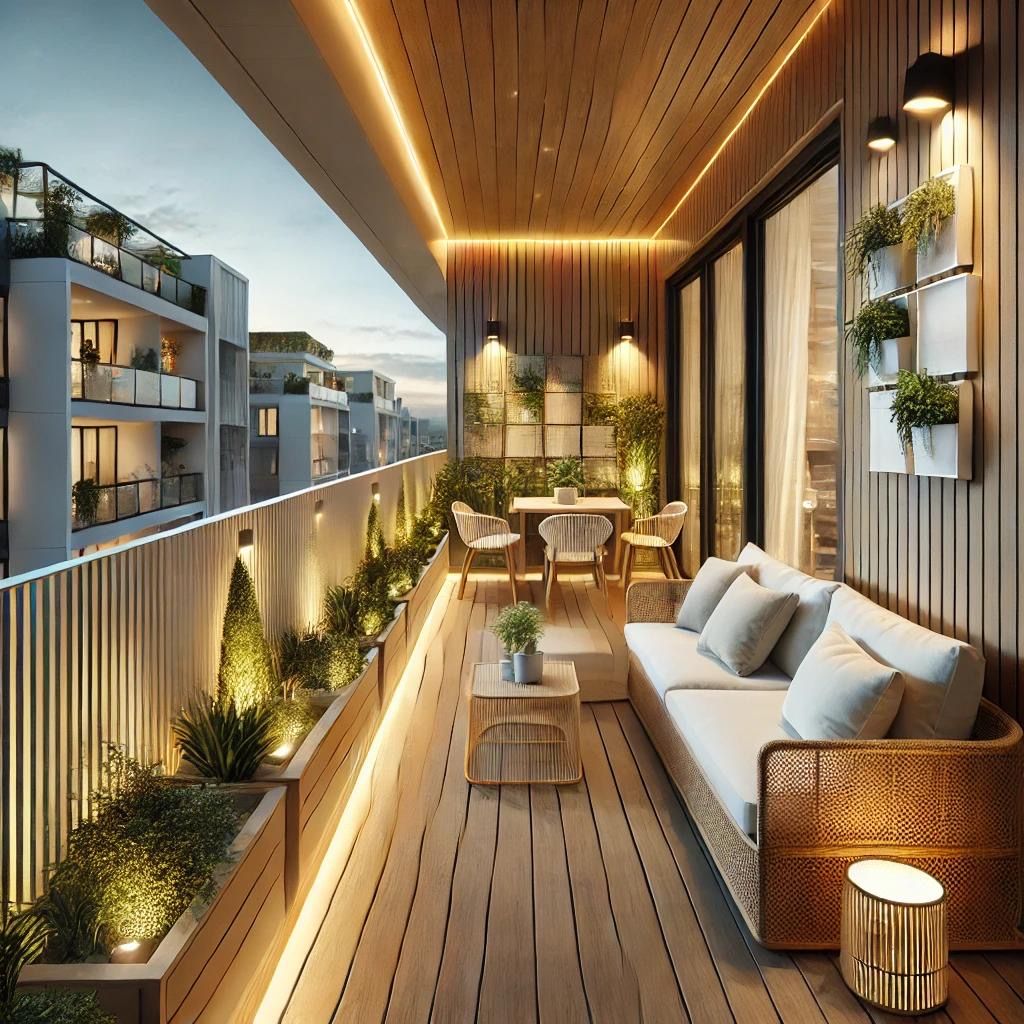
Aesthetics & Styles play a defining role in shaping how interiors feel, function, and connect with people. Below is a clear, design-focused overview of the most influential interior styles today, highlighting their core principles, visual language, and practical applications.
Biophilic Design


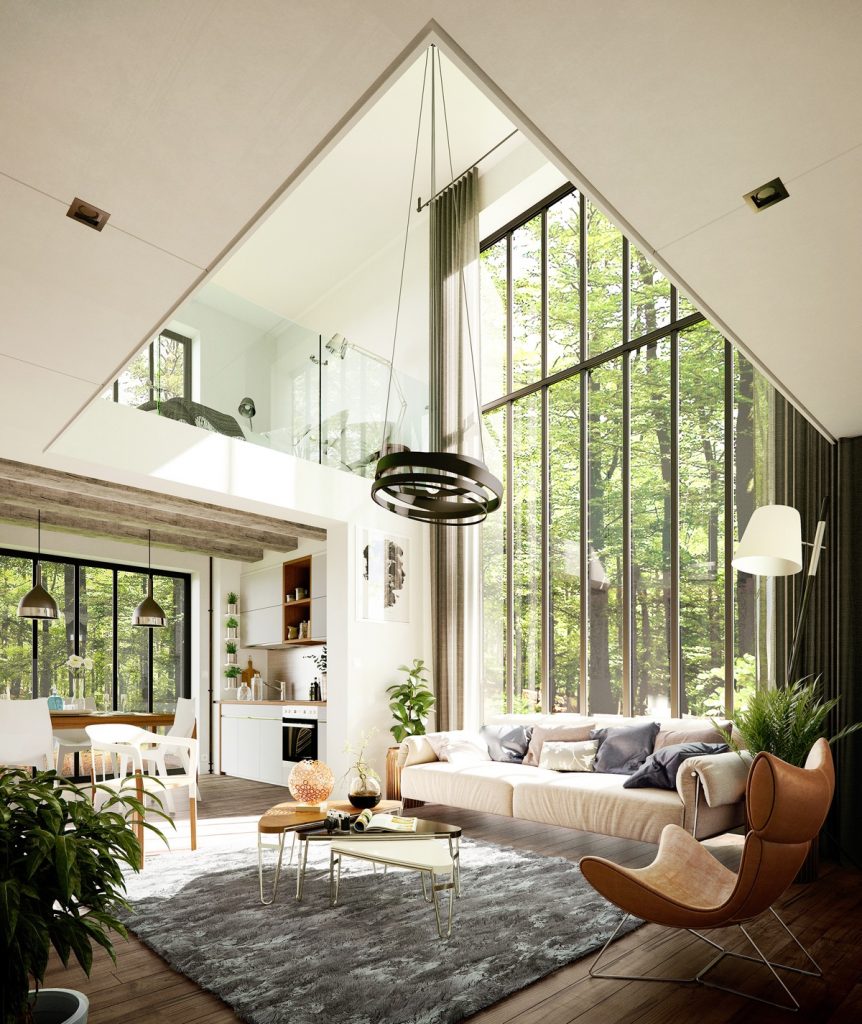
Biophilic design focuses on strengthening the connection between interiors and nature. It is driven by the idea that humans thrive in environments that reflect natural elements.
Key characteristics:
- Abundant natural light and ventilation
- Indoor plants, green walls, and water features
- Use of organic materials such as wood, stone, clay, and linen
- Earthy color palettes inspired by forests, sand, and water
Why it works:
- Improves well-being and productivity
- Creates calming, restorative interiors
- Ideal for homes, workplaces, healthcare, and hospitality spaces
Bohemian (Boho) Style


Bohemian design is expressive, layered, and free-spirited. It embraces individuality and global influences without rigid rules.
Key characteristics:
- Rich colors, patterns, and mixed textures
- Handcrafted décor, vintage furniture, and artisanal accents
- Layered rugs, throws, cushions, and wall hangings
- Eclectic mix of cultural and personal elements
Why it works:
- Encourages creativity and personalization
- Feels relaxed and lived-in
- Perfect for artists, travelers, and informal residential spaces
Scandinavian Style


Scandinavian design emphasizes simplicity, functionality, and warmth. Originating from Nordic countries, it balances minimalism with comfort.
Key characteristics:
- Neutral palettes dominated by whites, greys, and soft pastels
- Clean lines and clutter-free layouts
- Natural wood, wool, and soft textiles
- Emphasis on light and cozy atmospheres (hygge)
Why it works:
- Timeless and highly functional
- Makes small spaces feel open and bright
- Suitable for urban apartments and modern homes
Mid-Century Modern


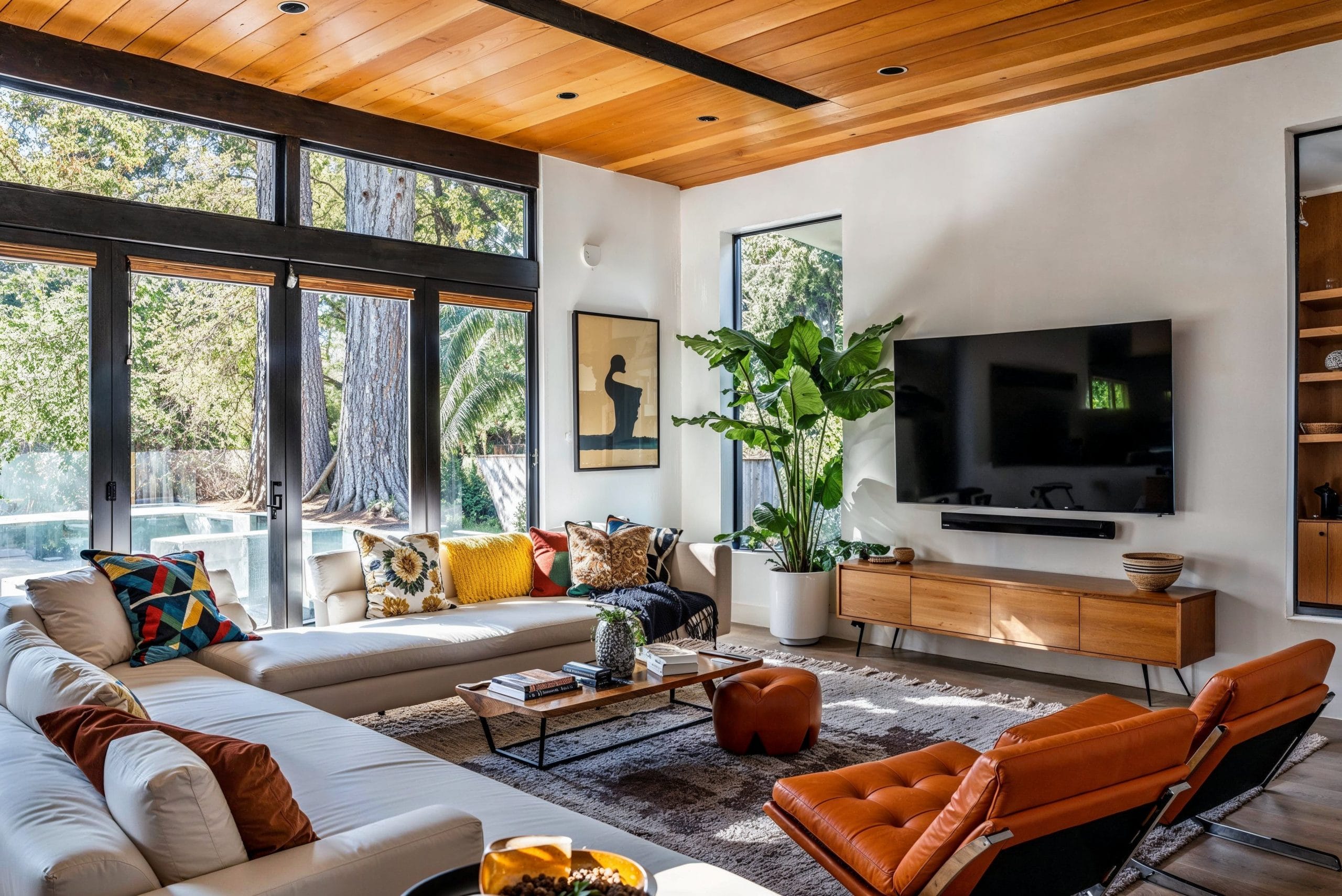

Mid-Century Modern design draws from the 1940s–60s, combining simplicity with bold visual identity.
Key characteristics:
- Clean lines and organic curves
- Functional furniture with tapered legs
- Warm wood tones paired with bold accent colors
- Graphic patterns and iconic lighting
Why it works:
- Retro yet contemporary
- Blends well with modern and minimalist interiors
- Ideal for statement-driven residential and commercial spaces
Japandi


Japandi is a hybrid of Japanese minimalism and Scandinavian functionality. It focuses on calm, balance, and intentional design.
Key characteristics:
- Muted, neutral color palettes
- Clean forms with warm, natural materials
- Minimal décor with high craftsmanship
- Emphasis on negative space and serenity
Why it works:
- Creates peaceful, clutter-free interiors
- Combines warmth with minimalism
- Ideal for modern luxury homes and mindful living spaces
Minimalist Maximalism
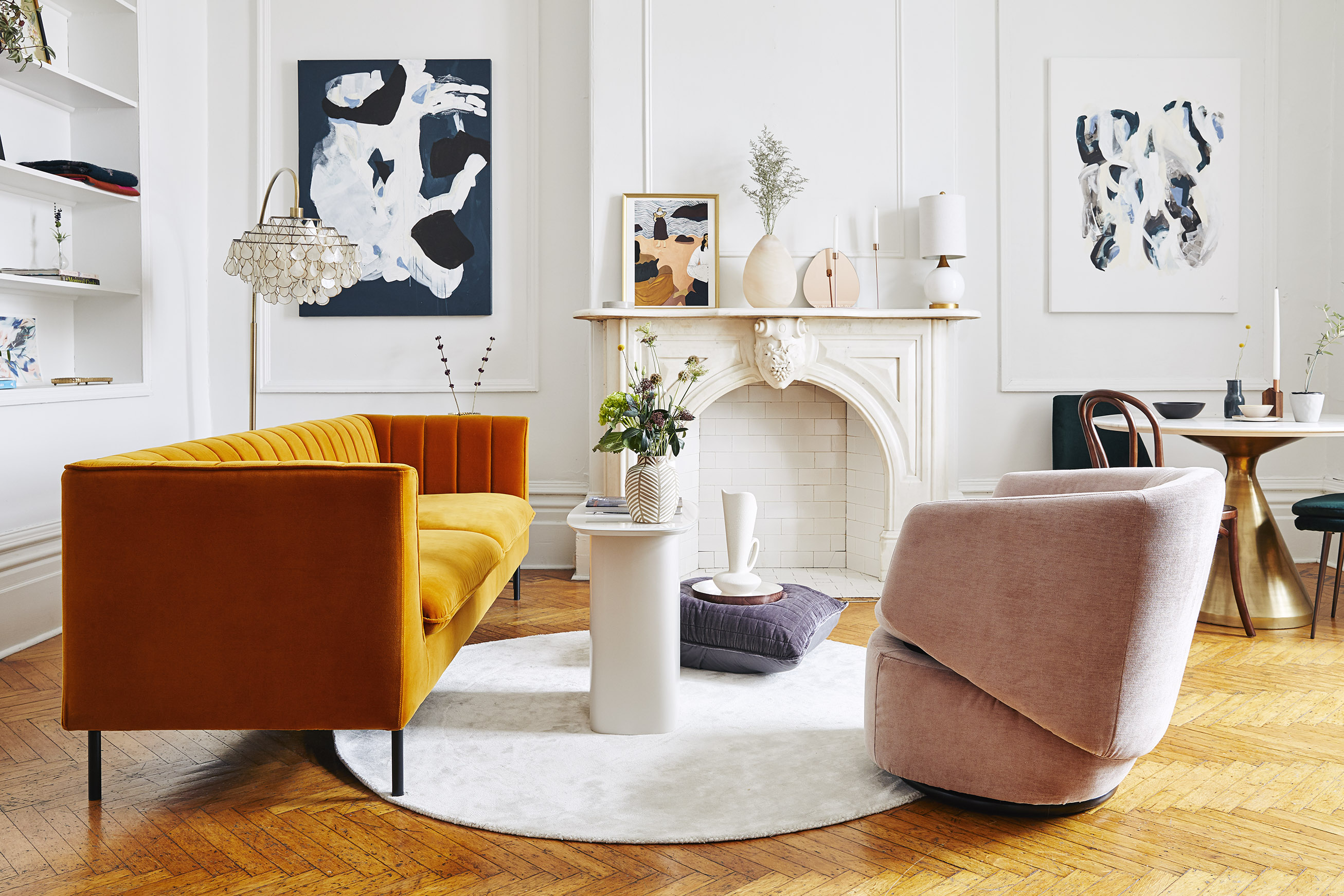
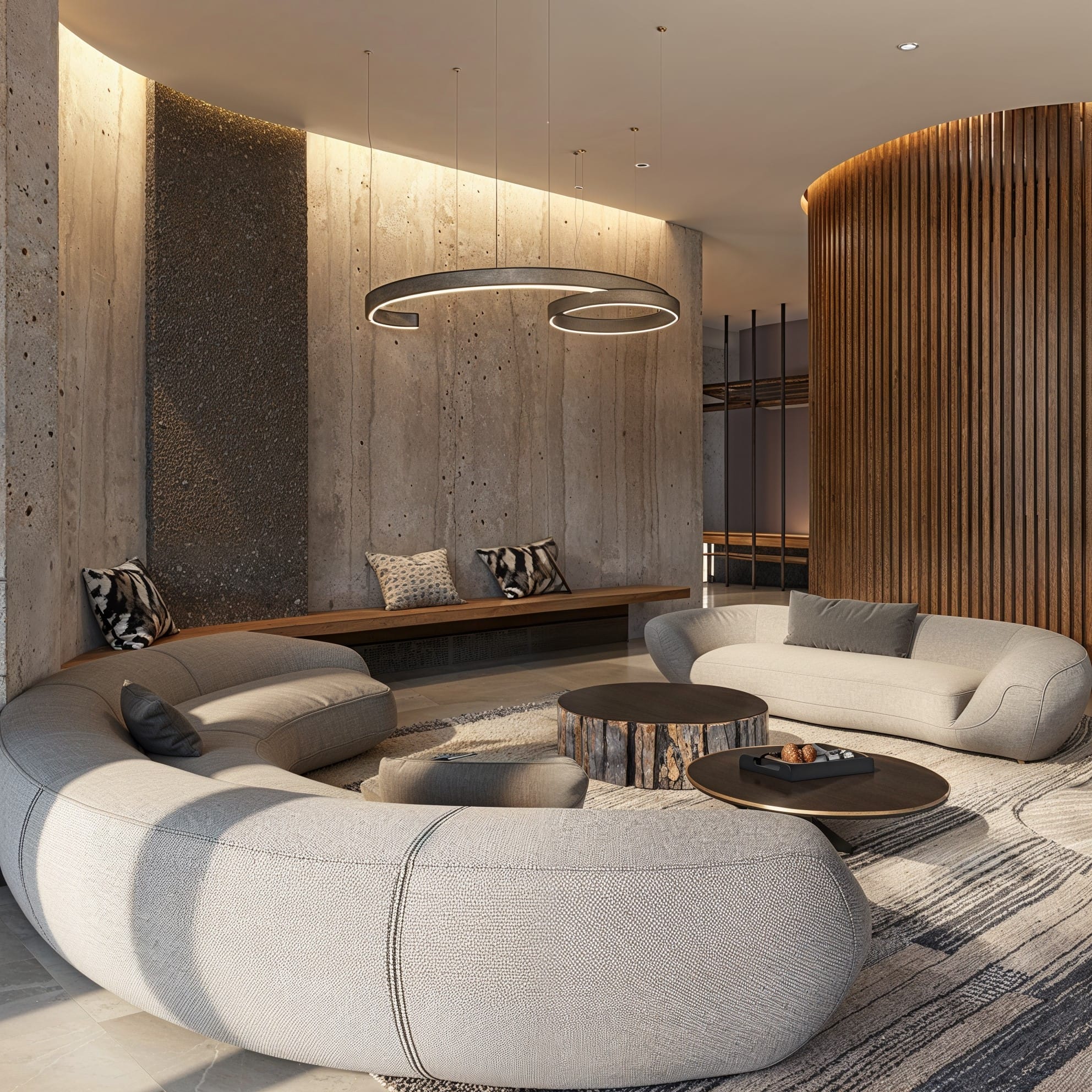


Minimalist maximalism merges restraint with expression. It keeps layouts clean while using bold elements to create impact.
Key characteristics:
- Neutral or minimal base with statement features
- Bold artwork, sculptural furniture, or dramatic lighting
- Limited but intentional use of color and texture
- Focus on quality over quantity
Why it works:
- Visually striking without feeling cluttered
- Allows creative expression within structure
- Suitable for contemporary homes and boutique commercial spaces
Summary
Each interior design style serves a distinct purpose:
- Biophilic design reconnects spaces with nature
- Bohemian celebrates individuality and freedom
- Scandinavian prioritizes comfort and simplicity
- Mid-Century Modern blends nostalgia with function
- Japandi creates calm through balance
- Minimalist maximalism delivers impact with restraint
Choosing the right aesthetic depends on lifestyle, space requirements, and emotional goals. Blending elements thoughtfully often leads to the most timeless and personalized interiors.