Maximalist Decor: Mix Patterns & Colors With Style
Build a vibrant, expressive home with bold colors, layered patterns, rich textures, statement furniture and meaningful pieces—without letting the room become visually chaotic.
Plan Your Maximalist HomeMore can work—when every layer has a reason
The supplied Interior A to Z article defines maximalism through abundant patterns, colors and textures, while emphasizing cohesion, scale, focal points and balance. This homepage-style version turns those principles into a practical design system for modern Delhi NCR homes.
01. Start with a bold palette
Choose a dominant color family first, then add complementary or contrasting shades so the room has an intentional visual base.
02. Mix patterns thoughtfully
Combine florals, stripes, geometrics and abstracts while repeating one or more colors to connect the different motifs.
03. Create a focal point
Give the eye a destination with an accent wall, artwork, statement furniture piece or distinctive lighting fixture.
04. Layer rich textures
Pair smooth finishes with woven, plush, rough or natural textures to give the room depth beyond color alone.
05. Play with pattern scale
Mix large, medium and small motifs instead of giving every pattern equal visual weight.
06. Keep a balancing neutral
Neutral walls, flooring or selected furniture can create breathing space around the more expressive elements.
How to mix bold patterns without making the room chaotic
The simplest way to control maximalist pattern mixing is to create a visual relationship between the patterns. Use a shared color, vary pattern scale and let one print lead while others support it. The original guide specifically recommends mixing different motifs and scales within a cohesive color scheme.
- Choose one dominant pattern for the room.
- Add a secondary pattern at a different scale.
- Repeat at least one color across multiple fabrics or surfaces.
- Use solids to separate competing patterns.
- Keep major furniture silhouettes relatively clear.
- Step back and edit anything that competes with the focal point.
Color, texture and personality belong in the same composition
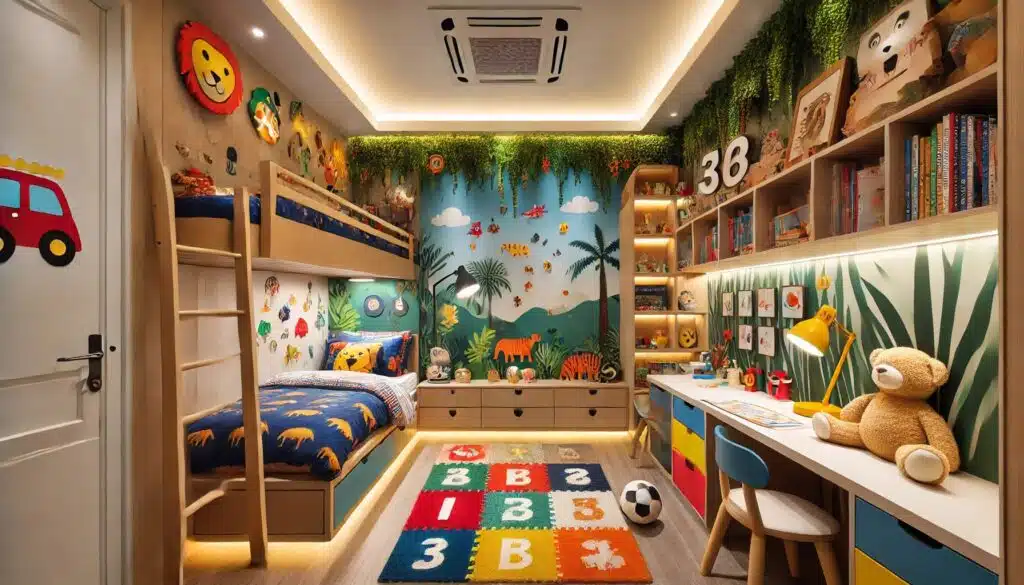


Maximalism becomes stronger when the different layers tell the same visual story. Think of the room as a composition: color establishes mood, pattern adds rhythm, texture adds depth, furniture provides structure and personal objects add meaning.
Six elements that make maximalism feel intentional
Statement furniture
Blend contemporary pieces with vintage or unconventional forms to create an eclectic but considered room.
Decorative lighting
Chandeliers, pendants, lamps and sculptural fixtures can become another layer of the room’s visual identity.
Art & collectibles
Use art, sculptures, books and collections to make the home tell a personal story rather than simply follow a trend.
Textiles
Rugs, cushions, curtains and upholstery are ideal places to introduce pattern and repeat accent colors.
Personal objects
Travel memories, family pieces and sentimental objects can give maximalist rooms their strongest sense of identity.
Negative space
Even expressive rooms need breathing room. Clear circulation and selected empty surfaces keep the design usable.
Design maximalism without losing function
Define the room’s function
Start with seating, storage, circulation and daily routines. Decoration should enhance the way the room is used.
Choose the visual anchor
Select one dominant feature—such as an artwork, sofa, wallpaper, rug or lighting piece—to lead the composition.
Build the palette
Choose the dominant color and supporting tones before adding patterns, fabrics and decorative objects.
Layer, then edit
Add texture, furniture, art and accessories gradually. Remove elements that compete rather than contribute.
More design ideas for expressive Delhi NCR homes
Distinctive Home Decor
Use color, texture, lighting, art, plants, mirrors and personal details to create a unique interior.
Space Planning
Make bold interiors practical by planning circulation, furniture proportions, storage and functional zones first.
Interior Design Services
Explore residential interiors, modular kitchens, wardrobes and turnkey interior solutions.
Maximalist interior design questions
What is maximalist interior design?
Maximalist interior design uses abundant color, pattern, texture, art and decorative elements to create an expressive and visually rich space. Cohesion and balance keep the result intentional.
How do I mix patterns without making my home look chaotic?
Use a unifying color palette, vary pattern scale, let one pattern lead and use solid surfaces to separate stronger motifs.
Can maximalist decor work in a small apartment?
Yes. Use vertical space, lighter base colors where useful, carefully selected focal points and controlled pattern placement so the room remains visually open.
How many colors should I use in a maximalist room?
There is no fixed number. A dominant color family with supporting and accent colors usually creates more cohesion than choosing unrelated colors without a visual relationship.
How can I make maximalist decor feel intentional?
Create clear focal points, repeat colors or materials, vary pattern scale, maintain usable circulation and edit decorative pieces that do not support the overall composition.
Make your home bold, layered and personal.
Turn color, pattern, texture and meaningful objects into a cohesive interior designed around the way you live.