Lighting Ideas & Tips That Make a Home Feel Beautiful
Lighting is not only about brightness. The right combination of ambient, task and accent lighting can shape mood, highlight materials, improve everyday function and give each room a refined finish.
Plan Your Interior LightingStart With Layers, Not Fixtures
A successful lighting plan begins with how a room is used. General illumination provides the foundation, task lighting supports activities, and accent lighting adds depth and visual focus.
Ambient
Overall illumination for comfortable movement and everyday use. Ceiling fixtures, recessed lights and indirect sources can form the base layer.
Task
Focused light for cooking, reading, dressing, studying and working. Place it where the activity happens rather than simply adding more ceiling lights.
Accent
Use focused or decorative light to emphasize artwork, textured walls, shelves, joinery, niches or architectural details.
Lighting Ideas by Room
Coordinate fixture position, colour temperature, controls and furniture before final electrical work.
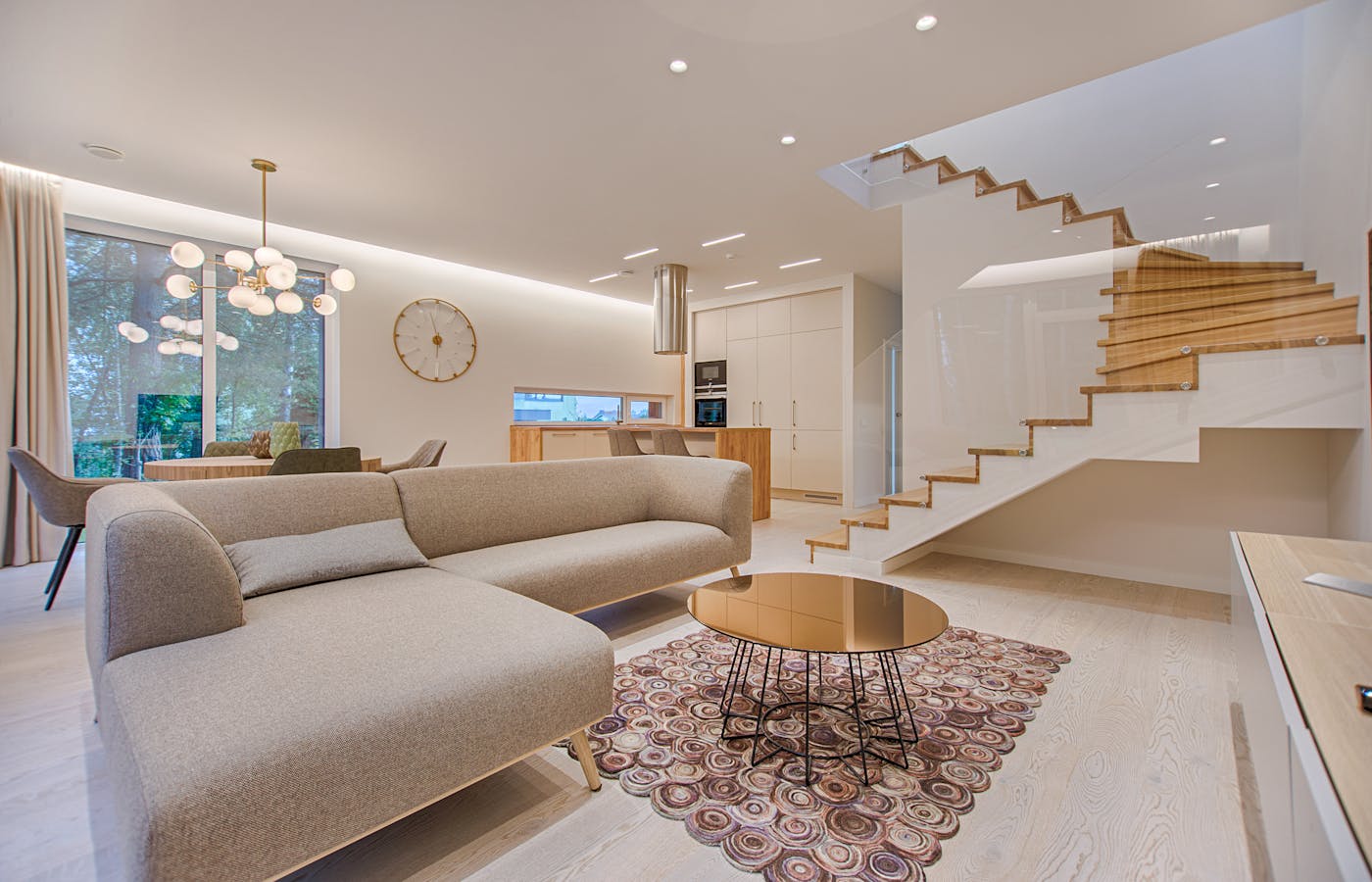
Combine general ceiling illumination with floor or table lamps, wall lights and accent lighting for artwork or feature walls. Keep glare away from television and seating sightlines.
Use softer ambient light with bedside task lighting. Wardrobe lighting and concealed headboard illumination can add convenience without making the room overly bright.
Prioritize task lighting over worktops, sinks and cooking zones. Under-cabinet lighting can reduce shadows and make preparation areas easier to use.
A pendant or chandelier can define the table while ambient lighting keeps circulation comfortable. Install it at a proportionate height for the table and room.
Combine comfortable ambient light with focused desk lighting. Control glare on screens by considering window direction and fixture placement.
Use suitable task lighting around the mirror and balanced general illumination. Select fixtures and electrical products appropriate for the environment.
12 Practical Lighting Tips
Mark furniture, cabinetry and activity zones before deciding switch and light positions.
Balance ambient, task and accent sources instead of relying on one fixture.
Consider eye level, reflective surfaces, television screens and polished finishes.
Wall washing and grazing can visually expand a room and reveal texture.
Wardrobes, display shelves and kitchen cabinets benefit from well-positioned integrated lighting.
Coordinate light colour with room function and the palette of the interior.
Separate circuits, dimming and scene controls make a layered plan more useful.
A feature pendant or wall light can become part of the room’s visual identity without overwhelming it.
Fixture size should relate to ceiling height, room dimensions and furniture.
Recessed lights, coves and profiles should be integrated into the false-ceiling layout rather than added afterward.
Choose accessible fixtures and plan replacement or servicing without disturbing finished interiors.
Rooms change over time, so avoid making every lighting decision dependent on one furniture arrangement.
Lighting, Materials & Interior Design
Lighting changes how colours, textures, wood finishes, stone, glass, metal and fabrics are perceived. It should therefore be coordinated with the wider interior palette.
False Ceiling
Coordinate downlights, concealed coves and linear profiles with the ceiling geometry and room proportions.
Furniture
Reading lamps, bedside lights, pendants and floor lamps should respond to furniture scale and circulation.
Feature Surfaces
Use accent lighting to reveal wall panels, artwork, textured finishes, niches and architectural details.
A Simple Lighting Planning Process
01 · Survey
Understand room dimensions, windows, ceiling height, electrical points and natural daylight.
02 · Zone
Map activities such as cooking, reading, dressing, dining, working and relaxing.
03 · Layer
Assign ambient, task and accent lighting to each zone.
04 · Coordinate
Integrate lighting with furniture, kitchen cabinets, wardrobes and ceiling details.
05 · Control
Plan switches, circuits, dimmers and smart controls where useful.
06 · Test
Review positions and brightness before final finishes and handover.
Lighting FAQ
What are the three main layers of interior lighting?
Ambient lighting provides general illumination, task lighting supports specific activities, and accent lighting adds emphasis and depth.
How can I improve lighting in a small home?
Use layered illumination, wall washing, integrated storage lighting and flexible lamps while avoiding excessive visual clutter.
Should lighting be planned with the interior designer?
Yes. Coordinating lighting with furniture, ceiling design, kitchen and wardrobe layouts helps avoid misplaced points and unnecessary rework.
Build the Lighting Plan Into the Interior
Interior A to Z provides home interior design and execution services across Delhi NCR, including Gurgaon and Noida.
Explore Interior Design Services