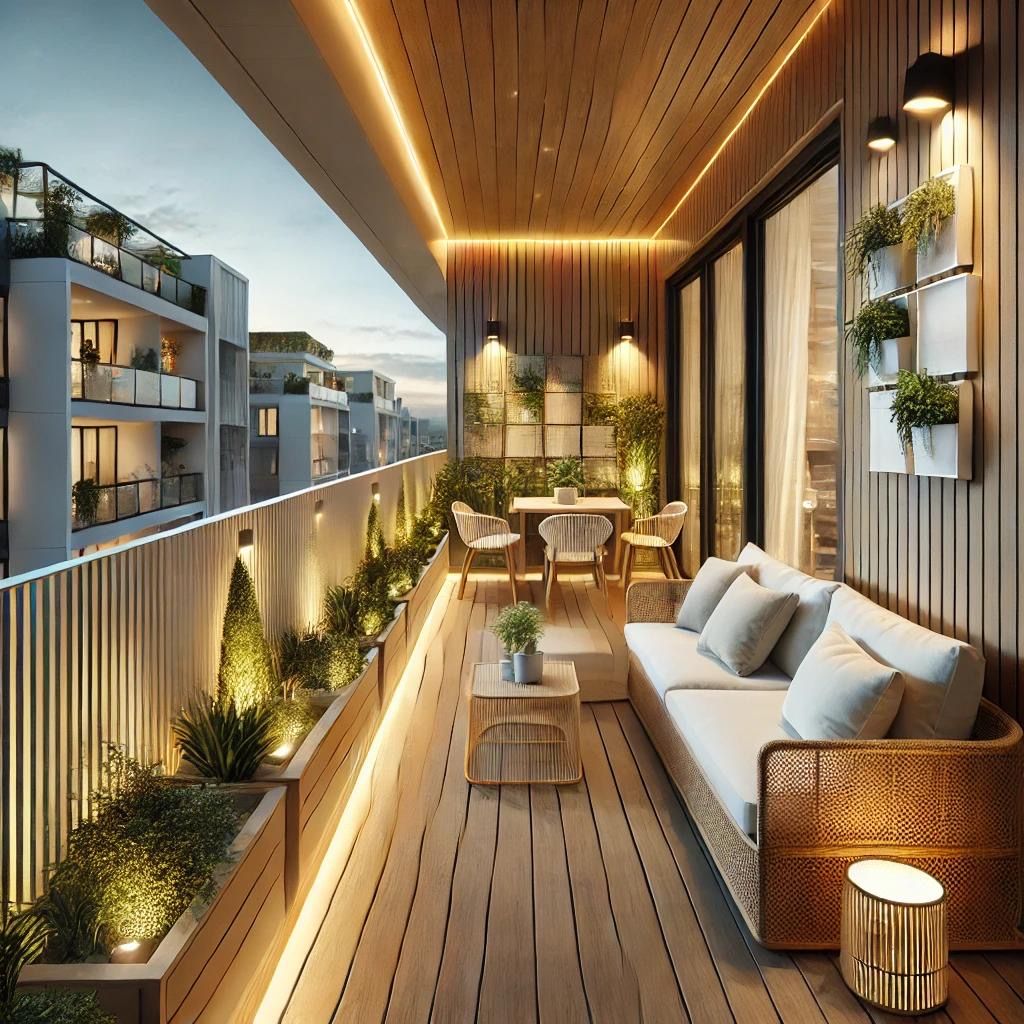
“Luxury” commonly means premium materials, custom detailing, imported finishes, heavy ornamentation, and high design overhead. But you can evoke luxury by applying a few strategic touches rather than doing everything in premium style.
Key levers:
- Contrast & accents (use luxe materials sparingly)
- Lighting (plays a huge role in luxury mood)
- Proportions & scale (large voids, simple lines)
- Texture & layering rather than expensive materials
- High quality focal pieces + more modest surrounding elements
Elements That Yield High Impact for Less
| Feature | Low Budget Alternative | Impact / Effect |
|---|---|---|
| Marble / stone accent | Use engineered stone / quartz / marble-look tile / large format tile | gives marble illusion without full cost |
| Wood detailing / paneling | Use MDF / laminate panels with wood grain finish and molding trims | gives warmth and form |
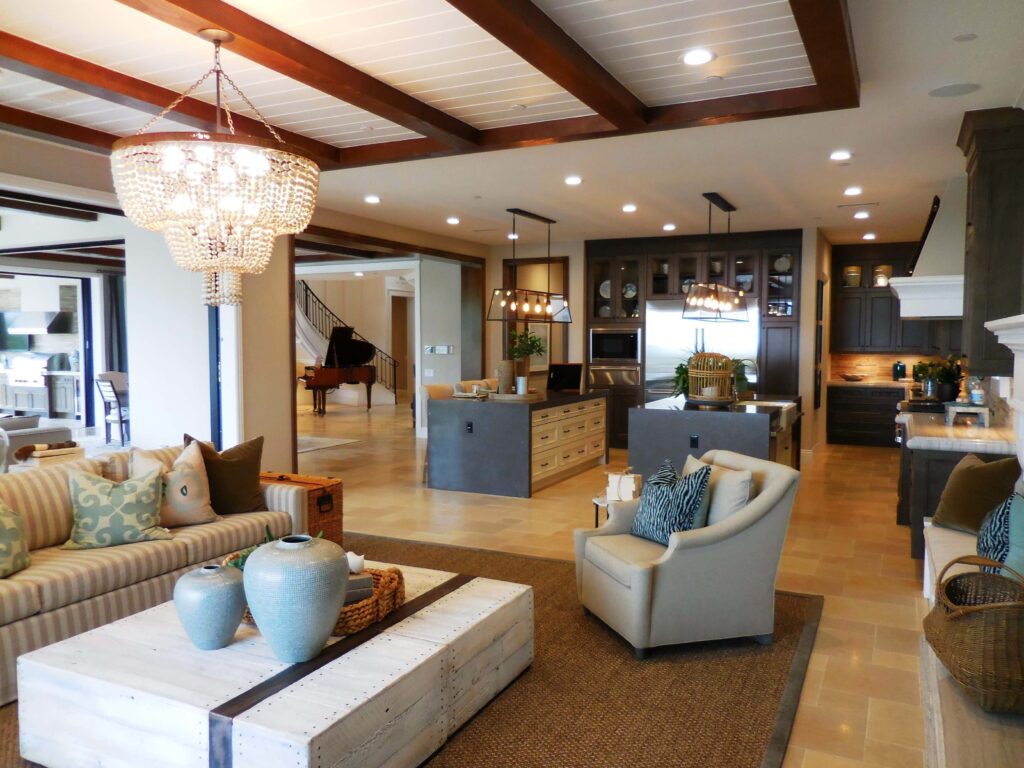
| Statement lighting / chandeliers | Use 1 luxury pendant + simpler ones elsewhere | draws eye, sets tone |
| Luxury flooring | Use laminate or engineered wood, or porcelain tiles | gives clean, rich look without solid wood |
| Feature wall | Use wallpaper, 3D panels, textured paint | focal point without full wall cost |
| Hardware & fixtures | Use premium style handles on key pieces + standard elsewhere | visual upgrade for little cost |
Estimated Cost Ranges (Budget Lux Look)
When doing interiors with a “luxury look but low budget” objective, your per sq ft cost will sit between very basic and premium. Here’s an indicative bracket:
- Basic: ₹800 – ₹1,200 per sq ft
- “Luxury look” lean upgrade: ₹1,200 – ₹1,800 per sq ft
- With more decorative touches: ₹1,800 – ₹2,500 per sq ft
So for a 2BHK (800-1,000 sq ft), a budget luxury look might cost ₹9.6 lakhs to ₹18 lakhs, depending on city and scope.
Sample Design Strategy
Suppose you have a 500 sq ft living + dining zone:
- Floor: Use large format porcelain or engineered wood
- Feature wall: Use 3D panels or high texture wallpaper
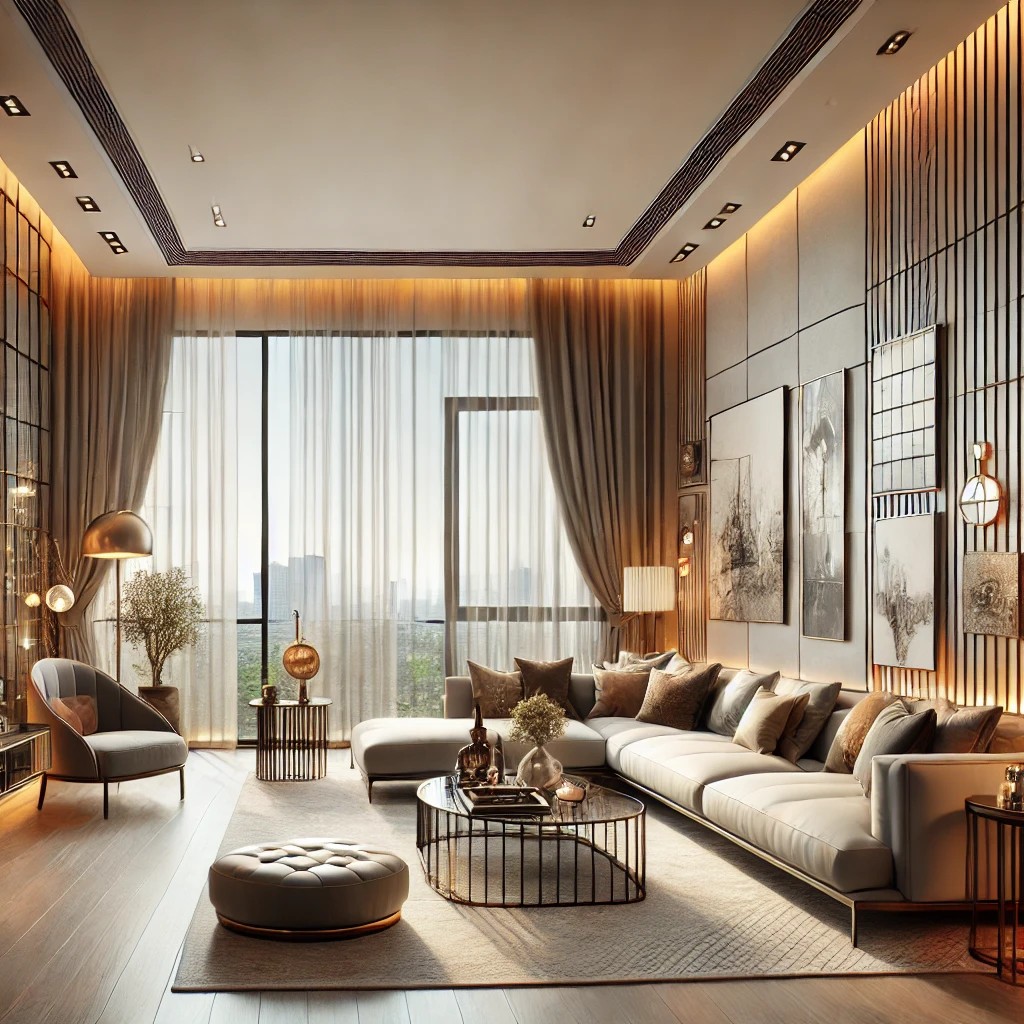
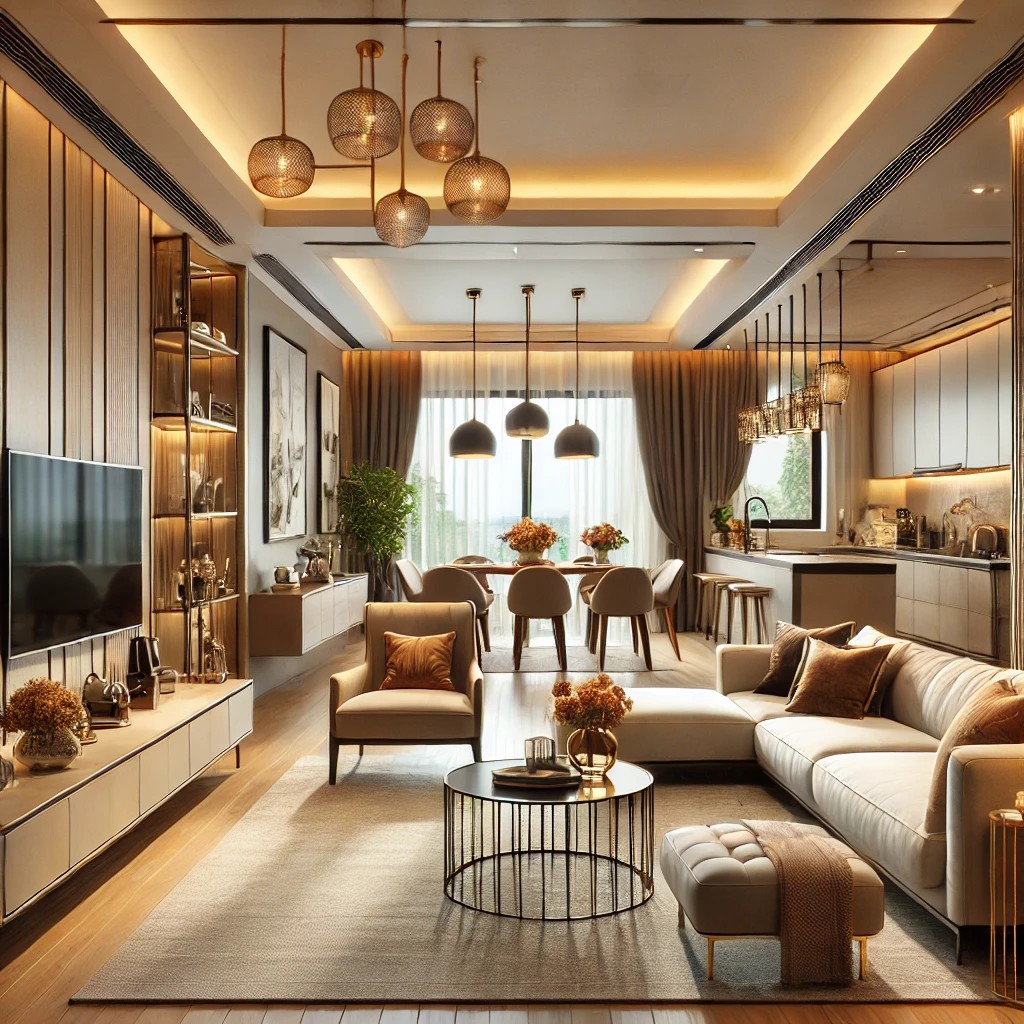
- Lighting: One elegant chandelier + recessed LED cove lighting
- Furniture: One statement sofa piece in better upholstery + modular units in matching wood tones
- Trim / Molding: Use narrow moldings to frame ceilings / wall edges
- Mirrors / reflected surfaces: Use mirrored wall segments or glass to expand space
- Accessories: Use curated décor items (vases, art) as focal accents
With those, you can evoke a luxurious feel without premium materials in every element.