Introduction
Interior design in modern homes is more than just aesthetics; it’s about creating spaces that reflect your lifestyle while maintaining functionality and comfort. Whether it’s a cozy apartment or a spacious villa, interior design principles can help transform any room into a stylish, comfortable haven. This blog explores seven key concepts of interior design in modern homes and how you can use them to elevate your living space.
1. Minimalism: Less is More
The minimalist approach is one of the cornerstones of modern interior design. It emphasizes simplicity, clean lines, and a monochromatic palette with splashes of color for accentuation. This style not only makes your home look organized but also provides a calming environment.
- Use neutral colors like white, beige, or gray for walls and furniture.
- Keep decor to a minimum, focusing on quality over quantity.
- Incorporate functional furniture with hidden storage to maintain a clutter-free look.
2. Open Floor Plans for Spaciousness
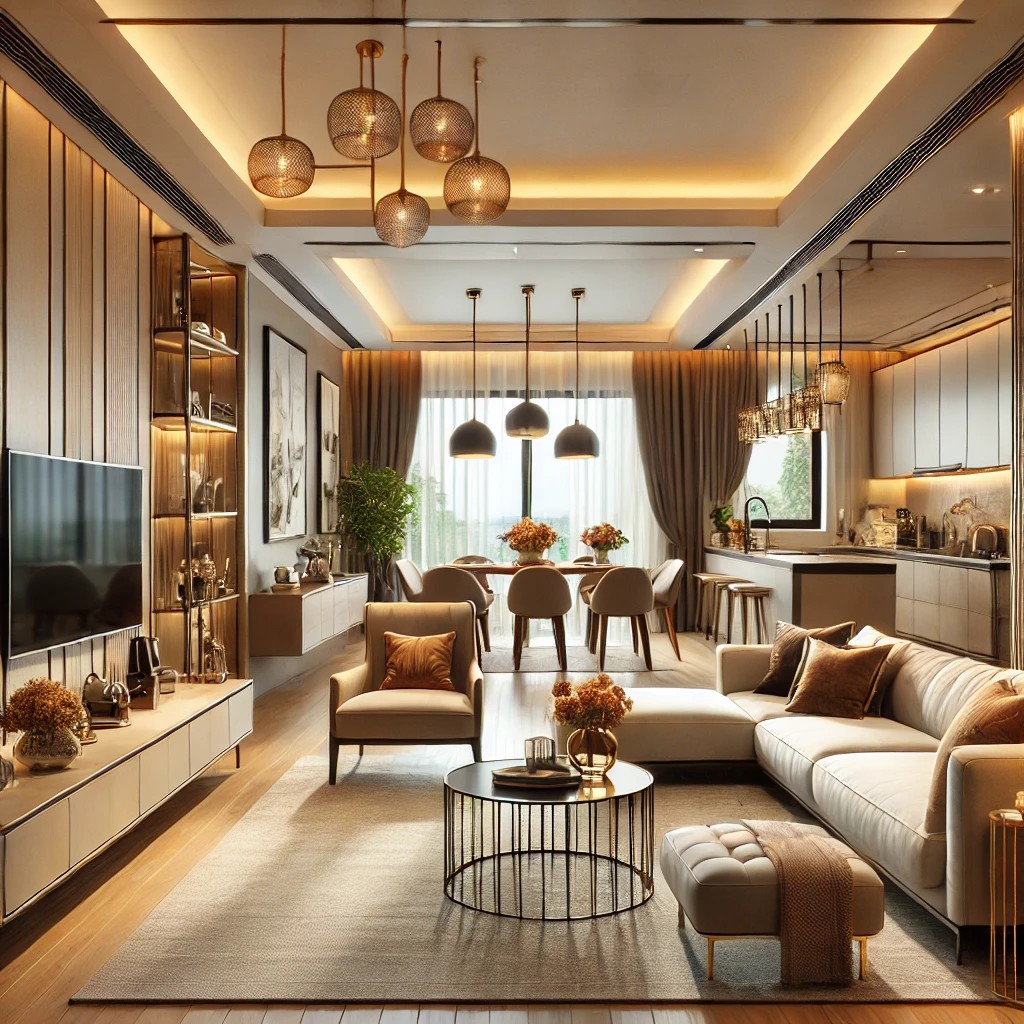
Open floor plans break down the barriers between rooms, promoting a free flow of light and air. They are particularly popular in modern homes because they make small spaces appear larger and enhance social interaction.
- Combine the living, dining, and kitchen areas into a single, unified space.
- Use area rugs and lighting to define different zones within an open space.
- Opt for sliding glass doors or large windows to bring in natural light.
3. Incorporation of Natural Elements
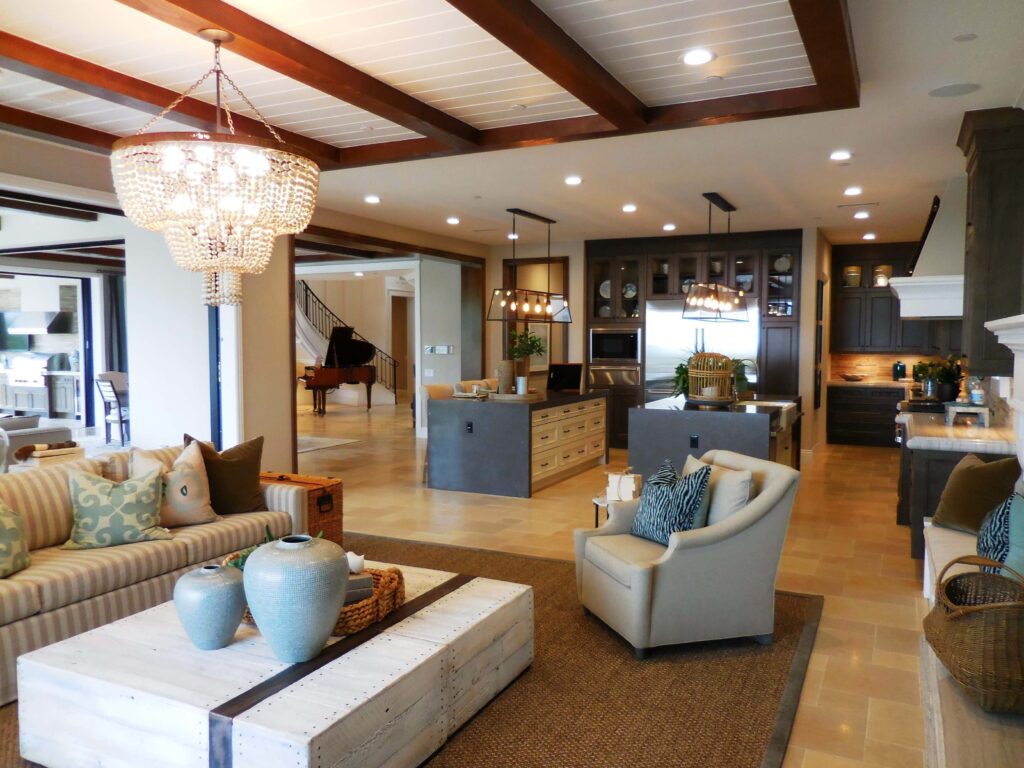
Modern interior design integrates natural materials like wood, stone, and metal to add texture and warmth to a space. These elements bring the outdoors in, creating a connection with nature and promoting a sense of well-being.
- Choose wooden flooring or exposed beams for a rustic touch.
- Incorporate natural stones in countertops or fireplaces.
- Add indoor plants for a refreshing, natural vibe.
4. Technology Integration
Smart homes are becoming a standard in modern interior design, with technology seamlessly integrated into the living space. From automated lighting to smart thermostats, technology enhances convenience and comfort.
- Install smart lighting systems that can be controlled via an app or voice commands.
- Use built-in speakers for a home theater experience.
- Automate home functions, such as temperature control or security features.
5. Sustainable and Eco-Friendly Materials
Sustainability is a significant trend in interior design, with an increasing focus on using eco-friendly and sustainable materials. Modern homes often incorporate recycled, upcycled, or low-impact materials.
- Opt for eco-friendly paints that are low in VOCs (volatile organic compounds).
- Choose furniture made from sustainable materials like bamboo or reclaimed wood.
- Install energy-efficient appliances and LED lighting.
6. Statement Lighting as a Focal Point
Lighting plays a crucial role in setting the mood and style of a space. In modern interior design, statement lighting fixtures act as focal points that add a touch of elegance.
- Hang a chandelier in the dining area for a luxurious feel.
- Use pendant lights over kitchen islands or countertops.
- Incorporate LED strip lighting to highlight architectural features.
7. Bold Color Accents for Visual Interest
While modern interiors often favor neutral tones, using bold colors as accents can create visual interest and a sense of personality. Strategically placed color can breathe life into an otherwise monochromatic space.
- Paint an accent wall with a bold color like deep blue or emerald green.
- Add colorful throw pillows, rugs, or artworks to introduce contrast.
- Use metallic finishes like gold or brass for an elegant touch.
FAQs on Modern Interior Design
Q1. What is the importance of minimalism in modern interior design?
Minimalism emphasizes simplicity, decluttering, and functionality, creating a space that feels peaceful and organized.
Q2. How do open floor plans enhance modern living?
Open floor plans increase natural light, create a sense of spaciousness, and improve social interaction by removing physical barriers.
Q3. What are some eco-friendly materials used in modern interiors?
Eco-friendly materials include bamboo, reclaimed wood, recycled metal, low-VOC paints, and natural stone.
Q4. How can technology be seamlessly integrated into interior design?
Smart devices such as automated lighting, thermostats, built-in speakers, and voice-controlled assistants can be incorporated for added convenience.
Q5. Why are bold color accents used in otherwise neutral modern interiors?
Bold colors add contrast and interest, preventing the space from looking monotonous while reflecting the homeowner’s personality.
Conclusion
Modern interior design is all about finding the perfect balance between aesthetics, functionality, and sustainability. Whether you prefer minimalist decor, the warmth of natural materials, or the smart integration of technology, understanding these key concepts will help you create a home that truly resonates with modern living. When planning your next interior design project, keep these principles in mind to transform your space into a beautiful, modern sanctuary.
External Resources
For more information and inspiration, check out these resources:
These links provide valuable insights into modern interior design trends, tips, and practical solutions for homeowners.