
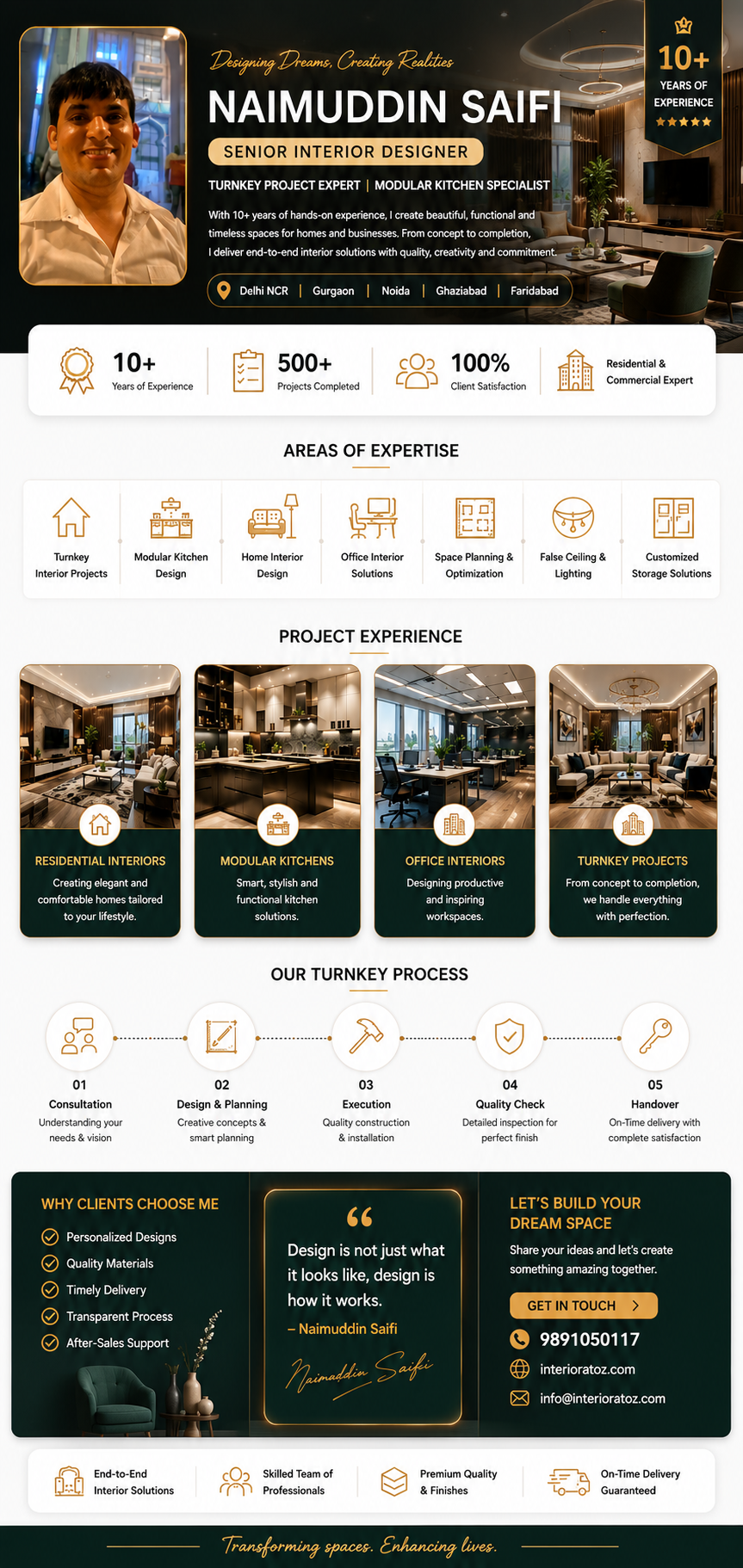
Author name: Interior A to Z - Luxury Interior Designers

Interior A to Z is a premier interior design firm specializing in luxury residential and commercial transformations across Gurgaon, Noida, and Delhi NCR. With over 15 years of expertise, we offer end-to-end solutions, from modular kitchens and minimalist bedrooms to complete home renovations. Our mission is to blend modern aesthetics with functional design. Book a Free Consultation at https://interioratoz.com/contact-us/ to start your dream project today.

Timeless Elegance: Embracing Classic Interior Design


Chapter 1: Introduction to Classic Interior Design

Classic interior design is an enduring style that transcends trends, focusing on timeless elegance and sophistication. It pays homage to the past while creating a space that feels warm, inviting, and effortlessly refined.


Chapter 2: The Foundation: Neutral Color Palette

Start with a neutral color palette as the foundation of classic design. Timeless hues like whites, creams, beiges, and soft grays set the stage for an elegant and versatile backdrop that withstands the test of time.


Chapter 3: Timeless Furniture Pieces

Invest in quality furniture that boasts traditional silhouettes and craftsmanship. Classic design embraces pieces with simple lines, graceful curves, and luxurious materials, creating a sense of enduring beauty in every room.


Chapter 4: Elegant Fabrics and Textures

Luxurious fabrics such as silk, velvet, and damask add a touch of opulence to classic interiors. Incorporate these materials through upholstery, drapery, and accent pillows to create a sense of richness and comfort.


Chapter 5: Symmetry and Balance

Classic design thrives on symmetry and balance. Create a harmonious environment by arranging furniture and decor in a balanced manner, evoking a sense of order and grace throughout the space.


Chapter 6: Architectural Details

Highlight architectural details to enhance the classic aesthetic. Crown molding, wainscoting, and coffered ceilings add a level of sophistication, while arched doorways and columns evoke a sense of timeless grandeur.


Chapter 7: Time-Honored Patterns

Incorporate classic patterns such as stripes, florals, and damasks into upholstery, rugs, and wallpaper. These patterns add a layer of visual interest and tradition, bringing a sense of history into the contemporary home.


Chapter 8: Statement Lighting

Illuminate your space with statement lighting fixtures. Chandeliers, sconces, and classic table lamps not only provide functional lighting but also serve as exquisite focal points that enhance the overall elegance of the room.


Chapter 9: Antique and Vintage Accents

Integrate antique or vintage pieces into your decor to add character and a sense of history. Whether it’s a well-worn bookshelf, an antique mirror, or a vintage rug, these accents contribute to the timeless allure of classic design.


Chapter 10: Understated Luxury

Classic interior design embraces understated luxury. Focus on quality over quantity, allowing a few carefully selected pieces to shine. This approach creates a sense of opulence that is refined and never overbearing.


Conclusion: Timeless Beauty in Every Detail

Classic interior design is not just a style; it’s a celebration of enduring beauty. By incorporating timeless elements, exquisite details, and a sense of balance, you can create a home that exudes elegance for generations to come. Embrace the charm of classic design, where every detail tells a story of refined taste and timeless sophistication.

Timeless Elegance: Embracing Classic Interior Design Read More Β»

Elevate Your Living Spaces: A Masterclass in Home Decor


Unveiling the Art of Interior Harmony

Decorating your home is not just about placing furniture and hanging curtains; it’s an art that involves crafting an environment that resonates with your personality. Let’s embark on a journey to elevate your living spaces and turn your home into a haven of style and comfort.


Chapter 1: The Canvas of Walls

Your walls are the canvas of your home, waiting to tell a story. Experiment with color palettes, textures, and patterns to create a backdrop that speaks volumes. Remember, it’s not just paint; it’s an expression of your style.


Chapter 2: Furniture Symphony

Furniture is more than mere utility; it’s a symphony of form and function. Choose pieces that not only serve a purpose but also complement each other. Blend modern with vintage, and witness the magic of a well-curated ensemble.


Chapter 3: Illuminating Ambiance

Lighting is the unsung hero of interior design. Explore the power of ambient, task, and accent lighting to transform your space. Let there be light in every corner, creating an ambiance that suits every mood.


Chapter 4: Textures and Tactility

Elevate your senses by incorporating textures that invite touch. From plush rugs to tactile wall coverings, infuse your space with elements that awaken the sense of touch, making your home a multi-sensory experience.


Chapter 5: The Green Oasis

Indoor plants are not just decor; they’re a breath of fresh airβ€”literally. Introduce greenery into your home to purify the air and add a touch of nature. From succulents to statement plants, let your space blossom with life.


Chapter 6: Artful Arrangements

Curate your space with meaningful art and accessories. Whether it’s a gallery wall of family photos or a collection of unique artifacts, let your walls and shelves tell a story. Remember, it’s not just about what you have but how you display it.


Chapter 7: Functional Flow

Consider the flow of your space. Arrange furniture to create natural pathways, ensuring a seamless transition from one area to another. A well-designed layout not only looks good but also enhances functionality.


Chapter 8: Personalized Retreats

Every room should reflect its purpose and the person using it. Whether it’s a cozy reading nook, a vibrant kitchen, or a serene bedroom, infuse your personality into each space. Let your home be a reflection of you.


Chapter 9: The Power of Minimalism

Sometimes, less is more. Embrace the elegance of minimalism by decluttering and focusing on essential elements. A minimalist approach creates a sense of calm and allows each piece to shine.


Chapter 10: Timeless Trends

While trends come and go, some endure the test of time. Invest in timeless pieces that transcend fads, ensuring your home remains stylish for years to come. Classic design elements never go out of fashion.


Conclusion: Your Home, Your Masterpiece

As you embark on your journey of home decor, remember that each decision contributes to the masterpiece that is your home. Take your time, experiment, and most importantly, enjoy the process. Let your home be a reflection of your style, personality, and the life you leadβ€”a true masterpiece in the art of living.

Elevate Your Living Spaces: A Masterclass in Home Decor Read More Β»

“Crafting Comfort: Exploring Innovative Furniture Designs for Modern Living”


Introduction:

Furniture design is a fascinating intersection of form, function, and aesthetic innovation. Join me on a journey through the world of contemporary furniture design, where creativity knows no bounds, and each piece is a testament to the evolving artistry of modern living.


1. Minimalist Marvels:

Minimalist furniture design embraces the philosophy of “less is more.” Clean lines, simple shapes, and a focus on functionality characterize minimalist pieces. From sleek sofas to streamlined dining tables, minimalist designs offer a timeless and uncluttered aesthetic.


2. Multifunctional Wonders:

In a world where space is a premium, multifunctional furniture takes center stage. Think sofas that transform into beds, coffee tables with hidden storage, or dining tables that double as work desks. These designs are a testament to the marriage of versatility and style.


3. Organic and Sustainable Creations:

Furniture designers are increasingly turning to sustainable materials and organic forms. From reclaimed wood to eco-friendly upholstery, these designs are not only visually appealing but also environmentally conscious, reflecting a commitment to a greener future.


4. Modular Masterpieces:

Modular furniture is the epitome of adaptability. From modular sofas that can be rearranged to suit different layouts to customizable shelving units, these designs empower users to shape their living spaces according to their needs and preferences.


5. Tech-Integrated Comfort:

As technology becomes seamlessly integrated into our lives, furniture follows suit. Think charging stations built into tables, sofas with built-in speakers, or smart lighting solutions embedded in furniture. Tech-integrated designs offer both convenience and a touch of futuristic flair.


6. Retro Revival:

Nostalgia takes center stage with furniture designs inspired by retro aesthetics. Mid-century modern pieces, bold colors, and quirky shapes from the past are making a stylish comeback, adding a touch of vintage charm to contemporary interiors.


7. Artistic Statement Chairs:

Chairs are no longer just functional; they are sculptural works of art. Designers are pushing the boundaries with avant-garde chair designs that challenge traditional notions of form and function. These statement pieces redefine the role of seating in interior spaces.


8. Fluid and Curvaceous Forms:

Curves are back in a big way. From sinuous sofas to rounded tables, furniture with fluid and curvaceous forms is gaining popularity. These designs add a soft and inviting touch to interiors, breaking away from the rigidity of straight lines.


9. Industrial Chic:

Raw materials, exposed hardware, and a nod to utilitarian aesthetics define industrial chic furniture. From metal-framed coffee tables to industrial-style lighting fixtures, these designs bring the rugged charm of warehouses and factories into contemporary homes.


10. Sustainable Upholstery and Textiles:

Beyond materials, sustainable practices extend to upholstery and textiles. Furniture designers are exploring eco-friendly fabrics, recycled leathers, and innovative textile technologies that reduce environmental impact while providing comfort and style.


11. Customizable Creations:

Empowering users to put their own spin on furniture, customizable designs are gaining popularity. From choosing the color of upholstery to configuring modular pieces, these designs invite users to be co-creators in the design process.


12. Artisanal Craftsmanship:

Handcrafted furniture celebrates the artistry of traditional craftsmanship. From intricately carved wooden pieces to handwoven textiles, artisanal designs showcase the beauty of human skill and dedication to creating furniture with soul.


Conclusion:

Furniture design is an ever-evolving tapestry of creativity, functionality, and style. As you navigate the realm of modern furniture design, let each piece be a reflection of your lifestyle, a source of comfort, and a harmonious addition to the canvas of your living space.

“Crafting Comfort: Exploring Innovative Furniture Designs for Modern Living” Read More Β»

“Draping Elegance: A Guide to Stylish Window Treatments for Every Room”


Introduction:

Window treatments are the crowning glory of a well-designed room, adding sophistication, functionality, and a touch of luxury. Join me on a journey through the world of window treatments, exploring a variety of styles and ideas to elevate your space and create a window of opportunity for design excellence.


1. Classic Curtains:

Timeless and versatile, classic curtains offer endless possibilities. Choose from an array of fabrics, patterns, and colors to complement your decor. Floor-length drapes can add drama and height to the room, while lighter fabrics invite a breezy and relaxed ambiance.


2. Roman Shades:

Roman shades combine the softness of fabric with the structured appeal of blinds. Choose from a variety of fold styles, materials, and patterns to achieve a tailored and sophisticated look. Roman shades are perfect for spaces where you want precise light control.


3. Sheer Elegance:

Sheer curtains let in the soft glow of natural light while maintaining a sense of privacy. Perfect for spaces that benefit from a gentle filtering of sunlight, sheer curtains come in various textures and patterns, adding an ethereal and airy quality to your windows.


4. Practical Vertical Blinds:

Vertical blinds are a practical and modern solution for large windows or sliding glass doors. They offer excellent light control and privacy, and their sleek design can complement contemporary interiors. Choose from various materials, including fabric and vinyl, to suit your style.


5. Elegant Drapery Panels:

Drapery panels are a versatile option that can be customized to suit different styles. Whether you prefer a clean and modern aesthetic or a more traditional look, drapery panels can be tailored to your specifications, framing your windows with grace and elegance.


6. Energy-Efficient Cellular Shades:

Cellular or honeycomb shades are not only stylish but also energy-efficient. The unique design traps air, providing insulation and helping to regulate the temperature in your home. Choose from a range of colors and opacities to achieve the desired atmosphere.


7. Rustic Wooden Shutters:

Wooden shutters exude rustic charm and offer a timeless appeal. Whether you opt for plantation shutters for a classic look or barn-style shutters for a touch of farmhouse chic, wooden shutters provide excellent light control and privacy.


8. Layered Look with Valances:

Enhance the visual appeal of your windows by adding valances. These short decorative panels can be layered over curtains or blinds to introduce patterns, textures, or a pop of color. Valances are a versatile way to frame your windows with style.


9. Bohemian Vibes with Beaded Curtains:

For a touch of bohemian flair, consider beaded curtains. These eclectic and artistic treatments allow light to filter through while adding a playful and whimsical element to your space. Beaded curtains work well in boho-inspired or eclectic interiors.


10. Motorized Window Treatments:

Embrace modern technology with motorized window treatments. Motorization offers convenience, allowing you to control your blinds or shades with the touch of a button. This high-tech solution is ideal for hard-to-reach windows or creating a smart home environment.


11. Layering with Sheer and Blackout:

Achieve the perfect balance of light and privacy by layering sheer curtains with blackout options. This versatile combination allows you to control the ambiance in your room throughout the day, providing flexibility and style.


Conclusion:

Window treatments are more than just functional coverings; they are design elements that contribute to the overall aesthetics of your space. As you explore the myriad options available, let your choice of window treatments be a reflection of your style, enhancing the beauty of your windows and creating a harmonious and inviting atmosphere in every room.

“Draping Elegance: A Guide to Stylish Window Treatments for Every Room” Read More Β»

“Artistry on the Walls: Creative Wall Decor Ideas to Transform Your Space”


Introduction:

Walls are not merely boundaries; they are canvases waiting to be adorned with creativity and personality. Join me on a visual journey through an array of wall decor ideas that go beyond conventional art, adding character, charm, and a touch of your unique style to your living spaces.


1. Gallery Wall Extravaganza:

Create a captivating gallery wall by arranging a collection of framed art, photographs, and prints. Play with different frame styles, sizes, and layouts for a dynamic and personalized visual feast.


2. Statement Murals:

Transform a wall into a work of art with a statement mural. Choose a design that resonates with your styleβ€”whether it’s a nature-inspired scene, an abstract masterpiece, or a vintage map, murals add a bold and artistic focal point.


3. Floating Shelves as Display:

Install floating shelves and turn them into curated displays. Showcase a mix of books, decorative objects, and small plants to add visual interest and depth to your walls.


4. Mirrors with Impact:

Mirrors aren’t just for checking your reflection; they add dimension and light to a space. Opt for oversized mirrors, uniquely shaped designs, or a collection of small mirrors to create a stunning reflective display.


5. Hanging Planters:

Bring nature indoors with hanging planters. Install wall-mounted planters and fill them with cascading greenery. This not only adds a touch of freshness but also introduces a whimsical and organic element to your decor.


6. DIY Wall Art:

Express your creativity through do-it-yourself wall art. Create your own paintings, tapestries, or textile art. The personal touch of handmade decor adds warmth and authenticity to your space.


7. Vintage Plate Wall:

Turn vintage plates into a charming wall display. Mix and match different patterns and sizes for a unique and eclectic look. This unconventional approach to wall decor adds a touch of nostalgia and elegance.


8. Shadow Boxes for Memories:

Craft shadow boxes to showcase cherished memories and mementos. Whether it’s travel souvenirs, ticket stubs, or family photos, these boxes add a personalized and sentimental touch to your walls.


9. Typography and Quotes:

Incorporate inspiring quotes or meaningful typography into your wall decor. This can be achieved through decals, framed prints, or even hand-painted lettering. Choose phrases that resonate with you and contribute to a positive atmosphere.


10. Textile Wall Hangings:

Introduce texture and warmth with textile wall hangings. Whether it’s a woven tapestry, a macramΓ© masterpiece, or a quilted fabric piece, textiles on the walls create a cozy and inviting ambiance.


11. 3D Wall Panels:

Add depth and architectural interest with 3D wall panels. These textured panels come in various designs and materials, transforming a flat surface into a visually dynamic and modern masterpiece.


12. Metal Wall Sculptures:

Explore the world of metal wall sculptures for a contemporary and sophisticated look. From abstract designs to geometric patterns, metal art pieces can serve as striking focal points.


Conclusion:

Wall decor is the silent storyteller of your space, narrating tales of creativity, memories, and personal style. As you explore these diverse wall decor ideas, let your walls become a canvas for self-expression, adding a layer of artistry that enhances the beauty and uniqueness of your living spaces.

“Artistry on the Walls: Creative Wall Decor Ideas to Transform Your Space” Read More Β»

“Designing Harmony: Crafting an Ideal Room Layout for Your Space”


Introduction:

The layout of a room is the architectural foundation upon which the entire design narrative unfolds. Join me in exploring the art of room layout, where every arrangement is a dance of functionality, flow, and aesthetic balance, creating spaces that seamlessly blend purpose and style.


1. Define the Purpose:

Before diving into the layout, clearly define the purpose of the room. Is it a cozy living space for relaxation, a functional home office, or a vibrant dining area for gatherings? Understanding the primary function guides the layout decisions.


2. Consider Traffic Flow:

Map out the natural flow of movement within the room. Ensure that there are clear pathways, avoiding obstacles and allowing easy access to key areas. Thoughtful traffic flow is fundamental to a well-designed and accessible space.


3. Focus on Focal Points:

Identify and highlight focal points in the room, such as a fireplace, large window, or a stunning piece of furniture. Arrange seating and key elements around these focal points to create visual interest and cohesion.


4. Furniture Placement for Conversation:

In seating areas, arrange furniture to facilitate easy conversation. Create intimate groupings with sofas and chairs facing each other, fostering a sense of connection and sociability.


5. Balance and Symmetry:

Achieve visual balance by distributing the visual weight of furniture and dΓ©cor elements evenly throughout the room. While symmetrical arrangements often convey formality, asymmetry adds a dynamic and contemporary touch.


6. Zoning in Open Spaces:

In open-concept spaces, define zones to give each area a distinct purpose. Use area rugs, furniture placement, or changes in flooring to delineate living, dining, and kitchen spaces, creating a sense of structure within the openness.


7. Multipurpose Furniture in Small Spaces:

In smaller rooms, opt for multipurpose furniture that maximizes functionality. Think storage ottomans, convertible sofas, or nesting tables that can adapt to different needs without overwhelming the space.


8. Scale and Proportion:

Consider the scale and proportion of furniture in relation to the room size. Avoid overcrowding or leaving too much open space. Aim for a harmonious arrangement that complements the dimensions of the room.


9. Embrace Vertical Space:

Utilize vertical space for storage and visual interest. Incorporate tall bookshelves, wall-mounted cabinets, or hanging dΓ©cor to draw the eye upward, creating a sense of height and expansiveness.


10. Flexibility for Future Changes:

Design the layout with future changes in mind. Consider how the room may evolve over time and choose a flexible layout that accommodates different furniture arrangements or design adjustments.


Conclusion:

A well-thought-out room layout is the backbone of a beautifully designed space. As you embark on the journey of crafting your room’s layout, let it be a reflection of your lifestyle, a facilitator of daily activities, and a testament to the seamless integration of form and function.

“Designing Harmony: Crafting an Ideal Room Layout for Your Space” Read More Β»

“Finishing Touches: Elevating Your Space with Chic Home Accessories”


Introduction:

In the world of interior design, home accessories are the exclamation points that punctuate a room’s style and personality. Join me on a journey through the realm of chic and curated home accessories, where each piece serves as a brushstroke in the canvas of your living space.


1. Statement Mirrors:

Mirrors are more than reflective surfaces; they are artistic statements. Choose mirrors with unique frames, shapes, or decorative detailing to add depth, enhance natural light, and create a focal point in any room.


2. Luxurious Throw Pillows:

Transform the comfort of your seating with luxurious throw pillows. Experiment with different textures, patterns, and colors to add a layer of sophistication and coziness to sofas, chairs, and beds.


3. Ambient Lighting Fixtures:

Lighting is not just functional; it’s a design element that sets the mood. Invest in stylish ambient lighting fixtures, such as pendant lights, chandeliers, or unique floor lamps, to add a touch of elegance and warmth to your space.


4. Artful Vases and Bowls:

Vases and bowls are not just vessels for flowers or fruits; they are sculptural pieces that contribute to the overall aesthetic. Choose pieces with interesting shapes, textures, or colors to showcase your style and enhance your dΓ©cor.


5. Textured Area Rugs:

Area rugs are more than floor coverings; they are opportunities to infuse texture and color into a room. Choose rugs with interesting patterns, plush textures, or bold colors to anchor your space and define different zones.


6. Decorative Wall Art:

Blank walls are canvases waiting to be adorned. Invest in decorative wall art that resonates with your style, whether it’s framed prints, paintings, or sculptural pieces. Create a gallery wall or let a single statement piece steal the spotlight.


7. Cozy Blankets and Throws:

Create an inviting atmosphere with cozy blankets and throws. Drape them over sofas or chairs to add warmth and comfort. Choose textures that complement your dΓ©cor, from chunky knits to faux fur.


8. Stylish Candle Holders:

Candle holders are not just functional; they add a touch of romance and sophistication. Select stylish candle holders in various heights, shapes, and materials to create a captivating display.


9. Unique Bookends:

For the avid reader or the design enthusiast, unique bookends can be both functional and decorative. Choose bookends that reflect your interests or add a quirky touch to your bookshelves.


10. Thoughtful Decorative Objects:

Infuse your space with personality through carefully chosen decorative objects. Whether it’s a unique sculpture, a vintage trinket, or a travel souvenir, these objects tell a story and make your space uniquely yours.


Conclusion:

Home accessories are the final strokes in the masterpiece of interior design. As you curate these finishing touches, let each accessory be a reflection of your style, a conversation starter, and a testament to the meticulous attention to detail that makes your space truly exceptional.

“Finishing Touches: Elevating Your Space with Chic Home Accessories” Read More Β»

“2023 DΓ©cor Trends: A Glimpse into the Future of Interior Styling”


Introduction:

As the design world continues to evolve, so do the trends that shape our living spaces. Join me on an exciting exploration of the dΓ©cor trends that are set to define 2023, infusing homes with fresh perspectives, innovative designs, and a touch of timeless elegance.


1. Sustainable Chic:

Embracing eco-friendly materials and sustainable practices is more than a trendβ€”it’s a lifestyle. Expect to see an increased focus on recycled and upcycled furniture, energy-efficient lighting, and environmentally conscious dΓ©cor choices that seamlessly blend style with sustainability.


2. Biophilic Design:

Bringing the outdoors in is a concept that continues to flourish. Biophilic design, with its emphasis on natural elements, living walls, and abundant greenery, transforms interiors into havens that foster a deep connection with nature.


3. Warm Earthy Tones:

A departure from cool grays, warm earthy tones take center stage. Terracotta, muted oranges, and rich browns are making a comeback, creating cozy and inviting atmospheres. These colors evoke a sense of warmth and comfort, grounding spaces in a natural aesthetic.


4. Artisanal Craftsmanship:

Handcrafted elements are gaining prominence, celebrating the beauty of imperfections and the artistry of human hands. From handmade ceramics to bespoke furniture, artisanal craftsmanship adds a personalized touch, elevating interiors with unique, one-of-a-kind pieces.


5. Vintage Revival:

Nostalgia takes a stylish turn with a revival of vintage aesthetics. Mid-century modern furniture, retro color palettes, and nostalgic design elements are making a comeback, creating spaces that pay homage to the past while embracing the present.


6. Maximalism with a Twist:

Maximalism evolves with a refined touch in 2023. Vibrant patterns, bold colors, and an eclectic mix of textures coalesce into carefully curated maximalist spaces. The key is thoughtful layering, ensuring that each element contributes to the overall visual tapestry.


7. Curated Clutter:

In a departure from minimalism, curated clutter is gaining popularity. This trend embraces a thoughtful arrangement of collectibles, art, and accessories that tell a story. The result is an intentional and personalized look that feels lived-in and inviting.


8. Dark and Moody Interiors:

Dark, moody interiors make a statement with deep, luxurious hues. Charcoal grays, navy blues, and rich greens create an atmosphere of sophistication and drama. Combined with plush textures and strategic lighting, these dark tones add depth and intrigue to spaces.


9. Mixed Material Magic:

Experimentation with materials is a key trend. Mixing metals, combining diverse textures like marble and wood, and juxtaposing matte and glossy finishes add a layer of complexity to design. The result is a dynamic interplay of materials that adds visual interest and depth.


10. Tech-Integrated Living:

As smart home technology advances, seamless integration with dΓ©cor becomes paramount. Expect to see technology seamlessly woven into furniture and accessories, providing both functionality and aesthetic appeal. Think stylish charging stations, smart mirrors, and tech-infused textiles.


Conclusion:

2023 dΓ©cor trends invite us to reimagine our living spaces, embracing a harmonious blend of sustainability, craftsmanship, and a nod to the past. As we embark on this design journey, let these trends inspire creativity, individuality, and a sense of delight in the spaces we call home.

“2023 DΓ©cor Trends: A Glimpse into the Future of Interior Styling” Read More Β»

“Colors Unveiled: A Guide to Harmonious Color Schemes in Interior Design”


Introduction:

Color is the silent storyteller of interior design, capable of evoking emotions, setting moods, and transforming spaces. Join me on a vibrant journey through the world of color schemes, where the artful selection and combination of hues create a symphony of visual delight in your living spaces.


1. Monochromatic Elegance:

Monochromatic color schemes involve using different shades and tones of a single color. This sophisticated approach creates a sense of harmony and simplicity, offering a timeless elegance that transcends design trends.


2. Dynamic Analogous Tones:

Analogous color schemes involve selecting colors that are adjacent to each other on the color wheel. This creates a harmonious and pleasing effect, offering a dynamic yet cohesive look. Explore variations of warm or cool tones for added depth.


3. Contrasting Complementary Brilliance:

Complementary color schemes involve pairing colors that are opposite each other on the color wheel. This creates a vibrant and high-contrast effect. For a balanced look, use one color as the dominant hue and the other as an accent.


4. Serene Split-Complementary Hues:

Split-complementary color schemes take the concept of complementary colors and soften the contrast by using two adjacent colors to the complement. This provides a balanced yet visually interesting palette, offering both harmony and a touch of excitement.


5. Triadic Harmony:

Triadic color schemes involve selecting three colors evenly spaced around the color wheel. This creates a balanced and harmonious look with a rich variety of tones. Experiment with primary colors or muted hues for a versatile appeal.


6. Playful Tetradic Palettes:

Tetradic color schemes, also known as double-complementary, involve using four colors together in the form of two complementary color pairs. This approach provides ample opportunities for creativity and a vibrant, playful atmosphere.


7. Refreshing Split-Tetradic Tones:

Split-tetradic color schemes take the tetradic palette and soften the contrast by choosing one base color and three adjacent to its complement. This allows for a diverse color scheme with a harmonious undertone.


8. Timeless Neutrals:

Neutral color schemes rely on shades of white, beige, gray, or black. While often associated with simplicity, neutrals can create a sophisticated and timeless look. Experiment with textures and patterns for added interest.


9. Bold Accents in Neutral Spaces:

Introduce bold accent colors to neutral spaces for a pop of vibrancy. Whether it’s a statement piece of furniture, vibrant artwork, or decorative accessories, these accents add personality without overwhelming the neutral backdrop.


10. Nature-Inspired Palettes:

Draw inspiration from nature for color schemes. Earthy tones, greens, blues, and sandy neutrals evoke a sense of tranquility and connection to the natural world. Infuse your space with the calming hues found in landscapes and seascapes.


Conclusion:

Color is a powerful tool in the hands of a designer, capable of transforming the entire mood and energy of a space. As you explore the vast palette of color schemes, let your choices reflect your personality, style, and the emotions you wish to evoke in the canvas of your home.

“Colors Unveiled: A Guide to Harmonious Color Schemes in Interior Design” Read More Β»

“Spatial Symphony: Mastering Furniture Arrangement for Stunning Interiors”


Introduction:

Furniture arrangement is the choreography of a room, where each piece plays a role in creating a harmonious and functional ensemble. Join me on a journey through the art of furniture arrangement, where balance, flow, and purpose converge to transform spaces into captivating and well-balanced compositions.


1. The Functionality Ballet:

Before arranging furniture, understand the primary functions of the space. Is it a living room for relaxation, a dining area for gatherings, or a home office for productivity? Define the purpose to guide your arrangement decisions.


2. Embrace the Flow:

Consider the natural flow of movement within the room. Arrange furniture to allow for easy navigation and create inviting pathways. Ensure that there’s a logical progression from one functional area to another.


3. Anchor with a Focal Point:

Identify a focal point in the room, such as a fireplace, a large window with a view, or an entertainment center. Arrange furniture around this focal point to create a visual anchor and a cohesive gathering point.


4. Scale and Proportion Ballet:

Pay attention to the scale and proportion of furniture. Ensure that pieces are appropriately sized for the room, with larger items anchoring the space and smaller pieces adding balance and visual interest.


5. Conversation Pit Placement:

In living rooms, create cozy conversation pits by arranging seating in a way that encourages face-to-face interaction. Consider the arrangement of sofas, chairs, and coffee tables to foster a sense of intimacy.


6. Dining Ensemble Choreography:

For dining areas, the arrangement should facilitate easy conversation among diners. Ensure that chairs are comfortably spaced around the table, allowing for smooth entry and exit.


7. Bedroom Symphony of Rest:

In bedrooms, arrange furniture to promote a sense of tranquility. Position the bed as the focal point and arrange additional furniture to enhance comfort and functionality, ensuring a harmonious space for rest and relaxation.


8. The Dance of Multipurpose Spaces:

In multifunctional spaces, such as home offices or studio apartments, arrange furniture to delineate distinct zones. Use area rugs, shelving, or room dividers to visually separate different functions within the same space.


9. Symmetry and Asymmetry Choreography:

Experiment with symmetry and asymmetry in furniture arrangement. Symmetrical arrangements create a sense of formality and balance, while asymmetrical layouts add a dynamic and contemporary touch.


10. Adaptable Ensemble:

Design furniture arrangements with adaptability in mind. Choose furniture that can be easily rearranged to accommodate different needs or occasions, providing flexibility for evolving lifestyles.


Conclusion:

Furniture arrangement is the dance of design, where each piece moves in harmony with the others to create a visually stunning and functional composition. As you arrange furniture, let it be an expression of your style, a facilitator of daily activities, and a testament to the beauty that emerges when form and function dance together in spatial harmony.

“Spatial Symphony: Mastering Furniture Arrangement for Stunning Interiors” Read More Β»

“Mastering the Art of Space Planning: Designing for Harmony and Functionality”


Introduction:

Space planning is the foundational art of interior design, ensuring that every inch of a room is utilized with purpose and elegance. Join me on a journey through the intricacies of space planning, where thoughtful layouts, strategic furniture placement, and an understanding of flow come together to create spaces that are both harmonious and functional.


1. Understanding Spatial Dynamics:

Space planning begins with a deep understanding of the spatial dynamics of a room. Assess the size, shape, and architectural features to determine the potential and limitations of the space.


2. Defining Zones:

Segment the space into functional zones based on its purpose. Whether it’s a living room with a reading nook, a multifunctional home office, or an open kitchen-dining area, clear zones provide structure and purpose.


3. Traffic Flow Considerations:

Consider the natural flow of movement within the space. Ensure that there are clear pathways and that furniture arrangements facilitate easy navigation without obstruction.


4. Furniture Selection and Scale:

Choose furniture that complements the scale of the room. Oversized furniture in a small space can make it feel cramped, while too many small pieces in a large room may result in a disjointed appearance.


5. Focal Points and Anchors:

Identify focal points in the room, such as a fireplace, large window, or architectural feature. Arrange furniture to emphasize these focal points and create a visual anchor for the space.


6. Functionality as a Priority:

Prioritize functionality in space planning. Ensure that the layout supports the intended activities of the room, whether it’s a conducive workspace, comfortable seating arrangement, or efficient kitchen workflow.


7. Flexibility and Adaptability:

Design spaces with flexibility in mind. Choose furniture and layouts that can adapt to different needs and occasions, providing versatility and longevity to the design.


8. Visual Balance:

Create visual balance by distributing visual weight evenly throughout the room. Balance heavy furniture with lighter elements, and consider the visual impact of colors and patterns.


9. Maximizing Storage Solutions:

Integrate storage solutions seamlessly into the space. Utilize built-in cabinets, shelving, and multifunctional furniture to keep the room organized without sacrificing aesthetics.


10. Consideration for Future Needs:

Anticipate future needs and changes in lifestyle. Whether it’s a growing family, a home office expansion, or a desire for a more open layout, space planning that accommodates future adjustments ensures the longevity of the design.


Conclusion:

In the symphony of interior design, space planning is the conductor, orchestrating the elements to create a harmonious and functional composition. As you navigate the intricacies of space planning, let it be a dance of creativity and practicality, resulting in spaces that not only captivate the eye but also enhance the way you live and interact within them.

“Mastering the Art of Space Planning: Designing for Harmony and Functionality” Read More Β»

The Art of Interior Styling: Crafting Spaces with Panache and Precision

Interior styling is the art of transforming a space into a curated masterpiece that reflects not just design, but personality and lifestyle. Whether you are working with a top interior design company in Gurgaon or styling a luxury 3 BHK apartment, every arrangement is a brushstroke in the canvas of a captivating home.

1. Defining Style and Space Optimization

Styling begins with a clear vision. For high-impact areas like the living room or master bedroom, defining your style sets the stage for harmony. Utilizing 3D interior design tools can help you visualize how colors and textures will interact before making any purchases.

2. The Power of Custom Elements

Statement furniture and bespoke creations, such as custom-designed wardrobes or a sleek modular kitchen, add a layer of individuality. These elements ensure that your space is not only functional but also a conversation starter.

3. Budgeting for Panache

Achieving a styled look requires a balance of investment and creativity. Understanding interior designer rates and the factors that affect costs is crucial. For those on a budget, knowing where you can cut corners allows you to allocate funds to high-impact styling pieces.

4. Professional Execution

A well-styled home often benefits from a professional touch. If you are unsure about your project’s direction, evaluating if hiring an interior designer is worth it can provide clarity. Professionals also help manage the project timeline, ensuring your styling journey is smooth and efficient.

Conclusion: Interior styling is a dance between creativity and functionality. By experimenting with layers, lighting, and artful arrangements, you create a space that is unmistakably yours.

The Art of Interior Styling: Crafting Spaces with Panache and Precision Read More Β»

“Unleashing Creativity: Finding Design Inspiration for Your Space”


Introduction:

In the world of design, inspiration is the heartbeat that brings spaces to life. Whether you’re embarking on a new project or seeking to refresh your surroundings, let’s delve into the vast realms of design inspiration to fuel your creativity and illuminate the path to a truly remarkable space.


1. Nature’s Palette:

Nature is an endless source of inspiration. Capture the serenity of a coastal palette with hues of blues and sandy neutrals, or embrace the vibrancy of a botanical garden with lush greens and floral accents. The colors and textures found in nature effortlessly translate into captivating design schemes.


2. Architectural Wonders:

Explore the architectural marvels around the world. From the timeless elegance of classical structures to the sleek modernism of contemporary buildings, architectural elements can inspire everything from color choices to furniture silhouettes.


3. Artistic Expressions:

Art has the power to evoke emotions and spark creativity. Visit galleries, explore street art, or lose yourself in the strokes of a favorite painting. The color palettes, patterns, and themes found in art can serve as a launching pad for your design journey.


4. Cultural Riches:

Draw inspiration from the rich tapestry of global cultures. Whether it’s the intricate patterns of Moroccan tiles, the simplicity of Scandinavian design, or the opulence of Eastern aesthetics, infusing cultural elements into your space adds depth and a sense of worldly sophistication.


5. Timeless Elegance of History:

Explore different eras for timeless design cues. From the glamour of the Roaring Twenties to the mid-century modern simplicity of the 1950s, historical periods offer a wealth of inspiration. Modern interpretations of classic styles can seamlessly blend the old with the new.


6. Personal Narratives:

Your own experiences and memories can be a wellspring of inspiration. Reflect on places you’ve visited, experiences that left a lasting impression, or cherished moments. Infuse these personal narratives into your design, making your space a reflection of your unique journey.


7. Everyday Objects:

Look around your daily life for unexpected inspiration. The sleek lines of your favorite electronic gadget, the color palette of your morning coffee ritual, or the geometry of urban architectureβ€”everyday objects can offer fresh perspectives for design concepts.


8. Fashion Forward:

Fashion trends often influence interior design. Explore the latest runway collections or delve into timeless fashion icons. The interplay of fabrics, patterns, and color schemes in fashion can inspire chic and sophisticated interior aesthetics.


9. Technology and Futurism:

Look to the future for cutting-edge inspiration. Futuristic design concepts, technology innovations, and sci-fi aesthetics can push the boundaries of conventional design, offering bold and avant-garde ideas for those seeking a forward-thinking space.


10. Personal Style Evolution:

Consider your own style evolution. Reflect on how your tastes and preferences have transformed over the years. Use this introspection to create a space that not only aligns with current trends but also resonates with your ever-evolving personal style.


Conclusion:

Design inspiration is boundless, waiting to be discovered in the world around us. As you embark on your design journey, let the diverse sources of inspiration guide you, infusing your space with creativity, individuality, and the boundless beauty of innovative design.

“Unleashing Creativity: Finding Design Inspiration for Your Space” Read More Β»

“Revitalize, Refresh, Rejoice: A Room Makeover Guide”


Introduction:

Embarking on a room makeover is not just about changing the aesthetics; it’s a transformative journey that breathes new life into a space, turning it into a haven of inspiration and rejuvenation. Let’s dive into the art of room makeovers, where every decision is a brushstroke on the canvas of your personal sanctuary.


1. Vision Boarding:

Begin your room makeover with a vision. Create a vision board with images, colors, and textures that resonate with the ambiance you desire. This visual roadmap will guide your decisions and keep the makeover on track.


2. Clearing the Canvas:

Before adding new elements, declutter and clear the space. Take a fresh look at what you have, what you love, and what can be repurposed. A clean canvas allows for a clearer perspective on the possibilities that lie ahead.


3. Color Palette Exploration:

Colors set the tone for the entire room. Explore different color palettes that align with your vision. Whether it’s calming neutrals, vibrant jewel tones, or a combination of both, let the colors evoke the emotions you want to feel in the space.


4. Furniture Facelift:

Consider the furniture as the backbone of your room. Evaluate each piece for its potential in the new design. Sometimes a fresh coat of paint, new hardware, or a strategic rearrangement can breathe new life into existing furniture.


5. Textures and Layers:

Introduce a variety of textures to add depth and warmth. Layering with different textilesβ€”plush rugs, cozy throws, and textured cushionsβ€”creates a tactile experience that invites comfort and visual interest.


6. Lighting Transformation:

Revamp the lighting to create the right ambiance. Consider a mix of overhead lighting, floor lamps, and task lighting. Statement light fixtures not only illuminate the space but also serve as focal points of design.


7. Artistic Statements:

Elevate the room with artwork and decorative statements. Whether it’s a gallery wall, a large statement piece, or a collection of cherished items, let the walls tell a story that resonates with your personality.


8. Functional and Stylish Storage:

Incorporate storage solutions that are both functional and stylish. From decorative baskets to sleek shelving units, effective storage ensures that the room remains organized and clutter-free.


9. Signature Pieces:

Introduce signature pieces that steal the spotlight. Whether it’s a bold accent chair, a unique coffee table, or a statement mirror, let these pieces be the conversation starters that define the room’s character.


10. Personalized Flourishes:

Infuse the room with personal touches. Display sentimental items, cherished memories, and objects that reflect your passions. These personalized flourishes make the space uniquely yours.


Conclusion:

A room makeover is more than a visual transformation; it’s a declaration of your evolving style and a commitment to creating a space that resonates with who you are now. As you step into the refreshed room, let it be a celebration of renewal, creativity, and the joy of embracing change.

“Revitalize, Refresh, Rejoice: A Room Makeover Guide” Read More Β»

“Harmony in Design: Crafting Timeless Spaces”


Introduction:

Welcome to a journey where creativity meets functionality, where aesthetics weave seamlessly with purpose. As an interior designer, my passion is to transform spaces into personalized sanctuaries, reflecting the essence and dreams of those who inhabit them.


1. The Art of Space Planning:

In the realm of interior design, every square foot is a canvas waiting to be adorned. From the grandeur of living rooms to the intimacy of bedrooms, meticulous space planning ensures that form follows function, creating an environment that is both beautiful and practical.


2. Colors That Speak Volumes:

Colors are the palette with which we paint emotions onto the canvas of walls. Whether it’s the calming hues of blues and greens or the warmth of earthy tones, the right color scheme sets the mood and defines the character of a space.


3. Furnishing a Symphony:

Furniture is not just about functionality; it’s the melody that resonates through a room. Each piece contributes to the harmony, from the stately elegance of a sofa to the quaint charm of accent chairs, creating a symphony of comfort and style.


4. Illuminating Ambiance:

Lighting is the orchestrator of ambiance. Pendant lights, floor lamps, and strategically placed fixtures conduct the atmosphere, casting shadows and highlighting focal points to weave a narrative of warmth and sophistication.


5. Texture, the Silent Narrator:

Texture is the silent storyteller, adding depth and character to surfaces. From the smoothness of marble countertops to the coziness of textured throws, the interplay of tactile elements elevates the sensory experience of a space.


6. Personalizing with Accessories:

Accessories are the punctuation marks in the language of design. They infuse personality into a room, from vibrant throw pillows that speak of playfulness to curated art pieces that whisper tales of the occupant’s journey.


7. Beyond Walls: Open-Concept Living:

Breaking down barriers, open-concept living transcends the traditional. Kitchens merge with dining spaces, living areas extend seamlessly, fostering a sense of openness and connection, embodying the modern way of living.


8. Sustainable Elegance:

In an era of conscientious living, sustainable design takes center stage. From reclaimed wood to energy-efficient lighting, marrying elegance with eco-conscious choices creates spaces that not only captivate but also contribute to a greener world.


9. Navigating Trends: Timelessness vs. Transience:

Trends may come and go, but the essence of timeless design endures. Balancing contemporary elements with enduring classics ensures that spaces remain relevant and cherished through the ebb and flow of design fads.


10. Designing for Well-being:

Beyond aesthetics, the true success of a design lies in its impact on well-being. Thoughtful layouts, ergonomic furniture, and mindful choices converge to create spaces that nurture and rejuvenate, promoting a harmonious lifestyle.


Conclusion:

As an interior designer, my joy lies in the alchemy of transforming spaces into reflections of individuality, where every design decision resonates with the soul of those who call it home. Join me in the journey of crafting timeless spaces that are not just adorned but lived in, spaces where every corner tells a unique story.

“Harmony in Design: Crafting Timeless Spaces” Read More Β»

Interior Design Basics: Creating Beautiful and Functional Spaces

Interior design is the art and science of enhancing the interior of a space to create a more aesthetically pleasing and functional environment. Whether you’re looking to spruce up your home, embark on a career in interior design, or simply want to understand the fundamentals, here are some essential basics:


**1. Understanding the Space:

  • Functionality: Identify the purpose of the space. Is it a living room, bedroom, office, or kitchen? Understand how the space will be used to inform your design decisions.
  • Traffic Flow: Consider how people will move through the space. Ensure a logical and comfortable flow from one area to another.

**2. Color Palette and Mood:

  • Color Theory: Learn the basics of color theory, including the color wheel, complementary colors, and analogous colors. Different colors evoke different moods, so choose hues that align with the desired atmosphere.
  • Lighting: Consider natural and artificial lighting. Lighting can significantly impact the perception of color and the overall ambiance of a space.

**3. Furniture and Layout:

  • Scale and Proportion: Choose furniture that fits the scale of the room. Maintain a balance between larger and smaller pieces to create visual harmony.
  • Furniture Placement: Arrange furniture in a way that encourages conversation, allows for easy movement, and complements the room’s focal points.

**4. Texture and Materials:

  • Textures: Introduce a variety of textures to add depth and interest. Combine smooth, rough, soft, and hard textures for a more tactile experience.
  • Materials: Consider the materials used in furniture, flooring, and accessories. Select materials that are not only visually appealing but also practical for the intended use.

**5. Balance and Harmony:

  • Symmetry vs. Asymmetry: Achieve balance in the design through either symmetrical or asymmetrical arrangements. Symmetry creates a formal and traditional look, while asymmetry feels more casual and dynamic.
  • Unity: Ensure that all design elements work cohesively to create a unified and harmonious look.

**6. The Power of Accessories:

  • Art and Decor: Use art and decor to express your personality and enhance the theme of the space. Pay attention to proportion and spacing when hanging artwork.
  • Cohesive Theme: Stick to a cohesive theme or style for accessories to create a pulled-together look.

**7. Window Treatments:

  • Curtains and Blinds: Consider the role of window treatments in controlling light, adding privacy, and contributing to the overall design. Choose fabrics and styles that complement the room.

**8. Practical Considerations:

  • Storage Solutions: Integrate effective storage solutions to maintain a clutter-free environment. Utilize furniture with built-in storage and consider decorative storage options.
  • Durability: Select materials and furnishings that are durable and can withstand the demands of daily use.

**9. Personalization:

  • Reflect Personal Style: Infuse the space with elements that reflect your personal style and preferences. Your home should feel like a reflection of who you are.
  • Meaningful Items: Include items with sentimental value to add a personal touch and create a more inviting atmosphere.

**10. Stay Informed and Inspired:

  • Continuous Learning: Stay updated on design trends, new materials, and innovative solutions. Attend design events, read design blogs, and keep an eye on industry publications.
  • Draw Inspiration: Draw inspiration from a variety of sources, including nature, art, travel, and other designers. Pay attention to what resonates with you and incorporate those elements into your designs.

Interior Design Basics: Creating Beautiful and Functional Spaces Read More Β»

“Crafting Comfort: A Guide to Thoughtful Room Decor Design”


Introduction:

Your room is your sanctuary, a reflection of your personality and a space for relaxation and inspiration. In this guide, explore innovative and thoughtful room decor design ideas that will transform your personal haven into a place of comfort and style.


1. Theme Selection: Setting the Mood

Begin by selecting a theme that resonates with your personality and preferences. Whether it’s a serene beach retreat, a nature-inspired haven, or a vibrant bohemian escape, the theme will serve as the foundation for your room decor design.


2. Personalized Color Palette: Expressive Hues

Choose a personalized color palette that reflects the mood you want to create. Consider the psychology of colorsβ€”soft pastels for tranquility, bold hues for energy, or neutral tones for timeless elegance. Ensure that the colors you choose harmonize with your chosen theme.


3. Statement Furniture: Focal Points of Style

Introduce statement furniture pieces that serve as focal points in the room. Whether it’s a unique headboard, an ornate dresser, or a stylish accent chair, these pieces add character and flair. Consider furniture that complements your chosen theme and color palette.


4. Cozy Bedding: Layers of Comfort

Transform your bed into a cozy haven with layers of comfortable bedding. Experiment with different textures, patterns, and fabrics to create a welcoming and visually appealing focal point. Throw pillows and blankets add an extra touch of comfort and style.


5. Wall Art Arrangements: Creative Expression

Curate a gallery of wall art that showcases your creative expression. Mix and match framed artwork, photographs, and decorative pieces to create an eclectic and visually interesting display. Consider a cohesive color scheme or theme for a unified look.


6. Lighting Atmosphere: Ambient Brilliance

Craft an atmospheric ambiance with carefully chosen lighting. Incorporate a mix of overhead lighting, floor lamps, and task lighting to create layers of illumination. Dimmer switches provide flexibility, allowing you to adjust the lighting to suit different moods.


7. Functional Storage: Clutter-Free Serenity

Invest in functional storage solutions to maintain a clutter-free environment. Stylish shelves, decorative baskets, and multipurpose furniture with built-in storage help organize belongings while adding to the overall decor. A tidy space contributes to a serene atmosphere.


8. Textured Rugs and Carpets: Grounded Comfort

Define and anchor your room with textured rugs or carpets. Whether it’s a luxurious area rug or a statement carpet, textures add warmth and dimension to the space. Choose patterns and materials that align with your overall decor theme.


9. Green Oasis: Indoor Plants and Nature-Inspired Decor

Bring nature indoors with indoor plants and nature-inspired decor. Lush greenery not only enhances air quality but also adds a touch of tranquility. Incorporate planters, botanical prints, or nature-inspired patterns for a refreshing and harmonious feel.


10. Personalized Details: Meaningful Accents

Infuse your room with personalized details that tell your story. Display meaningful mementos, travel souvenirs, or handmade crafts. These accents add a personal touch and contribute to the overall uniqueness of your room decor design.


Conclusion:

Crafting a thoughtful room decor design involves a blend of personal expression, comfort, and style. By carefully selecting themes, colors, and meaningful accents, you can transform your room into a haven that resonates with your individuality and creates a space you’ll love to call your own.

“Crafting Comfort: A Guide to Thoughtful Room Decor Design” Read More Β»

“Artistry Unveiled: Interior Wall Design Ideas for a Living Room Masterpiece”


Introduction:

The walls of your living room are a canvas waiting to be transformed into a masterpiece. In this guide, explore creative and captivating interior wall design ideas that will breathe life, personality, and sophistication into your living space.


1. Accent Wall Elegance: Focal Point of Style

Create a stunning focal point by designating one wall as an accent wall. Experiment with bold colors, textured wallpaper, or even a captivating mural to add drama and visual interest. An accent wall not only draws attention but also sets the tone for the entire room.


2. Timeless Wall Paneling: Classic Sophistication

Consider timeless wall paneling to infuse a sense of classic sophistication into your living room. Whether it’s beadboard, shiplap, or raised panels, wall paneling adds depth and texture, creating an elegant backdrop for your furniture and decor.


3. Gallery of Memories: Personalized Photo Wall

Transform your living room into a gallery of memories by creating a personalized photo wall. Arrange framed photos in a gallery-style display, creating a visual narrative of your life’s journey. This not only adds a personal touch but also serves as a conversation starter.


4. Geometric Wall Designs: Modern Symmetry

Embrace the trend of geometric wall designs to achieve modern symmetry. Use painter’s tape to create crisp lines and geometric patterns, or opt for geometric wallpaper for a hassle-free yet impactful look. Geometric designs add a contemporary flair to your living room.


5. Nature-Inspired Murals: Bringing the Outdoors In

Envelop your living room in the beauty of nature with a nature-inspired mural. Whether it’s a serene forest scene, a beach sunset, or a mountain landscape, a mural can create a breathtaking focal point that brings the outdoors into your living space.


6. Texture Play: Three-Dimensional Wall Treatments

Add depth and tactile interest to your living room with three-dimensional wall treatments. Textured wallpapers, decorative wall panels, or even textured paint techniques can create a sense of richness and dimension. These textures enhance the overall visual appeal of your space.


7. Floating Shelves Display: Functional Artistry

Transform your wall into a functional art display with floating shelves. Arrange books, artwork, and decorative items on these shelves to create an ever-evolving visual feast. The versatility of floating shelves allows you to change the display with the seasons or your evolving tastes.


8. Bohemian Tapestry: Artistic Expression

Infuse a bohemian spirit into your living room with a vibrant tapestry. Whether it’s a handwoven textile, a macramΓ© masterpiece, or a globally inspired fabric, a tapestry adds color, texture, and an eclectic charm to your walls.


9. Metallic Accents: Glamorous Wall Statements

Introduce a touch of glamour with metallic wall accents. Consider metallic wallpapers, decorative metal panels, or even metallic wall decals to add a luxurious sheen to your living room. Metallic accents catch and reflect light, creating an opulent atmosphere.


10. Vertical Gardens: Green Wall Oasis

Bring life to your living room walls with a vertical garden. Install wall-mounted planters or create a living wall with a variety of indoor plants. Not only does this design add a breath of fresh air, but it also contributes to a harmonious and natural ambiance.


Conclusion:

Your living room walls are a canvas for expressing your style and creativity. Whether you choose an accent wall, timeless paneling, or a nature-inspired mural, let your walls tell a story and set the stage for a living room masterpiece that is uniquely yours.

“Artistry Unveiled: Interior Wall Design Ideas for a Living Room Masterpiece” Read More Β»

“Efficiency Meets Elegance: Designing Your Dream Modular Kitchen Interior”


Introduction:

The kitchen is the heart of the home, and a well-designed modular kitchen brings efficiency, organization, and elegance to this vital space. In this guide, explore innovative ideas and key principles for creating a modular kitchen interior that seamlessly blends style with functionality.


1. Streamlined Layout: Optimal Workflow

Begin with a streamlined layout that optimizes workflow. The classic work triangle – connecting the sink, stove, and refrigerator – remains a fundamental concept. Design the layout to ensure easy movement and accessibility, minimizing unnecessary steps during meal preparation.


2. Smart Storage Solutions: Decluttering with Style

Maximize storage efficiency with smart solutions. Incorporate modular cabinets, pull-out shelves, and organizers to keep utensils, pots, and pantry items neatly organized. Clever storage design not only enhances functionality but also contributes to the aesthetic appeal of the kitchen.


3. Elegant Cabinetry: Style Meets Substance

Choose cabinetry that balances style and substance. Sleek, handle-less cabinets lend a modern touch, while classic shaker-style cabinets bring timeless elegance. The choice of materials and finishes, such as high-gloss, matte, or wood veneer, plays a crucial role in defining the overall aesthetic.


4. Multipurpose Islands: Central Hub of Activity

Integrate a multipurpose kitchen island to serve as a central hub. Islands provide additional workspace, storage, and often double as a dining or seating area. Consider incorporating a sink or cooktop into the island for added functionality and visual appeal.


5. Functional Countertops: Durable and Stylish

Select durable and easy-to-maintain countertops that withstand the demands of a busy kitchen. Granite, quartz, or solid surface materials offer both style and practicality. Ensure sufficient counter space for meal preparation, and consider extending the countertop to create a breakfast bar or casual dining area.


6. Efficient Appliances: Modern Convenience

Invest in efficient and space-saving kitchen appliances. Sleek, built-in appliances contribute to a seamless and contemporary look. Energy-efficient options not only reduce environmental impact but also lower utility costs in the long run.


7. Ambient Lighting: Setting the Mood

Illuminate your modular kitchen with ambient lighting that caters to different moods and tasks. Under-cabinet lighting, pendant lights over the island, and recessed lighting provide a well-lit and inviting atmosphere. Consider installing dimmers for adjustable lighting levels.


8. Tech-Savvy Features: Smart Kitchen Integration

Embrace smart technology for a truly modern kitchen experience. From smart refrigerators with touch screens to hands-free faucets and app-controlled lighting, integrating technology enhances convenience and efficiency in your modular kitchen.


9. Stylish Backsplash: Functional Elegance

Choose a stylish backsplash that complements the overall design. Whether it’s subway tiles, mosaic patterns, or sleek glass panels, the backsplash adds a touch of personality to the kitchen. Opt for materials that are easy to clean and maintain.


10. Personalized Touches: Adding Character

Infuse your personality into the modular kitchen with personalized touches. Open shelving for displaying decorative items, a vibrant accent wall, or unique cabinet hardware can add character without compromising the efficiency of the space.


Conclusion:

Designing a modular kitchen interior is a harmonious blend of efficiency and elegance. By focusing on streamlined layouts, smart storage solutions, and stylish finishes, you can create a kitchen that not only meets your functional needs but also reflects your design preferences and culinary aspirations.

“Efficiency Meets Elegance: Designing Your Dream Modular Kitchen Interior” Read More Β»

“Elevating Everyday Living: Interior Decoration Ideas for Your Living Room”


Introduction:

The living room is the heartbeat of your home, where comfort meets style and memories unfold. In this guide, discover inspiring interior decoration ideas to transform your living room into a haven of warmth, elegance, and personal expression.


1. Signature Seating: Comfortable and Stylish

Choose seating that embodies both comfort and style. Whether it’s a plush sectional sofa, a set of chic accent chairs, or a combination of both, prioritize comfort without compromising on aesthetics. Consider fabrics and textures that add a touch of luxury while ensuring durability.


2. Harmonious Color Palette: Creating a Visual Symphony

Craft a harmonious color palette that sets the tone for your living room. Whether you prefer calming neutrals, sophisticated monochromes, or vibrant pops of color, ensure that the chosen hues complement each other. A well-balanced color scheme creates a visually pleasing and cohesive atmosphere.


3. Statement Wall: Focal Point of Interest

Designate a statement wall to serve as the focal point of your living room. This can be achieved through bold wallpaper, an accent color, or a gallery of curated artwork. A statement wall adds character and draws attention, anchoring the entire room’s design.


4. Inviting Lighting: Layers of Illumination

Create layers of illumination to enhance the ambiance. Incorporate a mix of overhead lighting, floor lamps, table lamps, and wall sconces. Adjustable lighting allows you to adapt the mood to different occasions, from cozy evenings to lively gatherings.


5. Cozy Textiles: Layering for Comfort

Introduce a variety of textiles to add warmth and coziness. Layering with throw blankets, cushions, and area rugs not only enhances comfort but also introduces texture and visual interest. Experiment with different fabrics and patterns to infuse personality into your living space.


6. Functional Furniture: Stylish and Practical

Select furniture that is not only stylish but also functional. Consider pieces with built-in storage to keep clutter at bay. Versatile coffee tables and side tables can serve both decorative and practical purposes, contributing to the overall functionality of the living room.


7. Nature’s Touch: Indoor Greenery

Bring the outdoors in with indoor plants. Whether it’s a statement potted plant, a collection of succulents, or a vase of fresh flowers, incorporating greenery adds a refreshing and natural element to your living room. Plants contribute to a sense of well-being and vitality.


8. Personalized Decor: A Gallery of Memories

Adorn your living room with personalized decor that tells your story. Display family photographs, cherished mementos, or artwork created by loved ones. This not only adds a personal touch but also makes your living room a reflection of your unique journey.


9. Multifunctional Shelving: Style with Purpose

Opt for shelving units that serve both aesthetic and functional purposes. Stylish bookshelves or wall-mounted shelves can display curated decor items, books, and art while keeping the space organized. This approach adds sophistication and a sense of purpose to your living room.


10. Reflective Surfaces: Amplifying Light and Space

Incorporate reflective surfaces to amplify light and create a sense of space. Mirrors, glass coffee tables, and metallic accents reflect natural light, making the living room feel brighter and more expansive. Strategic placement of mirrors can also enhance the overall decor.


Conclusion:

Interior decoration for your living room is an art that marries comfort with style and personal expression. By carefully selecting furniture, colors, and decor elements, you can create a living space that not only reflects your personality but also invites relaxation, connection, and the joy of everyday living.

“Elevating Everyday Living: Interior Decoration Ideas for Your Living Room” Read More Β»

“Innovate, Collaborate, Create: The Essence of Modern Office Interior Design”


Introduction:

The modern office is not merely a workspace; it’s a dynamic environment that fosters creativity, collaboration, and productivity. In this exploration, we dive into the principles and trends that define modern office interior design, creating spaces that inspire innovation and cater to the evolving needs of the contemporary workforce.


1. Open Concept Workspaces: Breaking Down Barriers

Modern office design often embraces open-concept layouts to break down traditional barriers. Shared workspaces promote collaboration, communication, and a sense of community among team members. This layout encourages the free flow of ideas and enhances a culture of transparency.


2. Flexible Furniture: Adaptable Work Environments

Versatile and flexible furniture is a cornerstone of modern office design. Adjustable desks, modular seating, and movable partitions allow for quick adaptations to different work scenarios. This flexibility caters to the diverse needs of employees and supports a more agile and dynamic workflow.


3. Biophilic Design: Bringing Nature Indoors

Biophilic design, incorporating natural elements into the office environment, is a growing trend. Greenery, natural light, and sustainable materials create a connection to nature, promoting well-being, reducing stress, and enhancing the overall quality of the workspace.


4. Technology Integration: Smart and Connected Offices

Modern offices are equipped with state-of-the-art technology to support connectivity and productivity. Wireless charging stations, smart lighting systems, and integrated audio-visual solutions contribute to a seamless and efficient work experience. Technology is seamlessly integrated into the design, enhancing functionality without sacrificing aesthetics.


5. Collaborative Zones: Nurturing Team Dynamics

Dedicated collaborative zones provide spaces for brainstorming, team meetings, and creative discussions. These zones are equipped with comfortable seating, writable surfaces, and multimedia capabilities, fostering an environment that encourages teamwork and idea exchange.


6. Ergonomic Workstations: Prioritizing Employee Well-being

Employee well-being takes center stage with ergonomic workstations. Adjustable chairs, sit-stand desks, and proper lighting contribute to a comfortable and health-conscious workspace. Prioritizing ergonomics not only enhances productivity but also supports long-term employee health.


7. Bold Colors and Contrasts: Vibrant Work Atmosphere

Modern offices often embrace bold color schemes and contrasts to infuse energy and vibrancy into the workspace. Strategic use of color can influence mood and creativity, creating an inspiring atmosphere that stimulates innovation.


8. Diverse Breakout Spaces: Encouraging Informal Interactions

Beyond traditional meeting rooms, modern offices feature diverse breakout spaces. These informal areas, equipped with comfortable seating and collaborative tools, encourage spontaneous interactions, casual discussions, and provide employees with alternative work settings.


9. Privacy Pods: Balancing Openness and Seclusion

In response to the open concept, privacy pods or phone booths offer employees quiet spaces for focused work or confidential conversations. These pods strike a balance between the need for collaboration and the importance of individual concentration.


10. Art and Aesthetics: Inspirational Design Elements

Art and aesthetically pleasing design elements contribute to a visually stimulating environment. Modern offices often incorporate local artwork, unique installations, and creative design features to inspire employees and create a distinctive brand identity.


Conclusion:

Modern office interior design goes beyond aesthetics; it’s a strategic approach that aligns with the evolving nature of work. By embracing open concepts, flexible designs, and a focus on well-being, today’s offices become vibrant hubs that foster creativity, collaboration, and productivity.

“Innovate, Collaborate, Create: The Essence of Modern Office Interior Design” Read More Β»

Scroll to Top