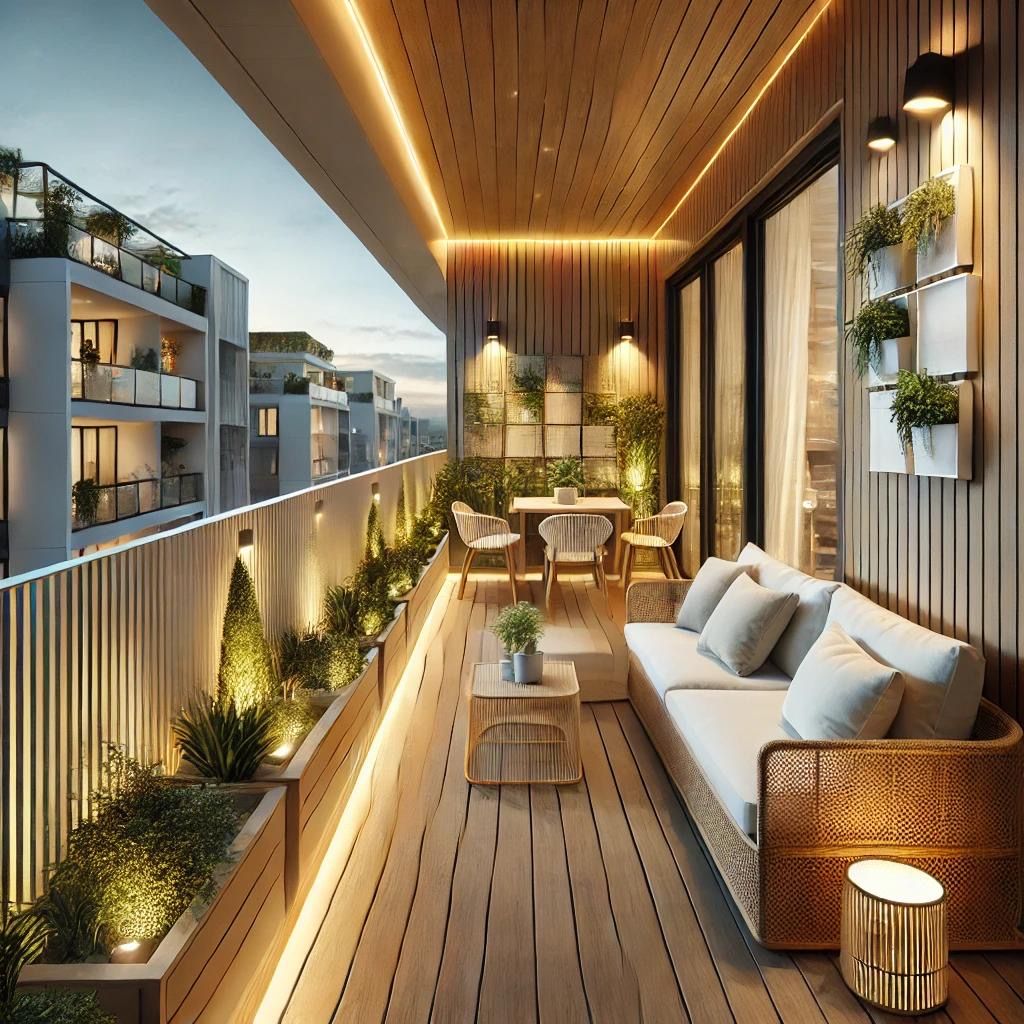
A – Accent
A focal point in a room created with color, texture, or furniture.
B – Balance
Even distribution of visual weight. Types: symmetrical, asymmetrical, radial.
C – Contrast
Use of opposing elements (light/dark, smooth/rough) to create interest.
D – Dimension
Perceived depth and scale of objects in space.
E – Emphasis
Drawing attention to a feature (e.g., statement wall, artwork).
F – Focal Point
Main visual anchor of a room (e.g., fireplace, sofa, bed).
G – Gradient
Gradual transition of colors, textures, or scale for flow.
H – Harmony
Coherence of design elements so everything feels unified.
I – Illumination
Lighting design—ambient, task, and accent lighting.
J – Juxtaposition
Placement of contrasting styles or elements side by side.
K – Kerb Appeal (for interiors, “Key Appeal”)
How interiors visually appeal at first glance; initial impression.
L – Layout
Spatial arrangement of furniture and design elements.
M – Movement
Visual path guiding the eye across a room.
N – Negative Space
Empty or unfilled areas that give breathing room to design.
O – Order
Logical and functional arrangement of elements in a space.
P – Proportion
Size relationships between objects and the overall space.
Q – Quality
Standard of materials, finishes, and craftsmanship.
R – Rhythm
Repetition of elements (patterns, shapes, colors) for continuity.
S – Scale
Relative size of objects compared to the space or other objects.
T – Texture
Surface quality (smooth, rough, soft) that adds depth and interest.
U – Unity
Overall cohesiveness achieved when all principles work together.
V – Variety
Diverse elements that prevent monotony while staying balanced.
W – Warmth
Use of colors, textures, or lighting to create comfort.
X – Xenial Design
Design that feels welcoming and hospitable to guests.
Y – Yardstick (in design)
Measurement standard for proportion, ergonomics, and scale.
Z – Zoning
Dividing a space into functional areas (living, dining, work).