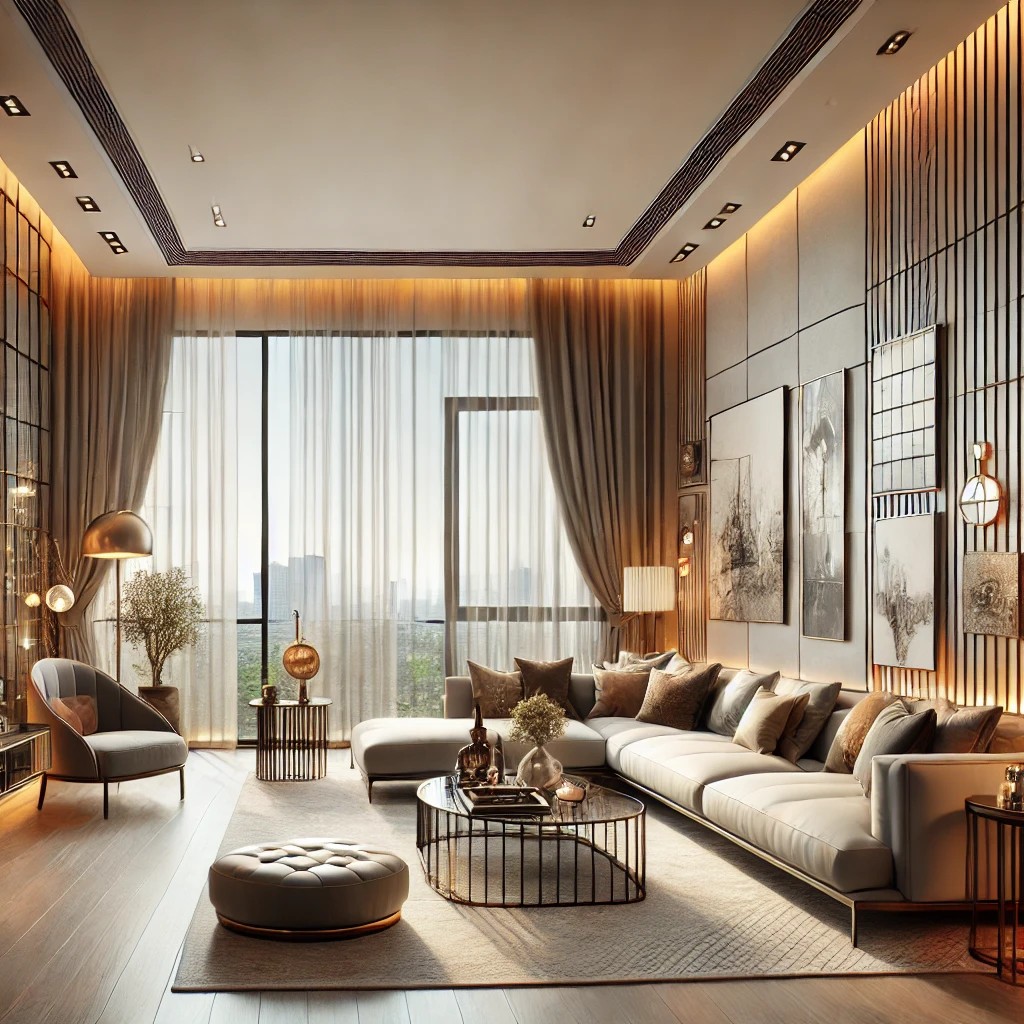
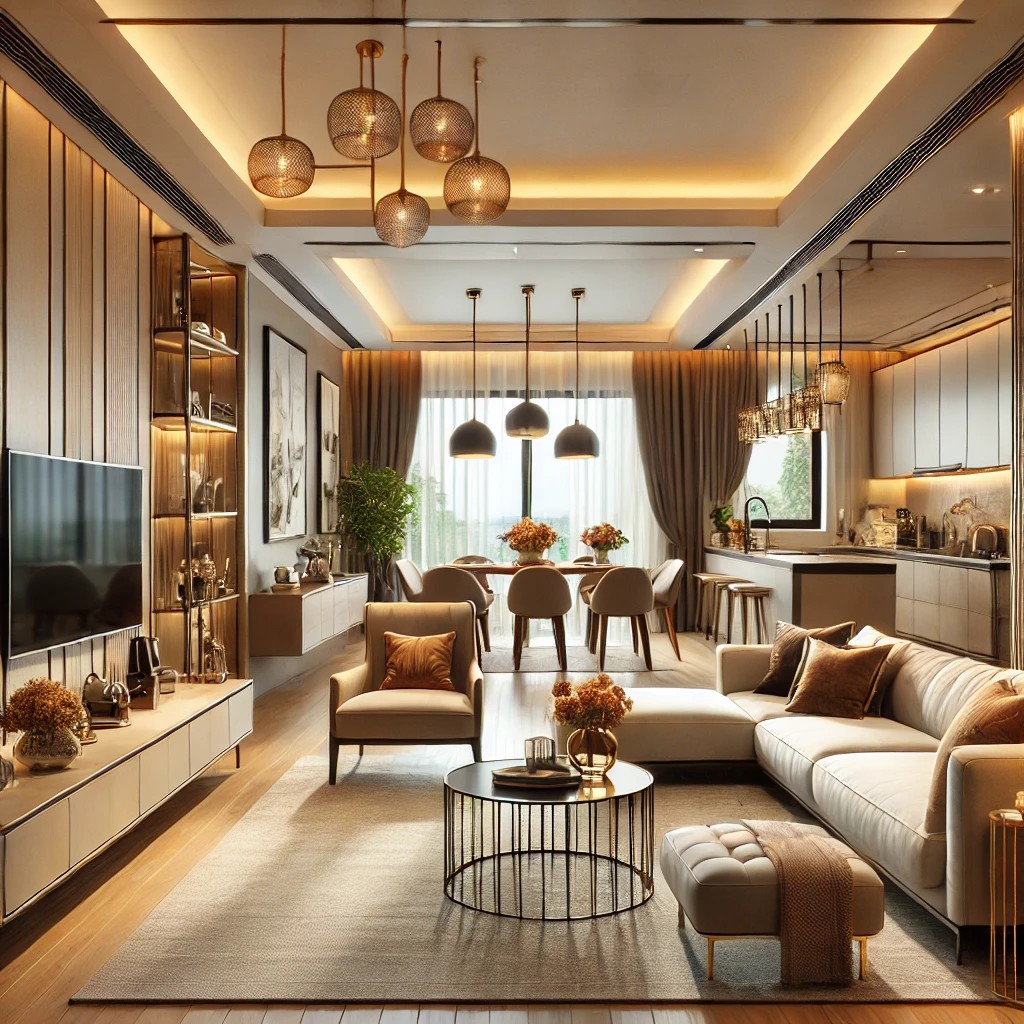
Interior design plays a pivotal role in shaping our living environments, especially in contemporary settings where aesthetics meet functionality. The principles of interior design are foundational guidelines that help create harmonious, functional, and aesthetically pleasing spaces. Whether you’re redesigning a single room or an entire home, understanding these principles is crucial for achieving a modern look that reflects your lifestyle.
Understanding the Principles of Interior Design
1. Balance: Creating Equilibrium in Spaces
Balance is a fundamental principle in interior design that ensures visual stability. In contemporary living, this can be achieved in two primary ways:
- Symmetrical Balance: This involves arranging furniture and decor items equally on either side of a central axis. For instance, two identical sofas flanking a coffee table create a visually balanced space.
- Asymmetrical Balance: This technique uses different elements that have equal visual weight. For example, a large art piece on one wall can be balanced by a cluster of smaller decorative items on the opposite side.
How to Apply Balance:
- Use large furniture pieces to anchor a room and add smaller items to complement them.
- Distribute colors and patterns evenly throughout the space to maintain equilibrium.
2. Proportion and Scale: The Importance of Size
Proportion and scale are essential for creating spaces that feel comfortable and inviting. They dictate how the size of furniture and decor relates to each other and the room itself.
- Proportion: This refers to the relationship between the sizes of different objects. Ensuring that furniture is proportional to the size of the room is key to effective design.
- Scale: Scale refers to the size of an object in relation to its surroundings. Choosing appropriately sized furniture can enhance the perception of space.
How to Apply Proportion and Scale:
- Select furniture that is suitable for the room’s dimensions. In small spaces, opt for streamlined pieces that don’t overwhelm.
- Incorporate larger items as focal points in spacious areas, such as oversized artwork or a statement couch.
3. Harmony: Creating Cohesion and Unity
Harmony is about creating a sense of cohesion in a space. This principle ensures that all design elements work together to form a unified look.
How to Apply Harmony:
- Choose a consistent color palette that flows throughout your home. Stick to three primary colors with complementary shades.
- Use similar textures or materials in various elements, such as matching fabrics on cushions and curtains.
4. Contrast: Adding Visual Interest
In contemporary design, contrast plays a significant role in creating dynamic spaces. This principle involves pairing different elements to highlight their differences, enhancing the visual appeal.
How to Apply Contrast:
- Use contrasting colors to draw attention. A bright red armchair can pop against a neutral-toned living room.
- Mix textures, such as pairing a sleek leather sofa with a cozy knitted throw, to create depth.
5. Rhythm: Establishing Flow and Movement
Rhythm in interior design creates a sense of movement and helps guide the eye throughout a space. This can be achieved through repetition and progression.
How to Apply Rhythm:
- Repeat shapes or colors throughout the space. For instance, if you use round tables, consider incorporating round decor items as well.
- Arrange furniture in a way that creates a natural flow, allowing for easy navigation.
6. Emphasis: Creating Focal Points
Emphasis is about highlighting a particular feature in a room to create a focal point. This can be achieved through color, size, or placement.
How to Apply Emphasis:
- Choose a standout item, like a bold piece of art or a striking piece of furniture, and arrange surrounding items to enhance its prominence.
- Use lighting to highlight your focal point, ensuring it draws the eye.
7. Functionality: Designing for Everyday Living
While aesthetics are crucial, functionality is paramount in contemporary living. A well-designed space should not only look good but also meet the practical needs of its inhabitants.
How to Apply Functionality:
- Assess how you use each space and arrange furniture accordingly. Ensure that pathways are clear and that each area serves a purpose.
- Incorporate storage solutions that are both functional and stylish, such as built-in shelving or multi-functional furniture.
Practical Tips for Implementing Interior Design Principles
- Define Your Style: Start by identifying your personal style. Create a mood board that includes colors, textures, and designs that resonate with you.
- Plan Your Layout: Before purchasing new furniture, sketch out your room’s layout. Consider how you’ll use the space and ensure that there’s a natural flow.
- Choose a Color Palette: Stick to a limited color scheme to create harmony. Use one or two primary colors and a few accent colors throughout your home.
- Invest in Quality Pieces: High-quality furniture may require a higher initial investment, but it often lasts longer and enhances the overall look of your home.
- Layer Your Lighting: Use a combination of ambient, task, and accent lighting to create a warm and inviting atmosphere. Proper lighting adds depth and dimension to your space.
- Personalize with Accessories: Incorporate accessories that reflect your personality and interests. Unique items can add character and warmth to your home.
- Stay Flexible: Interior design is an ongoing process. Don’t hesitate to rearrange furniture or update decor to suit your changing needs and preferences.
Frequently Asked Questions (FAQs)
1. What are the main principles of interior design?
The main principles include balance, proportion and scale, harmony, contrast, rhythm, emphasis, and functionality.
2. How can I create balance in my interior design?
You can create balance by arranging furniture symmetrically or asymmetrically to ensure visual stability in the space.
3. What is the importance of proportion in interior design?
Proportion ensures that furniture and decor are appropriately sized in relation to each other and the space, contributing to comfort and functionality.
4. How can I achieve harmony in my home?
Choose a cohesive color palette and ensure that the styles and materials of your furniture and decor align for a unified look.
5. Is contrast necessary in contemporary design?
Yes, contrast adds visual interest and depth, making a space feel dynamic and engaging.
6. What does functionality mean in interior design?
Functionality refers to how well a space meets the practical needs of its users, ensuring that it is both beautiful and usable.
7. How do I create a focal point in my living room?
Select a standout item, like a piece of artwork or furniture, and arrange other elements around it to enhance its prominence.
Conclusion
Understanding and applying the principles of interior design in contemporary living can significantly enhance both the functionality and aesthetic appeal of your home. By focusing on balance, proportion, harmony, contrast, rhythm, emphasis, and functionality, you can create spaces that are not only visually pleasing but also serve the needs of modern living.
For additional insights and inspiration, explore these resources:
By mastering these principles, you’ll be equipped to transform your living spaces into beautifully designed environments that enhance your lifestyle and reflect your personal style.