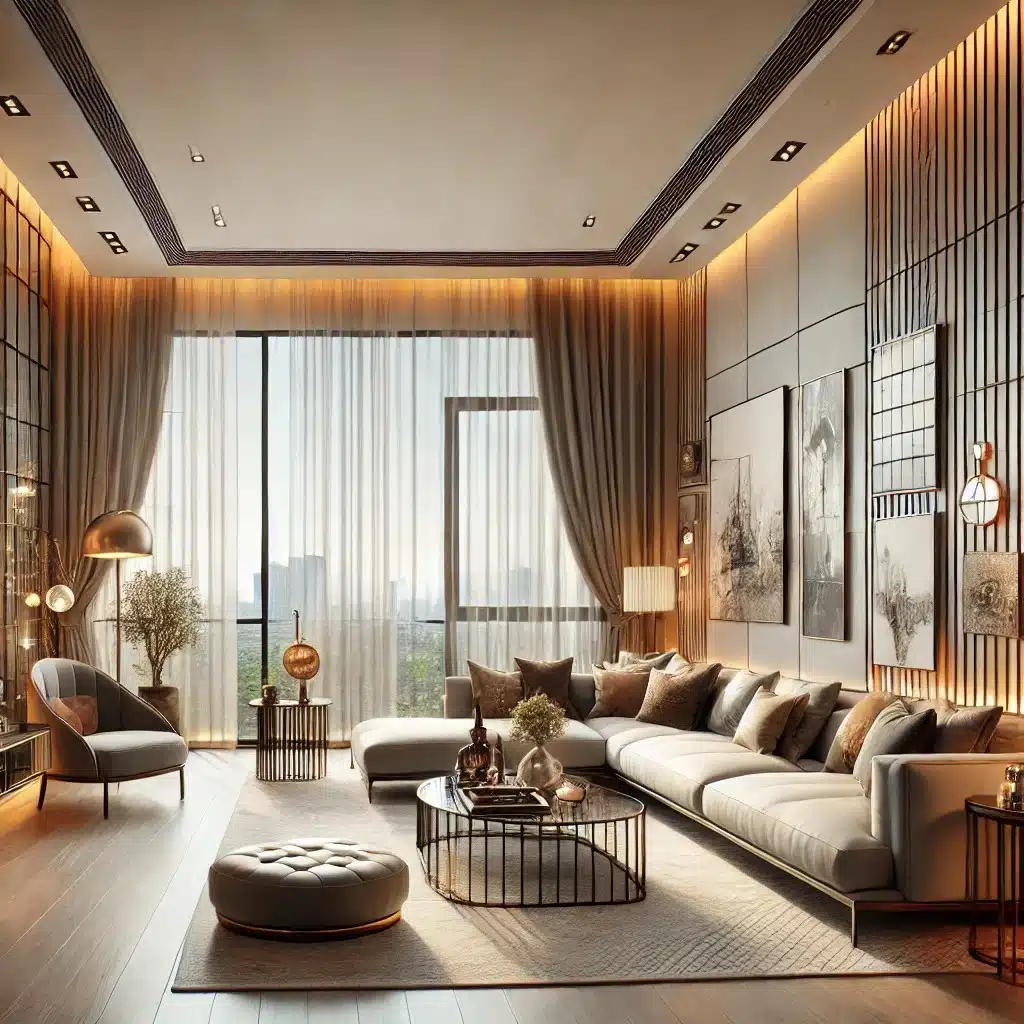
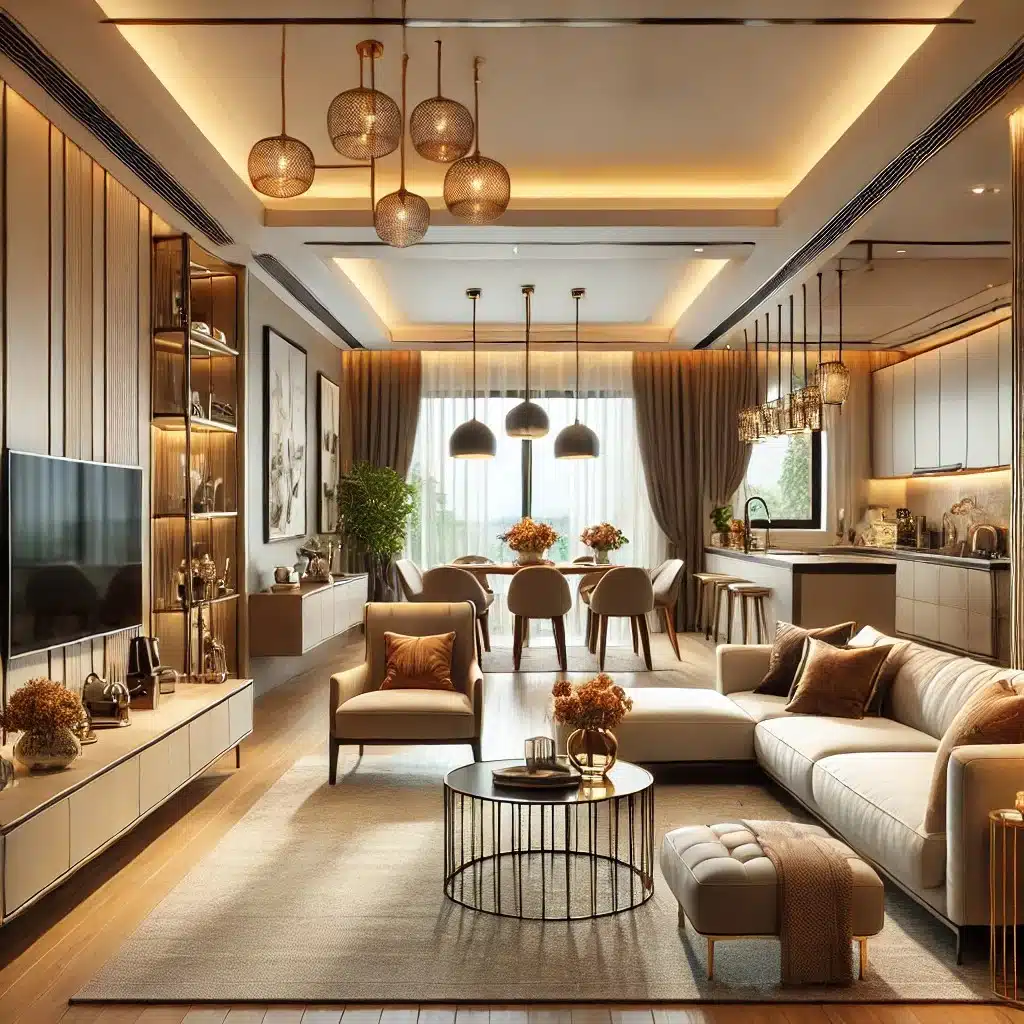
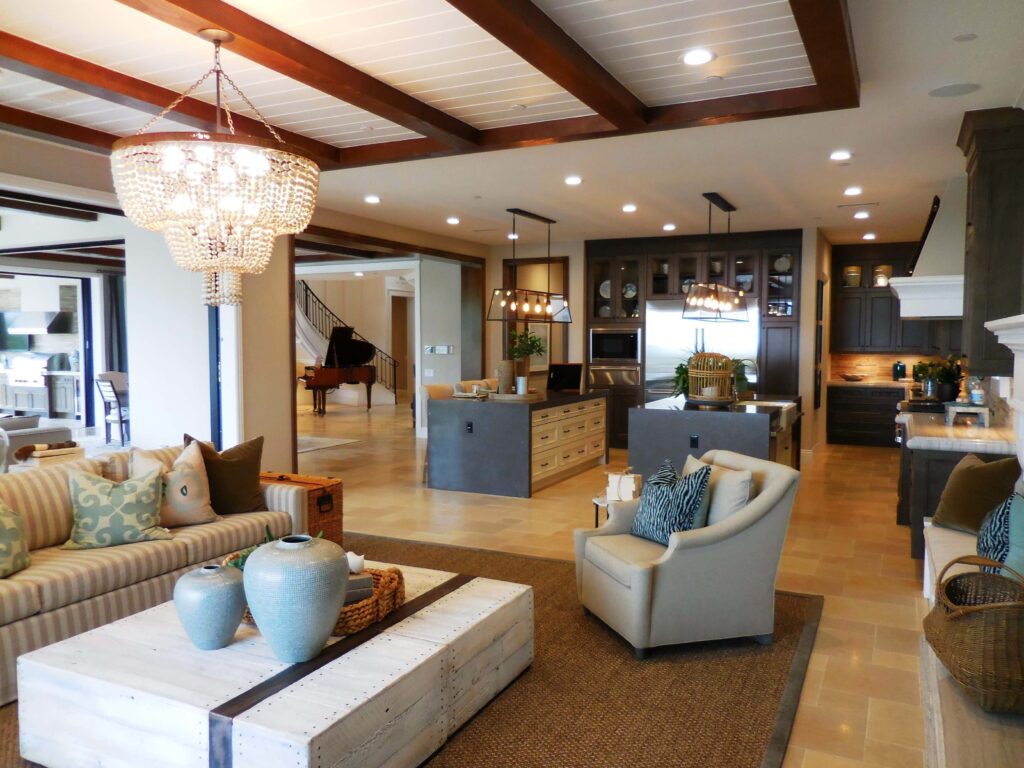
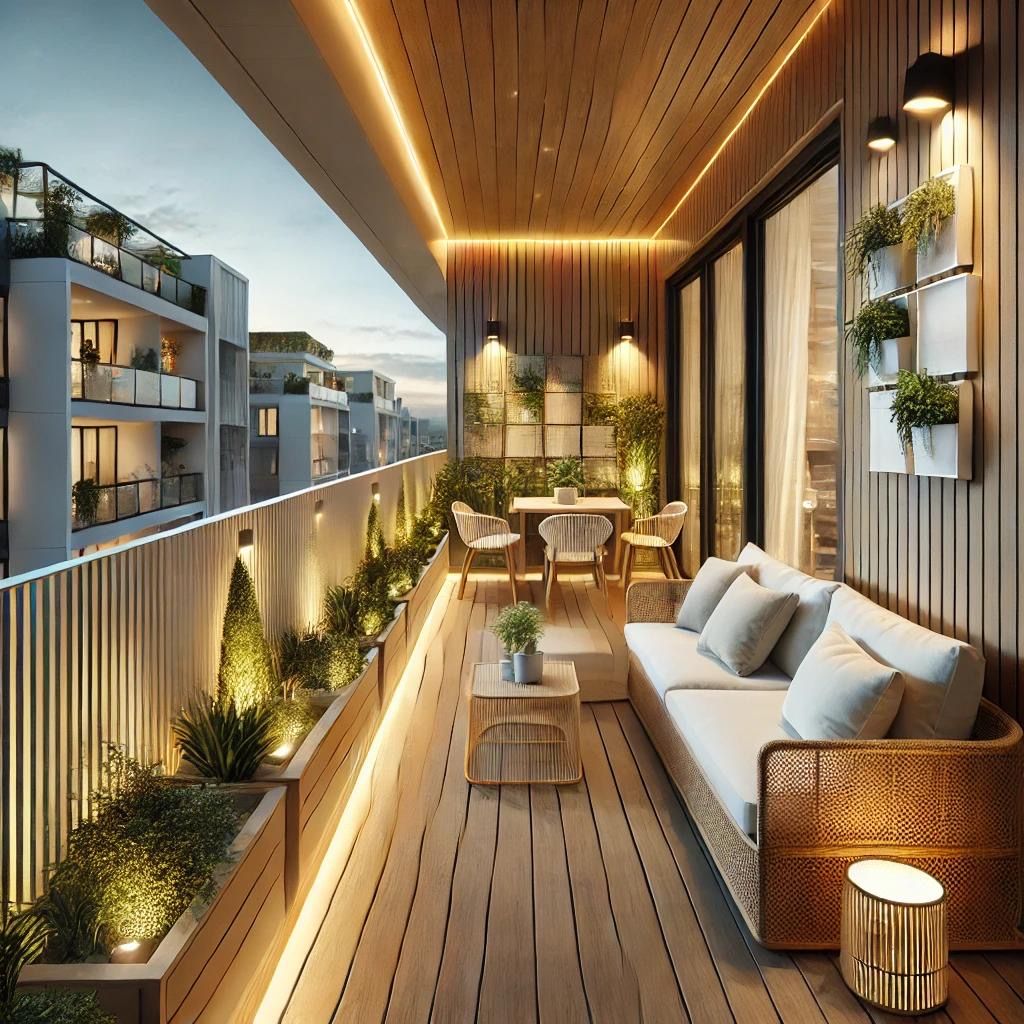
Keep in mind that the industry is dynamic, and trends may continue to evolve. Here are some sustainable commercial spaces design trends that were relevant:
- Biophilic Design Integration: Bringing nature indoors through the use of plants, natural materials, and abundant natural light. This trend is likely to continue as it enhances well-being and connection to the environment.
- Energy-Efficient Lighting: LED lighting systems and other energy-efficient lighting solutions are becoming standard in sustainable designs. These systems not only save energy but also contribute to a healthier indoor environment.
- Flexible and Modular Workspaces: The trend toward flexible, adaptable workspaces supports sustainability by optimizing the use of space and reducing the need for constant remodeling.
- Eco-Friendly Materials: The use of sustainable, recycled, or upcycled materials in construction and furnishing to reduce environmental impact. This includes materials like reclaimed wood, recycled metal, and low-VOC paints.
- Waste Reduction Strategies: Designers are increasingly incorporating waste reduction strategies, such as recycling stations, upcycling initiatives, and promoting a circular economy within commercial spaces.
- Sustainable Furniture Choices: Choosing furniture made from sustainable materials, with a focus on durability and recyclability. This includes furniture designed for disassembly and reuse.
- Renewable Energy Integration: Incorporating renewable energy sources like solar panels or wind turbines to power commercial spaces. This aligns with the growing emphasis on reducing the carbon footprint of buildings.
- Water Conservation Measures: Implementing water-efficient fixtures, rainwater harvesting systems, and smart irrigation technologies to minimize water usage within commercial spaces.
- Smart Building Technologies: Integration of smart building technologies to optimize energy consumption, monitor indoor air quality, and enhance overall operational efficiency.
- Certifications and Standards: Designing and constructing commercial spaces in accordance with green building certifications, such as LEED (Leadership in Energy and Environmental Design) or BREEAM (Building Research Establishment Environmental Assessment Method).
- Natural Ventilation Strategies: Designing spaces that maximize natural ventilation and reduce the reliance on mechanical systems, promoting a healthier indoor environment.
- Sustainable Transportation Initiatives: Implementing designs that encourage sustainable commuting options, such as bicycle storage, electric vehicle charging stations, and proximity to public transportation.
- Green Roofs and Walls: Integrating green roofs and walls into commercial buildings not only provides insulation but also contributes to improved air quality and aesthetics.
- Local Sourcing and Manufacturing: Prioritizing local sourcing of materials and furniture to reduce transportation-related carbon emissions and support local economies.
- Employee Well-Being Focus: Sustainable design trends increasingly emphasize creating environments that promote employee well-being, health, and productivity.
To stay updated on the latest trends for 2024, it’s recommended to consult industry publications, attend design conferences, and follow leading design firms and sustainability organizations.