
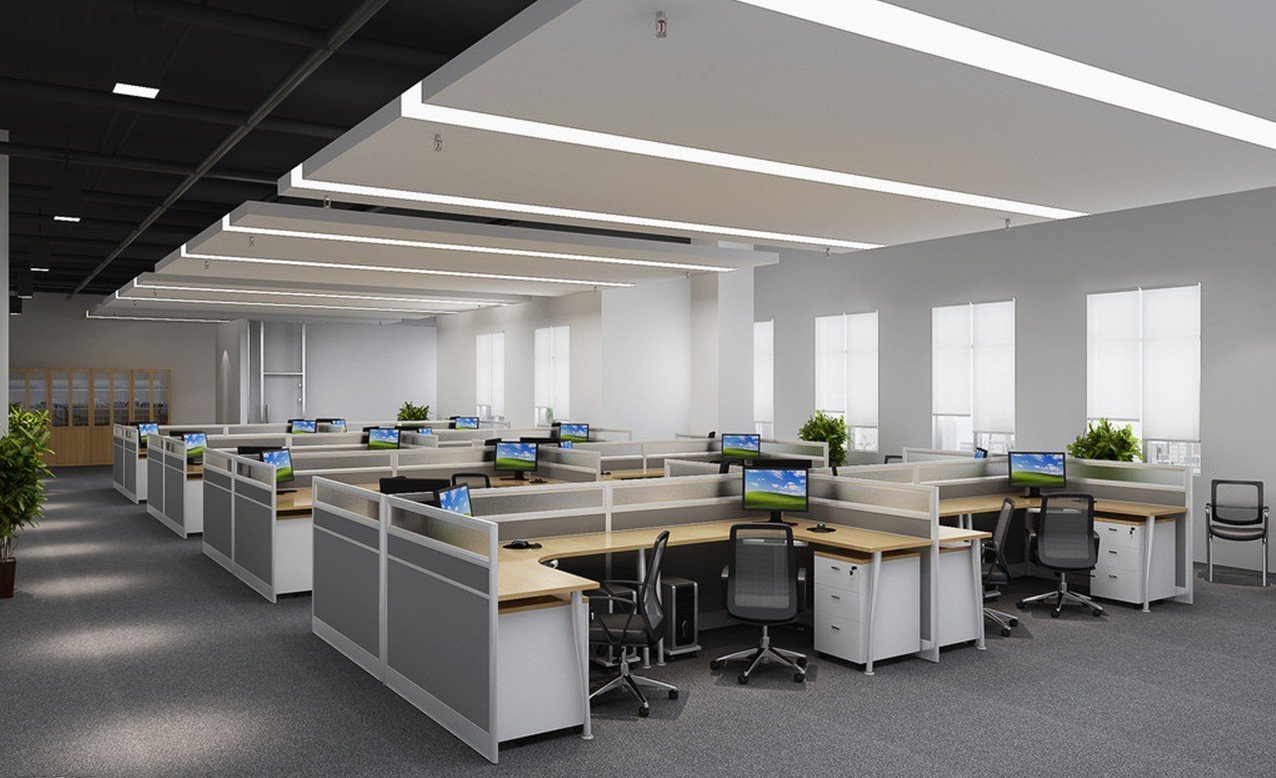
Office Interior Design: 12 Smart Ideas to Create Productive, Professional, and Inspiring Workspaces
Office interior design plays a critical role in productivity, employee well-being, and brand perception. A well-designed office is not just visually appealing—it supports workflow, encourages collaboration, and creates a professional environment for both teams and clients. From startups to corporate offices, thoughtful office interior design directly impacts performance and business success.
This blog covers key principles, layout ideas, trends, and expert tips to help you design an efficient and modern office space.
What Is Office Interior Design?
Office interior design focuses on planning and styling workspaces to balance functionality, comfort, and aesthetics. It considers layout, ergonomics, lighting, acoustics, branding, and technology integration to create an environment that supports daily operations and long-term growth.
Core objectives include:
- Improving productivity and focus
- Supporting collaboration and communication
- Reflecting brand identity
- Ensuring comfort and ergonomics
- Optimizing space utilization
Importance of Good Office Interior Design
Well-planned office interior design offers measurable benefits:
- Higher employee productivity
- Better employee satisfaction and retention
- Efficient use of available space
- Positive impression on clients and visitors
- Improved workflow and organization
A good office design is a strategic business investment.
Office Interior Design Layout Types
Choosing the right layout is essential for efficiency.
Common office interior design layouts include:
- Open office layout for collaboration and flexibility
- Cubicle layout for focused individual work
- Hybrid layout combining open and private zones
- Cabin-based layout for leadership and confidential work
- Co-working style layout for startups and shared offices
The best layout depends on team size, work culture, and business needs.
Modern Office Interior Design Ideas
Modern office interior design emphasizes simplicity and flexibility.
Popular ideas include:
- Clean lines and clutter-free layouts
- Neutral color palettes with brand accents
- Modular furniture systems
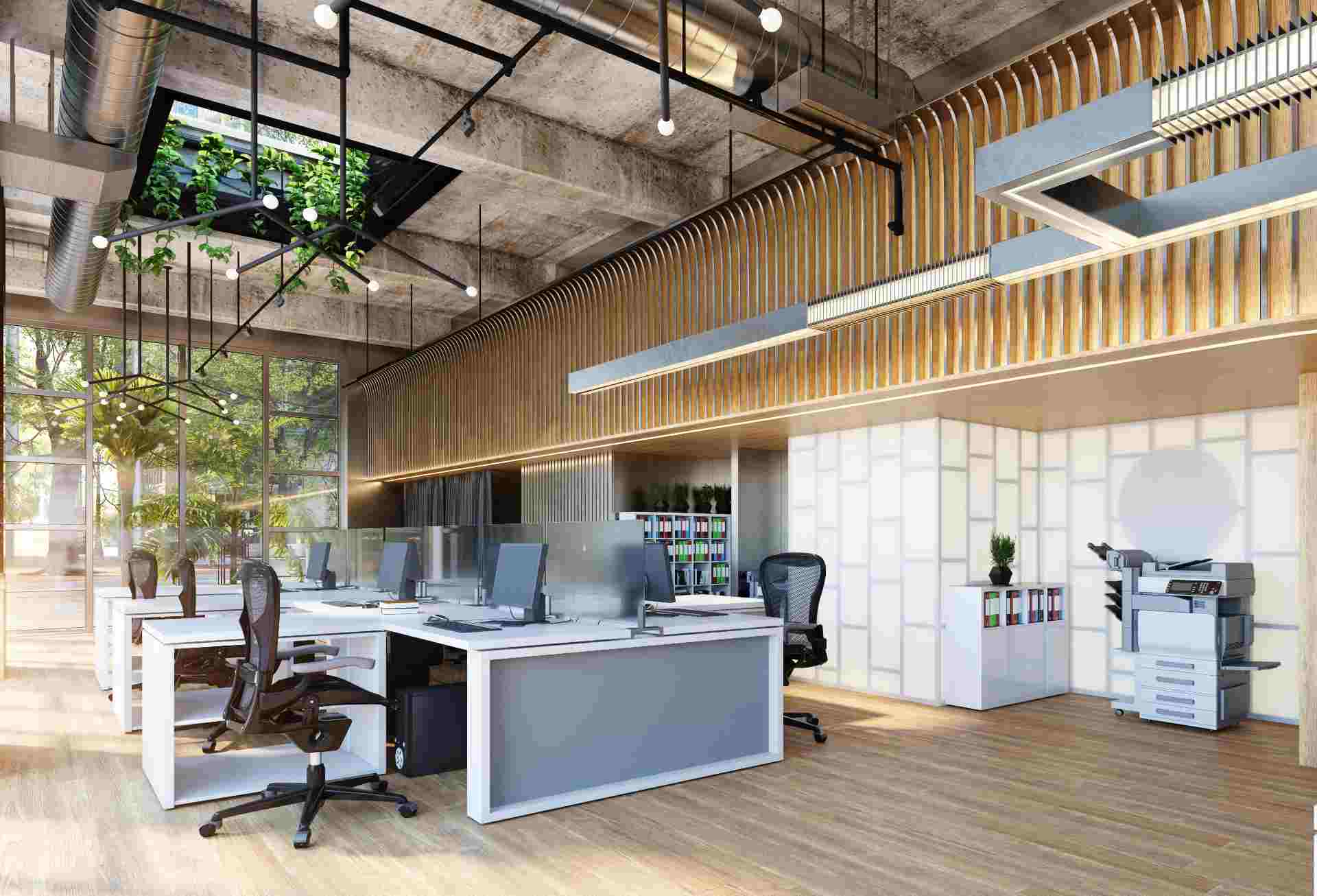
- Open ceilings with industrial elements
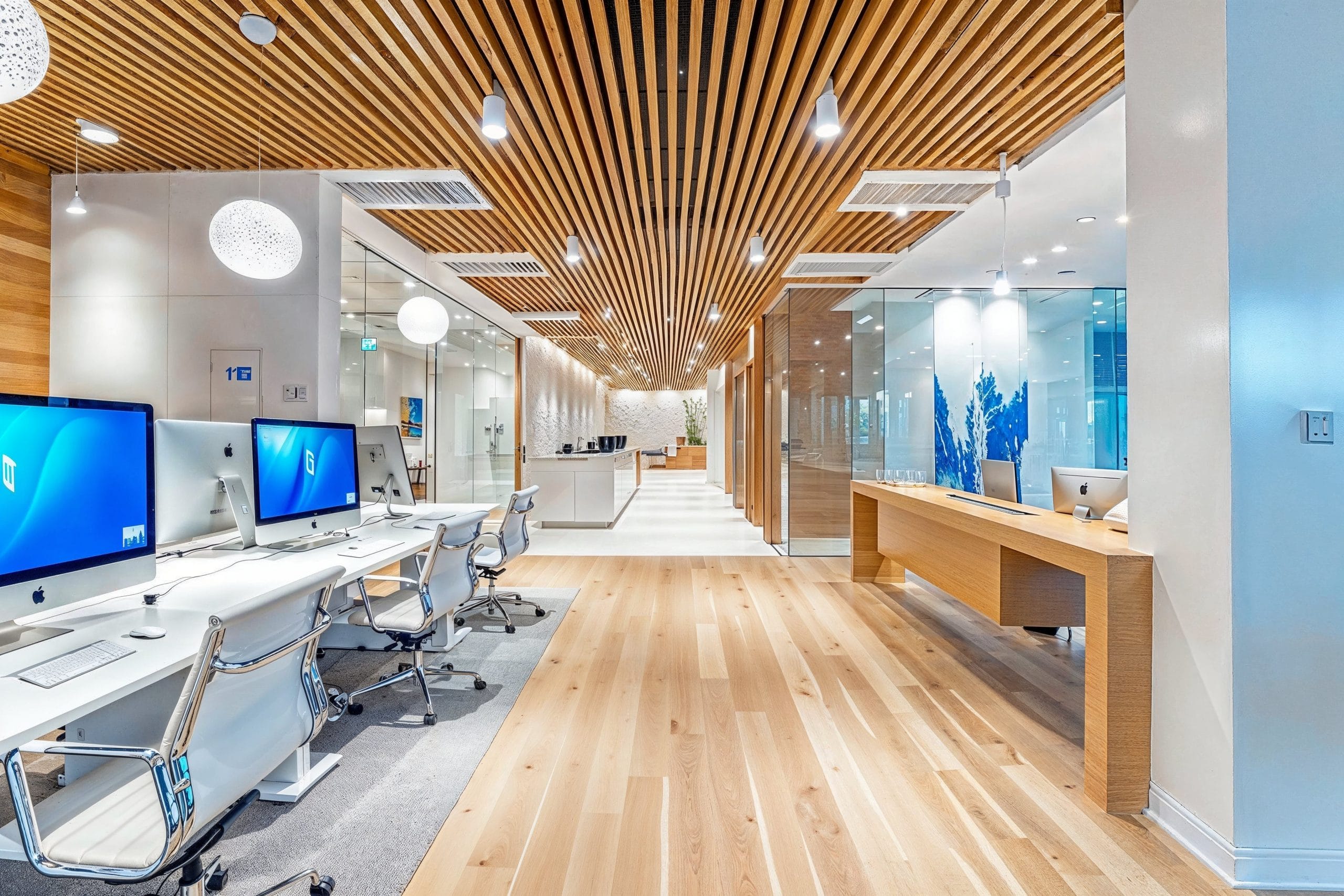
- Smart use of glass partitions
Modern offices feel open, professional, and adaptable.
Furniture Selection for Office Interior Design
Furniture directly affects comfort and productivity.
Key furniture elements:
- Ergonomic workstations and chairs
- Adjustable desks for flexibility
- Compact storage units
- Collaborative seating for meeting zones
Comfortable furniture reduces fatigue and improves efficiency.
Lighting in Office Interior Design
Lighting is one of the most important design elements.
Effective lighting strategies:
- Maximize natural daylight
- Use LED panel lights for general illumination
- Task lighting for workstations
- Accent lighting for reception and branding areas
Proper lighting improves focus and reduces eye strain.
Color Schemes for Office Interior Design
Color influences mood and performance.
Recommended color strategies:
- Neutral bases like white, grey, or beige
- Blue and green tones for focus and calm
- Brand colors as subtle accents
- Avoid overly dark or distracting colors
Balanced color palettes create a professional atmosphere.
Office Interior Design for Small Offices
Smart office interior design makes small offices feel larger.
Space-saving ideas:
- Open layouts with minimal partitions
- Wall-mounted storage
- Glass partitions instead of solid walls
- Multi-functional furniture
Efficient planning prevents overcrowding.
Technology Integration in Office Interior Design
Modern offices must support technology seamlessly.
Key considerations:
- Concealed wiring and cable management
- Smart lighting and climate control
- Adequate power and data points
- Acoustic planning for virtual meetings
Technology should enhance productivity without visual clutter.
Latest Trends in Office Interior Design
Office interior design continues to evolve with new trends:
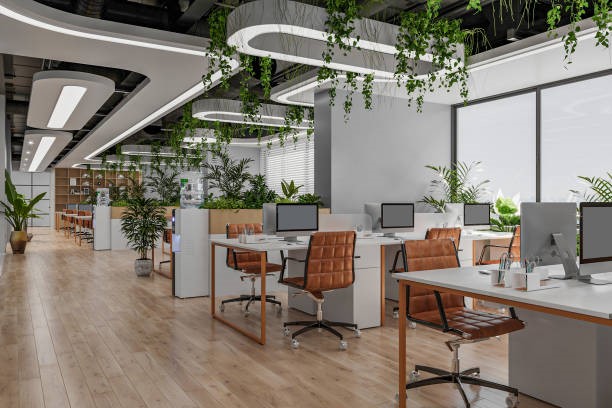
- Biophilic design with indoor plants
- Flexible and activity-based workspaces
- Sustainable and eco-friendly materials
- Acoustic panels for noise control
- Wellness-focused office layouts
These trends prioritize comfort and long-term efficiency.
Common Mistakes to Avoid in Office Interior Design
Avoid these design pitfalls:
- Ignoring ergonomics
- Poor lighting planning
- Overcrowding workstations
- Lack of storage
- Designing without considering future expansion
Professional planning helps avoid costly redesigns.
Tips to Choose the Right Office Interior Designer
When hiring a designer:
- Review previous office projects
- Ensure understanding of workflow and brand needs
- Ask for layout plans and 3D designs
- Confirm timelines and budgets
- Choose designers experienced in commercial spaces
The right designer ensures functional and scalable office interiors.
Final Thoughts on Office Interior Design
Office interior design is a powerful tool for improving productivity, efficiency, and workplace culture. By focusing on smart layouts, ergonomic furniture, proper lighting, and cohesive aesthetics, offices can become inspiring environments that support both people and business goals.
If you’re planning to design or renovate an office, investing in professional office interior design ensures a workspace that looks professional and works effectively every day.
Looking to upgrade your office space? Start with thoughtful office interior design and create a workplace built for success.