Author name: Interior A to Z - Luxury Interior Designers

Interior A to Z is a premier interior design firm specializing in luxury residential and commercial transformations across Gurgaon, Noida, and Delhi NCR. With over 15 years of expertise, we offer end-to-end solutions, from modular kitchens and minimalist bedrooms to complete home renovations. Our mission is to blend modern aesthetics with functional design. Book a Free Consultation at https://interioratoz.com/contact-us/ to start your dream project today.

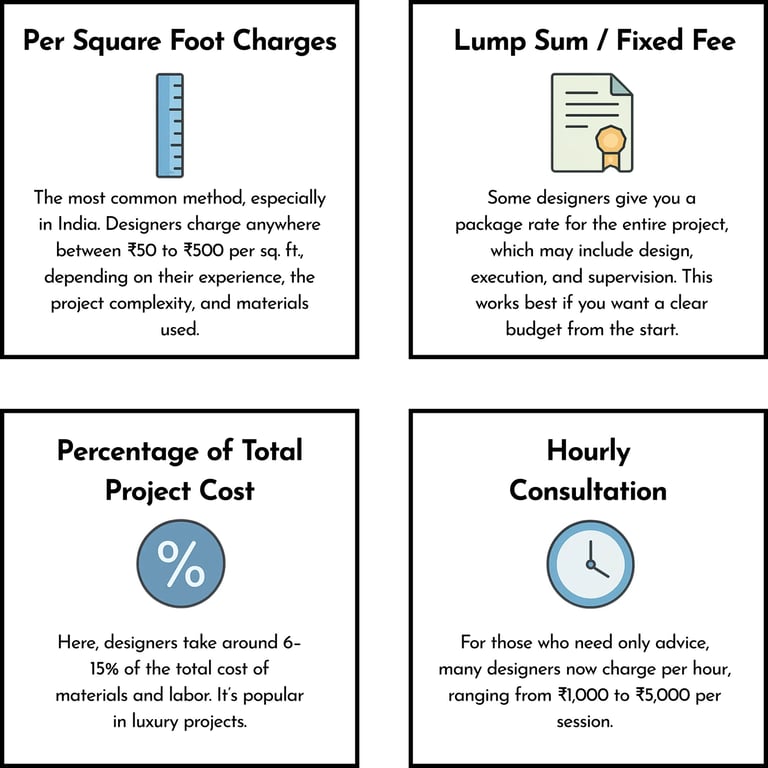
How Do Interior Designers Charge Fees?

When embarking on a home renovation or design project, understanding how interior designers charge fees is crucial for budgeting effectively. The cost structure can vary significantly among designers, influenced by their experience, the scope of the project, and the specific services offered. This blog post explores the various fee structures interior designers use, helping you make informed decisions when hiring a professional.

Understanding Interior Designer Fee Structures

1. Common Pricing Models

  1. Hourly Rate
    • Many interior designers charge by the hour, with rates typically ranging from β‚Ή1,500 to β‚Ή10,000 or more, depending on the designer’s experience and location. This model is often used for smaller projects or consultations.
    TotalΒ CostΒ (Hourly)=HourlyΒ RateΓ—EstimatedΒ Hours\text{Total Cost (Hourly)} = \text{Hourly Rate} \times \text{Estimated Hours}TotalΒ CostΒ (Hourly)=HourlyΒ RateΓ—EstimatedΒ Hours
  2. Flat Fee
    • A flat fee is a set amount charged for specific services or projects. This fee often starts at around β‚Ή25,000 for small tasks and can increase to β‚Ή2,50,000 or more for comprehensive design services.
  3. Percentage of Project Cost
    • This model involves charging a percentage of the total project budget, typically ranging from 10% to 30%. For instance, if your project budget is β‚Ή1,00,000, the designer’s fee could range from β‚Ή10,000 to β‚Ή30,000.
    TotalΒ CostΒ (Percentage)=TotalΒ ProjectΒ CostΓ—Percentage\text{Total Cost (Percentage)} = \text{Total Project Cost} \times \text{Percentage}TotalΒ CostΒ (Percentage)=TotalΒ ProjectΒ CostΓ—Percentage
  4. Cost-Plus Pricing
    • Under this model, the designer charges for the actual cost of materials plus a markup, usually between 20% to 40%. This pricing structure can provide transparency regarding material costs, but it can also lead to higher overall expenses.
    TotalΒ CostΒ (Cost-Plus)=TotalΒ MaterialΒ Cost+(TotalΒ MaterialΒ CostΓ—MarkupΒ Percentage)\text{Total Cost (Cost-Plus)} = \text{Total Material Cost} + (\text{Total Material Cost} \times \text{Markup Percentage})TotalΒ CostΒ (Cost-Plus)=TotalΒ MaterialΒ Cost+(TotalΒ MaterialΒ CostΓ—MarkupΒ Percentage)
  5. Retainer Fee
    • Some designers may require a retainer fee, which is an upfront payment that secures their services. This fee is often deducted from the final project cost.

2. Factors Influencing Designer Fees

  1. Experience and Reputation
    • Designers with extensive experience and a strong portfolio tend to charge higher fees. Hiring a well-established designer can provide peace of mind but may come with a higher price tag.
  2. Project Scope
    • The complexity and size of the project significantly affect costs. Larger projects that require more time, effort, and resources will naturally incur higher fees.
  3. Location
    • Geographic location plays a vital role in determining design fees. Designers in metropolitan areas or affluent neighborhoods often charge more due to higher demand and living costs.
  4. Level of Customization
    • Highly personalized designs or those requiring custom furnishings will typically increase the overall cost. If you prefer standard solutions, you may save on expenses.
  5. Timeline
    • Projects with tight deadlines may incur additional charges. Flexibility with your timeline can help reduce costs.

FAQ

Q1: What are the most common fee structures for interior designers?
The most common fee structures include hourly rates, flat fees, percentage-based fees, and cost-plus pricing.

Q2: How can I determine which pricing model is best for my project?
The best pricing model depends on the scope of your project, your budget, and your personal preferences. Discuss your needs with potential designers to find the most suitable arrangement.

Q3: Are there hidden costs in hiring an interior designer?
Yes, there can be hidden costs, such as additional charges for materials, shipping, installation, or unexpected expenses. It’s essential to clarify all potential costs upfront.

Q4: Can I negotiate fees with an interior designer?
Many designers are open to negotiations. Clear communication about your budget and project scope can lead to a mutually beneficial arrangement.

Key Points to Remember

  • Pricing Models: Interior designers commonly charge through hourly rates, flat fees, percentages of project costs, or cost-plus pricing.
  • Factors Influencing Fees: Experience, project scope, location, level of customization, and timeline can all impact the cost of hiring a designer.
  • Transparency: Open communication about fees and potential additional costs is crucial to avoid surprises.

Conclusion

Understanding how interior designers charge fees is vital for effective budgeting and project planning. By familiarizing yourself with the different pricing models and the factors that influence costs, you can make informed decisions that align with your design goals and financial capabilities.

Whether you choose an hourly rate, flat fee, or percentage-based fee structure, clear communication with your designer is essential. This approach not only ensures transparency regarding costs but also helps establish a collaborative relationship that can lead to successful project outcomes. Investing time in understanding the fee structures can ultimately enhance your design experience, resulting in a beautifully transformed space tailored to your unique style and needs.

How Do Interior Designers Charge Fees? Read More Β»

What Is the Minimum Budget for an Interior Designer?

When considering a home renovation or redesign, one of the first questions homeowners ask is about the budget. Understanding the minimum budget for hiring an interior designer can help you plan effectively and set realistic expectations. This blog post explores the factors that influence the cost of hiring an interior designer, typical pricing models, and what you can expect with a minimum budget.

Understanding the Minimum Budget for Interior Design

1. Typical Pricing Models

  1. Hourly Rate
    • Interior designers often charge by the hour, with rates typically ranging from β‚Ή1,500 to β‚Ή10,000. For smaller projects, you may be able to work with a designer on an hourly basis, which can be a cost-effective way to get professional help.
  2. Flat Fee
    • A flat fee may be charged for a specific project, with prices usually starting around β‚Ή25,000 for smaller tasks. For a comprehensive redesign or renovation, this fee can increase significantly, often exceeding β‚Ή1,00,000.
  3. Percentage of Project Cost
    • Many designers charge a percentage of the total project budget, typically between 10% to 30%. For a project with a total budget of β‚Ή1,00,000, you could expect to pay β‚Ή10,000 to β‚Ή30,000 for design services.
  4. Cost-Plus Pricing
    • This model includes the cost of materials plus a markup, which can be between 20% to 40%. This method can add up quickly, so it’s essential to calculate these costs carefully.
  5. Retainer Fee
    • Some designers may require a retainer fee upfront, which can vary widely but is often around 10% of the project budget.

2. Factors Influencing Minimum Budget

  1. Project Scope
    • The size and complexity of your project significantly affect the minimum budget. A small room redesign will require a different budget than a full home renovation.
  2. Location
    • Interior design costs can vary by region. Designers in metropolitan areas or affluent neighborhoods may charge more due to higher living costs and demand for services.
  3. Designer Experience
    • More experienced designers with a strong portfolio typically charge higher fees. If you have a limited budget, consider working with a less established designer who may offer competitive rates.
  4. Level of Customization
    • Highly customized designs or those requiring bespoke furnishings will increase costs. If you are looking for a budget-friendly option, consider more standardized solutions.
  5. Timeline
    • Projects with tighter timelines may incur additional costs. If you can be flexible with your schedule, you may save money.

FAQ

Q1: What is the minimum budget for hiring an interior designer?
The minimum budget for hiring an interior designer can start as low as β‚Ή25,000 for small projects, while larger projects may require budgets of β‚Ή1,00,000 or more.

Q2: Are there any ways to reduce costs when hiring an interior designer?
Yes, you can reduce costs by limiting the scope of work, opting for hourly consultations, and choosing a designer who fits within your budget.

Q3: What should I expect for my budget?
For a minimum budget, expect to receive basic design consultations, layout suggestions, and possibly limited assistance with materials and furnishings.

Q4: Can I negotiate the fees with an interior designer?
Many designers are open to negotiations, especially if you have a clear understanding of your budget and project needs.

Key Points to Remember

  • Minimum Budget Ranges: Expect a minimum budget of around β‚Ή25,000 for small projects; larger projects may require β‚Ή1,00,000 or more.
  • Pricing Models: Interior designers may charge hourly, flat fees, percentages of project costs, or use cost-plus pricing.
  • Influencing Factors: Project scope, location, designer experience, level of customization, and timeline can all impact costs.

Conclusion

Understanding the minimum budget for hiring an interior designer is crucial for planning your project. By considering various pricing models and the factors that influence costs, you can set a realistic budget that aligns with your design goals.

While it’s possible to find an interior designer within a limited budget, being clear about your needs and expectations is essential. Open communication with potential designers can help you negotiate costs and make informed decisions, ensuring a successful collaboration that transforms your space into a beautifully designed environment. Whether you’re looking to refresh a single room or embark on a comprehensive renovation, knowing your budget will empower you to choose the right designer for your project.

What Is the Minimum Budget for an Interior Designer? Read More Β»

How to Calculate the Cost of Interior Design

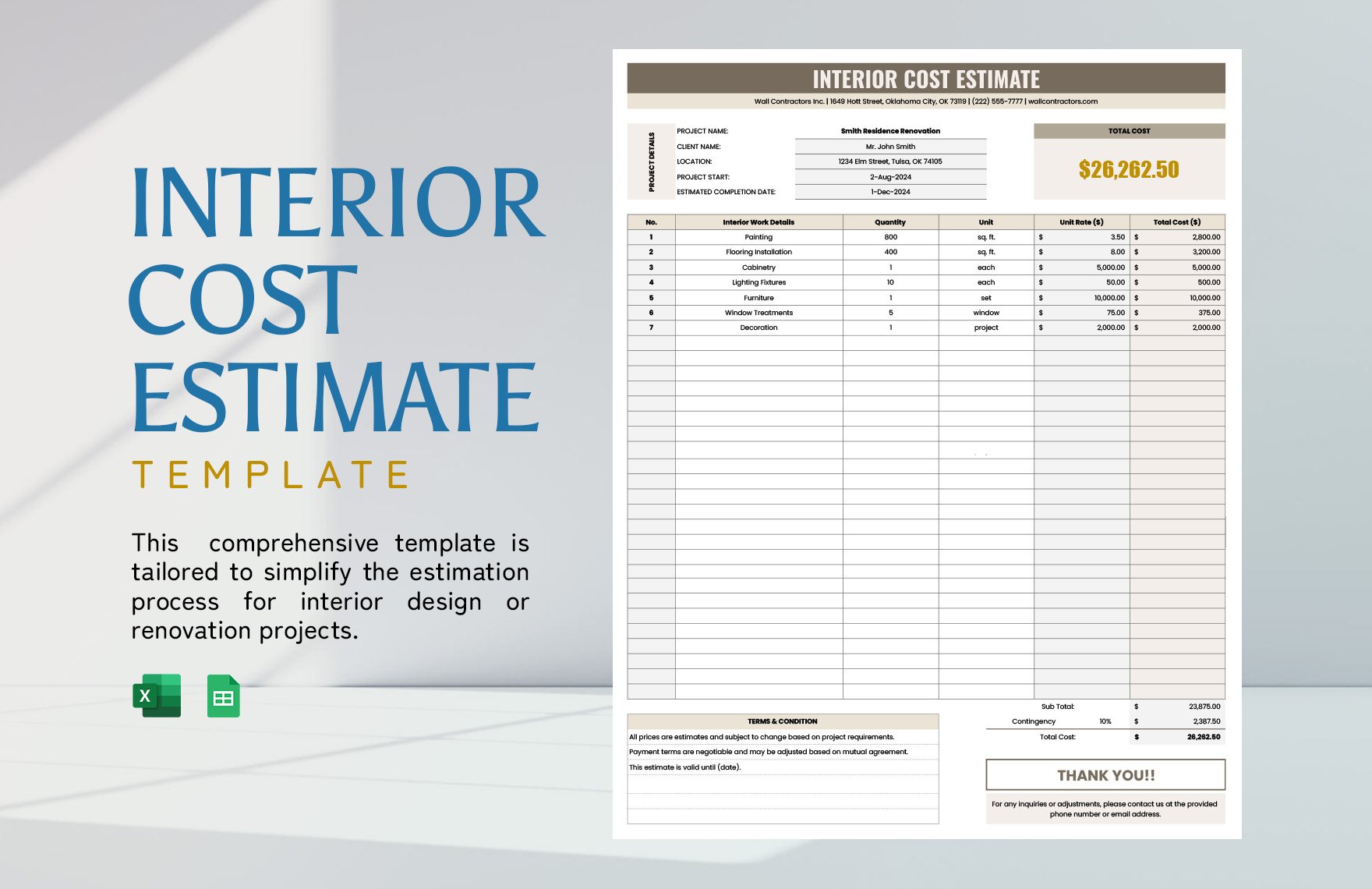
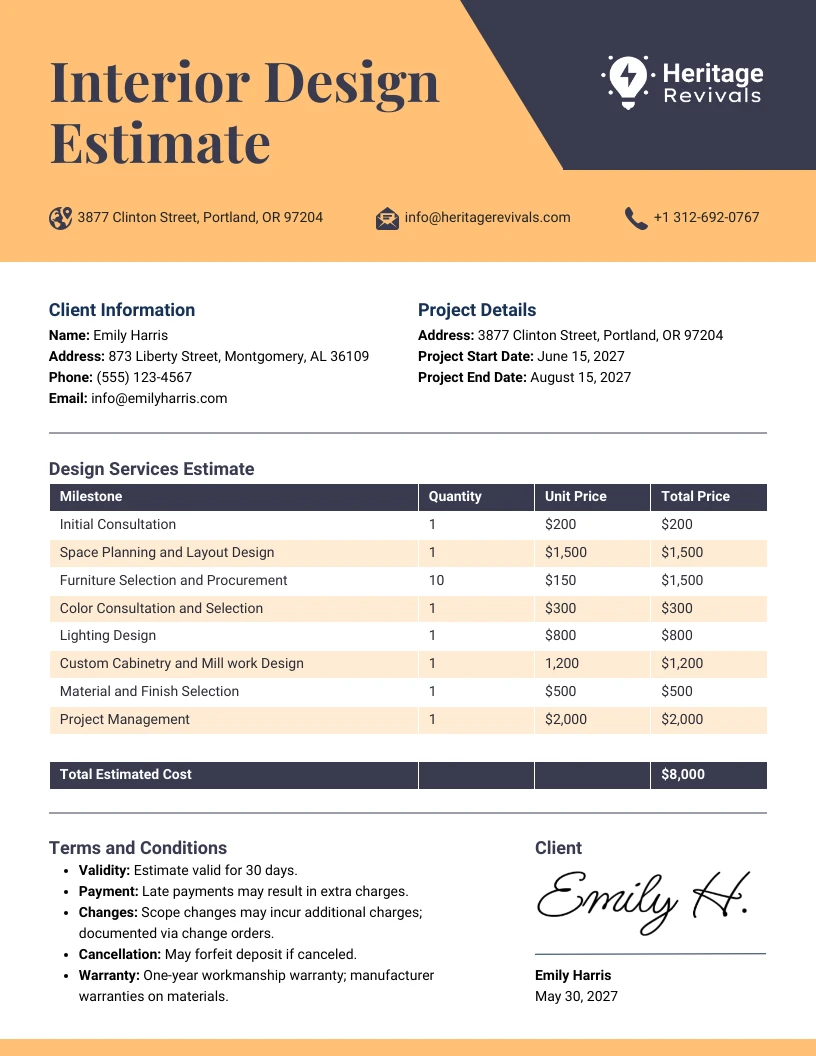
Understanding the cost of interior design is crucial for homeowners planning to renovate or decorate their spaces. Accurately calculating this cost helps you budget effectively and make informed decisions throughout the design process. This blog post will guide you through the steps to calculate the cost of interior design, including factors to consider and common pricing models.

Step-by-Step Guide to Calculate Interior Design Costs

Step 1: Define Your Project Scope

  1. Identify the Project Type
    • Determine whether you’re undertaking a full renovation, a single room redesign, or a consultation.
  2. Specify Areas to be Designed
    • List the specific rooms or spaces that need attention (e.g., kitchen, living room, bedroom).
  3. Clarify Your Goals
    • Outline your design objectives, including style preferences and functional needs, to help the designer understand your vision.

Step 2: Choose a Pricing Model

  1. Hourly Rate
    • Many designers charge an hourly rate, which can range from β‚Ή1,500 to β‚Ή10,000. Multiply the hourly rate by the estimated number of hours required for your project.
    TotalΒ CostΒ (Hourly)=HourlyΒ RateΓ—EstimatedΒ Hours\text{Total Cost (Hourly)} = \text{Hourly Rate} \times \text{Estimated Hours}TotalΒ CostΒ (Hourly)=HourlyΒ RateΓ—EstimatedΒ Hours
  2. Flat Fee
    • For larger projects, some designers offer a flat fee that covers the entire scope of work. This amount can range from β‚Ή25,000 to β‚Ή2,50,000 or more.
  3. Percentage of Project Cost
    • This model involves charging a percentage (typically 10% to 30%) of the total project budget. Estimate the overall cost of your project and calculate:
    TotalΒ CostΒ (Percentage)=TotalΒ ProjectΒ CostΓ—Percentage\text{Total Cost (Percentage)} = \text{Total Project Cost} \times \text{Percentage}TotalΒ CostΒ (Percentage)=TotalΒ ProjectΒ CostΓ—Percentage
  4. Cost-Plus Pricing
    • Here, the designer charges for materials plus a markup (usually 20% to 40%). Add the markup to the total cost of materials and furnishings:
    TotalΒ CostΒ (Cost-Plus)=TotalΒ MaterialΒ Cost+(TotalΒ MaterialΒ CostΓ—MarkupΒ Percentage)\text{Total Cost (Cost-Plus)} = \text{Total Material Cost} + (\text{Total Material Cost} \times \text{Markup Percentage})TotalΒ CostΒ (Cost-Plus)=TotalΒ MaterialΒ Cost+(TotalΒ MaterialΒ CostΓ—MarkupΒ Percentage)
  5. Retainer Fee
    • Some designers may ask for a retainer fee upfront, which can be deducted from the total cost.

Step 3: Include Additional Expenses

  1. Materials and Furnishings
    • Estimate the costs for furniture, fixtures, fabrics, and decor items. Collect quotes from various suppliers to get accurate figures.
  2. Contractor Fees
    • If your project requires the services of contractors (e.g., electricians, carpenters), include their fees in your budget.
  3. Permits and Fees
    • Check for any permits or inspections needed for renovations, especially for structural changes.
  4. Contingency Fund
    • Set aside 10% to 20% of your total budget as a contingency for unexpected costs that may arise during the project.

Step 4: Calculate the Total Cost

  1. Combine All Costs
    • Add the costs from your chosen pricing model, material expenses, contractor fees, permits, and the contingency fund:
    TotalΒ EstimatedΒ Cost=CostΒ fromΒ PricingΒ Model+MaterialΒ Costs+ContractorΒ Fees+Permits+Contingency\text{Total Estimated Cost} = \text{Cost from Pricing Model} + \text{Material Costs} + \text{Contractor Fees} + \text{Permits} + \text{Contingency}TotalΒ EstimatedΒ Cost=CostΒ fromΒ PricingΒ Model+MaterialΒ Costs+ContractorΒ Fees+Permits+Contingency

FAQ

Q1: What is the average cost of hiring an interior designer?
The cost can vary widely, but it typically ranges from β‚Ή1,500 to β‚Ή10,000 per hour or β‚Ή25,000 to β‚Ή2,50,000 for larger projects, depending on various factors like experience and project scope.

Q2: How do I know which pricing model to choose?
The best model depends on your project’s scope, budget, and personal preferences. Discuss your needs with potential designers to find the most suitable pricing structure.

Q3: Can I negotiate fees with an interior designer?
Yes, many designers are open to negotiations. Clear communication about your budget and expectations can help you reach a mutually agreeable fee.

Q4: Are there hidden costs in interior design?
Yes, there can be hidden costs, such as shipping fees, installation costs, or unexpected materials. Having a contingency fund helps cover these expenses.

Key Points to Remember

  • Define Your Scope: Understand what areas and projects you need the designer for.
  • Choose a Pricing Model: Options include hourly rates, flat fees, percentage-based fees, and cost-plus pricing.
  • Include Additional Costs: Don’t forget to factor in materials, contractor fees, permits, and contingency funds.
  • Calculate Total Cost: Combine all estimated costs for a comprehensive budget.

Conclusion

Calculating the cost of interior design involves a thorough understanding of your project scope, choosing the right pricing model, and factoring in various expenses. By following these steps, you can create a well-structured budget that aligns with your design goals.

Investing time in this process not only helps you manage your finances but also ensures a smoother collaboration with your interior designer. Open communication about costs, expectations, and project details will ultimately lead to a successful design experience, transforming your space into a beautifully designed environment that reflects your unique style and needs.

How to Calculate the Cost of Interior Design Read More Β»

What Is the Typical Cost for an Interior Designer?

Hiring an interior designer can significantly enhance the functionality and aesthetics of your living space. However, understanding the typical costs associated with interior design services is essential for budgeting effectively. This blog post will explore the various pricing structures, average costs, and factors that influence the cost of hiring an interior designer.

Typical Costs of Hiring an Interior Designer

  1. Hourly Rate
    • Many interior designers charge by the hour. On average, hourly rates can range from β‚Ή1,500 to β‚Ή10,000, depending on the designer’s experience and expertise. This model is often used for consultations or smaller projects where the scope may be undefined.
  2. Flat Fee
    • Some designers prefer to charge a flat fee for a specific project. This fee varies based on the project’s complexity and scope, typically ranging from β‚Ή25,000 to β‚Ή2,50,000 or more for larger projects. Flat fees are often preferred for comprehensive design services, as they provide clarity on costs upfront.
  3. Percentage of Project Cost
    • Charging a percentage of the total project cost is another common pricing model. This percentage usually falls between 10% to 30% of the overall budget, making it ideal for larger renovations or new builds. This model aligns the designer’s interests with those of the client, as they both benefit from staying within budget.
  4. Cost-Plus Pricing
    • In this model, the designer charges the client the actual cost of materials and furnishings plus a markup, which typically ranges from 20% to 40%. This method allows clients to see the breakdown of costs, but it can sometimes lead to higher overall expenses.
  5. Retainer Fee
    • Some designers may require a retainer fee, which is a sum paid upfront to secure their services. This fee may be applied toward the total project cost and is common for long-term projects requiring ongoing consultation.

Factors Influencing the Cost of Interior Design Services

  1. Experience and Reputation
    • Designers with extensive experience and a strong portfolio often charge higher rates due to their proven expertise and established reputation in the industry.
  2. Location
    • The geographical location of the project significantly affects pricing. Designers in metropolitan areas or affluent neighborhoods generally charge more due to higher living costs and demand.
  3. Scope of the Project
    • Larger projects that involve extensive planning, coordination, and execution naturally incur higher costs. Projects requiring custom furnishings or structural changes may also lead to increased charges.
  4. Level of Customization
    • Highly personalized designs that reflect the client’s unique style and preferences often require more time and resources, resulting in higher fees.
  5. Timeline
    • Projects with tight deadlines may incur additional charges as designers prioritize your project over others.

FAQ

Q1: What is the average cost of hiring an interior designer?
The average cost of hiring an interior designer can range from β‚Ή1,500 to β‚Ή10,000 per hour, or β‚Ή25,000 to β‚Ή2,50,000 for flat fee projects, depending on various factors like experience, project scope, and location.

Q2: Are interior design services worth the investment?
Yes, hiring an interior designer can be worth the investment, especially for complex projects. Designers can save you time, help you avoid costly mistakes, and enhance the overall quality of your space.

Q3: How can I determine which pricing model is best for my project?
The best pricing model depends on the project’s scope, budget, and your personal preferences. Discuss your needs with potential designers to find a pricing structure that suits your requirements.

Q4: Can I negotiate the fees with an interior designer?
Yes, negotiating fees with an interior designer is often possible. Open communication about your budget and expectations can help you reach a mutually agreeable arrangement.

Key Points to Remember

  • Pricing Models: Interior designers typically charge by the hour, a flat fee, a percentage of the project cost, or use cost-plus pricing.
  • Average Costs: Hourly rates can range from β‚Ή1,500 to β‚Ή10,000, while flat fees typically range from β‚Ή25,000 to β‚Ή2,50,000 depending on the project.
  • Factors Influencing Cost: Experience, location, project scope, customization level, and timeline all play a significant role in determining the overall charge.

Conclusion

Understanding the typical cost of hiring an interior designer is crucial for effective budgeting. With various pricing modelsβ€”hourly rates, flat fees, percentage-based fees, and cost-plus pricingβ€”homeowners can choose a structure that aligns with their project needs and financial capabilities.

While the average costs can range widely based on experience, location, and project scope, investing in a skilled interior designer can ultimately enhance the quality of your space, save you time, and help you avoid costly mistakes. By carefully considering the costs and communicating openly with potential designers, you can find the right professional to bring your vision to life and create a beautifully designed home tailored to your style and functionality.

What Is the Typical Cost for an Interior Designer? Read More Β»

What Is the Charge of an Interior Designer?

Understanding the costs associated with hiring an interior designer is crucial for homeowners planning a renovation or new build. The charge of an interior designer can vary widely based on factors such as experience, location, project scope, and the complexity of the design. In this blog post, we will break down the various pricing models used by interior designers and what you can expect when budgeting for professional design services.

Pricing Models Used by Interior Designers

  1. Hourly Rate
    • Many interior designers charge by the hour for their services. Rates can range from β‚Ή1,500 to β‚Ή10,000 per hour, depending on the designer’s experience and expertise. This model is often used for smaller projects or consultations where the scope is not well-defined.
  2. Flat Fee
    • Some designers offer a flat fee for a specific project. This fee is determined based on the scope of work and can be more cost-effective for larger projects. Flat fees typically cover all design services, from initial consultations to the final implementation of the design.
  3. Percentage of Project Cost
    • Another common pricing model is to charge a percentage of the total project cost. This percentage can range from 10% to 30% and is often used for large-scale renovations or new builds. This model incentivizes the designer to work within budget and can align their interests with those of the client.
  4. Cost-Plus Pricing
    • In this model, the designer charges the client the cost of materials and furnishings plus a markup. The markup can vary but generally ranges from 20% to 40%. This method is beneficial for clients who want to know exactly what they’re paying for each item, but it can lead to higher overall costs.
  5. Retainer Fee
    • Some designers may charge a retainer fee, which is a lump sum paid upfront to secure their services. This fee may be credited toward the total project cost. Retainer agreements are common for long-term projects where ongoing design consultation is required.

Factors Influencing the Cost of Interior Design Services

  1. Experience and Reputation
    • Designers with extensive experience and a strong reputation typically charge higher rates due to their proven track record and expertise.
  2. Location
    • The cost of interior design services can vary significantly based on geographic location. Designers in metropolitan areas or affluent neighborhoods often charge more due to higher demand and living costs.
  3. Scope of the Project
    • Larger projects requiring extensive planning, coordination, and execution will naturally incur higher costs. More complex designs that involve structural changes or custom furnishings can also increase the overall charge.
  4. Level of Customization
    • Highly customized designs that reflect the client’s unique style and preferences often require more time and resources, leading to higher fees.
  5. Timeline
    • Urgent projects with tight deadlines may incur additional fees, as designers may need to prioritize your project over others.

FAQ

Q1: How much should I expect to pay for an interior designer?
The cost of hiring an interior designer can range widely based on the pricing model, experience, and scope of the project. Hourly rates can range from β‚Ή1,500 to β‚Ή10,000, while flat fees and percentages of project costs vary based on the project’s complexity.

Q2: Is it worth hiring an interior designer?
Hiring an interior designer can be worth the investment, especially for complex projects. They can save you time, help you avoid costly mistakes, and bring a level of expertise that enhances the overall quality of the design.

Q3: Can I negotiate the fee with my interior designer?
Yes, it’s often possible to negotiate fees with an interior designer, especially if you have a clear understanding of your budget and project scope. Open communication about costs can help you find a mutually agreeable arrangement.

Q4: Do interior designers charge for consultations?
Some designers charge for initial consultations, while others may offer free consultations as a way to attract clients. It’s important to clarify this upfront when reaching out to potential designers.

Key Points to Remember

  • Pricing Models: Interior designers may charge hourly, flat fees, a percentage of the project cost, cost-plus pricing, or a retainer fee.
  • Factors Influencing Cost: Experience, location, project scope, customization level, and timeline all affect the overall charge.
  • Value of Hiring a Designer: An interior designer can save time, reduce errors, and enhance the overall quality of your space, making their services a worthwhile investment for many homeowners.

Conclusion

The charge of an interior designer can vary significantly based on various factors, including the pricing model, the designer’s experience, the project’s complexity, and geographic location. Understanding these elements can help you budget effectively and choose a pricing structure that works for your needs.

Whether you opt for an hourly rate, a flat fee, or a percentage of the project cost, investing in a skilled interior designer can greatly enhance your living space and bring your vision to life. By doing your research and communicating openly with potential designers, you can find the right professional to transform your home into a space that reflects your style and meets your functional requirements.

What Is the Charge of an Interior Designer? Read More Β»

Professional Qualities That Define an Exceptional Interior Designer

In the competitive world of interior design, exceptional designers stand out not only for their creativity but also for their professionalism and expertise. Whether you are a homeowner looking to hire a designer or an aspiring interior designer, understanding the professional qualities that define an exceptional designer can make a significant difference. Here’s a comprehensive look at the qualities that set outstanding interior designers apart.

Key Professional Qualities of an Exceptional Interior Designer

  1. Creative Vision
    • Exceptional interior designers possess a unique creative vision that allows them to conceptualize innovative design solutions. They can blend aesthetics with functionality, creating spaces that are not only visually stunning but also practical for everyday living.
  2. Strong Communication Skills
    • Effective communication is vital in interior design. Exceptional designers clearly articulate their ideas and listen attentively to their clients. This two-way communication ensures that the designer fully understands the client’s needs and preferences, fostering a collaborative atmosphere.
  3. Attention to Detail
    • An exceptional interior designer has a keen eye for detail, ensuring that every aspect of the design is meticulously considered. From color palettes to furniture placement and lighting choices, attention to detail enhances the overall quality of the project and contributes to a cohesive design.
  4. Problem-Solving Abilities
    • Interior design projects often encounter unexpected challenges, such as budget constraints or structural issues. Exceptional designers have strong problem-solving skills, enabling them to find creative solutions that meet both the client’s vision and practical requirements.
  5. Project Management Expertise
    • Managing an interior design project requires strong organizational skills. Exceptional designers excel in project management, coordinating various aspects of the project, such as timelines, budgets, and contractor schedules, to ensure a seamless process from concept to completion.
  6. Knowledge of Design Trends and Technologies
    • Staying updated with the latest design trends, materials, and technologies is essential for an exceptional interior designer. This knowledge allows them to incorporate contemporary elements into their work while ensuring that designs remain timeless and relevant.
  7. Client-Centric Approach
    • Exceptional designers prioritize their clients’ needs and preferences. They take the time to understand their clients’ lifestyles, ensuring that the design reflects their personality and functional requirements. A client-centric approach fosters trust and satisfaction throughout the project.
  8. Adaptability and Flexibility
    • The ability to adapt to changing client needs or project conditions is a hallmark of an exceptional designer. Flexibility allows them to pivot when necessary, ensuring that the final outcome aligns with the client’s evolving vision while maintaining quality.
  9. Strong Work Ethic
    • An exceptional interior designer demonstrates a strong work ethic, taking ownership of their projects and striving for excellence. They are committed to delivering high-quality work, meeting deadlines, and ensuring client satisfaction at every stage.
  10. Positive Reputation and Client Testimonials
    • A positive reputation within the industry and among clients speaks volumes about an exceptional designer’s capabilities. Client testimonials highlighting professionalism, creativity, and successful project outcomes can provide valuable insights into a designer’s work ethic and expertise.

FAQ

Q1: What role does creativity play in interior design?
Creativity is fundamental in interior design as it enables designers to develop unique concepts that enhance the functionality and aesthetic appeal of a space. Exceptional designers use their creativity to solve design challenges and create personalized solutions for their clients.

Q2: Why is effective communication important in interior design?
Effective communication ensures that designers and clients are aligned throughout the project. It allows designers to understand client preferences, convey design ideas, and address any concerns, fostering a collaborative relationship.

Q3: How does attention to detail impact the design process?
Attention to detail ensures that every element of the design is considered, contributing to a polished and cohesive final outcome. It can elevate the quality of the project, making a significant difference in the overall aesthetic and functionality of the space.

Q4: How do problem-solving skills benefit interior designers?
Problem-solving skills enable designers to address unexpected challenges that may arise during a project, such as budget constraints or design flaws. Exceptional designers can find creative solutions that keep the project on track and meet client expectations.

Key Professional Qualities in Bullet Points

  • Creative Vision
  • Strong Communication Skills
  • Attention to Detail
  • Problem-Solving Abilities
  • Project Management Expertise
  • Knowledge of Design Trends and Technologies
  • Client-Centric Approach
  • Adaptability and Flexibility
  • Strong Work Ethic
  • Positive Reputation and Client Testimonials

Conclusion

Exceptional interior designers embody a combination of professional qualities that set them apart in the industry. From their creative vision and attention to detail to their strong communication skills and problem-solving abilities, these traits ensure that they can deliver high-quality designs that meet clients’ needs and preferences.

A client-centric approach, project management expertise, and adaptability further enhance their ability to navigate the complexities of each project while maintaining a focus on client satisfaction. By prioritizing these professional qualities, homeowners can confidently select an interior designer who will transform their vision into a stunning reality, resulting in beautifully designed spaces that reflect their unique style and lifestyle.

Professional Qualities That Define an Exceptional Interior Designer Read More Β»

Characteristics to Seek in a Residential Interior Designer

Choosing the right residential interior designer can transform your living space into a beautiful, functional home that reflects your personal style. With so many designers available, it’s essential to know which characteristics to look for to ensure a successful collaboration and an outcome that meets your expectations. Here are the key characteristics to seek in a residential interior designer.

Key Characteristics to Seek in a Residential Interior Designer

  1. Strong Portfolio
    • A designer’s portfolio showcases their style, expertise, and previous work. Look for a diverse range of projects that demonstrate versatility and creativity. A strong portfolio will provide insight into the designer’s ability to adapt to different styles and meet varied client needs.
  2. Excellent Communication Skills
    • Effective communication is crucial for a successful design project. A designer should be able to articulate their ideas clearly, listen to your preferences, and provide updates throughout the process. This characteristic fosters a collaborative atmosphere and ensures your vision is understood and executed.
  3. Creativity and Innovation
    • Residential interior design requires creativity and the ability to think outside the box. A designer should have a unique approach to solving design challenges and be willing to explore innovative ideas that can enhance your space while staying true to your style preferences.
  4. Client-Centric Approach
    • A great interior designer puts the client first. They should prioritize your needs, preferences, and lifestyle, tailoring their designs accordingly. This characteristic ensures that the final result is a reflection of your personality and meets your functional requirements.
  5. Attention to Detail
    • The smallest details can make a significant impact on the overall design. A designer with a keen eye for detail will ensure that every element, from color schemes to furniture placement, is meticulously considered, resulting in a polished and cohesive final outcome.
  6. Project Management Skills
    • Interior design involves managing multiple tasks, timelines, and budgets. A competent designer should possess strong project management skills, ensuring that the project stays on track and within budget while coordinating with contractors and suppliers effectively.
  7. Adaptability and Flexibility
    • Residential projects often face changes due to evolving client preferences, budget constraints, or unforeseen challenges. A good designer should be adaptable, able to adjust their plans and designs without compromising quality or client satisfaction.
  8. Knowledge of Current Trends
    • Staying updated with the latest design trends, materials, and technologies is essential for an interior designer. This knowledge allows them to incorporate contemporary elements into their designs while ensuring they remain timeless and relevant.
  9. Problem-Solving Skills
    • Design projects can present unexpected challenges, from spatial limitations to supply chain issues. A designer with strong problem-solving skills can navigate these challenges creatively, finding effective solutions that keep the project moving forward.
  10. Positive Client Reviews and Testimonials
    • Past client experiences provide valuable insights into a designer’s work ethic and ability to meet expectations. Look for reviews and testimonials that highlight the designer’s professionalism, creativity, and ability to deliver results.

FAQ

Q1: Why is a strong portfolio important when selecting a designer?
A strong portfolio showcases a designer’s style and range of work, allowing potential clients to assess their capabilities and whether their aesthetic aligns with the client’s vision.

Q2: How can I assess a designer’s communication skills?
You can assess communication skills through initial consultations. Observe how well the designer listens, explains their ideas, and responds to your questions and concerns.

Q3: What does a client-centric approach look like in interior design?
A client-centric approach means the designer prioritizes your needs, actively involves you in the design process, and tailors their work to reflect your personal style and lifestyle requirements.

Q4: Why is adaptability important in a residential interior designer?
Adaptability is crucial because design projects can evolve over time due to changing client preferences or unforeseen circumstances. An adaptable designer can pivot effectively while maintaining the integrity of the project.

Key Characteristics in Bullet Points

  • Strong Portfolio
  • Excellent Communication Skills
  • Creativity and Innovation
  • Client-Centric Approach
  • Attention to Detail
  • Project Management Skills
  • Adaptability and Flexibility
  • Knowledge of Current Trends
  • Problem-Solving Skills
  • Positive Client Reviews and Testimonials

Conclusion

When searching for a residential interior designer, it’s essential to consider the key characteristics that contribute to a successful design project. A strong portfolio, excellent communication skills, and a client-centric approach set the stage for collaboration and satisfaction. Creativity, attention to detail, and strong project management skills ensure that the designer can bring your vision to life while navigating the complexities of the design process.

Adaptability, knowledge of current trends, and problem-solving skills are also vital in addressing any challenges that may arise, ultimately leading to a harmonious and functional living space. By prioritizing these characteristics in your search for an interior designer, you can ensure a rewarding experience that results in a beautifully designed home that truly reflects your style and needs.

Characteristics to Seek in a Residential Interior Designer Read More Β»

Qualities of Interior Designers That Ensure Client Satisfaction

Achieving client satisfaction in interior design is about more than creating a beautiful space; it involves understanding clients’ needs, delivering quality results on time, and exceeding expectations. When designers possess specific qualities, they can consistently deliver exceptional service and ensure that clients are delighted with the outcome. Here’s an in-depth look at the qualities that enable interior designers to ensure client satisfaction.

Key Qualities That Ensure Client Satisfaction

  1. Active Listening
    • The first step in achieving client satisfaction is understanding what the client wants. Interior designers who practice active listening can capture the client’s vision, preferences, and lifestyle needs. It’s more than just taking notes; it’s about truly grasping the client’s aspirations for their space, which lays a strong foundation for the entire project.
  2. Client-Centric Approach
    • A client-focused approach ensures that the designer prioritizes the client’s needs and desires throughout the project. This means customizing designs to suit the client’s personality and preferences rather than imposing the designer’s own style. A designer who involves the client in the design process and seeks feedback regularly is more likely to create a space that resonates with the client.
  3. Transparent Communication
    • Honest and open communication is essential in building trust with clients. It involves keeping the client informed about project progress, any changes in timelines, or budget adjustments. Transparency prevents misunderstandings and helps manage client expectations effectively, leading to a smoother process and greater client satisfaction.
  4. Flexibility and Adaptability
    • Client preferences may change, or unexpected challenges may arise during a project. Designers who are flexible and can adapt to these changes without compromising on quality ensure that the project remains aligned with the client’s evolving vision. Being able to pivot quickly while maintaining design integrity is a crucial quality for ensuring satisfaction.
  5. Attention to Detail
    • In interior design, the smallest details can have a significant impact on the final result. Whether it’s selecting the perfect paint color, incorporating unique decor elements, or ensuring a flawless finish, attention to detail guarantees a polished and high-quality outcome that delights the client.
  6. Problem-Solving Skills
    • Interior design projects often come with challenges, such as budget constraints, space limitations, or unforeseen structural issues. A designer with strong problem-solving skills can find creative and effective solutions to overcome these obstacles, ensuring that the project progresses smoothly and meets the client’s expectations.
  7. Time Management and Organizational Skills
    • Completing a project on time is a key factor in client satisfaction. Designers who manage their time well can stick to deadlines and ensure that every aspect of the project runs according to plan. Good organizational skills also help in coordinating various elements, such as material sourcing, contractor schedules, and installation timelines.
  8. Empathy and Emotional Intelligence
    • Understanding the emotions behind a client’s preferences is crucial for creating a space that truly reflects their personality and lifestyle. Empathy allows designers to connect with clients on a deeper level, addressing not just functional needs but also the emotional aspects of the space.
  9. Commitment to Quality and Craftsmanship
    • High-quality craftsmanship and attention to the quality of materials used can elevate the overall design. A commitment to using the best materials, finishes, and techniques ensures that the end result is not only beautiful but also durable, adding long-term value to the client’s investment.
  10. Proactive Feedback and Involvement
    • Designers who proactively seek client feedback throughout the project can adjust their approach if needed, ensuring the final result aligns with the client’s vision. Involving clients in important decisions, such as material selection or layout changes, makes them feel more connected to the project and boosts overall satisfaction.

FAQ

Q1: How does active listening improve client satisfaction in interior design?
Active listening helps designers fully understand the client’s vision and requirements, resulting in a design that closely matches the client’s expectations. This reduces the risk of miscommunication and ensures that the project meets the client’s needs.

Q2: Why is transparency important in interior design projects?
Transparency builds trust by keeping the client informed about project updates, timelines, and costs. It helps manage expectations and ensures that clients are not caught off guard by unexpected changes.

Q3: How can adaptability benefit the interior design process?
Adaptability allows designers to handle changes in client preferences or unexpected challenges with ease. This flexibility ensures that the project remains aligned with the client’s evolving vision without compromising quality.

Q4: What role does empathy play in achieving client satisfaction?
Empathy enables designers to understand the emotional impact that design choices can have on clients. By addressing not only the functional but also the emotional needs of the client, designers can create spaces that truly resonate.

Key Qualities in Bullet Points

  • Active Listening
  • Client-Centric Approach
  • Transparent Communication
  • Flexibility and Adaptability
  • Attention to Detail
  • Problem-Solving Skills
  • Time Management and Organizational Skills
  • Empathy and Emotional Intelligence
  • Commitment to Quality and Craftsmanship
  • Proactive Feedback and Involvement

Conclusion

Ensuring client satisfaction in interior design requires more than just a flair for aesthetics. It involves a set of qualities that allow designers to understand their clients’ needs, communicate effectively, and deliver projects that exceed expectations. Active listening, a client-centric approach, and transparent communication lay the groundwork for a positive client experience, while adaptability, attention to detail, and problem-solving skills help navigate the design process seamlessly.

By demonstrating empathy, maintaining a commitment to quality, and actively involving clients throughout the project, interior designers can foster strong client relationships and achieve outstanding results. These qualities are the building blocks of successful interior design, ensuring not only beautiful and functional spaces but also satisfied clients who feel that their vision has been brought to life.

Qualities of Interior Designers That Ensure Client Satisfaction Read More Β»

What Skills Should Every Interior Designer Possess?

The world of interior design goes beyond selecting beautiful furnishings and coordinating colors. It requires a blend of artistic flair, technical expertise, and interpersonal skills to create spaces that are not only aesthetically pleasing but also functional. For aspiring interior designers or clients seeking to understand what makes a great designer, it’s important to know the core skills that are essential in this field. Let’s explore the key skills that every interior designer should possess.

Essential Skills Every Interior Designer Should Possess

  1. Creativity and Artistic Sense
    • Creativity is the foundation of interior design. A designer must be able to think outside the box and visualize innovative concepts that transform spaces into aesthetically appealing and functional environments. An artistic sense helps in understanding how different elements, such as color, texture, and shape, work together to create harmony within a room.
  2. Technical Proficiency in Design Software
    • Modern interior design relies heavily on technology. Proficiency in design software like AutoCAD, SketchUp, and 3D modeling programs is essential for creating detailed floor plans, renderings, and visualizations. These tools help designers present their ideas more effectively to clients and ensure accuracy during project execution.
  3. Understanding of Design Principles
    • Knowledge of fundamental design principles, such as balance, proportion, rhythm, and harmony, enables designers to create cohesive and visually appealing spaces. This skill ensures that every element in a room contributes to a unified look and feel, resulting in a polished and professional outcome.
  4. Strong Communication Skills
    • Interior designers need to communicate effectively with clients, contractors, suppliers, and team members. Being able to convey design ideas clearly, provide project updates, and manage client expectations is essential for a successful design process. Listening skills are equally important to understand the client’s needs and preferences.
  5. Project Management Skills
    • Interior designers often juggle multiple projects with varying deadlines and budgets. Strong project management skills help keep projects on track by organizing tasks, managing resources, and coordinating with different stakeholders. This includes overseeing timelines, ensuring budgets are adhered to, and troubleshooting any issues that arise.
  6. Problem-Solving Abilities
    • The ability to solve problems quickly and creatively is vital in interior design. Challenges such as space limitations, budget constraints, or unexpected structural issues can occur, and a skilled designer must be able to find effective solutions without compromising on the quality of the design.
  7. Knowledge of Building Codes and Safety Regulations
    • Understanding local building codes, safety regulations, and accessibility standards is crucial for compliance. This knowledge ensures that design projects meet legal requirements and are safe for all users. It also helps in avoiding costly mistakes during the construction phase.
  8. Attention to Detail
    • The success of a design project often lies in the details. From choosing the right fabric to ensuring the perfect placement of lighting fixtures, attention to detail ensures that the final design is cohesive and polished. It also shows a commitment to quality, which clients greatly appreciate.
  9. Time Management and Organizational Skills
    • With multiple elements to coordinate in a project, effective time management is a must. Designers should be able to prioritize tasks, meet deadlines, and keep the project running smoothly. Strong organizational skills also help in managing resources, schedules, and client expectations efficiently.
  10. Adaptability and Willingness to Learn
    • Interior design trends, materials, and technology evolve constantly. A successful designer stays updated with industry changes and is willing to adapt to new styles, tools, and practices. Flexibility ensures that they can meet the demands of different clients and project types.

FAQ

Q1: Why is technical proficiency important in interior design?
Technical skills allow designers to create accurate and detailed plans using design software. This proficiency not only helps in visualizing ideas but also ensures precision during the implementation of design projects.

Q2: How do project management skills benefit an interior designer?
Project management skills help designers organize tasks, manage resources, and ensure that projects stay within budget and are completed on time. It’s essential for coordinating the various aspects of a project smoothly.

Q3: What is the significance of understanding design principles?
Design principles like balance, harmony, and proportion form the foundation of creating aesthetically pleasing and functional spaces. Knowledge of these principles helps designers make informed choices when arranging elements within a room.

Q4: How does adaptability enhance a designer’s career?
Adaptability allows designers to keep up with industry trends, adopt new technologies, and meet the evolving preferences of clients. It makes them versatile and capable of handling a wide range of design challenges.

Key Skills in Bullet Points

  • Creativity and Artistic Sense
  • Technical Proficiency in Design Software (AutoCAD, SketchUp)
  • Understanding of Design Principles
  • Strong Communication Skills
  • Project Management Skills
  • Problem-Solving Abilities
  • Knowledge of Building Codes and Safety Regulations
  • Attention to Detail
  • Time Management and Organizational Skills
  • Adaptability and Willingness to Learn

Conclusion

The skills required for interior design go beyond just an eye for beauty. Creativity, technical proficiency, and an understanding of design principles form the artistic and professional foundation, while strong communication, project management, and problem-solving skills enable designers to deliver projects successfully. Being adaptable, detail-oriented, and knowledgeable about building codes further ensures that designers can meet clients’ needs while adhering to industry standards.

For anyone pursuing a career in interior design or seeking a designer for a project, these skills are essential markers of competence. By mastering these skills, interior designers can create spaces that not only look stunning but also function efficiently, ultimately providing clients with a satisfying experience.

What Skills Should Every Interior Designer Possess? Read More Β»

Essential Qualities for Interior Designers Working with Clients

Interior design is not just about creating aesthetically pleasing spaces; it’s also about building strong relationships with clients. When working directly with clients, interior designers need specific qualities that go beyond artistic skills. These attributes help them understand the client’s vision, manage expectations, and deliver projects that meet or exceed expectations. Let’s delve into the essential qualities interior designers need to effectively collaborate with clients.

Key Qualities for Interior Designers Working with Clients

  1. Active Listening
    • Listening actively is crucial for understanding the client’s needs, preferences, and goals. It goes beyond just hearing words; it involves paying attention to details, reading between the lines, and asking the right questions. This ensures the designer has a clear picture of the client’s vision from the start, which minimizes misunderstandings and leads to a design that truly reflects the client’s desires.
  2. Effective Communication Skills
    • Clear and open communication is essential throughout the interior design process. Designers should be able to explain design concepts, provide updates on progress, and manage expectations regarding timelines and budgets. Good communication also involves presenting ideas in a way that clients can easily understand, using visual aids like sketches and mood boards when necessary.
  3. Empathy and Emotional Intelligence
    • Empathy allows designers to connect with clients on an emotional level, understanding not only their practical needs but also the feelings they want their space to evoke. Emotional intelligence helps in navigating client concerns, managing feedback, and dealing with any emotional stress that may arise during the project.
  4. Adaptability and Flexibility
    • Projects often face changes due to shifting client preferences, budget adjustments, or unforeseen challenges. A designer who is adaptable can adjust plans and come up with alternative solutions without compromising the project’s quality. Flexibility ensures that designers can incorporate new ideas or trends suggested by the client while maintaining the integrity of the design.
  5. Patience and Understanding
    • Working with clients can sometimes be challenging, especially when they are unsure about their preferences or keep changing their minds. Patience is key in such situations. An understanding approach helps to guide clients through the decision-making process without making them feel pressured.
  6. Problem-Solving Skills
    • Problem-solving abilities are crucial when working directly with clients. Designers often face challenges related to space limitations, budget constraints, or conflicting tastes. A resourceful designer can find creative solutions to address these issues while still delivering a design that aligns with the client’s vision.
  7. Transparency and Honesty
    • Being honest about what is feasible within the given budget or timeline is essential for building trust with clients. Transparency in terms of costs, materials, and design choices helps manage expectations and prevents any surprises down the road. A designer who is upfront about potential challenges earns the client’s trust.
  8. Time Management and Organizational Skills
    • Meeting deadlines and staying on schedule is important, especially when working with clients who have time-sensitive projects. Good time management ensures that the project progresses smoothly, while organizational skills help keep all aspects of the design process on track, from sourcing materials to coordinating with contractors.
  9. Client-Centric Approach
    • A client-centric approach focuses on prioritizing the client’s needs and desires. This quality ensures that the design process is collaborative, with the designer acting as a guide rather than imposing their style. The end result is a space that reflects the client’s personality and lifestyle rather than just the designer’s signature style.
  10. Attention to Detail
    • When working with clients, it’s often the small details that make a big difference. Whether it’s choosing the right shade of paint, ensuring that furniture placement allows for proper flow, or incorporating personal touches, attention to detail can elevate the final design. It also shows clients that their specific preferences and requests are valued.

FAQ

Q1: How does active listening benefit the interior design process?
Active listening ensures that the designer fully understands the client’s needs, style preferences, and project goals. This minimizes the chances of miscommunication and helps create a design that is closely aligned with the client’s vision.

Q2: Why is transparency important when working with clients?
Transparency helps in managing client expectations by providing a realistic view of what can be achieved within the given budget and timeline. It builds trust and ensures that clients are informed about every aspect of the project, from costs to potential challenges.

Q3: How can empathy improve a designer’s relationship with clients?
Empathy allows designers to understand the emotions behind the client’s design preferences. This deeper connection helps create a space that resonates with the client on a personal level and enhances the overall experience of working together.

Q4: What role does adaptability play in the interior design process?
Adaptability is crucial because client preferences and project requirements can change. A designer who is flexible can adjust plans quickly and incorporate new ideas, ensuring the project stays on track without compromising the quality of the design.

Essential Qualities in Bullet Points

  • Active Listening
  • Effective Communication Skills
  • Empathy and Emotional Intelligence
  • Adaptability and Flexibility
  • Patience and Understanding
  • Problem-Solving Skills
  • Transparency and Honesty
  • Time Management and Organizational Skills
  • Client-Centric Approach
  • Attention to Detail

Conclusion

Interior designers working with clients need more than just creative skills; they require a range of interpersonal qualities to foster strong relationships and deliver successful projects. Active listening, empathy, and effective communication help designers understand client needs, while adaptability, problem-solving, and patience ensure they can navigate challenges and changes throughout the design process.

By focusing on transparency, time management, and a client-centric approach, interior designers can create spaces that not only meet but exceed client expectations. These essential qualities not only help establish a productive working relationship but also leave clients satisfied and more likely to recommend the designer’s services. For interior designers aiming to excel, developing these client-focused attributes is as important as honing their artistic and technical skills.

Essential Qualities for Interior Designers Working with Clients Read More Β»

How to Evaluate the Qualities of an Interior Designer

Choosing the right interior designer is essential for ensuring that your space is transformed according to your vision, needs, and lifestyle. With numerous professionals in the field, it’s crucial to understand how to evaluate their qualities effectively. This guide will help you identify key factors that signify a competent and suitable interior designer for your project.

Key Qualities to Look for in an Interior Designer

  1. Portfolio and Experience
    • A designer’s portfolio provides insight into their style, creativity, and versatility. It showcases their past projects and helps you determine if their design approach aligns with your preferences. Look for a diverse range of projects and note whether they have experience with spaces similar to yours, whether it’s residential, commercial, or specific rooms like kitchens or living areas.
  2. Creativity and Design Vision
    • An interior designer should have a strong sense of creativity and the ability to visualize unique design concepts. This quality is crucial for crafting customized spaces that reflect your personality while incorporating the latest trends. Ask about their design philosophy and how they approach new projects to gauge their creativity.
  3. Technical Skills and Knowledge
    • Competency in technical skills, such as drawing, computer-aided design (CAD), and 3D modeling, is essential for creating detailed layouts and visualizations. The designer should also be knowledgeable about materials, finishes, and sustainable practices. This technical expertise ensures that designs are not only beautiful but also functional and feasible.
  4. Communication Skills
    • Effective communication is vital throughout the interior design process. The designer should listen carefully to your needs, explain design concepts clearly, and keep you updated on progress. Good communication also extends to coordinating with contractors and suppliers to ensure the project runs smoothly.
  5. Problem-Solving Abilities
    • Interior design projects can encounter unexpected challenges, such as structural limitations or budget constraints. A designer with strong problem-solving skills can find creative solutions to overcome these obstacles without compromising on quality or aesthetics.
  6. Client-Centric Approach and Empathy
    • A good interior designer should prioritize the client’s needs and be able to empathize with their lifestyle and preferences. This approach ensures that the final design reflects the client’s personality and functionality requirements. Ask how they incorporate client feedback and preferences into the design process.
  7. Time Management and Organization
    • Meeting deadlines and staying on budget are crucial aspects of interior design projects. A well-organized designer with strong time management skills will be able to handle multiple tasks simultaneously, ensuring that the project is completed efficiently.
  8. Knowledge of Trends and Styles
    • The interior design industry is always evolving, with new trends emerging regularly. A competent designer stays updated on the latest styles, materials, and technologies, allowing them to incorporate modern elements into their designs while still adhering to your specific taste.
  9. Attention to Detail
    • The small details can make a big difference in interior design. Whether it’s selecting the perfect lighting fixture or ensuring that the color palette is cohesive, attention to detail ensures a polished and refined final outcome.
  10. Reputation and Reviews
    • A designer’s reputation can speak volumes about their quality of work. Check online reviews, testimonials, and ratings to learn about previous clients’ experiences. Personal recommendations from friends or family who have worked with the designer can also be valuable.

FAQ

Q1: Why is a designer’s portfolio important in evaluating their quality?
A portfolio provides a visual representation of the designer’s work, showcasing their style, creativity, and versatility. It helps you determine whether their design approach aligns with your taste and the requirements of your project.

Q2: How can I assess a designer’s communication skills?
You can evaluate their communication skills during the initial consultation. Pay attention to how well they listen to your ideas, respond to your questions, and explain their design concepts. Effective communication is key to a successful design process.

Q3: What role does problem-solving play in interior design?
Problem-solving is crucial because unexpected challenges can arise, such as budget constraints or structural issues. A designer who is good at problem-solving can find innovative solutions that maintain the project’s quality and vision.

Q4: Why is it important for an interior designer to be knowledgeable about trends?
Trends influence the materials, colors, and styles used in interior design. A designer who is knowledgeable about trends can help you create a modern space that reflects current styles, while also ensuring the design remains timeless.

Key Qualities to Consider in Bullet Points

  • Portfolio and Experience
  • Creativity and Design Vision
  • Technical Skills and Knowledge (CAD, materials, finishes)
  • Communication Skills
  • Problem-Solving Abilities
  • Client-Centric Approach and Empathy
  • Time Management and Organization
  • Knowledge of Trends and Styles
  • Attention to Detail
  • Reputation and Reviews

Conclusion

Evaluating the qualities of an interior designer is a critical step in finding the right professional for your project. By considering factors like experience, creativity, technical skills, and communication abilities, you can make a more informed choice. Problem-solving skills, empathy, and knowledge of trends further ensure that the designer can adapt to your specific needs and create a space that truly reflects your vision.

Ultimately, a competent interior designer should possess a balanced blend of artistic talent, technical expertise, and practical qualities. This combination will not only bring your design ideas to life but also ensure that the project is executed smoothly from start to finish. Evaluating these qualities will help you find a designer who can transform your space into a functional, beautiful environment that suits your lifestyle.

How to Evaluate the Qualities of an Interior Designer Read More Β»

Attributes of a Competent Interior Designer

A competent interior designer goes beyond having a good eye for color and decor; they possess a combination of skills, traits, and qualities that enable them to transform ordinary spaces into extraordinary environments. Understanding these attributes is essential for anyone aiming to excel in this competitive field. Let’s explore what makes an interior designer truly competent.

Core Attributes of a Competent Interior Designer

  1. Artistic Vision and Creativity
    • Creativity is a cornerstone in interior design. A competent designer can envision how various elements, such as furniture, colors, and textures, will come together to create a cohesive and aesthetically pleasing space. Their artistic vision allows them to think outside the box and develop unique design concepts that resonate with clients.
  2. Technical Proficiency
    • A good interior designer is proficient in technical skills, including the use of design software like AutoCAD and SketchUp. This technical know-how enables them to produce accurate drawings, blueprints, and 3D visualizations, which are essential for communicating design ideas and executing projects seamlessly.
  3. Understanding of Design Principles
    • Competent interior designers have a deep understanding of design principles such as balance, proportion, harmony, and contrast. This knowledge allows them to create spaces that are not only visually appealing but also functionally efficient.
  4. Strong Communication Skills
    • Effective communication is vital in interior design. Designers must be able to understand client needs, convey ideas clearly, and collaborate with contractors, suppliers, and other stakeholders. Good communication ensures that everyone is on the same page, leading to smoother project execution.
  5. Problem-Solving Abilities
    • Interior design projects often present unforeseen challenges, whether due to space limitations, budget constraints, or unexpected delays. A competent designer must be resourceful and capable of coming up with practical solutions to overcome these obstacles.
  6. Time Management and Organization
    • With multiple projects on the go, a skilled interior designer must be adept at managing time and staying organized. They need to keep track of deadlines, appointments, and resources to ensure that each project is completed efficiently and to a high standard.
  7. Attention to Detail
    • Successful interior design is in the details. From selecting the right lighting fixtures to choosing complementary fabrics, a keen eye for detail helps ensure that every aspect of a space contributes to the overall look and feel.
  8. Knowledge of Building Codes and Safety Regulations
    • A competent designer is knowledgeable about local building codes, safety regulations, and accessibility standards. This understanding is essential to ensure that all design projects comply with legal requirements and are safe for occupants.
  9. Adaptability
    • Trends in interior design evolve quickly, and client preferences can change rapidly. A competent interior designer stays adaptable and is always ready to incorporate new ideas, materials, and technologies into their projects.
  10. Empathy and Client-Focused Approach
    • Empathy helps designers understand the client’s lifestyle, preferences, and needs. A client-focused approach ensures that the design reflects the personality and requirements of those who will use the space, resulting in a more satisfying outcome.

FAQ

Q1: How important is technical proficiency in interior design?
Technical proficiency is crucial because it allows designers to create accurate plans, layouts, and visual representations of their ideas. This skill helps in conveying design concepts clearly to clients and contractors, facilitating smooth project implementation.

Q2: Why is understanding design principles essential for interior designers?
Understanding design principles like balance, proportion, and harmony enables designers to create spaces that are not only beautiful but also functional. These principles ensure that the different elements in a room work together cohesively.

Q3: What role does adaptability play in the career of an interior designer?
Adaptability is essential because the interior design industry is constantly evolving with new trends, technologies, and client preferences. Being adaptable allows designers to stay relevant and cater to the changing needs of their clients.

Q4: How does empathy benefit an interior designer?
Empathy helps designers connect with clients on a deeper level by understanding their emotional and practical needs. This leads to more personalized designs that reflect the client’s lifestyle and preferences, resulting in higher satisfaction.

Key Attributes in Bullet Points

  • Artistic Vision and Creativity
  • Technical Proficiency (AutoCAD, SketchUp)
  • Understanding of Design Principles
  • Strong Communication Skills
  • Problem-Solving Abilities
  • Time Management and Organization
  • Attention to Detail
  • Knowledge of Building Codes and Safety Regulations
  • Adaptability
  • Empathy and Client-Focused Approach

Conclusion

The attributes of a competent interior designer encompass both artistic skills and practical qualities. Creativity, technical proficiency, and a deep understanding of design principles form the foundation, while qualities like strong communication, problem-solving abilities, and empathy enhance the designer’s ability to deliver exceptional results. Adaptability and attention to detail further ensure that designs are not only current but also polished and cohesive.

For those aspiring to be competent interior designers, focusing on developing these key attributes can pave the way for a successful career in this dynamic field. By combining creativity with practicality, designers can create spaces that not only look stunning but also serve the needs of the people who inhabit them.

Attributes of a Competent Interior Designer Read More Β»

Key Skills and Qualities of Interior Design Professionals

Interior design is a multifaceted profession that goes beyond aesthetics. It requires a blend of technical skills, creative flair, and personal qualities to transform spaces into functional and visually appealing environments. Let’s explore the essential skills and qualities that successful interior design professionals possess, enabling them to thrive in this dynamic industry.

Key Skills for Interior Design Professionals

  1. Spatial Awareness
    • A deep understanding of space is crucial for interior designers. They must visualize how a room’s layout, furniture arrangement, and other elements can optimize the available space while ensuring comfort and functionality.
  2. Design Principles and Aesthetics
    • Interior designers need a solid grasp of design principles like balance, contrast, harmony, and scale. This knowledge helps them create visually appealing spaces that align with a client’s style and the intended use of the room.
  3. Technical Drawing and Computer-Aided Design (CAD)
    • Proficiency in technical drawing and CAD software is essential for creating detailed floor plans, layouts, and 3D visualizations. This skill allows designers to communicate their ideas effectively to clients and contractors.
  4. Knowledge of Materials and Finishes
    • Understanding different materials, finishes, and textures enables designers to make informed decisions on selecting products that fit the project’s aesthetic and functional requirements.
  5. Project Management
    • Interior designers often manage multiple projects at once, requiring strong project management skills. This involves coordinating with contractors, tracking budgets, meeting deadlines, and ensuring that all elements come together smoothly.
  6. Budgeting and Cost Estimation
    • Cost estimation and budget management are critical skills in interior design. Designers must balance creativity with practicality, ensuring that the project stays within financial constraints without compromising quality.
  7. Sustainability Practices
    • As sustainability becomes more important, designers should be knowledgeable about eco-friendly materials, energy-efficient solutions, and sustainable design practices. This expertise helps create environmentally responsible interiors.
  8. Building Codes and Regulations
    • A thorough understanding of local building codes and regulations ensures that all design projects comply with safety standards and legal requirements, avoiding potential legal issues or construction setbacks.

Qualities of Successful Interior Designers

  1. Creativity and Imagination
    • Creativity is the foundation of interior design. Designers need a vivid imagination to envision unique spaces and innovative solutions, setting them apart in a competitive market.
  2. Attention to Detail
    • The ability to notice and perfect even the smallest details ensures that the final design is cohesive and polished. This quality is vital in achieving the desired ambiance and functionality.
  3. Strong Communication Skills
    • Good communication is essential for understanding client needs, explaining design concepts, and coordinating with various stakeholders, including contractors, suppliers, and architects.
  4. Problem-Solving Mindset
    • The design process often involves overcoming challenges like structural limitations or budget restrictions. A problem-solving mindset helps designers find creative solutions to unexpected issues.
  5. Adaptability and Flexibility
    • Trends, client preferences, and project requirements can change rapidly. Successful designers remain adaptable, adjusting plans as needed to achieve the best results.
  6. Empathy and Client-Centric Approach
    • Understanding the client’s lifestyle, tastes, and aspirations is key to creating spaces that resonate with them. Empathy allows designers to connect with clients on a deeper level, resulting in more personalized designs.
  7. Self-Motivation and Drive
    • Interior design projects often come with tight deadlines and high expectations. Self-motivation helps designers stay focused and deliver quality work even under pressure.

FAQ

Q1: Why are technical skills like CAD important for interior designers?
Technical skills such as CAD allow interior designers to create accurate, professional plans and visualizations that convey their design ideas clearly. It helps clients and contractors understand the proposed designs, facilitating smoother project execution.

Q2: How does knowledge of materials affect an interior designer’s work?
Understanding different materials helps designers select the right products that match the project’s aesthetic, functional requirements, and budget. It also ensures that the materials chosen are durable and suitable for the intended environment.

Q3: What role does sustainability play in interior design?
Sustainability is becoming increasingly important in interior design as clients seek eco-friendly solutions. Designers who are knowledgeable about sustainable practices can recommend materials and methods that reduce environmental impact, contributing to a more responsible industry.

Q4: How does empathy benefit an interior designer?
Empathy enables designers to understand the emotional and practical needs of their clients, resulting in spaces that are not only beautiful but also deeply personal and functional. This connection often leads to higher client satisfaction and stronger professional relationships.

Key Skills and Qualities in Bullet Points

  • Skills
    • Spatial Awareness
    • Design Principles and Aesthetics
    • Technical Drawing and CAD
    • Knowledge of Materials and Finishes
    • Project Management
    • Budgeting and Cost Estimation
    • Sustainability Practices
    • Building Codes and Regulations
  • Qualities
    • Creativity and Imagination
    • Attention to Detail
    • Strong Communication Skills
    • Problem-Solving Mindset
    • Adaptability and Flexibility
    • Empathy and Client-Centric Approach
    • Self-Motivation and Drive

Conclusion

Interior design professionals need a diverse set of skills and personal qualities to succeed. While creativity and an eye for aesthetics are essential, they must also be adept at project management, technical skills, and client communication. The ability to balance practical considerations with artistic vision can transform any space into a stunning, functional area.

Aspiring designers should aim to continuously improve these skills and cultivate the qualities that make great interior designers stand out. By doing so, they will not only achieve career growth but also create spaces that truly make a difference in people’s lives.

Key Skills and Qualities of Interior Design Professionals Read More Β»

What Personality Traits Are Important for Interior Designers?

Interior designers need more than just creative skills and technical knowledge to succeed; they also need specific personality traits that enable them to thrive in this dynamic industry. The ability to blend these qualities can set an interior designer apart, making their work more impactful and satisfying for clients. Let’s delve into the key traits that contribute to an interior designer’s success.

Essential Personality Traits for Interior Designers

  1. Creativity and Imagination
    • Creativity is at the core of interior design, allowing designers to conceptualize unique spaces and aesthetic themes. An imaginative approach helps in visualizing how various elements like color, texture, and furniture come together to create a cohesive look.
  2. Attention to Detail
    • Interior design demands a meticulous eye for details. Designers need to ensure that every aspect of a space, from furniture placement to lighting and dΓ©cor, aligns perfectly. This trait helps in maintaining the harmony and balance of the overall design.
  3. Strong Communication Skills
    • Being an effective communicator is crucial. Interior designers must listen carefully to client needs and convey ideas clearly to clients, contractors, and team members. This includes both verbal communication and visual presentations.
  4. Problem-Solving Abilities
    • Challenges often arise in the process of designing a space, whether it’s dealing with structural constraints or tight budgets. Good problem-solving skills enable designers to think on their feet and come up with innovative solutions.
  5. Adaptability
    • Trends and client preferences can change rapidly in interior design. A great designer stays flexible and open-minded, quickly adapting to new trends, technologies, and project requirements.
  6. Patience and Perseverance
    • Interior design projects can be time-consuming and may not always go as planned. Patience helps in navigating through delays and challenges, while perseverance ensures designers stay committed to achieving the desired outcome.
  7. Empathy
    • Understanding clients’ emotions and expectations is key to creating spaces that are not only beautiful but also functional and personal. Empathy helps designers connect with clients on a deeper level, ensuring their designs truly resonate with the client’s lifestyle and needs.
  8. Organization and Time Management
    • Managing multiple projects simultaneously requires strong organizational skills. Keeping track of timelines, budgets, and resources ensures that each project progresses smoothly and is completed on time.

FAQ

Q1: Why is creativity important for interior designers?
Creativity allows interior designers to envision unique spaces that are not just aesthetically pleasing but also practical. It helps in combining various elements in a way that brings out the desired ambiance and function of a room.

Q2: Can someone without strong communication skills succeed in interior design?
While it’s possible, strong communication skills can significantly enhance a designer’s career. Clear communication helps in understanding client needs, collaborating with contractors, and conveying design ideas effectively.

Q3: How does attention to detail impact an interior design project?
Attention to detail ensures that all design elements work cohesively. Small oversights can disrupt the harmony of a space, while careful attention can elevate the overall quality and appeal of a design.

Q4: What role does empathy play in interior design?
Empathy enables designers to create spaces that resonate emotionally with clients. By understanding the client’s lifestyle, preferences, and expectations, designers can craft interiors that are not only visually appealing but also deeply personal.

Key Traits in Bullet Points

  • Creativity and Imagination
  • Attention to Detail
  • Strong Communication Skills
  • Problem-Solving Abilities
  • Adaptability
  • Patience and Perseverance
  • Empathy
  • Organization and Time Management

Conclusion

A successful interior designer possesses a combination of creative skills and key personality traits that enable them to adapt, solve problems, and connect with clients. The ability to be flexible, detail-oriented, and empathetic can make all the difference in delivering exceptional interior design work. For those aspiring to be in the field, cultivating these traits will not only help in achieving career growth but also in delivering designs that leave a lasting impact on clients and the spaces they inhabit.

With the right mix of skills and personality traits, an interior designer can turn any space into a masterpiece that resonates with the client’s unique style and needs.

What Personality Traits Are Important for Interior Designers? Read More Β»

Understanding the Fees for Interior Designers and the Qualities that Lead to a Successful Project

Hiring an interior designer can transform your space into something truly special. However, understanding the fees associated with these services and what qualities to look for in a designer can help you get the most out of your investment. Here, we’ll explain the different fee structures used by interior designers and discuss the qualities that can lead to a successful interior design project.

Interior A to Z is a trusted name among interior designers in Delhi NCR offering innovative and practical solutions. Our team also includes expert interior designers in Gurgaon.

1. Factors Influencing Interior Designer Fees

Several factors impact how much an interior designer may charge for their services:

  • Project Size and Complexity: Larger projects with extensive renovations or multiple rooms generally incur higher fees.
  • Location: Fees vary by region, with urban areas like Delhi often commanding higher rates than smaller towns.
  • Experience Level: Designers with more experience and an established reputation usually charge more for their expertise.
  • Scope of Services: Whether it’s a full-service design, project management, or consultancy, the level of service affects the total cost.
  • Material and Furnishing Preferences: High-end materials and custom-made furnishings can drive up the overall project cost.

2. Common Fee Structures for Interior Designers

Interior designers use a variety of fee structures based on the project type and client preferences:

  • Hourly Rate: This is common for consultation services or small projects. Rates can range from β‚Ή1,500 to β‚Ή7,500 per hour, depending on the designer’s reputation.
  • Flat Fee: A fixed rate is agreed upon for the entire project. It usually ranges from β‚Ή50,000 to β‚Ή5,00,000 or more based on the project’s complexity.
  • Percentage of Project Cost: In this model, the designer charges a percentage (typically 10-30%) of the total project cost, which includes both services and materials.
  • Per Square Foot Rate: Ideal for larger spaces, the designer charges based on the area covered, with fees ranging from β‚Ή150 to β‚Ή1,000 per square foot.

3. Additional Costs to Consider

Apart from the designer’s fees, there are other potential costs to keep in mind:

  • Travel Expenses: Some designers may charge extra for travel, particularly for projects located outside their city.
  • Procurement Fees: Handling the purchase of furnishings and materials may come with an additional fee.
  • Revisions and Changes: If you request changes beyond the initially agreed scope, there might be extra charges.
  • Project Management Fees: If the designer oversees contractors or handles logistics, project management fees may apply.

Qualities of Successful Interior Designers

When hiring an interior designer, consider these key qualities that can lead to a successful project:

  1. Creativity and Vision
    A successful designer should have a strong sense of aesthetics and the ability to visualize unique solutions that match your style and needs.
  2. Attention to Detail
    Great designers pay close attention to every detail, from material selection to color schemes and furniture placement, ensuring a cohesive look.
  3. Strong Communication Skills
    Being able to communicate ideas clearly and listen to the client’s needs is crucial for translating a vision into reality.
  4. Problem-Solving Ability
    Interior design projects often encounter challenges, such as space limitations or budget constraints. An effective designer finds creative solutions to overcome these issues.
  5. Technical Knowledge
    Understanding architectural principles, space planning, and material properties allows a designer to make informed decisions.
  6. Flexibility and Adaptability
    A successful designer should be open to changes and capable of adapting their approach to meet the client’s evolving requirements.
  7. Project Management Skills
    Designers who can manage timelines, budgets, and contractors efficiently ensure a smoother process and a better final outcome.

FAQ on Interior Designer Fees and Qualities

Q1: Can an interior designer help me save money in the long run?
Yes, a good designer can help you avoid costly mistakes, choose durable materials, and maximize your budget through smart design choices.

Q2: How do I know if an interior designer is right for my project?
Look for a designer whose style aligns with your vision, and consider their portfolio, client reviews, and communication style.

Q3: Do all designers charge for the initial consultation?
Not necessarily. Some designers offer free initial consultations, while others charge a nominal fee. Always confirm this beforehand.

Q4: How can I ensure the project stays within my budget?
Discuss your budget clearly with the designer from the start and choose a pricing structure that fits your financial plan. Regularly review expenses to avoid surprises.

Key Points to Remember

  • Interior designer fees can vary based on the project’s scope, location, and the designer’s experience.
  • Understanding the fee structures can help you budget effectively and avoid unexpected costs.
  • Look for key qualities in an interior designer, such as creativity, attention to detail, and strong project management skills.
  • Additional expenses like travel, procurement, and revisions should be considered when planning your budget.

Conclusion

Investing in an interior designer can significantly enhance the aesthetic and functionality of your space, provided you understand the costs involved and choose the right professional for the job. By familiarizing yourself with various fee structures and seeking a designer with the right qualities, you can ensure your interior design project is a success. The combination of thoughtful budgeting and selecting a skilled designer will lead to a beautifully transformed space that meets your needs and exceeds your expectations.

A modern interior design concept showcasing trending styles in Delhi, Noida, and Gurgaon. The space features a minimalist aesthetic with an open layou

Understanding the Fees for Interior Designers and the Qualities that Lead to a Successful Project (9 Powerful Insights)

Fees for Interior Designers vary based on experience, project scope, and design complexity. For homeowners in Delhi NCR, Gurgaon, and Noida, understanding how designers chargeβ€”and what qualities ensure a successful projectβ€”helps in making informed decisions and achieving the desired results.


Fees for Interior Designers – How Do Designers Charge?

Image
Image
Image
Image

Fees for Interior Designers can be structured in different ways depending on the project.

Common Pricing Models:

  • Per Square Foot Pricing
  • Fixed Fee (Lump Sum)
  • Percentage of Project Cost
  • Hourly Rate

Each model is used based on project size and complexity.


Fees for Interior Designers – Average Cost in Delhi NCR

Fees for Interior Designers in Delhi NCR, Gurgaon, and Noida vary widely.

Approximate Range:

  • β‚Ή50 – β‚Ή300 per sq. ft (design only)
  • 5% – 15% of total project cost
  • Fixed packages for turnkey projects

Luxury designers may charge higher depending on expertise.


Fees for Interior Designers – What’s Included in the Cost?

Fees for Interior Designers usually include:

  • Design consultation
  • Space planning
  • 2D layouts and 3D designs
  • Material selection guidance
  • Site visits and supervision

Turnkey projects may include full execution.


Fees for Interior Designers – Factors That Affect Pricing

Image
Image
Image
Image

Fees for Interior Designers depend on several factors:

  • Project size and layout
  • Material quality
  • Level of customization
  • Designer experience
  • Location (Delhi NCR vs Gurgaon vs Noida)

Fees for Interior Designers – Hidden Costs to Consider

Understanding hidden costs helps avoid budget surprises.

Common Hidden Charges:

  • Additional design revisions
  • Site visit charges
  • Project management fees
  • Custom furniture costs

Always ask for a detailed quotation.


Fees for Interior Designers – Qualities That Lead to a Successful Project

Choosing the right designer is as important as understanding fees.

Essential Qualities:

1. Strong Communication

Clear communication ensures alignment with client expectations.

2. Creativity and Innovation

Unique ideas create standout interiors.

3. Technical Expertise

Knowledge of materials, layouts, and execution.

4. Project Management Skills

Ensures timely completion and quality control.

5. Attention to Detail

Enhances overall design quality.

6. Budget Management

Keeps the project within financial limits.

7. Client-Centric Approach

Focuses on personalization and satisfaction.


Fees for Interior Designers – Tips to Get Best Value

Smart Tips:

  • Compare multiple designers
  • Check portfolios and reviews
  • Choose experience over low cost
  • Define scope clearly

Fees for Interior Designers – Latest Trends Affecting Pricing

Image
Image
Image
Image

Fees for Interior Designers are influenced by trends such as:

  • Smart home automation
  • Sustainable materials
  • Minimalist luxury design
  • Custom furniture

Fees for Interior Designers – Final Thoughts

Fees for Interior Designers depend on multiple factors, but understanding pricing models and designer qualities ensures a successful project. Whether you are planning a home in Gurgaon, upgrading a space in Noida, or designing in Delhi NCR, choosing the right professional leads to better results and long-term value.


Call to Action

Planning your interior project? Understand Fees for Interior Designers and work with experts who combine transparency, creativity, and professionalism for a successful outcome.

Understanding the Fees for Interior Designers and the Qualities that Lead to a Successful Project Read More Β»

Understanding the Fees for Hiring an Interior Designer

When planning to revamp your living space, hiring an interior designer can be a valuable investment. However, understanding the fees associated with these services can be confusing for many homeowners. In this guide, we’ll break down the factors that determine the cost of hiring an interior designer, common fee structures, and tips to ensure you get the best value for your money.

1. Factors Affecting Interior Designer Fees

Several elements influence how much an interior designer may charge, including:

  • Project Scope: Larger projects with extensive redesign or renovations naturally cost more due to increased planning, materials, and labor.
  • Location: Fees can vary significantly depending on your geographical area. For instance, interior design costs in metropolitan cities like Delhi or Surat may be higher than in smaller towns.
  • Designer’s Experience: More experienced and reputable designers often charge higher fees, but their expertise can lead to a more polished final result.
  • Material and Furnishing Choices: Opting for high-end materials and custom-made furnishings can drive up costs.
  • Consultation Frequency: If your project requires frequent site visits or detailed consultations, this will also impact the overall fee.

2. Common Fee Structures

Interior designers use different pricing models depending on the nature and complexity of the project. Here are some common ways fees may be structured:

  • Hourly Rate: The designer charges for the time spent on the project. Rates typically range from β‚Ή1,500 to β‚Ή7,500 per hour in India, depending on the designer’s expertise.
  • Fixed Fee: For larger projects, designers may offer a flat rate based on the estimated workload, with fees ranging from β‚Ή50,000 to β‚Ή5,00,000 or more.
  • Cost-Plus Pricing: The designer may charge a percentage (usually 10-30%) of the total project cost as their fee. This covers their services while also factoring in the purchase of furniture and materials.
  • Per Square Foot Rate: Ideal for larger projects, this structure involves charging based on the area being designed, with fees varying from β‚Ή150 to β‚Ή1,000 per square foot.

3. Additional Costs to Consider

While budgeting for an interior design project, it’s important to account for additional expenses beyond the designer’s fees:

  • Project Management Fees: If the designer manages subcontractors, there might be extra charges for supervision.
  • Travel Expenses: Some designers charge for travel, especially for out-of-town site visits.
  • Procurement Fees: If the designer handles the purchase of materials and furnishings, they might charge a procurement fee.
  • Revisions: Some contracts include a limited number of revisions, with additional charges for extra changes.

FAQ on Interior Designer Fees

Q1: Can I negotiate the fees with an interior designer?
Yes, you can negotiate, especially if you have a flexible timeline or are open to different design options. However, it’s important to respect the designer’s expertise and time.

Q2: Is it cheaper to hire an interior designer on a consultancy-only basis?
Yes, hiring an interior designer just for consultations can be more affordable, as you’ll be paying for their advice and guidance rather than full project execution.

Q3: Why do interior designers charge differently based on location?
The cost of living, availability of materials, and demand for interior design services vary by region, impacting the pricing structure.

Q4: What should I expect in a typical interior design consultation?
A consultation usually involves discussing the project requirements, assessing the space, suggesting design concepts, and providing a rough cost estimate.

Key Points to Remember

  • Fees vary based on project size, designer experience, and location.
  • Understanding the different fee structures helps in setting a realistic budget.
  • Consider additional costs such as project management, travel, and procurement.
  • Don’t hesitate to discuss budget concerns with your designer to find a suitable arrangement.

Conclusion

Hiring an interior designer is a wise investment for anyone looking to enhance their living space’s aesthetic and functionality. By understanding the various fee structures and factors that affect pricing, you can make informed decisions and ensure your project stays within budget. Make sure to have a detailed discussion with your designer about fees and expectations before starting the project to avoid any surprises. Proper planning and a clear agreement on fees can lead to a beautiful and budget-friendly transformation of your space.

Understanding the Fees for Hiring an Interior Designer Read More Β»

Qualities of Interior Designers That Lead to Success

Interior design is a multifaceted profession that requires a unique combination of creativity, technical skills, and interpersonal abilities. The success of an interior designer is often determined by their ability to balance these qualities effectively. In this blog, we will explore the essential qualities that contribute to the success of interior designers, enabling them to create spaces that are not only aesthetically pleasing but also functional and aligned with client needs.

Blog Content

Successful interior designers possess a variety of qualities that set them apart in a competitive industry. Here are some key attributes that lead to success in interior design:

  1. Creativity and Innovation
    • Creativity is the cornerstone of interior design. Successful designers think outside the box and bring fresh ideas to their projects, helping clients achieve unique and personalized spaces.
    • They stay updated with design trends and are not afraid to experiment with different styles, materials, and layouts.
  2. Strong Communication Skills
    • Effective communication is crucial for understanding client needs and conveying design concepts. Successful designers actively listen to their clients and articulate their ideas clearly and confidently.
    • This two-way communication fosters collaboration and helps build trust throughout the design process.
  3. Attention to Detail
    • A keen eye for detail ensures that every aspect of the design is carefully considered. Successful interior designers meticulously select colors, textures, and furnishings, ensuring they all work together harmoniously.
    • This attention to detail enhances the overall quality of the design and contributes to a polished final product.
  4. Problem-Solving Skills
    • Interior design projects often encounter challenges, from budget constraints to unforeseen structural issues. Successful designers possess strong problem-solving skills that enable them to navigate these challenges creatively and effectively.
    • Their ability to think critically and devise practical solutions ensures that projects remain on track and meet client expectations.
  5. Empathy and Client-Centered Approach
    • Understanding clients’ needs, preferences, and lifestyles is essential for successful interior design. Empathetic designers can put themselves in their clients’ shoes, creating spaces that truly reflect their personalities and functional requirements.
    • This client-centered approach fosters positive relationships and leads to high client satisfaction.
  6. Technical Proficiency
    • A solid understanding of design software (such as AutoCAD, SketchUp, and 3D rendering tools) and architectural principles is essential for successful interior designers.
    • Technical proficiency allows designers to create accurate plans and visualizations, ensuring their designs are practical and feasible.
  7. Time Management and Organization
    • Successful interior designers are skilled at managing their time and organizing projects efficiently. They juggle multiple tasks, from concept development to project execution, while adhering to deadlines.
    • Strong organizational skills ensure that projects run smoothly and that clients are kept informed throughout the process.
  8. Networking and Collaboration Skills
    • Building a network of contacts, including contractors, suppliers, and other design professionals, is crucial for success in interior design. Successful designers cultivate these relationships to facilitate project execution.
    • Collaborative skills allow designers to work effectively with various stakeholders, ensuring that projects come together seamlessly.
  9. Passion and Dedication
    • A genuine passion for design drives successful interior designers to continually seek inspiration, expand their knowledge, and improve their skills. This dedication reflects in the quality of their work and their commitment to client satisfaction.
    • Passionate designers are more likely to go above and beyond for their clients, resulting in successful and fulfilling projects.

Frequently Asked Questions (FAQ)

Q1: What qualities should I look for in a successful interior designer?
A: Look for creativity, strong communication skills, attention to detail, problem-solving abilities, empathy, technical proficiency, time management, networking skills, and passion for design.

Q2: How does effective communication contribute to a designer’s success?
A: Effective communication fosters collaboration, builds trust, and ensures that designers fully understand and meet client needs throughout the design process.

Q3: Why is empathy important in interior design?
A: Empathy allows designers to connect with clients and create spaces that reflect their personalities and lifestyles, leading to higher client satisfaction and successful outcomes.

Bullet Points Summarizing Qualities of Interior Designers That Lead to Success

  • Creativity and Innovation: Ability to think outside the box and bring fresh ideas to projects.
  • Strong Communication Skills: Effective listening and clear articulation of design concepts.
  • Attention to Detail: Meticulous consideration of all design elements for a cohesive final product.
  • Problem-Solving Skills: Creative navigation of challenges and obstacles throughout projects.
  • Empathy and Client-Centered Approach: Understanding client needs to create personalized spaces.
  • Technical Proficiency: Proficient use of design software and knowledge of architectural principles.
  • Time Management and Organization: Effective juggling of multiple tasks and adherence to deadlines.
  • Networking and Collaboration Skills: Building relationships with contractors and suppliers for project success.
  • Passion and Dedication: Genuine enthusiasm for design driving continuous improvement and high-quality work.

Conclusion

The qualities that contribute to the success of interior designers encompass a blend of creativity, technical skills, and interpersonal attributes. By fostering creativity, strong communication, and empathy, designers can build meaningful relationships with clients and create spaces that resonate with their needs and preferences. Problem-solving abilities, technical proficiency, and effective time management further enhance their effectiveness, ensuring that projects are completed on time and within budget. Ultimately, successful interior designers possess a combination of personal attributes and professional skills that set them apart, enabling them to thrive in a competitive industry and deliver exceptional design experiences.

Qualities of Interior Designers That Lead to Success Read More Β»

Essential Personal Attributes of Interior Designers

Interior design is more than just creating beautiful spaces; it’s about understanding clients’ needs and transforming their visions into reality. To excel in this dynamic field, interior designers must possess a unique set of personal attributes that enhance their creative abilities and client relationships. In this blog, we will explore the essential personal attributes that define successful interior designers.

Blog Content

To stand out in the competitive world of interior design, professionals must cultivate various personal attributes that contribute to their effectiveness. Here are some of the essential personal attributes of interior designers:

  1. Creativity and Imagination
    • Creativity is at the heart of interior design. Successful designers possess a vivid imagination that allows them to envision unique concepts and innovative solutions.
    • They can think outside the box and experiment with different styles, materials, and layouts to create visually stunning and functional spaces.
  2. Attention to Detail
    • Interior designers must have a keen eye for detail. This attribute enables them to spot inconsistencies and ensure that every element of the design is harmonious.
    • Attention to detail also encompasses everything from color palettes and furnishings to spatial arrangements, leading to polished and cohesive outcomes.
  3. Strong Communication Skills
    • Effective communication is essential for understanding client needs and conveying design ideas clearly. Top designers listen attentively and articulate their concepts in a way that resonates with clients.
    • Strong communication fosters collaboration and trust, making the design process smoother and more enjoyable for everyone involved.
  4. Empathy and Understanding
    • Empathy is a vital attribute for interior designers. They must understand and connect with clients on a personal level to create spaces that reflect their lifestyles and preferences.
    • This understanding helps designers tailor their approach, ensuring that the final design is a true representation of the client’s vision.
  5. Adaptability and Flexibility
    • The ability to adapt to changing circumstances is crucial in interior design. Projects often evolve, and clients may have new ideas or requirements as the design process unfolds.
    • A skilled designer remains flexible, adjusting their plans while still maintaining the integrity of the overall design.
  6. Organizational Skills
    • Strong organizational skills are essential for managing multiple projects, timelines, and budgets. Interior designers must coordinate various elements, from sourcing materials to overseeing installations.
    • Being organized helps designers stay on track and ensures that projects are completed efficiently and effectively.
  7. Problem-Solving Abilities
    • Interior design often involves overcoming unexpected challenges. Designers with strong problem-solving skills can navigate obstacles creatively, finding solutions that maintain design integrity while meeting client needs.
    • This attribute ensures that projects progress smoothly, even when faced with setbacks.
  8. Passion for Design
    • A genuine passion for design drives interior designers to continually improve their skills and stay updated on industry trends. This enthusiasm translates into innovative ideas and high-quality work.
    • Designers who love what they do are more likely to go the extra mile for their clients, resulting in successful and satisfying projects.
  9. Confidence and Decisiveness
    • Confidence in their skills and decisions allows interior designers to lead projects effectively. Clients appreciate designers who can assertively present their ideas and recommendations.
    • Decisiveness helps designers make timely choices, ensuring that projects stay on schedule and within budget.

Frequently Asked Questions (FAQ)

Q1: What personal attributes should I look for in an interior designer?
A: Look for creativity, attention to detail, strong communication skills, empathy, adaptability, organizational skills, problem-solving abilities, passion for design, and confidence.

Q2: Why is empathy important for interior designers?
A: Empathy allows designers to connect with clients and understand their needs, resulting in personalized designs that truly reflect their lifestyles and preferences.

Q3: How do strong organizational skills benefit an interior designer?
A: Organizational skills enable designers to manage multiple projects, timelines, and budgets effectively, ensuring that projects are completed efficiently and successfully.

Bullet Points Summarizing Essential Personal Attributes of Interior Designers

  • Creativity and Imagination: Ability to envision unique concepts and innovative solutions.
  • Attention to Detail: Keen eye for consistency and harmony in design elements.
  • Strong Communication Skills: Effective listening and clear articulation of ideas.
  • Empathy and Understanding: Ability to connect with clients and tailor designs to their needs.
  • Adaptability and Flexibility: Willingness to adjust plans based on changing circumstances.
  • Organizational Skills: Competence in managing timelines, budgets, and project elements.
  • Problem-Solving Abilities: Creativity in navigating unexpected challenges.
  • Passion for Design: Genuine enthusiasm that drives continuous improvement and innovation.
  • Confidence and Decisiveness: Assurance in presenting ideas and making timely decisions.

Conclusion

The essential personal attributes of interior designers play a crucial role in their ability to create beautiful and functional spaces while building strong relationships with clients. Traits such as creativity, attention to detail, and strong communication skills are foundational to success in the field. Furthermore, empathy, adaptability, and organizational abilities enhance the designer’s effectiveness, ensuring that projects meet client expectations and are delivered on time. By cultivating these attributes, aspiring interior designers can excel in their careers and make a lasting impact in the world of design. Ultimately, the combination of personal traits and professional skills will set exceptional designers apart, allowing them to thrive in this dynamic and rewarding industry.

Essential Personal Attributes of Interior Designers Read More Β»

Significant Traits of Top Interior Design Experts

Interior design is a field that combines creativity, technical knowledge, and a deep understanding of client needs. Top interior design experts possess a unique blend of traits that enable them to create stunning and functional spaces while maintaining strong client relationships. In this blog, we will explore the significant traits that distinguish top interior design professionals in the industry.

Blog Content

Understanding the traits that make interior designers successful can help clients make informed decisions when selecting a designer. Here are some of the most significant traits of top interior design experts:

  1. Creative Vision
    • Exceptional interior designers have a strong creative vision that allows them to conceptualize innovative designs tailored to their clients’ needs.
    • They think outside the box, providing unique solutions that enhance the aesthetics and functionality of spaces.
  2. Strong Communication Skills
    • Clear communication is vital in interior design. Top designers excel in articulating their ideas and listening to client feedback.
    • They foster open dialogue, ensuring that clients feel heard and understood throughout the design process.
  3. Attention to Detail
    • The best interior designers pay meticulous attention to detail. From selecting colors and materials to finalizing layouts, every aspect is thoughtfully considered.
    • This attention to detail results in cohesive designs that elevate the overall quality of the project.
  4. Technical Proficiency
    • Proficient use of design software (such as AutoCAD, SketchUp, and Adobe Creative Suite) is essential for creating detailed plans and visualizations.
    • Top designers also possess knowledge of architectural principles, building codes, and construction processes, ensuring their designs are not only beautiful but also practical and compliant.
  5. Strong Problem-Solving Skills
    • Design projects often encounter unexpected challenges. Top designers are adept problem solvers, able to navigate obstacles creatively and effectively.
    • Their ability to think on their feet ensures that projects stay on track and meet client expectations, even in the face of difficulties.
  6. Empathy and Client-Centered Focus
    • A successful interior designer prioritizes the client’s needs and preferences. Top designers empathize with clients, understanding their lifestyle, tastes, and functional requirements.
    • This client-centered focus fosters strong relationships and ensures that the final design truly reflects the client’s vision.
  7. Adaptability and Flexibility
    • The ability to adapt to changing circumstances and evolving client needs is crucial in interior design. Top designers are flexible, adjusting their plans based on feedback and unforeseen challenges.
    • This adaptability allows them to maintain a positive and collaborative atmosphere throughout the design process.
  8. Strong Project Management Skills
    • Successful interior designers excel at managing projects, balancing timelines, budgets, and resources effectively.
    • They coordinate with contractors, vendors, and other professionals, ensuring that all aspects of the project align with the client’s goals.
  9. Continuous Learning and Industry Awareness
    • The best interior designers stay updated on industry trends, materials, and technologies. They continuously seek new knowledge and skills to enhance their design practice.
    • This commitment to learning allows them to bring fresh ideas and innovative solutions to their clients.

Frequently Asked Questions (FAQ)

Q1: What traits should I look for in a top interior designer?
A: Look for creative vision, strong communication skills, attention to detail, technical proficiency, problem-solving abilities, empathy, adaptability, project management skills, and a commitment to continuous learning.

Q2: How does a designer’s communication style impact the project?
A: Effective communication fosters collaboration and trust, ensuring that the designer understands the client’s needs and preferences while providing clear updates throughout the project.

Q3: Why is adaptability important for interior designers?
A: Adaptability allows designers to respond to changing circumstances, client feedback, and unexpected challenges, maintaining a positive working relationship and achieving the best possible outcome.

Bullet Points Summarizing Significant Traits of Top Interior Design Experts

  • Creative Vision: Ability to conceptualize innovative designs tailored to client needs.
  • Strong Communication Skills: Clear articulation of ideas and active listening to client feedback.
  • Attention to Detail: Meticulous consideration of all design elements for a cohesive final product.
  • Technical Proficiency: Skilled in design software and knowledgeable about architectural principles and codes.
  • Strong Problem-Solving Skills: Effective navigation of unexpected challenges to keep projects on track.
  • Empathy and Client-Centered Focus: Prioritizing client needs and preferences to create personalized designs.
  • Adaptability and Flexibility: Willingness to adjust plans based on feedback and changing circumstances.
  • Strong Project Management Skills: Effective coordination of timelines, budgets, and resources.
  • Continuous Learning and Industry Awareness: Staying updated on trends and innovations to provide fresh ideas.

Conclusion

The traits of top interior design experts encompass a blend of creativity, technical skills, and strong interpersonal qualities. By prioritizing effective communication, attention to detail, and a client-centered approach, these professionals create designs that not only meet but exceed client expectations. Their problem-solving abilities and adaptability ensure smooth project execution, while their commitment to continuous learning keeps them at the forefront of industry trends. When looking for an interior designer, recognizing these significant traits will help you select a professional who can bring your vision to life and create a space that reflects your unique style and needs.

Significant Traits of Top Interior Design Experts Read More Β»

How to Identify a Skilled Interior Designer

Choosing the right interior designer can make a significant difference in the success of your project. Whether you’re redesigning your home, office, or any other space, a skilled interior designer can help bring your vision to life. However, with so many options available, it can be challenging to identify the best fit for your needs. In this blog, we will explore key indicators to help you identify a skilled interior designer.

Blog Content

Identifying a skilled interior designer requires careful evaluation of their qualifications, work ethic, and compatibility with your vision. Here are essential steps to consider:

  1. Review Their Portfolio
    • A well-curated portfolio is one of the most important indicators of a designer’s skill. Look for a diverse range of projects that showcase their style, creativity, and versatility.
    • Pay attention to the detailsβ€”how they handle space, color, texture, and lighting. A strong portfolio should reflect a designer’s ability to create cohesive and aesthetically pleasing environments.
  2. Check Qualifications and Credentials
    • Ensure that the designer has the appropriate educational background in interior design or a related field. Look for degrees from accredited institutions.
    • Professional certifications, such as those from the National Council for Interior Design Qualification (NCIDQ), demonstrate a commitment to industry standards and professionalism.
  3. Seek Client Testimonials and References
    • Reading reviews and testimonials from previous clients can provide valuable insight into a designer’s work ethic and effectiveness.
    • Ask for references and follow up with former clients to gauge their satisfaction with the designer’s services, communication, and ability to meet deadlines.
  4. Assess Their Communication Skills
    • Effective communication is crucial in the client-designer relationship. Pay attention to how the designer communicates during your initial meetings.
    • A skilled designer will listen attentively to your needs, ask thoughtful questions, and clearly articulate their ideas and processes.
  5. Evaluate Their Problem-Solving Abilities
    • Design projects often encounter unexpected challenges. A skilled designer should demonstrate strong problem-solving abilities and creativity in overcoming obstacles.
    • Ask about past projects where they faced challenges and how they addressed them. This can provide insight into their adaptability and resourcefulness.
  6. Consider Their Design Process
    • Inquire about the designer’s approach to the design process. A skilled interior designer should have a structured process that includes research, concept development, and client feedback.
    • Understanding how they involve clients at various stages will give you a sense of their collaborative approach and commitment to your vision.
  7. Look for a Strong Sense of Style and Aesthetic
    • A skilled designer should have a distinctive style that aligns with your vision. Review their past work to see if their design aesthetic resonates with your preferences.
    • While it’s essential for a designer to have their unique flair, they should also be adaptable to incorporate your tastes into their designs.
  8. Assess Their Project Management Skills
    • Strong project management is essential for a successful design outcome. Inquire about how the designer manages timelines, budgets, and coordination with contractors and vendors.
    • A skilled designer should demonstrate organizational abilities and the capacity to keep projects on track and within budget.
  9. Observe Their Passion and Enthusiasm
    • A passionate interior designer is more likely to be invested in your project. Look for signs of enthusiasm and a genuine interest in bringing your vision to life.
    • This passion often translates into a higher quality of work and a more enjoyable collaborative experience.

Frequently Asked Questions (FAQ)

Q1: What should I look for in an interior designer’s portfolio?
A: Look for diversity in projects, attention to detail, and evidence of creativity and versatility. The portfolio should showcase the designer’s ability to create cohesive and aesthetically pleasing environments.

Q2: Why are client testimonials important when selecting an interior designer?
A: Client testimonials provide insight into the designer’s work ethic, communication style, and ability to meet deadlines. They can help you gauge the satisfaction of previous clients and the overall quality of the designer’s work.

Q3: How can I assess a designer’s problem-solving abilities?
A: Ask about past projects where they faced challenges and how they addressed them. Their responses will indicate their adaptability and resourcefulness when dealing with unexpected issues.

Bullet Points Summarizing How to Identify a Skilled Interior Designer

  • Review Their Portfolio: Look for diverse projects showcasing creativity and versatility.
  • Check Qualifications and Credentials: Ensure they have appropriate education and professional certifications.
  • Seek Client Testimonials and References: Read reviews and ask for references to gauge client satisfaction.
  • Assess Their Communication Skills: Observe how they listen and articulate their ideas during initial meetings.
  • Evaluate Their Problem-Solving Abilities: Inquire about past challenges and how they addressed them.
  • Consider Their Design Process: Understand their approach to involving clients in the design process.
  • Look for a Strong Sense of Style and Aesthetic: Ensure their design style aligns with your preferences.
  • Assess Their Project Management Skills: Inquire about how they manage timelines and budgets.
  • Observe Their Passion and Enthusiasm: Look for genuine interest in bringing your vision to life.

Conclusion

Identifying a skilled interior designer involves a thoughtful evaluation of their qualifications, communication skills, and design process. By reviewing portfolios, seeking client testimonials, and assessing problem-solving abilities, you can make an informed decision that aligns with your project goals. A talented interior designer not only brings creativity and technical expertise to the table but also fosters a collaborative and enjoyable experience throughout the design journey. Taking the time to find the right designer will ultimately lead to a successful transformation of your space, tailored to your unique vision and lifestyle.

How to Identify a Skilled Interior Designer Read More Β»

Qualities of Interior Designers That Clients Appreciate

Choosing the right interior designer is crucial for transforming a vision into reality, and certain qualities can significantly enhance the client-designer relationship. Understanding what clients appreciate in their designers can help aspiring professionals refine their skills and provide exceptional service. In this blog, we will explore the key qualities of interior designers that clients value the most.

Blog Content

The role of an interior designer extends beyond aesthetic appeal; it encompasses understanding client needs, managing projects, and delivering exceptional results. Here are the top qualities that clients appreciate in their interior designers:

  1. Strong Communication Skills
    • Clear and open communication is fundamental in any client-designer relationship. Clients appreciate designers who actively listen to their needs and ideas, ensuring their vision is understood.
    • Regular updates and transparency throughout the design process build trust and foster collaboration.
  2. Creativity and Innovation
    • Clients are often drawn to designers who bring fresh and creative ideas to the table. A designer’s ability to think outside the box and propose innovative solutions is highly valued.
    • Unique designs that reflect the client’s personality and lifestyle can significantly enhance the overall satisfaction with the project.
  3. Attention to Detail
    • Clients appreciate designers who pay meticulous attention to detail. This includes not only the aesthetics but also the functionality of the space.
    • Thoughtful consideration of every element, from color schemes to furniture placement, contributes to a cohesive and polished design.
  4. Problem-Solving Abilities
    • Design projects often encounter unforeseen challenges, and clients value designers who can effectively navigate these obstacles. Strong problem-solving skills allow designers to find creative solutions without compromising the project’s integrity.
    • Clients feel reassured when their designer can handle issues promptly and effectively.
  5. Adaptability and Flexibility
    • The ability to adapt to changing circumstances is crucial in the design process. Clients appreciate designers who can adjust plans based on feedback or unforeseen issues.
    • Flexibility in accommodating client preferences and evolving trends demonstrates a commitment to achieving the best possible outcome.
  6. Client-Centered Approach
    • A client-centered approach ensures that the designer prioritizes the client’s needs and preferences. Clients appreciate designers who take the time to understand their lifestyle, tastes, and requirements.
    • This personalized attention fosters a strong working relationship and results in designs that truly resonate with the client.
  7. Professionalism and Reliability
    • Clients value designers who demonstrate professionalism in their work. This includes punctuality, respect for budgets, and adherence to timelines.
    • Being reliable and accountable instills confidence in clients, making them more comfortable throughout the design process.
  8. Technical Expertise
    • Clients appreciate designers with a solid understanding of design principles, materials, and technical skills. Knowledge of building codes, spatial planning, and design software adds credibility and ensures that designs are both beautiful and functional.
    • Clients feel reassured knowing their designer is well-versed in industry standards and best practices.
  9. Strong Project Management Skills
    • Effective project management is essential for delivering successful outcomes. Clients value designers who can manage timelines, budgets, and resources efficiently.
    • Organized designers help prevent delays and cost overruns, contributing to a smoother project experience.

Frequently Asked Questions (FAQ)

Q1: What qualities should I look for in an interior designer?
A: Look for strong communication skills, creativity, attention to detail, problem-solving abilities, and a client-centered approach. Professionalism and technical expertise are also important.

Q2: Why is communication important in the client-designer relationship?
A: Clear communication ensures that the designer understands the client’s vision and preferences. Regular updates foster trust and collaboration, leading to a more successful project.

Q3: How can a designer demonstrate adaptability?
A: A designer shows adaptability by being open to feedback, adjusting designs based on client preferences, and effectively managing unforeseen challenges that arise during the project.

Bullet Points Summarizing Qualities of Interior Designers That Clients Appreciate

  • Strong Communication Skills: Active listening and clear articulation of ideas.
  • Creativity and Innovation: Unique and fresh design solutions that reflect client preferences.
  • Attention to Detail: Meticulous consideration of aesthetics and functionality.
  • Problem-Solving Abilities: Effective navigation of unforeseen challenges.
  • Adaptability and Flexibility: Ability to adjust plans based on feedback and changing circumstances.
  • Client-Centered Approach: Prioritization of client needs and preferences.
  • Professionalism and Reliability: Punctuality, respect for budgets, and adherence to timelines.
  • Technical Expertise: Knowledge of design principles and industry standards.
  • Strong Project Management Skills: Efficient management of timelines, budgets, and resources.

Conclusion

The qualities of interior designers that clients appreciate play a vital role in the success of any design project. From strong communication and creativity to professionalism and adaptability, these traits contribute to a positive client experience and outstanding results. By cultivating these essential qualities, interior designers can foster lasting relationships with clients, ensuring that their visions are realized while navigating the complexities of the design process. Ultimately, designers who prioritize client satisfaction and maintain high standards of excellence will stand out in this competitive industry, paving the way for a successful career in interior design.

Qualities of Interior Designers That Clients Appreciate Read More Β»

Scroll to Top