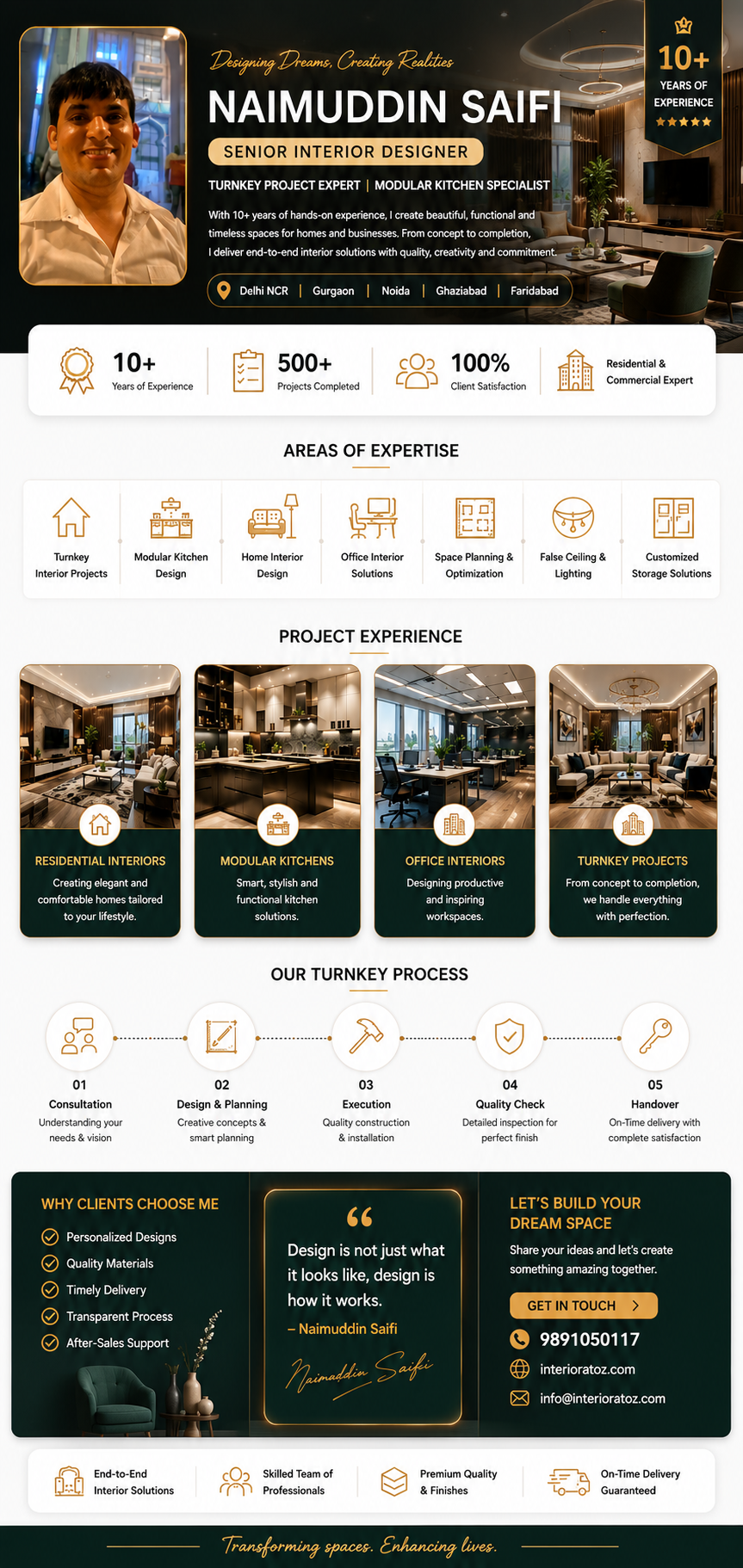
Author name: Interior A to Z - Luxury Interior Designers

Interior A to Z is a premier interior design firm specializing in luxury residential and commercial transformations across Gurgaon, Noida, and Delhi NCR. With over 15 years of expertise, we offer end-to-end solutions, from modular kitchens and minimalist bedrooms to complete home renovations. Our mission is to blend modern aesthetics with functional design. Book a Free Consultation at https://interioratoz.com/contact-us/ to start your dream project today.

Elevate Your Space: Finding Luxury Interior Design Services Near You

When it comes to creating a home that exudes elegance and sophistication, luxury interior design services can make all the difference. Whether you’re renovating an existing space or starting from scratch, partnering with a skilled designer can help you achieve a stunning environment that reflects your unique style and taste. Here’s how to find luxury interior design services close to you and what to expect from the process.

Why Choose Luxury Interior Design?

Luxury interior design goes beyond mere aesthetics. Here are some key reasons to consider luxury services:

  • Personalized Experience: Luxury designers take the time to understand your vision, lifestyle, and preferences, creating a tailored design that suits your needs.
  • High-Quality Materials: These services often use premium materials and furnishings, ensuring longevity and an upscale look.
  • Attention to Detail: A focus on intricate details, custom solutions, and sophisticated color palettes elevates your space.
  • Expert Guidance: Luxury designers have extensive experience and knowledge of the latest trends and timeless styles, providing valuable insights throughout the process.

How to Find Luxury Interior Design Services Nearby

  1. Online Research: Start by searching for luxury interior designers in your area using platforms like Houzz, Pinterest, and local business directories. Look for portfolios that showcase their work and style.
  2. Social Media: Explore Instagram and Facebook for inspiration and to find designers who resonate with your taste. Many designers share their projects and ideas on these platforms.
  3. Ask for Recommendations: Reach out to friends, family, or colleagues who have worked with luxury designers. Personal referrals can lead you to trusted professionals.
  4. Visit Design Showrooms: Many luxury interior designers have showrooms or collaborations with furniture stores. Visiting these spaces can give you a sense of their style and offerings.
  5. Attend Local Design Events: Keep an eye out for home and design expos, where you can meet designers, view their work, and network with professionals in the industry.

What to Expect from Luxury Interior Design Services

  • Initial Consultation: Most designers offer an initial meeting to discuss your vision, budget, and timeline. This is your opportunity to share ideas and get to know the designer’s approach.
  • Concept Development: After understanding your preferences, the designer will create a comprehensive design concept, including color schemes, materials, and layouts.
  • Project Management: Luxury designers often oversee every aspect of the project, from sourcing materials to coordinating contractors, ensuring a seamless execution.
  • Custom Solutions: Expect bespoke furnishings and unique design elements tailored to your space, elevating the overall aesthetic.
  • Final Reveal: Once everything is complete, the designer will unveil the finished space, showcasing their vision and your input combined into a cohesive design.

Investing in luxury interior design services can transform your home into a stunning sanctuary that reflects your style and enhances your lifestyle. By taking the time to research and connect with local designers, you can find the perfect partner to bring your vision to life. Embrace the journey of creating a luxurious space that you’ll cherish for years to come!


Here’s a frequently asked questions (FAQ) section for luxury interior design services nearby:


FAQ: Luxury Interior Design Services Close to Me

1. What are luxury interior design services?

Luxury interior design services involve creating high-end, sophisticated spaces that reflect a client’s unique style and preferences. These services often include personalized design concepts, high-quality materials, custom furnishings, and meticulous attention to detail.

2. How do I find luxury interior designers near me?

You can find local luxury interior designers by searching online on platforms like Houzz, Yelp, and Google. Additionally, social media channels like Instagram and Pinterest can provide inspiration and showcase designers’ portfolios.

3. What should I expect during an initial consultation?

During the initial consultation, the designer will discuss your vision, preferences, budget, and timeline. It’s an opportunity to ask questions, share ideas, and gauge whether the designer’s style aligns with your expectations.

4. How much do luxury interior design services cost?

Costs can vary significantly based on the designer’s experience, project scope, and materials used. Some designers charge a flat fee, while others may work on an hourly basis or take a percentage of the total project cost. It’s essential to discuss your budget upfront.

5. Can I still be involved in the design process?

Absolutely! Luxury interior designers encourage client involvement and feedback throughout the process. They aim to create a space that reflects your taste while providing their expertise and creativity.

6. What services do luxury interior designers typically offer?

Services often include space planning, color consultations, furniture and material selection, custom cabinetry design, project management, and final styling. Many designers also offer sourcing for unique or bespoke items.

7. How long does a luxury interior design project take?

The duration of a project varies based on complexity and size. During your consultation, the designer should provide a rough timeline based on your specific needs.

8. What if I don’t know what I want?

That’s okay! Luxury interior designers are skilled at guiding clients through the design process. They can help you explore different styles and concepts to find a direction that resonates with you.

9. How do luxury designers source materials and furnishings?

Luxury designers often have relationships with exclusive vendors and access to high-quality materials that may not be available to the general public. They can help you choose the best options for your design.

10. What if I’m not satisfied with the final design?

Open communication is vital throughout the design process. If you have concerns about the design, discuss them with your designer. A professional will be willing to make adjustments to ensure you are happy with the final outcome.


Here’s a bullet point list for luxury interior design services nearby:

Key Points: Luxury Interior Design Services Close to Me

  • Personalized Design: Tailored design concepts that reflect your unique style and preferences.
  • High-Quality Materials: Use of premium furnishings and materials for a sophisticated look and feel.
  • Expertise and Experience: Skilled designers with extensive knowledge of current trends and timeless styles.
  • Comprehensive Services: Offer a range of services, including space planning, color consultations, and project management.
  • Client Collaboration: Involvement of clients throughout the design process to ensure their vision is realized.
  • Custom Solutions: Creation of bespoke furnishings and design elements tailored to your space.
  • Project Management: Oversight of all aspects of the project, from sourcing materials to coordinating contractors.
  • Initial Consultation: Free or low-cost consultations to discuss your vision, budget, and timeline.
  • Access to Exclusive Vendors: Ability to source unique and high-end materials unavailable to the general public.
  • Timely Completion: Clear timelines provided for project milestones and final completion.

Conclusion: Luxury Interior Design Services Close to Me

Investing in luxury interior design services can transform your living space into a sophisticated haven that reflects your personal style and enhances your lifestyle. By partnering with a skilled designer, you gain access to expertise, high-quality materials, and bespoke solutions tailored specifically for you.

Finding the right luxury interior design service nearby is an essential first step in this exciting journey. With thorough research, clear communication, and an open mind, you can collaborate with professionals who understand your vision and help bring it to life. Embrace the opportunity to elevate your space and create a home that not only meets your aesthetic desires but also provides a comfortable and functional environment for you and your loved ones. Start your journey today and discover the endless possibilities that luxury interior design has to offer!

Elevate Your Space: Finding Luxury Interior Design Services Near You Read More Β»

Transform Your Space: Finding Modern Home Interior Decorators in Your Area

In today’s fast-paced world, our homes serve as sanctuaries, reflecting our personalities and lifestyles. Modern interior decorators can help you achieve a stylish and functional space that aligns with current trends while considering your unique taste. Here’s how to find the right modern home interior decorators near you.

Why Choose a Modern Interior Decorator?

Modern interior decorators specialize in creating spaces that are not only aesthetically pleasing but also practical. They focus on:

  • Minimalism: Utilizing clean lines and uncluttered designs.
  • Functionality: Ensuring that spaces are both beautiful and usable.
  • Sustainable Design: Incorporating eco-friendly materials and practices.

Tips for Finding the Right Decorator

  1. Research Local Decorators: Start by searching online for interior decorators in your area. Websites like Houzz, Yelp, and local business directories can provide listings and customer reviews.
  2. Check Their Portfolio: A good decorator will have a portfolio showcasing their previous work. Look for styles that resonate with you.
  3. Schedule Consultations: Many decorators offer free initial consultations. This is an excellent opportunity to discuss your vision and see if their style aligns with yours.
  4. Ask for Recommendations: Word-of-mouth referrals from friends or family can lead you to reliable decorators.
  5. Consider Your Budget: Discuss your budget openly. A professional decorator can work with various price points and help you maximize your investment.
  6. Look for Specializations: Some decorators may specialize in certain areas, like residential spaces, commercial projects, or specific styles (e.g., mid-century modern, Scandinavian). Ensure their expertise aligns with your needs.

Questions to Ask During Consultations

  • What is your design philosophy?
  • Can you provide references from past clients?
  • How do you approach project timelines and budgets?
  • What services do you offer (e.g., full design, consultations, sourcing materials)?

Finding the right modern home interior decorator can be a game-changer for your living space. By doing thorough research and asking the right questions, you can create a home that is not only modern and stylish but also a true reflection of who you are. Take the first step towards transforming your home today!


Here’s a frequently asked questions (FAQ) section for modern home interior decorators nearby:


FAQ: Modern Home Interior Decorators Nearby

1. What is the role of a modern home interior decorator?

A modern home interior decorator specializes in designing and enhancing the interior spaces of your home. They focus on creating functional, stylish, and aesthetically pleasing environments that reflect contemporary design trends and your personal style.

2. How do I find modern interior decorators near me?

You can find local interior decorators by searching online platforms like Houzz, Yelp, and Google. Additionally, asking for recommendations from friends or family can lead you to reputable decorators in your area.

3. What should I look for in an interior decorator?

When choosing an interior decorator, consider their portfolio, design style, experience, and client reviews. It’s important to find someone whose aesthetic aligns with your vision for your home.

4. How much do modern interior decorators charge?

Fees vary based on the decorator’s experience, the scope of the project, and your location. Some decorators charge a flat fee, while others may work on an hourly basis or take a percentage of the total project cost. Discuss your budget upfront to ensure transparency.

5. Can I work with an interior decorator on a small budget?

Yes! Many interior decorators can work within a variety of budgets. Be open about your financial constraints, and they can help you find creative solutions that fit your needs.

6. Do I need to have a clear vision of what I want before hiring a decorator?

Not necessarily. While having some ideas about your preferences can be helpful, a good interior decorator will work with you to develop a cohesive vision for your space based on your lifestyle and tastes.

7. What services do modern interior decorators typically offer?

Services can include space planning, color consultations, furniture selection, custom cabinetry design, and even project management for renovations. Some decorators may also provide sourcing for decor and furnishings.

8. How long does it take to complete a project with an interior decorator?

Project timelines vary based on the scope and complexity of the work. During your initial consultation, your decorator should provide a general timeframe based on your specific project.

9. What should I prepare for the initial consultation with a decorator?

Come prepared with any ideas or inspirations you have, your budget, and a list of must-haves for your space. Photos of areas you like or dislike can also help the decorator understand your style preferences.

10. What happens if I’m not happy with the design proposed by my decorator?

Open communication is key. If you have concerns about the proposed design, discuss them with your decorator. A professional will be open to feedback and willing to make adjustments to ensure your satisfaction.


Here’s a bullet point list for modern home interior decorators nearby:

Key Points: Modern Home Interior Decorators Nearby

  • Expertise in Modern Design: Specializes in contemporary styles, emphasizing clean lines and minimalism.
  • Local Search Options: Use platforms like Houzz, Yelp, and Google to find decorators in your area.
  • Portfolio Review: Examine past work to ensure their style aligns with your vision.
  • Consultation Availability: Many decorators offer free initial consultations to discuss your project.
  • Budget Considerations: Services can accommodate various budgets; discuss financial limits upfront.
  • Variety of Services: Offers space planning, color consultations, furniture selection, and project management.
  • Collaborative Approach: Work with clients to develop a cohesive vision, regardless of initial clarity.
  • Project Timelines: Completion time varies by project scope; timelines should be discussed during consultations.
  • Open Communication: Feedback is encouraged to ensure client satisfaction with designs.
  • Recommendations: Word-of-mouth referrals can lead you to trustworthy local decorators.

Conclusion: Modern Home Interior Decorators Nearby

In the quest to create a stylish and functional living space, modern home interior decorators play a crucial role. With their expertise in contemporary design and a keen understanding of client needs, they can transform your home into a reflection of your personal style. By taking the time to research and consult with decorators in your area, you can find the right professional to help you achieve your vision.

Whether you’re looking to refresh a single room or undertake a complete home makeover, collaborating with a local decorator can streamline the process and elevate your space. Remember to communicate openly about your preferences and budget to ensure a successful partnership. With the right decorator by your side, you can turn your home into a beautiful sanctuary that combines modern aesthetics with comfort and functionality. Start your journey today and enjoy the transformation that awaits!

Transform Your Space: Finding Modern Home Interior Decorators in Your Area Read More Β»

Transform Your Space: How to Make a Wall Interesting

Understanding Wall Aesthetics

Walls play a crucial role in the overall aesthetic of a room. A blank wall can sometimes feel empty and uninviting, while an interesting wall can draw the eye and create a focal point in the space. Understanding wall aesthetics means realizing the potential of what can be done to transform a mundane surface into a masterpiece that tells a story.

Utilizing Color and Texture

One of the simplest ways to make a wall interesting is through color. Choosing bold or unexpected colors can instantly elevate the look of your room. However, color isn’t the only tool at your disposal. Incorporating different textures with materials like wood, fabric, or even metallic finishes can create depth. Consider painting one wall a deep color and leaving others lighter for contrast, or using textured wallpaper for added intrigue.

Artwork and Personal Touches

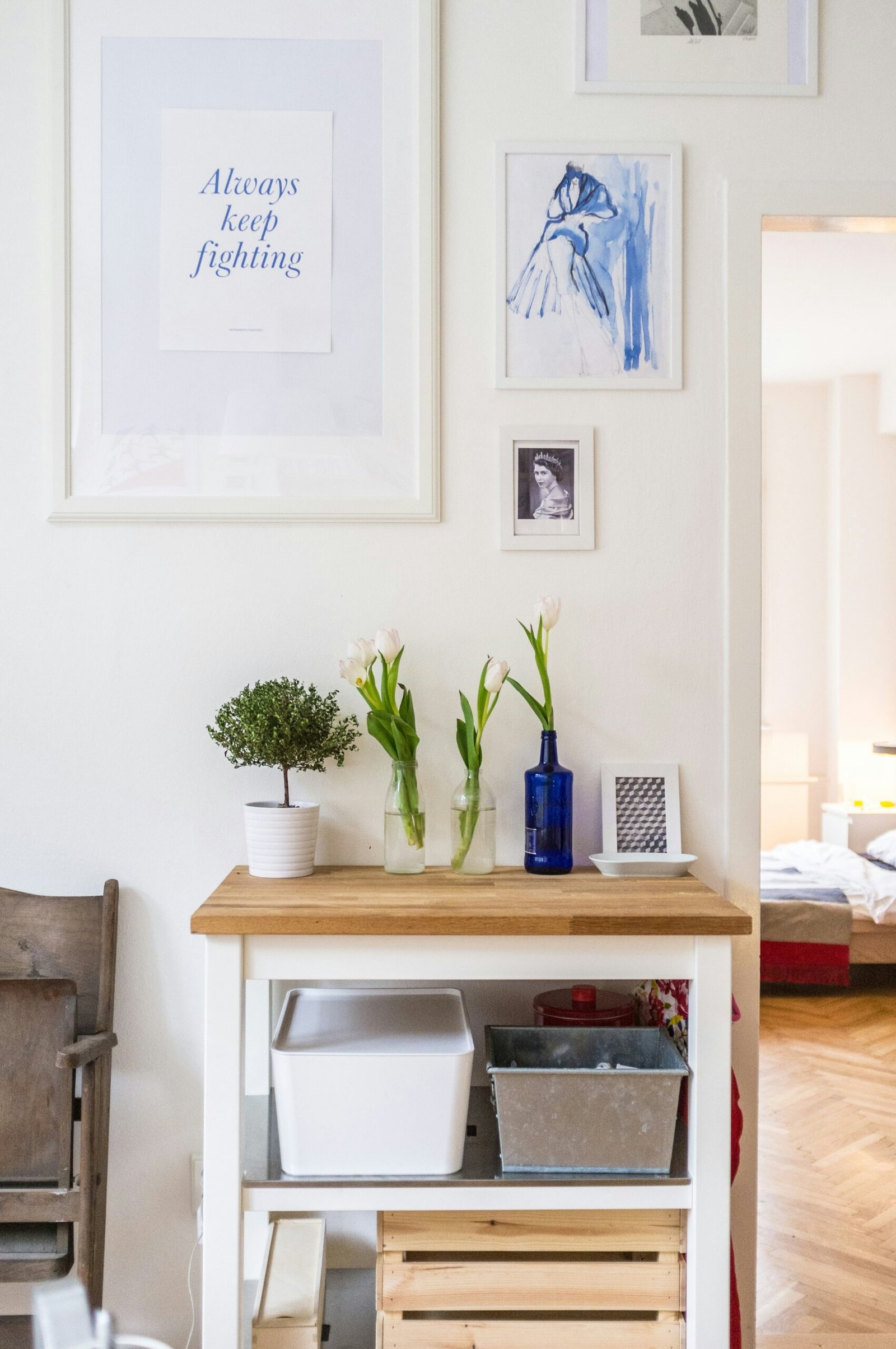
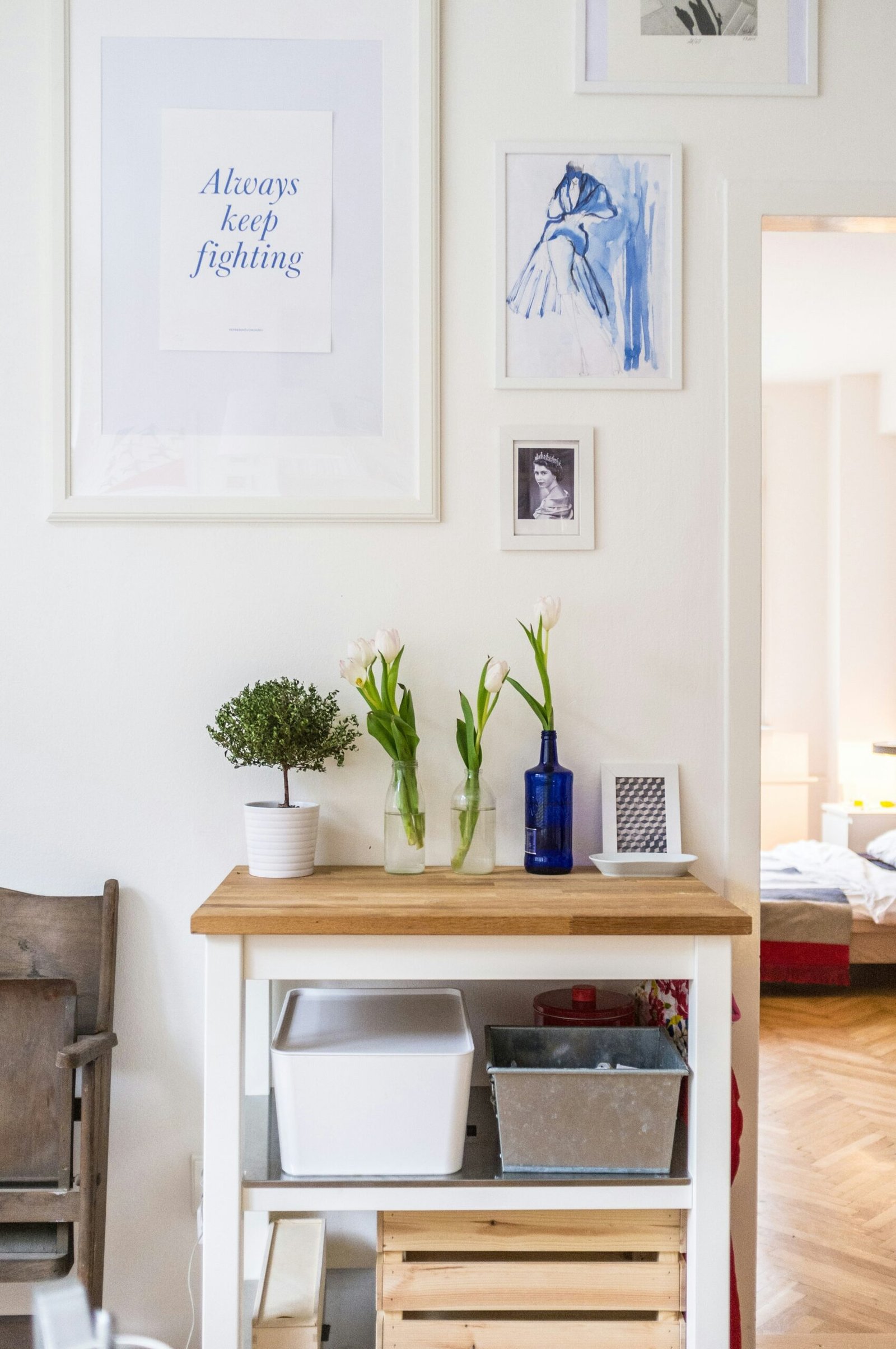
Another effective method to enhance your wall is by displaying artwork. Incorporating framed paintings, photographs, or even a gallery wall with a mix of different frames and art styles can make the wall truly unique. Additionally, adding personal touches, like a collection of travel souvenirs or family heirlooms, can create a warm and inviting atmosphere. This not only makes the wall interesting but also personal and reflective of your own experiences.

Making a wall interesting can add character and style to any room in your home. Here are several creative ideas to transform a plain wall into a focal point:

1. Choose a Bold Paint Color

  • Accent Wall: Paint one wall a bold or contrasting color to create an accent wall that draws attention.
  • Ombre Effect: Use an ombre technique, blending two or more colors from dark to light for a unique gradient effect.

2. Use Wallpaper

  • Patterned Wallpaper: Select a wallpaper with an interesting pattern, texture, or color that complements your overall decor.
  • Removable Wallpaper: Consider removable wallpaper for a temporary solution that’s easy to apply and remove.

3. Create a Gallery Wall

  • Artwork Arrangement: Hang a collection of framed art, photographs, or prints in a curated arrangement. Mix frame styles and sizes for a more dynamic look.
  • Floating Shelves: Incorporate floating shelves to display small artworks, plants, or decorative objects alongside framed pieces.

4. Incorporate Textures

  • Wood Paneling: Add wood paneling or reclaimed wood for a rustic, warm look. You can also paint or stain the wood to match your decor.
  • Textile Wall Hangings: Use fabric, tapestry, or woven wall hangings to introduce texture and softness to the wall.

5. Add Mirrors

  • Statement Mirror: Hang a large decorative mirror to create the illusion of more space and reflect light, making the room feel brighter.
  • Clustered Mirrors: Create a collection of smaller mirrors in different shapes and sizes for an artistic display.

6. Install Shelving

  • Open Shelves: Add open shelving to display books, plants, and decorative items. Arrange them creatively to keep the display dynamic.
  • Corner Shelves: Use corner shelves to make the most of limited wall space while providing additional storage or display area.

7. Use Wall Decals or Stickers

  • Removable Stickers: Apply removable wall decals or stickers that reflect your style, such as quotes, shapes, or graphics, for a fun touch.
  • Geometric Shapes: Create a geometric pattern using decals to add a modern flair without committing to paint.

8. Incorporate Lighting

  • Wall Sconces: Install wall sconces or picture lights to highlight artwork or features on the wall, adding both functionality and style.
  • String Lights: Drape string lights or fairy lights along the wall for a whimsical touch, especially in a bedroom or cozy space.

9. Create a Chalkboard or Whiteboard Wall

  • Chalkboard Paint: Paint a section of the wall with chalkboard paint for a functional and fun space where you can draw or write notes.
  • Whiteboard Surface: Consider a whiteboard wall for jotting down ideas or reminders in a home office or kitchen.

10. Introduce Plants

  • Vertical Garden: Use wall-mounted planters to create a vertical garden, bringing nature indoors and adding freshness to your decor.
  • Hanging Planters: Hang plants from the ceiling or wall brackets to add greenery without taking up floor space.

11. Create a Functional Wall

  • Pegboards: Install a pegboard for a creative storage solution that can hold tools, craft supplies, or kitchen utensils, adding both function and style.
  • Magnetic Boards: Use magnetic boards to display notes, photos, or art, providing an interactive element to your wall.

12. Artistic Murals or Stencils

  • Wall Murals: Hire an artist or use removable mural wallpaper to create a stunning focal point that reflects your personality.
  • Stenciled Patterns: Use stencils to create patterns or designs directly on the wall, adding a unique touch without the commitment of wallpaper.

13. Combine Elements

  • Mix and Match: Combine several of the above ideas to create a unique and interesting wall. For example, use a bold color with a gallery wall and some decorative shelves.

Conclusion

Making a wall interesting involves creativity and a mix of styles and elements that reflect your personal taste. By incorporating colors, textures, artwork, and functional features, you can transform a plain wall into a captivating focal point that enhances your overall decor. Enjoy the process of experimenting and creating a wall that truly represents your style!

Transform Your Space: How to Make a Wall Interesting Read More Β»

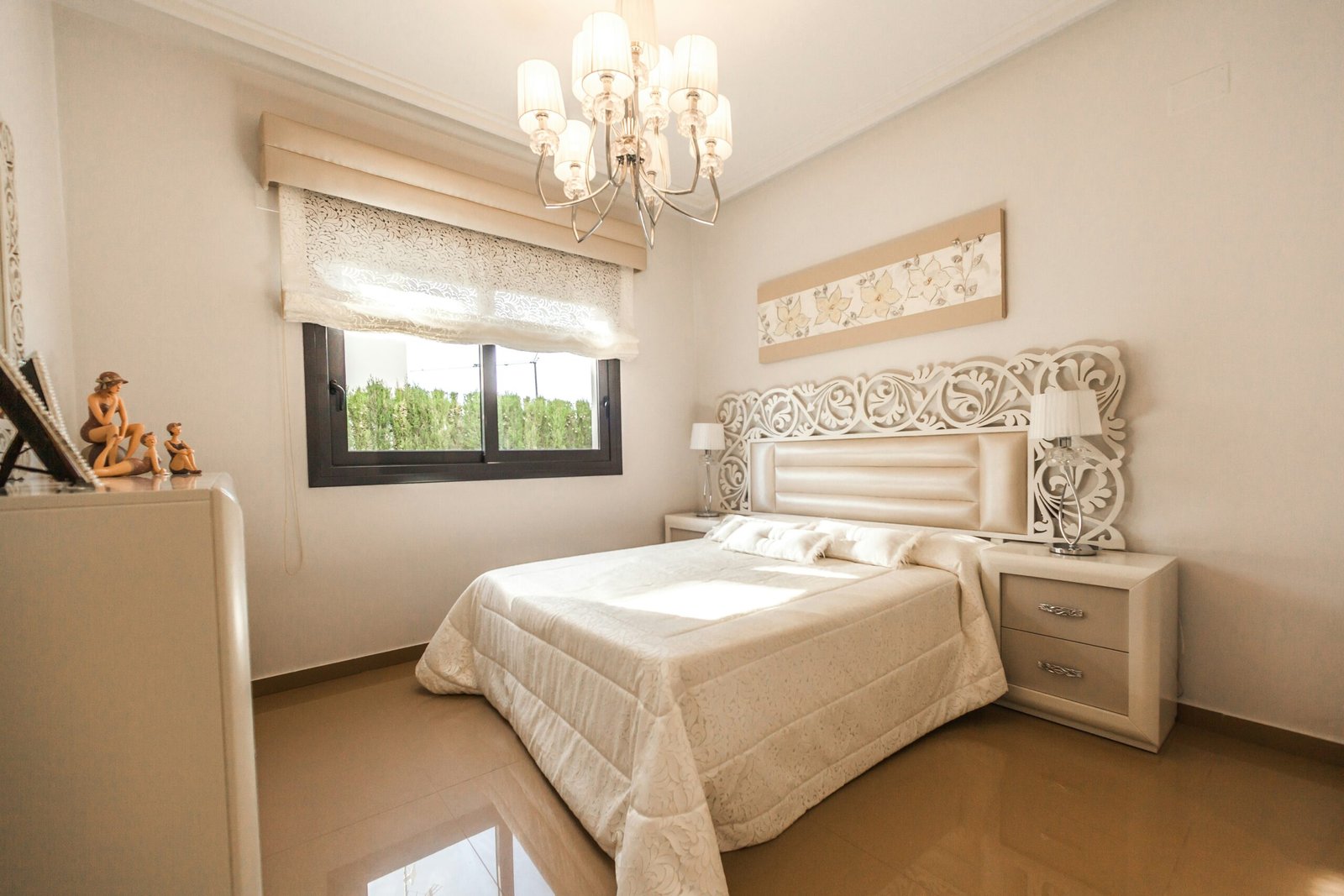
brown wooden bed frame and nightstand

A Comprehensive Guide to Furnishing Your Bedroom

brown wooden bed frame and nightstand

Understanding Your Space

Before diving into the process of furnishing your bedroom, it’s crucial to understand the space you have. Measure your room dimensions and take note of elements like windows and door placements. This will help you visualize your furniture layout. Consider how you want to utilize the space for both functionality and comfort.

Choosing the Right Furniture

When it comes to furnishing the bedroom, selecting the right furniture is essential. Start with the bed, as it’s the centerpiece of the room. Opt for a size that fits your space adequately. For additional storage, consider beds with built-in drawers or choosing a platform bed with under-bed storage. Beyond the bed, think about nightstands and dressers; they should complement the overall aesthetic while offering practicality.

Enhancing Ambiance with Decor

After you’ve chosen your essential furniture, focus on enhancing the ambiance with decor. This can significantly impact the bedroom feel. Incorporate soft lighting through lamps or fairy lights to create a cozy atmosphere. Add textiles like cushions, throws, and rugs to bring warmth to the space. Lastly, don’t forget to personalize your room with artwork or photographs, making it a true reflection of your style.

Furnishing your bedroom involves selecting and arranging furniture, decor, and accessories to create a comfortable, functional, and aesthetically pleasing space. Here’s a step-by-step guide to help you effectively furnish your bedroom:

1. Assess Your Space

  • Measure Your Bedroom: Take measurements of the room, including the dimensions of walls, windows, and doorways. This will help you determine the size of furniture that will fit comfortably.
  • Evaluate Layout: Consider the layout of the room, noting any architectural features such as built-in closets, windows, or alcoves that may affect furniture placement.

2. Define Your Style

  • Choose a Design Theme: Decide on a style that resonates with you, such as modern, traditional, minimalist, or bohemian. This will guide your furniture and decor choices.
  • Create a Mood Board: Compile images, colors, and textures that reflect your vision for the space. This will serve as inspiration as you select items for your bedroom.

3. Choose a Color Palette

  • Select Base Colors: Choose a neutral color for the walls, which will create a calming backdrop. Light shades of gray, beige, or soft pastels can make the room feel more spacious.
  • Add Accent Colors: Incorporate accent colors through bedding, curtains, and decor to add personality and warmth to the space.

4. Select Essential Furniture

  • Invest in Key Pieces: Start with essential items such as a bed frame, mattress, nightstands, and a dresser. Ensure the bed is the focal point of the room.
  • Consider Multi-Functional Furniture: Opt for items like a storage ottoman at the foot of the bed, a bed frame with built-in drawers, or a nightstand with shelving to maximize space.

5. Focus on the Bed

  • Choose the Right Mattress: Invest in a quality mattress that provides comfort and support, as it plays a crucial role in your overall well-being.
  • Layer Bedding: Use a combination of sheets, blankets, and decorative pillows to create a cozy and inviting bed. Consider using a duvet cover or a quilt for added texture.

6. Incorporate Storage Solutions

  • Use Smart Storage: Look for furniture with built-in storage to keep the room organized. This includes under-bed storage boxes, a chest of drawers, or a bed frame with drawers.
  • Declutter Regularly: Keep your bedroom tidy by regularly decluttering and finding designated spots for all items.

7. Enhance Lighting

  • Use Layered Lighting: Incorporate a mix of ambient, task, and accent lighting. Use bedside lamps for reading, overhead lighting for general illumination, and soft lighting to create a cozy atmosphere.
  • Maximize Natural Light: Use light window treatments that allow natural light to flow in. Consider sheer curtains or blinds for privacy without blocking sunlight.

8. Add Decor and Accessories

  • Choose Decorative Elements: Incorporate artwork, mirrors, and decorative objects that reflect your personality and style. These can enhance the overall look of your bedroom.
  • Layer Textures: Use different textures, such as soft throw blankets, cushions, and rugs, to add warmth and comfort to the space.

9. Incorporate Plants

  • Add Indoor Plants: Use potted plants or small succulents to bring life and color into your bedroom. Plants can enhance air quality and create a more inviting atmosphere.
  • Choose Low-Maintenance Options: If you’re not experienced in plant care, opt for low-maintenance plants like snake plants or pothos.

10. Personalize Your Space

  • Showcase Your Interests: Include items that reflect your hobbies, travels, or experiences, such as photos, souvenirs, or books, to add a personal touch.
  • Rotate Decor: Occasionally update your decor or rearrange furniture to keep your space feeling fresh and dynamic.

11. Create a Cozy Atmosphere

  • Add Soft Furnishings: Use soft rugs, cushions, and throws to create a cozy and inviting environment. Layering these can enhance comfort.
  • Keep It Clutter-Free: A tidy room contributes to a peaceful atmosphere. Ensure everything has a designated place to maintain a sense of calm.

12. Stay Within Your Budget

  • Set a Budget: Determine how much you can spend on furnishing your bedroom. Prioritize essential items and allocate funds accordingly.
  • Shop Smart: Look for sales, discounts, and second-hand items to save money. DIY projects can also add personal flair without breaking the bank.

Conclusion

Furnishing your bedroom is about creating a space that feels comfortable, functional, and reflective of your personal style. By assessing your space, defining your style, selecting essential furniture, and incorporating decor and accessories, you can create a beautifully furnished bedroom that enhances your well-being. Enjoy the process, and let your creativity shine as you transform your bedroom into a cozy haven!

A Comprehensive Guide to Furnishing Your Bedroom Read More Β»

A Complete Guide to Furnishing Your Flat

Understanding Your Space

Begin your journey of furnishing your flat by thoroughly understanding your space. Measure each room to grasp dimensions and layout, as this will inform your furniture choices. Consider the natural light available, as brighter spaces can accommodate darker furniture, while dim rooms may benefit from lighter pieces.

Choosing the Right Furniture

When selecting furniture for your flat, prioritize functionality and style. Start with essential items such as a comfortable sofa, a durable dining table, and a cozy bed. Look for multipurpose furnitureβ€”for example, a coffee table that also serves as storage or a sofa bed for guests. Remember to keep your personal style in mind. Whether you prefer modern, rustic, or minimalist designs, choose pieces that resonate with your aesthetic.

Accessorizing Your Flat

Once the major pieces are in place, it’s time to accessorize. Adding accents like cushions, rugs, and curtains can transform a barren flat into a welcoming home. Consider wall art and plants to breathe life into your rooms. These elements reflect your personality and can make a significant difference in the ambiance of your flat. Don’t forget to incorporate lighting; the right fixtures can highlight your decor and set the mood effectively.

Furnishing your flat involves selecting and arranging furniture, decor, and accessories to create a comfortable, functional, and aesthetically pleasing living space. Here’s a step-by-step guide to help you effectively furnish your flat:

1. Assess Your Space

  • Measure Your Rooms: Start by measuring the dimensions of each room, including the height of walls, windows, and doorways. This will help you determine the size of furniture that will fit.
  • Evaluate Layout: Consider the layout of your flat and how different areas will be used. Identify traffic patterns and any architectural features that should be taken into account.

2. Define Your Style

  • Choose a Design Theme: Decide on a design style that resonates with you (e.g., modern, minimalist, industrial, bohemian). This will guide your furniture and decor choices.
  • Create a Mood Board: Compile images, colors, and textures that reflect your vision. This will serve as inspiration as you select furniture and decor.

3. Create a Functional Layout

  • Plan the Arrangement: Sketch out potential furniture layouts for each room. Consider the placement of major furniture pieces and how they relate to each other.
  • Prioritize Functionality: Ensure that the layout promotes ease of movement and functionality. Avoid overcrowding a space with too much furniture.

4. Select Essential Furniture

  • Invest in Key Pieces: Start with essential furniture items like a sofa, bed, dining table, and chairs. Choose quality pieces that align with your style and are comfortable.
  • Consider Multi-Functional Furniture: Opt for items that serve multiple purposes, such as a sofa bed for guests or a coffee table with storage. This maximizes space in smaller flats.

5. Choose a Color Palette

  • Select Base and Accent Colors: Choose a neutral base color for larger furniture pieces, such as a sofa or bed frame. Add accent colors through accessories like cushions, rugs, and artwork.
  • Coordinate Textiles: Ensure that fabrics and textures coordinate with the overall color scheme. This includes curtains, throws, and upholstery.

6. Incorporate Storage Solutions

  • Use Smart Storage: Look for furniture with built-in storage, such as ottomans, bed frames with drawers, or shelves that can double as decor.
  • Organize Clutter: Keep your space tidy by incorporating decorative storage solutions like baskets or boxes to store items out of sight.

7. Add Decor and Accessories

  • Choose Decorative Elements: Incorporate artwork, mirrors, and decorative objects that reflect your personality and style. These pieces can enhance the overall look of your flat.
  • Layer Textures: Mix different textures to add depth to your space. Use textiles like cushions, throws, and rugs to create a cozy atmosphere.

8. Enhance Lighting

  • Use Multiple Light Sources: Incorporate a mix of ambient, task, and accent lighting to create a warm and inviting environment. Consider floor lamps, table lamps, and ceiling fixtures.
  • Maximize Natural Light: Use light, airy window treatments to allow natural light to flow in. Consider sheer curtains or blinds that complement your decor.

9. Incorporate Plants

  • Add Indoor Plants: Use potted plants or hanging greenery to bring life and color to your flat. Plants can enhance air quality and create a more inviting atmosphere.
  • Choose Low-Maintenance Options: If you’re not experienced in plant care, select low-maintenance varieties like succulents or snake plants.

10. Personalize Your Space

  • Showcase Your Interests: Incorporate items that reflect your hobbies, travels, or experiences. This adds a personal touch to your decor.
  • Rotate Decor: Occasionally update your decor or rearrange furniture to keep your space feeling fresh and dynamic.

11. Stay Within Your Budget

  • Set a Budget: Determine how much you can afford to spend on furnishing your flat. Prioritize essential items and allocate funds accordingly.
  • Shop Smart: Look for sales, discounts, and second-hand items to save money. Consider DIY projects for personalized and cost-effective solutions.

12. Be Patient and Flexible

  • Take Your Time: Furnishing a flat is a process. Don’t rush; take your time to find pieces that fit your vision and budget.
  • Be Open to Change: As you furnish and live in your space, be willing to make adjustments based on what works and what doesn’t.

Conclusion

Furnishing your flat is about creating a comfortable and functional living space that reflects your personal style. By assessing your space, defining your style, selecting essential furniture, and incorporating decor and accessories, you can create a beautifully furnished flat that enhances your lifestyle. Enjoy the process, and let your creativity shine as you transform your space!

A Complete Guide to Furnishing Your Flat Read More Β»

white petaled flowers with green leaves

5 Essential Tips for Redesigning Your Flat

white petaled flowers with green leaves

Understanding Your Space

Redesigning a flat is a creative journey that begins with understanding your space. Take a moment to assess what you have. Measure your flat’s dimensions and note any architectural features such as windows, doors, and built-in storage. This will help you plan a layout that maximizes the potential of your home while ensuring comfort.

Choosing a Style

One of the most crucial steps in the redesign process is selecting a style that resonates with you. Whether it’s modern, minimalist, or bohemian, your chosen aesthetic should reflect your personality. Consider collecting images or creating mood boards that highlight colors, textures, and furniture styles you love. This visual guide will help streamline your decisions as you design.

Functionality Matters

While aesthetics are important, functionality should never be overlooked. When redesigning your flat, think about how you use your space daily. Ensure that high-traffic areas are practical and accessible, and your furniture choices promote movement. If you’re working with a smaller flat, consider multi-functional furniture that serves more than one purpose, allowing you to maintain an uncluttered feel.

Redesigning a flat can be an exciting project that transforms your living space into a more functional and aesthetically pleasing environment. Here’s a step-by-step guide to help you effectively redesign your flat:

1. Assess Your Current Space

  • Evaluate Functionality: Take stock of how your flat currently functions. Identify areas that are working well and those that need improvement.
  • Note Design Flaws: Look for any design elements that feel outdated, cramped, or uninviting. Make a list of what you want to change.

2. Define Your Goals

  • Set Clear Objectives: Determine the main goals for the redesign. Are you looking to create more space, improve functionality, update the decor, or enhance the overall aesthetic?
  • Consider Your Lifestyle: Think about your daily routines and how your redesigned flat can better support your lifestyle needs.

3. Create a Budget

  • Determine Your Budget: Decide how much you’re willing to spend on the redesign. Consider all aspects, including materials, furniture, and labor if hiring professionals.
  • Prioritize Expenses: Identify which elements are most important to you and allocate your budget accordingly. It’s often helpful to focus on key areas first.

4. Develop a Design Concept

  • Choose a Style: Decide on a design style that resonates with you, such as modern, minimalist, industrial, or bohemian. Research styles to find what you like best.
  • Create a Mood Board: Collect images, color palettes, materials, and textures that inspire your redesign. This can serve as a visual reference throughout the project.

5. Plan Your Layout

  • Assess Traffic Flow: Consider how you move through your space and ensure that the layout facilitates easy movement and access to key areas.
  • Utilize Space Efficiently: Use furniture arrangement to maximize space. Consider multi-functional furniture pieces to optimize functionality.

6. Choose a Color Scheme

  • Select Base Colors: Choose a neutral base color for walls to create a calming backdrop. This allows you to introduce accent colors through decor and furnishings.
  • Add Accent Colors: Incorporate pops of color through accessories like cushions, rugs, and artwork. Stick to a cohesive color palette to maintain harmony.

7. Update Flooring and Walls

  • Consider New Flooring: If your flooring is outdated, consider replacing it with materials that complement your redesign. Options include hardwood, laminate, tile, or carpet.
  • Paint or Wallpaper: Freshen up your walls with a new coat of paint or consider adding wallpaper for texture and interest. Use bold patterns or colors strategically.

8. Select Furniture and Decor

  • Invest in Key Pieces: Choose furniture that suits your style and is functional for your space. Look for quality pieces that will last.
  • Incorporate Unique Decor: Add decorative elements that reflect your personality, such as artwork, sculptures, or personal photographs.

9. Enhance Lighting

  • Use Layered Lighting: Incorporate a mix of ambient, task, and accent lighting to create a warm and inviting atmosphere. Consider modern light fixtures that align with your design style.
  • Maximize Natural Light: Keep window treatments light and airy to allow natural light to flow in, enhancing the feeling of space.

10. Incorporate Storage Solutions

  • Choose Smart Storage Options: Look for furniture that offers storage solutions, such as ottomans with hidden compartments or shelves that double as decor.
  • Declutter Regularly: Keep your space organized by regularly decluttering and finding designated spots for everything.

11. Personalize Your Space

  • Showcase Your Personality: Incorporate items that reflect your interests and experiences, such as travel souvenirs or favorite books.
  • Add Indoor Plants: Use indoor plants to bring life and color into your flat. They can also improve air quality and create a more inviting atmosphere.

12. Consider Professional Help

  • Hire Professionals if Needed: If the redesign feels overwhelming or if you lack experience, consider hiring an interior designer or contractor to help with the process.
  • Get Multiple Quotes: If hiring contractors, obtain multiple quotes and check reviews to ensure quality work.

13. Be Flexible and Patient

  • Stay Open to Changes: As you redesign, you may find that certain ideas evolve. Be flexible and willing to adapt your plans as necessary.
  • Take Your Time: Redesigning a flat is a process. Don’t rush; take your time to ensure that each element aligns with your vision.

Conclusion

Redesigning a flat can significantly enhance your living space, making it more functional and visually appealing. By following these steps and focusing on your personal style and needs, you can create a beautifully redesigned flat that reflects your individuality and enhances your lifestyle. Enjoy the journey and embrace the creativity involved in transforming your home!

5 Essential Tips for Redesigning Your Flat Read More Β»

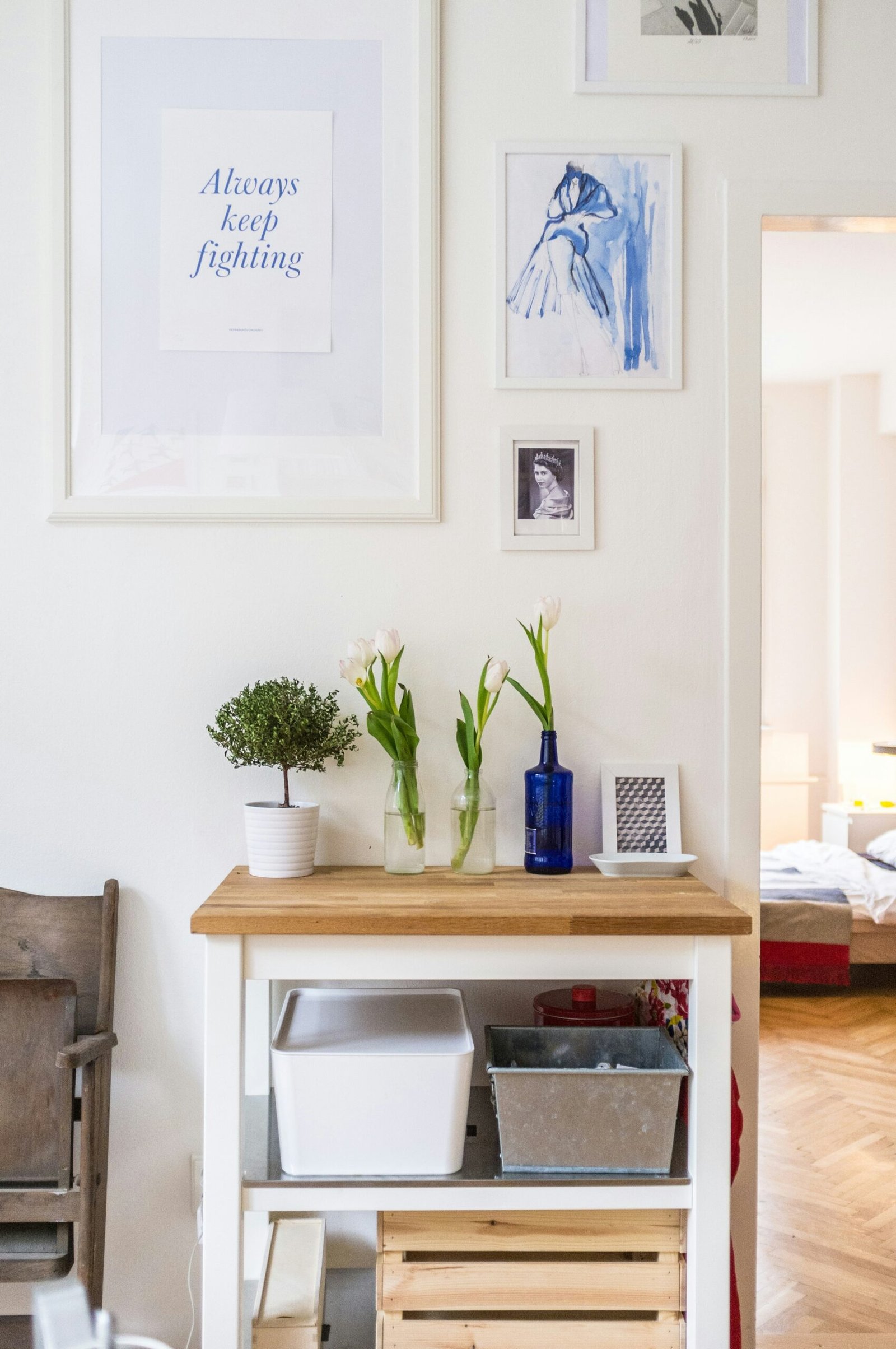
white and brown wooden end table near wall inside room

10 Tips for Decorating Your Modern Flat

white and brown wooden end table near wall inside room

Understanding Modern Decor

Decorating a modern flat involves a careful blend of aesthetics and functionality. The key features of modern decor include clean lines, minimal clutter, and the use of natural materials. This approach results in spaces that feel open and inviting, making them ideal for contemporary living.

Choosing the Right Color Palette

When it comes to selecting colors for your flat, opt for a neutral base with splashes of vibrant shades. Soft whites, grays, and earthy tones can serve as a canvas, while bold colors can be introduced through accessories such as cushions, artwork, or accent walls. This combination adds personality while maintaining the modern look.

Smart Furniture Arrangements

In a modern flat, how you arrange furniture can significantly influence the overall vibe. Aim for a layout that promotes easy movement and conversation. Consider investing in multi-functional furniture, such as storage ottomans or expandable tables, to maximize space. This strategy helps keep the room organized and stylish.

Incorporating Natural Light

Natural light is a crucial component of modern decor. Utilize sheer curtains or blinds to permit daylight while maintaining privacy. Reflective surfaces such as mirrors can also help to amplify light, creating an airy atmosphere. Spaces filled with light feel more inviting and spacious, enhancing the overall decor.

Personal Touches

Lastly, remember to infuse your personality into the decor of your modern flat. Whether it’s through framed photographs, bookshelves filled with your favorite reads, or unique art pieces, adding personal items creates warmth and character. This balance between modern design and personal touches brings your space to life.

Decorating a modern flat involves creating a stylish and functional space that reflects contemporary design principles. Here’s a step-by-step guide to help you achieve a modern aesthetic in your flat:

1. Define Your Style

  • Research Modern Design: Familiarize yourself with modern design elements, such as clean lines, minimalism, and a neutral color palette. Look at examples for inspiration.
  • Create a Mood Board: Gather images, color swatches, and textures that resonate with your vision for a modern flat.

2. Choose a Color Palette

  • Neutral Base: Start with a neutral base for walls, such as whites, grays, or beiges. This creates a clean backdrop that allows furniture and decor to stand out.
  • Accent Colors: Introduce pops of color through accessories like cushions, rugs, and artwork. Stick to a limited color scheme to maintain harmony.

3. Opt for Minimalist Furniture

  • Select Clean-Lined Furniture: Choose furniture with simple, geometric shapes and smooth surfaces. Look for pieces made of materials like wood, metal, and glass.
  • Prioritize Functionality: Choose multi-functional furniture, such as a sofa bed or storage ottoman, to maximize space without sacrificing style.

4. Enhance Lighting

  • Use Layered Lighting: Incorporate a mix of ambient, task, and accent lighting to create a warm and inviting atmosphere. Pendant lights and floor lamps can add a modern touch.
  • Maximize Natural Light: Keep window treatments light and airy to allow natural light to flow in. Use sheer curtains or blinds for privacy without blocking light.

5. Incorporate Textures

  • Mix Materials: Combine different textures, such as wood, metal, glass, and fabric, to add depth. For example, pair a sleek leather sofa with soft, textured cushions.
  • Use Area Rugs: Define spaces and add warmth with area rugs, particularly in living and dining areas.

6. Add Art and Decor

  • Choose Statement Artwork: Select bold, contemporary artwork that complements your color palette. Large-scale pieces can serve as focal points.
  • Limit Clutter: Keep decor minimal to avoid a crowded look. Use a few well-chosen accessories to enhance the modern feel.

7. Create Open Spaces

  • Emphasize Flow: Arrange furniture to create an open, inviting layout that encourages movement and interaction. Avoid overcrowding any area.
  • Use Room Dividers: In larger flats, consider using stylish room dividers or open shelving to create distinct zones without closing off the space.

8. Incorporate Technology

  • Smart Home Features: Integrate smart technology, like automated lighting or climate control, to enhance functionality while keeping a modern aesthetic.
  • Stylish Electronics: Choose modern-looking appliances and gadgets that blend seamlessly with your decor.

9. Personalize Your Space

  • Showcase Personal Items: Incorporate personal touches, like travel souvenirs or family photos, to make the space uniquely yours while keeping it cohesive.
  • Add Indoor Plants: Bring life and color into your flat with indoor plants. Choose low-maintenance options if you’re not confident in your plant care skills.

10. Pay Attention to Details

  • Select Stylish Fixtures: Upgrade light fixtures, cabinet handles, and faucets to modern, sleek designs that enhance the overall look.
  • Consider Flooring: Choose flooring that complements the modern aesthetic, such as hardwood, laminate, or polished concrete.

11. Keep it Organized

  • Use Smart Storage Solutions: Invest in furniture with built-in storage to keep the space tidy. Opt for stylish baskets or decorative boxes for easy organization.
  • Declutter Regularly: Maintain a clean and modern look by regularly decluttering and minimizing excess items.

12. Stay Flexible

  • Be Open to Change: As you live in your flat, you may discover what works and what doesn’t. Don’t hesitate to rearrange or update your design over time.
  • Experiment with Arrangements: Try different furniture arrangements to find what feels best in your space. A new layout can refresh the entire look.

Conclusion

Decorating a modern flat is about blending style, functionality, and personal touches to create a cohesive and inviting environment. By focusing on clean lines, a neutral palette, and thoughtful decor choices, you can achieve a modern aesthetic that reflects your personality and enhances your living space. Enjoy the decorating process and let your creativity shine!

10 Tips for Decorating Your Modern Flat Read More Β»

Ways to Cultivate Uniqueness in Interior Design

Embrace Personal Stories

One of the most effective ways to make your interior design unique is by incorporating personal stories into your space. Every item in your home can reflect your journey, whether it’s a piece of art from your travels, family heirlooms, or even handmade crafts. Infusing memories and experiences into your decor not only enhances creativity but also creates a warm and inviting atmosphere.

Experiment with Color Schemes

Another approach is to experiment with unconventional color palettes. Move beyond neutral tones and explore vibrant colors that resonate with you. Consider using bold colors as accents or creating a feature wall. This not only makes a statement but can also drastically alter the ambiance of a room, thereby reflecting your unique personality.

Mix Different Styles

Finally, don’t hesitate to mix different interior design styles. Combining vintage finds with modern elements, or rustic items with sleek designs can create a harmonious yet distinctive look. Curate a space that doesn’t conform to one category but is a blend of what you love. This approach not only sets your space apart but also showcases your creative versatility.

Being unique in interior design involves combining your personal style, creativity, and thoughtful choices that reflect your individuality. Here are some effective ways to achieve a distinctive and original look in your space:

1. Embrace Personal Style

  • Identify Your Aesthetic: Reflect on your preferences, inspirations, and what makes you feel comfortable. Explore various design styles (bohemian, industrial, eclectic, etc.) to find what resonates with you.
  • Use a Mood Board: Create a mood board to visualize your style. Collect images, colors, and textures that inspire you, and use them as a reference when designing your space.

2. Incorporate Unique Elements

  • Choose Statement Pieces: Invest in standout furniture or decor items that act as focal points. This could be an oversized artwork, an unusual sculpture, or a uniquely shaped piece of furniture.
  • Explore Vintage or Antique Finds: Look for unique vintage or antique items that have character and history. These pieces can add depth and storytelling to your decor.

3. Experiment with Color and Patterns

  • Play with Color Combinations: Don’t be afraid to use bold or unexpected color combinations. Use contrasting colors to create visual interest and energy.
  • Mix Patterns: Combine different patterns and textures, such as stripes, florals, and geometric designs. Just ensure they complement each other to maintain cohesion.

4. Personalize Your Space

  • Incorporate Personal Art and Crafts: Display your artwork, crafts, or DIY projects. This adds a personal touch and showcases your creativity.
  • Showcase Travel Memories: Use souvenirs, photographs, or decor items from your travels to tell your story and add uniqueness to your space.

5. Choose Unique Materials

  • Experiment with Textures: Use a mix of materials like wood, metal, glass, and fabric to add depth. Look for unique textures, such as rattan, cork, or stone.
  • Opt for Sustainable Materials: Consider eco-friendly materials that stand out for their sustainability and uniqueness, such as reclaimed wood or bamboo.

6. Design with Functionality

  • Create Multi-Functional Spaces: Design areas that serve multiple purposes, such as a home office that doubles as a guest room. This approach can lead to innovative and unique layouts.
  • Incorporate Smart Storage Solutions: Use creative storage solutions that blend functionality with design. For example, use decorative boxes or stylish baskets that fit your decor.

7. Incorporate Technology

  • Use Smart Home Features: Integrate technology seamlessly into your design, such as smart lighting, sound systems, or automated blinds, while ensuring they enhance the aesthetic appeal.
  • Explore Unique Lighting Solutions: Choose unconventional lighting fixtures, such as sculptural lamps or chandeliers that serve as works of art.

8. Create a Story

  • Theme Your Decor: Develop a theme that tells a story or reflects a passion. For example, a nature-inspired theme could incorporate plants, earthy colors, and natural materials.
  • Design Around a Focal Point: Choose a specific area or piece in your home as a focal point and design around it, creating a narrative throughout your space.

9. Stay Open to Change

  • Be Experimental: Don’t hesitate to try new ideas, arrangements, or trends. Interior design is an evolving process, and being open to change can lead to unique outcomes.
  • Rotate Decor: Occasionally change up your decor or rearrange furniture to give your space a fresh look. This can keep your environment feeling dynamic and unique.

10. Trust Your Instincts

  • Follow Your Heart: Ultimately, trust your instincts when it comes to design choices. If something feels right to you, go for it, even if it’s unconventional.
  • Avoid Trends: While it’s helpful to be aware of trends, prioritize what feels authentic to you over what is currently popular.

Conclusion

To be unique in interior design, embrace your individuality and express it through thoughtful choices, personal touches, and creative experimentation. By combining various elements that reflect your personality, you can create a space that is not only stylish but also truly one-of-a-kind. Enjoy the process and have fun making your space uniquely yours!

Ways to Cultivate Uniqueness in Interior Design Read More Β»

two beige table decors

10 Creative Ways to Decorate Your Home

two beige table decors

Introduction to Home Decoration

Decorating your home is not just about filling up space; it’s about creating a warm, inviting atmosphere that reflects your personal style. Whether you’re moving into a new place or simply refreshing your current space, knowing how to decorate your home can make a significant difference in your living experience.

Understand Your Style

The first step in home decoration is understanding your own style. Are you drawn to minimalism, bohemian vibes, or perhaps a rustic charm? Take some time to explore different styles online or through magazines to find what resonates with you. This foundation will guide your choices as you begin to decorate your home.

Incorporate Nature

Bringing elements of nature indoors is a fantastic way to breathe life into your home. Consider adding plants, flowers, or even natural wood pieces. These elements not only beautify your space but also create a calming atmosphere that enhances your overall well-being.

Utilize Color and Texture

The colors on your walls, furniture, and decor play a crucial role in the overall aesthetics. Choose a color scheme that harmonizes with the mood you want to create. Using various textures, like soft fabrics and glossy surfaces, can add depth and interest to your space.

Personal Touches Matter

Lastly, add personal touches through artwork, photographs, or heirlooms that tell your story. These unique pieces will not only make your home feel more inviting but will also reflect your personality and experiences, making it truly yours.

In conclusion, by understanding your style, incorporating nature, and adding personal touches, you can effectively decorate your home to create a space that you love.

Decorating your home is a wonderful opportunity to express your personality and create a comfortable, inviting space. Here’s a comprehensive guide to help you decorate your home effectively:

1. Define Your Style

  • Explore Different Styles: Research various decor styles (modern, bohemian, rustic, industrial, etc.) to find inspiration that resonates with you.
  • Create a Mood Board: Collect images, colors, textures, and patterns that inspire you. This can help you visualize your overall design direction.

2. Choose a Color Palette

  • Select Base Colors: Start with a neutral color palette for walls to create a cohesive and versatile backdrop. Soft whites, grays, or beiges work well.
  • Add Accent Colors: Introduce accent colors through accessories like cushions, artwork, and rugs. Consider a limited color scheme to maintain harmony.

3. Plan Your Layout

  • Assess Your Space: Measure your rooms and take note of architectural features, windows, and doors. Consider the flow of movement and how you use each space.
  • Use a Floor Plan: Sketch a floor plan or use online tools to visualize furniture placement and ensure an efficient layout.

4. Invest in Key Furniture Pieces

  • Choose Functional Items: Start with essential furniture such as sofas, beds, and dining tables. Opt for quality pieces that suit your lifestyle and needs.
  • Select Multi-Functional Furniture: Consider furniture that serves multiple purposes, like a sofa bed or storage ottoman, especially for smaller spaces.

5. Enhance Lighting

  • Layer Your Lighting: Use a combination of ambient, task, and accent lighting to create a warm atmosphere. Floor lamps, table lamps, and pendant lights can add depth.
  • Maximize Natural Light: Use sheer curtains or blinds to let in light while maintaining privacy. Mirrors can also help reflect and amplify natural light.

6. Add Textures

  • Mix Materials: Combine different textures, such as wood, metal, fabric, and glass, to add depth and interest. Soft furnishings like cushions and throws can create a cozy feel.
  • Use Area Rugs: Area rugs can define spaces and add warmth, especially on hard flooring.

7. Incorporate Art and Decor

  • Display Artwork: Invest in quality art pieces that reflect your style. Create a gallery wall or use oversized artwork as a statement piece.
  • Limit Clutter: Keep surfaces tidy by selecting a few standout decorative items. Use storage solutions to hide clutter and maintain an organized appearance.

8. Personalize Your Space

  • Use Personal Touches: Incorporate family photos, travel souvenirs, or DIY projects to make the space feel uniquely yours.
  • Add Indoor Plants: Bring life and color into your home with indoor plants. Choose low-maintenance options if you’re not confident in your plant care skills.

9. Create Functional Zones

  • Define Spaces: Use furniture arrangement, rugs, or room dividers to create distinct areas for different activities (e.g., reading nook, workspace, dining area).
  • Ensure Flow: Maintain a natural flow between spaces, allowing easy movement and access.

10. Consider Window Treatments

  • Choose Curtains Wisely: Opt for stylish curtains that enhance your decor. Floor-to-ceiling curtains can create the illusion of height.
  • Use Blinds or Shades: Consider using elegant blinds or shades for a modern look, especially in rooms that require privacy.

11. Pay Attention to Details

  • Upgrade Hardware: Replace standard cabinet knobs and drawer pulls with more stylish options to elevate the overall look.
  • Choose Quality Fixtures: Upgrade light fixtures and faucets for a more polished and contemporary appearance.

12. Stay Flexible and Open-Minded

  • Be Willing to Change: As you live in your space, you may find that certain arrangements or decor items don’t work as well as you thought. Don’t hesitate to rearrange.
  • Try New Ideas: Experiment with different decor styles, arrangements, or seasonal changes to keep your home feeling fresh.

13. Budget Wisely

  • Set a Budget: Determine how much you can spend on decorating. Prioritize key items and stick to your budget to avoid overspending.
  • Shop Smart: Look for sales, thrift store finds, or DIY projects to save money while achieving your desired look.

Conclusion

Decorating your home is an enjoyable and creative process that allows you to showcase your personality and create a welcoming environment. By defining your style, planning your layout, and carefully selecting furniture and decor, you can transform your space into a beautiful and functional home. Take your time, enjoy the journey, and have fun with it!

10 Creative Ways to Decorate Your Home Read More Β»

Top Tips for Designing Your Apartment: A Comprehensive Guide

Understanding Your Space

When considering how to design your apartment, the first step is to understand the space you have. Take measurements and note the layout, including where the doors and windows are. This will help you visualize your design options and ensure that your furniture and dΓ©cor choices fit harmoniously into your living quarters.

Choosing a Design Style

Next, it’s essential to determine your personal design style. Do you prefer modern, minimalist aesthetics or are you drawn to a more bohemian vibe? By pinpointing your style, you can create a cohesive look throughout your apartment. Collect inspiration from magazines, websites, and social media platforms like Pinterest to curate a vision board that reflects your personality.

Maximizing Functionality

Space management is key in apartment design. Multifunctional furniture can be a lifesaver in smaller apartments. Look for items such as sofa beds, coffee tables with storage, or extendable dining tables. Ensure that each piece of furniture serves a purpose while contributing to the overall aesthetic. Additionally, consider using vertical storage solutions, like shelves or cabinets, to keep your floor space clutter-free.

Remember, designing your apartment is not only about style but also about creating a comfortable and functional living environment. Take your time to explore different options, and soon you’ll have a personalized space that feels like home.

Designing your apartment can be an exciting and rewarding process! Here’s a step-by-step guide to help you create a space that reflects your style, maximizes functionality, and feels like home:

1. Define Your Style

  • Explore Design Styles: Research various interior design styles (modern, minimalist, bohemian, industrial, etc.) to find inspiration. Use platforms like Pinterest or Instagram for ideas.
  • Create a Mood Board: Collect images, color palettes, and textures that resonate with you. A mood board can help clarify your vision for the space.

2. Plan Your Space

  • Understand the Layout: Measure your apartment and take note of its layout, including the location of windows, doors, and electrical outlets.
  • Create a Floor Plan: Use graph paper or online tools to sketch a floor plan. Plan the layout of each room, considering traffic flow and furniture placement.

3. Choose a Color Palette

  • Select a Base Color: Choose a neutral base color for the walls to create a cohesive backdrop. Soft whites, grays, or beiges are great options.
  • Add Accent Colors: Introduce pops of color through decor items, such as cushions, rugs, and artwork. Stick to a limited color palette for a sophisticated look.

4. Invest in Quality Furniture

  • Choose Essential Pieces: Start with essential furniture, such as a sofa, bed, and dining table. Opt for pieces that fit your lifestyle and needs.
  • Select Multi-Functional Furniture: Consider furniture that serves multiple purposes, such as a sofa bed or a coffee table with storage, to maximize space.

5. Maximize Storage

  • Utilize Vertical Space: Use tall bookshelves, wall-mounted shelves, and cabinets to take advantage of vertical space and keep the floor clear.
  • Incorporate Hidden Storage: Choose furniture with built-in storage, like ottomans or beds with drawers, to keep the space organized and clutter-free.

6. Enhance Lighting

  • Use Layered Lighting: Incorporate a mix of ambient, task, and accent lighting to create a warm and inviting atmosphere. Floor lamps, table lamps, and sconces can add depth.
  • Maximize Natural Light: Use sheer curtains or blinds to allow natural light in while maintaining privacy. Position mirrors to reflect light and make the space feel larger.

7. Decorate Thoughtfully

  • Choose Statement Pieces: Invest in a few high-quality decor items, such as artwork or a stylish rug, to create focal points in each room.
  • Limit Clutter: Keep decor minimal to avoid a crowded look. Use storage solutions to hide away items and maintain an organized appearance.

8. Incorporate Textures

  • Mix Materials: Combine various textures, such as wood, metal, glass, and fabric, to add visual interest. Use cushions, throws, and rugs to create a cozy atmosphere.
  • Use Layering: Layer different textiles, like a plush rug over hardwood flooring, to create depth and warmth.

9. Personalize Your Space

  • Display Personal Items: Incorporate personal touches, such as family photos, travel souvenirs, or DIY projects, to make the space feel uniquely yours.
  • Incorporate Indoor Plants: Use indoor plants to add life and color to your apartment. Choose low-maintenance options if you’re not confident in your plant-care skills.

10. Create Zones

  • Define Spaces: Use furniture placement and rugs to create distinct areas for different activities, like a reading nook, workspace, or dining area.
  • Maintain Flow: Ensure there’s a natural flow between spaces, allowing easy movement throughout the apartment.

11. Pay Attention to Details

  • Choose Hardware Wisely: Replace standard cabinet knobs and drawer pulls with more stylish options to elevate the overall look.
  • Upgrade Fixtures: Consider upgrading light fixtures and faucets for a more polished and modern appearance.

12. Stay Flexible

  • Be Open to Change: As you live in your apartment, you may discover what works and what doesn’t. Don’t hesitate to rearrange or update your design over time.
  • Try New Things: Experiment with different decor styles and arrangements to keep the space feeling fresh and exciting.

13. Budget Wisely

  • Set a Budget: Determine how much you can spend on furnishings, decor, and renovations. Stick to your budget while prioritizing key items.
  • Shop Smart: Look for sales, thrift store finds, and DIY projects to save money while creating a stylish space.

Conclusion

Designing your apartment is a personal journey that allows you to express your style and create a comfortable living environment. By defining your aesthetic, planning your space, and thoughtfully choosing furniture and decor, you can transform your apartment into a beautiful and functional home. Enjoy the process, and don’t forget to have fun with it!

Top Tips for Designing Your Apartment: A Comprehensive Guide Read More Β»

Transforming a Small Home into a Luxurious Retreat

Embrace Minimalism

Creating a luxurious feel in a small home often starts with adopting a minimalist approach. Focus on decluttering your space to enhance its overall aesthetic. By reducing unnecessary items, you not only create more room but also allow the essential features of your home to shine. Minimalism emphasizes quality over quantityβ€”choose high-quality pieces that reflect your style and create an inviting atmosphere.

Selecting the Right Color Palette

Colors play a significant role in how we perceive space. Opt for a neutral color palette that includes shades like beige, gray, and soft whites. These colors can make your small home appear more spacious while exuding an air of sophistication. Consider adding splashes of color through accessories like cushions, artwork, or plants, which keep the environment dynamic and lively.

Incorporating Luxurious Textures

Introduce luxurious textures to elevate your small home’s ambiance. Use fabrics such as velvet, silk, and cashmere in pillows or throws to add depth and comfort. Incorporate rich materials like marble, wood, or brass through furniture, fixtures, or decor. These textures not only add visual interest but also invoke a feeling of affluence in any space, making your home feel like a lavish retreat.

Making a small home feel luxurious is all about smart design choices, high-quality materials, and thoughtful decor. Here are some effective tips to help you achieve a luxurious atmosphere in a small space:

1. Choose a Sophisticated Color Palette

  • Opt for Neutrals: Start with a base of soft, neutral colors like whites, creams, and light grays. These colors create a clean, elegant backdrop that makes the space feel larger.
  • Add Accents: Introduce rich jewel tones or metallics as accents through decor items, such as cushions, artwork, or throws, to add depth and sophistication.

2. Invest in Quality Furniture

  • Select Timeless Pieces: Choose classic, well-made furniture that will withstand trends and provide comfort. Look for solid wood pieces or high-quality upholstery.
  • Embrace Minimalism: In a small space, fewer high-quality pieces can create a more luxurious feel than overcrowding the room with furniture.

3. Enhance Lighting

  • Use Layered Lighting: Incorporate ambient, task, and accent lighting to create a warm and inviting atmosphere. Consider using dimmers to adjust the mood.
  • Choose Statement Fixtures: Invest in elegant chandeliers, pendant lights, or sculptural lamps that serve as decorative elements while providing ample light.

4. Incorporate Textures

  • Mix Materials: Combine various textures, such as wood, metal, glass, and fabric, to add visual interest. For example, pair a leather sofa with a soft, plush rug.
  • Use Luxurious Fabrics: Incorporate high-quality textiles, like velvet, silk, or cashmere, in your curtains, cushions, and throws to enhance comfort and elegance.

5. Maximize Space with Smart Storage

  • Use Multi-Functional Furniture: Choose furniture that doubles as storage, such as ottomans with hidden compartments or coffee tables with shelves, to keep the space organized.
  • Incorporate Built-In Storage: Consider built-in shelves or cabinetry to maximize vertical space and keep the home clutter-free while looking stylish.

6. Add Decorative Accessories

  • Choose Statement Decor: Use a few bold decorative items, such as oversized art pieces, elegant sculptures, or decorative vases, to create focal points without overcrowding the space.
  • Limit Clutter: Keep accessories to a minimum, focusing on quality over quantity to maintain an upscale look.

7. Incorporate Mirrors

  • Use Mirrors to Reflect Light: Strategically place mirrors to reflect natural light and create the illusion of a larger space. A large mirror can serve as a stunning decorative element.
  • Choose Decorative Frames: Opt for mirrors with ornate or stylish frames to enhance their visual appeal and contribute to the luxurious atmosphere.

8. Focus on Flooring

  • Consider High-Quality Flooring: If feasible, invest in hardwood or high-quality laminate flooring for a polished look. Area rugs can add warmth and define spaces.
  • Use Rugs to Add Comfort: Choose luxurious rugs with rich textures and patterns to create a cozy and inviting environment.

9. Incorporate Greenery

  • Use Indoor Plants: Add stylish indoor plants to bring life and vibrancy to your space. Choose plants that thrive in low light if your home lacks natural light.
  • Choose Elegant Planters: Use decorative pots that match your decor style for a cohesive look.

10. Personalize with Art and Decor

  • Display Unique Artwork: Invest in a few pieces of quality art that resonate with you. A well-curated collection adds character and sophistication.
  • Incorporate Personal Items: Use travel souvenirs or family heirlooms to add a personal touch and make the space feel uniquely yours.

11. Focus on Window Treatments

  • Choose Elegant Curtains: Opt for floor-to-ceiling curtains to create an illusion of height and add a touch of drama. Use luxurious fabrics for a refined look.
  • Use Sheer Curtains: Combine sheer and blackout curtains for a soft, elegant look while allowing natural light to filter through.

12. Create Cozy Spaces

  • Define Areas: Use rugs or furniture arrangements to define distinct areas for different activities, such as reading nooks or workspaces, while maintaining flow.
  • Add Soft Furnishings: Use cushions, throws, and blankets to create cozy spots throughout the home, enhancing comfort and luxury.

13. Keep It Clean and Organized

  • Declutter Regularly: A clean, organized space looks more luxurious. Regularly declutter surfaces and keep personal items neatly stored away.
  • Implement Smart Storage Solutions: Use decorative boxes, baskets, and stylish bins to keep clutter hidden while maintaining an organized appearance.

14. Upgrade Hardware and Fixtures

  • Replace Standard Hardware: Swap out cabinet knobs, handles, and faucets for more elegant options in finishes like gold, bronze, or matte black.
  • Update Fixtures: Consider upgrading bathroom and kitchen fixtures to modern, high-end options for an immediate boost in luxury.

Conclusion

Transforming a small home into a luxurious space is achievable through thoughtful design, quality materials, and elegant decor. By focusing on a cohesive aesthetic, investing in timeless pieces, and incorporating personalized touches, you can create a stunning and inviting environment that feels upscale and sophisticated. Enjoy the process of elevating your small home!

Transforming a Small Home into a Luxurious Retreat Read More Β»

Elevate Your Flat: Tips to Make It Look Expensive

Choose a Neutral Color Palette

When designing a flat to exude luxury, selecting a neutral color palette is essential. Soft whites, greys, and beiges create an open and sophisticated atmosphere. This foundation allows you to layer textures and add pops of color with accessories and art, enhancing the overall elegance.

Invest in Quality Furniture

While it may be tempting to fill your space with budget-friendly options, investing in a few quality pieces can make a significant difference. Look for furniture that combines both style and functionality, as this will elevate your flat’s aesthetic without overcrowding it. Opt for timeless designs that will endure trends and stand the test of time.

Accessorize Wisely

Accessorizing your flat is crucial to achieving a high-end look. Focus on curating a few statement pieces, such as a striking piece of art or a luxurious throw. Select decorative items that complement your neutral palette, and combine them in a way that feels intentional. Remember, less is often more when aiming for a sophisticated appearance.

Making a flat look expensive doesn’t always require a big budget. With some strategic design choices and smart decorating ideas, you can create a luxurious aesthetic. Here are some effective tips to help you achieve that high-end look:

1. Choose a Cohesive Color Palette

  • Opt for Neutral Tones: Use a sophisticated color palette with neutral shades like white, beige, gray, and soft pastels. These colors create a clean and elegant backdrop.
  • Add Bold Accents: Incorporate rich jewel tones or deep colors as accents in decor items, such as cushions, rugs, or artwork, to add depth and interest.

2. Invest in Quality Furniture

  • Select Timeless Pieces: Choose classic, well-crafted furniture that stands the test of time. Look for solid wood or high-quality upholstery for sofas and chairs.
  • Use Fewer, Statement Pieces: Instead of overcrowding the space with furniture, opt for fewer but more impactful pieces that draw attention and create a focal point.

3. Enhance Lighting

  • Choose Elegant Light Fixtures: Invest in stylish chandeliers, pendant lights, or modern sconces that serve as statement pieces and elevate the overall ambiance.
  • Incorporate Layered Lighting: Use a mix of ambient, task, and accent lighting to create a warm, inviting atmosphere. Dimmers can add an extra touch of luxury.

4. Focus on Textures

  • Mix Materials: Combine different textures, such as soft fabrics, sleek metals, and natural woods, to add depth and richness to the decor.
  • Incorporate Luxurious Fabrics: Use high-quality textiles like velvet, silk, or cashmere for cushions, throws, and curtains to elevate the space.

5. Add Decorative Accessories

  • Choose Statement Decor: Use bold, oversized art pieces, elegant sculptures, or designer vases as focal points to create an upscale feel.
  • Limit Clutter: Avoid overcrowding surfaces with too many decor items. Instead, select a few key pieces that stand out and complement the space.

6. Incorporate Mirrors

  • Use Mirrors Strategically: Place large mirrors in key areas to reflect light and create the illusion of a larger space. They can also serve as stylish wall decor.
  • Choose Decorative Frames: Opt for mirrors with ornate or unique frames to add a touch of sophistication.

7. Opt for High-Quality Flooring

  • Consider Upgrading Flooring: If possible, invest in hardwood or high-quality laminate flooring for a polished look. If you’re on a budget, consider luxury vinyl or stylish area rugs.
  • Use Area Rugs Wisely: Layer rugs to define spaces and add comfort. Choose rugs with intricate patterns or rich textures to enhance the upscale look.

8. Incorporate Greenery

  • Use Indoor Plants: Incorporate stylish indoor plants to bring life and freshness to your flat. Opt for decorative pots that match your decor style.
  • Choose Statement Planters: Use larger plants in unique planters to create a focal point and add elegance to the space.

9. Upgrade Hardware and Fixtures

  • Replace Standard Hardware: Swap out cabinet handles, drawer pulls, and door knobs for more elegant options in finishes like brass, chrome, or matte black.
  • Update Faucets and Fixtures: Consider upgrading bathroom and kitchen fixtures to more modern or luxurious options for an immediate facelift.

10. Create a Luxurious Atmosphere

  • Use Soft Lighting: Incorporate warm, soft lighting to create a cozy, inviting environment. Avoid harsh overhead lights.
  • Add Scented Candles: Use high-quality scented candles to enhance the atmosphere. Choose subtle fragrances that create a calming effect.

11. Personalize with Art and Accessories

  • Choose Art Thoughtfully: Invest in a few pieces of quality art that resonate with you. A well-curated art collection adds sophistication.
  • Display Unique Finds: Incorporate unique decorative items or travel souvenirs that reflect your personality and taste.

12. Keep It Clean and Organized

  • Declutter Regularly: Keep surfaces tidy and organized to maintain an elegant look. Invest in stylish storage solutions to hide away clutter.
  • Implement Smart Storage Solutions: Use decorative boxes, stylish baskets, and multifunctional furniture to keep your space organized.

Conclusion

Creating an expensive look in your flat is about making thoughtful choices that reflect luxury, quality, and style. By focusing on a cohesive color palette, investing in quality pieces, and incorporating decorative elements, you can transform your space into a sophisticated and inviting home. Enjoy the process of elevating your flat’s aesthetic!

Elevate Your Flat: Tips to Make It Look Expensive Read More Β»

Creative Ways to Decorate an Old Flat

Embrace the Charm of Vintage

Decorating an old flat offers a unique opportunity to showcase its character and history. Start by embracing the vintage elements that already exist. Keep original features like exposed brick, hardwood floors, or classic moldings, and incorporate them into your design concept. These traditional touches can provide a fantastic backdrop for your decor choices.

Mix Old with New Furniture

One effective way to refresh your old flat is to mix vintage and contemporary furniture. Pairing a sleek, modern sofa with a rustic wooden coffee table can create an interesting contrast that enhances the overall aesthetic. Don’t hesitate to visit thrift stores or flea markets for unique finds that can be integrated into your dΓ©cor seamlessly.

Add Color and Personality

Adding color is crucial when decorating an old flat. Opt for bright cushions, colorful art pieces, or bold area rugs to infuse life into the space. A fresh coat of paint can also transform rooms, making them feel both modern and inviting. Remember to reflect your personality through your decoration choices; after all, this is your home.

Decorating an old flat can be a rewarding experience, allowing you to blend its character with your personal style. Here are some effective strategies to help you refresh and revitalize your space:

1. Assess the Space

  • Identify Character Features: Take note of unique architectural elements, like moldings, original flooring, or vintage fixtures. Highlight these features in your decor.
  • Understand Layout Challenges: Recognize any layout issues, such as awkward room shapes or limited natural light, that you’ll need to work around.

2. Choose a Color Palette

  • Opt for Light and Bright Colors: Use light, neutral shades to create an airy feel and make the space look larger. Soft whites, pastels, or light grays can freshen up older walls.
  • Incorporate Accent Colors: Add pops of color through accessories, art, or furniture to inject personality and warmth into the space.

3. Update Fixtures and Hardware

  • Replace Outdated Light Fixtures: Swap out old light fixtures for more modern or stylish options that suit your decor style.
  • Upgrade Hardware: Change cabinet knobs, handles, and door fixtures to give your flat a fresh, updated look.

4. Focus on Furniture Selection

  • Mix Old and New: Combine vintage or antique furniture with contemporary pieces to create a balanced and eclectic look. Thrift stores and flea markets are great places to find unique items.
  • Choose Functional Furniture: Opt for pieces that suit your lifestyle, ensuring they are comfortable and meet your needs while fitting the scale of the rooms.

5. Enhance Lighting

  • Use Layered Lighting: Incorporate a mix of ambient, task, and accent lighting to create a warm and inviting atmosphere. Use floor lamps, table lamps, and sconces to add depth.
  • Maximize Natural Light: Use sheer curtains to allow natural light in while maintaining privacy, making the space feel brighter and more open.

6. Incorporate Textures

  • Add Layered Textures: Use various materials, such as wood, metal, fabric, and glass, to add visual interest. For example, pair a leather sofa with a soft wool throw.
  • Use Rugs Wisely: Area rugs can define spaces and add comfort. Choose rugs that complement your furniture and enhance the room’s aesthetic.

7. Decorate with Art and Accessories

  • Create a Gallery Wall: Hang a collection of artwork, photos, or prints to add character and personal touch to the walls.
  • Choose Statement Decor: Select a few standout accessories, such as sculptures, vases, or decorative bowls, to enhance the space without cluttering it.

8. Incorporate Plants

  • Add Indoor Plants: Use potted plants or hanging planters to bring life to your flat. Plants improve air quality and add color and texture.
  • Choose Stylish Planters: Use planters that match your decor style to create a cohesive look.

9. Personalize Your Space

  • Display Personal Items: Use decor that reflects your personality, such as travel souvenirs, family photos, or DIY projects, to make the space feel uniquely yours.
  • Create a Cozy Atmosphere: Add soft furnishings, like throw pillows and blankets, to enhance comfort and create a welcoming environment.

10. Refresh the Walls

  • Paint or Wallpaper: A fresh coat of paint or new wallpaper can dramatically change the look of a room. Consider removable wallpaper for a temporary update.
  • Repair Any Damage: Address any cracks, holes, or peeling paint before painting to ensure a clean and polished finish.

11. Optimize Storage Solutions

  • Utilize Smart Storage: Use stylish storage solutions, like decorative baskets or shelving units, to keep clutter at bay and maintain an organized space.
  • Maximize Vertical Space: Install wall-mounted shelves or cabinets to take advantage of vertical space and free up floor space.

12. Focus on the Entryway

  • Create a Welcoming Entry: Make a good first impression by decorating the entryway with a stylish console table, a mirror, and a few decorative items or plants.
  • Add Functionality: Include hooks or a small bench for convenience, helping to keep the area organized.

Conclusion

Decorating an old flat is an opportunity to celebrate its character while infusing your personal style. By focusing on updates, clever design choices, and thoughtful decor, you can create a beautiful and inviting living space that reflects your unique taste. Enjoy the process of transforming your old flat into a stylish and comfortable home!

Creative Ways to Decorate an Old Flat Read More Β»

Transform Your Flat: Simple Tips to Make It Beautiful

Understand Your Space

Before diving into decor, it’s essential to understand the dimensions and layout of your flat. Take measurements and visualize how different pieces of furniture will fit together. This preliminary step prevents overcrowding and ensures that your space feels open and inviting.

Choose a Color Palette

Selecting a cohesive color palette sets the tone for your flat’s ambiance. Neutral colors such as whites, grays, and beiges create a calm environment, while pops of color can be added through accessories or accent walls. Remember, the right colors can make your flat feel spacious and beautifully organized.

Incorporate Personal Touches

Make your flat uniquely yours by incorporating personal items such as artwork, photographs, or souvenirs. These touches offer personality and warmth to your space. Additionally, plan for adequate lighting: layer your lighting choices with both overhead fixtures and task lights to create an inviting atmosphere.

Finally, remember that beauty is in the details. Adding greenery through plants or flowers can breathe life into your flat, contributing to both aesthetics and well-being. With these tips, creating a beautiful flat becomes an enjoyable journey of self-expression.

Making your flat beautiful involves a combination of thoughtful design, decor, and personal touches. Here are some effective tips to help you transform your space into a stunning home:

1. Establish a Cohesive Color Scheme

  • Choose a Palette: Start with a neutral base (whites, greys, beiges) and add accent colors that reflect your style. Use these colors consistently throughout the flat to create harmony.
  • Use Color Strategically: Paint an accent wall or incorporate color through accessories like cushions, artwork, and rugs to add vibrancy.

2. Invest in Quality Furniture

  • Select Timeless Pieces: Choose well-made, classic furniture that can withstand trends and provide lasting comfort. Look for pieces that match your style and fit well in your space.
  • Prioritize Comfort: Ensure your seating and beds are comfortable and inviting, as these are essential for a cozy atmosphere.

3. Incorporate Textures

  • Mix Textures: Combine different materials like wood, metal, glass, and fabric to add depth and interest. For example, pair a sleek leather sofa with soft throw pillows and a woven rug.
  • Add Soft Furnishings: Use cushions, throws, and area rugs to create a warm and inviting atmosphere.

4. Enhance Lighting

  • Use Layered Lighting: Incorporate a mix of ambient, task, and accent lighting to create a warm and inviting environment. Consider floor lamps, table lamps, and pendant lights.
  • Maximize Natural Light: Use sheer curtains or blinds to let in as much natural light as possible, making the space feel airy and open.

5. Create a Focal Point

  • Choose Statement Decor: Incorporate a bold piece of art, a striking light fixture, or a unique piece of furniture that serves as a focal point in the room.
  • Arrange Furniture Thoughtfully: Position furniture to highlight the focal point, creating a visually appealing layout.

6. Incorporate Personal Touches

  • Display Personal Items: Use decor items that reflect your personality, such as photographs, travel souvenirs, or family heirlooms. This adds warmth and character to your space.
  • Curate Art and Accessories: Choose artwork and decor that resonate with you and enhance the overall aesthetic of the flat.

7. Add Greenery

  • Use Indoor Plants: Incorporate a variety of indoor plants to bring life and freshness to your flat. Plants improve air quality and add color and texture.
  • Choose Stylish Planters: Select planters that match your decor style to enhance the overall look.

8. Focus on Window Treatments

  • Choose Quality Curtains or Blinds: Opt for elegant curtains or stylish blinds that complement your decor while providing privacy and light control.
  • Maximize Height: Hang curtains closer to the ceiling to create the illusion of taller windows and a more spacious feel.

9. Create Cozy Spaces

  • Define Areas: Use furniture arrangements and area rugs to create distinct zones for different activities (e.g., a reading nook, dining area, or workspace).
  • Add Soft Lighting: Incorporate warm lighting and cozy textiles to create an inviting atmosphere in these spaces.

10. Upgrade Hardware and Fixtures

  • Choose High-Quality Finishes: Replace standard hardware (like cabinet handles and door knobs) with stylish options in brass, chrome, or matte finishes.
  • Update Light Fixtures: Consider replacing outdated light fixtures with more modern or decorative options to elevate the space.

11. Utilize Storage Solutions

  • Choose Multi-Functional Furniture: Look for furniture with built-in storage, like ottomans or coffee tables with hidden compartments, to keep your space organized and clutter-free.
  • Incorporate Vertical Storage: Use shelves or wall-mounted storage to maximize space without taking up valuable floor area.

12. Add Decorative Accessories

  • Use Decorative Items Sparingly: Incorporate decorative objects, such as vases, candles, or sculptures, to enhance your decor while avoiding clutter.
  • Rotate Decor: Change out decor items periodically to keep the space feeling fresh and new.

13. Consider Artwork and Wall Decor

  • Choose Quality Art: Invest in artwork that speaks to you, whether it’s paintings, prints, or photography. Create a gallery wall for a dynamic display.
  • Use Mirrors Wisely: Incorporate mirrors to reflect light and create a sense of space. They can also serve as decorative elements.

14. Personalize Your Space

  • Add Unique Items: Include items that tell your story, such as mementos from travels or DIY projects that showcase your creativity.
  • Balance Style and Comfort: While aesthetics are important, ensure your flat remains comfortable and livable.

Conclusion

Making your flat beautiful is about blending style, functionality, and personal touches. By focusing on cohesive design elements, quality materials, and thoughtful decor, you can create a stunning living space that reflects your personality and enhances your lifestyle. Enjoy the process of transforming your flat into a beautiful and inviting home!

Transform Your Flat: Simple Tips to Make It Beautiful Read More Β»

white and brown wooden end table near wall inside room

10 Creative Ways to Decorate Your First Flat

white and brown wooden end table near wall inside room

Understand Your Style

When decorating your first flat, the first step is to identify your personal style. Consider whether you lean towards bohemian, minimalistic, modern, or vintage aesthetics. This will guide your choices in color schemes, furniture, and decor elements, making the decorating process more cohesive and enjoyable.

Choose a Color Palette

A well-chosen color palette can transform your space. Opt for neutral tones as a base, which can make a small flat feel larger. Accentuate with bold colors through accessories like cushions or art pieces. This balance creates a vibrant yet inviting atmosphere, perfect for your first home.

Maximize Vertical Space

In smaller flats, utilizing vertical space is crucial. Consider wall-mounted shelves for books, plants, or decorative items. This approach not only frees up floor space but also draws the eye upward, creating an illusion of height. Additionally, tall furniture pieces can add character without overcrowding the room.

Decorating your first flat should be an exciting endeavor filled with personalization and creativity. Remember, it’s a reflection of you, so take your time and enjoy each step of making it your very own.

Decorating your first flat is an exciting opportunity to express your personal style and make the space feel like home. Here’s a step-by-step guide to help you navigate the process:

1. Set a Budget

  • Determine Your Spending Limit: Establish a clear budget to help guide your purchases and avoid overspending.
  • Prioritize Expenses: Decide which areas or items are most important to you, such as furniture, decor, or appliances.

2. Assess Your Space

  • Understand the Layout: Measure the rooms and take note of their layout. Consider where furniture will fit and how the flow of movement will work.
  • Identify Key Features: Highlight any architectural elements or natural light sources you want to showcase.

3. Choose a Style

  • Find Your Aesthetic: Decide on a style that reflects your personality, whether it’s modern, minimalist, bohemian, industrial, or a mix.
  • Create a Mood Board: Collect images, colors, and textures that inspire you to visualize your design.

4. Plan Your Layout

  • Use Design Tools: Consider using online room planners or apps to help visualize furniture placement and layout.
  • Create Zones: Think about how you will use each space and designate areas for different activities (e.g., dining, working, relaxing).

5. Select Furniture

  • Choose Multi-Functional Pieces: Look for furniture that serves multiple purposes, such as a sofa bed, storage ottoman, or expandable dining table, to maximize space.
  • Prioritize Comfort: Ensure your furniture is comfortable and suited for your lifestyle.

6. Incorporate Color

  • Choose a Color Palette: Select a cohesive color scheme that resonates with you. You can start with neutral colors and add pops of color through decor.
  • Experiment with Paint: Consider painting an accent wall or using removable wallpaper to add personality.

7. Add Textures and Fabrics

  • Layer Textures: Incorporate different textures with textiles like cushions, throws, and rugs to create warmth and depth.
  • Choose Quality Materials: Invest in high-quality fabrics that enhance the overall aesthetic, such as cotton, linen, or velvet.

8. Enhance Lighting

  • Use Layered Lighting: Combine ambient, task, and accent lighting to create a warm and inviting atmosphere. Consider floor lamps, table lamps, and overhead fixtures.
  • Maximize Natural Light: Use sheer curtains or blinds that allow natural light to flow in, making the space feel airy.

9. Personalize with Decor

  • Display Personal Items: Use decor items that reflect your interests, such as photographs, travel souvenirs, or art.
  • Keep It Minimal: Avoid overcrowding surfaces with too many decor pieces. Choose a few key items that have meaning to you.

10. Incorporate Plants

  • Add Greenery: Use indoor plants to bring life to your space. They improve air quality and add color and texture.
  • Select Stylish Planters: Choose planters that fit your style to enhance the decor.

11. Maximize Storage

  • Use Smart Storage Solutions: Invest in furniture with built-in storage, like bookshelves, ottomans, or coffee tables with hidden compartments.
  • Utilize Vertical Space: Use wall shelves or hooks to store and display items without taking up floor space.

12. Focus on Accessories

  • Choose Statement Pieces: Incorporate a few standout accessories, like a unique piece of art or a decorative mirror, to elevate the space.
  • Use Rugs to Define Areas: Area rugs can help define different spaces within an open layout and add warmth.

13. Create a Cozy Atmosphere

  • Incorporate Soft Lighting: Use warm light bulbs and dimmers to create a cozy ambiance in the evenings.
  • Add Cozy Textiles: Use throw blankets and cushions to create a comfortable and inviting space.

14. Have Fun with It

  • Enjoy the Process: Decorating your first flat is an exciting adventure. Take your time to explore different options and find what truly makes you happy.
  • Be Open to Change: Don’t hesitate to rearrange or swap out decor as you live in the space and discover what works best for you.

Conclusion

Decorating your first flat is all about expressing your personal style and creating a comfortable, functional environment. By planning thoughtfully, prioritizing your purchases, and having fun with the process, you can turn your flat into a stylish home that reflects who you are. Enjoy making it your own!

10 Creative Ways to Decorate Your First Flat Read More Β»

living room

Transform Your Space: A Guide to Creating Luxury Interiors

living room

Understanding Luxury Interior Design

Creating a luxury interior is not only about expensive furnishings; it’s also about the feeling it evokes. A luxury interior reflects sophistication and attention to detail, making your living space feel more inviting and comfortable. Key elements include color schemes, textures, and meticulously chosen decor that harmonize to create an atmosphere of opulence.

Choosing the Right Color Palette

The foundation of a luxurious interior begins with a perfect color palette. Neutral tones such as beige, cream, and gray are often favored, as they form a calming backdrop that allows decor elements to shine. To add depth, incorporate rich, jewel tones in accents or artwork. Remember, the interplay between light and dark shades can also create a dramatic effect that enhances the luxury feel of your space.

Selecting High-Quality Materials

In luxury interior design, material selection is paramount. Invest in high-quality materials like natural woods, marble, and premium fabrics for upholstery. Textures play a pivotal role; combining sleek finishes with sumptuous fabrics contributes to a multi-dimensional environment. Don’t forget to include elements like silk curtains or velvet cushions, which invite both touch and visual indulgence.

Creating a Cohesive Design

Lastly, ensure your luxury interior flows cohesively throughout your space. Each room should speak to the next without losing individuality. This could mean matching design elements, like hardware finishes or color accents, creating a seamless transition. By thoughtfully curating your home’s aesthetic, you can achieve a luxurious atmosphere that resonates with comfort and elegance.

Creating a luxury interior involves a combination of high-quality materials, thoughtful design, and elegant decor that exudes sophistication. Here are key steps and tips to help you achieve a luxury interior in your home:

1. Establish a Cohesive Color Palette

  • Choose Neutral Bases: Start with a neutral color scheme, using shades like whites, creams, greys, and beiges as your foundation. These colors create a serene and sophisticated backdrop.
  • Incorporate Rich Accents: Add depth with rich, jewel-toned accent colors like deep greens, navy blues, or burgundy. These can be introduced through accessories, furniture, or artwork.

2. Invest in Quality Materials

  • Select High-End Finishes: Opt for premium materials such as hardwood flooring, marble countertops, or high-quality fabrics (like silk, velvet, or linen) for furniture and upholstery.
  • Prioritize Durability and Timelessness: Choose materials that not only look luxurious but are also durable and timeless, ensuring longevity in your design.

3. Focus on Elegant Furniture

  • Choose Statement Pieces: Invest in standout furniture items, such as a beautifully crafted dining table, a luxurious sofa, or an exquisite bed frame, that serve as focal points in the room.
  • Balance Proportions: Ensure that your furniture is proportionate to the space. Oversized pieces can make a room feel cramped, while smaller items may get lost in larger spaces.

4. Incorporate Luxurious Textures

  • Layer Different Textures: Mix and match textures like leather, wood, glass, and metal to create visual interest. For example, combine a plush velvet sofa with sleek leather accents.
  • Add Soft Furnishings: Use decorative pillows, throws, and area rugs to create warmth and comfort, enhancing the overall luxury feel.

5. Enhance Lighting

  • Use Elegant Light Fixtures: Invest in statement lighting such as chandeliers, pendant lights, or sconces that add glamour to the space. Look for designs with crystal or metallic finishes.
  • Layer Your Lighting: Combine ambient, task, and accent lighting to create a warm and inviting atmosphere. Dimmer switches can help adjust the intensity to suit different moods.

6. Decorate with Art and Accessories

  • Choose Quality Artwork: Select pieces that resonate with you and enhance the aesthetic of the space. Large-scale artwork can serve as a focal point, while smaller pieces can be arranged in galleries.
  • Incorporate Elegant Accessories: Use high-quality decorative items, such as vases, sculptures, and candles, to add sophistication. Keep accessories curated and minimal to avoid clutter.

7. Utilize Mirrors

  • Incorporate Mirrors for Depth: Use mirrors strategically to reflect light and create the illusion of more space. Ornate mirrors can also serve as statement pieces.
  • Choose Unique Shapes: Select mirrors in interesting shapes or frames to add character and elegance to your design.

8. Pay Attention to Window Treatments

  • Opt for Luxurious Curtains or Blinds: Choose high-quality fabrics for curtains (like silk or linen) that add an elegant touch. Floor-to-ceiling drapes can create a dramatic effect.
  • Maximize Natural Light: Use sheer curtains to allow natural light while still providing privacy, creating an airy and open feel.

9. Create Functional Spaces

  • Define Areas for Different Activities: Use furniture arrangement and area rugs to delineate different zones within a room, such as a reading nook, dining area, or workspace.
  • Prioritize Comfort and Usability: Ensure that the luxury design does not compromise functionality. Choose furniture that is both elegant and comfortable.

10. Incorporate Greenery

  • Add Indoor Plants: Use potted plants or fresh flowers to bring life and vibrancy to your space. Choose stylish planters that complement your decor.
  • Select Statement Plants: Consider larger plants like fiddle leaf figs or snake plants as focal points that enhance the luxury feel.

11. Upgrade Fixtures and Hardware

  • Choose High-End Finishes: Replace standard fixtures (like faucets, cabinet handles, and door knobs) with more luxurious options in brass, chrome, or matte finishes.
  • Consider Custom Options: If possible, invest in custom cabinetry or built-ins that enhance the overall design and functionality of your space.

12. Personalize Your Space

  • Showcase Unique Items: Incorporate personal items that reflect your interests, travels, or family heritage in a stylish manner.
  • Maintain Balance: While personal touches are important, ensure they align with the overall luxury aesthetic without overwhelming the space.

13. Focus on Scent

  • Use Scented Candles or Diffusers: Add a pleasant fragrance to your space with high-quality scented candles, essential oil diffusers, or incense, enhancing the overall sensory experience.

Conclusion

Creating a luxury interior requires careful attention to detail, high-quality materials, and a cohesive design approach. By focusing on elegance, comfort, and personal touches, you can transform your home into a sophisticated and inviting space that feels truly luxurious. Take your time to curate each element, and enjoy the process of designing your dream interior!

Transform Your Space: A Guide to Creating Luxury Interiors Read More Β»

white bed comforter near glass window

Transform Your Flat into a Luxurious Haven: Tips and Tricks

white bed comforter near glass window

Introduction to Luxurious Living

Creating a luxurious atmosphere in your flat is easier than you might think. With a few strategic changes, you can elevate your living space without breaking the bank. This blog post will guide you through essential tips to achieve that opulent look.

Choose the Right Color Palette

The foundation of a luxurious flat begins with the right color scheme. Opt for neutral tones paired with rich, deep hues. Shades like emerald green, navy blue, or even a bold burgundy can create an elegant contrast against lighter walls. Accentuating your walls with a luxe color can set the perfect mood.

Invest in Quality Decor

When it comes to decor, quality trumps quantity. Choose statement pieces such as a luxurious chandelier or an oversized mirror to add depth and interest to your flat. Incorporating texture through textiles, like plush cushions or silk curtains, also helps to create a more inviting environment. Investing in high-quality decor can significantly transform how your flat feels.

Lighting Makes a Difference

Lighting plays a pivotal role in making a flat feel luxurious. Soft, ambient lighting can change the entire ambiance. Consider layering your lighting with decorative lamps, overhead fixtures, and even candles. A well-lit space appears more open and can enhance the overall aesthetic of your home.

Conclusion

By focusing on color, quality decor, and effective lighting, you can effortlessly transform your flat into a luxurious sanctuary. Remember, it’s not about having the most expensive items; it’s about how you curate your space. Small, thoughtful changes will elevate your ambiance and make your flat a place of comfort and luxury.

Making a flat look luxurious involves combining elegant design elements, high-quality materials, and thoughtful decor choices to create a sophisticated and inviting atmosphere. Here are some effective tips to help you achieve a luxurious look in your flat:

1. Choose a Refined Color Palette

  • Neutral Base Colors: Start with a neutral color scheme (whites, creams, beiges, and greys) as the foundation. These colors create a calm and sophisticated backdrop.
  • Accent Colors: Add rich, deep colors (like navy, emerald green, or burgundy) for accents in furniture, artwork, or accessories to bring warmth and depth.

2. Invest in Quality Furniture

  • Select High-Quality Pieces: Choose well-made furniture that features quality materials, such as solid wood, leather, or high-end fabrics. Look for pieces with timeless designs.
  • Opt for Statement Furniture: Incorporate a few statement pieces (like a designer chair or a unique coffee table) to serve as focal points in the room.

3. Incorporate Luxurious Textures

  • Layer Textures: Mix and match different textures, such as silk, velvet, fur, and polished metals, to create a sense of richness.
  • Add Soft Furnishings: Use plush rugs, throw pillows, and cozy blankets to add warmth and comfort to the space.

4. Enhance Lighting

  • Use Elegant Lighting Fixtures: Install statement chandeliers or pendant lights that add a touch of glamour. Opt for fixtures with crystal, glass, or metallic finishes.
  • Layer Your Lighting: Combine ambient, task, and accent lighting to create a warm and inviting atmosphere. Dimmer switches can help adjust the brightness for different moods.

5. Decorate with Art and Accessories

  • Choose Art Wisely: Invest in quality artwork or prints that resonate with your style. Large-scale pieces can create a dramatic impact on the walls.
  • Curate Accessories: Use decorative items that exude luxury, such as crystal vases, sculptural pieces, or elegant candles. Keep accessories minimal to avoid clutter.

6. Incorporate Mirrors

  • Use Mirrors to Reflect Light: Strategically place mirrors to reflect light and create the illusion of more space. Ornate or decorative mirrors can also add a touch of elegance.
  • Create Focal Points: Use a large mirror as a statement piece in a living area or hallway to draw the eye.

7. Pay Attention to Window Treatments

  • Choose Quality Curtains or Blinds: Opt for floor-to-ceiling drapes in luxurious fabrics (like silk or velvet) for a dramatic effect. Roman shades or wooden blinds can also provide a sophisticated look.
  • Let in Natural Light: Avoid heavy or dark window treatments that block natural light. Sheer curtains can create an airy feel while still providing privacy.

8. Create Cohesive Spaces

  • Design a Flow: Ensure that the design elements in your flat work well together. Use a consistent color palette, materials, and style throughout different rooms to create a harmonious flow.
  • Balance Functionality and Aesthetics: Choose furniture and decor that not only looks good but also serves a purpose, maintaining both style and comfort.

9. Incorporate Plants and Greenery

  • Add Indoor Plants: Use elegant planters to incorporate greenery. Plants bring life to your space and improve air quality, enhancing the overall ambiance.
  • Choose Statement Plants: Consider larger plants like fiddle leaf figs or palm trees as focal points in the living area.

10. Upgrade Fixtures and Hardware

  • Choose High-End Finishes: Replace standard fixtures (like doorknobs, cabinet handles, and light switches) with more luxurious options in brass, chrome, or matte black finishes.
  • Consider Updated Faucets and Sinks: In kitchens and bathrooms, opt for sleek, modern faucets and sinks that add a touch of elegance.

11. Create a Cozy Atmosphere

  • Add Warmth with Textiles: Use high-quality textiles like cashmere throws, plush cushions, and soft rugs to create a warm, inviting space.
  • Incorporate Scent: Use scented candles, diffusers, or incense to add a pleasant fragrance to your flat, enhancing the sensory experience.

12. Personalize Your Space

  • Showcase Personal Items: Include items that reflect your personality and experiences, such as travel souvenirs or family photos, but display them in an organized and stylish manner.
  • Balance Luxury with Comfort: Ensure your space is comfortable and welcoming, so it feels luxurious yet livable.

Conclusion

Creating a luxurious look in your flat is all about thoughtful design choices and quality materials. By focusing on elegance, texture, and personal touches, you can transform your space into a sophisticated retreat that feels both upscale and inviting. Take your time to curate your decor, and don’t hesitate to invest in pieces that truly resonate with your style.

Transform Your Flat into a Luxurious Haven: Tips and Tricks Read More Β»

10 Creative Ways to Decorate Your Flat

Introduction

When living in a flat, decorating can be both fun and challenging. You often face restrictions on renovations, so it’s essential to make the most of the space you have. But can I decorate my flat without breaking the bank or violating any lease terms? Absolutely! Here are ten creative ways to infuse your personal style into your living space.

1. Use Removable Wallpapers

Removable wallpapers are an excellent solution for renters. They come in various designs, allowing you to transform your walls without permanent changes. When it’s time to move out, simply peel them off.

2. Incorporate Indoor Plants

Adding greenery to your flat can brighten the space and give it a fresh atmosphere. Consider low-maintenance plants like succulents or snake plants, which require little care and thrive indoors.

3. Create a Gallery Wall

Transform a bland wall into a stunning gallery by hanging framed photos or artwork. Mix different frame styles and sizes for a personal touch. This allows you to showcase your interests and memories while enhancing your flat’s appearance.

4. Opt for Multifunctional Furniture

When space is limited, think multifunctional. A bed with storage drawers or a coffee table that doubles as a desk can make a significant difference in your flat’s functionality and aesthetics.

5. Light it Up

Lighting can dramatically alter a room’s mood. Consider various lighting options, like string lights or stylish floor lamps, to create a warm ambiance without heavy installation.

Conclusion

Decorating a flat is all about creativity and making strategic choices. By incorporating these ideas, you can create a charming and personalized sanctuary that reflects your style while adhering to any leasing guidelines. So, can I decorate my flat? Yes, and with these tips, you certainly can!

Absolutely! Decorating your flat is a great way to personalize your space and make it feel like home. Here are some considerations and tips to help you decorate your flat effectively:

1. Understand Your Space

  • Assess the Layout: Take a good look at the layout of your flat. Consider the size of each room and how the spaces flow into one another.
  • Identify Key Features: Note any architectural features, such as large windows, built-in shelves, or interesting wall textures, that you can highlight in your decor.

2. Set a Budget

  • Determine Your Spending Limit: Establish how much you are willing to spend on decorating. This will guide your choices and help you prioritize your purchases.
  • Consider DIY Options: If you’re on a tight budget, consider do-it-yourself projects for decor, furniture, or renovations.

3. Choose a Style

  • Find Your Aesthetic: Decide on a decorating style that resonates with you, such as modern, minimalist, industrial, bohemian, or Scandinavian.
  • Create a Mood Board: Collect images, colors, and materials that inspire you and align with your chosen style.

4. Plan Your Layout

  • Furniture Arrangement: Think about how you want to arrange your furniture for both functionality and flow. Make sure there’s enough space to move around comfortably.
  • Define Areas: Use rugs, furniture, or lighting to create distinct areas for different activities (e.g., reading nook, dining space, workspace).

5. Choose a Color Palette

  • Stick to a Theme: Select a color scheme that complements your style. Neutral bases with accent colors can create a cohesive look.
  • Experiment with Paint: If you want to add color, consider painting an accent wall or using removable wallpaper for a temporary change.

6. Select Furniture Wisely

  • Opt for Multi-Functional Pieces: Choose furniture that serves more than one purpose, especially in smaller flats (e.g., a sofa bed, storage ottomans).
  • Scale Your Furniture: Make sure your furniture is proportionate to the size of your flat. Oversized furniture can make a small space feel cramped.

7. Incorporate Textures

  • Layer Different Materials: Use a variety of textures (e.g., wood, metal, fabric) to add depth and warmth to your decor.
  • Add Soft Furnishings: Incorporate cushions, throws, and rugs to create a cozy atmosphere.

8. Utilize Lighting

  • Maximize Natural Light: Use sheer curtains or blinds that allow natural light to flow in. Avoid heavy drapes that can make a room feel dark.
  • Layered Lighting: Combine different lighting sources (overhead, task, and ambient lighting) to create a warm and inviting atmosphere.

9. Decorate the Walls

  • Art and Prints: Hang artwork, photographs, or prints that reflect your personality. Consider a gallery wall for a personal touch.
  • Shelving and Storage: Use shelves to display decor items, books, or plants, adding both style and storage.

10. Add Greenery

  • Incorporate Plants: Use indoor plants to bring life and freshness to your flat. They also improve air quality.
  • Stylish Planters: Choose planters that match your decor style, from modern to rustic.

11. Accessorize Thoughtfully

  • Personal Touches: Include decor items that reflect your interests, travels, or hobbies. This makes the space uniquely yours.
  • Avoid Clutter: Keep accessories minimal to prevent a cluttered look. Choose a few statement pieces rather than overcrowding surfaces.

12. Embrace Personalization

  • Showcase Your Style: Use personal items, such as family photos or mementos, to add character to your space.
  • Experiment: Don’t hesitate to rearrange or swap out decor until you find what feels right.

Conclusion

You can definitely decorate your flat to reflect your style and create a comfortable living environment. By planning thoughtfully and incorporating elements that resonate with you, you can transform your flat into a space that feels welcoming and uniquely yours. Enjoy the decorating process!

Absolutely! Decorating your flat is a great way to personalize your space and make it feel like home. Here are some considerations and tips to help you decorate your flat effectively:

1. Understand Your Space

  • Assess the Layout: Take a good look at the layout of your flat. Consider the size of each room and how the spaces flow into one another.
  • Identify Key Features: Note any architectural features, such as large windows, built-in shelves, or interesting wall textures, that you can highlight in your decor.

2. Set a Budget

  • Determine Your Spending Limit: Establish how much you are willing to spend on decorating. This will guide your choices and help you prioritize your purchases.
  • Consider DIY Options: If you’re on a tight budget, consider do-it-yourself projects for decor, furniture, or renovations.

3. Choose a Style

  • Find Your Aesthetic: Decide on a decorating style that resonates with you, such as modern, minimalist, industrial, bohemian, or Scandinavian.
  • Create a Mood Board: Collect images, colors, and materials that inspire you and align with your chosen style.

4. Plan Your Layout

  • Furniture Arrangement: Think about how you want to arrange your furniture for both functionality and flow. Make sure there’s enough space to move around comfortably.
  • Define Areas: Use rugs, furniture, or lighting to create distinct areas for different activities (e.g., reading nook, dining space, workspace).

5. Choose a Color Palette

  • Stick to a Theme: Select a color scheme that complements your style. Neutral bases with accent colors can create a cohesive look.
  • Experiment with Paint: If you want to add color, consider painting an accent wall or using removable wallpaper for a temporary change.

6. Select Furniture Wisely

  • Opt for Multi-Functional Pieces: Choose furniture that serves more than one purpose, especially in smaller flats (e.g., a sofa bed, storage ottomans).
  • Scale Your Furniture: Make sure your furniture is proportionate to the size of your flat. Oversized furniture can make a small space feel cramped.

7. Incorporate Textures

  • Layer Different Materials: Use a variety of textures (e.g., wood, metal, fabric) to add depth and warmth to your decor.
  • Add Soft Furnishings: Incorporate cushions, throws, and rugs to create a cozy atmosphere.

8. Utilize Lighting

  • Maximize Natural Light: Use sheer curtains or blinds that allow natural light to flow in. Avoid heavy drapes that can make a room feel dark.
  • Layered Lighting: Combine different lighting sources (overhead, task, and ambient lighting) to create a warm and inviting atmosphere.

9. Decorate the Walls

  • Art and Prints: Hang artwork, photographs, or prints that reflect your personality. Consider a gallery wall for a personal touch.
  • Shelving and Storage: Use shelves to display decor items, books, or plants, adding both style and storage.

10. Add Greenery

  • Incorporate Plants: Use indoor plants to bring life and freshness to your flat. They also improve air quality.
  • Stylish Planters: Choose planters that match your decor style, from modern to rustic.

11. Accessorize Thoughtfully

  • Personal Touches: Include decor items that reflect your interests, travels, or hobbies. This makes the space uniquely yours.
  • Avoid Clutter: Keep accessories minimal to prevent a cluttered look. Choose a few statement pieces rather than overcrowding surfaces.

12. Embrace Personalization

  • Showcase Your Style: Use personal items, such as family photos or mementos, to add character to your space.
  • Experiment: Don’t hesitate to rearrange or swap out decor until you find what feels right.

Conclusion

You can definitely decorate your flat to reflect your style and create a comfortable living environment. By planning thoughtfully and incorporating elements that resonate with you, you can transform your flat into a space that feels welcoming and uniquely yours. Enjoy the decorating process!

10 Creative Ways to Decorate Your Flat Read More Β»

white and brown chairs beside wicker basket near white wall

Finding Your Perfect Apartment Style: A Comprehensive Guide

white and brown chairs beside wicker basket near white wall

Understanding Different Apartment Styles

When it comes to finding your perfect apartment style, it’s essential to understand the various options available. From modern minimalist to cozy bohemian, each style offers a unique ambiance that can reflect your personality. Take the time to explore different aesthetics by browsing online platforms or visiting showrooms, which can help clarify what resonates with you.

Determining Your Preferences

Before diving into your apartment hunt, start by identifying your preferences. Ask yourself questions about color schemes, furniture types, and overall themes you enjoy. Creating a mood board can be a helpful exercise, allowing you to visualize and compile elements that appeal to you. This clarity will guide you when assessing potential spaces and deciding on the perfect style for your new home.

Exploring Possibilities in Your Market

Once you’ve established your aesthetic preferences, it’s time to explore what’s available in your market. Visit local listings, attend open houses, or connect with real estate agents to view different apartments that align with your discovered style. Remember to keep an open mind, as some spaces can be transformed with a little creativity. Don’t hesitate to mix and match elements from various styles to create a unique space that feels just right for you.

Finding your apartment style involves exploring your preferences, inspirations, and lifestyle needs. Here’s a step-by-step guide to help you discover a style that resonates with you:

Step 1: Gather Inspiration

  • Create a Vision Board: Use platforms like Pinterest, Instagram, or even physical mood boards to collect images that inspire you. Look for photos of interiors, color palettes, furniture, and decor.
  • Explore Design Styles: Familiarize yourself with different interior design styles such as:
    • Minimalist: Clean lines, neutral colors, and a clutter-free aesthetic.
    • Scandinavian: Light colors, natural materials, and functional decor.
    • Industrial: Raw materials, exposed pipes, and a rustic feel.
    • Bohemian: Eclectic patterns, vibrant colors, and layered textiles.
    • Contemporary: A mix of styles with current trends and sleek designs.

Step 2: Identify Your Preferences

  • Assess Your Likes and Dislikes: Take note of what you are drawn to and what you dislike. This can be colors, patterns, materials, or furniture styles.
  • Consider Your Lifestyle: Think about how you use your space. Do you entertain often? Need a cozy reading nook? Prioritize styles that align with your daily activities.

Step 3: Analyze Your Space

  • Evaluate Your Apartment: Consider the layout, size, and architectural features of your apartment. Certain styles work better in specific types of spaces (e.g., high ceilings for industrial designs).
  • Take Note of Existing Elements: Identify elements you want to keep (like furniture or fixtures) and how they can fit into your chosen style.

Step 4: Experiment with Color

  • Explore Color Palettes: Identify colors that make you feel happy or relaxed. Use color swatches to visualize how different shades work together.
  • Test Samples: Paint a small area or use color samples in your apartment to see how they look in different lighting.

Step 5: Combine Styles

  • Eclectic Mix: If you like elements from various styles, consider blending them. Choose a primary style and incorporate accents from others to create a unique look.
  • Stick to a Theme: When mixing styles, ensure there’s a cohesive theme or color palette to maintain harmony in your space.

Step 6: Consider Functionality

  • Prioritize Comfort and Practicality: Ensure that your chosen style aligns with your needs. For instance, if you have kids or pets, durable and easy-to-clean materials may be essential.
  • Choose Multi-Functional Furniture: Consider furniture that serves multiple purposes, like a sofa bed or storage ottoman, especially in smaller spaces.

Step 7: Explore Your Personality

  • Reflect Your Personality: Think about how your personality can be expressed through design. If you’re vibrant and outgoing, bold colors and eclectic decor might suit you. If you prefer calm and tranquility, a minimalist style could be the answer.
  • Incorporate Personal Touches: Add items that reflect your interests or experiences, like travel souvenirs, family photos, or art that resonates with you.

Step 8: Visit Showrooms and Homes

  • Explore Design Showrooms: Visit furniture stores or design showrooms to see how various styles are implemented. This can give you a better sense of what you like in practice.
  • Attend Open Houses or Home Tours: Explore local homes or apartments to see different styles in action. Take note of what appeals to you.

Step 9: Experiment and Adapt

  • Try Out Different Looks: Don’t be afraid to experiment with different arrangements or decor. Rearranging furniture or changing accessories can drastically alter the look and feel of your space.
  • Be Open to Change: Your style may evolve over time, so stay open to new ideas and trends. Allow your space to grow with you.

Step 10: Trust Your Instincts

  • Go with Your Gut: Ultimately, your apartment should reflect you and what makes you comfortable. Trust your instincts when making design choices.

Conclusion

Finding your apartment style is a journey that combines inspiration, preference, and practicality. By exploring different styles, experimenting with colors and layouts, and incorporating your personality, you can create a space that feels uniquely yours and meets your lifestyle needs. Take your time, enjoy the process, and let your style evolve naturally!

Finding Your Perfect Apartment Style: A Comprehensive Guide Read More Β»

white and brown wooden end table near wall inside room

Stylish Ways to Decorate Your Modern Flat

white and brown wooden end table near wall inside room

Embrace Minimalism

When it comes to decorating your modern flat, less is often more. Embrace the principles of minimalism by focusing on clean lines and a clutter-free space. Choose furniture with simple designs in neutral colors to create a serene atmosphere. Integrating a few well-placed decorative items can add personality without overwhelming the space.

Utilize Bold Accents

While minimalism is key, incorporating bold accents can breathe life into your flat. Consider vibrant artwork or colorful throw pillows that contrast with your muted furniture. Accent walls painted in deep colors or adorned with striking wallpaper can create a focal point, making the room feel dynamic and inviting.

Maximize Natural Light

Natural light plays a crucial role in enhancing the aesthetic of your modern flat. Use sheer curtains to allow sunlight to filter through, creating a warm and airy vibe. Mirrors can also be strategically placed to reflect light, making the space appear larger and brighter. By combining these elements, you can create a bright and welcoming environment that complements your modern decor.

Decorating a modern flat involves combining functionality with aesthetic appeal to create a stylish and comfortable living space. Here’s a step-by-step guide to help you achieve a modern look for your flat:

Step 1: Define Your Style

  • Research Modern Design: Look for inspiration in modern design styles such as minimalist, industrial, Scandinavian, or contemporary. Identify elements you like.
  • Create a Mood Board: Gather images, colors, textures, and materials that resonate with you to visualize your desired outcome.

Step 2: Choose a Color Palette

  • Neutral Base Colors: Use a neutral color palette as the foundation (whites, greys, beige) to keep the space feeling open and airy.
  • Accent Colors: Add pops of color with accent walls, cushions, or artwork. Choose bold colors like navy blue, emerald green, or mustard yellow for a striking effect.

Step 3: Plan the Layout

  • Consider Functionality: Identify how you’ll use the space. Arrange furniture to create a functional flow and allow for easy movement.
  • Open Spaces: In modern design, open spaces are key. Use furniture placement to create distinct areas (e.g., living, dining, working) without enclosing them.

Step 4: Select Modern Furniture

  • Choose Sleek Lines: Opt for furniture with clean lines and geometric shapes. Look for pieces made of materials like metal, glass, and light-colored woods.
  • Multi-Functional Pieces: Consider furniture that serves multiple purposes, such as a sofa bed, a coffee table with storage, or nesting tables.

Step 5: Incorporate Textures

  • Layer Textures: Mix different textures to add depth and warmth. Use materials like wool, velvet, leather, and natural fibers in cushions, rugs, and throws.
  • Use Area Rugs: Define spaces with area rugs, especially in open-concept flats. Choose rugs that complement your color palette.

Step 6: Emphasize Lighting

  • Natural Light: Maximize natural light by using sheer curtains or blinds. Keep window areas clear of clutter to enhance brightness.
  • Statement Lighting Fixtures: Install modern light fixtures such as pendant lights, chandeliers, or sculptural lamps to serve as focal points.

Step 7: Decorate the Walls

  • Art and Mirrors: Hang large pieces of modern art or create a gallery wall with a mix of frames. Mirrors can also help reflect light and create a sense of space.
  • Accent Walls: Consider painting one wall in a bold color or using wallpaper for a dramatic effect.

Step 8: Add Greenery

  • Incorporate Plants: Use indoor plants to bring life to your flat. Choose low-maintenance varieties like snake plants, pothos, or succulents.
  • Stylish Planters: Opt for modern planters in geometric shapes or materials that match your decor.

Step 9: Accessorize Thoughtfully

  • Minimal Accessories: Keep accessories minimal and purposeful. Use decorative items that reflect your personality, like books, vases, or sculptures.
  • Functional Decor: Choose decor that also serves a function, like stylish storage boxes or baskets.

Step 10: Create Zones

  • Define Areas: Use furniture placement, rugs, or lighting to create distinct zones for different activities (e.g., a reading nook, dining area, or workspace).
  • Cozy Corners: Add comfortable seating or cushions in corners for inviting spots to relax or work.

Step 11: Focus on Storage Solutions

  • Built-in Storage: Utilize built-in shelves or cabinets to maximize space and keep items organized.
  • Hidden Storage: Look for furniture with hidden storage, like ottomans or coffee tables with compartments.

Step 12: Personal Touches

  • Showcase Memories: Incorporate personal items such as family photos, travel souvenirs, or artwork to make the space feel uniquely yours.
  • Balance Style with Comfort: Ensure that while the design is modern, the space also feels inviting and comfortable.

Conclusion

Decorating a modern flat is all about balancing aesthetics with functionality. By selecting the right colors, furniture, and decor, you can create a stylish and inviting environment that reflects your personal style while maintaining a contemporary feel. Take your time to plan and execute your vision, ensuring that your flat feels like a true home.

Stylish Ways to Decorate Your Modern Flat Read More Β»

Understanding Simple Interior Design

What is Simple Interior Design?

Simple interior design embodies minimalism, focusing on creating a tranquil space devoid of excess clutter. It emphasizes functionality and comfort while ensuring aesthetic appeal. This style is not merely about having fewer items; it’s about curating a space that feels open, refreshing, and easy to navigate.

Key Elements of Simple Interior Design

In simple interior design, the most significant elements often include a neutral color palette, natural materials, and ample natural light. The choice of furniture is purposeful, often featuring clean lines and geometric shapes. Decorative items are kept to a minimum, allowing the space itself to shine without distractions, creating an inviting atmosphere.

The Benefits of Simple Interior Design

The benefits of adopting a simple interior design style are numerous. First, it promotes a sense of peace and relaxation, making it ideal for modern living. Moreover, it makes upkeep easier as there are fewer items to clean and maintain. Lastly, this design approach allows one to express their personal taste through a few carefully selected pieces, enhancing the individuality of the home.

In conclusion, simple interior design is a celebration of less is more, allowing for functional living spaces that remain stylish without overwhelming the senses.

Simple interior design refers to a style that emphasizes minimalism, functionality, and a clean aesthetic. It focuses on creating spaces that are not only visually appealing but also comfortable and practical. Here are some key characteristics and principles of simple interior design:

Key Characteristics of Simple Interior Design

  1. Minimalism:
    • Less is more. The design avoids clutter and unnecessary items, focusing instead on essential furniture and decor.
    • Each element in the space serves a purpose, contributing to the overall functionality and aesthetic.
  2. Neutral Color Palette:
    • Simple interior design often utilizes a neutral color scheme, including whites, beiges, grays, and soft earth tones.
    • Accent colors can be introduced through accessories, artwork, or plants, but the overall tone remains calming and subdued.
  3. Clean Lines and Geometric Shapes:
    • Furniture and decor feature straight lines and geometric shapes, which create a streamlined and organized appearance.
    • Avoidance of ornate detailing or excessive embellishments keeps the design straightforward.
  4. Functional Furniture:
    • Furniture is chosen for its functionality as well as its aesthetic appeal. Pieces should serve multiple purposes, such as a sofa bed or an ottoman with storage.
    • The layout is designed for ease of movement and everyday use, with comfortable seating and practical surfaces.
  5. Natural Light and Airy Spaces:
    • Simple design prioritizes natural light by using large windows, light fabrics, and open spaces.
    • The aim is to create an airy, bright atmosphere that enhances the feeling of openness.
  6. Quality Over Quantity:
    • Investing in fewer high-quality items rather than many inexpensive pieces creates a more sophisticated and timeless look.
    • Simple design often includes sustainable materials and craftsmanship.
  7. Thoughtful Decor:
    • Decor items are minimal but meaningful, such as a few pieces of artwork, decorative cushions, or a statement plant.
    • Accessories should enhance the space without overwhelming it, ensuring that each piece contributes to the overall design.
  8. Emphasis on Texture:
    • Simple interior design can incorporate various textures (such as wood, metal, textiles, and ceramics) to add depth and interest without complicating the aesthetic.
    • Layering different textures helps create a warm and inviting atmosphere.

Benefits of Simple Interior Design

  • Easier Maintenance: Fewer items and clutter make cleaning and upkeep more manageable.
  • Timeless Appeal: Simple designs tend to be more timeless and less susceptible to trends, leading to a lasting aesthetic.
  • Promotes Calmness: A minimalist approach can reduce stress and promote a sense of tranquility, making spaces feel more relaxing and organized.
  • Flexibility: Simple designs can easily adapt to changes in style, decor, or personal preferences over time.

Conclusion

Simple interior design is about creating spaces that are functional, aesthetically pleasing, and free from excess. It emphasizes clarity, purpose, and comfort, making it a popular choice for modern living. Whether you’re designing a small apartment or a large home, embracing simplicity can lead to a beautifully harmonious environment.

Understanding Simple Interior Design Read More Β»

Scroll to Top