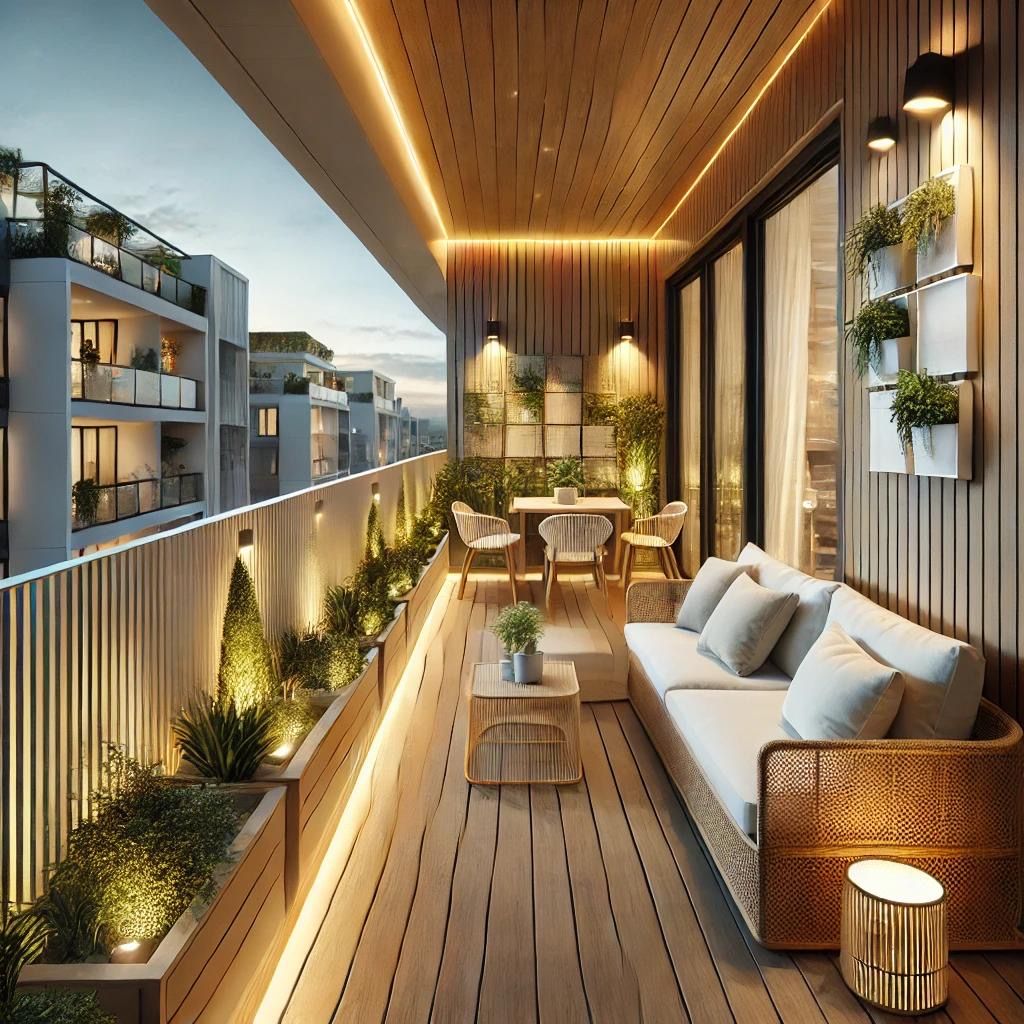
Balconies are small but high-impact spaces. With the right design and materials, you can give your balcony a fresh look without breaking the bank. This guide gives you cost ranges, key cost drivers, sample estimates, and tips to keep costs low.
If you are planning to upgrade your home interiors, explore Interior A to Z for customized solutions that enhance both aesthetics and usability while staying within your budget.
What Influences Low Budget Balcony Design Cost
- Area / size of balcony (sq ft)
- Flooring (tiles, wooden deck, outdoor tiles)
- Waterproofing & drainage
- Railings / safety guard
- Seating & furniture (benches, chairs, small tables)
- Planters / greenery / vertical gardens
- Lighting & electrical points
- Wall treatments (cladding, paint, panels)
- Labor, transport, site constraint
Typical Cost Ranges & Benchmarks
There is limited public data specific to balcony interiors, but using analogous room and outdoor-interior benchmarks allows estimation.
- For general interiors, budget per sq ft rates can be ₹800 – ₹1,500+ (for small rooms) Rennovate Interiors+1
- Given the simpler scope of a balcony (no plumbing, fewer walls), a balcony design might come in at a reduced rate (e.g. ₹300 – ₹800 / sq ft) depending on finishes and material quality
- Simple balcony makeovers (flooring, seating, plants) often are quoted within ₹10,000 to ₹50,000 regionally (depending on size and complexity)
Sample Estimate
Let’s assume:
- Balcony size = 80 sq ft
- You choose budget finishes: ceramic outdoor tiles, a simple banera (bench), a couple of planters, basic lighting
If you pick a rate of ₹500 / sq ft:
- Base cost = 80 × 500 = ₹40,000
- Add buffer (10-15%) = ₹44,000 to ₹46,000
If you scale down further (tiles reused, only minimal furniture), cost might drop near ₹25,000 – ₹35,000 for small balconies.
Tips to Keep Balcony Design Costs Low
- Use outdoor tiles or ceramic flooring instead of wood or exotic materials
- Reuse or upcycle old furniture (paint and cushion refresh)
- Use vertical planters rather than large pots
- Install LED strip lighting or solar lights instead of elaborate fixtures
- Skip heavy cladding; use paint, wood slats, or simple panels
- Buy locally to reduce transport / logistic charges
- Let plant growth soften the look rather than decorative panels
- Limit structural changes (e.g. avoid adding walls or major plumbing)