How to Build Your Portfolio as an Interior Designer
A professional interior design portfolio is more than a collection of attractive photographs. It should communicate your design thinking, project experience, technical skills, creativity and ability to solve real spatial problems.

What makes a good interior design portfolio?
A good interior design portfolio presents your strongest and most relevant work in a clear visual story. It should show not only the finished space but also how you approached the design problem.
Depending on your experience, this can include residential projects, commercial projects, academic work, concept designs, floor plans, elevations, mood boards, material palettes, 3D visualizations, before-and-after images and selected project details.
What should an interior designer include in a portfolio?
Your portfolio should be selective. Every project should have a reason for being included and should demonstrate something useful about your capabilities.
Completed project photographs
Use clear photographs that show the overall space as well as important details such as cabinetry, lighting, materials and furniture.
Floor plans and layouts
Selected plans can demonstrate your ability to understand dimensions, circulation, furniture placement and functional zoning.
Mood boards
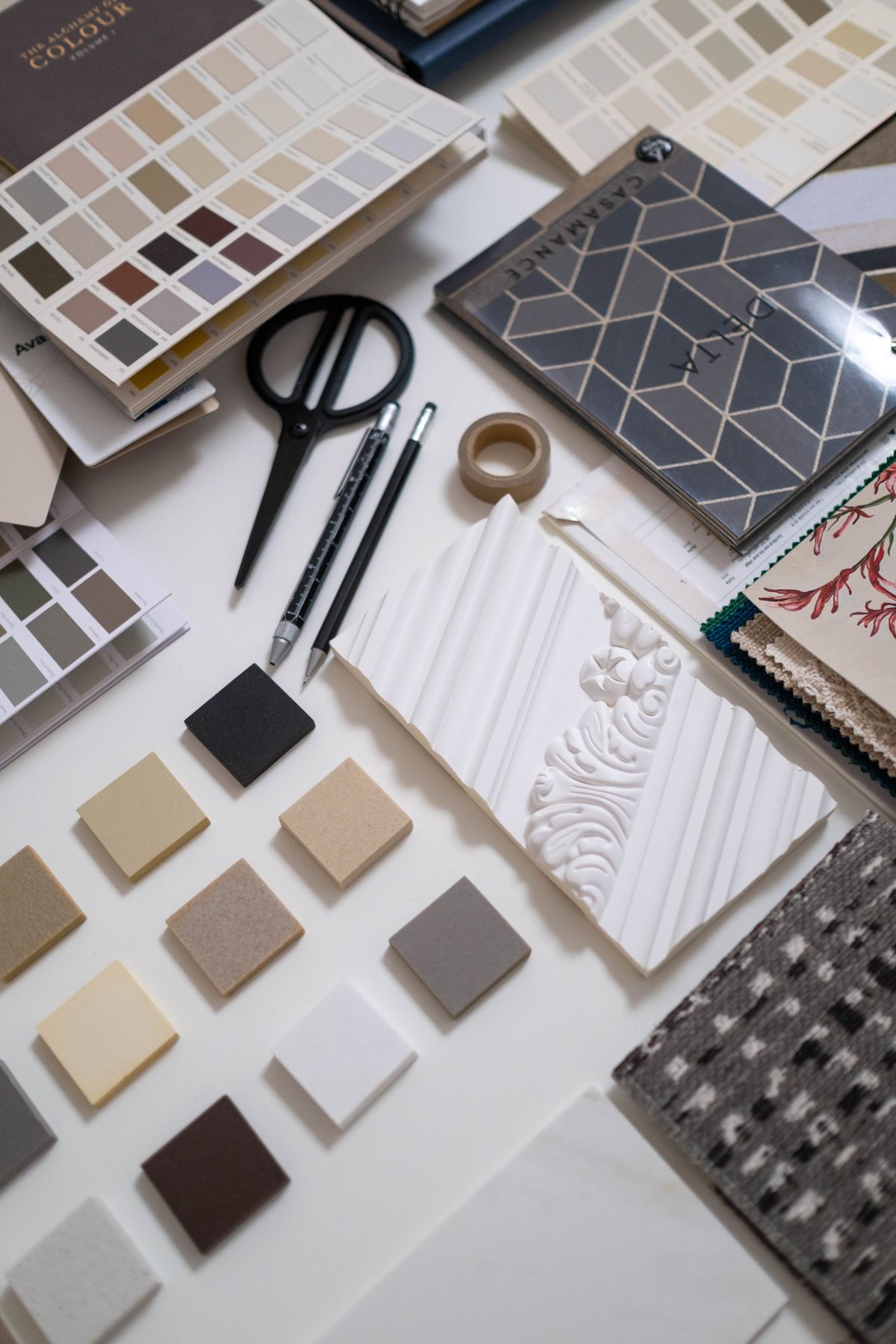
Show how colours, textures, materials, furniture and visual references were combined to establish a design direction.
3D visualizations
Renderings can communicate the proposed design before construction and help demonstrate visualization skills.
Material selections
Include selected material palettes when they help explain the concept, functionality and relationship between finishes.
Project descriptions
Briefly explain the property, design challenge, concept, scope, your role and the result without overwhelming the reader.
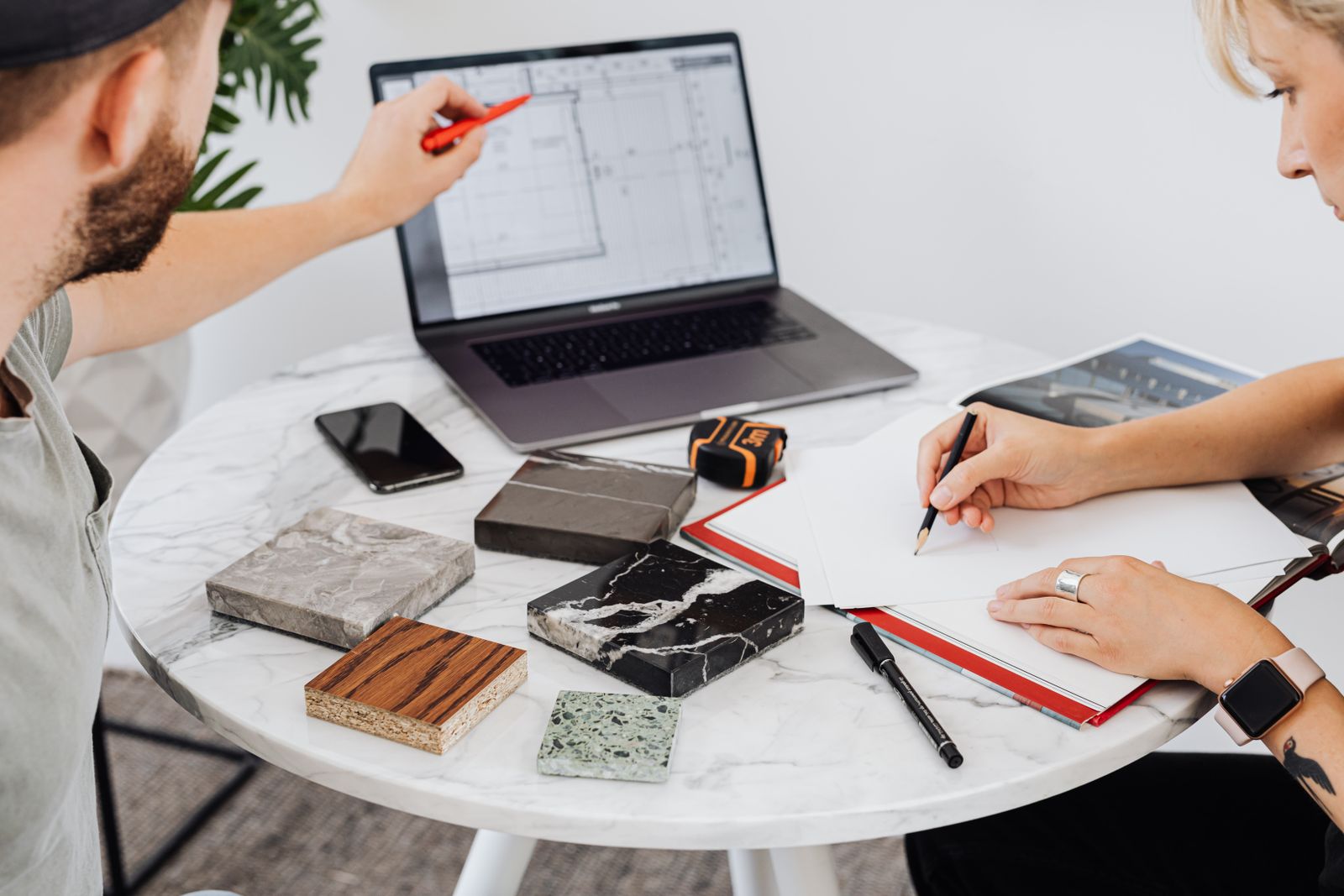
Don’t show only the finished room
Finished photographs are important, but they do not always explain how the design was developed. Including selected process material gives the viewer a better understanding of your professional approach.
A project can move from an initial requirement to space planning, concept development, material selection, visualization and final execution. Your portfolio can tell that story in a concise way.
Useful process material
- Initial design brief
- Space-planning studies
- Furniture layouts
- Concept sketches
- Mood boards
- Material palettes
- 3D views
- Selected technical drawings
- Before-and-after photographs
- Final project photographs
Turn each important project into a mini case study
Instead of placing photographs one after another, create a short project story. This makes the portfolio easier to understand and demonstrates how you solve design problems.
Project overview
State the property type, approximate location, project scope and the role you played.
Design challenge
Explain the main problem—for example limited space, storage requirements, awkward circulation or a specific client brief.
Design approach
Describe the concept, planning strategy, materials, colour direction, furniture and lighting decisions.
Execution
Where applicable, show how the approved design translated into materials, furniture, cabinetry, lighting and completed spaces.
Final result
Use your strongest completed photographs and briefly explain how the final design addressed the original requirements.
How to build an interior design portfolio without professional projects
You do not need a long list of completed client projects to begin building a portfolio. Students and new designers can demonstrate their ability through carefully developed academic and personal projects.
Before-and-after images can make your work easier to understand
Where you have permission to use project photographs, before-and-after comparisons can show the transformation more clearly than a final photograph alone.
They are particularly useful for renovation, apartment redesign, space optimization and projects where the original layout presented a clear challenge.
- Show the original condition.
- Explain the main design problem.
- Show the proposed planning or concept.
- Present the completed result.
- Explain what changed and why.
Use accurate project information
A professional portfolio becomes more credible when project information is specific and accurate. Avoid adding impressive-sounding numbers or project details that cannot be verified.
| Portfolio detail | What to show | Important consideration |
|---|---|---|
| Property type | Apartment, villa, builder floor, office, retail or other space | Use the actual property type. |
| Area | Approximate carpet or built-up area where verified | Do not estimate as a confirmed measurement. |
| Design style | Modern, contemporary, minimalist, traditional or actual project style | Describe the design accurately. |
| Scope | Kitchen, wardrobes, furniture, lighting, rooms and execution | State only the work actually included. |
| Budget | Actual verified project budget, if appropriate | Omit it if the figure is not verified. |
| Timeline | Actual project duration, if verified | Avoid publishing an invented completion period. |
A simple structure for an interior designer portfolio
Cover
Your name or studio name, profession and a strong representative project image.
About
A concise introduction covering your design focus, experience, approach and professional interests.
Selected projects
Present your strongest projects with clear photographs and concise case-study information.
Design process
Include selected drawings, mood boards, material studies and visualizations.
Skills
Mention relevant design, visualization, documentation and technical skills.
Contact
Make it easy for clients, employers or collaborators to contact you or view more work.
Build an online portfolio that is easy to explore
An online portfolio can extend your reach beyond a printed portfolio. It should load quickly, work well on mobile devices and make it simple for visitors to understand your work.
Organize projects logically rather than placing every image on one long page. Separate project types where useful and give each important project enough context.
Online portfolio essentials
- Fast-loading optimized images
- Clear project titles
- Short project descriptions
- Consistent image quality
- Mobile-friendly layout
- Simple navigation
- Clear contact information
- Relevant project categories
- Accessible image alt text
- Original project photography where available
Make your online interior design portfolio easier to discover
If your portfolio is published online, basic SEO can help search engines understand the projects and services you provide.
Use descriptive project titles
Instead of generic names such as “Project 1”, use descriptive titles such as “3 BHK Home Interior Design in Gurgaon”.
Optimize image files
Resize images to their actual display requirements and use modern formats such as WebP or AVIF where supported.
Write useful alt text
Describe the meaningful content of an image naturally instead of stuffing keywords into every alt attribute.
Create individual project pages
Important projects can have dedicated pages with unique descriptions, photographs, project details and relevant internal links.
Link related services
Connect project pages with relevant home interior, kitchen, space-planning and other service pages.
Keep content original
Use original project descriptions and authentic photographs wherever possible. Avoid duplicate descriptions across multiple projects.
Continue learning about interior design
Interior design portfolio FAQs
What should an interior design portfolio include?
An interior design portfolio can include completed project photographs, drawings, floor plans, mood boards, material selections, 3D visualizations, project descriptions, design concepts and selected details that demonstrate the designer’s process and skills.
How many projects should an interior designer include in a portfolio?
There is no fixed number. A smaller collection of relevant, well-presented projects can be more effective than a large collection of repetitive work. Include enough projects to demonstrate range, consistency and relevant experience.
Should an interior design portfolio include drawings?
Yes. Where appropriate, drawings such as floor plans, elevations, layouts and selected technical details can demonstrate design thinking and technical ability alongside finished photographs.
Can a student create an interior design portfolio without professional projects?
Yes. Students can include academic projects, concept designs, room studies, mood boards, material explorations, measured drawings, 3D visualizations and personal design exercises.
Should an interior designer have an online portfolio?
An online portfolio can make it easier for potential clients, employers and collaborators to review a designer’s work. It can be presented through a personal website, professional profile or another suitable digital platform.
Let your portfolio show how you think, design and execute
A strong interior design portfolio should make your work easier to understand. Select relevant projects, explain the design challenge, show the process and present the finished result with accurate information.
Interior A to Z provides residential and commercial interior design services across Delhi NCR, including Delhi, Gurgaon and Noida.