Choosing the Perfect TV Units for Your Home
Find the right TV unit by balancing television size, wall dimensions, storage, viewing comfort, materials, lighting and your overall living-room style. Explore practical modern TV unit ideas for homes in Delhi NCR, Gurgaon and Noida.
Plan Your TV Unit “`
“`Your TV Unit Should Be Part of the Living Room, Not an Afterthought
A modern TV unit can combine the television, storage, wall treatment, lighting and electrical planning into one coordinated feature. The right design can become the focal point of the living room while keeping everyday electronics and accessories organised.
Interior A to Z’s current TV-unit approach focuses on wall dimensions, television size, storage requirements, viewing position and the wider living-room interior rather than selecting a cabinet independently.
8 Things to Consider When Choosing a TV Unit
These decisions will help you select a TV unit that looks good and remains practical for everyday use.
Measure the Complete TV Wall
Start with the available wall width and height. Check doors, windows, switches, sockets, columns and other architectural elements before designing the unit.
Choose the Unit Around the Television
Record the actual television dimensions and mounting requirements. The TV panel and surrounding storage should feel proportional rather than too small or excessively large.
Decide What Needs to Be Stored
Plan for gaming consoles, remotes, speakers, books, documents, décor and other electronics before deciding the number of drawers, cabinets and shelves.
Plan Comfortable Viewing
The screen position should work with the main sofa and viewing distance. Consider seated eye level, screen size, sofa height and glare before finalising the TV height.
Plan Concealed Electrical Routes
Decide where power, internet, sound and media connections will go before fabrication. Proper cable planning helps keep the finished TV wall clean while preserving access for maintenance.
Select Practical Finishes
Laminates, veneer, wood finishes, MDF, glass, fluted panels and stone-look surfaces can all be used. Choose according to appearance, durability, maintenance and budget.
Use Lighting Without Creating Screen Glare
Concealed LED strips and profile lighting can highlight the TV wall, but light placement should be planned carefully so reflections do not interfere with viewing.
Match the Rest of the Interior
Coordinate the TV unit with the sofa, flooring, wall colours, curtains, furniture and other materials so the entertainment wall feels integrated with the room.
 “`
“`Popular TV Unit Designs for Modern Homes
There is no single best TV unit style. The right choice depends on the room, wall, storage requirements and the visual language of the home.
- Floating TV unit: keeps the floor visually open.
- Wall-mounted TV panel: combines the television with storage and wall treatment.
- Wooden TV unit: introduces warmth and natural texture.
- Minimal TV panel: keeps the design clean and visually quiet.
- Luxury TV wall: combines premium finishes, lighting and integrated storage.
- TV and bookshelf combination: adds display and storage around the entertainment area.
TV Unit Ideas for Small, Medium and Large Living Rooms
The same TV unit design should not be used for every room. Scale and circulation should guide the design.
Floating consoles, slim panels, concealed storage and vertical shelving can preserve floor space and maintain an open appearance.
Combine a central TV panel with drawers, cabinets, selected display shelves and integrated lighting.
A full entertainment wall can incorporate extensive storage, bookshelves, display niches, panelling and architectural lighting.
Use compact storage and wall-mounted solutions where circulation and floor area are limited.
Custom TV walls can be coordinated with larger living rooms, feature walls and furniture layouts.
Premium materials, custom cabinetry, stone-look finishes, integrated lighting and display elements can create a more architectural TV wall.
Choose the Right Mix of Open and Closed Storage
A TV unit should hide everyday clutter while leaving enough space for selected decorative pieces. A combination of closed storage and open display areas often provides the best balance.
- Use closed cabinets for remotes, accessories and less attractive equipment.
- Use drawers for small electronics and frequently accessed items.
- Use open shelves selectively for books, artwork and décor.
- Provide ventilation where electronic equipment requires it.
- Leave service access for cables and devices.
- Keep the storage proportionate to the room instead of filling the entire wall.
 “`
“`Popular Materials for Modern TV Units
Material selection changes the appearance, maintenance and cost of a TV unit. The material should be selected after understanding the room’s overall interior palette.
Available in many colours and textures and generally practical for everyday residential interiors.
Provides a natural wood appearance and works well in warm contemporary and premium interiors.
Wood and wood-look surfaces can add warmth and visual depth to a living room.
Vertical textures can add rhythm and create a contemporary feature wall behind the TV.
Marble or stone-inspired finishes can create a premium focal wall when used selectively.
These materials can create a lighter contemporary appearance when coordinated with the wider furniture palette.
Which TV Unit Style Fits Your Home?
Use this quick comparison as a starting point before developing the final design.
| TV Unit Type | Suitable For | Main Advantage | Design Character |
|---|---|---|---|
| Floating TV Unit | Compact apartments | Keeps floor visually open | Modern minimalist |
| Wall-Mounted TV Panel | Modern homes | Combines TV, storage and wall treatment | Contemporary |
| Wooden TV Unit | Family living rooms | Adds warmth and texture | Warm contemporary |
| Full Entertainment Wall | Large living rooms | Maximum storage and display potential | Premium |
| TV & Bookshelf Combination | Homes needing extra storage | Combines entertainment and display | Functional contemporary |
TV Unit Planning Checklist
Complete these decisions before fabrication or installation.
Measure First
- Wall width and height
- TV dimensions
- Doors and windows
- Socket locations
- Furniture position
Plan Technology
- Power points
- Internet connection
- Set-top box or streaming device
- Soundbar or speakers
- Concealed cable routes
Plan the Design
- TV panel finish
- Storage requirements
- Open shelving
- Lighting
- Wall treatment
Check the Final Composition
- TV and wall proportions
- Viewing comfort
- Furniture relationship
- Circulation space
- Overall interior style
“`Design the TV Wall Together With the Rest of the Room
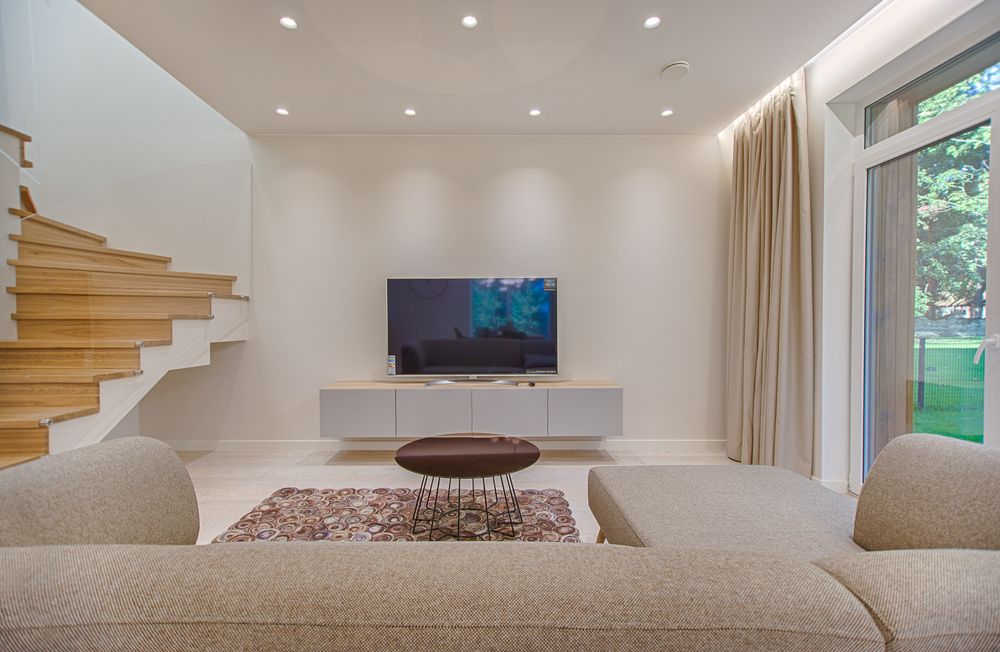
A TV unit looks most successful when it is planned as part of the complete living-room composition. Sofa proportions, coffee table placement, flooring, curtains, lighting, wall colours and décor should all relate to the TV wall.
- Plan the sofa and TV viewing relationship first.
- Coordinate TV wall finishes with flooring and furniture.
- Use lighting to create atmosphere without screen glare.
- Keep decorative elements balanced around the television.
- Plan storage according to actual household requirements.
Modern TV Units for Delhi, Gurgaon & Noida Homes
TV unit design can be customised for apartments, builder floors, villas and independent homes across Delhi NCR. The final solution should respond to the actual wall dimensions, television size, storage requirements and interior style.
Interior A to Z provides customized TV unit and living-room interior solutions across Delhi NCR, Gurgaon and Noida, including floating units, wall-mounted TV panels, storage, wall panelling, lighting and integrated entertainment walls.
“` “`TV Unit Design FAQs
How do I choose the perfect TV unit for my home?
Start with the TV wall dimensions, television size, viewing position and required storage. Then select a style and material that complements the living room while allowing for concealed wiring and comfortable circulation.
What is the best TV unit design for a small living room?
Floating and wall-mounted TV units can work well in smaller living rooms because they keep more floor area visually open. Slim storage and vertical elements can provide functionality without making the room feel crowded.
How high should a TV unit be?
The television should be positioned for comfortable viewing from the main seating position. Consider the screen centre, sofa height, viewing distance and the complete wall composition rather than using one fixed height for every room.
Which material is best for a TV unit?
Laminates, veneer, plywood-based construction, MDF, wood finishes, glass and stone-look surfaces are commonly used. The appropriate material depends on durability, appearance, maintenance, budget and the wider interior design.
How can I hide TV wires?
Plan concealed conduits and cable routes before installation. Access points behind the television and inside the storage can keep the finished wall clean while allowing future maintenance.
Can a TV unit include storage?
Yes. Drawers, cabinets, open shelves, display niches and media storage can all be integrated depending on the available wall space and household requirements.
How much does a custom TV unit cost?
Cost varies according to dimensions, material, storage, wall panelling, lighting, hardware and installation. An accurate quotation requires the wall measurements and final specification.
Turn Your TV Wall Into a Functional Design Feature
Share your television size, wall dimensions, storage requirements and preferred style to plan a TV unit that fits your living room rather than simply filling the wall.
Start Your TV Unit DesignCall +91 98910 50117