
25 Home Design Tips to Make Your Home More Beautiful, Comfortable & Functional
Use practical design principles to improve space planning, storage, lighting, colours, furniture and everyday comfort — whether you live in an apartment, builder floor, villa or independent home.
The Best Home Design Tip: Plan Before You Buy
Good home interiors begin with understanding the property and the way it will actually be used. Interior A to Z’s current residential approach starts with space planning, storage, circulation, lighting, materials and lifestyle requirements rather than decoration alone.
Measure the Home
Record room dimensions, ceiling heights, doors, windows, columns and important electrical or plumbing points.
Define Your Lifestyle
List how your family cooks, works, relaxes, entertains, stores belongings and uses each room.
Set Priorities
Decide what matters most: storage, kitchen, luxury finishes, work-from-home, children, entertaining or flexibility.
Design the Home as One Connected Experience
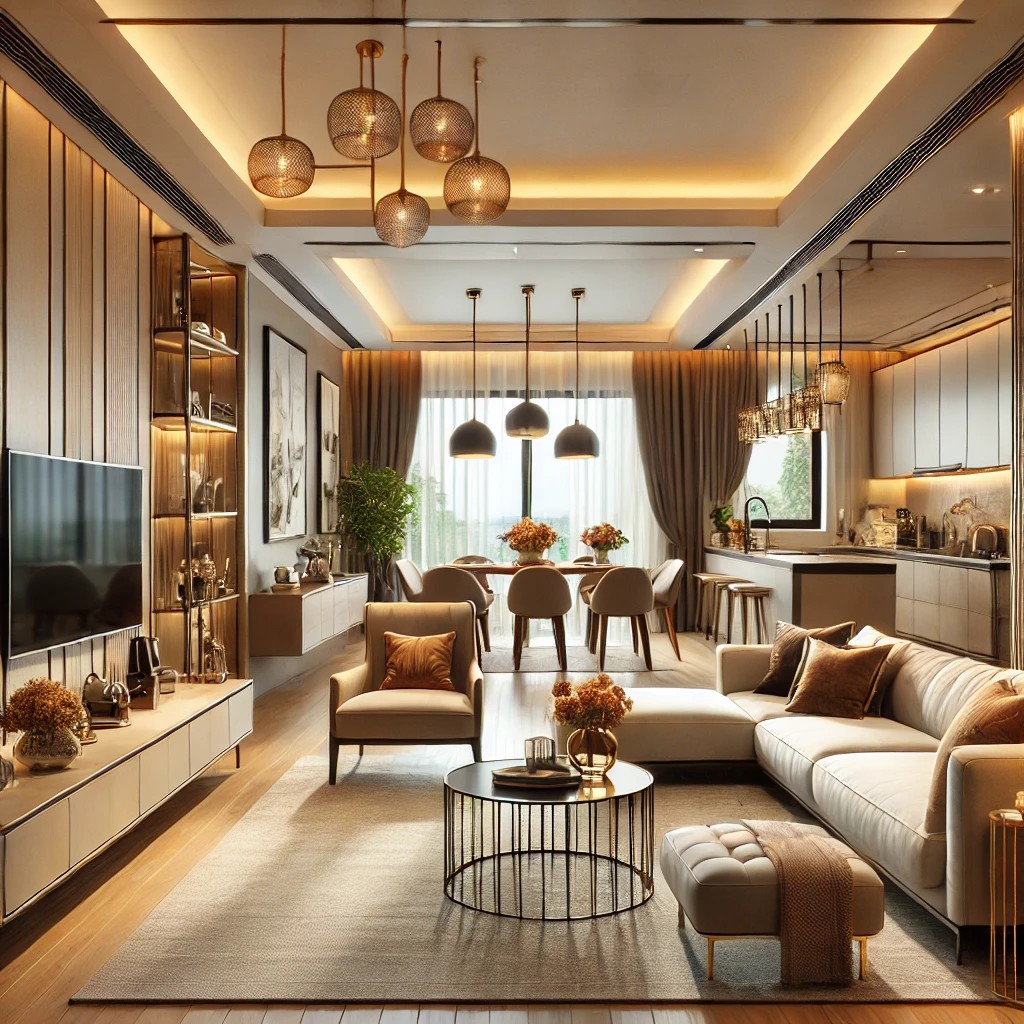
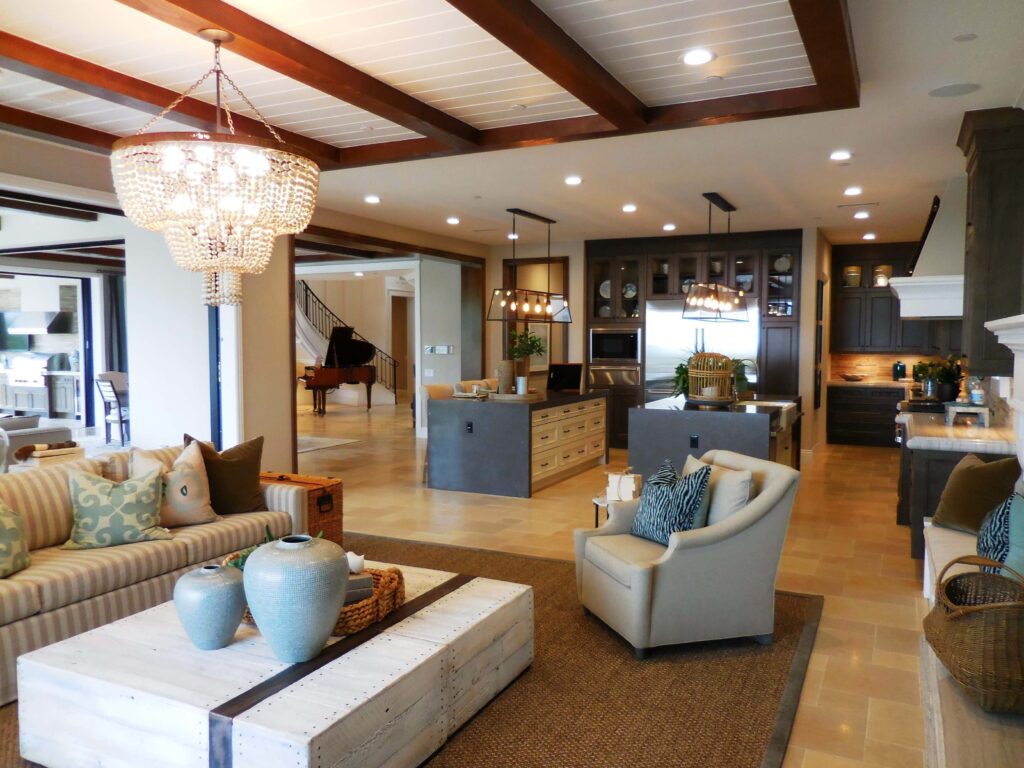
A coordinated home does not mean every room should look identical. Repeat selected colours, wood tones, metals, flooring or lighting principles while adapting each room to its purpose.
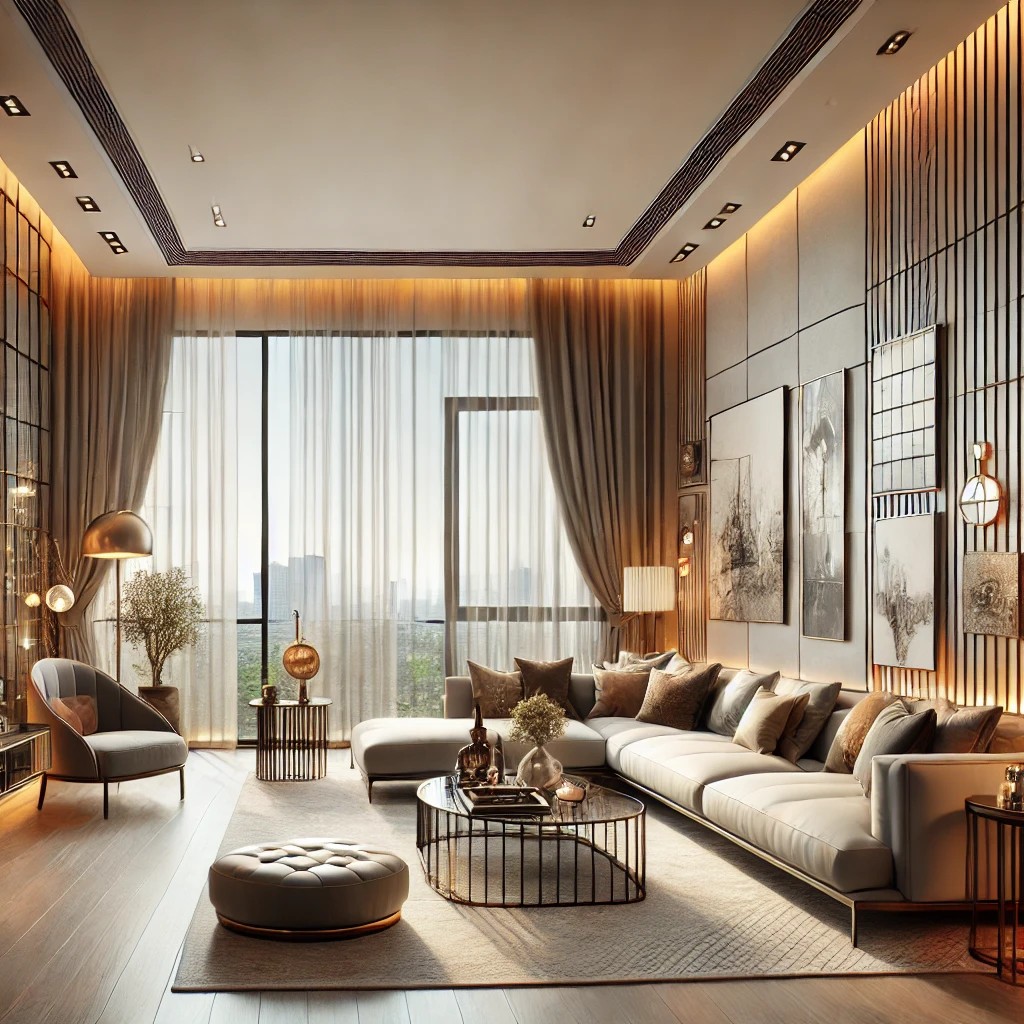
Keep seating proportional and maintain clear circulation around major furniture.
Allow comfortable movement around the table and plan useful storage nearby.
Prioritize bed placement, wardrobe access, bedside storage and calming light.
Plan appliances, work surfaces and storage before selecting cabinet finishes.
Give the desk proper task lighting, comfortable ergonomics and cable management.
Create a practical landing zone for shoes, keys, bags and everyday objects.

Home Design Tips That Make a Real Difference
Start With a Floor Plan
Map furniture, storage and movement before buying large pieces.
Choose Furniture by Scale
A sofa that looks good online may overwhelm a compact room. Measure before ordering.
Protect Circulation
Keep natural walking routes open instead of filling every corner with furniture.
Use Multifunctional Furniture
Storage beds, ottomans, fold-down desks and built-in benches can improve smaller homes.
Use Vertical Storage
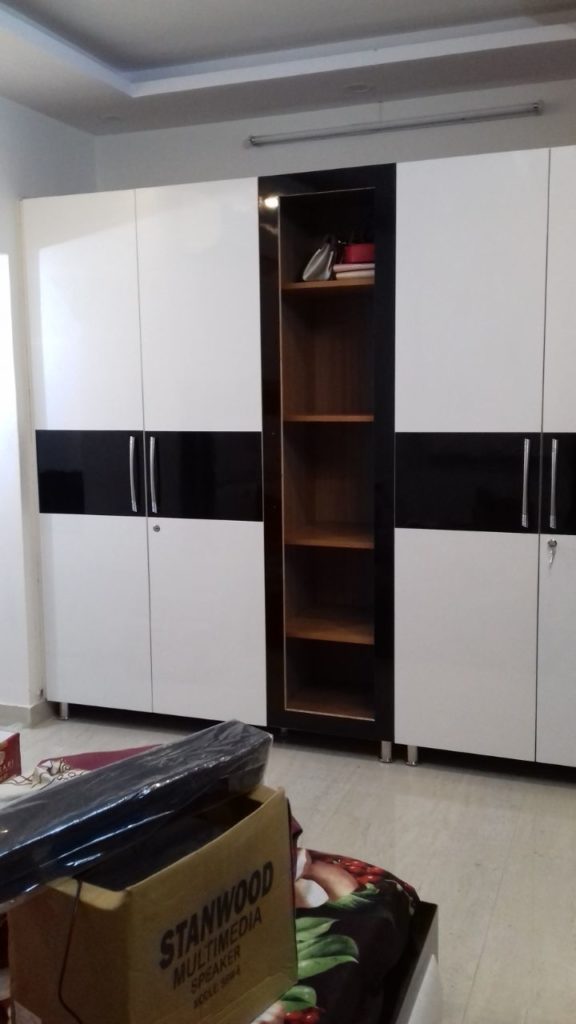
Full-height wardrobes and cabinets make better use of wall volume.
Keep a Cohesive Palette
Choose a base palette and introduce stronger colours through selected accents.
Layer Your Lighting
Combine ambient, task and accent lighting instead of relying on one ceiling fixture.
Maximize Natural Light
Avoid unnecessary visual barriers near windows and use appropriate curtains.
Add a Focal Point
Give each major room one clear visual feature rather than many competing ones.
Plan the TV Wall Carefully
Integrate storage, cables, viewing height and proportions into the design.
Design the Kitchen Around Workflow
Plan cooking, preparation, cleaning and appliance locations before cabinet styling.
Make Wardrobes Efficient
Separate hanging, folded clothes, drawers, accessories and luggage storage.
Use Mirrors Strategically
Mirrors can improve light and visual openness when positioned thoughtfully.
Choose Durable Finishes
Consider cleaning, moisture, scratches, sunlight and daily wear before selecting materials.
Keep the Ceiling Proportionate
False ceilings and decorative details should respond to room height rather than reduce it unnecessarily.
Plan Electrical Points Early
Switches, sockets, appliance connections and lighting controls should follow the furniture plan.
Use Textures for Depth
Mix wood, fabric, stone, glass or wall texture selectively for visual richness.
Keep Clutter Contained
Closed storage can protect visual calm while open shelves can display carefully selected objects.
Create a Flexible Room
A guest room can double as a study, hobby room or home office when required.
Repeat Materials Carefully
Repeating a wood tone or metal finish across rooms can create continuity.
Use Plants With Intention
Greenery can add softness and life without turning every surface into a display area.
Prioritize Frequently Used Items
Keep daily-use kitchen, wardrobe and household items easy to access.
Design for Maintenance
Choose surfaces and details that your household can realistically clean and maintain.
Budget for the Whole Scope
Include furniture, lighting, electrical, civil work, hardware, installation and finishing—not only carpentry.
Leave Room for Personality
Artwork, books, textiles and meaningful objects make a planned interior feel like your home.

Use Three Layers of Light
Lighting is one of the easiest ways to change the comfort and character of a room. A practical plan combines ambient, task and accent lighting.
- Ambient: provides comfortable overall illumination.
- Task: focuses light where work happens — kitchen counters, desks, bedside areas and dressing zones.
- Accent: highlights artwork, textures, shelves, niches or architectural features.
Smart Storage Is a Design Feature
Storage should be planned with the room rather than added after the furniture is finalized. This is particularly useful in Delhi NCR apartments where every usable square foot matters. Current Interior A to Z guidance emphasizes customized storage, modular kitchens, wardrobes and multifunctional furniture.
Living Room Storage
Combine TV units, cabinets, bookshelves and concealed storage without overcrowding the wall.
Living Room Interiors →Bedroom Wardrobes
Use full-height wardrobes, internal drawers, hanging zones and practical accessory storage.
Wardrobe Interiors →Multifunctional Furniture
Use furniture that performs more than one job where space is limited.
Multifunctional Furniture →Two Areas Where Planning Matters Most

Kitchen
Plan the work surface, storage, appliances, sink, hob, chimney and movement before choosing cabinet colours. A good kitchen should support daily cooking rather than simply look impressive.
Bedroom
Start with bed placement and circulation. Then resolve wardrobes, dressing, bedside storage, lighting, curtains and charging points.
Choose Materials for Looks, Use and Maintenance
A beautiful material is not automatically the right material for every application. Consider moisture, heat, cleaning, scratches, sunlight, expected usage and repair requirements alongside appearance. Interior A to Z’s current methodology treats material selection as part of design rather than a last-minute decision.
| Material / Finish | Useful For | Planning Consideration |
|---|---|---|
| Laminate | Cabinetry and furniture surfaces | Wide range of colours and practical maintenance |
| Veneer | Premium furniture and wall accents | Natural appearance; finish and maintenance matter |
| Glass | Display units, partitions and selected furniture | Consider cleaning, safety and visibility |
| Stone / Stone-look surfaces | Feature walls, counters and accents | Weight, maintenance and application suitability |
| Paint / Texture | Walls and feature areas | Choose finish based on room use and cleaning requirements |
Home Design Tips for Spending Smarter
Do not allocate the entire budget to visible finishes. A complete interior also includes functional infrastructure and execution. Current Interior A to Z guidance identifies planning, materials, furniture, lighting, storage and execution as interconnected parts of the project.
Spend First on Function
Prioritize layout, kitchen workflow, wardrobes, storage, electrical planning and essential furniture.
Upgrade High-Impact Areas
Use premium finishes selectively on the entrance, TV wall, dining area, master bedroom or other focal points.
Compare Complete Scope
When reviewing quotations, compare materials, quantities, hardware, installation, civil/electrical work and exclusions—not only the total price.
7 Home Design Mistakes to Avoid
1. Buying Furniture Too Early
Furniture should follow the measured layout, not force the layout to change.
2. Ignoring Storage
Beautiful rooms become difficult to maintain when everyday belongings have nowhere to go.
3. Using One Light Source
A single overhead fixture rarely provides the right atmosphere for every activity.
4. Choosing Finishes Only From Photos
Material performance, maintenance and actual samples matter.
5. Overfilling Small Rooms
Leave visual and physical breathing space around major furniture.
6. Changing the Plan During Execution
Late changes can affect cost, timelines and already completed work.
7. Designing Without a Scope
Define inclusions, exclusions, materials, quantities and responsibilities before execution.
Home Design Tips for Delhi, Gurgaon & Noida
Interior requirements differ by property. Apartments may need compact storage and multifunctional furniture; builder floors and villas can allow larger furniture, home offices, walk-in wardrobes or specialized spaces.
Delhi
Plan around apartment layouts, builder floors, independent homes and local property constraints.
Home Interior Design Delhi NCR →Gurgaon
Focus on apartment, high-rise, builder-floor and villa layouts with practical storage and modern finishes.
Interior Designer Gurgaon →Noida
Use space-efficient layouts, modular kitchens, wardrobes, multifunctional furniture and layered lighting.
Interior Designer Noida →Home Design Tips FAQs
What should I plan first when designing my home?
Start with the floor plan, room functions, furniture placement, circulation, kitchen workflow and storage. Then develop colours, materials and decorative details.
How can I make a small home look bigger?
Use appropriately scaled furniture, clear circulation, vertical storage, a restrained colour palette, mirrors where useful, good natural light and layered lighting. Multifunctional furniture can also improve usability.
What is the most important interior design tip?
Plan around how the home will actually be used. A visually attractive interior that has poor storage, circulation or lighting will be difficult to live with.
How many colours should I use in a home?
There is no fixed number. A practical approach is to establish a dominant base palette and use accent colours selectively so rooms feel connected rather than visually chaotic.
How can I make my home feel more luxurious?
Focus on proportion, lighting, material consistency, custom storage, quality hardware, carefully selected feature walls and fewer but stronger decorative elements rather than simply adding more expensive items.
Should I hire an interior designer?
Professional help can be useful when a project involves multiple rooms, custom furniture, detailed electrical or lighting planning, material coordination or turnkey execution. Interior A to Z provides customized residential planning across Delhi NCR.
Turn Good Design Tips Into a Home That Works
Share your property type, location, floor plan and requirements with Interior A to Z. Get a practical design direction based on your space, lifestyle, storage needs and project scope.
Request a Home Interior Consultation