Vastu Shastra Interior Design for a Beautiful, Balanced Home
Vastu Shastra interior design brings traditional Indian principles of direction, space and balance into contemporary homes without forcing the interior to look old-fashioned.
The most successful approach combines Vastu considerations with practical space planning, natural light, storage, circulation, materials and the way your family actually lives.

Vastu should guide the space, not overpower the design.
Vastu Shastra is a traditional Indian approach to architecture and spatial arrangement. In interior design, it is often used as a framework for thinking about orientation, room placement, furniture, light, openness and the relationship between different parts of a home.
For a modern apartment, builder floor or villa, not every traditional recommendation will be possible. The practical objective is therefore to identify which principles can be incorporated into the existing floor plan while maintaining comfort, safety, storage and contemporary aesthetics.
5 foundations of Vastu-inspired interior design
A thoughtful Vastu interior does not need excessive decoration. It begins with the fundamentals of proportion, orientation, movement, daylight and functionality.
Direction
Traditional Vastu planning gives importance to the relationship between rooms and the cardinal directions. The actual floor plan should always be considered before applying a rule.
Natural Light
Bright, naturally lit interiors can create an inviting atmosphere. Window placement, curtains, furniture height and reflective finishes all influence daylight.
Open Movement
Clear circulation makes a home feel calmer and more spacious. Avoid filling every corner with furniture simply to satisfy a decorative requirement.
Material Balance
Wood, stone, fabric, metal, glass and plants can be combined carefully to create visual warmth without making the interior feel heavy or cluttered.
Purposeful Placement
Every major piece should have a reason to exist. Storage, seating, beds, work areas and lighting should support everyday use as well as the desired design direction.
Personal Comfort
A home should ultimately work for the people living in it. Lifestyle, accessibility, maintenance and practical requirements remain important parts of good interior planning.
15 practical Vastu interior design ideas
Use these ideas as a planning reference rather than rigid rules. Existing structure, apartment orientation and functional requirements should always be assessed first.
Create a calm, welcoming entrance
Keep the main entry visually clear, well maintained and adequately illuminated. A refined console, concealed storage and natural materials can create an elegant first impression.
- Keep circulation unobstructed.
- Use warm layered lighting.
- Avoid unnecessary visual clutter.
Make the living area open and light
Traditional Vastu guidance often associates living areas with the north, east or north-east portions of a home. In modern apartments, natural light and comfortable circulation are equally important.
- Prioritise daylight where possible.
- Maintain comfortable walking paths.
- Keep heavier furniture visually grounded.
Plan the kitchen around the fire zone
Traditional Vastu commonly associates the south-east with the fire element. When the existing kitchen location differs, designers can still focus on functional zoning, ventilation and safe separation of cooking and water areas.
- Plan the cooking triangle carefully.
- Separate heat and water zones where practical.
- Maximise useful storage.
Design the bedroom for stability and rest
The south-west is traditionally associated with the master bedroom. Regardless of orientation, a good bedroom should provide privacy, comfortable circulation, controlled lighting and sufficient wardrobe storage.
- Use a solid, visually balanced bed position.
- Reduce harsh direct lighting.
- Keep storage organised and accessible.
Give the prayer space a quiet identity
The north-east is traditionally associated with a pooja or spiritual space. A modern pooja unit can use wood, stone, jaali detailing and concealed lighting without dominating the overall interior.
- Choose a peaceful location.
- Use soft, warm lighting.
- Keep the surrounding area visually clean.
Make dining connected and comfortable
Dining should feel naturally connected to the kitchen or living area while retaining enough circulation. Lighting above the dining table can create a clear visual centre.
- Leave adequate chair clearance.
- Use warm pendant or layered lighting.
- Avoid overcrowding the dining zone.
Balance study, sleep and play
Children’s interiors benefit from good daylight, organised storage and clear zoning. Desk placement should prioritise comfortable natural light and ergonomic use rather than decorative rules alone.
- Create dedicated study and sleep zones.
- Use flexible storage.
- Keep finishes easy to maintain.
Design a focused work corner
A Vastu-conscious home office can combine traditional directional preferences with practical ergonomics, monitor positioning, task lighting and acoustic comfort.
- Prioritise natural light without screen glare.
- Provide closed storage for paperwork.
- Keep the workstation visually organised.
Use storage to reduce visual heaviness
Large storage should feel integrated rather than overwhelming. Full-height wardrobes, concealed handles and consistent finishes can create a calmer room.
- Use vertical storage efficiently.
- Keep clutter out of sight.
- Coordinate finishes with the room palette.
Use mirrors strategically
Mirror placement is frequently discussed in Vastu. Instead of following a single universal rule, consider the actual wall, reflected view, daylight and privacy of the room.
- Avoid reflecting visual clutter.
- Use mirrors to amplify useful light.
- Consider what the mirror reflects before installation.
Build a calm, natural colour palette
Neutral, earthy and soft natural shades work particularly well with contemporary Vastu-inspired interiors because they create a restrained backdrop for wood, stone, plants and textured fabrics.
- Use a consistent base palette.
- Add colour through textiles and artwork.
- Avoid making every room visually unrelated.
Layer light instead of relying on one source
Lighting can dramatically influence the feeling of a home. Combine daylight, ambient lighting, task lighting and accent lighting to create flexible spaces.
- Use warm ambient lighting in living zones.
- Add task lighting where precision is required.
- Use concealed lighting selectively.
Bring natural greenery indoors
Plants are often used in Vastu-inspired interiors as natural elements. From a design perspective, they can also soften hard surfaces and introduce texture.
- Choose plants suited to indoor conditions.
- Keep plants healthy and maintained.
- Avoid blocking circulation or windows.
Keep circulation zones clear
Regardless of Vastu tradition, clutter can make a home feel visually heavy. Intelligent storage planning helps keep surfaces clear without sacrificing everyday convenience.
- Use closed storage for everyday clutter.
- Plan storage before final furniture selection.
- Protect important circulation paths.
Connect the entire home with one design language
Vastu considerations work best when they are incorporated into the overall design instead of being added room by room at the end of the project.
- Coordinate colours and materials.
- Repeat selected design details.
- Plan the home as one connected experience.
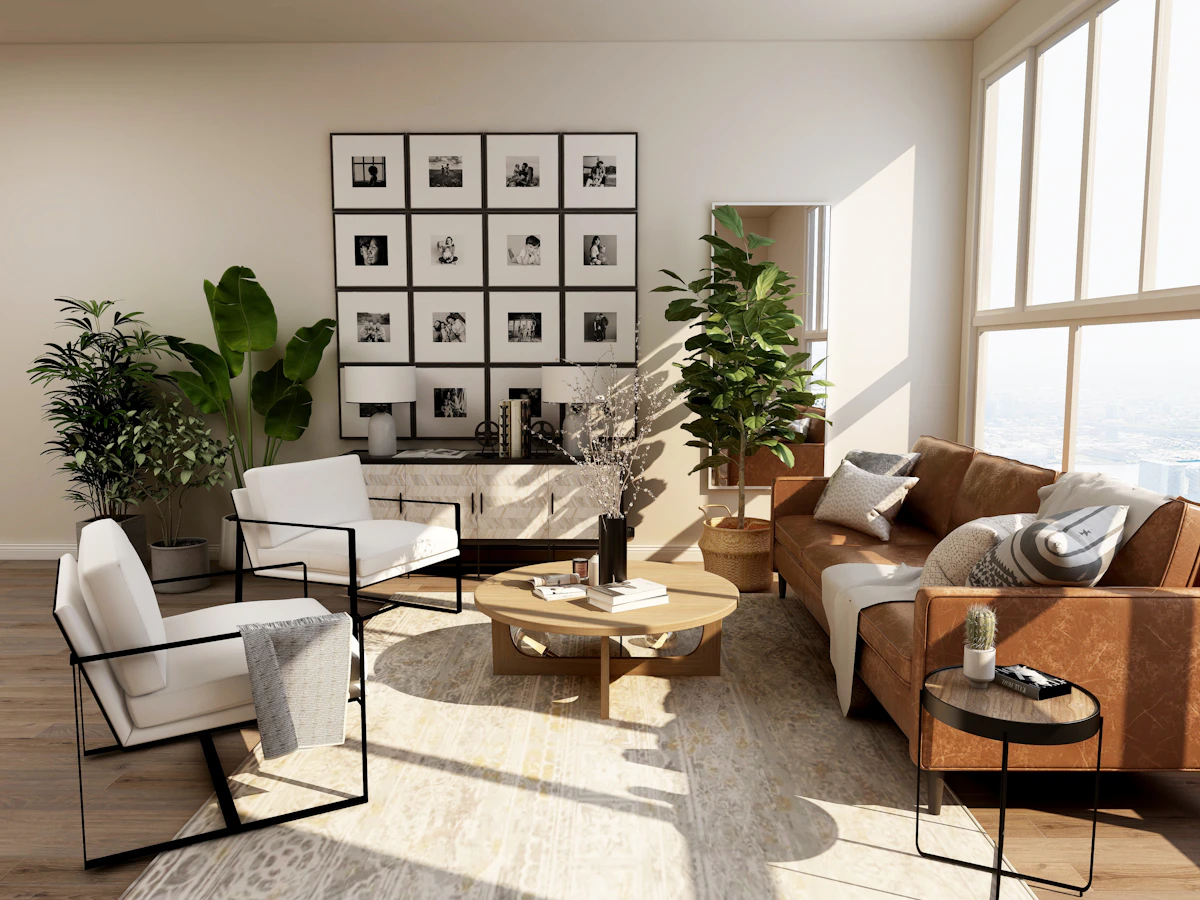
Tradition does not mean your home has to look traditional.
Modern Vastu interior design can be quiet, minimal and luxurious. The principles can be expressed through proportions, furniture placement, natural materials, light and thoughtful zoning rather than through excessive symbols or decoration.
- Contemporary furniture and clean lines
- Warm wood, stone and natural textures
- Layered architectural lighting
- Integrated storage and uncluttered surfaces
- Personal artwork and decorative objects
- Vastu considerations incorporated during planning
Vastu-inspired colour palettes for modern homes
Colour choices should respond to the room, daylight, materials and personal preference. Soft natural tones are particularly effective when creating a calm contemporary interior.
Warm Ivory
Creates a bright, refined foundation for wood, stone and soft furnishings.
Muted Green
Works well with plants, natural textures and biophilic design elements.
Soft Blue
A restrained option for bedrooms, study areas and quieter private spaces.
Earth Tones
Terracotta, taupe, beige and warm brown can add depth without visual noise.
How to make Vastu practical in a real apartment
High-rise apartments and existing homes rarely offer a blank canvas. Good interior planning works with the building instead of fighting it.
Start with the existing floor plan
Before choosing furniture or colours, understand the home’s orientation, entrances, windows, structural walls, plumbing, electrical points and actual circulation.
- Mark north and the main directions.
- Identify fixed architectural elements.
- Map daylight and ventilation.
- Then decide which Vastu preferences are practical.
Do not sacrifice functionality for a checklist
A beautiful home still needs comfortable movement, useful storage, safe electrical planning, proper ventilation and practical furniture dimensions.
- Prioritise everyday usability.
- Use Vastu as a planning consideration.
- Resolve conflicts through thoughtful design.
- Keep the final interior visually cohesive.
Vastu interior design in Delhi, Gurgaon and Noida
Vastu considerations can be incorporated into apartments, builder floors, villas and independent homes. The approach should respond to the actual property rather than using the same formula for every project.
Delhi
Plan Vastu-conscious interiors for apartments, builder floors, independent homes and premium residences across Delhi and South Delhi.
Explore Delhi NCR Home Interiors →Gurgaon
Combine Vastu planning with contemporary layouts, modular kitchens, wardrobes, lighting and complete home interiors in Gurgaon.
Interior Design Firm in Gurgaon →Noida
Adapt Vastu principles to modern Noida apartments and family homes while maintaining efficient storage and practical circulation.
Interior Designers in Noida →From Vastu requirements to a finished interior
A structured design process makes it easier to incorporate Vastu considerations before expensive execution decisions are made.
Consultation
Understand the property, lifestyle, Vastu preferences, aesthetic direction and project requirements.
Site & Layout
Review dimensions, orientation, fixed elements, windows, services and practical circulation.
Design
Develop furniture, storage, colours, lighting, materials and room-by-room planning.
Detailing
Refine cabinetry, hardware, finishes, lighting points and other execution details.
Execution
Implement the agreed design according to the project scope and selected materials.
Helpful interior design resources
Explore residential, luxury and turnkey interior design solutions.
Planning Interior Design Cost GuideUnderstand the major factors that influence an interior design budget.
Kitchen Modular Kitchen DesignExplore practical kitchen planning, storage and contemporary finishes.
Residential Home Interior DesignSee a broader approach to planning complete modern home interiors.
Luxury Luxury Interior DesignExplore refined materials, custom detailing and sophisticated interiors.
Portfolio Interior Design ProjectsExplore residential and commercial interior design work by Interior A to Z.
Vastu Shastra interior design FAQs
What is Vastu Shastra interior design?
Vastu Shastra interior design applies traditional Indian spatial principles to decisions such as room placement, orientation, furniture arrangement, natural light, colours and the relationship between different areas of a home.
Can Vastu principles be used in a modern apartment?
Yes. Vastu principles can be considered during furniture planning, lighting, colour selection, storage design and room arrangement without requiring the home to look traditional. Existing structural limitations should be considered first.
Which direction is considered suitable for a Vastu-friendly kitchen?
Traditional Vastu guidance commonly associates the south-east with the fire element and kitchen activity. In an existing apartment, however, the kitchen location may already be fixed. Ventilation, electrical safety, plumbing and practical workflow should remain part of the design decision.
What is commonly recommended for a Vastu-friendly master bedroom?
Traditional Vastu guidance often associates the south-west zone with the master bedroom. Inside the bedroom, designers can also consider bed position, wardrobe access, circulation, daylight, privacy and lighting.
Can luxury interiors also follow Vastu principles?
Yes. Vastu considerations can be incorporated into contemporary luxury interiors through space planning, furniture placement, lighting, materials, colours and detailing while maintaining a modern aesthetic.
Does Vastu require major structural changes?
Not necessarily. Many considerations can be addressed through furniture placement, lighting, colours, storage and room planning. Structural changes should only be considered after evaluating the actual property and project requirements.
Is Vastu Shastra scientifically proven?
Vastu Shastra is a traditional Indian architectural and spatial-planning system. Its spiritual and energetic claims are matters of tradition and belief rather than established scientific findings. Interior design decisions should therefore also consider measurable factors such as daylight, ventilation, ergonomics, safety and functionality.
Want Vastu considerations built into your interior from the beginning?
Share your property type, location, approximate size and requirements. Interior A to Z can help develop a practical interior design direction around your home, lifestyle and preferred Vastu considerations.