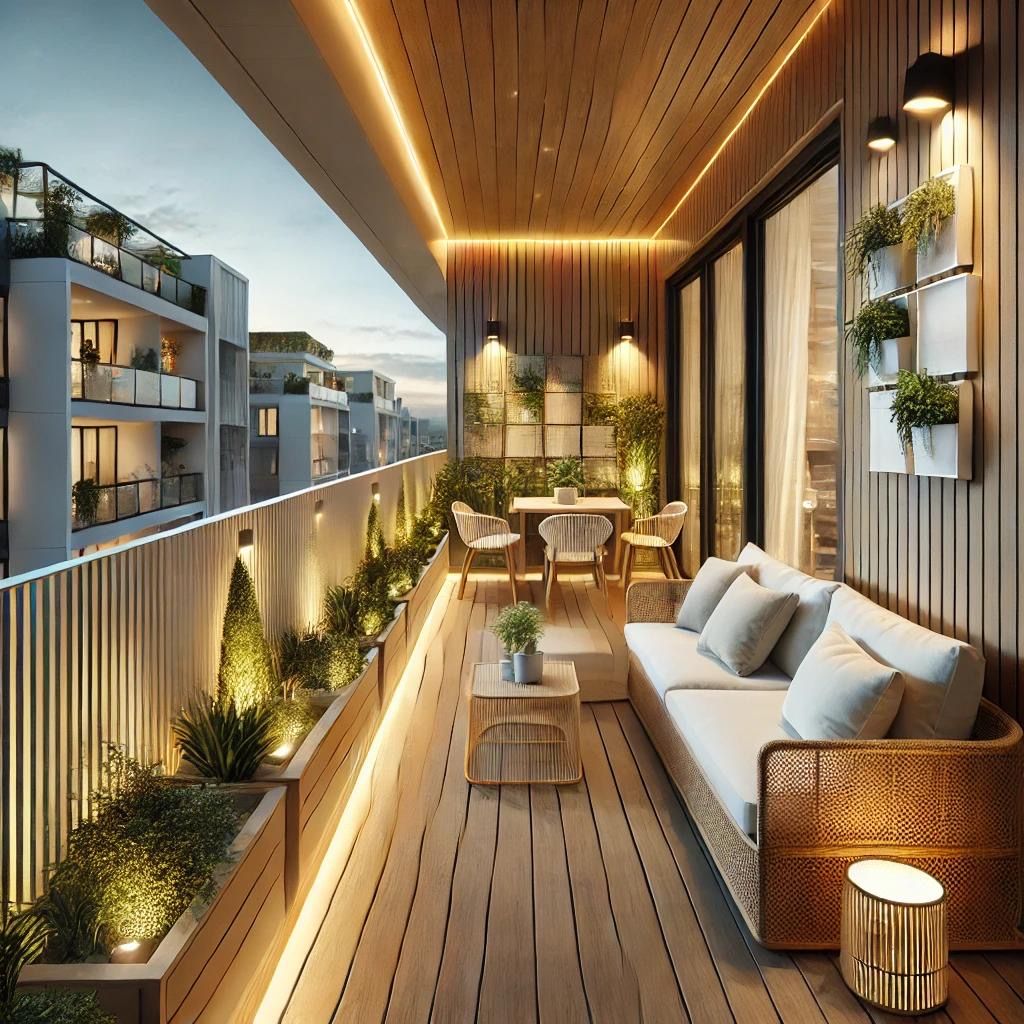
What is the 60-30-10 decorating rule?
Master the timeless formula for creating perfectly balanced color palettes in any room.
The 60-30-10 Rule is a classic design theory principle that helps create a balanced color palette. It states that 60% of the room should be a dominant color, 30% should be a secondary color or texture, and the final 10% should be an accent color. This is a fundamental part of any professional interior concept.
60% – The Main Color
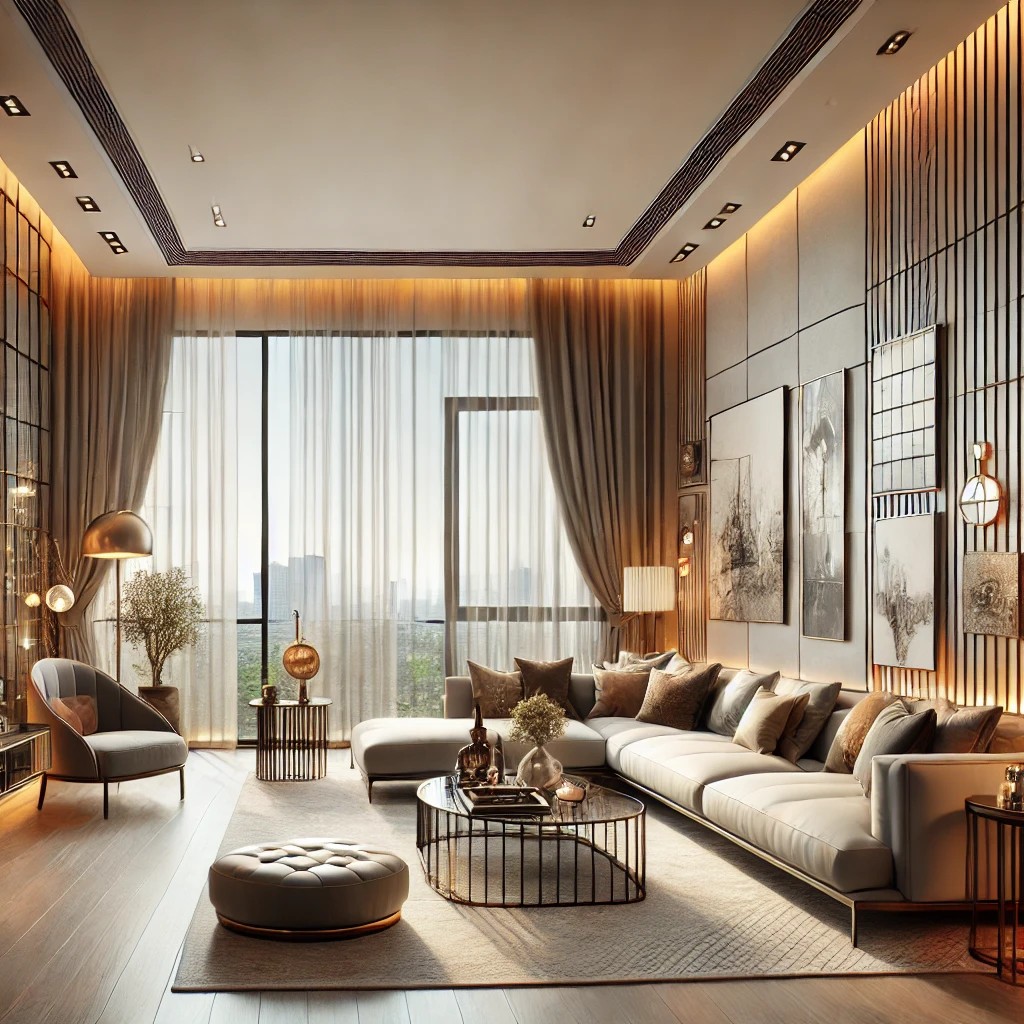
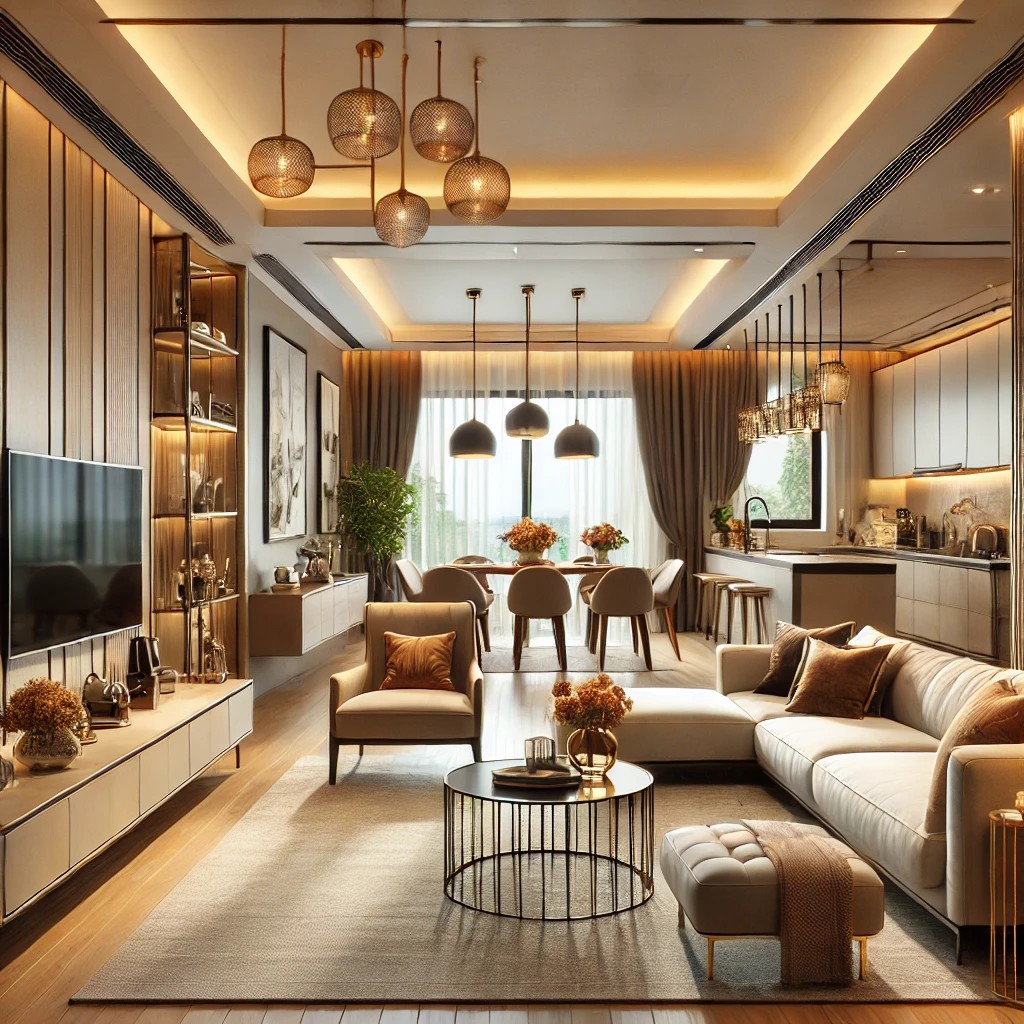
This is the primary color for your space, typically used on large surfaces like walls, rugs, or large furniture pieces. It sets the overall mood, making color psychology a vital consideration here. For a villa interior, this often involves neutral tones to create a sense of expanse.
30% – The Secondary Color
The secondary color adds depth and interest. It should be different enough from the main color to provide contrast but similar enough to maintain harmony. This color is often used for upholstery, curtains, or even a statement wall finish.
10% – The Accent Color
This is where you can be bold. Use your accent color for small interior features like cushions, artwork, or decorative lighting. It’s the “pop” that brings the room to life, much like a well-designed false ceiling can act as a highlight in a living room.
Why It Works
Whether you are a professional interior designer or trying to learn your own design, this rule provides a safety net. It ensures that your space doesn’t feel chaotic or boring. It is widely considered the golden rule of design for color application.
Bring Balance to Your Home
Ready to apply the 60-30-10 rule to your next project? Check out our modern luxury styles for inspiration or consult our pricing guide to get started.
Is Interior Design Easy? Find Out Here