Luxury kitchen interior design combines refined materials, precise craftsmanship, advanced appliances, thoughtful lighting, and effortless functionality. A truly luxurious kitchen is not defined by price alone; it is defined by how well the design supports cooking, entertaining, storage, comfort, maintenance, and the character of the home. Every detail should feel intentional, from the layout and cabinetry to the hardware, surfaces, lighting, and technology.
What Is Luxury Kitchen Interior Design?
Luxury kitchen interior design is a high-quality approach to planning and finishing a kitchen with an emphasis on performance, personalization, craftsmanship, and visual harmony. It may include custom or semi-custom cabinetry, premium stone or porcelain surfaces, integrated appliances, statement lighting, high-performance ventilation, specialty storage, and carefully coordinated finishes. Luxury should improve everyday use rather than add features that create unnecessary complexity.
Key Characteristics of a Luxury Kitchen
- Exceptional craftsmanship: Precise joinery, aligned doors, quality edge details, and durable construction.
- Personalized planning: The design responds to the room, household routines, entertaining style, and cooking needs.
- Premium materials: Carefully selected cabinets, countertops, flooring, backsplashes, metals, glass, and natural textures.
- Integrated appearance: Appliances, ventilation, storage, and services are coordinated to reduce visual clutter.
- High-performance hardware: Smooth drawers, strong hinges, lift systems, and organizers designed for frequent use.
- Layered lighting: General, task, accent, and decorative lighting support different activities and moods.
- Long-term value: Materials and systems are selected for durability, maintenance, repairability, and timeless appeal.
Luxury Kitchen Layout Ideas
Large Island Kitchen
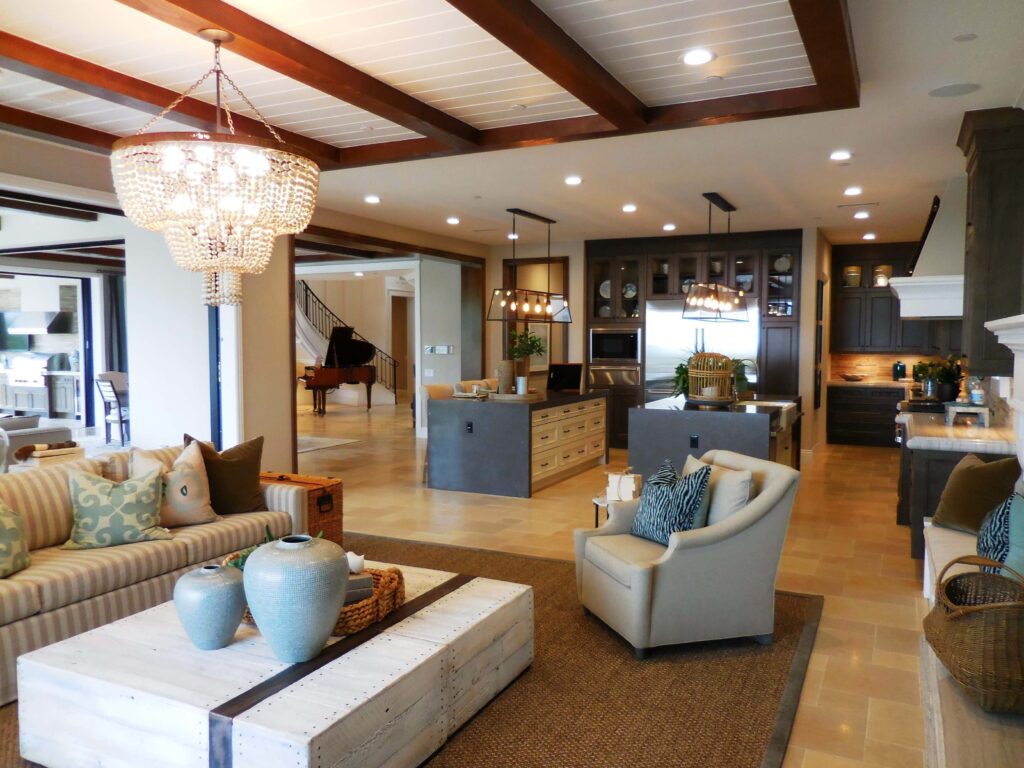
A generous island can become the main social and functional feature of a luxury kitchen. It may include seating, preparation space, storage, a sink, a cooktop, or integrated appliances. Confirm clearances, appliance door swings, lighting, plumbing, ventilation, and electrical requirements before finalizing its size. An island should support movement and conversation rather than overwhelm the room.
Separate Preparation and Entertaining Zones
A large kitchen can be divided into a main display kitchen and a working or preparation zone. This arrangement keeps everyday mess, small appliances, and heavy cooking activity organized while preserving a polished appearance in the entertaining area. The zones should remain connected through efficient storage and service access.
Open-Plan Kitchen and Dining Area
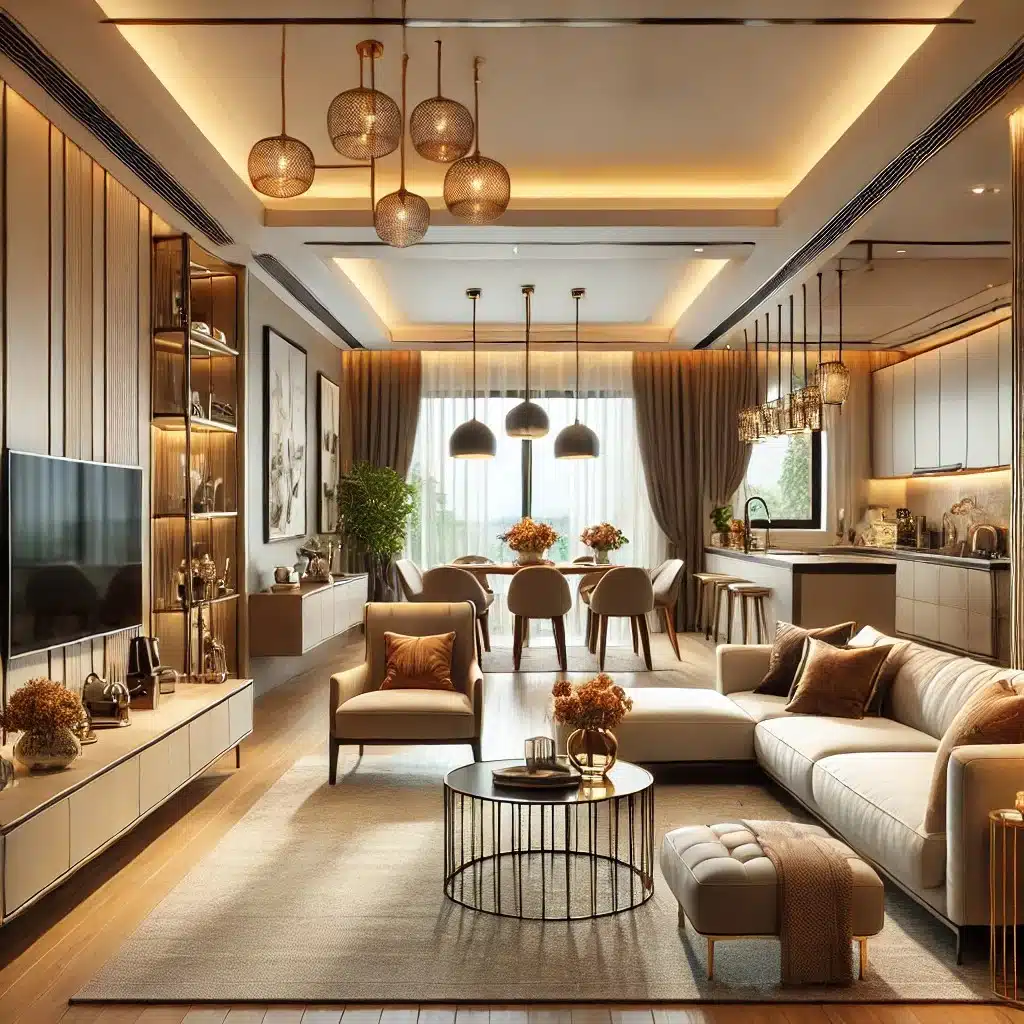
An open-plan luxury kitchen should coordinate with the dining and living spaces through materials, lighting, sightlines, and furniture scale. Full-height cabinetry, concealed appliances, and a carefully designed island can create a strong architectural connection without making the kitchen feel overly commercial.
Galley or Compact Luxury Kitchen
Luxury is possible in a smaller kitchen when the design focuses on proportion, high-quality materials, efficient storage, and excellent lighting. A refined galley layout can use tall cabinetry, integrated appliances, premium hardware, and a carefully selected countertop to create a cohesive and elegant result.
Custom Cabinetry and Architectural Details
Cabinetry often establishes the character of a luxury kitchen. Consider custom dimensions, full-height storage, paneled appliances, integrated handles, fluted or reeded details, framed doors, glass display cabinets, and concealed pocket doors. Use closed storage for appliances and supplies and reserve display areas for objects that contribute to the overall design.
Review the cabinet construction, core material, finish, edge protection, internal fittings, hinge quality, drawer load ratings, adjustment options, and serviceability. A premium exterior should be supported by durable internal construction and reliable hardware.
Premium Materials for Luxury Kitchens
Countertops and Stone Surfaces
Natural stone, quartz, porcelain, and other engineered surfaces can provide different levels of pattern, durability, heat resistance, stain resistance, and maintenance. Choose a surface based on actual cooking habits and care requirements. Review full slabs where possible to plan veining, joins, edges, waterfall ends, and backsplash continuity.
Wood and Veneer
Natural wood and high-quality veneer can introduce warmth and depth to a luxury kitchen. Grain direction, panel matching, finish consistency, and protection from moisture and heat are important. Use wood strategically with stone, metal, glass, or painted cabinetry for balance.
Metal, Glass, and Decorative Finishes
Brass, bronze, stainless steel, black metal, glass, and textured panels can create contrast and detail. Coordinate finishes across faucets, handles, lighting, appliances, stools, and accessories, or use deliberate contrast as a feature. Confirm the maintenance and durability of decorative coatings before specifying them in high-touch areas.
Luxury Kitchen Lighting Design
Lighting should be planned as part of the architecture, not added at the end. Use ambient lighting for general brightness, task lighting above work areas, accent lighting inside cabinets and along architectural features, and decorative pendants above an island or dining area. Dimmers and separate control zones allow the room to shift from cooking mode to entertaining mode.
Check color rendering, glare, beam direction, fixture scale, maintenance access, and suitability for heat and moisture. Lighting layouts should be coordinated with cabinet elevations, ceiling details, ventilation, and structural conditions.
High-End Storage and Organization
- Full-height pantry and appliance storage for a clean, uncluttered appearance.
- Deep, soft-close drawers with suitable load ratings for cookware and serving pieces.
- Dedicated storage for knives, spices, oils, trays, boards, linens, and tableware.
- Specialized corner systems that make difficult spaces accessible.
- Integrated waste and recycling centers near preparation and cleaning zones.
- Hidden charging drawers and organized storage for small appliances.
- Glass-front or illuminated display cabinets for selected collections.
- Walk-in pantry or secondary preparation room where space allows.
Premium Appliances and Smart Technology
Luxury appliances should be chosen for performance, reliability, capacity, energy use, service support, and integration with the kitchen plan. Options may include induction or gas cooking, multi-function ovens, steam ovens, warming drawers, wine storage, built-in coffee systems, quiet dishwashers, refrigeration columns, water filtration, and high-performance ventilation.
Smart controls can support lighting, appliance monitoring, temperature management, music, and security, but technology should be intuitive and maintainable. Confirm power requirements, ventilation, plumbing, network access, service clearances, warranties, and replacement plans before installation.
Luxury Kitchen Color and Style Directions
- Warm contemporary: Natural wood, soft stone, muted metals, and warm lighting.
- Modern monochrome: Layered white, grey, charcoal, or black finishes with contrasting texture.
- Classic luxury: Detailed cabinetry, marble-inspired surfaces, decorative hardware, and balanced symmetry.
- Modern industrial: Metal, stone, glass, timber, and strong architectural lines.
- Biophilic luxury: Natural materials, indoor plants, daylight, and views connected to the kitchen.
Limit the number of competing statement materials. A restrained palette often allows craftsmanship, stone veining, lighting, and architectural details to stand out more effectively.
Ventilation, Plumbing, and Electrical Planning
High-performance ventilation is essential in a luxury kitchen, especially where powerful cooktops, enclosed cabinetry, or open-plan living areas are involved. Confirm hood capacity, duct size, discharge route, noise levels, make-up air requirements, and cleaning access. Plumbing should account for sinks, dishwashers, water filtration, ice makers, boiling-water systems, and waste connections.
Electrical planning should include dedicated circuits, appliance loads, lighting controls, island outlets, charging points, and service access. Gas, electrical, plumbing, and ventilation installations should be completed by qualified professionals in accordance with local requirements.
How Much Does Luxury Kitchen Interior Design Cost?
Luxury kitchen costs vary widely according to room size, custom cabinetry, materials, appliances, hardware, lighting, architectural changes, installation, location, and project complexity. A complete budget should separate design fees, cabinetry, countertops, appliances, fixtures, hardware, lighting, flooring, backsplash, plumbing, electrical work, ventilation, delivery, installation, taxes, and contingency.
Request detailed specifications and an itemized quotation. Confirm the scope, material grades, sample approvals, fabrication tolerances, installation standards, schedule, payment stages, warranty, maintenance, and exclusions before work begins.
Common Luxury Kitchen Design Mistakes
- Choosing expensive finishes without planning a practical workflow.
- Adding too many premium materials and creating a visually busy space.
- Underestimating clearances around islands, seating, appliances, and cabinet doors.
- Specifying appliances before confirming cabinetry, ventilation, power, and service requirements.
- Focusing on appearance while overlooking internal storage, hardware, and maintenance.
- Using delicate surfaces in high-use areas without understanding care requirements.
- Leaving lighting, controls, and electrical planning until late in the project.
- Failing to coordinate cabinet elevations with stone joints, fixtures, vents, and architectural details.
- Accepting a premium price without reviewing material specifications, installation standards, and warranty terms.
Luxury Kitchen Planning Checklist
- Assess the room, structure, views, natural light, windows, doors, ceiling, and service routes.
- Define cooking, entertaining, storage, cleaning, accessibility, and household technology needs.
- Select a layout that supports movement, preparation, cooking, serving, and conversation.
- Confirm appliance specifications, ventilation, plumbing, electrical loads, and service clearances.
- Choose cabinetry construction, premium materials, finishes, hardware, fixtures, and lighting.
- Review full material samples and stone slabs under the actual lighting conditions.
- Approve detailed plans, elevations, opening directions, clearances, joints, edge profiles, and hardware schedules.
- Confirm the complete itemized quotation, project timeline, fabrication standards, installation process, warranty, and maintenance requirements.
- Inspect the finished kitchen and test every door, drawer, appliance, light, control, plumbing connection, ventilation system, and finish.
Final Thoughts
Luxury kitchen interior design is the art of combining beauty, performance, comfort, and lasting quality. The most successful kitchens use premium materials with restraint, organize storage around real routines, integrate appliances and services carefully, and treat lighting as a key architectural element. With detailed planning, skilled installation, and a focus on long-term usability, a luxury kitchen can become an elegant and highly functional center of the home.