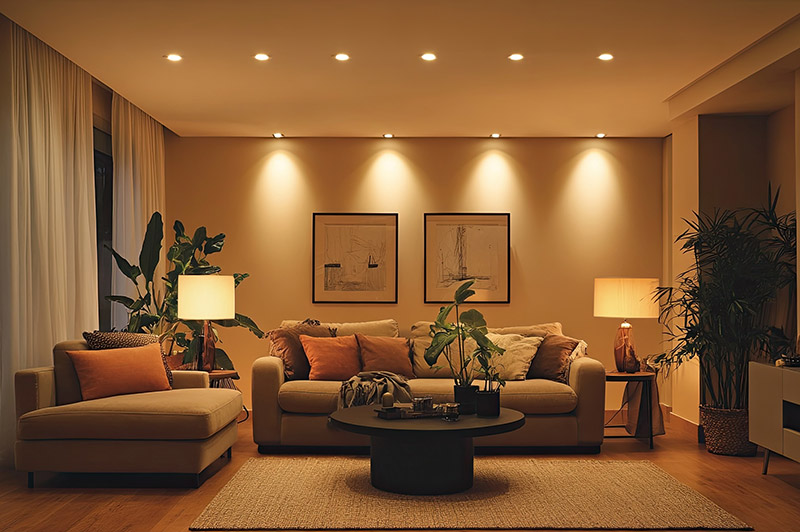

Living room lighting shapes how the space feels more than any furniture choice. A well-lit living room is layered, warm, and adaptable. It should support conversation, relaxation, reading, and evening ambience without harsh glare.
In modern homes across Gurgaon, Noida, and Delhi NCR, living room lighting focuses on softness, balance, and mood control.
This guide explains professional lighting strategies that transform an ordinary living room into a welcoming environment.
The Foundation: Layered Living Room Lighting
A single overhead light cannot carry a living room.
Design principles influenced by Bauhaus emphasize purposeful function β lighting should support activity and atmosphere.
A balanced living room includes:
- Ambient lighting (overall glow)
- Task lighting (reading or work)
- Accent lighting (depth and focus)
- Decorative lighting (style statement)
Layering prevents flat, shadow-heavy rooms.
Use Warm Color Temperature


Light temperature controls mood.
Best range:
- 2700K warm white
Cool lighting feels clinical. Warm light encourages relaxation and conversation.
Combine Ceiling Light with Secondary Sources
Overhead light should never work alone.
Pair it with:
- Floor lamps
- Table lamps
- Wall sconces
- Hidden LED strips
Secondary sources soften shadows.
Floor Lamps for Vertical Warmth

Floor lamps fill dark corners.
They add:
- Height variation
- Soft vertical glow
- Decorative structure
- Reading light
- Visual balance
Corners should never feel empty.
Table Lamps for Intimate Atmosphere
Table lamps create human-scale lighting.
Place them:
- Beside sofas
- On consoles
- On side tables
- On shelves
- Near reading chairs
Eye-level lighting feels calm and inviting.
Wall Sconces for Architectural Depth


Sconces add layered glow.
Benefits:
- Highlight walls
- Save floor space
- Add symmetry
- Create hotel-style ambience
- Enhance texture
They make rooms feel designed.
Hidden LED Lighting for Mood
Indirect light feels luxurious.
Use LEDs:
- Behind TV panels
- Under shelves
- In ceiling coves
- Under cabinets
- Around feature walls
Hidden light adds atmosphere without glare.
Statement Pendant or Chandelier


A central fixture anchors the room.
Choose:
- Sculptural pendants
- Modern chandeliers
- Soft globe fixtures
- Fabric-shaded lights
Decorative lighting doubles as art.
Accent Lighting for Focal Points
Use focused light to highlight:
- Artwork
- Textured walls
- Bookshelves
- Plants
- Sculptural decor
Accent lighting adds depth and drama.
Install Dimmers Everywhere
Brightness should adapt to time and mood.
Use:
- Dimmer switches
- Smart lighting systems
- Adjustable bulbs
Control is as important as brightness.
Avoid Common Living Room Lighting Mistakes
Do not:
- Use only ceiling light
- Install cool white bulbs
- Over-light the room
- Ignore dark corners
- Use exposed glare bulbs
- Skip layered sources
Flat light kills atmosphere.
Benefits of Smart Living Room Lighting
Good lighting improves:
- Relaxation
- Social comfort
- Visual depth
- Perceived luxury
- Room warmth
- Emotional atmosphere
Lighting defines experience.
Summary
Living room lighting succeeds through warmth, layering, and balance. Floor lamps, table lamps, sconces, and hidden LEDs create adaptable, inviting spaces. Whether lighting a compact Noida apartment or a spacious Gurgaon residence, the principles remain universal: soft glow, depth, and intention.
Good lighting does not spotlight a room. It embraces it.


