How to plan home interiors is the most important step in creating a beautiful, comfortable, and well-organised home. Proper planning helps you avoid layout mistakes, budget overruns, poor storage design, and design confusion. Whether you are designing a new home or renovating in Delhi NCR, Gurgaon, or Noida, following the right interior planning process ensures a smooth and successful result.
This guide explains the best way to plan home interiors step by step, followed by expert tips used by professional interior designers.
Step 1: Understand Your Lifestyle & Family Requirements
Start your home interior planning by understanding how you live.
Ask yourself:
- Number of family members and guests
- Bedrooms, bathrooms, and storage needs
- Work-from-home or study area required
- Kids’ room or entertainment zone planning
- Open or closed kitchen preference
This forms the foundation of your home interior planning process.
Step 2: Fix a Realistic Home Interior Budget
Budget planning is the backbone of interior design.
Include:
- Interior design and execution cost
- Furniture and décor expenses
- Modular kitchen and wardrobe budget
- Lighting, appliances, and fittings
- 10–15% contingency buffer
A clear budget helps control your home interior design cost and avoids overspending.
Step 3: Measure Your Home & Study the Layout
Accurate measurements prevent costly mistakes.
Check:
- Room length, width, and ceiling height
- Door and window positions
- Balcony and passage areas
- Electrical and plumbing points
Good layout understanding improves space utilisation and comfort.
Step 4: Choose the Right Interior Design Style
Select one design style and follow it throughout the home.
Popular styles include:
- Modern home interior design
- Contemporary interiors
- Minimalist home design
- Scandinavian style
- Traditional Indian interiors
- Luxury home interiors
Choosing one theme keeps your interiors balanced and visually appealing.
Step 5: Divide Your Home into Functional Zones
Zoning improves privacy and movement flow.
Main zones include:
- Living and entertainment zone
- Dining zone
- Kitchen and utility area
- Bedroom and private zone
- Study or work zone
- Storage and service areas
Good zoning ensures better organisation and comfort.
Step 6: Plan Furniture Layout Room by Room
Furniture planning defines daily comfort and movement.
Living Room
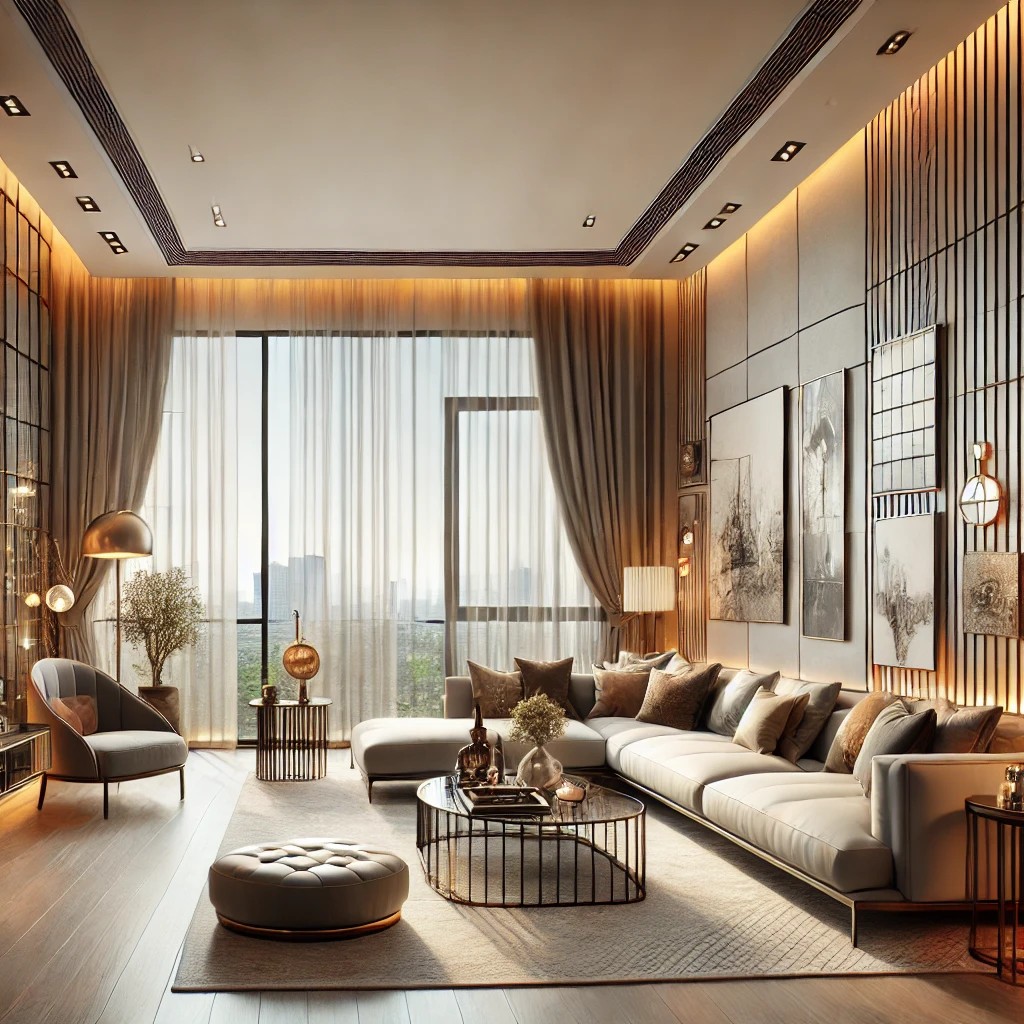
- Place sofa facing TV or focal wall
- Keep walking space clear
- Avoid blocking windows and balconies
Bedroom
- Place bed against a solid wall
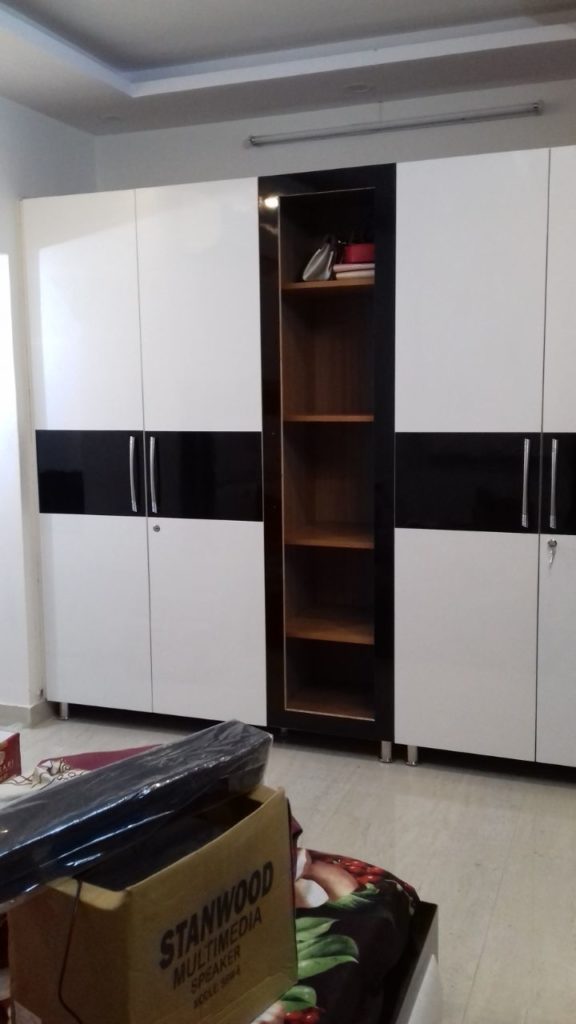
- Keep wardrobes near dressing area
- Leave free space on both sides
Dining Area
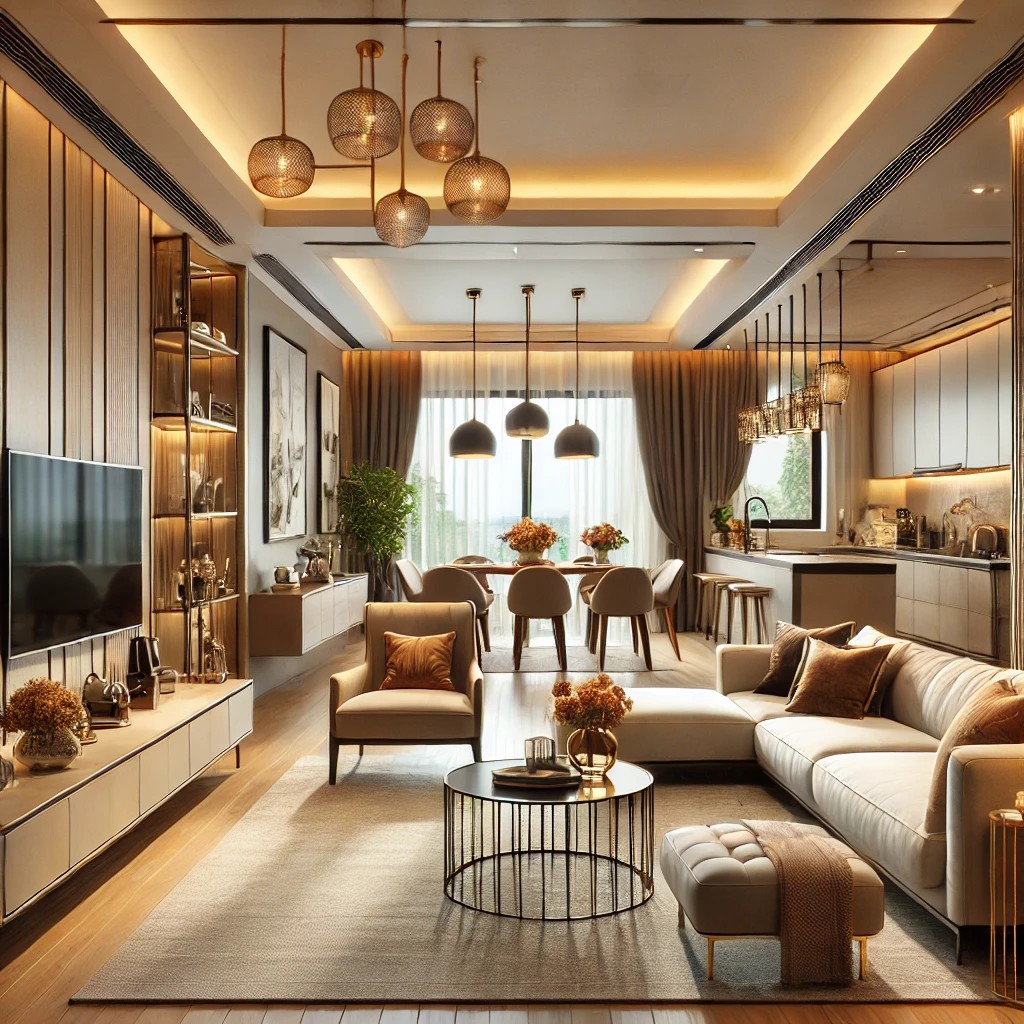
- Keep dining close to kitchen
- Leave space for chair movement
- Add crockery or sideboard unit
Kitchen
Choose the right layout:
- Straight kitchen – small homes
- L-shaped kitchen – medium homes
- U-shaped or island kitchen – large homes
Follow the work triangle rule (sink–hob–fridge).
Step 7: Select the Right Color Palette
Colors decide the mood and spaciousness of your home.
Tips:
- Use neutral base shades (white, beige, light grey)
- Add accent colors through cushions, rugs, or feature walls
- Choose calm shades for bedrooms and brighter tones for living areas
Light colors make homes look bigger and brighter.
Step 8: Choose Materials, Flooring & Finishes Carefully
Material selection affects durability and maintenance.
Choose:
- Vitrified tiles, wooden, vinyl, or marble flooring
- Laminates, acrylic, or veneer for wardrobes and kitchens
- Easy-to-clean wall paints and wallpapers
- Anti-skid bathroom tiles
Good materials ensure long-lasting and low-maintenance interiors.
Step 9: Plan Lighting & Electrical Layout in Advance
Lighting transforms your interiors.
Include:
- Ambient ceiling lights for general lighting
- Task lighting for kitchen and study
- Accent lighting for décor and walls
- Charging points and switch placements
Correct planning avoids future rewiring and wall breaking.
Step 10: Add Smart Storage Solutions
Storage planning keeps your home clutter-free.
Include:
- Floor-to-ceiling wardrobes
- Storage beds and ottomans
- Wall-mounted cabinets and shelves
- Kitchen tall units and corner storage
Smart storage improves organisation and space utilisation.
Step 11: Prepare 2D Layouts & 3D Interior Designs
Before execution:
- Finalise furniture layouts
- Review 3D interior views
- Lock colors, materials, and finishes
- Approve drawings and measurements
This avoids design changes and extra costs during execution.
Step 12: Start Execution & Supervise the Work
Execution includes:
- Carpentry and modular installation
- False ceiling and lighting work
- Painting and wall finishes
- Flooring and fittings
Regular site visits ensure quality control and timely completion.
Step 13: Final Styling & Home Handover
The final stage includes:
- Furniture placement
- Curtains, cushions, and rugs
- Wall art and décor accessories
- Final inspection and cleaning
Your home interior is now ready to move in.
Quick Summary – How to Plan Home Interiors
- Understand your lifestyle and requirements
- Fix a realistic interior design budget
- Measure your home and analyse the layout
- Choose one interior design style
- Divide home into functional zones
- Plan furniture layout room-wise
- Select suitable colors and wall finishes
- Choose durable materials and flooring
- Design lighting and electrical layout
- Add smart storage solutions
- Finalise 2D layouts and 3D designs
- Execute interiors with supervision
- Complete final styling and handover
Why Proper Home Interior Planning Matters
Good planning helps you:
- Avoid layout and design mistakes
- Control home interior design cost
- Improve space utilisation and comfort
- Reduce delays and rework
- Create a beautiful, organised, and functional home
Call to Action
Planning your home interiors in Delhi NCR, Gurgaon, or Noida?
Explore our expert guides on home interior planning, interior design cost, and modern home design ideas, or consult a professional interior designer to plan your home interiors the right way and turn your dream home into reality.