Essential Tips for Interior Design Beginners
Starting your interior design journey can feel overwhelming, but the right fundamentals make it easier. Learn how to plan your space, choose colors, select furniture, improve lighting and create a beautiful home with confidence.
Talk to an Interior Designer Explore Interior A to Z
Interior Design for Beginners: Understanding the Fundamentals
Interior design for beginners does not have to be complicated. The best way to start is by understanding how different design elements work together to create a comfortable and visually balanced space.
Color, space, furniture, lighting, texture, proportion and pattern all have an important role in interior design. You do not need to master everything immediately. Begin with the fundamentals and gradually develop your own design style.
7 Essential Interior Design Tips for Beginners
These practical principles can help beginners make better design decisions without making the process unnecessarily complicated.
Understand Your Space
Start by measuring the room. Note the location of doors, windows, electrical points and major architectural elements before deciding on furniture placement.
- Measure walls accurately
- Mark doors and windows
- Identify natural light sources
- Consider circulation space
Choose a Color Palette
Color is one of the easiest ways to establish the mood of an interior. Start with a simple base color and introduce complementary accent shades.
- Start with neutral colors
- Add one or two accent shades
- Test colors in natural light
- Repeat colors throughout the room
Prioritize Functionality
A stylish room still needs to work for everyday life. Consider how people will move, sit, work, relax and store their belongings.
- Keep pathways clear
- Plan storage early
- Choose practical furniture
- Think about daily routines
Select Furniture Carefully
Furniture should match the scale of the room. Oversized pieces can make a small space feel crowded, while very small furniture may make a large room feel disconnected.
- Measure before purchasing
- Check furniture proportions
- Prioritize comfort
- Maintain walking space
Use Layered Lighting
Good lighting combines general illumination with task and decorative lighting. This creates flexibility and improves the atmosphere of a room.
- Ambient lighting
- Task lighting
- Accent lighting
- Natural daylight
Add Texture and Pattern
Texture prevents a room from looking flat. Use rugs, curtains, cushions, wood, fabrics, artwork and other materials to introduce visual interest.
- Mix smooth and textured surfaces
- Use fabrics for warmth
- Add patterns carefully
- Repeat materials for cohesion
Avoid Over-Decorating
Beginners often try to fill every empty surface. Instead, leave some visual breathing room and allow important furniture and decorative pieces to stand out.
- Reduce unnecessary clutter
- Use statement pieces selectively
- Keep surfaces organized
- Allow negative space
Design in Stages
You do not have to complete the entire room in one day. Build the interior gradually, beginning with essential furniture and adding décor once the main layout works.
- Plan first
- Buy essential furniture
- Add lighting
- Finish with décor
How Beginners Can Choose the Right Interior Color Palette
Choosing colors is often one of the first decisions beginners face. A simple approach is to select a dominant color, a secondary color and one accent color.
Neutral Base
White, beige, cream, grey and warm neutral shades can provide a flexible foundation for furniture and décor.
Secondary Color
Introduce a complementary shade through furniture, curtains, rugs, cabinetry or selected walls.
Accent Color
Use stronger colors sparingly through cushions, artwork, accessories or small furniture pieces.


How to Choose Furniture as an Interior Design Beginner
Furniture should combine comfort, scale, function and visual appeal. Before purchasing a sofa, bed, dining table or cabinet, measure the available space.
- Measure the room before shopping
- Check door and lift access for large furniture
- Leave comfortable circulation paths
- Choose furniture according to room scale
- Consider maintenance requirements
- Prioritize quality for frequently used pieces
For smaller apartments in Delhi NCR, Gurgaon and Noida, multifunctional furniture can be particularly useful because it can provide additional storage without occupying unnecessary floor space.
Interior Design Tips for Different Rooms
Each room has different functional requirements. Start with the purpose of the space before choosing its decorative style.

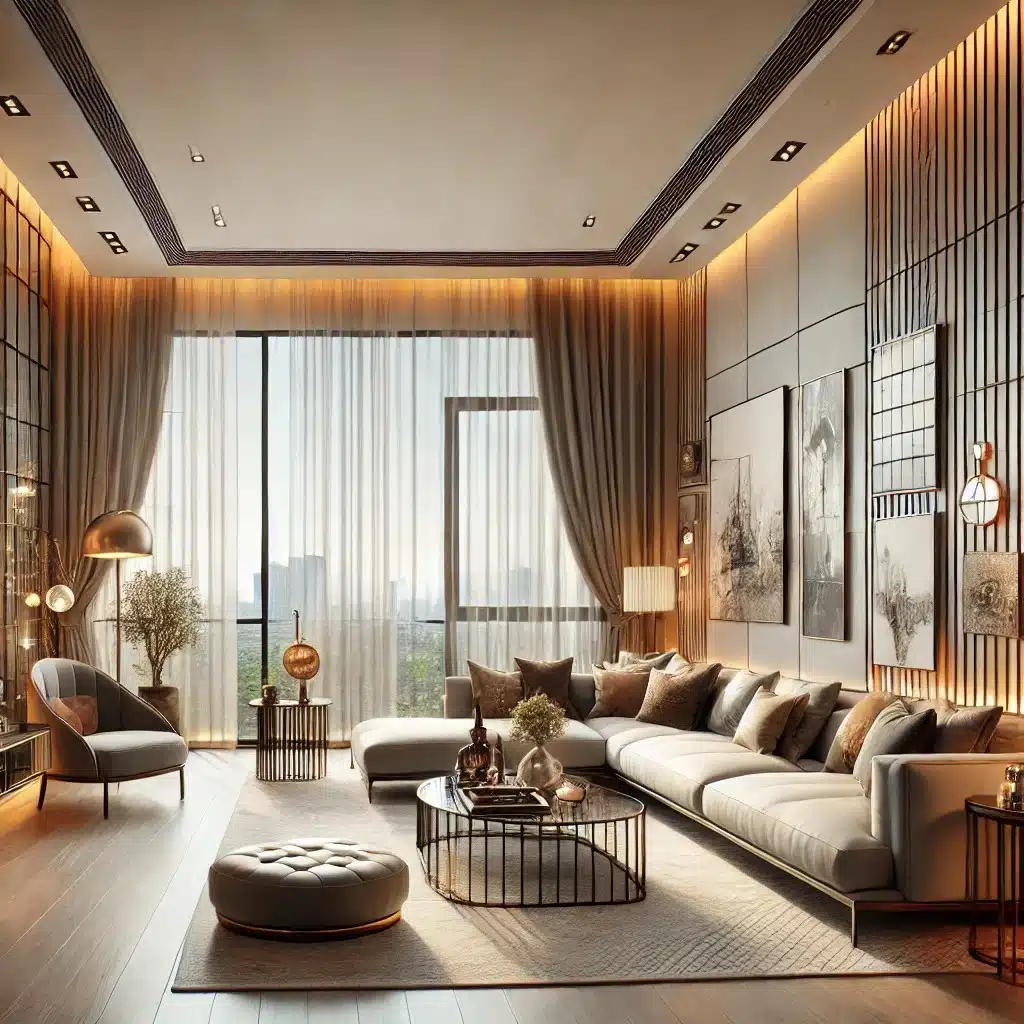
Living Room
Start with the sofa and main seating arrangement. Then plan the TV unit, lighting, rug, curtains and decorative accessories around it.
- Define the seating zone
- Plan TV placement
- Add layered lighting
- Use a suitable rug

Bedroom
Comfort should be the priority. Begin with the bed, then plan bedside storage, wardrobes, lighting and soft furnishings.
- Choose a comfortable bed
- Plan wardrobe storage
- Use warm lighting
- Keep the room uncluttered

Kitchen
Think about workflow, storage and cleaning before focusing on decorative details. A practical kitchen layout can make everyday cooking easier.
- Plan work zones
- Use efficient storage
- Consider appliance placement
- Select easy-care finishes

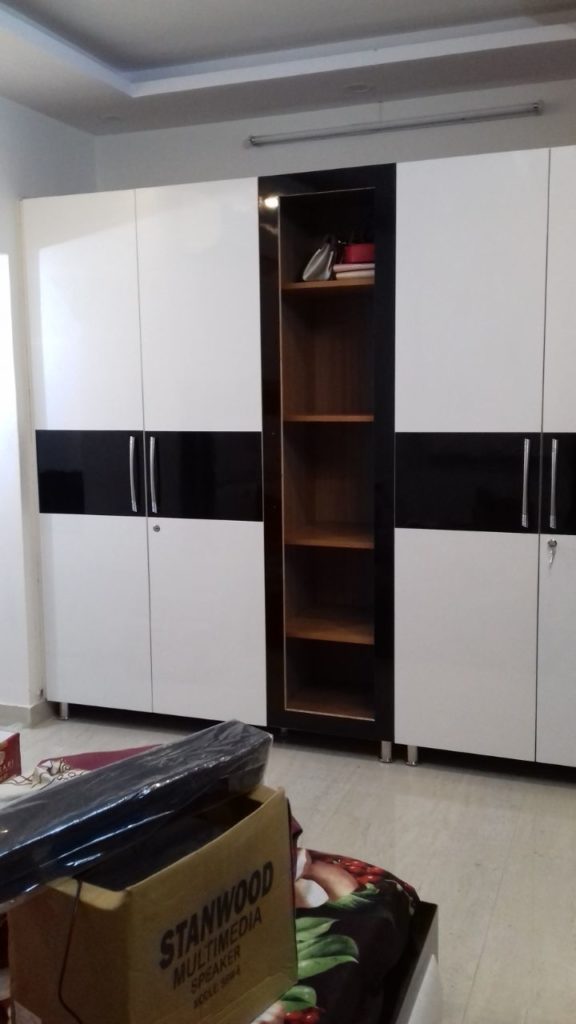
Wardrobe
Plan storage according to the clothes and accessories you actually use. Different compartments can make organization considerably easier.

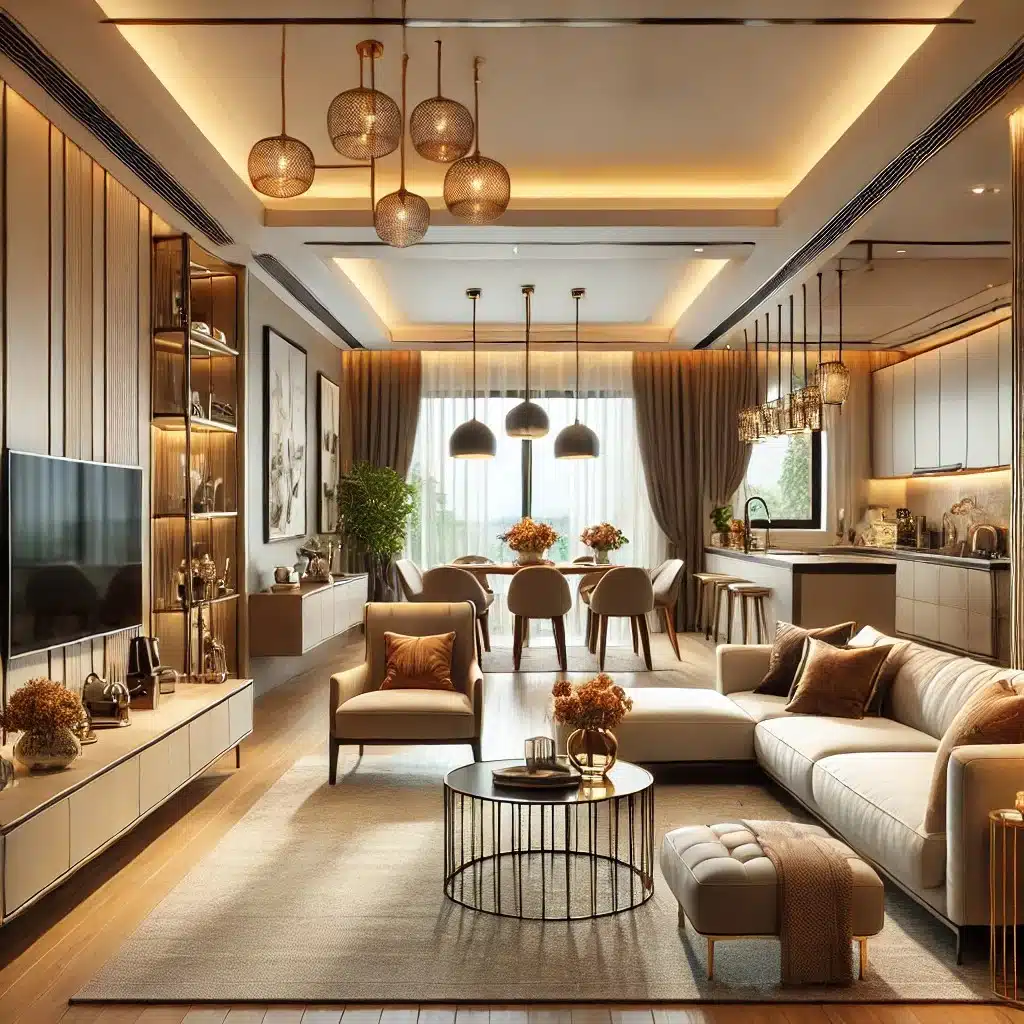
Dining Area
Choose a dining table according to available space and household size. Pendant lighting can create a visual focal point above the table.

Small Spaces
Use vertical storage, multifunctional furniture, mirrors and a restrained color palette to make compact rooms feel more open.
Lighting Tips Every Interior Design Beginner Should Know
Lighting can completely change the appearance and atmosphere of an interior. Instead of relying on one ceiling fixture, use multiple light sources.
Ambient Lighting
Provides general illumination throughout the room.
Task Lighting
Provides focused light for activities such as reading, cooking, working or applying makeup.
Accent Lighting
Highlights artwork, architectural features, shelves or decorative objects.
- Use daylight whenever possible
- Layer multiple light sources
- Choose warm lighting for relaxing spaces
- Use brighter task lighting where necessary

Common Interior Design Mistakes Beginners Should Avoid
Buying Furniture Too Quickly
Do not purchase major furniture before measuring the room and planning the layout.
Ignoring Storage
Storage should be planned from the beginning rather than added after the room is already finished.
Using Too Many Colors
Too many unrelated colors can make an interior look visually confusing. Create a coordinated palette instead.
Poor Lighting
A room can look flat or uncomfortable when it relies entirely on a single light source.
Ignoring Scale
Furniture should be appropriately sized for the room. Proportion is one of the foundations of good interior design.
Over-Decorating
Decorative objects should enhance the room rather than make it feel cluttered.
How Beginners Can Design a Home on a Budget
Interior design does not always require a complete renovation. Beginners can create significant improvements by prioritizing the changes that have the greatest visual and functional impact.
- Start with space planning
- Reuse quality furniture where possible
- Refresh walls with paint
- Upgrade lighting fixtures
- Add curtains and rugs
- Use artwork strategically
- Invest in storage where needed
- Buy décor gradually
A Beginner-Friendly Interior Design Process
Measure
Record room dimensions, windows, doors, electrical points and other important architectural features.
Plan
Decide how the room will be used and create a basic furniture layout before buying anything.
Select
Choose colors, materials, furniture, lighting and décor that work together as one visual scheme.
Refine
Live with the space and gradually adjust accessories, artwork, storage and decorative details.
Interior Design for Beginners in Delhi, Gurgaon and Noida
Homes across Delhi NCR often require a balance between aesthetics, available space, storage and practical everyday living.
Delhi
For Delhi homes, consider the property’s age, room dimensions, natural light, ventilation and storage requirements before selecting finishes.
Gurgaon
Modern Gurgaon apartments can benefit from contemporary layouts, customized storage, modular kitchens and flexible furniture.
Noida
Newer apartments in Noida can be planned around the existing floor plan, electrical points and builder-provided finishes.
Should Beginners Hire an Interior Designer?
DIY interior design can be rewarding, particularly for smaller decorative projects. However, professional help can be useful when the project involves major renovation, customized furniture, modular kitchens, electrical changes or complete home interiors.
- Full-home interior projects
- Complex space planning
- Modular kitchen design
- Customized wardrobes
- False ceiling and lighting planning
- Multiple contractors and trades
- Large renovation projects

FAQs About Interior Design for Beginners
How do I start interior design as a beginner?
Start by measuring your room, identifying how you will use it, planning the furniture layout and choosing a simple color palette. Then add lighting, storage and décor gradually.
What are the basic elements of interior design?
The basic elements include space, line, form, color, texture, pattern, light and proportion. These elements work together to create a balanced interior.
What should I choose first when designing a room?
Begin with the room’s purpose and layout. For many rooms, the primary furniture piece can then guide the remaining furniture, colors, lighting and décor decisions.
How many colors should beginners use in a room?
There is no fixed rule, but a simple palette with a dominant color, a secondary color and a limited accent color is often easier for beginners to coordinate.
How can I make a small room look bigger?
Use appropriately scaled furniture, maintain clear pathways, maximize natural light, use strategic mirrors, incorporate vertical storage and avoid unnecessary clutter.
Is interior design expensive?
Interior design costs vary according to the scope, property size, materials, customization and execution requirements. Beginners can also start with smaller improvements instead of redesigning the entire home.
Can I do interior design myself?
Yes. Simple projects such as painting, furniture rearrangement and décor can be handled independently. Professional help becomes more valuable for complex renovation and full-home interior projects.
When should I hire an interior designer?
Consider hiring an interior designer when you need detailed space planning, customized furniture, modular kitchens, extensive storage, renovation or coordinated execution.
Turn Your Interior Ideas Into a Beautiful Home
Whether you are designing your first room or planning a complete home interior, professional guidance can help you make better decisions about space, materials, furniture, lighting and budget.
WhatsApp Consultation Call 9891050117
Understanding the Basics of Interior Design
Interior design for beginners can seem overwhelming at first. However, grasping a few fundamental concepts can significantly ease your journey. Start by familiarizing yourself with the elements of design such as color, space, texture, and pattern. Each of these plays a vital role in creating a harmonious living space that reflects your personal style.
Choosing a Color Palette
One of the most crucial aspects of interior design is selecting a color palette. Choose colors that evoke the desired emotions and create a cohesive look throughout your home. Consider starting with neutral tones as a base and then add splashes of color through accent pieces like cushions, curtains, and artwork. This way, you can easily refresh your space without a complete overhaul.
Furnishing Your Space
When furnishing your space, think about functionality and style. Invest in quality furniture that provides comfort and fits your lifestyle. A well-furnished room can enhance the aesthetics of your home. Additionally, balancing large furniture pieces with smaller accents can create a well-proportioned room. Remember to allow for movement and accessibility in your layout!
By incorporating these fundamental tips into your design process, you will be well on your way to creating beautiful interiors that you love. With patience and creativity, interior design for beginners can be both fun and rewarding!