Modular Kitchen vs Carpenter-Made Kitchen in Greater Noida West
Choosing between a modular kitchen and a carpenter-made kitchen is an important decision when furnishing a new flat or renovating an existing home in Greater Noida West. Both options can create a functional and attractive kitchen, but they differ in manufacturing, installation, customisation, maintenance and cost.
This guide compares both approaches so you can select a kitchen solution that suits your apartment layout, cooking habits, storage requirements and budget in Noida Extension.
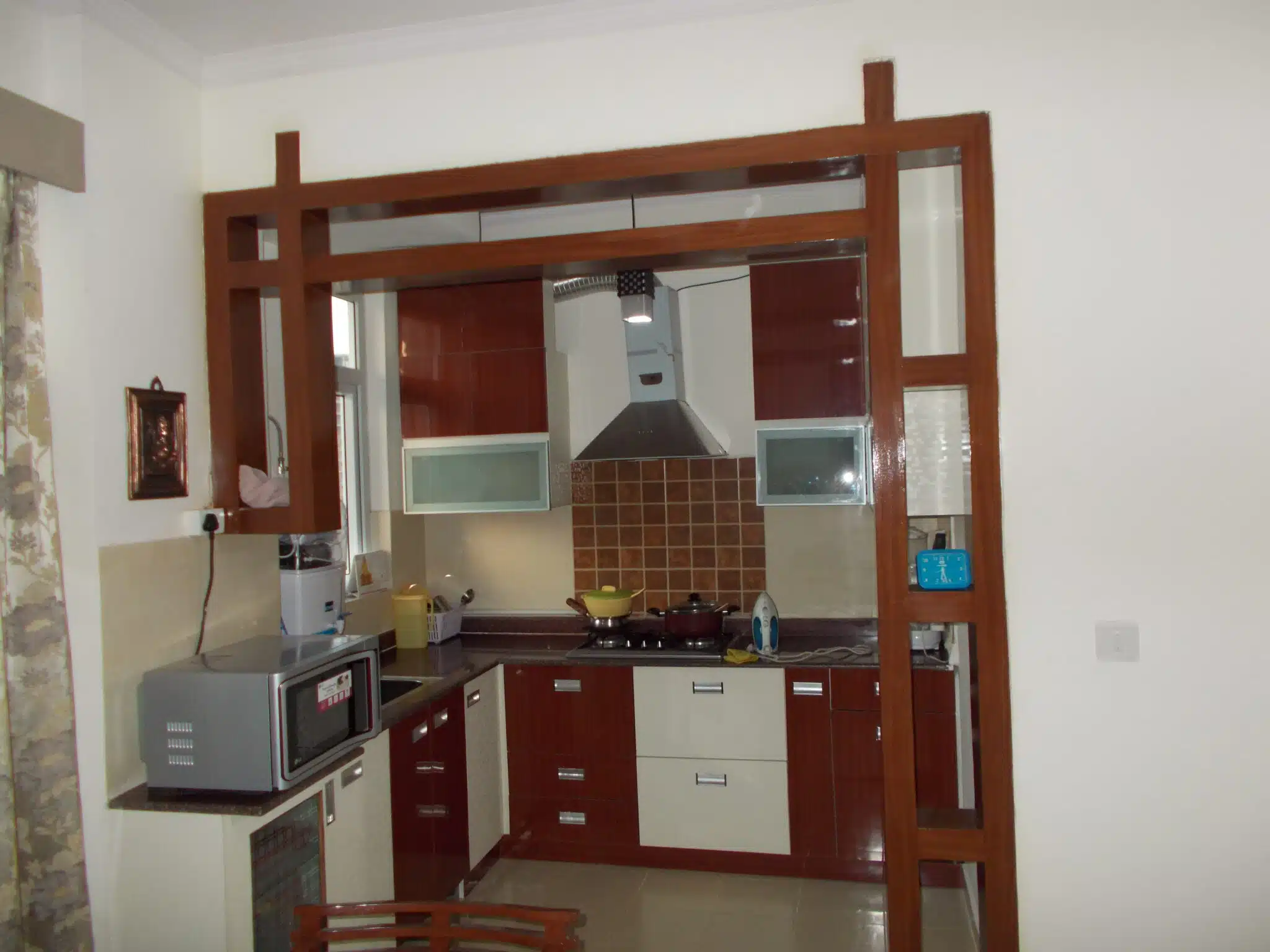
Quick Answer: Which Kitchen Should You Choose?
A modular kitchen is generally a suitable choice if you want factory-manufactured cabinets, consistent finishing, organised accessories and faster on-site installation. A carpenter-made kitchen can be a good option if you need highly customised dimensions, want direct control over materials or have an unusual kitchen layout.
1. What Is a Modular Kitchen?
A modular kitchen is made from individual cabinet units or modules manufactured in a factory or controlled workshop. These units are transported to the home and assembled, aligned and fitted according to the approved kitchen layout.
Common modular kitchen components include:
- Base cabinets below the countertop.
- Wall-mounted cabinets for everyday storage.
- Tall pantry and appliance units.
- Drawer units and cutlery organisers.
- Corner storage systems and pull-out baskets.
- Shutters, handles, hinges and drawer channels.
- Dedicated cabinets for appliances and cleaning supplies.
Depending on the manufacturer, the cabinets may be produced using plywood, HDHMR, MDF or other specified panel products. Finishes can include laminate, acrylic, membrane, veneer or paint systems.

2. What Is a Carpenter-Made Kitchen?
A carpenter-made kitchen is constructed to the available room dimensions by a carpenter or carpentry team. The cabinet structure is cut, assembled and fitted according to the agreed design and site measurements.
Materials may include plywood, blockboard or other engineered boards, with laminate, veneer, paint or other finishes. Hardware and accessories can be selected separately by the homeowner or designer.
Because the cabinets are made for the specific room, this approach can be useful for unusual wall dimensions, awkward corners, non-standard cabinet sizes or special storage requirements.
3. Modular Kitchen vs Carpenter-Made Kitchen: Complete Comparison
The following table explains the practical differences. Actual results depend on the supplier, carpenter, materials, installation team and project specification.
| Comparison factor | Modular kitchen | Carpenter-made kitchen |
|---|---|---|
| Manufacturing | Cabinet modules are factory-manufactured or workshop-produced. | Cabinets are made by carpentry teams to the site dimensions. |
| Customisation | Customisation depends on available module sizes and custom-unit options. | Can be adapted closely to unusual dimensions and design requirements. |
| Finish consistency | Can provide consistent machine-cut edges and repeatable finishes. | Depends heavily on the carpenter’s skill and finishing process. |
| Installation | Usually faster once manufacturing and site preparation are complete. | Often takes longer because more work is completed at the site. |
| Site disruption | Generally less cutting and fabrication inside the home. | May involve more dust, noise and finishing work at the site. |
| Hardware | May include standardised hardware packages or selected upgrades. | Hardware is generally selected and purchased separately. |
| Storage accessories | Many compatible pull-outs and organisers are available. | Accessories can be added, subject to cabinet dimensions and fitting skill. |
| Initial cost | Can be higher depending on brand, materials and hardware. | May be more economical for a comparable basic specification. |
| Repairs | Individual modules or fittings may be replaceable if compatible parts are available. | Repairs may depend on the original carpenter or a new fabricator. |
| Relocation | Some units can be dismantled and reinstalled, subject to design and condition. | Usually more difficult because the cabinets are built around the original site. |
| Warranty | Written product or installation warranties may be available; terms vary. | Warranty depends on the carpenter or contractor’s written agreement. |
4. Cost Comparison: Modular Kitchen vs Carpenter Kitchen
Cost is one of the biggest reasons homeowners compare these two options. A carpenter-made kitchen may have a lower initial quotation, but the final cost depends on the board, finish, hardware, accessories, labour and installation scope.
A modular kitchen quotation may include cabinet manufacturing, edge finishing, hardware and installation as a package. However, premium finishes, branded fittings and custom modules can increase the price.
What makes the two quotations different?
Board and carcass
Compare the same board grade, thickness, internal construction and moisture suitability.
Shutter finish
Laminate, acrylic, PU paint, membrane and veneer have different material and labour costs.
Hardware
Hinges, channels, drawer systems and corner accessories can significantly change the estimate.
Countertop
Granite, quartz and other surfaces should be quoted separately or clearly included.
Installation
Check whether transport, fitting, cutting, finishing and site adjustments are included.
Appliances and services
Chimney, hob, sink, plumbing, electrical changes and appliance installation may be extra.
For wider budgeting information, read Home Interior Design Cost in Delhi NCR and explore interior design cost information for Gurgaon.
5. Which Kitchen Has Better Material Quality?
Neither manufacturing method automatically guarantees better materials. The actual board grade, thickness, moisture resistance, edge protection and construction quality are more important than whether the kitchen is called modular or carpenter-made.
| Material | Potential application | What to verify |
|---|---|---|
| Plywood | Cabinet carcass, shelves and shutters. | Grade, manufacturer, thickness, bonding and moisture suitability. |
| HDHMR | Selected shutters and panels. | Product datasheet, moisture performance, edge sealing and fixing guidance. |
| MDF | Decorative panels and selected dry-zone applications. | Board type, moisture exposure and suitable finish. |
| Particle board | Selected budget-oriented cabinet applications. | Load suitability, moisture exposure and edge protection. |
| Laminate | Surface finish for shutters and panels. | Thickness, finish type, brand and application quality. |
For areas close to the sink and water supply, ask the designer to specify an appropriate moisture-resistant board and properly sealed edges. No ordinary cabinet board should be treated as waterproof without product-specific evidence.
Explore our related guide: Best Modular Kitchen Materials and Finishes.
6. Which Option Offers Better Finish and Precision?
Factory production can offer repeatable cutting, drilling and edge finishing. This can help maintain consistent cabinet dimensions and shutter gaps across the kitchen.
Carpenter-made kitchens can also achieve excellent finishing when the carpenter has the right tools, detailed drawings, good materials and enough time for accurate installation. However, results can vary more between individual teams.
Check these details in either kitchen
- Are cabinet doors aligned evenly?
- Are shutter gaps consistent?
- Are exposed edges properly finished?
- Do drawers open and close smoothly?
- Are corner joints neat and secure?
- Are shelves level and adequately supported?
- Are wall cabinets fixed securely to suitable structural support?
7. Installation Time: Which Kitchen Is Faster?
Modular kitchens generally require less on-site fabrication because much of the cabinet manufacturing is completed before delivery. Once the site is ready and the modules arrive, assembly and fitting can be relatively quick.
Carpenter-made kitchens usually require more time at the property for cutting, assembling, fitting and finishing. The actual duration depends on the kitchen size, number of workers, design complexity and availability of materials.
| Work stage | Modular kitchen | Carpenter-made kitchen |
|---|---|---|
| Measurement | Site measurement and design approval. | Site measurement and design planning. |
| Manufacturing | Factory or workshop production before installation. | Workshop or on-site cabinet fabrication. |
| Site work | Primarily assembly, levelling and fitting. | Cutting, cabinet assembly, finishing and fitting may occur on site. |
| Final adjustments | Shutter alignment, accessories and service coordination. | Shutter alignment, finishing and service coordination. |
Do not rely on a general installation-time promise. Ask for a project schedule that includes manufacturing, delivery, fitting, countertop work and final handover.
8. Customisation: Which Kitchen Fits Your Space Better?
Carpenter-made kitchens offer considerable flexibility for unusual walls, non-standard cabinet dimensions, columns and awkward corners. A skilled carpenter can build around site conditions, provided the measurements and drawings are accurate.
Modular kitchens also offer custom modules, fillers and made-to-measure units, but the level of flexibility depends on the manufacturer or modular kitchen supplier.
Choose modular for
- Regular L-shaped layouts.
- Parallel kitchens.
- Standard cabinet arrangements.
- Organised drawer and pull-out systems.
- Projects where faster site installation is important.
Consider carpenter-made for
- Irregular wall dimensions.
- Unusual corners and site constraints.
- Specially sized storage units.
- Direct control over material sourcing.
- Projects with an experienced, trusted carpenter.
Consider a hybrid for
- Modular drawers and hardware.
- Custom-built units for awkward spaces.
- Carpenter-made lofts or fillers.
- Selected factory-finished shutters.
- Different construction methods in different zones.
9. Hardware and Kitchen Storage: A Major Difference
Kitchen hardware affects daily convenience. The quality of hinges, drawer channels, baskets and pull-out accessories can matter more to everyday performance than the appearance of the cabinet doors.
Useful kitchen accessories
- Soft-close hinges for suitable cabinet shutters.
- Full-extension drawer channels for easier access.
- Cutlery and utensil organisers.
- Pull-out pantry baskets.
- Corner carousel or other suitable corner storage.
- Bottle and spice pull-outs.
- Under-sink organisers designed for the available space.
Modular suppliers may offer pre-designed accessory systems. A carpenter-made kitchen can also use branded hardware if it is specified and installed correctly.
See Modular Kitchen Accessories and Storage Solutions for more planning ideas.

10. Maintenance and Repair Considerations
Both kitchen types need routine cleaning, moisture control and occasional hardware adjustments. Maintenance depends on the quality of the materials, construction and installation.
With modular cabinets, individual modules or standard fittings may be easier to identify and replace, provided matching parts remain available. With carpenter-made cabinets, repair work may require a carpenter to match the original board, finish and construction.
- Wipe water spills promptly.
- Check the sink cabinet periodically for leakage.
- Avoid overloading drawers and shelves.
- Keep hinges and channels clean.
- Use suitable cleaning products for the finish.
- Address plumbing leaks before they damage cabinets.
11. Which Kitchen Is Better for Greater Noida West Apartments?
Greater Noida West has a range of apartment configurations, from compact kitchens in smaller flats to larger kitchens in spacious family homes. The right approach depends on the actual kitchen measurements, not just the apartment’s BHK configuration.
| Home or kitchen situation | Option worth considering | Planning priority |
|---|---|---|
| Compact 2BHK kitchen | Modular or hybrid | Efficient storage, clear work surfaces and appliance placement. |
| Family 3BHK kitchen | Modular or well-specified carpenter-made | Drawer storage, pantry space and durable cabinet construction. |
| Large 4BHK kitchen | Modular, carpenter-made or hybrid | Separate storage zones, tall units and additional work surfaces. |
| Kitchen with irregular walls | Carpenter-made or hybrid | Accurate measurements and custom cabinet dimensions. |
| Occupied home renovation | Often modular or a carefully phased hybrid | Reduce on-site fabrication and plan temporary cooking arrangements. |
| Strict budget | Carpenter-made or local modular supplier | Compare equivalent materials and avoid unnecessary accessories. |
For apartments in areas such as Gaur City, Ace City, Ace Divino, Nirala Estate, Panchsheel Greens and other Noida Extension communities, verify society renovation rules, service access, delivery timings and permitted work hours before starting installation.
12. What Is a Hybrid Modular and Carpenter-Made Kitchen?
A hybrid kitchen combines factory-made modular units with selected custom carpentry. It can be useful when a standard modular layout fits most of the room but a few areas need special dimensions or construction.
Examples of hybrid kitchen planning
- Factory-made base cabinets with custom-built loft storage.
- Modular drawer units with a carpenter-made appliance enclosure.
- Standard modular cabinets with custom fillers for wall irregularities.
- Factory-finished shutters with separately built utility storage.
- Modular hardware systems fitted into custom-sized cabinet structures.
13. How to Compare Two Kitchen Quotations Fairly
Do not compare only the final amount. Ask the modular supplier and carpenter to quote against the same kitchen drawing and specification.
| Quotation item | What to verify |
|---|---|
| Kitchen measurements | Same wall lengths, cabinet heights, depth and layout. |
| Carcass material | Board brand, grade, thickness and application. |
| Shutters | Core material, finish, thickness and edge treatment. |
| Back panels | Material, thickness and fixing details. |
| Hardware | Brand, model, quantity and load rating where applicable. |
| Accessories | Exact basket, drawer, organiser and corner-unit specifications. |
| Countertop | Material, thickness, edge profile, cut-outs and installation. |
| Sink and plumbing | Included products, connections and modifications. |
| Electrical work | New points, appliance connections and related charges. |
| Installation | Transport, fitting, finishing and site clean-up. |
| Warranty | Written coverage, exclusions, claim procedure and duration. |
| Payment schedule | Milestones, invoices and final handover conditions. |
Use our Interior Design Quotation Checklist for Greater Noida West to review the wider project estimate.
14. Common Mistakes When Choosing Between Modular and Carpenter-Made Kitchens
Choosing only by price
A low quotation may exclude hardware, accessories, countertop work or installation.
Ignoring material grade
Generic descriptions such as “commercial plywood” need a more precise specification.
Not checking the sink area
Water leakage and poorly sealed edges can damage cabinet boards in either kitchen type.
Skipping appliance planning
Finalise hob, chimney, refrigerator, oven and dishwasher dimensions before cabinet production.
Ignoring ventilation
Plan chimney ducting, ventilation and electrical connections before installation.
Accepting verbal promises
Get the design, materials, delivery schedule, warranty and payment terms in writing.
15. Step-by-Step Process to Choose the Right Kitchen
- Measure the kitchen: Record wall lengths, ceiling height, openings, columns and service points.
- List your requirements: Note cooking habits, family size, appliance needs and storage priorities.
- Choose a layout: Consider straight, L-shaped, parallel or U-shaped arrangements according to the available space.
- Prepare a design: Confirm cabinet sizes, worktop height, storage zones and appliance positions.
- Specify materials: Select carcass boards, shutters, finishes, edge treatment and countertop.
- Choose hardware: Confirm hinges, channels, baskets and accessory models.
- Get comparable quotations: Request a modular estimate and carpenter estimate with the same scope.
- Review the agreement: Confirm payment milestones, responsibilities, delivery, installation and warranty.
- Inspect before handover: Check alignment, drawers, edges, plumbing connections and finishing.
Kitchen Design Inspiration for Greater Noida West Homes
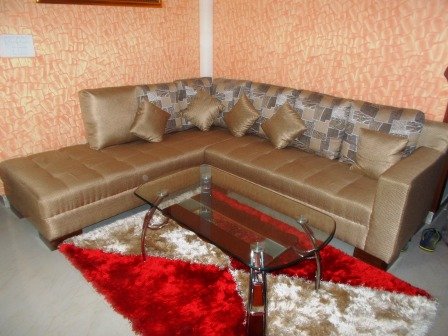
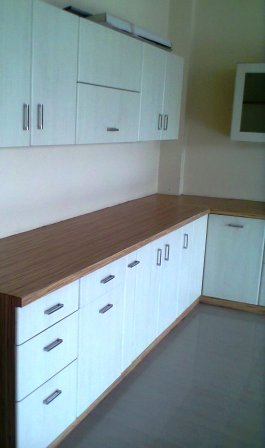
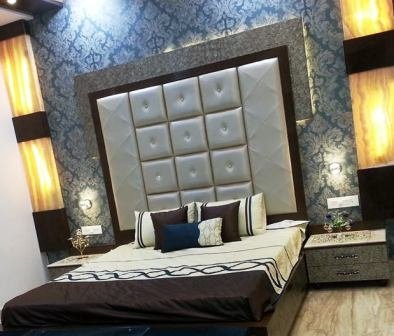
Use these images as general kitchen and home-interior design references when discussing layout, finishes and colour coordination. They should not be treated as proof of a particular construction method or material specification.
Frequently Asked Questions
Which is better: modular kitchen or carpenter-made kitchen?
A modular kitchen may be better if you prioritise factory-made components, consistent finishing and quicker installation. A carpenter-made kitchen may suit unusual layouts, special dimensions and direct control over materials. Compare the complete specifications before deciding.
Is a modular kitchen more expensive than a carpenter-made kitchen?
It can have a higher initial quotation, especially with branded hardware and premium finishes. However, a carpenter-made kitchen using the same board grade, finish and hardware may have a similar final cost. Request itemised quotations for a fair comparison.
Which kitchen lasts longer?
Neither construction method has a guaranteed lifespan. Durability depends on board quality, moisture protection, hardware, edge treatment, installation and maintenance. A properly specified carpenter-made kitchen can perform well, just as a well-built modular kitchen can.
Can a carpenter make a kitchen as good as a modular kitchen?
Yes. An experienced carpenter using quality boards, accurate drawings, suitable hardware and proper edge finishing can produce an excellent kitchen. The result depends on workmanship, supervision and material specifications.
Which kitchen is better for a small flat in Greater Noida West?
Both can work in a compact apartment. Modular units may help organise storage and reduce on-site fabrication. Carpenter-made cabinets can be useful where exact dimensions or unusual corners need custom solutions.
Can I combine modular and carpenter-made kitchen work?
Yes. A hybrid kitchen can combine modular cabinets and hardware with custom-built units for unusual spaces, lofts or utility areas. Use coordinated drawings and define installation and warranty responsibilities in writing.
Which is easier to repair: modular or carpenter-made kitchen?
Modular units may be easier to replace individually if compatible parts are available. Carpenter-made cabinets may require a carpenter to reproduce the original dimensions and finish. In either case, access to matching materials and hardware matters.
How long does modular kitchen installation take?
On-site assembly can be relatively quick once manufacturing, delivery and site preparation are complete. The total project timeline also includes measurement, design approval, production, countertop work and service connections.
How long does a carpenter-made kitchen take?
It depends on the layout, number of cabinets, workforce and finishing requirements. On-site fabrication and finishing generally take longer than assembling pre-manufactured units, but the contractor should provide a project-specific schedule.
Which material is best for a kitchen cabinet near the sink?
Ask for a board with appropriate moisture resistance, suitable for the intended cabinet application, together with properly sealed edges and joints. The exact product grade and installation details matter. No ordinary board should be assumed waterproof.
Are modular kitchens suitable for rented apartments?
They can be suitable, particularly if the installation is planned for the expected period of use. Some modules may be dismantled and relocated, but reuse depends on dimensions, condition and the new kitchen layout. Check the rental agreement before making permanent changes.
What should I check before paying a kitchen advance?
Review the approved drawings, exact materials, hardware list, finish samples, itemised quotation, exclusions, delivery schedule, payment milestones and written warranty. Avoid making a large payment against an incomplete verbal scope.
Final Verdict: Modular or Carpenter-Made Kitchen?
For many modern apartments in Greater Noida West, a modular kitchen is a practical choice when the layout is straightforward and the homeowner wants organised storage, factory-produced components and faster on-site installation.
A carpenter-made kitchen can be equally worth considering when custom dimensions, unusual spaces, direct material selection or a controlled budget are important. A hybrid kitchen can offer a balance between the two approaches.
The best decision is the one supported by accurate measurements, suitable materials, reliable hardware, clear drawings and a written installation agreement. Compare the actual specifications rather than choosing only by the label or the lowest price.
Related Interior Design Guides
Planning a Kitchen in Greater Noida West?
Discuss your kitchen layout, materials, storage requirements and budget before deciding between a modular, carpenter-made or hybrid kitchen.