Beautiful kitchens are planned from the inside out.
A modular kitchen should make cooking easier, storage smarter and the entire home feel more considered. Interior A to Z plans layouts, cabinetry, materials, lighting, appliances and execution as one connected design.
A kitchen should work beautifully before it looks beautiful.
The strongest modular kitchen interiors begin with accurate measurements, cooking habits, available space, ventilation, appliances, storage and budget—not cabinet colours alone.
Whether the property is an apartment in Noida, a family home in Delhi or a premium residence in Gurgaon, the kitchen can be planned around the actual room and the people who use it.
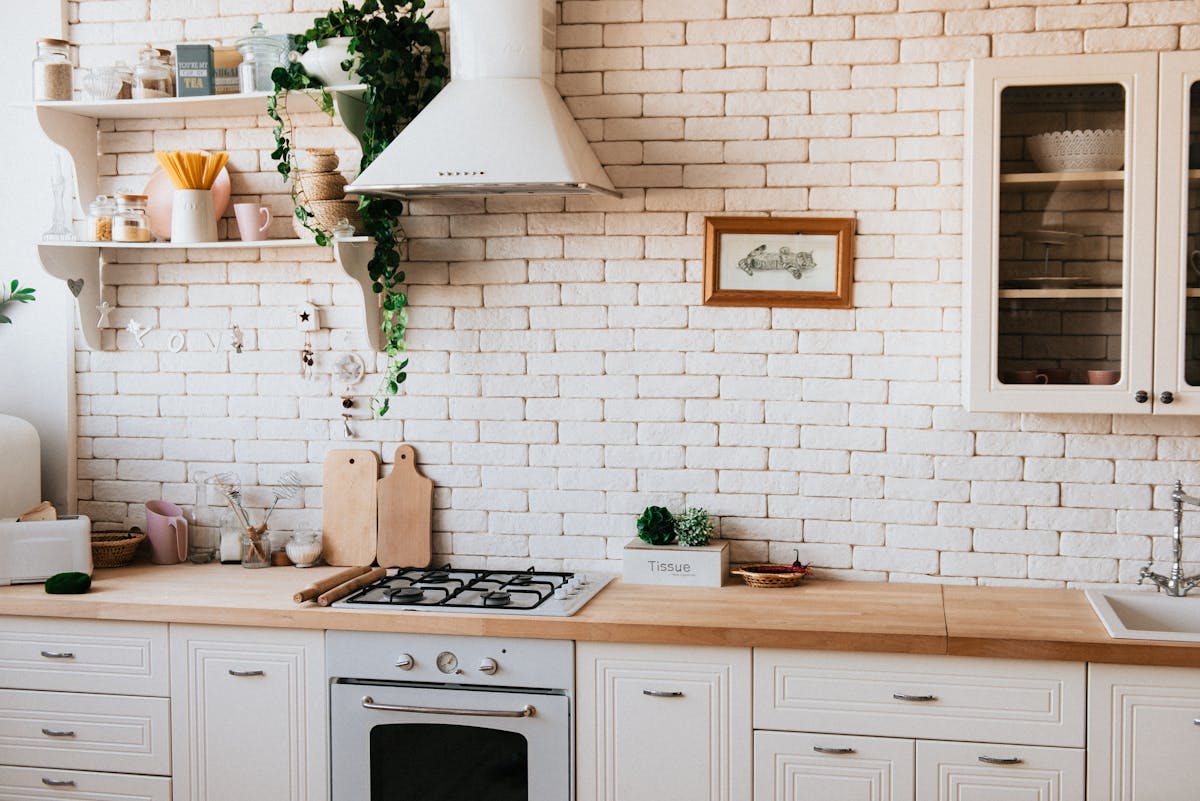
The right layout is the beginning of good kitchen design.
Straight
Efficient for compact kitchens and open-plan homes. A single run can be organized with tall storage and integrated appliances.
L-Shaped
A flexible two-wall arrangement with useful work zones and good circulation for many apartment and family kitchens.
U-Shaped
Excellent for larger kitchens where generous cabinetry and worktop area are more valuable than open floor area.
Parallel
Two opposing runs can create a highly efficient workflow in narrow rooms when doors, drawers and movement are coordinated.
Island
An island can add preparation space, storage and informal seating when the room provides comfortable circulation around it.
Peninsula
A practical alternative to a full island, adding worktop or seating while using less floor space.
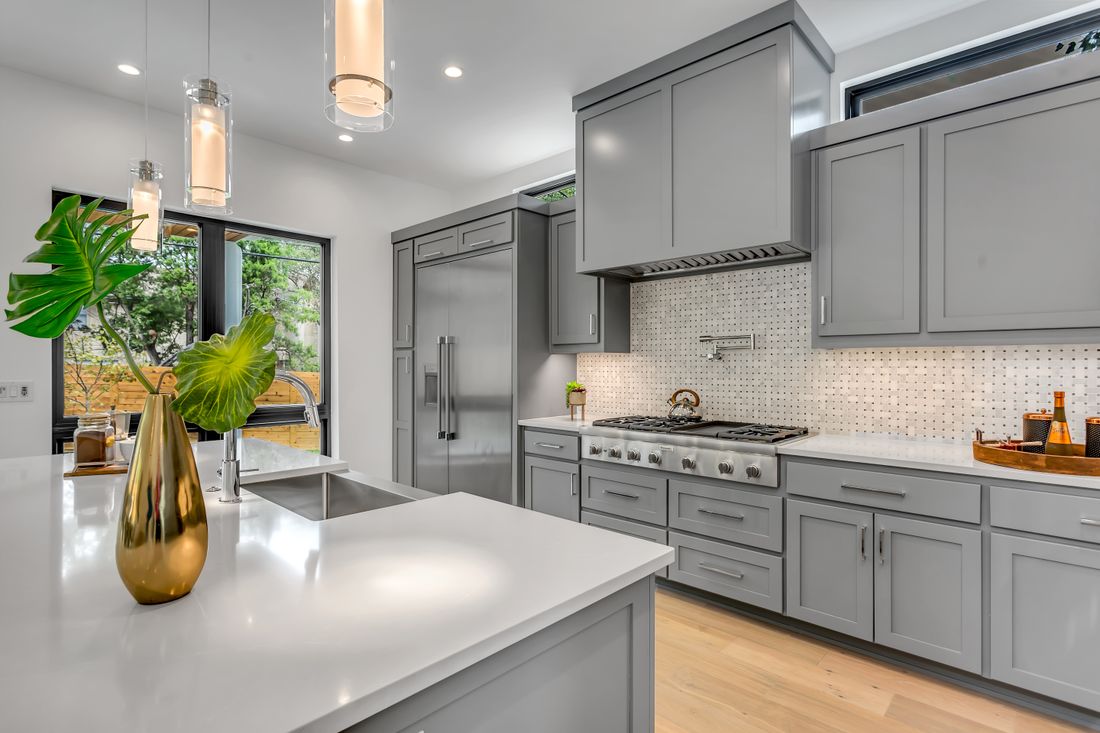
Storage should follow your routine.
Good modular kitchen interiors organize storage according to what you keep, how often you use it and where it belongs in the cooking workflow.
- Base, wall and full-height units
- Tall pantry storage
- Corner solutions and pull-outs
- Deep drawers for cookware
- Cutlery and tray organizers
- Bottle and spice pull-outs
- Under-sink and waste storage
- Appliance and utility storage
Choose materials for the life of the kitchen, not only the photograph.
Material selection affects appearance, durability, maintenance and project cost. Compare the actual board grade, thickness, moisture protection, edge sealing, hardware and workmanship rather than relying only on a material label.
Every detail needs to work with every other detail.
Workflow
Organize refrigerator, sink, preparation, hob and serving zones around the way the kitchen is used.
Cabinetry
Coordinate base units, wall units, tall units, drawers and internal storage accessories.
Appliances
Confirm dimensions, brands, installation, ventilation and electrical requirements before fabrication.
Lighting
Layer ambient and task lighting, including practical illumination below wall cabinets where needed.
Services
Coordinate plumbing, electrical loads, ventilation and utility requirements early in the design.
Maintenance
Choose finishes, hardware and storage details that suit cleaning, moisture, cooking intensity and long-term use.
Budget follows the specification.
Modular kitchen pricing varies with size, layout, carcass construction, shutter finish, hardware, countertop, accessories, appliances and installation. Current Interior A to Z material also stresses keeping separate allowances for cabinets, countertops, appliances, hardware, lighting and associated work.
A clear process protects the design.
Resolve measurements, workflow, materials and services before manufacturing so the finished kitchen is a result of decisions—not last-minute compromises.
Measure + understand
Review room dimensions, openings, services, appliances, cooking habits and storage needs.
Develop the layout
Test cabinet configurations and work zones for practical movement and efficient storage.
2D + 3D design
Visualize cabinets, colours, finishes, lighting and the overall kitchen composition.
Material + BOQ
Document boards, shutters, hardware, countertop, accessories, quantities and project scope.
Manufacture + install
Produce approved modular components and coordinate installation and associated site work.
Check + handover
Review alignment, finish, hardware, functionality and final detailing before completion.
One kitchen concept. Different homes, different solutions.
Interior A to Z positions modular kitchen design across Delhi, Gurgaon, Noida and wider Delhi NCR. The planning approach can be adapted to compact apartments, builder floors, villas and independent homes.
Modular Kitchen Design in Delhi
A location-focused kitchen page for Delhi homes, with layout, storage and execution guidance.
Explore →Modular Kitchen Design
Explore the broader modular kitchen design approach and popular layout ideas.
Explore →Home Designing with Modular Kitchens
Connect kitchen planning with workflow, storage, services, lighting and the rest of the home.
Read Guide →Questions to answer before fabrication.
What is modular kitchen interior design?
It is the coordinated planning of kitchen layout, cabinets, storage, appliances, countertop, finishes, lighting and installation so the kitchen works as one complete system.
Is plywood better than HDHMR?
Both can be suitable in different applications. Compare the exact grade, thickness, moisture protection, edge sealing, hardware, workmanship, warranty and intended use rather than relying only on the material name.
Can an island fit in a small kitchen?
Sometimes, but circulation, seating, appliance-door clearances, work zones, electrical or plumbing requirements and actual room dimensions should be checked first. A peninsula or compact movable unit may be more practical.
Should appliances be included in a modular kitchen quotation?
They can be included or supplied separately. Confirm dimensions, brands, installation, warranty, ventilation, electrical requirements and service responsibilities in writing.
How long does a modular kitchen last?
Service life depends on construction, material, hardware, moisture exposure, installation, maintenance and use. Durable specifications and repairable components can improve long-term value.
How should I compare modular kitchen quotations?
Compare cabinet quantities and dimensions, carcass and shutter specifications, hardware, countertop, accessories, appliances, installation, GST and exclusions. The lowest headline number may not represent the lowest complete project cost.
Bring your kitchen plan. We’ll help make it work.
Share your kitchen size, location, preferred style, appliance list and approximate budget. Begin with the layout and specification—not just the finish colour.