How to Choose an Interior Designer in Gurugram: 12 Expert Tips
Choosing an interior designer in Gurugram is an important decision because the right professional can help you plan your space, select suitable materials, coordinate execution and avoid costly design mistakes. Before hiring anyone, compare completed projects, design experience, communication, quotations, project management and written contract terms.
Whether you are designing a 2BHK apartment, a 3BHK flat, a builder floor, an independent house or a luxury villa, your interior designer should understand your lifestyle, property layout and budget. A beautiful portfolio is useful, but it should be supported by practical planning, transparent pricing and reliable execution.

1. Understand Your Interior Design Requirements First
Before contacting an interior designer, decide what you want to achieve. A clear project brief helps designers understand your expectations and prepare comparable proposals.
Prepare these details before your first meeting
- Property type: apartment, builder floor, villa or independent house.
- Property size and available floor plan.
- Number of bedrooms and bathrooms.
- Rooms and areas that require interior work.
- Preferred design style and reference images.
- Storage, furniture and work-from-home requirements.
- Kitchen and wardrobe requirements.
- Whether civil, electrical or plumbing work is needed.
- Your approximate budget and preferred completion date.
- Whether you need design-only or complete turnkey execution.
For example, a family moving into a new apartment in Gurugram may need a modular kitchen, wardrobes, TV unit, lighting and painting. An older builder floor may also need flooring, plumbing, electrical upgrades and renovation. These are different project scopes and should not be compared using the same generic quotation.
2. Check the Interior Designer’s Portfolio and Completed Projects
A portfolio helps you understand the designer’s style, technical detailing and experience. However, do not make a decision based only on attractive photographs or social media posts.
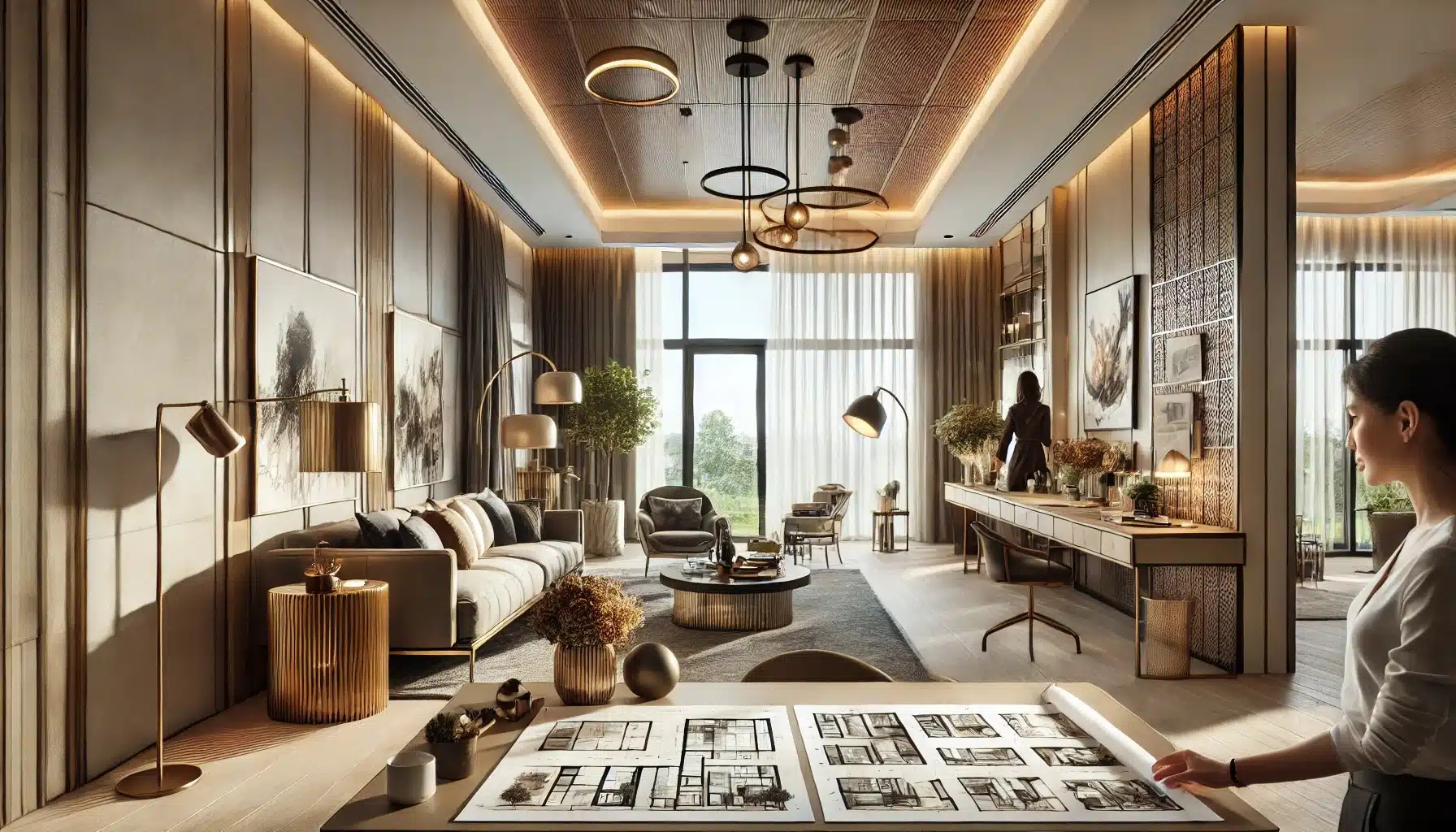
What to examine in a portfolio
- Completed homes similar to your property type.
- 2BHK and 3BHK apartment projects, if relevant.
- Builder-floor or villa projects for larger homes.
- Kitchen and wardrobe detailing.
- Storage planning and furniture proportions.
- Lighting, ceiling and wall-finish quality.
- Material combinations and finishing details.
- Before-and-after photographs for renovation work.
- Real site photographs, not only 3D visualisations.
Ask the designer to identify which photographs show completed projects and which are concept renders. If possible, visit a completed project or an ongoing site to understand actual workmanship.
3. Look for Experience with Your Property Type
Interior design requirements differ between compact apartments, large builder floors and independent houses. A designer should demonstrate experience relevant to the type of property you own.
2BHK and 3BHK Apartments
Look for efficient layouts, modular kitchens, wardrobe planning, compact storage, lighting and practical furniture arrangements.
Builder Floors
Check experience with customised furniture, larger rooms, multiple floors, service coordination and existing-condition renovation.
Independent Houses and Villas
Look for expertise in bespoke furniture, larger spaces, staircases, multiple kitchens, premium finishes and detailed coordination.
Renovation Projects
Check whether the designer can assess existing flooring, electrical systems, plumbing, walls, ceilings and old furniture before redesigning.
Ask for examples that match your property’s size, scope and expected investment. Experience with a luxury villa does not automatically demonstrate expertise in compact apartment planning, and vice versa.
4. Check Local Experience in Gurugram and Delhi NCR
Local project experience can help an interior designer understand the practical requirements of residential properties in Gurugram. Different societies and buildings may have different access rules, work timings, material-entry procedures and renovation permissions.
Local factors worth discussing
- Society or RWA rules for renovation and contractor entry.
- Permitted working hours and noise restrictions.
- Lift access and movement of large furniture.
- Material delivery and debris disposal arrangements.
- Existing plumbing and electrical conditions.
- Site supervision and travel arrangements.
- Coordination with building management where required.
If your property is in Golf Course Road, Sohna Road, Dwarka Expressway, New Gurgaon or another part of Gurugram, ask whether the designer has managed projects with similar site conditions.
For projects in Gurgaon, Noida and Delhi NCR, also confirm how frequently the team can visit the property and who will handle day-to-day coordination.
5. Understand the Designer’s Process and Deliverables
A professional design process should explain how your project moves from the first consultation to approved drawings and final execution. Ask what you will receive at each stage.
Common interior design deliverables
- Initial consultation and requirement brief.
- Site measurement and condition assessment.
- Furniture layout and space planning.
- 2D floor plans and furniture layouts.
- 3D views or visualisations for agreed rooms.
- Kitchen and wardrobe elevations.
- Electrical and lighting layouts.
- False ceiling and wall-finish drawings.
- Material and colour selection.
- Detailed working drawings for execution.
- Bill of Quantities or itemised quotation.
- Site supervision or execution coordination, if included.
Confirm the number of design revisions, the rooms covered by 3D views and whether working drawings are included. Do not assume that a presentation render is sufficient for manufacturing or installation.
6. Evaluate Material Knowledge and Specifications
Material selection affects durability, maintenance, appearance and project cost. Your interior designer should explain why a material is suitable for a particular application rather than relying on general descriptions such as premium or luxury quality.
Materials to discuss
- Carcass materials: Plywood, MDF, HDHMR or particle board, selected according to use and conditions.
- Shutter finishes: Laminate, acrylic, veneer, PU paint or other specified finishes.
- Hardware: Hinges, drawer channels, handles and storage accessories.
- Kitchen countertops: Granite, quartz or other suitable surfaces.
- Flooring: Tiles, engineered wood, laminate or other selected materials.
- Wall finishes: Paint, wallpaper, texture and panelling.
- Lighting: Fixtures, colour temperature and appropriate lighting layouts.
Ask for material brands, product ranges, thicknesses, finishes and hardware specifications in writing. For moisture-prone areas, ask how the designer plans to protect exposed edges, joints and cabinet interiors.
7. Compare Design Fees and Project Quotations Carefully
Interior designers may use different fee structures. Some charge for design services separately, while others provide a combined design-and-execution quotation.
Common fee structures
| Fee Structure | How It Works | What to Confirm |
|---|---|---|
| Fixed design fee | A pre-agreed amount for specified design services. | Drawings, 3D views, revisions and supervision inclusions. |
| Per-square-foot fee | Fee calculated using an agreed area measurement. | Carpet area or another area basis and included deliverables. |
| Percentage-based fee | Fee calculated as a percentage of an agreed project value. | Which project costs are included in the calculation. |
| Turnkey quotation | Combined design, procurement and execution pricing. | BOQ, materials, labour, taxes, exclusions and variation rates. |
There is no single fee that applies to every interior design project in Gurugram. The amount depends on the property, design complexity, services, materials, customisation and execution responsibility.
How to compare quotations
- Give shortlisted designers the same project brief.
- Compare identical rooms and furniture requirements.
- Check material specifications and product brands.
- Compare quantities, dimensions and installation details.
- Identify civil, electrical and plumbing inclusions.
- Check whether appliances and loose furniture are included.
- Review taxes, transport and other charges.
- Check exclusions and rates for additional work.
The lowest quotation may not represent the best value if it excludes important work or uses different specifications. Compare what is being delivered, not just the final number.
8. Check Site Supervision and Execution Capability
Good design needs accurate execution. If the designer is also managing the site, understand who will coordinate the contractors and how quality will be monitored.
Ask these execution questions
- Who will be the main point of contact?
- Who prepares and checks working drawings?
- Who supervises carpentry and furniture installation?
- Who coordinates electricians and plumbers?
- How frequently will the site be visited?
- How will progress updates be shared?
- Who approves material substitutions?
- How are workmanship issues recorded and corrected?
If you are hiring a design-only professional, confirm that you or your appointed contractor will be responsible for procurement and execution. If you want end-to-end delivery, understand exactly what the turnkey team will manage.
9. Ask for a Realistic Project Timeline
A clear schedule helps you plan possession, shifting, furniture delivery and other arrangements. Ask for a phase-wise timeline instead of relying on a single verbal completion date.
A typical project sequence
- Consultation and site measurement.
- Requirement planning and concept design.
- Layout and 3D design development.
- Drawing and material approvals.
- Procurement and furniture manufacturing.
- Civil, electrical and plumbing work, if included.
- Furniture installation and finishing.
- Final inspection and snag correction.
- Handover and documentation.
Ask which activities can happen simultaneously and which depend on earlier approvals. The timeline should account for material lead times, society permissions, site readiness and client decision-making.
For more detail, read the related guide: How Long Does Home Interior Work Take in Gurugram?
10. Speak to Previous Clients and Verify References
Previous clients can provide useful information about communication, workmanship, budget management and post-handover support. Ask for references from projects that are similar to yours.
Questions to ask previous clients
- Was the final work consistent with the approved design?
- Was the project completed within the agreed timeline?
- Were material specifications followed?
- Were additional costs explained before work started?
- Was the designer available during execution?
- How were delays or changes handled?
- Were defects corrected after handover?
- Would you hire the same designer again?
Where possible, visit a completed or ongoing project. A site visit can reveal workmanship, storage details, material finishes and installation quality that may not be visible in professional photographs.
11. Read the Interior Design Contract Before Signing
A written agreement protects both the homeowner and the designer by recording responsibilities, deliverables, payments and project conditions. Avoid relying on verbal promises for important parts of the work.
What the agreement should include
- Names of the parties and project property details.
- Complete scope of work.
- Design drawings and deliverables.
- Number of included revisions.
- Material specifications and approved brands.
- Detailed quotation or BOQ.
- Design and execution fees.
- Applicable taxes and payment milestones.
- Project schedule and approval responsibilities.
- Exclusions and client-supplied items.
- Procedure for additional work and design changes.
- Site supervision responsibilities.
- Warranty and post-handover support.
- Delay, cancellation and dispute-resolution terms.
Payments should be linked to clearly defined deliverables or progress milestones. Understand what each payment covers and what happens if the scope changes.
12. Identify Warning Signs Before Hiring
A designer’s approach to questions, documentation and project planning can reveal whether the working relationship is likely to be clear and manageable.
| Warning Sign | What to Do |
|---|---|
| Only renders are shown, with no completed project examples. | Ask for real photographs, references and a site visit. |
| Quotation contains vague descriptions such as premium materials. | Request brands, grades, dimensions and specifications. |
| No written scope or BOQ is provided. | Ask for itemised documentation before committing. |
| Large payment is demanded without clear milestones. | Ask for a stage-wise payment schedule and deliverables. |
| Site supervision responsibilities are unclear. | Confirm who visits the site and who manages contractors. |
| Additional work is discussed only verbally. | Require written cost and time approval before changes. |
| You are pressured to sign immediately. | Take time to compare proposals and review the agreement. |
| Warranty and post-handover support are unclear. | Ask for written coverage and a defect-reporting process. |
13. Freelance Interior Designer vs Turnkey Interior Design Company
The right service model depends on how much responsibility you want to manage yourself. A freelance designer may provide drawings and design guidance, while a turnkey company may coordinate procurement and the agreed execution work.
| Consideration | Freelance Designer | Turnkey Company |
|---|---|---|
| Design consultation | Usually available as part of the design service. | Usually included in the design process. |
| Drawings and layouts | Depends on the agreed deliverables. | Depends on the package and contract. |
| Material procurement | May be managed by the homeowner. | May be coordinated by the company. |
| Site execution | May be separate or coordinated for an additional fee. | Usually part of the agreed turnkey scope. |
| Project coordination | Depends on supervision arrangements. | Generally provided for contracted work. |
| Cost transparency | Design and contractor costs may be separate. | Requires a detailed BOQ to understand bundled costs. |
Neither model is automatically better. Choose the one that matches your budget, project complexity and willingness to coordinate vendors. Review the actual deliverables and responsibilities rather than relying on labels.
14. Do You Need an Interior Designer or an Architect?
Interior designers generally focus on the planning and design of interior spaces, including furniture, storage, lighting, finishes and interior execution. Architects provide architectural services relating to buildings and are subject to registration requirements under the Architects Act, 1972.
The Council of Architecture states that only a person registered with the Council can use the title and style of architect in India. If your project involves structural changes, building plans or statutory approvals, consult an appropriately registered architect and relevant qualified professionals. Check the Council of Architecture’s official information.
Choose the right professional for the work
- Interior designer: Furniture planning, space utilisation, finishes, lighting and interior design.
- Architect: Architectural design and services requiring professional architectural expertise.
- Structural engineer: Assessment and design of structural elements and proposed structural changes.
- Specialist contractor: Specific electrical, plumbing, waterproofing or other technical work.
For a typical home interior project, an interior designer may be the main design professional. For work affecting the building structure or requiring statutory building approvals, involve the appropriate qualified professionals.
15. Final Checklist Before Choosing an Interior Designer in Gurugram
Use this checklist to evaluate shortlisted designers:
- My property type and project scope have been discussed.
- I have reviewed completed projects similar to mine.
- I understand the designer’s experience and team structure.
- I have seen real project photographs or visited a site.
- The design process and deliverables are documented.
- 2D drawings, 3D views and revisions are clearly defined.
- Material specifications and brands are listed.
- The quotation includes quantities and item descriptions.
- Inclusions and exclusions are clearly stated.
- Site supervision responsibilities are confirmed.
- The project timeline is realistic.
- Previous client references have been checked.
- Payment milestones are documented.
- Changes and additional work require written approval.
- Warranty and post-handover terms are clear.
- The agreement has been reviewed before signing.
16. Related Interior Design Guides for Gurugram
Explore these related Interior A to Z resources to understand design services, project costs, turnkey execution and planning before starting your home interior project.
- How to Choose an Interior Designer in Gurgaon
- What Is Included in Turnkey Interior Design in Gurugram?
- Home Interior Design Cost in Gurgaon
- Interior Design Cost in Gurgaon
- Home Renovation Cost in Gurgaon
- Interior Design Payment Schedule
- How Long Does Home Interior Work Take in Gurugram?
- Interior A to Z – Home Interior Design
Frequently Asked Questions About Choosing an Interior Designer in Gurugram
1. How do I choose an interior designer in Gurugram?
Review completed projects similar to your property, check relevant experience, understand the design process, compare itemised quotations, verify material specifications, confirm site supervision and timelines, speak to previous clients and sign a written agreement covering scope, fees, exclusions and warranties.
2. What should I check in an interior designer’s portfolio?
Look for completed projects similar in size, property type, design style and budget. Ask to distinguish real project photographs from 3D renders, inspect furniture details and finishes, and request references or a site visit where possible.
3. How many interior designers should I compare before hiring?
Shortlisting and comparing two or three suitable designers is a practical approach. Give each the same project brief and compare their design deliverables, material specifications, fees, execution responsibilities, timelines and contract terms.
4. What questions should I ask an interior designer before hiring?
Ask about similar completed projects, who will design and supervise the work, what drawings and revisions are included, material brands and grades, the detailed BOQ, site visits, project timeline, payment milestones, exclusions, change-order costs and warranty terms.
5. Should I hire a freelance interior designer or a turnkey interior design company?
A freelance designer may suit projects where the homeowner can manage contractors or needs design-only services. A turnkey company may suit homeowners who prefer one team to coordinate design, procurement and the agreed execution work. Compare the actual responsibilities and contract scope rather than the business label.
6. How do interior designers charge in Gurugram?
Interior designers may charge a fixed design fee, a per-square-foot design fee, a percentage of project cost or through a combined design-and-execution quotation. The fee depends on project size, deliverables, site supervision, customisation and scope. Request a written fee breakdown.
7. What should an interior design contract include?
The agreement should identify the parties and property, project scope, drawings and deliverables, material specifications, fees, taxes, payment milestones, timeline, revision limits, exclusions, variation procedure, site supervision, warranties and handover responsibilities.
8. How can I verify an interior designer’s previous work?
Ask for completed project photographs, references from previous clients and permission to visit a finished or ongoing site where practical. Discuss budget changes, communication, timeline performance, workmanship and post-handover support with references.
9. Do I need a registered architect for home interior design?
A registered architect is not automatically required for every interior design project. However, architectural services and the use of the title architect are regulated under the Architects Act, 1972. For structural changes, building plans or statutory approvals, consult an appropriately registered architect and relevant qualified professionals.
10. What are warning signs when hiring an interior designer?
Warning signs include refusing to provide a written scope, showing only unverified portfolio images, giving vague material descriptions, demanding substantial payment without clear milestones, avoiding questions about site supervision, pressuring you to sign immediately and not documenting exclusions or design changes.
Conclusion: Choose an Interior Designer Based on Experience, Clarity and Execution
Choosing an interior designer in Gurugram requires more than comparing attractive designs or selecting the lowest quotation. The right professional should understand your property, lifestyle, budget and practical requirements while providing a clear design process and realistic execution plan.
Review completed projects, verify references, compare material specifications, understand the fee structure and check site supervision arrangements. Most importantly, record the scope, deliverables, payment milestones, exclusions, timeline and warranty terms in a written agreement.
Whether you are planning a 2BHK apartment, 3BHK flat, builder floor or independent house in Gurugram, Gurgaon, Noida or Delhi NCR, a careful selection process can help you make a more informed decision and manage your interior project with greater clarity.
Planning Your Home Interior Design in Gurugram?
Explore home interior design ideas, project planning resources and practical guidance for residential interiors across Gurugram and Delhi NCR.
Visit Interior A to Z to explore interior design and renovation resources.
Note: This article provides general guidance for evaluating interior design professionals. Qualifications, services, fees and project responsibilities vary. Verify credentials and references independently, and review the written agreement before making payments or authorising work.