What Affects Interior Design Cost in Gurugram? 12 Key Factors to Know
Understanding what affects interior design cost in Gurugram helps homeowners make informed decisions before starting a home makeover. The final budget is influenced by much more than the size of an apartment. Material quality, furniture specifications, modular kitchens, wardrobes, lighting, labour, customisation and site conditions all play an important role.
Quick Answer: What Affects Interior Design Cost in Gurugram?
Interior design cost in Gurugram mainly depends on the home’s usable area, number of rooms, work scope, material specifications, modular kitchen, wardrobes, furniture, lighting, civil modifications, labour and installation. A project with basic finishes and essential storage will generally require a different budget from a fully customised luxury interior with premium finishes.
The most reliable way to estimate the cost is to prepare an itemised requirement list, finalise material specifications and obtain a quotation based on the actual property.
Why Do Interior Design Costs Differ from One Home to Another?
Two apartments with the same number of bedrooms can have very different interior design budgets. One homeowner may need only a modular kitchen, wardrobes and essential lighting. Another may want custom furniture, decorative wall panelling, a complete false ceiling, premium flooring and extensive electrical changes.
This is why a BHK-based estimate should be treated as an initial planning reference rather than a final quotation. The actual work requirement, measurements and material choices determine the investment.
Homeowners planning interiors in Gurugram, Gurgaon, Noida and other parts of Delhi NCR should compare quotations using the same specifications. A lower total price may simply exclude work that another quotation already includes.
1. Home Size, Carpet Area and Layout
The size of the property is one of the first factors affecting interior design cost in Gurugram. A larger home usually requires more flooring, paint, furniture, storage, lighting points and installation work.
However, carpet area alone does not tell the complete story. The number of rooms, wall lengths, ceiling height, room shape and existing layout also influence the amount of work required.
What increases the cost?
- More bedrooms requiring wardrobes, beds and storage units.
- Large living and dining areas requiring additional furniture.
- Long passages, foyers and unused corners needing customised solutions.
- High ceilings requiring additional finishing or access arrangements.
- Irregular room layouts that need made-to-measure furniture.
For example, a compact 3BHK with minimal built-in storage may require less carpentry than a smaller apartment with full-height wardrobes, extensive kitchen cabinetry and multiple custom storage units.
2. Scope of Interior Work
The scope of work is one of the biggest factors influencing the overall project budget. A partial interior project and a complete turnkey project should never be compared as if they include the same services.
Common interior work categories
- Modular kitchen and kitchen accessories.
- Bedroom wardrobes, beds and bedside units.
- Living room TV units and wall treatments.
- False ceiling and lighting installation.
- Painting, wallpaper and decorative finishes.
- Flooring, bathroom and plumbing modifications.
- Custom furniture, curtains and soft furnishings.
- Electrical upgrades and smart-home provisions.
A homeowner who selects only essential carpentry can keep the project simpler. Adding every room, decorative feature and renovation activity increases the number of materials, trades and installation stages.
3. Material Quality and Surface Finishes
Material selection has a direct effect on interior design cost in Gurugram. Two wardrobes with identical dimensions can have different prices depending on the board, laminate, shutter finish, edge banding and hardware used.
Common material choices
- Laminate: A practical surface finish available in many colours, textures and price categories.
- MDF: Often used for selected furniture and decorative applications, depending on moisture exposure and product specification.
- BWR or BWP plywood: Common choices for applications where moisture resistance is an important consideration.
- Veneer: Offers a natural wood appearance and may require additional polishing and maintenance.
- Acrylic: Provides a smooth, reflective finish, commonly selected for modern kitchens and cabinetry.
- PU finish: Allows a refined painted appearance and can involve more detailed preparation and finishing.
- Glass and metal: Used for selected shutters, partitions, decorative features and furniture details.
The correct material depends on the location of use, expected durability, moisture exposure, maintenance preferences and design requirements. A premium finish is not automatically necessary for every cabinet.
4. Modular Kitchen Design and Specifications
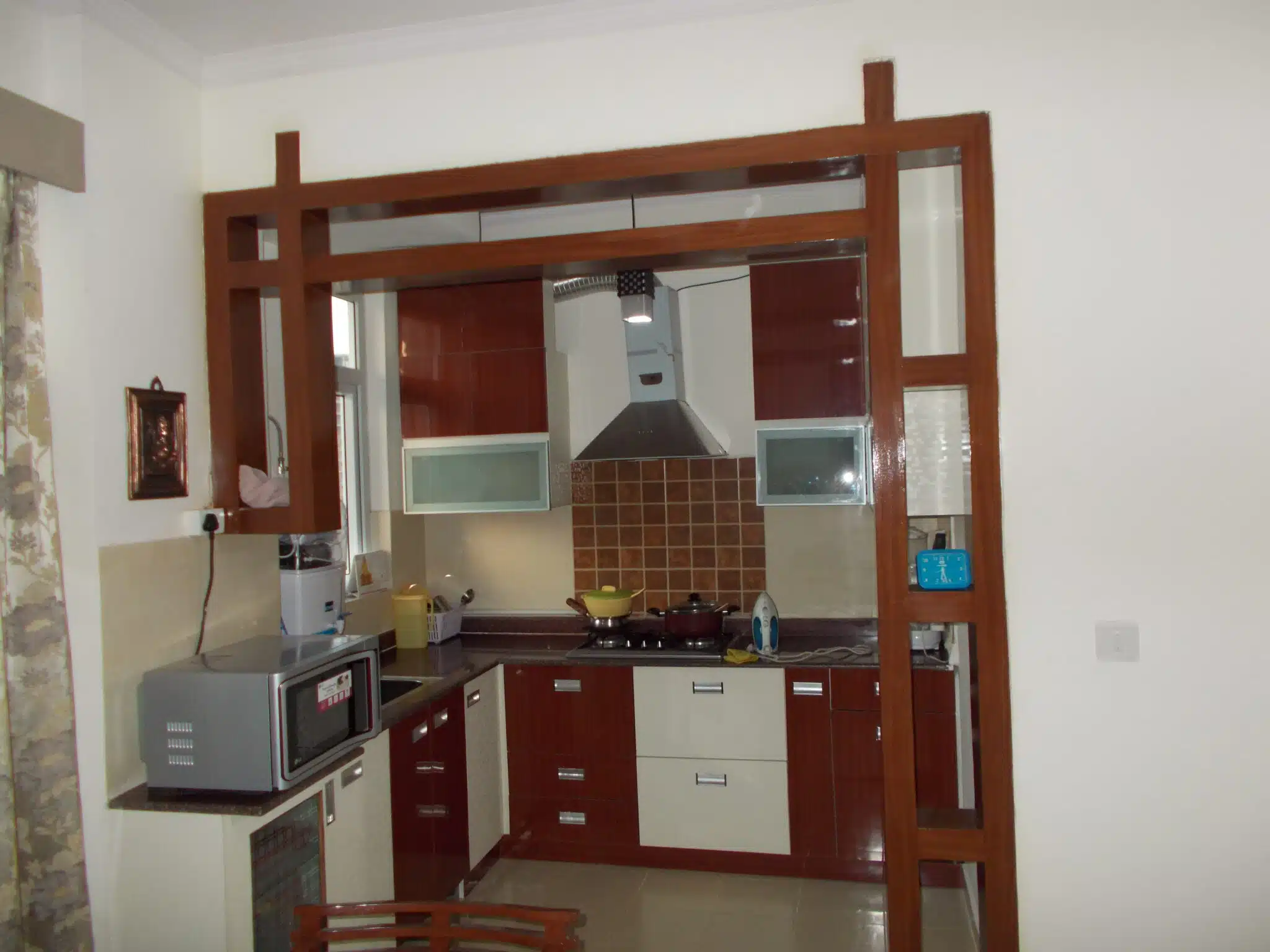
The kitchen is often a significant part of a residential interior budget because it combines cabinetry, shutters, countertops, hardware, accessories, appliances and plumbing or electrical provisions.
Kitchen features that influence the cost
- Kitchen size and straight, L-shaped, U-shaped or parallel layout.
- Base cabinets, wall cabinets and tall storage units.
- Board grade and internal cabinet construction.
- Laminate, acrylic, membrane, veneer or PU shutter finishes.
- Drawer channels, hinges and soft-close mechanisms.
- Pull-out baskets, corner units and pantry accessories.
- Countertop material, backsplash and sink selection.
- Chimney, hob and built-in appliance requirements.
A simple kitchen with standard storage and laminate shutters will have different specifications from a premium kitchen with tall units, specialised accessories and upgraded finishes.
Before finalising a kitchen quotation, ask for the cabinet dimensions, internal material, shutter finish, hardware brand, accessories and appliance exclusions in writing.
5. Wardrobes and Storage Requirements
Wardrobes, lofts, shoe cabinets, crockery units and other storage furniture contribute significantly to the overall cost. The budget depends on how much storage is required and how each unit is designed.
Wardrobe cost considerations
- Number of wardrobes and their total dimensions.
- Hinged, sliding or specialised shutter systems.
- Internal drawers, shelves, hanging sections and organisers.
- Mirror, glass, laminate, veneer or other shutter finishes.
- Loft storage and ceiling-height cabinetry.
- Accessories such as trouser racks and pull-down hangers.
Full-height wardrobes can use available vertical space efficiently, but they require careful measurement and suitable internal planning. A simple internal layout may be more economical than adding numerous specialised accessories.
6. Custom Furniture Versus Ready-Made Furniture
Furniture selection affects both the design and the final project cost. Ready-made furniture can be suitable for standard requirements, while customised furniture is useful when the room has unusual dimensions or needs a specific storage arrangement.
| Furniture option | Cost considerations | Suitable application |
|---|---|---|
| Ready-made furniture | Depends on brand, material, dimensions and finish. | Sofas, dining tables, chairs and standard beds. |
| Modular furniture | Depends on standard modules, specifications and installation. | Kitchens, wardrobes and selected storage units. |
| Custom furniture | Depends on design complexity, material, detailing and labour. | Built-in desks, unusual corners and made-to-measure units. |
A balanced approach is often useful: customise permanent storage and built-in furniture while considering ready-made options for movable pieces such as accent chairs, coffee tables and dining furniture.
7. Hardware, Fittings and Accessories
Hardware may appear to be a small detail, but it affects the price, functionality and everyday experience of kitchens and wardrobes.
Examples include:
- Hinges and drawer channels.
- Soft-close systems.
- Lift-up cabinet mechanisms.
- Pull-out pantry baskets.
- Corner storage solutions.
- Handles, profiles and drawer organisers.
Compare hardware by its actual make, model, load capacity and warranty. Do not accept a quotation that simply says “premium hardware” without identifying the product specification.
8. False Ceiling, Lighting and Electrical Design
Lighting is both a functional requirement and an important design element. The cost depends on the number of lighting points, fixture selection, wiring changes, ceiling design and installation complexity.
Lighting and ceiling elements
- Gypsum or POP false ceiling.
- Recessed downlights and spotlights.
- LED strip and cove lighting.
- Decorative pendant lights and chandeliers.
- Wall lights and bedside reading lights.
- Switchboard relocation and additional electrical points.
- Smart switches, dimmers and automation provisions.
A simple ceiling design with selected lighting points may be more economical than a multi-layer ceiling with extensive detailing. Plan electrical points before ceiling installation to avoid unnecessary rework.
9. Civil Work, Plumbing and Electrical Modifications
Renovation projects can involve work beyond furniture and decoration. Existing walls, flooring, plumbing lines and electrical systems may need attention before the new interiors can be installed.
Examples of additional work
- Removing existing cabinets, tiles or wall finishes.
- Repairing plaster and damaged surfaces.
- Changing kitchen or bathroom plumbing points.
- Relocating electrical switches and sockets.
- Replacing flooring or repairing the subfloor.
- Waterproofing and dampness-related repairs.
- Modifying non-structural partitions where permitted.
These activities should be assessed before the execution budget is finalised. Unidentified site issues can create additional work after demolition begins.
10. Labour, Installation and Workmanship
Interior projects require skilled carpenters, electricians, painters, plumbers, ceiling installers and other trades. Labour costs depend on the type of work, project schedule, workmanship requirements and availability of suitable professionals.
Complex joinery, curved furniture, detailed wall panelling and specialised finishes generally require more time and skill than straightforward installations.
What to clarify in the quotation
- Which labour activities are included?
- Are installation and finishing charges separate?
- Who handles site supervision and quality checks?
- Are transportation and material handling included?
- Who is responsible for repairs or installation defects?
Choosing a contractor only because of a low labour quotation can create problems if the scope, supervision and finishing standards are not clearly defined.
11. Location, Society Rules and Site Conditions in Gurugram
The location and physical conditions of a property can influence logistics, working hours and installation planning. Interior projects in Gurugram may involve different requirements depending on the apartment complex, builder floor, independent house or villa.
Location-related cost considerations
- Society permissions and renovation deposits, where applicable.
- Restricted working hours and material movement schedules.
- Lift availability and access for large furniture.
- Parking, loading and unloading arrangements.
- Distance between suppliers, workshop and project site.
- Existing property condition and accessibility.
- Rules relating to noise, debris removal and contractor entry.
A high-rise apartment may require advance lift bookings and scheduled material deliveries. An independent floor may have different access and storage arrangements. These details should be checked during project planning.
Similar considerations apply to homes in Gurgaon, Noida and other Delhi NCR locations. The local market and property rules should be reviewed rather than assuming one standard rate applies everywhere.
12. Interior Designer Fees, Project Management and Timeline
Interior design services can include space planning, concept development, 2D drawings, 3D visualisation, material selection, technical drawings, vendor coordination and site supervision. The fee depends on the services included and the agreed project arrangement.
Common fee structures
- Fixed design fee: A predetermined fee for an agreed list of design deliverables.
- Percentage-based fee: A fee calculated using an agreed percentage of the project value.
- Per-square-foot fee: A rate based on the area covered by the design service.
- Turnkey arrangement: Design and execution responsibilities are combined under an agreed scope.
The project timeline also matters. Urgent execution can require additional coordination, faster procurement or changes to labour scheduling. Late design changes may lead to material wastage, rework and additional expenses.
Ask whether design fees, site visits, drawings, revisions, project management, installation and taxes are included or charged separately.
Which Interior Design Elements Usually Need the Most Budget Attention?
Instead of assuming that every room contributes equally to the cost, divide the project into practical work categories. The following table is a planning checklist, not a fixed percentage allocation.
| Work category | What influences the cost? | Budget planning priority |
|---|---|---|
| Modular kitchen | Cabinet size, board, shutters, hardware, accessories and countertop. | High when a new kitchen is required. |
| Wardrobes and storage | Number of units, dimensions, internal fittings and finish. | High when multiple bedrooms need storage. |
| Furniture | Customisation, upholstery, construction and brand. | Depends on furniture replacement needs. |
| Electrical and lighting | Number of points, wiring, switches and fixtures. | High when the electrical layout changes. |
| False ceiling | Coverage, design layers, ceiling height and lighting details. | Optional depending on design requirements. |
| Painting and wall finishes | Surface condition, paint type, coats and decorative finishes. | Depends on the existing wall condition. |
| Civil and plumbing work | Demolition, repairs, relocation and installation. | Important in renovation projects. |
| Décor and soft furnishings | Curtains, rugs, accessories, artwork and upholstery. | Can be phased after essential work. |
How to Control Interior Design Cost in Gurugram
A well-planned project does not need to compromise on functionality or appearance. The key is to spend on the elements that matter most and avoid unnecessary design changes.
1. Prepare a detailed requirement list
Identify the rooms that need work and list the furniture, storage, lighting and finishes required in each space. This makes it easier to obtain comparable quotations.
2. Prioritise essential spaces
Complete essential kitchen work, wardrobes, electrical requirements and necessary repairs before spending heavily on optional décor.
3. Select materials according to usage
Choose finishes based on durability, cleaning requirements, moisture exposure and appearance. Use premium finishes selectively instead of specifying them for every surface.
4. Avoid unnecessary customisation
Complex curves, decorative panels, unusual shapes and excessive detailing can increase material and labour requirements. Use customised elements where they improve the function or appearance of the space.
5. Compare itemised quotations
Request the same measurements, material grades, hardware specifications, quantities and installation details from each contractor. Compare the scope rather than only the final amount.
6. Plan electrical and plumbing work early
Finalise furniture layouts and appliance positions before beginning electrical and plumbing work. This helps reduce avoidable relocation and rework.
7. Keep a contingency reserve
Consider keeping around 10–15% of the planned execution budget as a provisional reserve, particularly for renovation projects. The appropriate amount depends on the age and condition of the property and the likelihood of concealed issues.
- First, calculate essential work.
- Next, price upgrades and optional design features separately.
- Then, confirm taxes, transportation and installation charges.
- Finally, retain a contingency amount for unforeseen requirements.
Interior Design Quotation Checklist for Gurugram Homeowners
Before signing an agreement, review the quotation carefully. A professional estimate should explain what will be supplied, installed and excluded.
- Is the area measured as carpet area, built-up area or another unit?
- Is the room-wise scope of work clearly mentioned?
- Are plywood or board grades specified?
- Are laminate, acrylic, veneer or PU finishes identified?
- Are hardware brands and product specifications listed?
- Are kitchen appliances included or excluded?
- Are wardrobes and internal accessories itemised?
- Are electrical points, wiring and switches specified?
- Is false ceiling coverage clearly measured?
- Are civil work, plumbing and demolition included?
- Are transportation and installation charges included?
- Are design fees, site visits and revisions explained?
- Are GST and other applicable taxes clearly mentioned?
- Is the payment schedule linked to project milestones?
- Are completion timelines and warranty terms documented?
A detailed bill of quantities (BOQ) makes it easier to understand the proposed investment and identify missing work before execution.
Interior Design Cost Planning for Gurgaon, Noida and Delhi NCR
Homeowners across Delhi NCR should account for the specific characteristics of their property and local project requirements. Gurgaon and Gurugram include apartments, builder floors, villas and independent houses with different layouts and execution needs.
In Noida, apartment configurations, society permissions and access arrangements may affect project planning. In Delhi, older properties may require additional attention to existing electrical systems, plumbing, flooring and repairs.
Regardless of location, the most useful way to understand interior design cost is to compare the same work scope and material specifications. A standardised quotation checklist helps homeowners make a more informed decision.
Related Interior Design Cost Guides
Explore these Interior A to Z resources for more detailed budget planning:
Frequently Asked Questions About Interior Design Cost in Gurugram
1. What affects interior design cost in Gurugram the most?
The biggest factors are home size, project scope, material quality, modular kitchen and wardrobe specifications, custom furniture, hardware, civil work, lighting, labour and installation requirements. The combination of these factors determines the final budget.
2. Does the size of a home determine interior design cost?
Home size affects the quantity of materials, furniture, storage and labour required. However, the final cost also depends on the rooms included, finish quality, existing property condition and level of customisation.
3. Which materials increase interior design costs?
Premium plywood, veneer, acrylic, PU finishes, glass shutters, natural stone and branded hardware can increase costs compared with simpler laminates and standard fittings. Material suitability should also be considered alongside appearance and price.
4. Is modular furniture more affordable than custom furniture?
Modular furniture can offer predictable specifications and factory-based production. Custom furniture may cost more when it involves unusual dimensions, complex detailing or specialised finishes. The best option depends on the design and quotation.
5. How can I control my home interior design budget in Gurugram?
Define the scope before starting, prioritise essential rooms, compare material specifications, limit unnecessary customisation, request an itemised quotation and keep a contingency reserve.
6. Should civil work be included in an interior design quotation?
Civil work should be listed separately or clearly included in the quotation. Demolition, flooring, plumbing changes, wall modifications and waterproofing can affect the final project cost.
7. Do interior design costs vary between Gurugram, Gurgaon and Noida?
Costs can vary according to local labour, transport, vendor availability, property conditions, society rules and the specifications selected. Compare quotations using the same scope and material details.
8. How much contingency should I keep for home interiors?
A contingency reserve of around 10 to 15 percent is a useful planning allowance, particularly when the project includes renovation or work on an existing property. The appropriate reserve depends on site conditions and project uncertainty.
9. Why should I get a site visit before accepting an interior quotation?
A site visit helps assess measurements, existing finishes, electrical and plumbing conditions, access arrangements and society requirements. These details help create a more realistic scope and reduce the risk of unexpected expenses.
10. Is the lowest interior design quotation always the best option?
No. A low quotation may exclude hardware, installation, civil work, transportation or certain materials. Compare specifications, workmanship, payment terms and exclusions before selecting a designer or contractor.
Conclusion: Plan Your Interior Design Budget with Clarity
Understanding what affects interior design cost in Gurugram makes it easier to plan a home that meets your functional requirements and design preferences. Home size, work scope, materials, kitchen specifications, wardrobes, furniture, lighting, labour and site conditions all contribute to the final investment.
The best starting point is a clear requirement list, accurate measurements and an itemised quotation. Compare materials and services carefully, prioritise essential work and keep a reserve for unexpected requirements.
Whether you are planning a compact apartment, a builder floor, an independent house or a luxury villa in Gurugram, Gurgaon, Noida or Delhi NCR, a well-defined budget helps make the interior design process more organised and predictable.
Planning Your Home Interiors in Gurugram?
Get your requirements organised before starting your project. Discuss your property size, room-wise needs, preferred materials and budget to plan a suitable interior design solution.
Explore Interior A to ZFurther Reading and Cost Research
For additional reading about interior cost planning, materials and quotation components, refer to:
- DesignCafe – Interior Design Costs in Gurgaon
- NoBroker – Interior Design Rate Sheets and Work Costs
- Interior A to Z – Interior Design Cost Gurgaon and Delhi Guide
Cost references are indicative. Confirm current material specifications, taxes, labour, site conditions and work inclusions before preparing or approving a project quotation.