Interior Design Payment Schedule in Greater Noida West: 7 Smart Milestones to Follow
A clear interior design payment schedule helps homeowners understand when to pay, what work should be completed and which documents to check before releasing each instalment.
For a home interior project in Greater Noida West, payments should ideally be connected to signed drawings, approved material specifications, procurement, visible installation progress and final handover. Paying only according to dates without checking actual progress can create avoidable financial risks.

What Is an Interior Design Payment Schedule?
An interior design payment schedule is a written agreement that explains the total project amount, advance payment, instalment percentages, payment dates or milestones, invoice requirements and final balance. It should also explain what evidence is required before each payment becomes due.
Advance payment
Confirms the agreed booking and starts the project under a signed contract.
Progress payments
Released against approved procurement, delivery and measurable execution milestones.
Final payment
Connected to inspection, snag correction, documentation and agreed handover conditions.
Sample Interior Design Payment Schedule for Greater Noida West
The following seven-step framework is an example for a turnkey home interior project involving design, cabinetry, furniture, electrical work, ceiling work, finishes and installation. The percentages add up to 100% of the agreed contract value.
| Stage | Payment | Cumulative payment | Suggested payment trigger |
|---|---|---|---|
| 1. Contract and booking | 15% | 15% | Signed agreement, approved scope, drawing list and initial specifications. |
| 2. Material procurement | 30% | 45% | Approved material orders, purchase records and delivery or factory-order evidence. |
| 3. Carcass and framework installation | 25% | 70% | Major cabinetry carcasses and agreed ceiling or structural frameworks installed and inspected. |
| 4. Finishing and installation | 20% | 90% | Major shutters, hardware, painting, electrical fittings and agreed finishes completed. |
| 5. Initial handover inspection | 5% | 95% | Joint inspection and written snag list or handover record. |
| 6. Snag closure and documents | 5% | 100% | Agreed defects corrected and applicable warranty or product documents handed over. |
How to use this schedule: Attach the final agreed percentages and exact milestone definitions to the contract. If the project includes substantial factory-made modular work, the procurement stage may need a different payment arrangement. The schedule should reflect actual supplier commitments and project scope.
1. Booking Advance: What Should Be Agreed First?
The booking advance is usually the first payment made after selecting the interior designer or execution firm. It may reserve project resources and initiate the agreed design or execution process.
Before paying the advance, confirm:
- The full legal or business details of the contracting party.
- The project address and property details.
- The agreed rooms and areas included in the work.
- The total quotation and its validity period.
- The payment schedule and refund or cancellation terms.
- The design deliverables and number of revision rounds.
- The expected project start and completion milestones.
- The material specification and scope documents attached to the agreement.
2. Design Fees and Approval Payments
Some interior designers charge a separate design fee, while others include design work within a larger execution proposal. The agreement should clearly explain which arrangement applies.
When design fees are separate, payments can be linked to specific deliverables such as:
- Initial consultation and site measurement.
- Space planning and furniture layouts.
- Design concepts and material direction.
- 3D views or visual presentations, if included.
- Working drawings and execution details.
- Final approved material and finish schedule.
Confirm whether design fees are adjustable against execution costs if you proceed with the same firm. Do not assume that this adjustment is automatic.
3. Material Procurement and Factory Orders
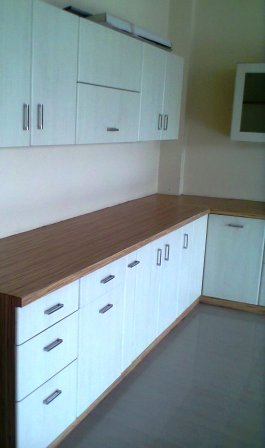
Material procurement is a major payment stage for many interior projects. Modular kitchens, wardrobes and customised furniture may require advance payments to suppliers or manufacturers before production begins.
Before releasing a procurement instalment, check:
- Approved plywood or board type, grade and thickness.
- Laminate, acrylic, veneer or other shutter finish.
- Hardware brand, model and specifications.
- Kitchen accessories and wardrobe fittings.
- Countertop, sink and appliance inclusions.
- Material quantities and approved drawings.
- Purchase orders, invoices or delivery records, as applicable.
- Expected production and delivery schedule.
4. Carcass Installation and Site Progress
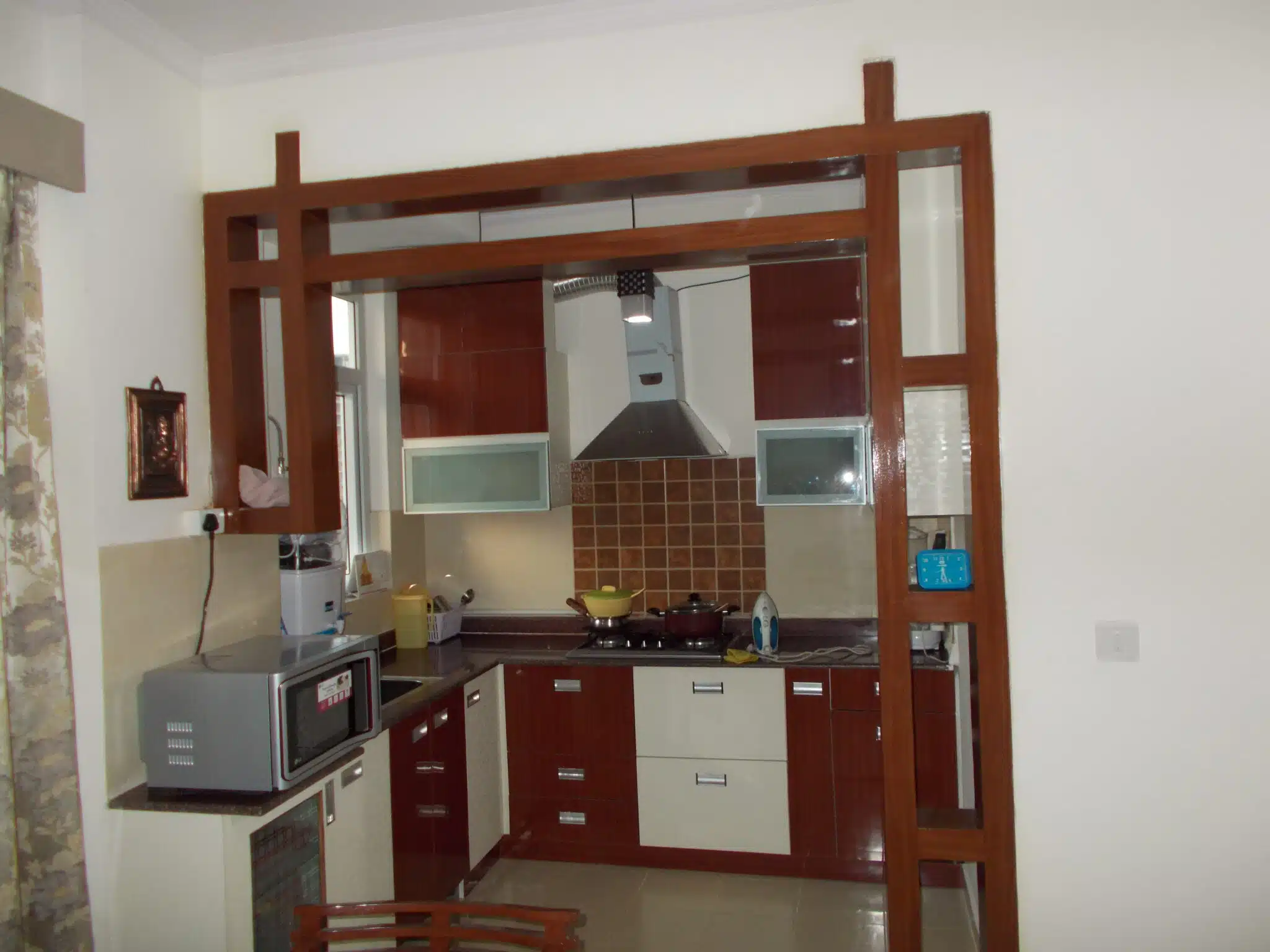
Once materials have been procured and the site is ready, major cabinetry and framework installation can begin. This is an important stage because the homeowner can inspect visible progress and compare the work with approved drawings.
Depending on the agreed scope, this stage may include:
- Kitchen carcass installation.
- Wardrobe carcass installation.
- TV unit and fixed storage framework.
- False ceiling framework.
- Agreed civil and electrical base work.
- Initial alignment and measurement checks.
Use a joint site inspection and progress record before releasing the corresponding instalment.
5. Finishing, Hardware and Final Installation
The finishing stage covers the work needed to make the agreed interiors functional and ready for inspection. The precise list depends on the contract and may differ between a full-home project and a modular kitchen or wardrobe package.
Cabinet shutters
Check finish, alignment, edge treatment and approved colour or texture.
Hardware
Inspect hinges, drawer channels, handles and agreed soft-close mechanisms.
Electrical fixtures
Check agreed switches, lights, fittings and safe installation by qualified professionals.
Painting and polish
Review surface preparation, coverage, finish consistency and agreed coats.
Furniture installation
Confirm the agreed furniture items, dimensions, stability and finish.
Cleaning and finishing
Check installation marks, visible damage, debris and final cleaning responsibilities.
Record incomplete items and visible defects. A payment should correspond to the work actually completed under the agreed milestone, not simply to a calendar date.
6. Handover Payment and Snag Inspection
Before final handover, inspect the completed work against the approved drawings, specifications and quotation. Prepare a written snag list for unfinished work, defects or adjustments.
Your inspection may include:
- Kitchen drawers, shutters, hinges and accessories.
- Wardrobe shutters, shelves, drawers and handles.
- Furniture alignment, stability and finish.
- Electrical points, lights and switches.
- Paint, ceiling and wall finish quality.
- Plumbing fittings and visible leakage checks, where applicable.
- Agreed cleaning and debris removal.
- Keys, manuals, warranty documents and product information.
Sign a handover document that records completed work and outstanding items. Avoid signing an unconditional completion certificate if significant contracted work remains incomplete.
7. Final Retention After Snag Closure
A final retention is an agreed portion of the contract value held until the specified defects and incomplete items have been addressed. It gives both parties a clear process for closing the project.
The agreement should define:
- The retention percentage or amount.
- Which items must be completed before release.
- How the snag list will be recorded and signed.
- The expected rectification period.
- Which documents must be handed over.
- The final payment due date after closure.
Sample Payment Calculation for a ₹10 Lakh Interior Project
The following example shows how the illustrative 15%–30%–25%–20%–5%–5% schedule works for a contract value of ₹10,00,000. It is a mathematical example, not a quotation or a standard price for a Greater Noida West flat.
| Milestone | Percentage | Amount | Total paid |
|---|---|---|---|
| Contract and booking | 15% | ₹1,50,000 | ₹1,50,000 |
| Material procurement | 30% | ₹3,00,000 | ₹4,50,000 |
| Carcass and framework installation | 25% | ₹2,50,000 | ₹7,00,000 |
| Finishing and installation | 20% | ₹2,00,000 | ₹9,00,000 |
| Initial handover inspection | 5% | ₹50,000 | ₹9,50,000 |
| Snag closure and final documents | 5% | ₹50,000 | ₹10,00,000 |
| Total | 100% | ₹10,00,000 | ₹10,00,000 |
Taxes are not separately calculated in this example. Your contract should state whether quoted prices include applicable taxes or whether taxes are added separately, and invoices should show the applicable tax treatment.
Different Payment Schedules for Different Interior Services
A single payment structure may not suit every project. Design-only services, factory-made modular products, custom furniture and complete turnkey execution have different cost and procurement requirements.
| Project type | Possible payment arrangement | Important checks |
|---|---|---|
| Design-only service | Payments against consultation, layout approval, 3D design and working drawings. | Deliverables, revision limits and drawing ownership. |
| Modular kitchen | Booking, approved factory order, production or dispatch, installation and final inspection. | Frozen drawings, material specifications and factory-order evidence. |
| Wardrobe package | Advance, approved material procurement, manufacturing, installation and completion. | Dimensions, board grade, shutter finish and hardware. |
| Custom furniture | Advance for approved production, balance against delivery and installation milestones. | Material, finish, dimensions and delivery condition. |
| Turnkey home interiors | Multiple milestone payments across procurement, installation, finishing and handover. | Complete BOQ, site progress, scope and retention. |
| Labour-only work | Measured progress payments based on agreed units, quantities or rates. | Measurement sheets, accepted work and material responsibility. |
The exact percentages should be negotiated and documented according to supplier requirements, project size, work sequence and the value of materials delivered or work completed.
Design Fee Payment Schedule: A Separate Example
If design services are charged separately from execution, connect each instalment to a clear design deliverable. The following is an example for a standalone design agreement, not a fixed Interior A to Z fee structure.
| Design milestone | Example share | Deliverable |
|---|---|---|
| Appointment and brief | 20% | Project brief, measurements and requirements. |
| Layout approval | 25% | Space plan and furniture layout. |
| Concept and 3D approval | 30% | Approved design direction, views and material concepts. |
| Working drawings | 20% | Agreed execution drawings and specifications. |
| Final design handover | 5% | Final drawing package and agreed design documentation. |
If site supervision or execution coordination is included, specify its scope, visit frequency and duration separately. A design fee should not be assumed to include unlimited site visits or unlimited design revisions.
Important Payment Terms to Include in Your Interior Contract
A clear agreement protects both the homeowner and the interior design firm. Attach the approved quotation, BOQ, drawings, specifications and payment schedule to the contract.
Project scope
List rooms, work items, quantities, deliverables and exclusions.
Payment milestones
State percentages, amounts, evidence and due dates for every instalment.
Material specifications
Identify brands, grades, thicknesses, finishes and hardware models where agreed.
Variation orders
Require written approval for extra work, substitutions and changes to cost or timeline.
Project timeline
Define start conditions, milestones, completion expectations and delay procedures.
Warranty and defects
Document component-wise coverage, exclusions and the process for reporting defects.
For significant projects, consider having the agreement reviewed by a qualified legal professional before signing.
Payment Safety Tips for Homeowners in Greater Noida West
- Pay against invoices: Use traceable payment methods such as bank transfer, UPI or cheque and retain receipts.
- Check the beneficiary: Verify that the account belongs to the contracting business or the authorised recipient identified in the agreement.
- Keep a payment ledger: Record invoice numbers, dates, amounts, tax and cumulative payments.
- Photograph site progress: Maintain dated records of delivered materials and completed installation milestones.
- Check supplier orders: Confirm product specifications and quantities before approving major procurement payments.
- Do not pay twice: Record any advance already paid to suppliers or subcontractors and show how it is adjusted in the main contract.
- Approve changes in writing: Agree on extra work and revised amounts before execution.
- Keep final documents: Store invoices, warranties, manuals, drawings and handover records.
Greater Noida West Site and Society Considerations
Interior work in residential communities can involve practical arrangements that affect the project schedule and payment milestones. Confirm these requirements before the first execution payment.
- Society renovation permissions and contractor entry procedures.
- Lift booking and material movement arrangements.
- Permitted working hours and restrictions on noisy work.
- Material unloading and parking access.
- Debris removal and site-cleaning requirements.
- Existing electrical, plumbing and AC service conditions.
- Any applicable society deposits or administrative charges.
These rules may differ between communities such as Gaur City, Ace City, Ace Divino, Nirala Estate, Panchsheel Greens, Supertech Eco Village, Cherry County and Mahagun Mywoods. Confirm the applicable requirements directly with the building management.
Payment Schedule Documents to Collect
Keep these documents together throughout the project:
- Signed interior design or execution agreement.
- Final quotation and itemised BOQ.
- Approved floor plan, design drawings and specifications.
- Material and hardware approval sheet.
- Supplier purchase orders or relevant procurement evidence.
- Invoices and payment receipts.
- Site progress reports and inspection records.
- Written variation approvals.
- Snag list and closure confirmation.
- Warranty documents and handover record.
For a detailed review before signing, use our interior design quotation checklist for Greater Noida West.
Interior Design Payment Schedule Reference Gallery
These images are general residential design references. They illustrate the types of interiors that may involve design, procurement and installation milestones; they are not proof of a particular payment arrangement or project contract.

Frequently Asked Questions About Interior Design Payment Schedule in Greater Noida West
What is a typical interior design payment schedule in Greater Noida West?
One possible turnkey schedule is 15% at contract signing, 30% at material procurement, 25% after major carcass installation, 20% after finishing, 5% at initial handover and 5% after snag closure. The final percentages should be agreed in the contract and adjusted to the actual project scope.
How much advance should I pay an interior designer?
The advance depends on the agreement and service type. A booking amount should be proportionate to the work being initiated and supported by a signed contract, approved scope and receipt. Avoid paying a large amount without documented terms.
Should interior design payments be linked to project milestones?
Milestone-based payments can help homeowners verify design approvals, procurement, installation and handover before releasing each instalment. The contract should define exactly what evidence establishes completion of each milestone.
Should I pay for materials before they arrive at my home?
Some factory-made products require payment before dispatch or production. If so, ask for approved drawings, supplier details, purchase-order evidence, material specifications and a clear delivery commitment before paying.
How much money should I keep for final handover?
The amount should be agreed in the contract. Some illustrative schedules retain 5–10% until agreed snags are corrected and handover documents are provided. The retention should be proportionate and have a clear release condition.
Is the design fee included in the turnkey payment schedule?
It depends on the proposal. Design fees may be separate or included in the total project price. Confirm the fee basis, deliverables, revision limits and any adjustment against execution costs in writing.
Should I pay the full amount before installation?
Do not assume that full payment before installation is necessary. Review the supplier’s actual procurement terms and negotiate a balanced schedule that connects payments to documented orders, delivery, installation and completion.
What should I do if the contractor asks for extra payment?
Ask for a written variation showing the additional work, quantity, material specification, price and effect on the timeline. Approve the change before the extra work begins.
Can I make interior design payments by UPI or bank transfer?
Use a traceable payment method accepted by the contracting business. Obtain an invoice or receipt showing the amount, date, project reference and applicable tax details.
What if the work is incomplete at the agreed milestone?
Record the incomplete items in writing, compare the actual progress with the signed milestone definition and follow the contract’s inspection and dispute process. Avoid approving a milestone as complete when its agreed conditions have not been met.
Does every interior designer in Greater Noida West follow the same payment schedule?
No. Payment terms vary by firm, project size, product type, supplier commitments and execution model. Compare the actual scope and payment triggers rather than assuming that one percentage schedule applies to every project.
What documents should I collect after final payment?
Collect final invoices, payment receipts, approved drawings, warranty documents, product manuals, keys, completion records and the signed snag-closure or handover document, as applicable to your contract.
Related Interior Design Guides
Discuss Your Home Interior Project and Payment Milestones
Planning a modular kitchen, wardrobes, complete flat interiors or a turnkey home project? Discuss the work scope, material specifications, project stages and quotation before finalising your agreement.
InteriorAtoZ.com | Home interior design planning for Greater Noida West, Noida, Gurgaon and Delhi NCR.