Interior Design Contractor Gurgaon: Plan and Execute Your Home Interiors
Choosing the right interior design contractor in Gurgaon is an important step when planning a new home interior, apartment upgrade or complete renovation. A well-defined contractor scope helps coordinate furniture, modular kitchens, wardrobes, ceilings, finishes, installation and other site activities.
Whether you own an apartment, builder floor, villa or independent house, the right project plan should connect design requirements with practical execution, material specifications and a clearly documented quotation.
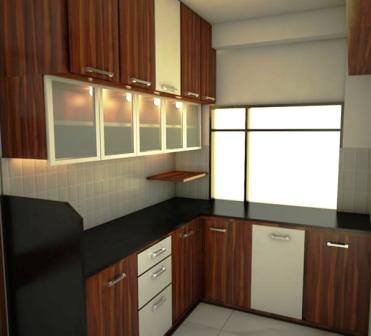
What Does an Interior Design Contractor Do?
An interior design contractor is responsible for carrying out the interior work defined in a project agreement. Depending on the arrangement, this may include coordinating carpentry, modular furniture, kitchen installation, wardrobes, electrical work, ceiling work, painting, flooring and finishing.
Some contractors also provide design planning and material selection. Others work from drawings and specifications supplied by a separate interior designer. Understanding this distinction helps homeowners assign responsibilities correctly.
Quick answer: An interior design contractor in Gurgaon helps execute agreed interior work, which may include furniture, kitchens, wardrobes, ceilings, finishes and installation. Before appointing a contractor, confirm the scope, material specifications, labour, timeline, payment schedule and exclusions in writing.
A successful project needs more than attractive design ideas. Measurements, product specifications, site conditions, workmanship and coordination between different activities all influence the finished result.
Interior Contractor Services for Gurgaon Homes
Residential interior contracting can cover a complete home or selected areas. The following services are commonly considered when preparing a project scope. Confirm the actual availability of each service with the appointed provider.
Modular Kitchen Installation
Kitchen cabinets, shutters, drawers, pantry units, countertops, backsplashes and accessories can be planned around the available layout and daily cooking requirements.
Wardrobes and Bedroom Furniture
Bedroom work may include wardrobes, loft storage, beds, headboards, dressing tables, bedside units and study furniture.
Living Room Interiors
Living spaces can include TV units, display storage, wall panelling, selected furniture, lighting and practical concealed storage.
False Ceiling and Lighting
Ceiling design, cove lighting, task lighting, decorative fixtures and electrical point coordination can be included where required.
Painting and Wall Finishes
Surface preparation, painting, wallpaper, decorative finishes and selected wall treatments can help complete the planned interior scheme.
Flooring and Civil Work
Depending on the agreement, work may include flooring replacement, repairs, wall modifications, plumbing adjustments and other civil activities.
Dining and Foyer Furniture
Dining storage, crockery units, entrance consoles, shoe cabinets and foyer elements can improve organisation and the overall layout.
Bathroom Vanity and Storage
Vanity cabinets, mirrors, storage units, accessories and related finishing work can be specified as part of a bathroom upgrade.
Complete Home Interior Execution
A broader project may coordinate multiple rooms, furniture categories, finishes, installation activities and handover requirements under one agreed scope.
Interior Designer vs Interior Design Contractor
The terms interior designer and interior contractor are sometimes used interchangeably, but their responsibilities can be different. A designer generally develops the design direction, while a contractor carries out the agreed physical work.
Interior designer responsibilities
- Understanding the homeowner’s requirements and lifestyle.
- Preparing space plans and furniture layouts.
- Recommending materials, colours and finishes.
- Developing design concepts and relevant drawings.
- Coordinating design decisions and revisions.
Interior contractor responsibilities
- Reviewing site measurements and execution requirements.
- Arranging agreed materials, labour and installation.
- Executing carpentry, furniture and finishing work.
- Coordinating assigned trades and site activities.
- Completing agreed work and addressing documented defects.
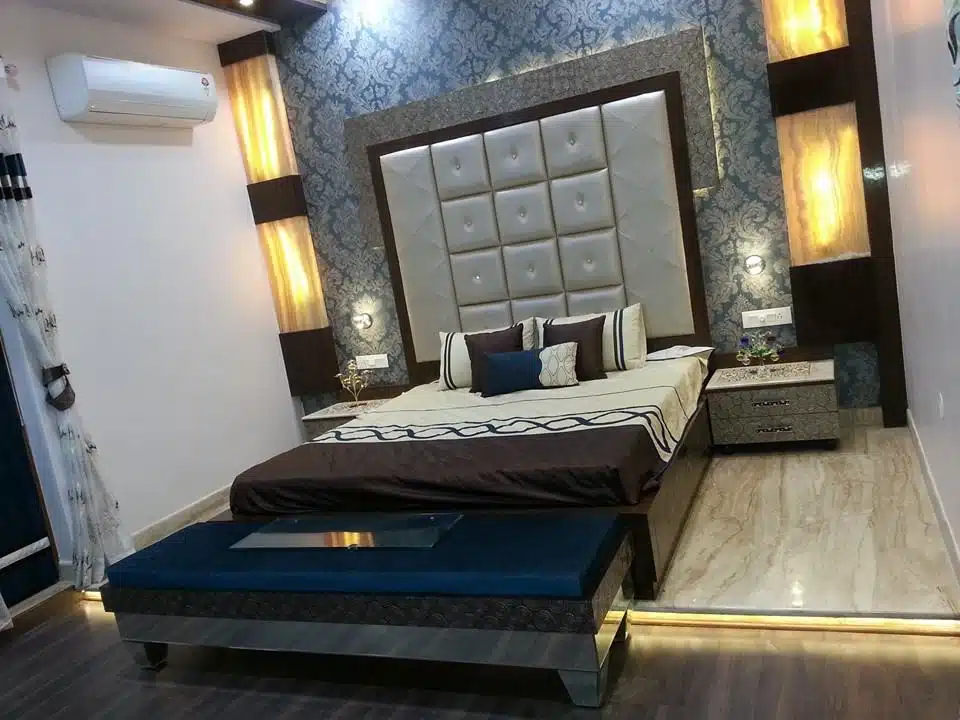
Bedroom design reference illustrating furniture and wardrobe elements that require coordinated design and installation.
Important: Some businesses offer both design and execution. If one company is handling both, ask for a written breakdown of design deliverables, procurement, installation, site coordination and handover responsibilities.
9 Smart Tips to Choose an Interior Design Contractor in Gurgaon
A contractor should be evaluated on more than the initial quotation. These practical checks help homeowners assess whether a proposed service arrangement matches the project’s requirements.
Review Relevant Experience
Look for experience with a property type and scope similar to yours, such as apartments, builder floors, villas, modular kitchens or renovation work.
Inspect Previous Work
Review genuine project photographs, completed work or references where available. Ask which parts of a project were actually handled by the contractor.
Request a Detailed Quotation
The quotation should explain measurements, quantities, material specifications, labour, installation and exclusions instead of showing only a single total.
Check Material Specifications
Confirm board types, thickness, surface finishes, hardware, fittings and product details. Ask for approved alternatives if the budget needs adjustment.
Clarify Who Manages Each Trade
Identify who is responsible for carpentry, electrical work, plumbing, painting, ceiling work, civil repairs and other specialist activities.
Agree on Project Timelines
Discuss the expected sequence, manufacturing lead times, delivery, installation and handover. Record the assumptions that may affect the schedule.
Understand Payment Milestones
Agree on payment stages and the work or deliverables associated with each stage. Avoid unclear payment arrangements.
Confirm Change Management
Ask how additional work, revised dimensions, design changes and material substitutions will be approved and priced.
Review Handover and Warranty Terms
Clarify snag correction, product warranties, maintenance instructions, final inspection and the documents to be provided at handover.
How to Plan Residential Interior Contract Work
A room-wise plan helps homeowners understand the execution requirements and coordinate different activities. It also reduces the risk of missing important items from the original quotation.
| Area | Possible Work | Important Checks |
|---|---|---|
| Living room | TV unit, wall panelling, storage and lighting | Wall dimensions, wiring points and furniture layout |
| Kitchen | Cabinets, drawers, countertop and backsplash | Plumbing, appliance sizes and cabinet measurements |
| Master bedroom | Wardrobe, bed, headboard and dressing unit | Storage needs, shutter movement and clearances |
| Additional bedrooms | Wardrobes, beds, study units and shelves | Room use, furniture size and electrical points |
| Dining area | Dining furniture, crockery storage and lighting | Movement space and furniture placement |
| Bathrooms | Vanity, mirror, accessories and related upgrades | Waterproofing, plumbing and moisture-resistant materials |
| Entrance | Shoe cabinet, foyer console and mirror | Door clearance, circulation and storage access |
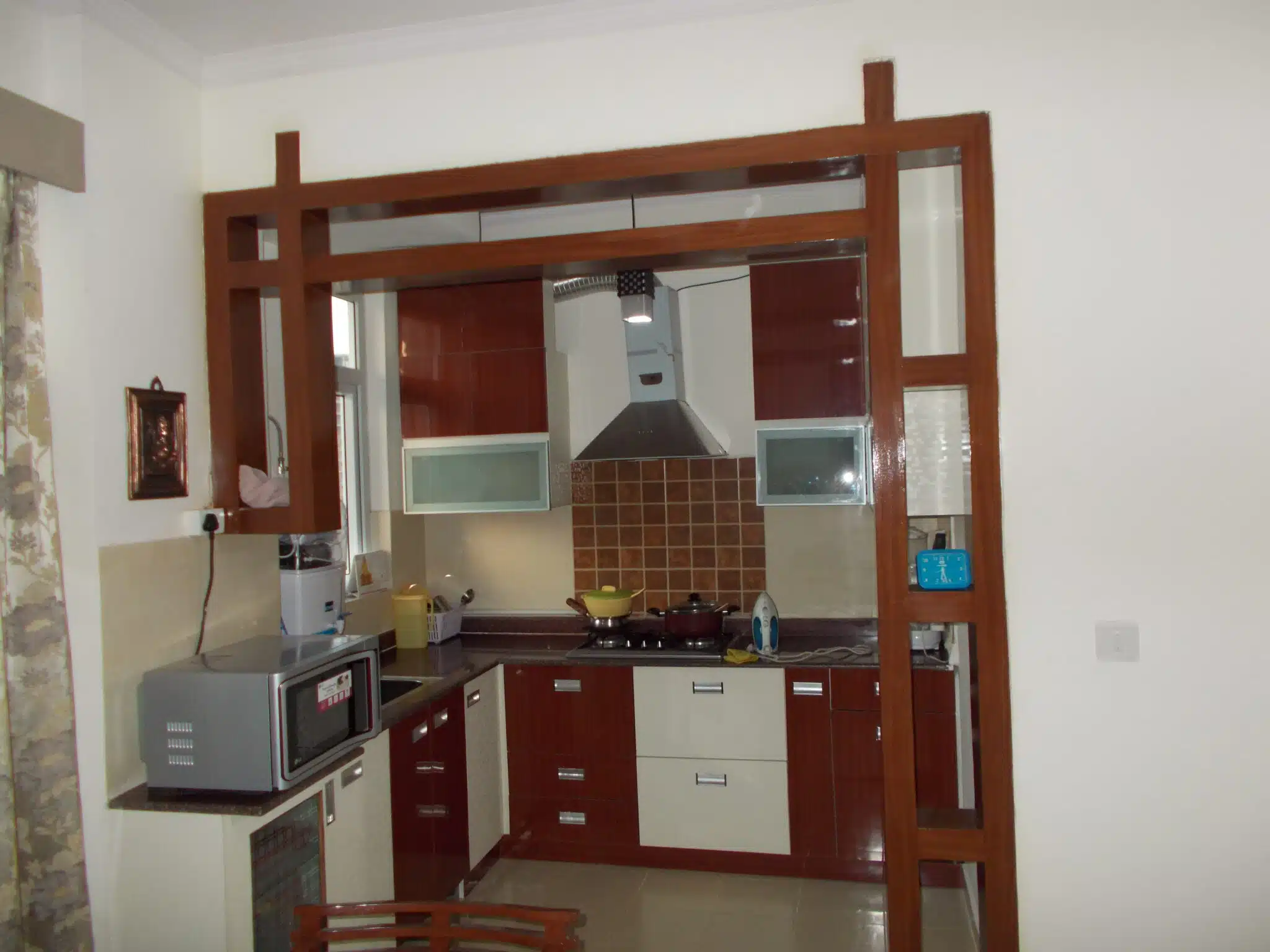
Kitchen design reference showing cabinet finishes and storage elements to specify before installation.
Materials and Workmanship to Discuss with Your Contractor
The quality of an interior project depends on suitable materials, correct installation and attention to finishing details. Material selection should match the intended use, maintenance requirements and available budget.
Carpentry and furniture
- Plywood, MDF, HDHMR or other specified board materials.
- Board thickness and application suitability.
- Laminate, veneer, acrylic and other surface finishes.
- Edge banding and corner finishing.
- Hinges, drawer channels, handles and sliding hardware.
Finishing and installation
- Surface preparation and alignment.
- Proper fixing and support for cabinets.
- Consistent gaps and shutter movement.
- Clean finishing around edges and joints.
- Protection of floors, walls and existing furniture.
Turnkey Interior Contractor vs Individual Contractors
Homeowners can appoint one contractor for a broader project or engage separate specialists for different activities. The suitable approach depends on project size, coordination requirements and the responsibilities each provider is willing to accept.
Turnkey Interior Arrangement
A turnkey arrangement may combine multiple agreed services under one contract. It can simplify communication when one party is responsible for coordinating the specified work.
- One consolidated project scope.
- Defined coordination responsibilities.
- Planned sequence of activities.
- One agreed handover process.
Separate Specialist Contractors
Individual contractors can be appointed for carpentry, painting, electrical work, plumbing, ceilings and other specialist requirements.
- Separate trade-specific quotations.
- Direct selection of specialists.
- Flexible scheduling of individual activities.
- More coordination responsibility for the homeowner or project manager.
How to Decide
Compare the scope, coordination effort, quality controls, communication process and total responsibilities before selecting an arrangement.
- List all required trades.
- Identify the project coordinator.
- Confirm who handles delays and defects.
- Record exclusions and additional charges.
What Should an Interior Contractor Quotation Include?
A written quotation protects both the homeowner and the contractor by establishing what has been agreed. The document should be detailed enough to identify the work, specifications and responsibilities.
Quotation checklist
- Property details and project address.
- Room-wise scope and measurements.
- Furniture dimensions and quantities.
- Material type, thickness and finish.
- Hardware and fitting specifications.
- Labour and installation charges.
- Transportation and delivery terms.
- Applicable taxes and additional charges.
- Payment milestones and project schedule.
- Exclusions and variation policy.
- Handover, snagging and warranty terms.
Cost factors to review
- Property size and room configuration.
- Quantity and complexity of custom furniture.
- Material grades and surface finishes.
- Hardware and accessory selection.
- Civil, electrical and plumbing requirements.
- Site access and delivery conditions.
- Installation complexity and project duration.
- Design revisions and additional work.
Budget tip: Request an itemised quotation and compare equivalent specifications. Avoid relying on a single per-square-foot figure when the scope, material quality and included services are different.
Interior Contracting Process: From Site Visit to Handover
A planned execution sequence helps reduce rework and makes it easier to coordinate different teams.
Requirement Discussion
Discuss the property, room requirements, design preferences, budget expectations and completion priorities.
Site Visit and Measurements
Check dimensions, existing services, access conditions, wall and floor conditions and installation requirements.
Design and Scope Finalisation
Confirm layouts, furniture details, material selections, drawings and the list of work included in the project.
Quotation and Agreement
Review quantities, specifications, charges, exclusions, payment milestones and the proposed project schedule.
Procurement and Preparation
Arrange approved materials, production requirements, delivery planning and site preparation.
Installation and Finishing
Carry out the agreed work, coordinate assigned trades and inspect alignment, operation and finishing quality.
Final Inspection and Handover
Review completed items, record pending corrections, check product documentation and confirm handover requirements.
Interior Design Contractor for Gurgaon and Delhi NCR
Interior projects across Gurgaon and nearby cities can involve different building layouts, site access conditions and residential society requirements. A contractor should assess the actual property before confirming the execution plan.
New Gurgaon
Review builder-provided layouts, kitchen provisions, electrical points, balcony access, service areas and apartment renovation rules.
Golf Course Road and Extension
Larger apartments may require detailed coordination of custom furniture, premium finishes, lighting and room-specific storage.
DLF and Established Sectors
Existing homes may need additional checks for civil repairs, electrical upgrades, plumbing, flooring and reuse of existing furniture.
Builder Floors
Stair access, floor layouts, service areas and site conditions should be considered when planning delivery and installation.
Noida
Apartment configuration, society permissions, delivery access and the coordination of furniture and finishing work should be reviewed.
Delhi NCR
Local building conditions, transport arrangements, working-hour restrictions and site access can influence project scheduling.
Common Mistakes to Avoid When Hiring an Interior Contractor
A few checks before signing an agreement can prevent misunderstandings during execution.
- Hiring without a written scope: Record exactly which rooms, products and activities are included.
- Ignoring material details: Specify board type, thickness, finish and hardware rather than accepting broad descriptions.
- Comparing only total prices: Check whether the quotations cover equivalent work and specifications.
- Leaving responsibilities unclear: Identify who manages each trade, delivery, installation and site coordination.
- Not agreeing on changes: Document how revisions and additional work will be approved.
- Overlooking society permissions: Check working hours, lift usage, delivery access and debris disposal rules.
- Skipping final inspection: Create a snag list and agree on the correction process before handover.
FAQs About Interior Design Contractor Gurgaon
These answers address common questions homeowners ask before appointing an interior contractor.
1. What does an interior design contractor in Gurgaon do?
An interior design contractor may coordinate or execute agreed interior work such as modular furniture, wardrobes, kitchens, ceilings, painting, electrical work, finishes and installation. The exact responsibility depends on the written project agreement.
2. What is the difference between an interior designer and an interior contractor?
An interior designer primarily develops layouts, design concepts, material selections and drawings. An interior contractor focuses on carrying out the agreed work. Some businesses offer both design and execution, so responsibilities should be confirmed in writing.
3. How do I choose a reliable interior contractor in Gurgaon?
Review relevant project experience, material specifications, quotation details, installation responsibilities, references where available, payment milestones, written timelines and the process for handling changes.
4. Does an interior design contractor provide turnkey services?
Some contractors provide turnkey services, while others handle selected trades or installation work. Confirm whether design, procurement, manufacturing, civil work, electrical work, installation and handover are included.
5. What should an interior contractor quotation include?
A clear quotation should list the work scope, measurements, materials, finishes, hardware, labour, installation, taxes, payment milestones, expected schedule, exclusions and the process for approving additional work.
6. Can an interior contractor work on an occupied home?
Work in an occupied home may be possible with suitable planning. Discuss room-wise scheduling, dust control, access, safety, storage of materials, working hours and temporary arrangements before work begins.
7. Should I hire separate contractors for carpentry, electrical and painting?
You can appoint separate specialists or choose a contractor who coordinates multiple trades. The important point is to define responsibilities, work sequence, quality checks and communication arrangements.
8. How can I keep my interior project organised?
Maintain approved drawings, a written scope, material specifications, payment records, a project schedule and a list of approved changes. Review progress at agreed milestones and record pending corrections.
Discuss Your Interior Design Project in Gurgaon
Planning a new apartment interior, a modular kitchen, custom wardrobes or a complete home renovation? Share your requirements and property details to begin a discussion about the appropriate design and execution scope.
Contact InteriorAtoZ